Review · CHIANG MAI
Chiang Mai: Morning Cooking Class with Market Visit
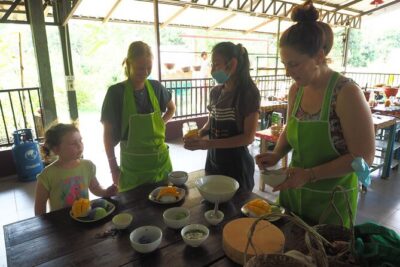
The best part of this Chiang Mai cooking class happens before the first pan gets hot. You visit a local market, learn what the unfamiliar herbs and vegetables are for, then pick fresh ingredients in an organic garden before cooking six Thai dishes in an air-conditioned studio.
I like the market-to-plate structure, which gives you useful context instead of treating Thai food as a list of recipes. I also like the range of choices, from Pad Thai and green curry to vegan soup and mango sticky rice. The main thing to watch is the morning pickup: hotel coverage is limited in some areas, and traffic can make the timing less exact.
The class costs $41 per person for five hours, including transfers in covered parts of Chiang Mai, food, instruction, drinks, equipment, and a PDF recipe book. It is a strong value for anyone who wants a proper meal, practical cooking skills, and a pleasant half-day activity rather than only a quick demonstration.
Key points at a glance
- A real market visit comes first: See fresh Thai ingredients before using them in class.
- Pick herbs at an organic garden: Learn how vegetables and herbs are grown and gather ingredients for your dishes.
- Six dishes give you plenty to eat: Prepare a starter, main course, soup, curry paste, curry, and dessert.
- New is a frequently named instructor: Her clear English and patient explanations make unfamiliar ingredients easier to follow.
- Dietary needs can be accommodated: Vegetarian, vegan, Halal, and gluten-free choices are available, along with help for allergies.
- Pickup needs careful checking: Service covers many central areas, but not every hotel or street.
Why this Chiang Mai cooking class works
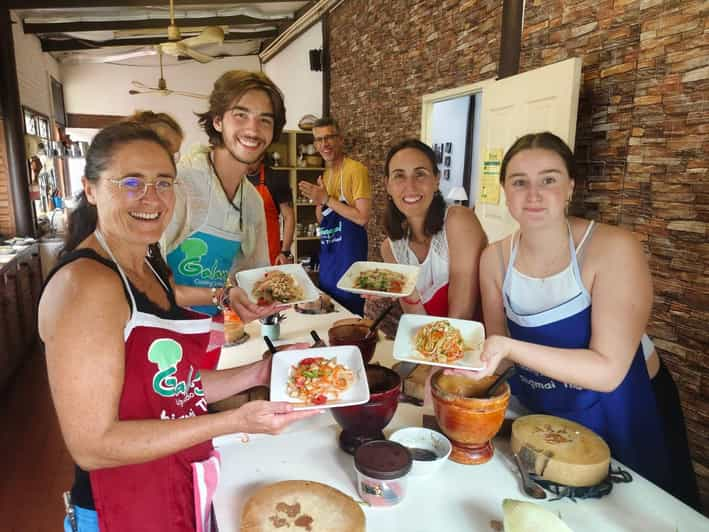
Thai cooking is easier to understand when you see the ingredients before they are chopped and cooked. That is the smart idea behind this experience. Instead of arriving at a studio with a printed recipe and no context, you begin with a look at the food sold in Chiang Mai.
At $41, you are paying for five hours, several dishes, a market visit, an organic garden, an instructor, hotel transport in selected areas, and a recipe book. A cooking class can be poor value if you make one dish and spend most of the time watching. Here, the six-dish format gives you more hands-on work and a full meal at the end.
I would choose this class if you want to eat what you cook, ask questions, and return home with recipes you can use. It suits beginners particularly well, but people who already cook will still find the market and ingredient explanations useful.
More Cooking Classes with a Market Tour in Chiang Mai
- Chiang Mai: Cooking Class, Market & Thai Herbs Garden Tour
★ 4.9 · 4,824 reviews - Chiang Mai: Authentic Cooking Class with Market & Farm Visit
★ 4.9 · 4,546 reviews - Chiang Mai: Cooking Class with Market and Pickup
★ 4.9 · 1,365 reviews
The morning begins with Chiang Mai pickup
Pickup takes place between about 8:30 and 9:00 in the morning. You should wait in your hotel lobby 5 to 10 minutes before the scheduled time. The driver will wait no longer than five minutes after the agreed pickup time, so this is not the morning to linger over breakfast.
Transport is offered to hotels in Chiang Mai’s old city, Santitham, and much of Huay Keaw Road from Kad Suan Kaew toward Maya Shopping Mall. Some parts of Nimmanhaemin Road, Sirimongkrajan Road, Wat Ket Road, Chang Phueak, Chang Khlan, and Chang Moi are also covered.
That last point matters. Coverage depends on your exact address, not only the name of your neighborhood. Check before booking. If your hotel is outside the service area, you can arrange your own ride to the cooking school or market. You can also go directly to the studio if you prefer to skip the transfer.
Traffic and the number of pickup points may cause a delay before 9:00. Keep your morning flexible, and make sure the provider has the correct hotel address. One customer had trouble getting a reply about transport and had to obtain the cooking school address separately. That is an avoidable nuisance, so confirm the meeting point in advance.
At the local market, ingredients become less mysterious
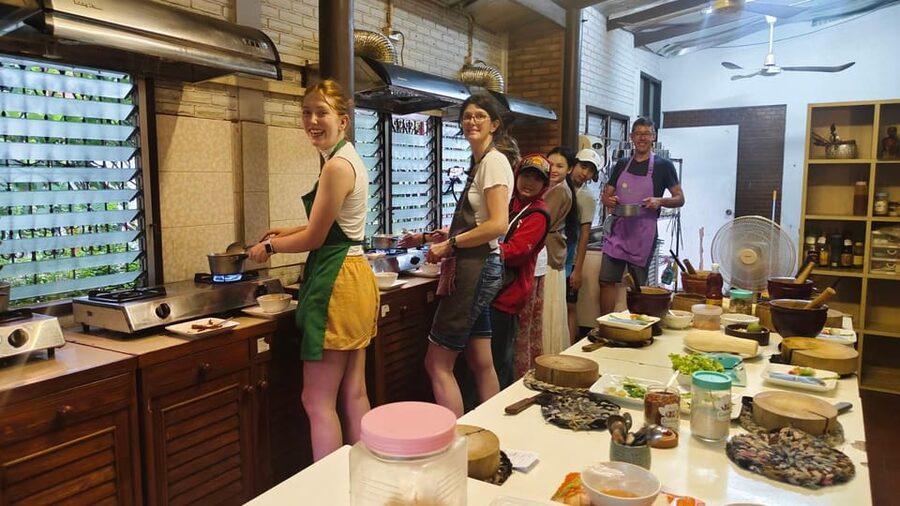
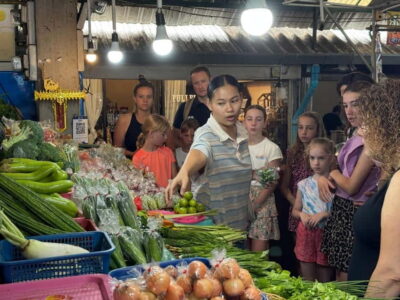
The market visit is listed as depending on interest, but it is one of the best parts of the morning if you want more than a basic cooking lesson. You get to see the raw materials before they are measured into little bowls at the studio.
An English-speaking instructor such as New can explain the ingredients and show you how they appear in everyday Thai cooking. You might see the fresh produce, herbs, noodles, curry ingredients, and other items needed for the day’s menu. The important benefit is not simply seeing a market. It is learning to connect an ingredient’s smell, shape, and texture with the finished dish.
This is useful when you shop at home. Thai recipes often call for ingredients that look alike to a newcomer. A market explanation can help you understand what to substitute and what not to confuse. One particularly useful part of the instruction is learning which ingredients can be found or replaced in other countries.
The market is described as local rather than aimed only at international visitors. That gives the stop a more everyday feel, though you should expect a working food market rather than a polished sightseeing attraction. Wear comfortable shoes and be ready for strong smells and close quarters.
The organic garden adds a practical lesson
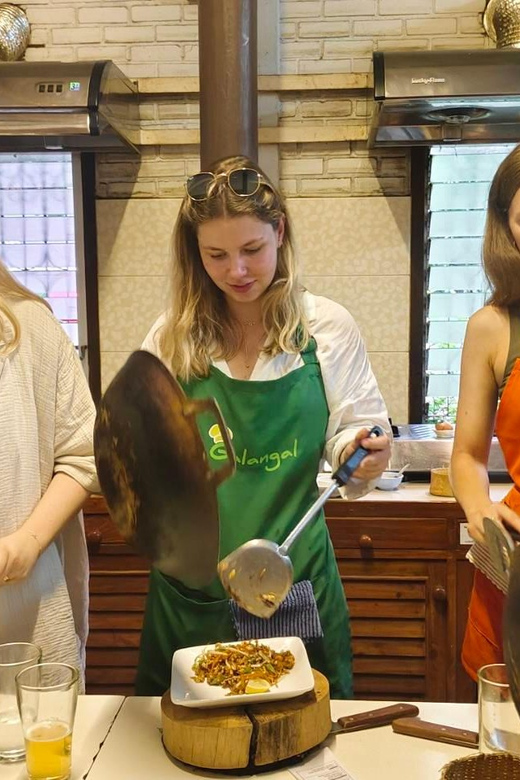
After the market, you visit an organic garden and learn how Thai vegetables and herbs are grown. You can pick some of the ingredients for your cooking, which gives the class a pleasant hands-on link between garden and plate.
I like this step because it answers questions the market cannot. You see where herbs and vegetables come from, how they grow, and why fresh ingredients matter in Thai food. The lesson is not presented as a long farming tour. It is a short, useful introduction before the cooking begins.
This stop also gives you a break from the kitchen and a chance to ask about ingredients you may not recognize. If you are interested in organic farming, it adds real value. If your priority is cooking as many dishes as possible, remember that the garden and market take part of the five-hour schedule. That is a fair trade for most people, but those wanting an intensive chef-style lesson should know the focus is broader than knife skills alone.
More Cooking Classes with a Market Tour in Thailand
- Chiang Mai: Evening Cooking Class and Local Market Visit
★ 4.9 · 648 reviews - Evening Cooking Class in Organic Farm with Local Market Tour
★ 5.0 · 394 reviews - Half-Day Cooking Class with Market Tour
★ 5.0 · 163 reviews - Chiang Mai: Traditional Thai Cooking Class with Market Tour
★ 4.8 · 137 reviews
The air-conditioned studio keeps the class comfortable
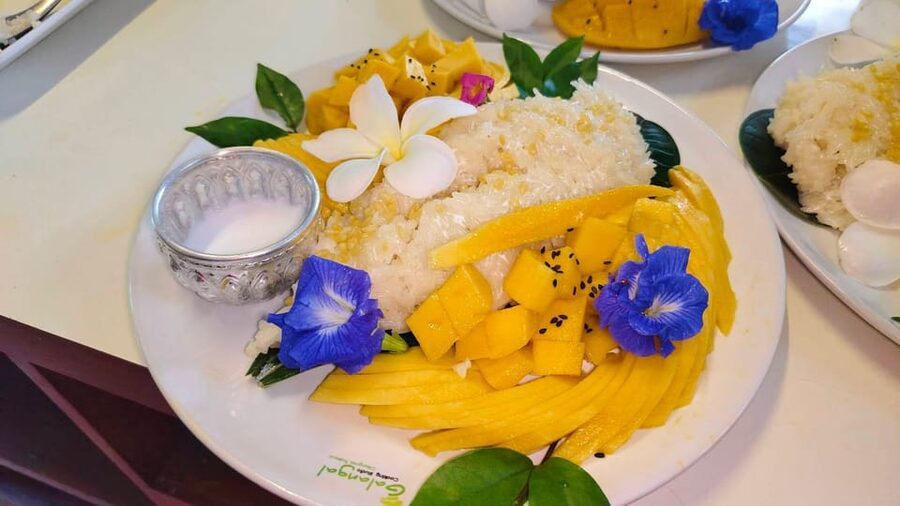
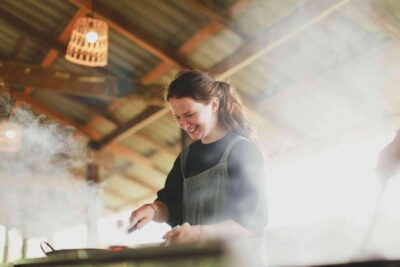
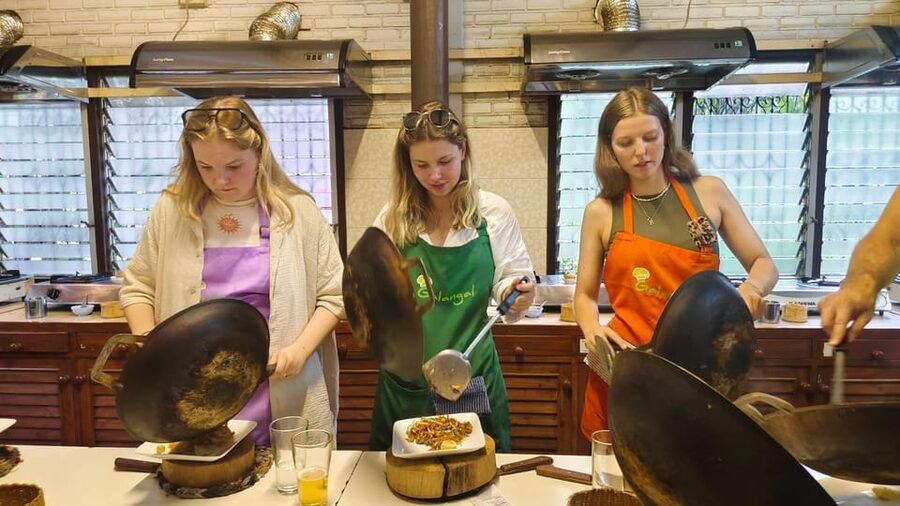
The cooking takes place in an indoor kitchen and air-conditioned dining room. That is a practical advantage in Chiang Mai’s warm climate, especially after a market visit and time outside in the garden.
The staff provides all ingredients and equipment, along with water, tea, and coffee. You do not need to arrive with cooking tools or shop for supplies. Bring any personal medication you need, and arrive with an empty stomach. You will eat what you prepare, and the amount of food is substantial for a morning class.
The instructors explain the cooking methods and guide you through each recipe. New is the instructor named most often in the feedback, and her clear English is especially useful when discussing unfamiliar dishes. The teaching appears suited to both complete beginners and people who already know their way around a kitchen.
You choose your dishes from several groups. The exact menu is a major reason to read the options before booking. You are not locked into one fixed sequence.
Choose a starter with plenty of Thai character
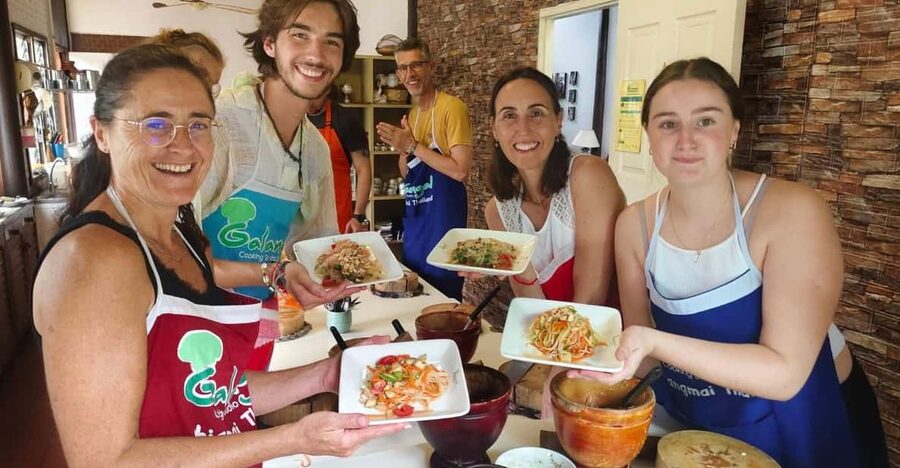
For the first course, you can choose one of four dishes:
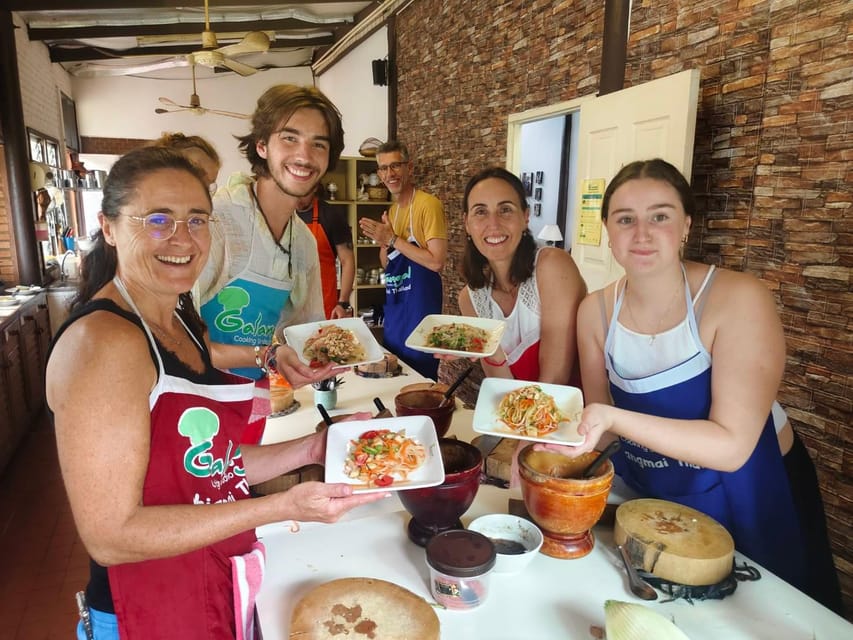
- Som Tam, green papaya salad
- Por Pia Thod, fried spring rolls
- Larb Kai, chicken salad
- Yam Woon Sen, glass noodle salad
These choices give you different kinds of practice. Som Tam introduces the balance of sour, salty, sweet, and spicy flavors. Spring rolls are a familiar choice for cautious cooks and give you a clear lesson in filling and rolling.
Larb Kai is a good pick if you want to try a strongly seasoned chicken salad. Yam Woon Sen offers a lighter noodle-based option. Ask about your preferred dish and dietary needs before the class, since some recipes contain meat, seafood, or ingredients that may not suit an allergy.
The main course lets you set the level of challenge
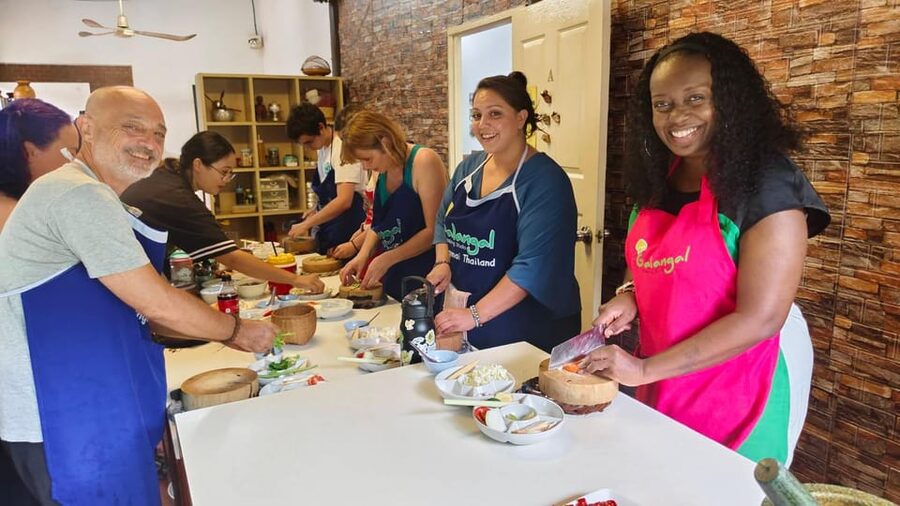
Your main-course choices include Pad Thai, Pad See Ew, chicken with cashew nuts, or minced chicken with holy basil.
Pad Thai is the obvious choice if you want the dish most associated with Thai cooking abroad. Pad See Ew gives you a different noodle style and a milder, savory profile. Chicken with cashew nuts is a good option for those who prefer a straightforward stir-fry.
Minced chicken with holy basil offers a stronger Thai street-food flavor. It is also a useful dish to learn because it is quick to prepare at home once you have the ingredients. The staff can help you select a dish that fits your taste and dietary requirements.
The value here is repetition. You are not simply watching an instructor toss ingredients into a wok. You practice the steps, season the food, and then eat the result. That makes the recipe book more useful later because you have already handled the process.
Soup and curry explain the heart of Thai flavor
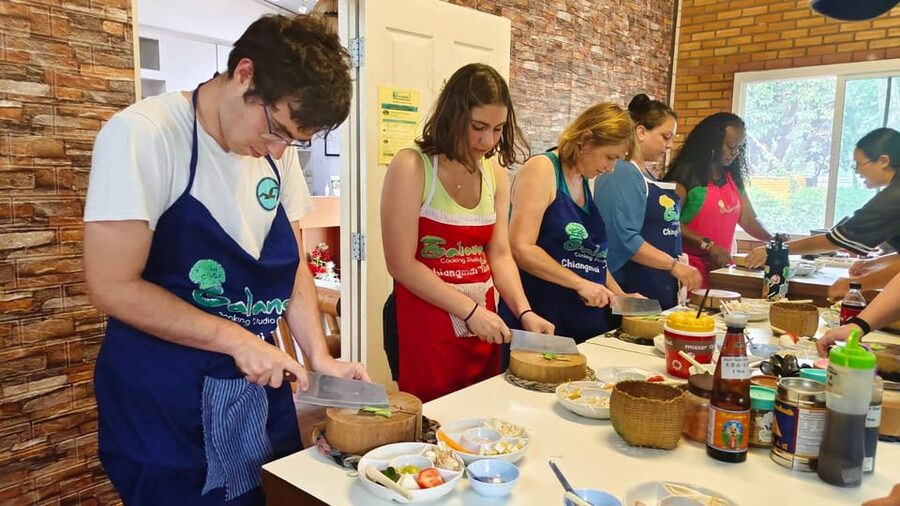
For soup, you can make Tom Yum Kung, a hot and sour prawn soup; Tom Kha Kai, chicken soup with coconut milk; Tom Kha Je, a vegan coconut milk soup; or Tom Zap Kai, a hot and sour chicken soup.
This section is helpful if you want to understand how Thai soups get their character. You can choose between sour and spicy flavors, coconut milk, prawns, chicken, or a vegan preparation. The vegan Tom Kha Je is a particularly helpful option for plant-based cooks who want to learn a Thai dish without needing to modify a meat recipe themselves.
You also prepare a curry, choosing from green, red, yellow, Massaman, or Panang. Making the curry paste is part of the lesson, so you learn more than opening a jar and adding coconut milk. The curry choices range from bright and spicy to milder and sweeter styles.
The curry-paste lesson is one of the more useful skills to take home. Thai curry depends on the balance of herbs, spices, aromatics, and heat. Even if your home ingredients are not identical, understanding the basic method helps you adjust the recipe sensibly.
Dessert finishes the meal on a sweet note
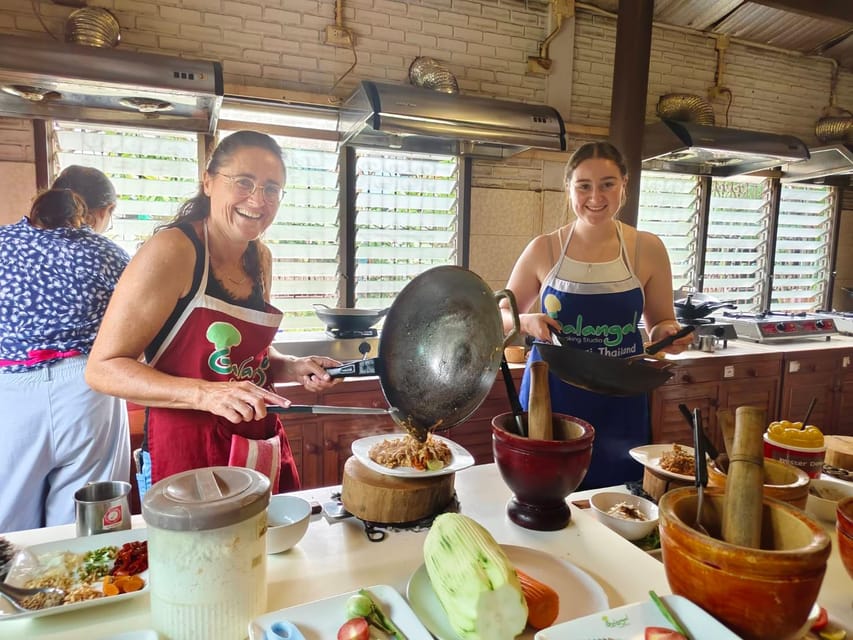
For dessert, choose mango sticky rice with ice cream or deep-fried banana. Both are simple enough for a beginner, but they finish the class with something you can easily imagine making for friends.
Mango sticky rice gives you a lesson in the relationship between fruit, coconut, and sweet rice. The fried banana is a more direct treat with a crisp finish. Since you prepare dessert after the main dishes, you get a complete Thai meal rather than a class focused only on savory food.
The class is described as making six dishes in total. The menu includes a starter, main course, soup, curry preparation, curry, and dessert, although the exact counting can vary with the selected menu. Confirm the day’s sequence if you need to plan around dietary restrictions or a particular dish.
Dietary choices are handled before the cooking starts
The class is available for vegan, vegetarian, Halal, and gluten-free diets. It can also accommodate people with allergies, but you should state your needs clearly when booking and again when you meet the instructor.
This is more useful than a vague promise of flexibility because the menu includes meat, prawns, noodles, curry pastes, and sauces. Some dishes require substitutions, and the instructor needs time to plan them properly. The available choices mean you can usually take part in the same cooking structure without simply watching other people eat.
Families can also consider this class. One four-year-old was welcomed and cooked alongside the adults, and infant seats are available. The activity is stroller accessible and wheelchair accessible, though you should still confirm the transport arrangements and any specific mobility needs before the morning.
The PDF recipe book helps after you leave Chiang Mai
The PDF recipe book is a small but important part of the package. Many cooking classes are enjoyable on the day and hard to repeat later because the instructions disappear when you leave. Here, you receive the recipes digitally so you can try the dishes at home.
The usefulness of the book depends on how well you record your own adjustments, so pay attention during the lesson. Note which curry you chose, how spicy you made it, and any ingredient substitutions discussed by the instructor.
The class also explains ingredients that may be hard to find outside Thailand. That makes the recipes more practical. You may not reproduce every flavor exactly at home, but you will have a better idea of what to buy and how to adapt the dish.
Who should book, and who should think twice
I would recommend this experience to first-time visitors who want a friendly introduction to Thai food. It also suits couples, families, solo visitors, and anyone looking for a five-hour activity with a meal built in.
It is particularly good for you if you value explanations, ingredient shopping, and several recipes over a single polished demonstration. The combination of market, garden, kitchen, and dining room gives the morning a clear rhythm.
You might choose another class if you want a private chef lesson focused on advanced technique, or if you dislike early pickup and a fixed morning schedule. The market visit and garden are part of the appeal, but they also leave less time for extended work on each individual dish.
At $41, the package is well priced for the amount included. You get food, equipment, drinks, instruction, the recipe book, and transport where available. Keep the separate visitor charge in mind: an adult visitor costs 500 baht per person, and a child aged 6 to 12 costs 350 baht per person. Clarify exactly how that charge applies to your booking before you pay.
Should you book the Galangal Cooking Studio class?
Book it if you want to understand Thai food through its ingredients, not just eat it at a restaurant. The local market, organic garden, six-dish menu, and recipe book make this more useful than a short cooking demonstration.
I would give the class extra weight if you are traveling with children, need vegetarian or vegan options, or want an English-speaking instructor who explains each step clearly. Just confirm hotel pickup, arrive on time, and choose your dishes in advance if you have strong preferences.
For a half-day in Chiang Mai, this is a practical, tasty choice with enough structure for beginners and enough menu variety to keep experienced home cooks interested.
FAQ
How long does the Chiang Mai cooking class last?
The activity lasts five hours, including the hotel pickup, market visit, organic garden visit, cooking lesson, meal, and return transfer.
What dishes can I choose to cook?
You can choose a starter, main course, soup, curry, and dessert. Starter choices include Som Tam, spring rolls, Larb Kai, and glass noodle salad. Main dishes include Pad Thai, Pad See Ew, chicken with cashew nuts, and minced chicken with holy basil. Soup and curry choices are also available, followed by mango sticky rice with ice cream or deep-fried banana.
Is hotel pickup included?
Yes, pickup and drop-off are included for many hotels in Chiang Mai’s old city, Santitham, Huay Keaw Road, and selected parts of nearby districts. Coverage depends on your exact address, so check before booking.
What time does pickup take place?
Pickup is scheduled between 8:30 and 9:00 AM. Wait in your hotel lobby 5 to 10 minutes early. The driver will wait no longer than five minutes after the scheduled pickup time.
Can I join if I am vegan or vegetarian?
Yes. The activity offers vegan and vegetarian options. Halal and gluten-free choices are also available, and the class can accommodate allergies when you provide the information in advance.
Is the activity wheelchair accessible?
Yes. The activity is wheelchair accessible and stroller accessible. It is also near public transport, and infant seats are available.
What do I receive after the class?
You receive a PDF recipe book so you can prepare the dishes at home. The class also includes all cooking ingredients and equipment, as well as water, tea, and coffee.
More morning classes around Chiang Mai
- Chiang Mai: Half Day Morning Cooking Class with Market Tour
★ 4.9 · 10 reviews - Tingly Thai Cooking Class with Morning Market Tour
★ 5.0 · 589 reviews - Balinese Cooking class with traditional morning market visit
★ 5.0 · 161 reviews - Kyoto: Morning Japanese Bento Cooking Class
★ 5.0 · 149 reviews
New cooking classes around Chiang Mai
- Chiang Mai: Local Northern Thai Cooking Class at Grandma’s★ 5.0 · 33 reviews
- Chiang Mai: Half Day Morning Cooking Class with Market Tour★ 4.9 · 10 reviews
- Chiang Mai: Half Day Cooking Class at Organic Farm★ 4.8 · 96 reviews
- Half-Day Cooking Class with Market Tour★ 5.0 · 163 reviews
- Half-Day Thai Cooking Class on a Local Farm Near Chiang Mai★ 4.9 · 32 reviews
- Full Day Thai Cooking Class in Organic Farm and Market★ 5.0 · 3 reviews
- Chiang Mai: Traditional Thai-Akha Cooking Class& Market Tour★ 5.0 · 25 reviews
- Chiang Mai : Traditional Northern Cooking Class★ 5.0 · 8 reviews
Chiang Mai Cooking Classes, side by side.
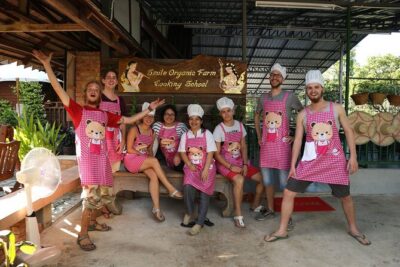
Half-Day Thai Cooking Class at Organic Farm in Chiang Mai
Read our review →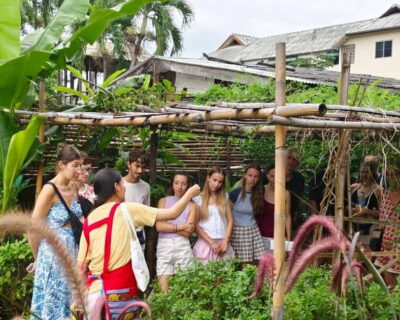
Chiang Mai: Cooking Class, Market & Thai Herbs Garden Tour
Read our review →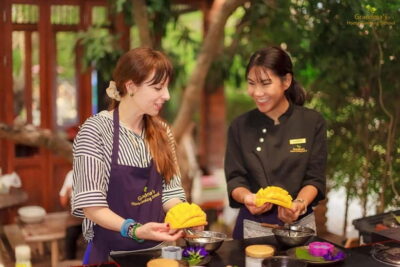
Chiang Mai: Authentic Cooking Class with Market & Farm Visit
Read our review →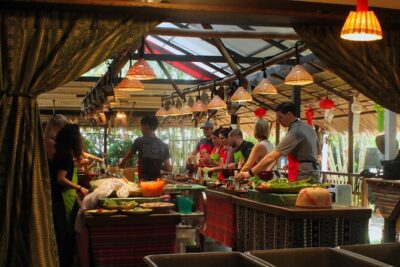
Chiang Mai: Cooking Class with Market and Pickup
Read our review →
Chiang Mai: Cooking Class with Organic Farm at Mama Noi
Read our review →