
Review · CATANIA
Cooking Class Arancini in Catania
Catania’s best-known snack is not difficult because of its ingredients. It is difficult because the rice must hold together, the filling must stay inside, and the final breading must turn crisp without becoming greasy. This three-hour cooking class lets you work through each step with a professional chef, then sit down to taste the results with Sicilian wine.
I like the small group limit of six, which gives you room to ask questions and shape the arancini yourself. I also like that the class includes almond paste, a second Sicilian specialty that adds variety. The main caution is the recipe booklet: some participants received only two photocopied recipes, with missing quantities and no clear rice instructions, so you should take careful notes during the lesson.
Key points at a glance
- Small Catania class: The group is limited to six, and some sessions have only two participants.
- Two Sicilian specialties: You make savory arancini and sweet almond paste in the same kitchen.
- Hands-on rice work: The chef explains how to cook and season the rice before you shape it.
- Several fillings: You can prepare and taste different fillings, with vegetarian options available.
- A full tasting: Arancini, almond paste, Sicilian-style wine, water, and coffee are included.
- Recipe follow-up: A booklet is provided, but write down missing measurements as you cook.
Why arancini are worth learning in Catania
Arancini are often treated as simple street food: a golden rice ball, a filling in the center, and a crunchy shell. The class shows you why good arancini need more care than their casual appearance suggests.
The rice forms the structure. It must be cooked and seasoned so it is flavorful but firm enough to shape. The information provided for the class identifies cheese, butter, and saffron as part of the rice preparation, but exact amounts may not appear in the booklet. Pay close attention when the chef demonstrates this step.
Next comes the filling. You can make several types, and vegetarian fillings are possible. That makes the class more useful for mixed groups, since one person does not have to watch while everyone else cooks meat-based versions.
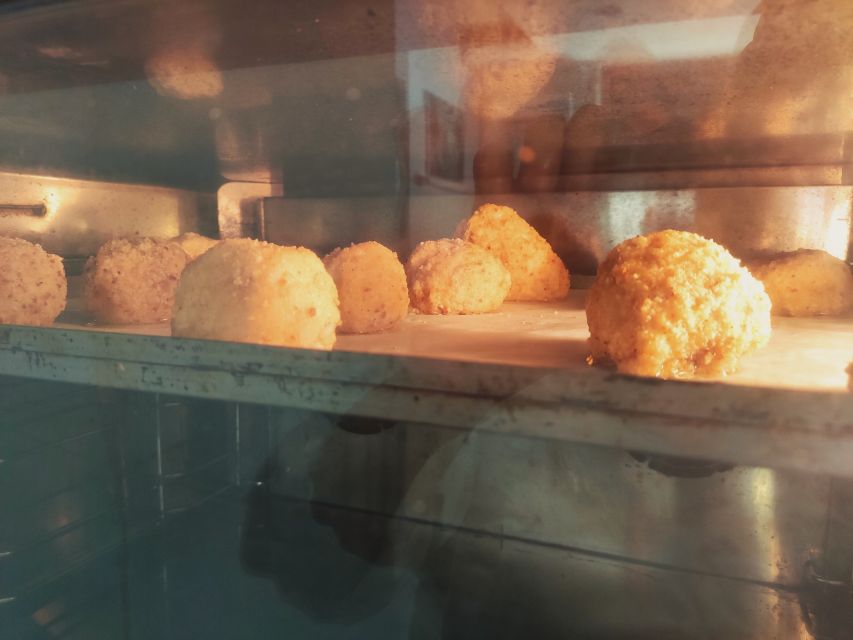
Finally, you learn to bread the arancino. This is the stage that gives the snack its familiar crunch. The class is not simply a demonstration followed by a meal. You handle the food, shape it, and see how the parts fit together before tasting the finished result.
More cooking classes around Italy:
- Florence: Pasta Cooking Class with Unlimited Wine
★ 4.9 · 10,285 reviews - 3 in 1 Cooking Class near Navona: Fettuccine, Ravioli & Tiramisu
★ 5.0 · 7,376 reviews - Florence: Pasta & Tiramisu Cooking Class with Unlimited Wine
★ 4.9 · 6,708 reviews
Inside the Catania cooking laboratory
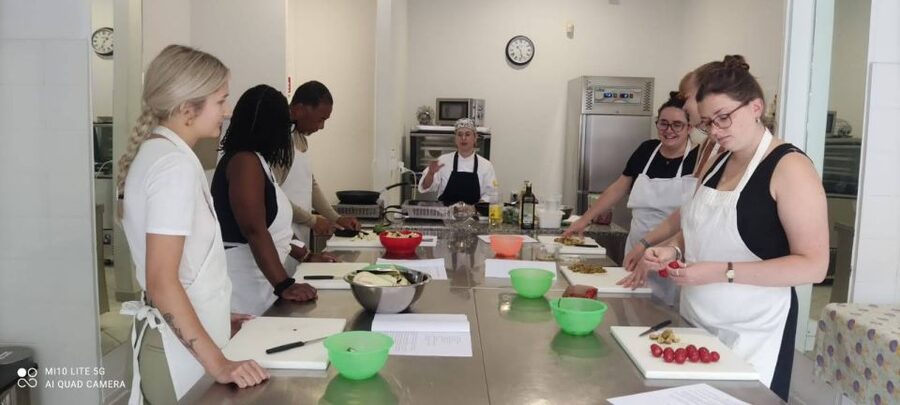
The meeting point is a cooking laboratory at approximately 37.514843, 15.102241 in Catania. This is a practical setting for the lesson. You are there to cook, not to watch a chef perform in a restaurant kitchen from a distance.
The experience lasts about three hours. That is enough time for the chef to explain the rice, prepare fillings, form the arancini, make the breading, and teach the almond paste. It also leaves time for cooking and tasting the finished food.
The language options are English and Italian. An English-speaking chef is available, and one recent class was led by Agata, who was praised for both teaching and cooking. The provider is Futuro e Lavoro, and the class is designed as a small-group activity rather than a large demonstration.
A small group matters here. With only six places, you have a better chance to ask how wet the rice should be, how much filling belongs inside, or why one arancino is holding its shape while another is not. Some sessions have had only two people, creating a particularly personal lesson.
First comes the saffron rice
The rice is the foundation of the class. If it is too soft, the arancino can fall apart. If it is too dry, the finished snack may feel hard and dull. The chef explains the cooking method and seasoning before you begin shaping.
The stated preparation includes cheese, butter, and saffron. These ingredients give the rice its savory flavor and warm color. You should listen closely here, since the recipe handout may not include full quantities or enough detail to recreate the rice from the paper alone.
This is one of the places where a hands-on class gives you more than a standard food tour. You can see the texture at the exact point when the rice is ready. You can also ask questions about consistency and shaping while the chef is working beside you.
For home cooks, I recommend writing down more than the chef’s final ingredient list. Note the rice texture, the order in which ingredients are added, and any resting time. Those small details may matter more than the ingredient names when you repeat the recipe at home.
Building different arancini fillings
Once the rice is ready, you prepare fillings for several versions of arancino. The class allows vegetarian fillings, so you can ask about that option when you book or at the start of the lesson.
Making more than one type is useful because it lets you compare how fillings affect the finished snack. A filling that is too wet may weaken the rice shell. A filling that is too sparse can make the arancino seem plain. The class gives you a direct sense of how much filling works and how firmly the rice needs to be packed.
You will then form the rice around the filling. This is the most tactile part of the lesson and may take a little practice. The shape has to close fully, with no gaps that could let the filling escape during cooking.
The supplied information does not specify the exact filling recipes, so I would not book this expecting a fixed menu of named traditional versions. You should expect several fillings, with the chef explaining the choices available during your session.
Same kitchen, a different dish:
- Florence: Pasta Cooking Class with Unlimited Wine
★ 5.0 · 6,413 reviews - Cooking Class and Lunch at a Tuscan Farmhouse with Local Market Tour from Florence
★ 5.0 · 4,831 reviews - Rome: Pasta Making Class with Wine, Limoncello, and Dessert
★ 4.9 · 3,177 reviews - Pastamania – Florence Pasta Making Class
★ 5.0 · 3,050 reviews
The crisp breading is the turning point
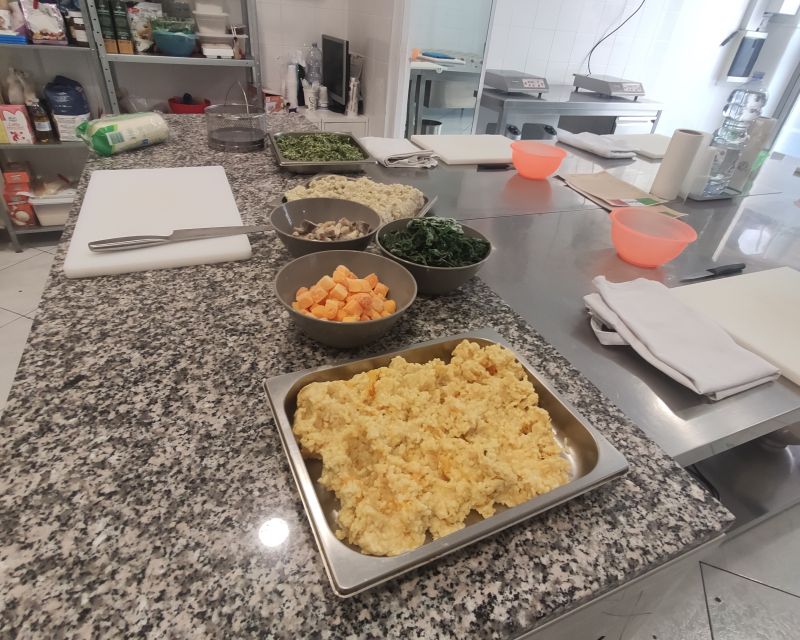
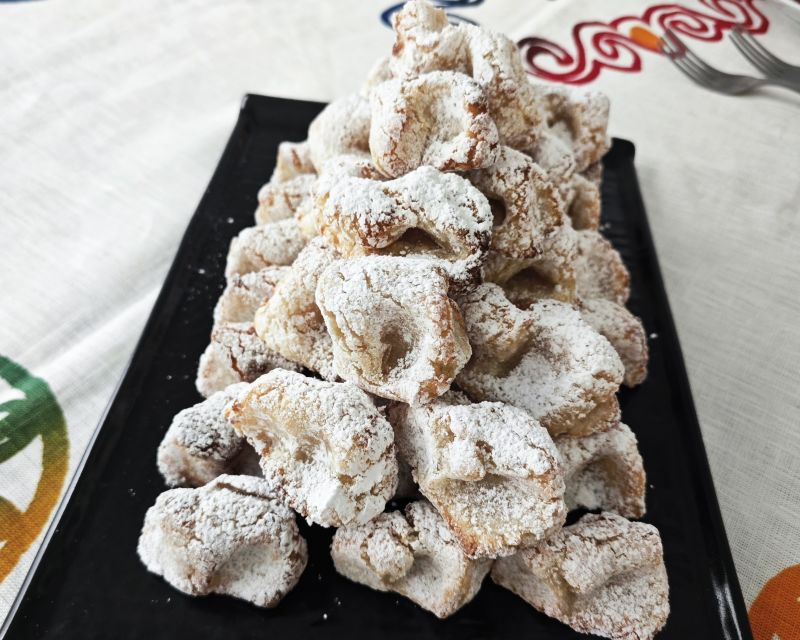
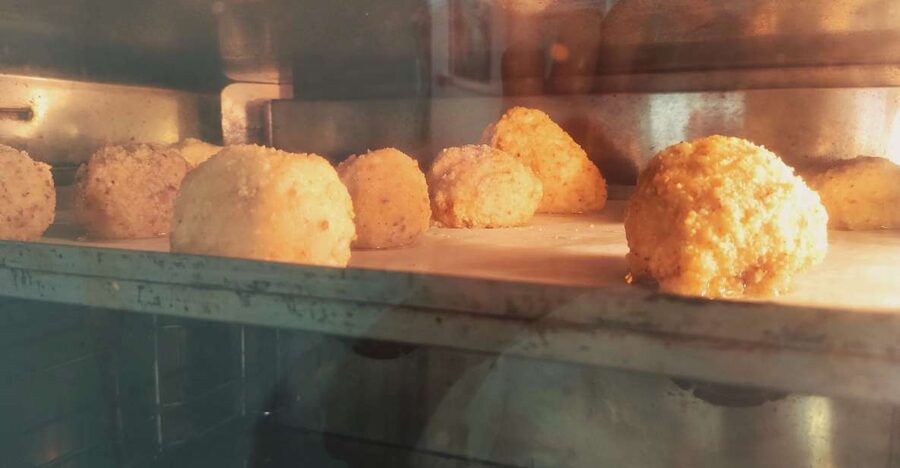
The breading creates the contrast that makes arancini so satisfying. The rice should be soft and savory inside, while the outside becomes crisp and sturdy.
The chef teaches the breading method rather than leaving you with a finished snack to inspect. This gives you a chance to see how evenly the coating should cover the rice and how the shape must be handled before cooking.
The cooking class information does not state the exact frying equipment or cooking temperature, so I would avoid promising a particular technique. What you can count on is an explanation of the crunchy coating and a tasting of the finished arancini.
This is also a useful part of the class for anyone who has tried making arancini at home and had trouble with cracking or weak breading. You can ask questions at the moment the problem appears, rather than trying to diagnose it later in your own kitchen.
Almond paste adds a sweet Sicilian finish
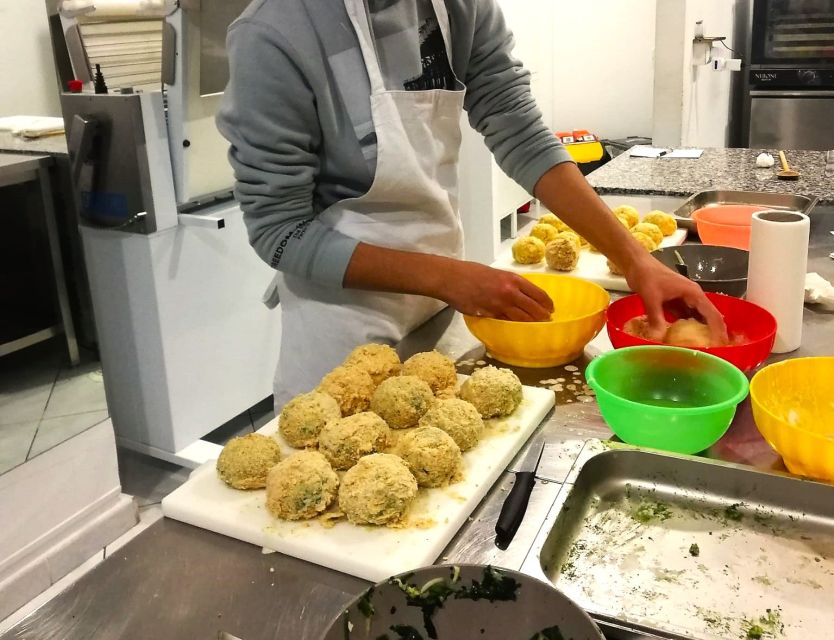
Arancini are the main subject, but the almond paste gives the class a welcome second act. You learn how to make this typical Sicilian sweet, then taste it along with the savory food.
The almond paste is a good reason to choose this class over an arancini-only lesson. You leave with techniques for two different kinds of Sicilian food: a filled rice specialty and a sweet almond preparation.
The information provided does not give the full ingredient list or shape of the almond paste, so expect the chef to supply the practical detail during the session. If you want to repeat it at home, write down measurements and texture cues as you go.
The mix of savory and sweet also keeps the three hours from feeling repetitive. You move from cooking rice and preparing fillings to making a different kind of mixture, then finish with a shared tasting.
Tasting the food with wine and coffee
At the end, you taste the different arancini and the almond paste you prepared. Sicilian-style wine, water, and coffee are included.
The tasting is not just a reward after the work. It gives you a chance to compare the fillings and judge the texture of the breading. You can also see how the almond paste fits into the meal as a sweet finish.
One useful detail is that there may be enough food to take leftovers home. That depends on the amount produced in your particular session, but one participant specifically had plenty left over. If you are planning other food stops in Catania, keep this in mind. A three-hour cooking class can become a substantial meal.
The shared format can be social without requiring a large group. One session included two separate cooking parties who shared what they had prepared. That setup can make the tasting feel more like a relaxed meal than a quick sample at the counter.
What the recipe booklet is really worth
The class includes a booklet with recipes so you can make the dishes for friends and family. That is a useful idea, but the paperwork appears to be the weakest part of the experience.
One participant received two copied recipes that were incomplete. The booklet did not explain how to make the rice, and it gave no quantities for the cheese, butter, and saffron. If your handout is brief, do not assume you will remember every ratio after the tasting.
My advice is simple: treat the booklet as a prompt, not the whole lesson. Write down the missing measurements, the rice method, the order of preparation, and any advice the chef gives about texture. If possible, ask the chef to confirm the recipe before you leave.
This drawback does not cancel out the value of the class, since the cooking itself supplies information that a short sheet cannot. But if your main reason for booking is to reproduce the arancini exactly at home, your own notes will be important.
Group size, language, and timing
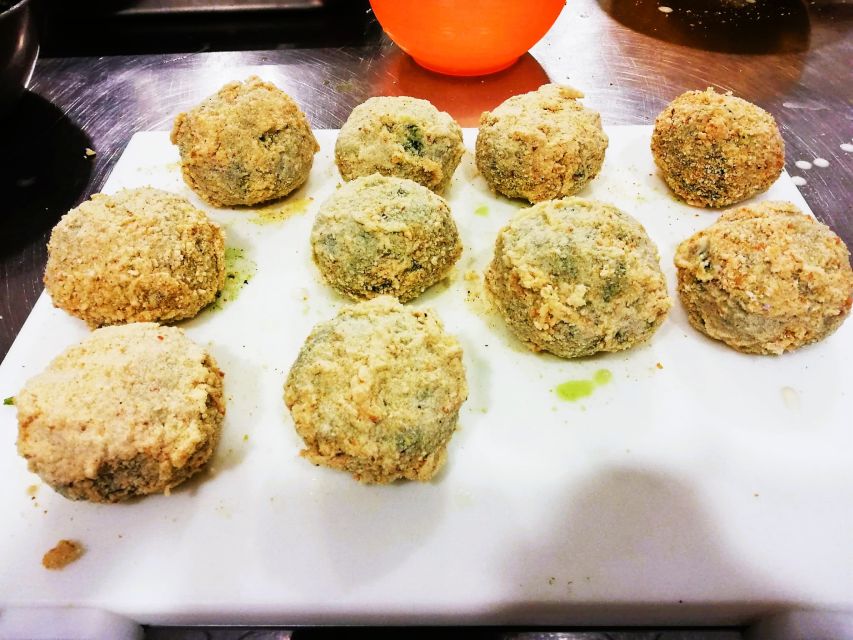
The class lasts three hours and is limited to six participants. That small size is one of its strongest practical features. You should have more direct contact with the chef than in a large group, and the work can be divided without turning every step into a long wait.
English and Italian are offered. An English-speaking instructor has led the class, and the teaching has been described as clear and friendly. If language matters to you, confirm the available language when selecting your time.
Starting times vary, so you need to check availability for your chosen date. The activity takes place at the laboratory rather than at a sightseeing site, so allow enough time to reach the coordinates in Catania before the class begins.
The experience is not designed for very young children. The restrictions exclude babies and children under four. Older children may still need to manage several hands-on cooking steps, so consider their interest in food preparation before booking.
Who will get the most from this class
I would choose this for anyone who wants a food activity with real participation rather than a simple tasting. It suits couples, friends, solo participants, and small family groups who enjoy learning a dish they can attempt again at home.
It is also a good choice on a hot day. The class takes place indoors, and one participant found it especially enjoyable as a break from Sicily’s heat. You still spend time cooking, but you are not walking between outdoor sights for three hours.
Vegetarians should find the class workable because vegetarian fillings are possible. Ask about the available fillings at the start, since the exact selection is not specified in advance.
I would be more cautious if you need a polished, fully detailed cookbook. The class itself appears stronger than the handout. I would also choose another activity if your main goal is a full Sicilian home meal, a market visit, or a lesson centered on pasta, pizza, or seafood. This experience has a clear focus: arancini and almond paste.
Value, flexibility, and the 4.8 rating
A price is not provided here, so I cannot judge the exact cost in euros. The value depends on what is included in your booking, but the package combines three hours of instruction, hands-on cooking, several tastings, wine, water, coffee, and a recipe booklet.
The small group is important when judging the price. You are not paying only for food. You are also paying for direct instruction, the chance to ask questions, and the ability to make the dishes yourself.
A rating of 4.8 from 20 ratings suggests a consistently strong experience, with the clearest praise focused on the chef, the friendly teaching, the quality of the food, and the personal group size. The lower mark relates to the incomplete recipe material, not to the cooking or meal itself.
You can cancel up to 24 hours before the activity for a full refund, and the reserve-now, pay-later option keeps your plans flexible. Those terms are useful in Catania, where weather, ferry schedules, and changes to a wider Sicily itinerary can affect your day.
Should you book the arancini class?
Book it if you want to learn a signature Catania food by making it yourself. The small groups, patient instruction, multiple fillings, and final tasting give the class more substance than a short street-food sample.
Go in with realistic expectations about the recipe booklet. Take notes, ask for quantities, and pay close attention to the rice. If you do that, you should leave with both a satisfying meal and a workable method for making arancini and almond paste at home.
I would recommend it most for food-focused visitors who have three spare hours in Catania and enjoy practical activities. If you prefer sightseeing, a restaurant meal, or a broader cooking menu, compare it with a pasta, pizza, or home-dining class instead.
FAQ
Where does the cooking class take place?
The class takes place at a cooking laboratory in Catania, Sicily. The meeting point is located at approximately 37.514843, 15.102241.
How long does the experience last?
The cooking class lasts three hours.
What will I learn to cook?
You will learn to prepare Sicilian arancini and almond paste. The lesson covers rice preparation, fillings, shaping, crunchy breading, and the almond paste method.
Can I make vegetarian arancini?
Yes. Vegetarian fillings are possible during the class.
Is food and drink included?
Yes. You taste several types of arancini and almond paste, and Sicilian-style wine, water, and coffee are provided.
What languages are available?
The activity is offered in English and Italian.
How many people are in each group?
The group is limited to six participants. Some sessions may have fewer people.
Will I receive the recipes afterward?
Yes. You receive a recipe booklet at the end of the lesson. Since some recipe details may be incomplete, take notes during the cooking demonstration, especially for the rice quantities and method.
New cooking classes around Italy
- Sestri Levante: Pesto & Cooking Classes, Wine Tasting★ 4.9 · 56 reviews
- Sardinia Cooking Class: Fresh Handmade Pasta★ 5.0 · 53 reviews
- San Gimignano: Tuscan Cooking Class★ 5.0 · 2 reviews
- San Gimignano: Truffle Cooking Class with Wine Tasting★ 5.0 · 5 reviews
- San Gimignano: “Hands in dough” Cooking Class with Lunch★ 5.0 · 6 reviews
- Salento: Authentic Cooking Experience with Fresh Pasta and Local Products★ 5.0 · 8 reviews
- ROME:Hands-On Lasagna & Marsala Tiramisu Cooking Experience”★ 5.0 · 3 reviews
- Rome: Private Wine Tour and Pasta Making Class in a Winery★ 5.0 · 6 reviews
Catania Cooking Classes, side by side.
Catania: Pistachio Ravioli, Pasta Home Cooking Class w/ Wine
Read our review →
Cooking lesson in Catania with lunch or dinner
Read our review →
Catania: Market Tour and Cooking Class with Chef Riccardo
Read our review →
Catania: Pasta & Tiramisu Cooking Class at a Local’s Home
Read our review →
Catania: Private Cooking Class at a Local’s Home
Read our review →
Cooking class, visit to the Catania market and light lunch
Read our review →This kitchen also appears in