
Review · INDONESIA
From Garden to Table: Indonesian Cooking Class in Yogyakarta
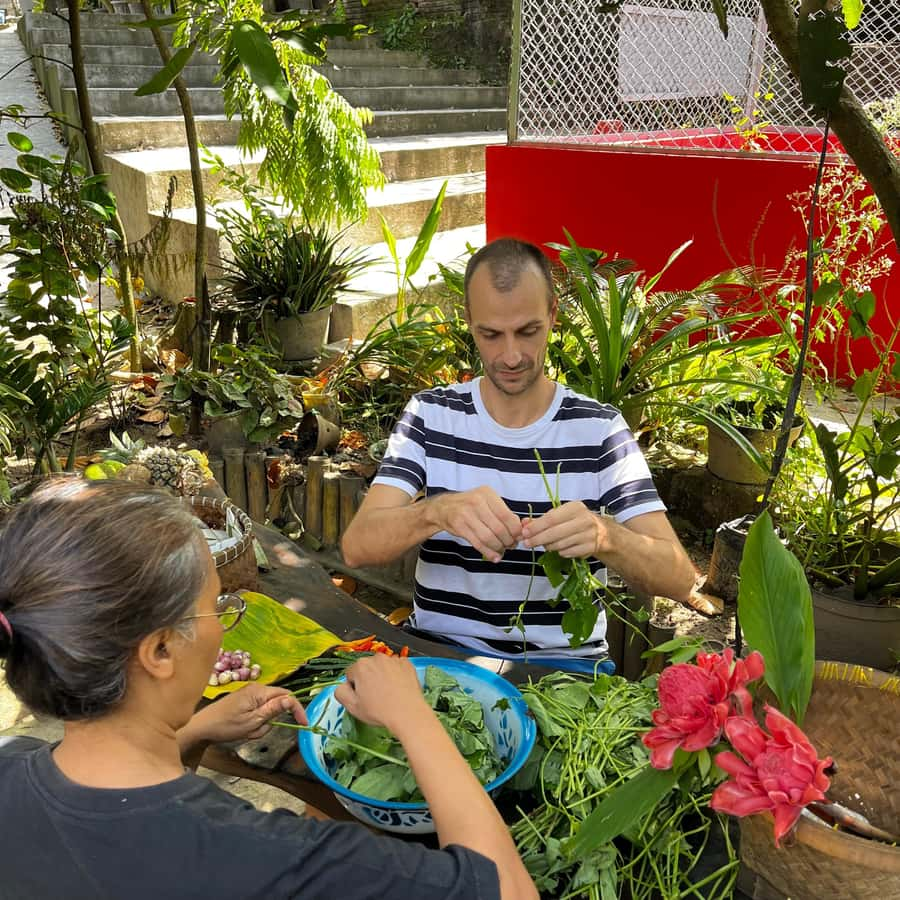
The best part of this Yogyakarta class happens before the cooking begins: you walk into Endah’s garden and pick herbs, vegetables, and flowers that will soon appear on your plate. You handle rhizomes, spices, and raw ingredients while learning how Javanese cooks build flavor.
I like the family welcome and the fact that you really work with the food rather than simply watch a demonstration. I also like the private format, which lets Endah adjust menus and spice levels. The main consideration is heat: the cooking area is not air-conditioned, so bring a small personal fan if you are sensitive to tropical temperatures.
Key points to know before booking
- Pick ingredients straight from the garden: Endah explains which plants are used in local dishes and lets you harvest what you need.
- Cook, do not just watch: You help prepare sambals, vegetables, tofu, tempeh, chicken, sauces, and fruit.
- Choose from several menus: Endah sends the full menu range after booking, with options that can be adjusted to your tastes.
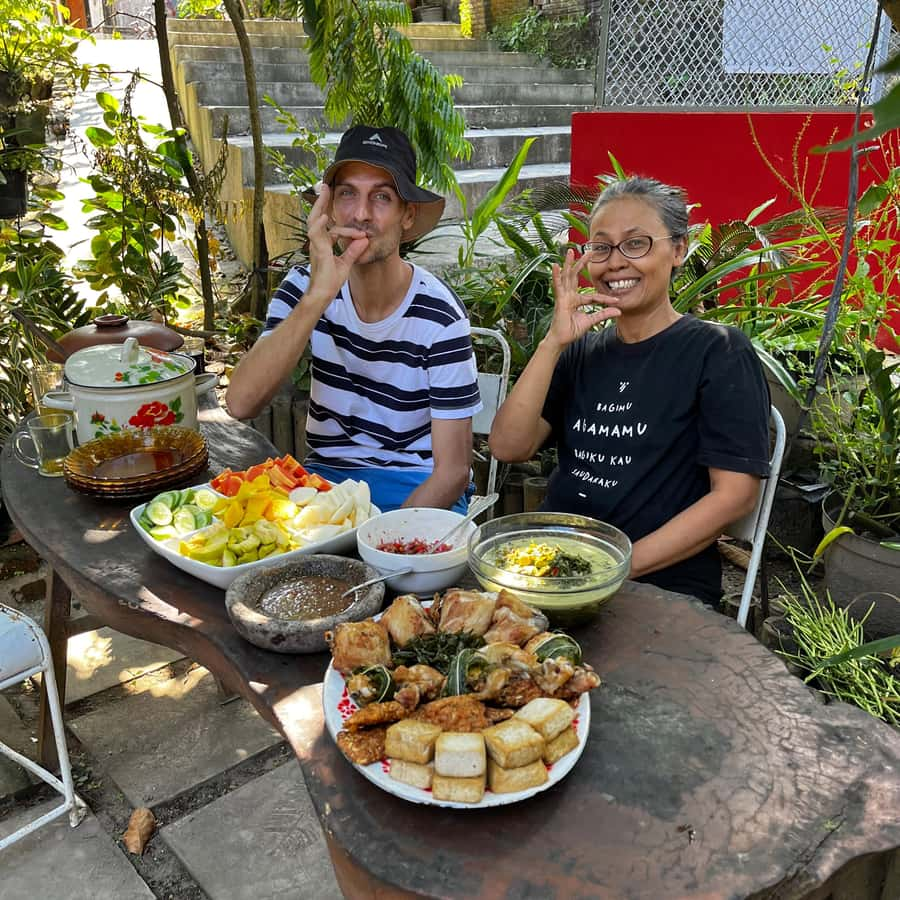
- Eat everything you prepare: Lunch, drinks, and a welcome beverage are included, and portions are generous.
- Meet an Indonesian family: The setting feels more like cooking in a home than attending a formal culinary school.
- Plan for a warm, relaxed setting: The class is private and wheelchair accessible, but the cooking space has no air-conditioning.
A garden-to-table start in Yogyakarta
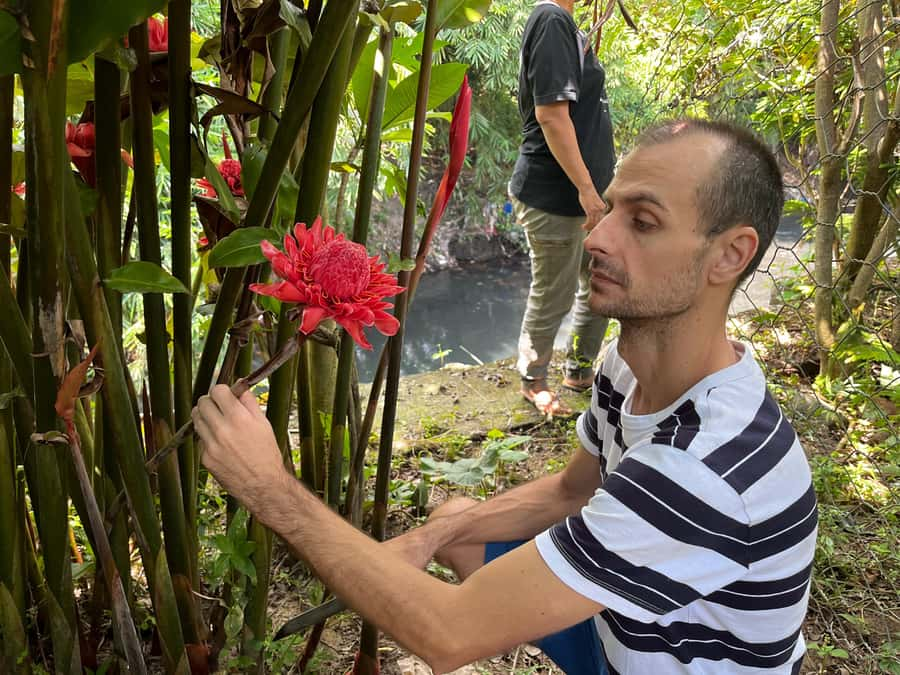
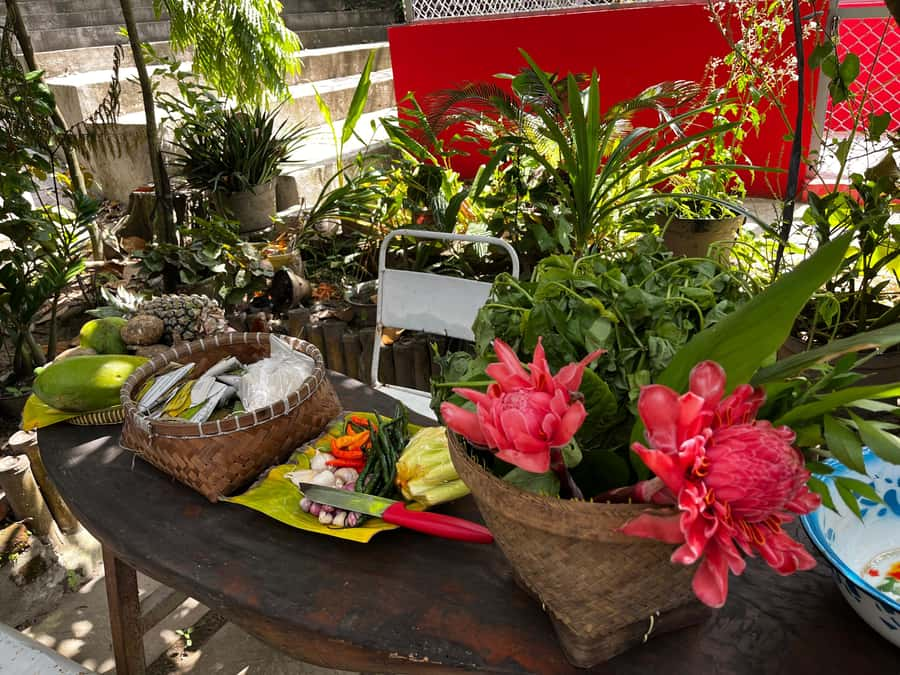
This is not a class that begins with a neat row of premeasured ingredients. You start outdoors, in Endah’s garden, learning to recognize the plants and herbs that give Indonesian food its character.
You might pick fresh leaves, herbs, vegetables, or flowers, with Endah explaining how each one is used. This simple step gives you a better sense of the connection between Indonesian food and everyday home gardening. Ingredients stop being anonymous items in a recipe and become things you can touch, smell, and identify.
The garden also sets the mood. You are not in a polished restaurant kitchen or a large teaching studio. You are in a quiet family setting, with cats nearby and the easy rhythm of a household. That makes the class feel personal, though it also means you should expect a relaxed pace rather than a highly choreographed professional demonstration.
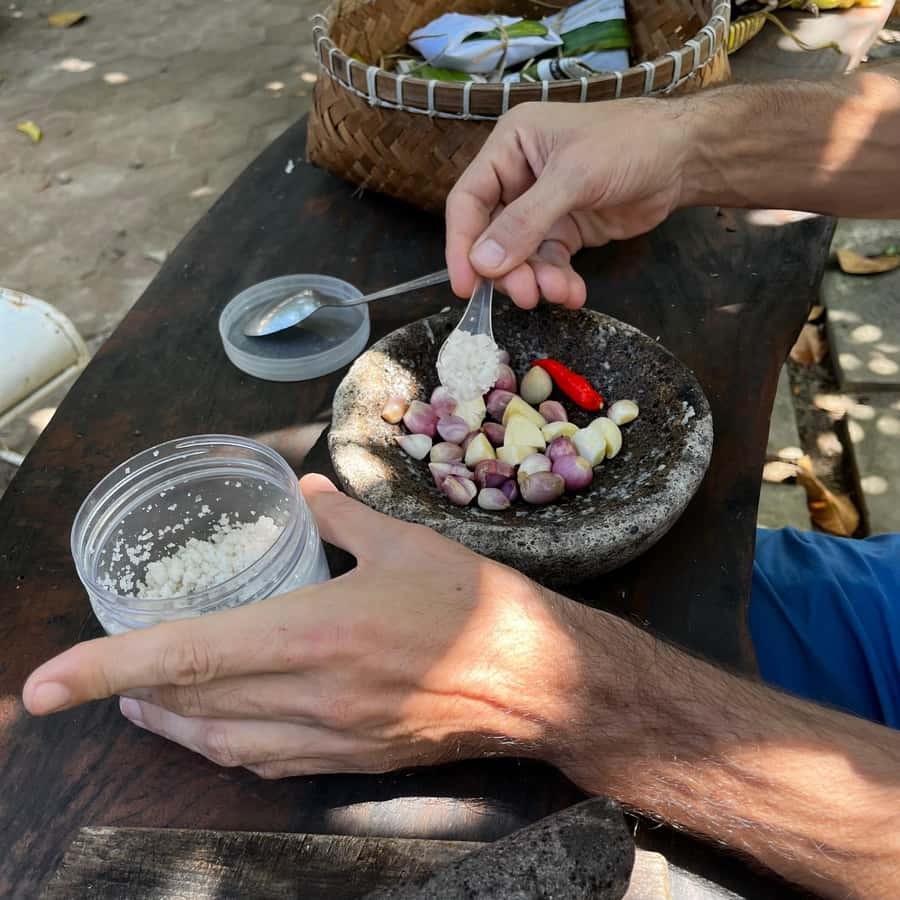
You will handle rhizomes and spices as well as fresh raw produce. For anyone who usually buys curry pastes or bottled sauces, this is one of the most useful parts of the class. You get a clearer idea of how Indonesian cooks combine earthy, sharp, sweet, hot, and fresh flavors.
More Farm Cooking Classes in Indonesia
- Ubud: Balinese Cooking Class at an Organic Farm
★ 5.0 · 1,786 reviews - Balinese Farm Cooking Class by Pemulan Bali
★ 5.0 · 410 reviews - From Ubud: Authentic Bali Farm Cooking School & Organic Farm
★ 5.0 · 122 reviews
Picking a menu and setting the spice level
After booking, Endah sends you the available menus so you can choose what you want to cook. The advertised selection includes six local dishes:
- Vegetable rujak with peanut sauce
- Fried chicken with curry leaves
- Fried or boiled tofu
- Tempeh
- Balinese lemongrass chili sauce
- Local fruit rujak
The menu is a good mix of textures and flavors. Vegetable rujak uses a peanut-based sauce, while fruit rujak gives you a fresher, sweeter finish. Tofu and tempeh bring two important Indonesian staples to the table, and the chicken provides a more substantial centerpiece.
The exact menu range is broader than this sample, with several menu choices available. Endah can also pay attention to your preferred spice level. That matters in Indonesia, where a dish described as mild may still be lively for some visitors. Tell her early if you want less heat, or if you are eager to try a hotter sambal.
The menu can be adjusted in a private class, particularly if you are traveling as a couple or small group. That flexibility is a real advantage over a fixed group lesson. If there is a dish you especially want to try, this is the time to raise it.
Five hours of hands-on preparation
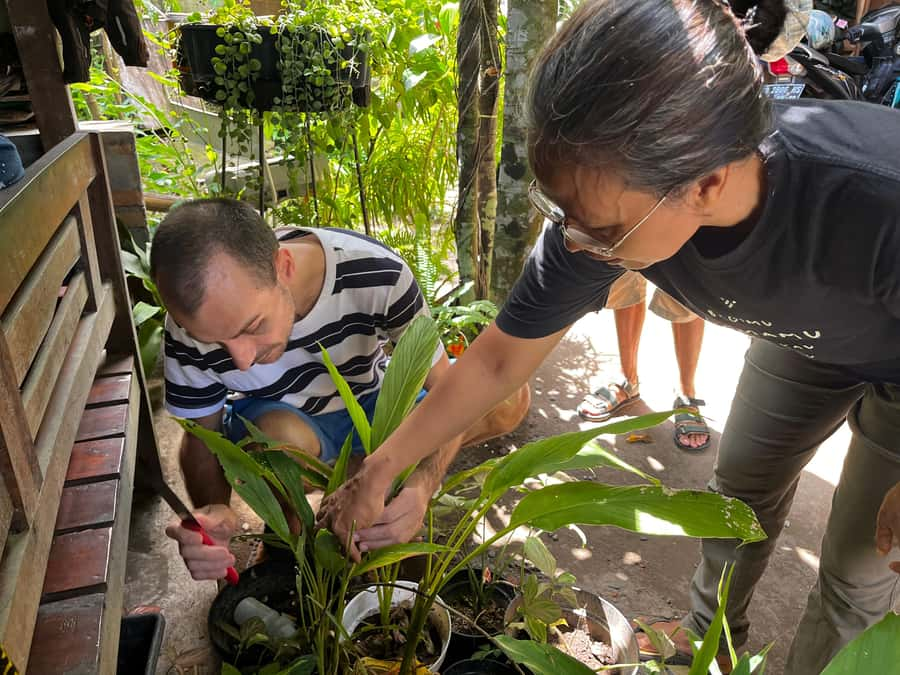
The cooking portion involves much more than stirring a pot at the end. You help prepare the ingredients, process spices, and make the sauces that define the meal.
Sambal is likely to receive plenty of attention. The Balinese lemongrass chili sauce, in particular, gives you a close look at how fresh aromatics and chili are turned into a sharp accompaniment. You may also prepare peanut sauce for the vegetable rujak and work with the ingredients used in the fruit dish.
You will also learn through the small tasks that home cooks repeat every day. Tofu and tempeh need different treatment, and chicken with curry leaves brings another set of steps and aromas. The class gives you a feel for the order of work, though the dishes may not always be prepared one at a time from start to finish.
That point is worth knowing. Since several dishes are prepared together, you may work on one sauce while another dish cooks. This is normal in a home kitchen, but it can make the process less clear if you want a formal lesson where every dish is completed in a strict sequence. Ask Endah to explain the role of each ingredient as you go, especially if you want to recreate the recipes later.
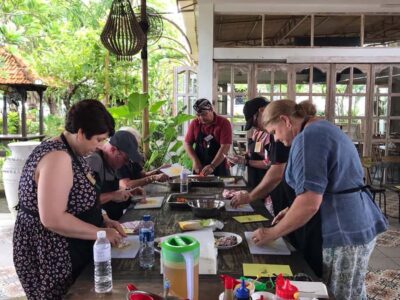
The strongest benefit is practical involvement. You are not simply sitting at a counter while a host cooks for you. You handle ingredients and take part in the meal’s preparation. The level of participation may vary by dish, but the class is designed around doing, not just observing.
What you actually eat for lunch
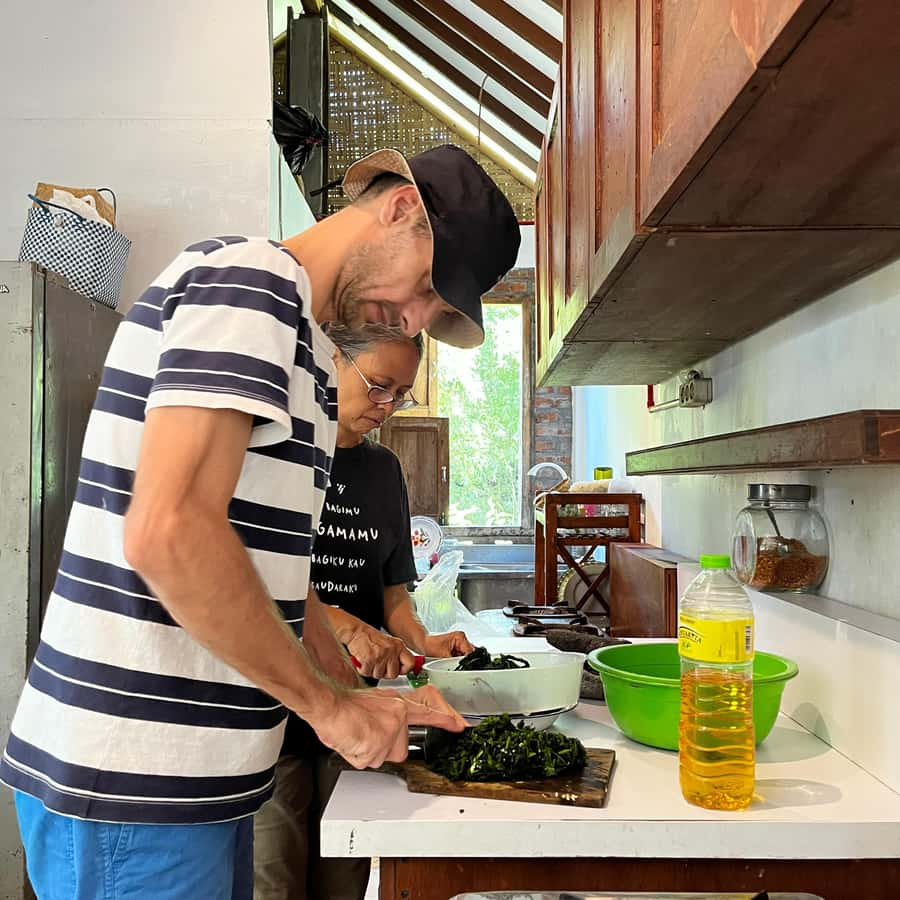
At the end, you sit down to eat the food you have prepared. Lunch and refreshing drinks are included, so you do not need to plan another meal immediately afterward.
Portions are generous. The menu includes several dishes, sauces, vegetables, protein, and fruit, and you may find there is more food than you can finish. That makes the $46 price easier to assess. You are paying for five hours of instruction and cultural exchange, but also for a full meal made with fresh ingredients and a private host.
The welcome drink sets the tone. You can choose tamarind turmeric, tamarind sugar, or lemongrass tea. These are not just generic refreshments. They introduce the sweet, sour, herbal, and earthy flavors that appear throughout Indonesian cooking.
The class may also include extra family hospitality, such as fresh juice, snacks, coffee, or garden bananas. These additions are not the core advertised inclusions, so I would treat them as a pleasant possibility rather than something to book for. The dependable promise is the welcome drink, the cooked meal, and the provided refreshments.
Recipes are sent after the class, giving you a chance to repeat the dishes at home. That adds lasting value, especially if you can find the required spices and fresh herbs where you live.
More Balinese Cooking Classes around Indonesia:
- Ubud Cooking Class Bali with Balinese Chef
★ 5.0 · 1,609 reviews - PRIVATE Authentic Balinese Cooking Class in Ubud at Putu’s Home
★ 5.0 · 644 reviews - Balinese Ubud cooking school (9 Dish Cooking and Market Tour)
★ 5.0 · 540 reviews - Ubud: Balinese Cooking Class and Market Tour
★ 4.8 · 531 reviews
The family atmosphere is part of the lesson
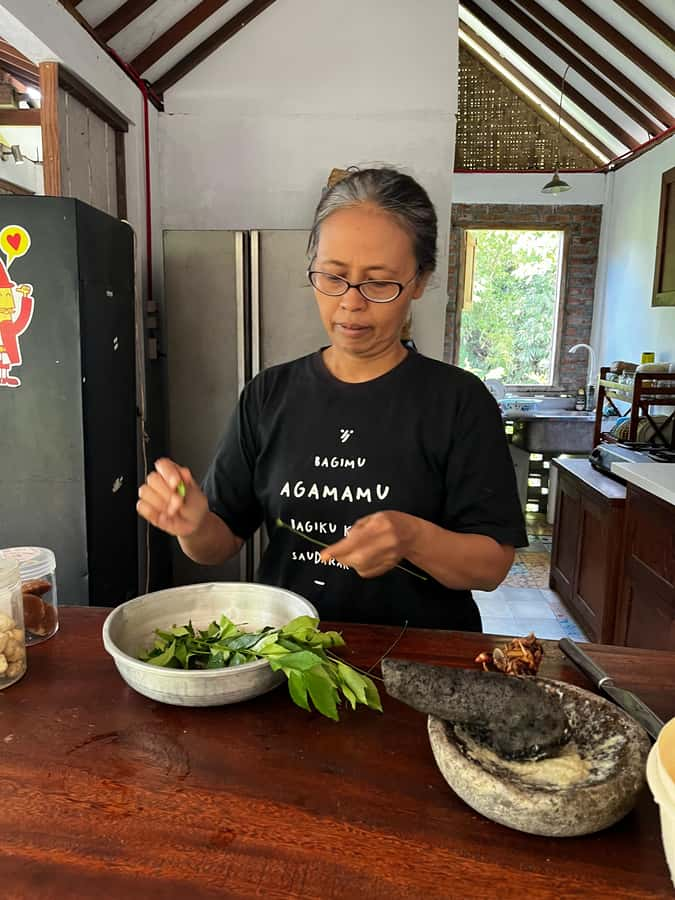
Endah and her family create a setting that feels informal and welcoming. You may meet family members, share conversation, and spend time in the same surroundings where the food is prepared. The result is less like a commercial activity and more like being invited into someone’s cooking routine.
That atmosphere is valuable because Indonesian cuisine is tied to hospitality. Food is not treated as a separate performance. It is prepared, shared, and discussed around the same table.
The class also brings people from different cultures together. Conversations about ingredients naturally lead to questions about daily life, customs, family meals, and local habits. You are not only learning a recipe. You are learning how food fits into Javanese life.
The cats add to the relaxed setting, though anyone with allergies should keep the informal home environment in mind. The experience is best suited to people who enjoy conversation and a little unpredictability. If you prefer a spotless studio, strict timing, and a quiet professional kitchen, this may feel too casual.
How the class compares with a standard cooking lesson
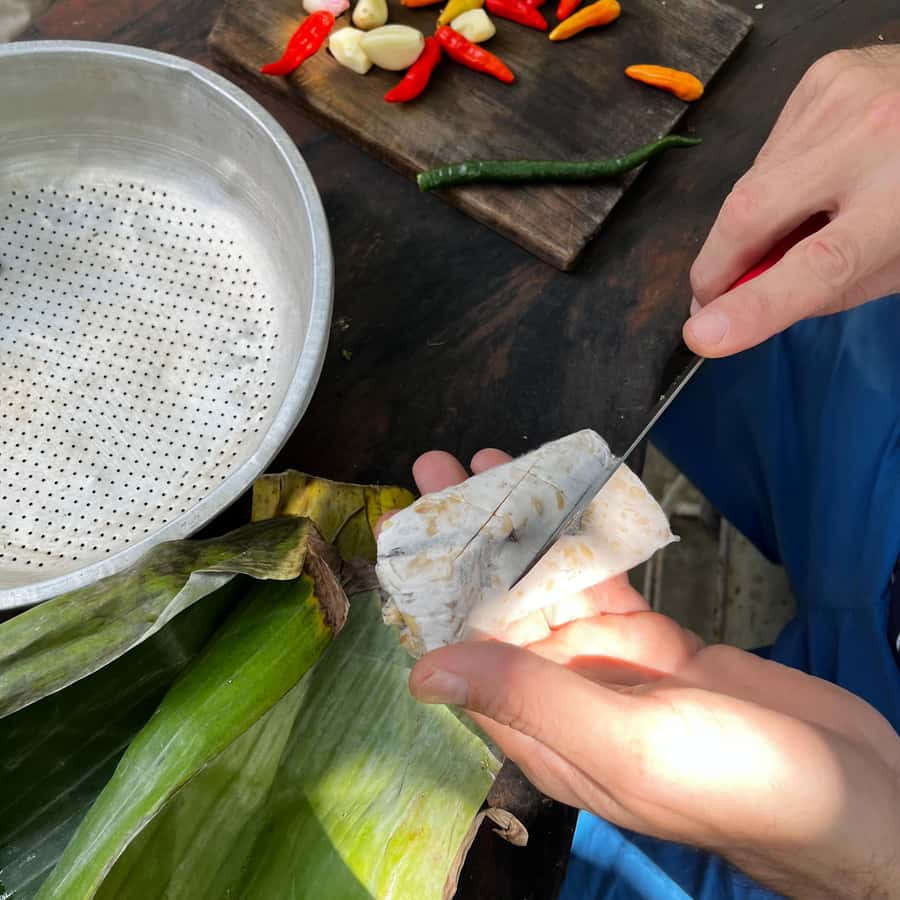
A typical cooking class may hand you a printed recipe, demonstrate each step, and give every participant an identical workstation. This experience is more personal and more connected to the household.
You begin by seeing where some ingredients come from. You then help prepare the food, talk with the host, and share the finished meal. The sequence can be less tidy than a studio lesson, but you gain a better sense of how ingredients are used in an actual Indonesian kitchen.
There is one tradeoff. Because multiple dishes are made during the same session, the path from ingredient to finished plate may not always be obvious. If you want to learn a precise restaurant-style workflow, you may need to ask questions and take your own notes.
For most home cooks, that is a fair exchange. The point is not to produce a flawless technical demonstration. It is to understand the ingredients, build confidence with Indonesian flavors, and enjoy a meal in a local family setting.
Price, timing, and practical comfort
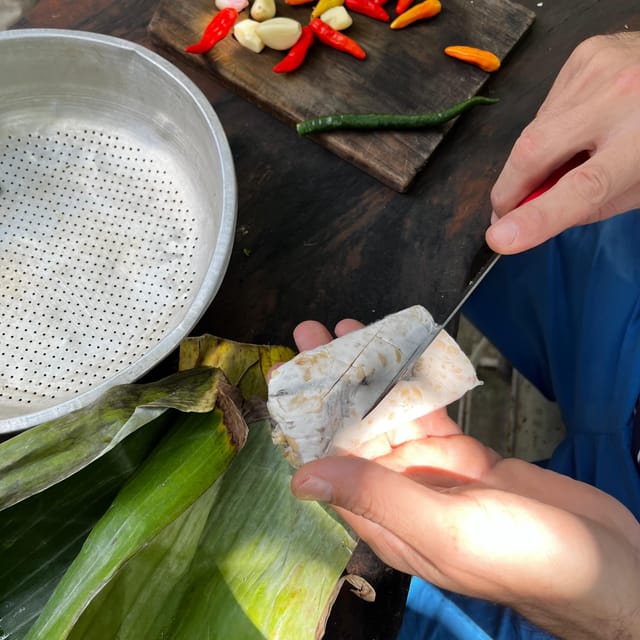
At $46 per person, this is not the cheapest way to eat lunch in Yogyakarta. Local food can cost far less, but the comparison is not really a cheap meal versus an expensive meal. The price covers five hours, a private English-language class, garden harvesting, ingredients, equipment, welcome drinks, lunch, and recipes afterward.
I consider that reasonable for couples, families with older children, and small groups who want a personal activity rather than a quick restaurant meal. The private format gives you more control over the menu and pace, which adds value if you have food preferences or a particular dish in mind.
The class runs for five hours, with starting times based on availability. That is a sizeable block of your day, so plan it as a main activity rather than a short stop between temple visits. The provider does not include a hotel shuttle, and personal expenses and tips are also separate.
Dress for warmth and practical work. The cooking area is not air-conditioned, and one person specifically found a personal fan useful. You may want to carry water, though drinks are provided, and wear clothing that is comfortable around food preparation.
The experience is wheelchair accessible. It is not suitable for children under five or people over 70, according to the activity conditions. Families should also consider the five-hour length and the warm cooking environment before booking for older children.
Who will enjoy this most
I would choose this class if you want to understand Indonesian food through ingredients and conversation, not just collect a few recipes.
It suits:
- Couples looking for a private activity in Yogyakarta
- Small groups with different spice preferences
- Home cooks who want recipes to repeat later
- People interested in gardens, local produce, and family life
- Anyone who prefers active participation to a demonstration
- Visitors who enjoy informal cultural exchange
It may be less suitable if you want air-conditioning, a polished culinary school setting, or a class that follows a strict dish-by-dish format. It is also not the right pick for very young children or anyone who finds five hours in a warm kitchen difficult.
Useful booking and day-of tips
Choose your menu carefully after receiving the options. If you already know you want to try a certain dish, tell Endah before the session so the menu can be arranged around your interests.
Ask questions during the garden walk. The plants are not just scenery, and learning their names and uses is one of the most distinctive parts of the experience.
If you are sensitive to chili, explain your limits clearly. Endah is attentive to spice levels, and a private class makes that conversation easy.
Bring a small fan if you dislike heat. The cooking space is not air-conditioned, and the five-hour duration means comfort matters.
Leave room in your schedule after lunch. The meal can be large, and the class is designed to be enjoyed at an unhurried family pace.
You can cancel up to 24 hours ahead for a full refund, and you can reserve now and pay later. Those terms are useful if your Yogyakarta plans are still shifting.
Should you book the Yogyakarta cooking class?
Book it if you want more than a quick Indonesian meal or a demonstration from a distance. The garden harvest, private format, family welcome, adjustable spice levels, and recipes afterward give this experience real substance.
The main compromises are the warm, non-air-conditioned kitchen and the occasionally loose flow between dishes. Still, for $46, you receive a five-hour activity, a substantial lunch, drinks, personal instruction, and a look at everyday Javanese cooking that a restaurant meal cannot provide.
I would especially recommend it to couples and small groups who value conversation, fresh ingredients, and a relaxed home setting. If that sounds like your kind of afternoon, Endah’s class is a strong choice in Yogyakarta.
FAQ
How long does the cooking class last?
The class lasts five hours. Check availability for the starting times offered on your chosen date.
What dishes will I prepare?
The advertised menu includes vegetable rujak with peanut sauce, fried chicken with curry leaves, fried or boiled tofu, tempeh, Balinese lemongrass chili sauce, and local fruit rujak. The full menu range is sent after booking.
Is lunch included?
Yes. You eat the dishes prepared during the class, and lunch is included in the price.
What drinks are provided?
You can choose a welcome drink of tamarind turmeric, tamarind sugar, or lemongrass tea. Refreshing drinks are also provided during the experience.
Is the class private?
Yes. The experience is offered for a private group.
Is the class taught in English?
Yes. The instructor language is English.
Is the activity wheelchair accessible?
Yes. The activity is wheelchair accessible. It is not suitable for children under five or people over 70.
New cooking classes around Indonesia
- Seminyak: Vegetarian Cooking Class★ 5.0 · 3 reviews
- Seminyak : cooking class traditional food bali★ 5.0 · 5 reviews
- Quad ride, waterfalls & aunthentic cooking class in munduk★ 4.9 · 53 reviews
- Pure Bali Village Experience Cooking & Jamu Class, Transfer★ 4.8 · 5 reviews
- Ubud: Organic Farm Harvest, Bali Cooking Class by Pemulan★ 4.8 · 12 reviews
- packages cooking class and romantic dinner in a local home★ 5.0 · 4 reviews
- Nusa Dua: Balinese Cooking Class with Market Tour★ 5.0 · 4 reviews
- Bali: Balinese Cooking Class and Market Tour★ 4.8 · 19 reviews
Indonesia Cooking Classes, side by side.
Ubud: Balinese Cooking Class at an Organic Farm
Read our review →
From Ubud: Authentic Cooking Class in a Local Village
Read our review →
Ubud: Cooking Class with Transfers and Optional Market Visit
Read our review →
PRIVATE Authentic Balinese Cooking Class in Ubud at Putu’s Home
Read our review →
Balinese Ubud cooking school (9 Dish Cooking and Market Tour)
Read our review →
This kitchen also appears in