
Review · MARRAKECH
Marrakesh: Moroccan Dishes Cooking Class with a Local Chef
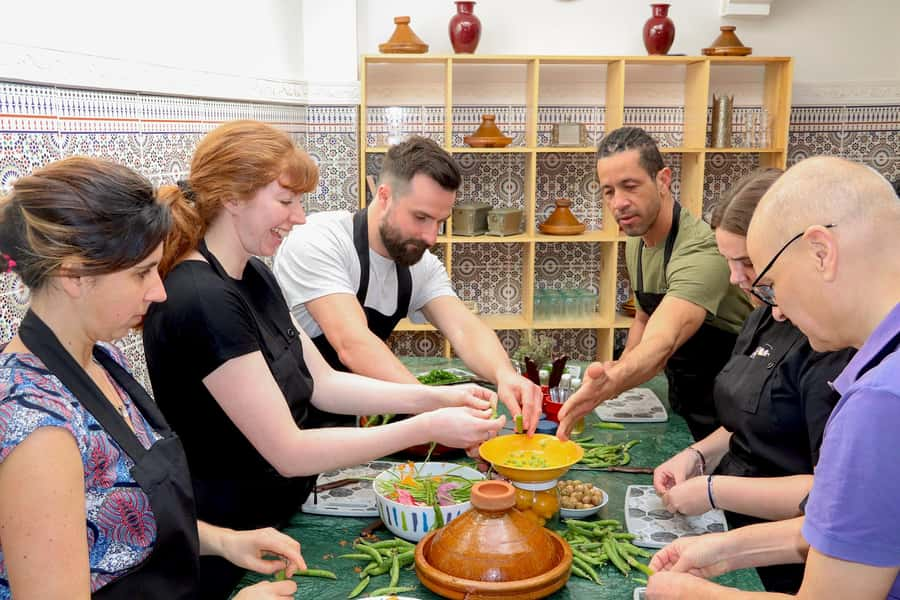
Moroccan cooking is built on patience, good spices, and food meant for sharing. This four-hour class puts you to work with Hassan and Ahmed, beginning at a local market near Bab Doukkala and ending with a table full of tagines and salads. You do not simply watch a chef cook one dish. You work as part of a team and learn several.
I especially like the market stop, where you help choose fresh ingredients, and the mint tea ceremony, which gives the class a cultural start instead of rushing straight to the chopping board. The main consideration is that the dishes are made collectively, so you will not prepare one complete recipe alone from start to finish.
Key points at a glance
- Market shopping near Bab Doukkala: Help select vegetables and supplies before heading to the cooking space.
- Four hours from meeting point to meal: Allow time for tea, preparation, cooking, conversation, and a shared feast.
- Several Moroccan dishes in one class: The usual spread includes tagines, kefta, shakshouka, and zaalouk.
- Small group format: The normal maximum is nine people, with ten possible for a private group or unexpected overbooking.
- Recipes sent afterward: You leave with instructions for recreating the dishes at home.
- Good dietary flexibility, with limits: Vegetarian, vegan, and gluten-free food can be prepared, but the class is not suitable for onion or garlic allergies.
Why this Marrakesh cooking class is worth your afternoon
At $47 per person, this is a good-value food experience if you want more than a restaurant meal. The price covers the guide, cooking class, food, bread, water, tea, apron, and recipes. You also get a short market visit and several hours of instruction.
The real value is the range of dishes. A standard cooking lesson might focus on one tagine. Here, the group may prepare four tagines and two side dishes, though the exact number depends on group size and the day’s plan. That means you learn how different spices work with meat, vegetables, tomatoes, preserved lemon, fruit, and aubergine.
You also eat everything prepared during the session. The meal is served buffet-style, so you can taste each dish rather than choosing only one plate. For a visitor trying to understand Moroccan food, that variety makes the class more useful than a single-recipe lesson.
The tone is informal. You are not racing a clock in a professional school kitchen. The cooking area is air-conditioned, and the format is designed to feel like joining a household meal. That can mean a relaxed and friendly session, but it also means the experience is social and shared rather than highly structured.
More Moroccan Cooking Classes around Marrakesh:
- Marrakech: Moroccan Cooking Class with Pickup
★ 4.6 · 1,862 reviews - Marrakech: Traditional Moroccan Cooking Class & Market Visit
★ 4.8 · 1,861 reviews - Marrakech: Moroccan Cooking Class with a Local Family
★ 4.9 · 668 reviews
Meeting at Pharmacie Bab Doukkala
Your starting point is Pharmacie Bab Doukkala. Use the exact pharmacy name in Google Maps, since meeting points around Marrakesh can be confusing and similar names may appear nearby.
Hotel pickup and drop-off are not included. You will need to reach the meeting point yourself, then follow the guide to the market and cooking location. A WhatsApp message with clear meeting instructions may be sent before the class, but you should still check the location carefully before leaving your accommodation.
The class needs at least two participants. If you are traveling alone, contact the provider before booking so they can confirm that another participant is scheduled for the same day.
The group normally has no more than nine people. Ten is possible in a private group or if an unexpected booking creates an overfill. That is still small enough for personal guidance, though the shared work becomes more noticeable as the group grows.
A 15-minute market lesson near Bab Doukkala
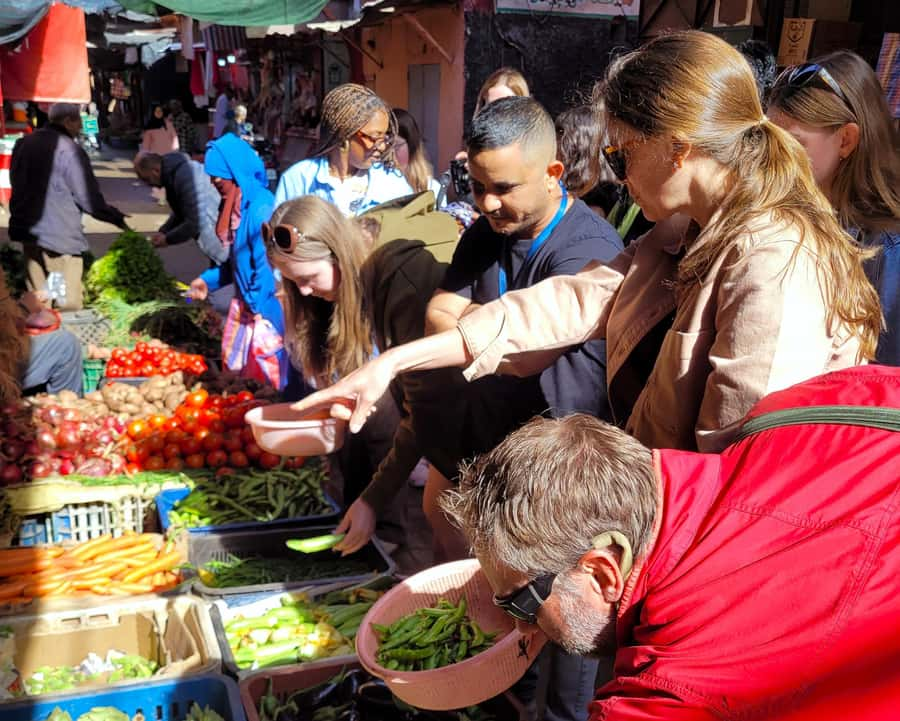
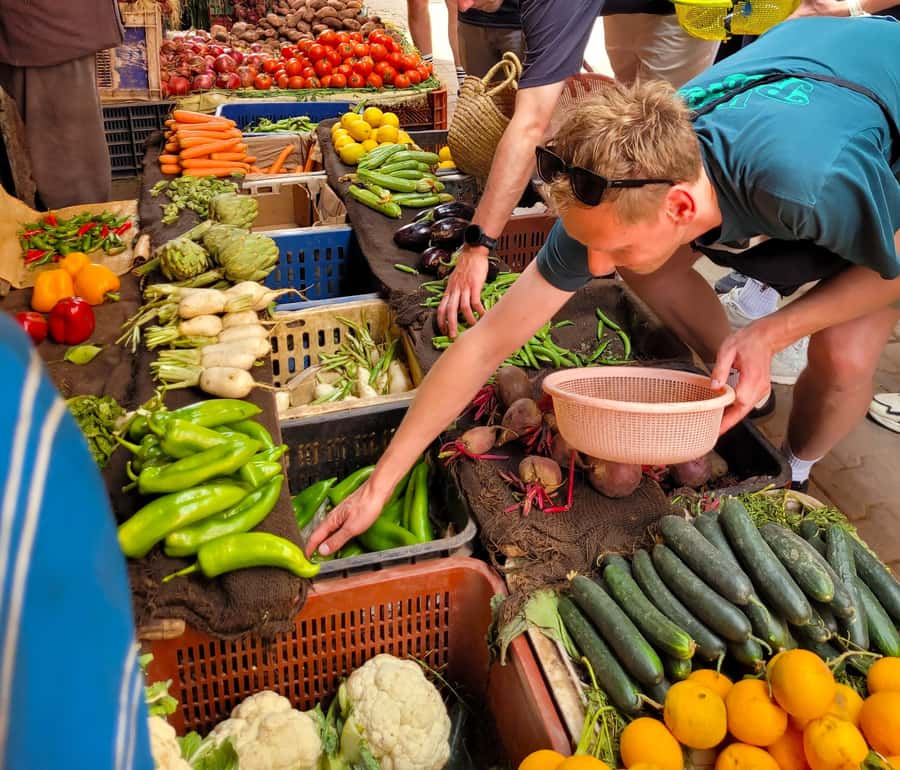
The market visit is short, about 15 minutes, but it gives the class a useful local beginning. Instead of receiving a prepared basket of ingredients, you see the supplies being selected and help choose some of the vegetables.
This matters because Moroccan cooking depends heavily on fresh produce and the right balance of spices. The market stop helps connect the food on your plate with the everyday act of shopping for it. You are not just handed a recipe and asked to follow instructions without context.
Do not expect a full food tour or a long explanation of every stall. The purpose is practical: collect what the group needs, learn a little about shopping locally, and move on to the kitchen. If you enjoy markets, you may wish the stop lasted longer, but the short visit keeps the focus on cooking.
The shared shopping also sets the tone for the rest of the activity. Everyone contributes a small part before the cooking begins, and that same group approach continues at the worktables.
The mint tea ceremony sets the mood
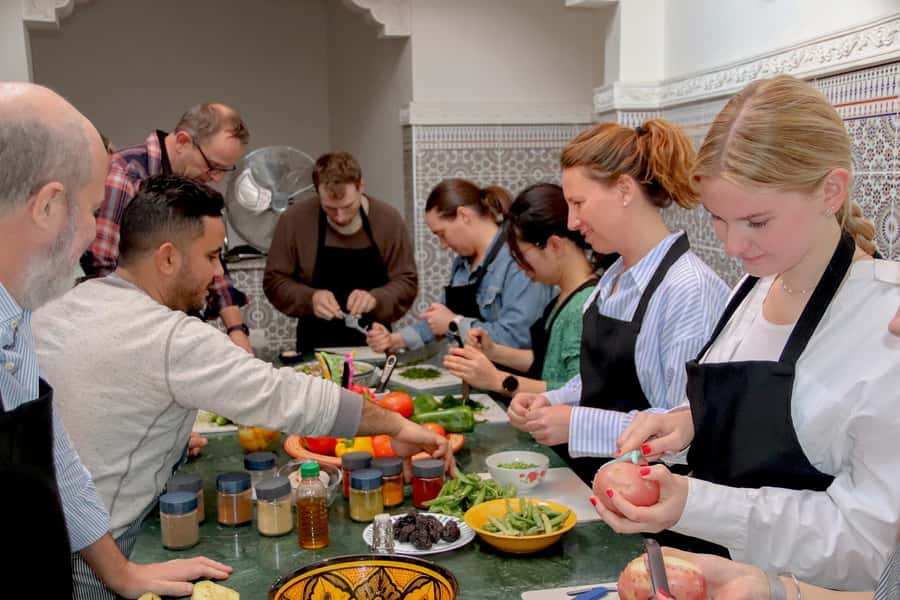
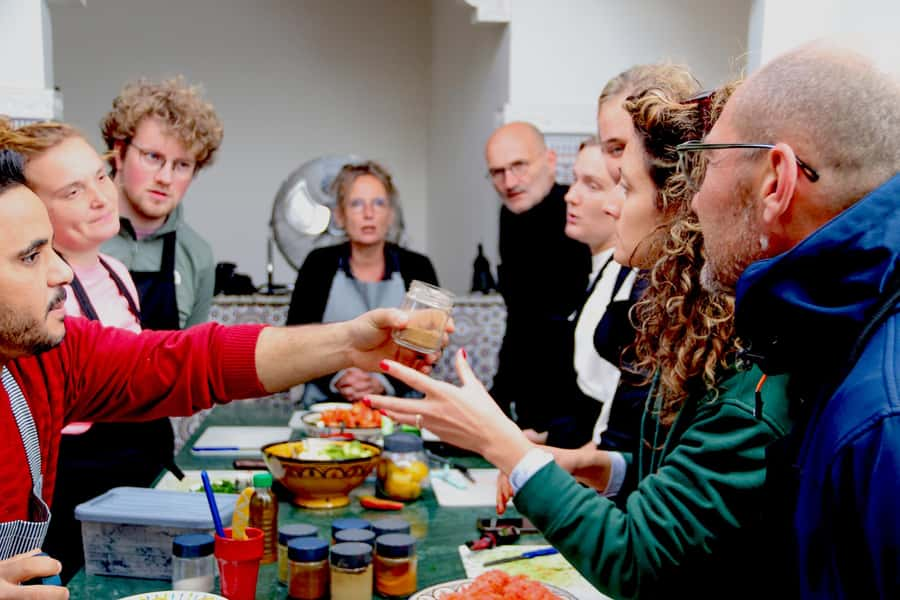
Back at the cooking space, the class begins with a 30-minute tea ceremony. You learn the traditional method for making Moroccan mint tea, then drink it while getting acquainted with the guides and the rest of the group.
This is one of the most distinctive parts of the afternoon. Mint tea is not treated as a quick welcome drink. It is presented as part of Moroccan hospitality and daily life, with conversation about customs and traditions woven into the demonstration.
Ahmed often leads the tea and cultural introduction, while Hassan takes charge of much of the cooking instruction. Both English and French are offered when the group includes speakers of both languages. If everyone speaks the same language, the class is held in that language only.
The bilingual setup is worth noting if you want a long, detailed lesson in just one language. When two languages are needed, explanations may be divided between them. Still, the format allows mixed groups to participate, and the instructors make a point of including everyone.
More cooking classes around Marrakesh:
- Marrakech: Moroccan Cuisine Cooking Class in Local Home
★ 4.8 · 508 reviews - Marrakech: Moroccan Cooking Workshop at La Maison Arabe
★ 5.0 · 446 reviews - Marrakech: Tajine Cooking Class in a Traditional Riad
★ 4.8 · 424 reviews - Marrakech: Moroccan Cooking Class with Market Visit and Meal
★ 4.9 · 347 reviews
Three hours of chopping, seasoning, and tagine work
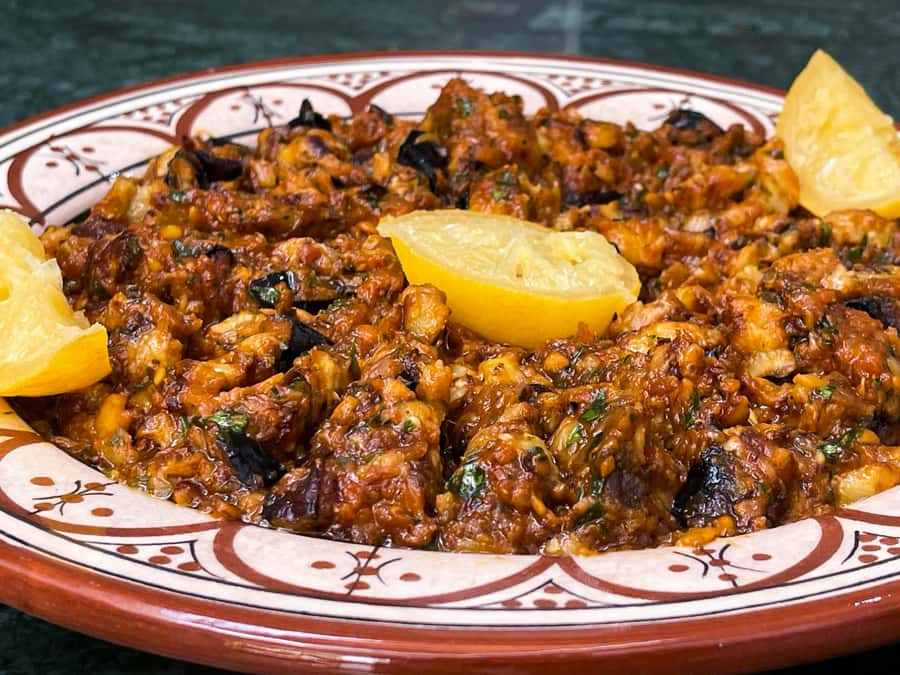
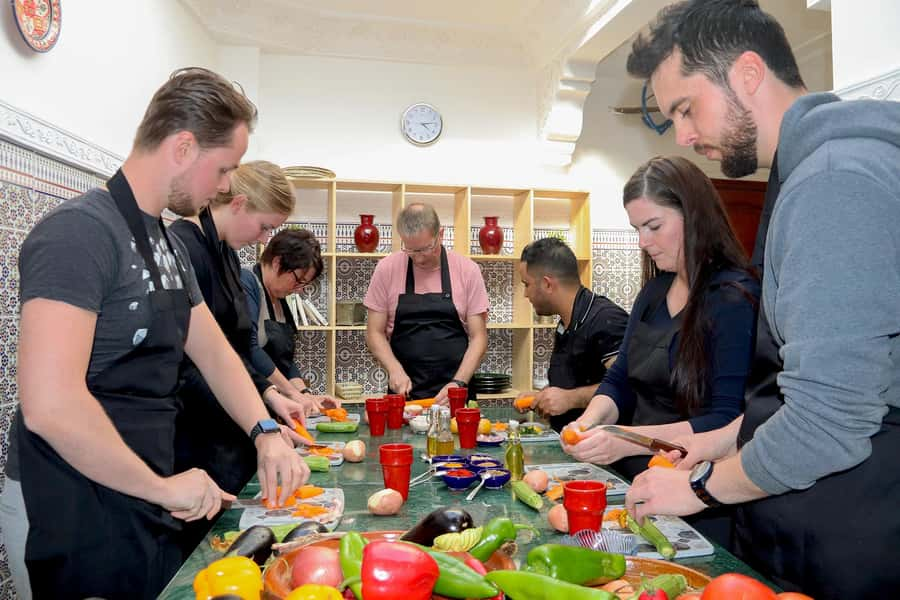
The cooking portion lasts about three hours and 15 minutes. You learn practical basics such as peeling, chopping, seasoning, and arranging food in tagines. The instruction is based on home cooking rather than restaurant theatrics.
A usual menu may include:
- Beef with prunes tagine
- Chicken with preserved lemon tagine
- Vegetable tagine
- Kefta, or meatballs with tomato sauce and eggs
- Shakshouka with sweet peppers
- Zaalouk, a fried or grilled aubergine salad
The exact menu can change with group size and dietary needs. One session may produce four tagines and two side dishes, while another may include fewer dishes. The stated aim is to give the group a broad lesson, and there should be enough participants to prepare the full range in many sessions.
You will not each make an entire tagine independently. The class works as one team, with tasks assigned across the group. That is a plus if you like meeting people and trying many recipes. It is less ideal if you want complete control over one dish or hope to practice every step alone.
The group method has a practical benefit. You see how several dishes are built at the same time, how spices are used in different ways, and how a Moroccan meal comes together as a collection of plates. You also learn how tagines are used for everyday cooking and special occasions.
The chef’s job is not just to demonstrate. Hassan is described as patient, good-humored, and attentive to making sure each person has a role. That matters in a class where some people may be confident cooks and others may rarely pick up a knife. You can expect guidance with basic preparation as well as explanations of Moroccan food customs.
The meal is the reward at the end
Once cooking is complete, the food is served buffet-style with bread. You can taste the different tagines and salads made by the group, rather than sitting down to a dish prepared in advance.
This ending gives the class a clear payoff. You have handled the ingredients, watched the cooking stages, and then eaten the finished food with the people who helped prepare it. It is also a useful way to compare the dishes. The sweet and savory combination of prunes, the brightness of preserved lemon, the tomato and egg base of kefta, and the smoky aubergine salad each show a different side of Moroccan cooking.
Water and tea are included. Additional drinks are not included, so do not assume that anything beyond those beverages will be provided.
The food is intended to be plentiful enough for everyone to share. Still, the exact amount and selection depend on the group and menu. If you have a strict dietary need, contact the provider before booking rather than relying on an informal adjustment during class.
Dietary needs, children, and comfort
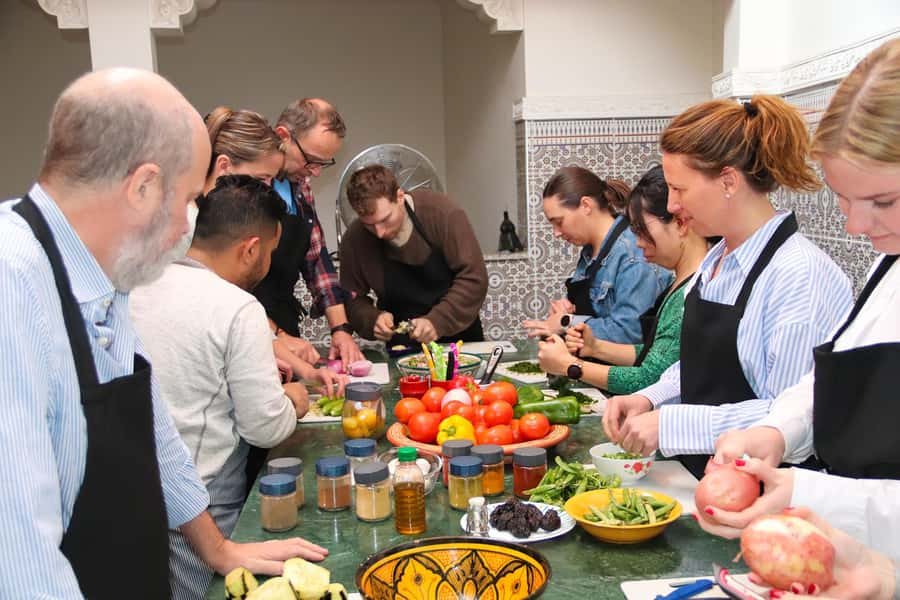
The class can accommodate vegan, vegetarian, and gluten-free food. It is not suitable for people with onion or garlic allergies, so those allergies should be treated as a firm limitation.
Children aged six and older are allowed. The group format can work well for families because children receive a role in preparing the food, but the class remains four hours long. Children under six are not accepted.
The cooking area has air conditioning. One practical note is that the room can feel cool, particularly in colder weather, so a light sweater is sensible. The class is not suitable for wheelchair users or people with back problems. You will also be standing and working around a kitchen for much of the session, so comfortable clothing and shoes are wise.
Alcohol, drugs, pets, and nudity are not allowed. The class also operates during Ramadan.
What you take home besides a full stomach
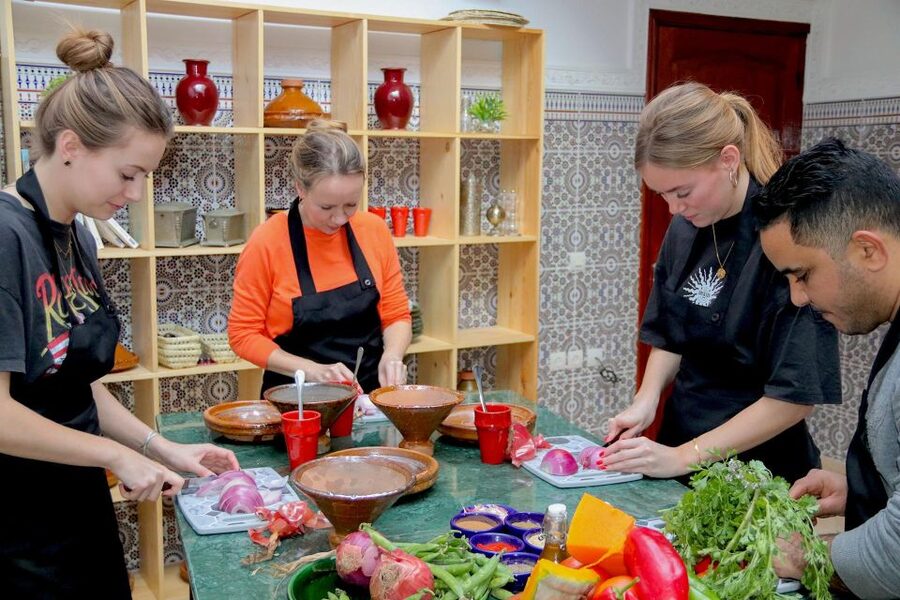
The strongest souvenir is the set of recipes. A link to the recipes is sent after the workshop, giving you a way to repeat the tagines and side dishes at home. This is more useful than a printed card with one simplified recipe because you can refer back to the wider selection from the class.
You also leave with a better sense of how Moroccan dishes are assembled. The lesson covers spice combinations, preparation methods, tagine use, tea making, and the role of shared cooking. You may still need to adjust quantities for your own kitchen, especially if you do not own a tagine, but the recipes give you a practical starting point.
Some people choose to buy spices from the workshop at the end. This is optional and not included in the $47 price. It can be a convenient way to continue the cooking at home, though you should treat it as an extra purchase rather than part of the class.
The hands-on format is especially useful for anyone who wants to cook Moroccan food after returning home. Watching a demonstration can show you what to do, but peeling, chopping, stirring, and seasoning help you remember the process.
Who should book this class
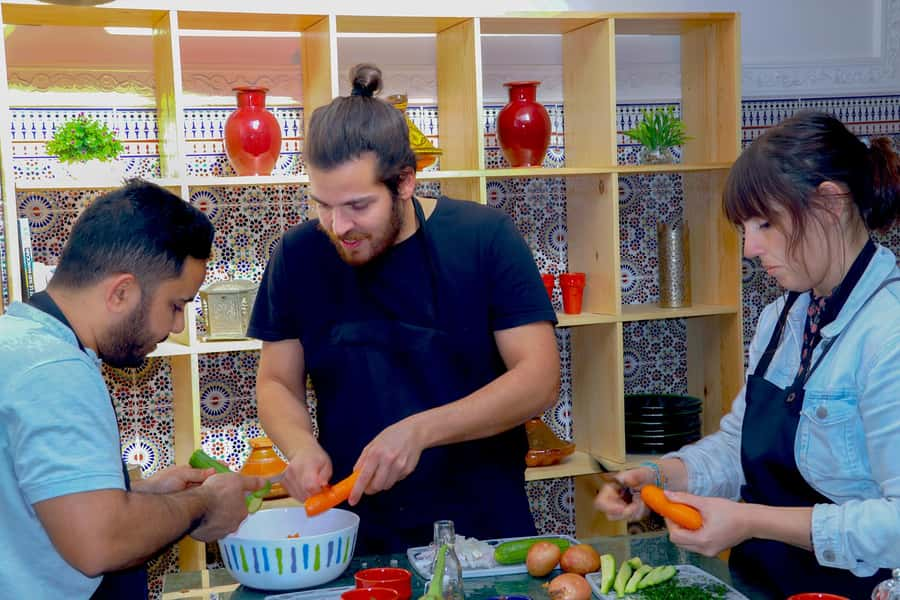
I would choose this for food-focused visitors, first-time visitors to Marrakesh, couples, families with children over six, and solo visitors who are comfortable joining a small group. It is also a good choice early in your stay because it gives you a useful guide to Moroccan ingredients and dishes before you order more tagines in restaurants.
It suits curious cooks more than people looking for a polished chef demonstration. You will be part of the work, and the shared tasks are central to the experience.
It may not suit you if you need a private lesson, cannot eat onion or garlic, use a wheelchair, or have back problems. It is also not the right pick if you want to spend the whole afternoon touring markets. The market visit is brief, with most of the time devoted to cooking and eating.
The class is bilingual when needed, but you should confirm your language preference if that matters to you. English and French are the available languages.
Should you book the Marrakesh cooking class?
Book it if you want a friendly, hands-on introduction to Moroccan food and like the idea of making a full meal with other people. The combination of market shopping, mint tea, several dishes, cultural discussion, and a shared dinner gives you more substance than a basic cooking demonstration.
At $47, the inclusion of food, drinks, apron, instruction, and recipes makes the price fair. The main tradeoff is that you share the cooking rather than making one dish alone, and the menu can vary.
For the best fit, book this when you have four hours free, check the meeting point carefully, wear comfortable clothes, and bring a sweater if the weather is cool. If those details work for you, Hassan and Ahmed offer a useful way to taste Marrakesh through the food people cook at home.
FAQ
How long does the cooking class last?
The full activity lasts four hours, from meeting at the pharmacy through the market visit, tea ceremony, cooking, and meal.
Where is the meeting point?
Meet at Pharmacie Bab Doukkala in Marrakesh. Search for the exact pharmacy name in Google Maps.
Is hotel pickup included?
No. Hotel pickup and drop-off are not included.
What languages are available?
The instructors speak English and French. The class is bilingual when participants speak different languages. If everyone speaks the same language, it is held in that language.
How many people can join?
The normal maximum is nine participants. Ten people are possible for a private group or an unexpected overbooking.
What dishes might I cook?
The usual dishes include beef with prunes tagine, chicken with preserved lemon tagine, vegetable tagine, kefta, shakshouka, and zaalouk. The menu can vary.
Is the food served during the class?
Yes. The dishes prepared by the group are served as a buffet at the end, with bread.
Can dietary restrictions be accommodated?
Vegan, vegetarian, and gluten-free dishes can be prepared. The class is not suitable for people with onion or garlic allergies.
Are children allowed?
Children aged six and older are allowed. Children under six are not accepted.
What is included in the price?
The price includes the guide, cooking class, meal and bread, water, tea, apron, and recipes sent after the workshop. Additional drinks and hotel transfers are not included.
New cooking classes around Marrakesh
- Moroccan Food Cooking Class with a Local Chef in Marrakech★ 4.7 · 90 reviews
- Marrakech: 3-Hour Open-Air Moroccan Cooking Course★ 4.9 · 74 reviews
- Moroccan cooking class in Marrakech with berber chef★ 5.0 · 16 reviews
- Edgy 8 Dish Private, Fusion Cooking Class, Menu Plan, Market★ 4.9 · 31 reviews
- Marrakesh: Private Cooking Class & Local Market Shopping★ 4.7 · 15 reviews
- Marrakech: Moroccan Cooking Class for vegetarians and vegan★ 4.9 · 156 reviews
- Marrakech: Moroccan Cooking Class with Amazing Local Chef!★ 4.9 · 100 reviews
- Marrakech: Moroccan Cooking Class with Local Chef★ 4.6 · 87 reviews
Marrakech Cooking Classes, side by side.
Marrakech: Moroccan Cooking Class with Pickup
Read our review →
Marrakech: Traditional Moroccan Cooking Class & Market Visit
Read our review →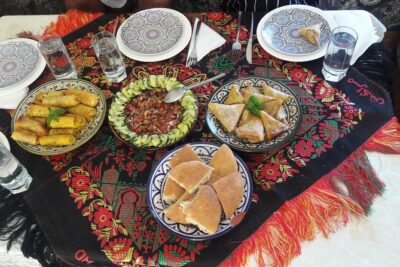
Moroccan Cooking Class & Marrakech Market Visit with Chef Khmisa
Read our review →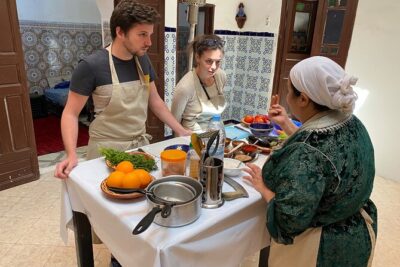
Half-Day Cooking Class with Local Chef Laila in Marrakech
Read our review →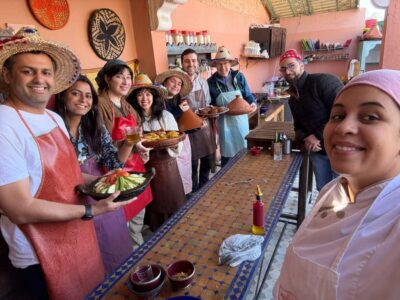
Marrakech: Moroccan Cooking Class with a Local Family
Read our review →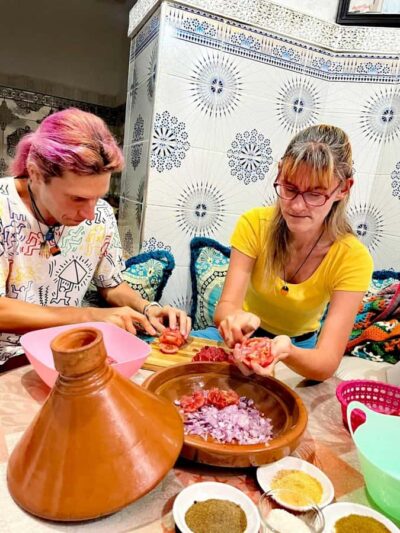
Marrakech: Moroccan Cuisine Cooking Class in Local Home
Read our review →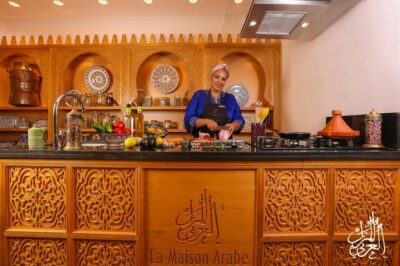
Marrakech: Moroccan Cooking Workshop at La Maison Arabe
Read our review →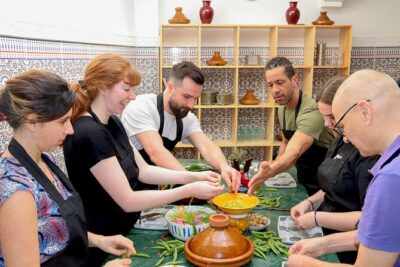
Marrakesh cooking class with chef Hassan – Local dishes
Read our review →This kitchen also appears in