Review · MARRAKECH
Marrakech: Traditional Moroccan Cooking Class & Market Visit
The best part of this Marrakech cooking class begins before you reach the kitchen. You walk through a local souk with your hosts, choose fresh ingredients, and then use them in a traditional meal at Khmisa’s intimate riad workshop. Kawtar and Khmisa guide the session, with local chefs helping you understand the spices, methods, and small tricks behind Moroccan food.
I like the market-to-table format, because it gives the meal a clear connection to daily life in Marrakech. I also like the practical recipes, which include tagines, salads, mint tea, and dessert you can attempt at home. The main consideration is that the class takes place in a shared group, and the Medina meeting point can be hard to pinpoint unless you receive clear directions to the mosque’s front entrance.
Key points
- Shop before you cook: Select fresh vegetables, chicken, herbs, and other ingredients in a local souk away from the most tourist-focused stalls.
- Learn the real tea ritual: Mint tea involves more than pouring hot water over mint and adding sugar.
- Cook a full Moroccan meal: The menu can include three to six dishes, with starters, tagines, and pastilla of milk for dessert.
- Expect active participation: You chop, season, stir, and help prepare the meal rather than simply watching a chef.
- Eat what you make: Lunch or dinner is included, and portions are substantial.
- Take the class home: Electronic recipes are sent afterward, and homemade spices may be available to buy.
From the Marrakech souk to the cooking table
At $40 per person, this is a strong-value food experience in Marrakech. You are not paying only for a demonstration. The fee includes the market walk, ingredients, local guide, chef, tea, the cooked meal, and electronic recipes afterward.
The experience starts with a discussion of food allergies and restrictions. That matters here because the menu may include chicken, vegetables, dairy, spices, and pastry. Share your needs before heading to the market so the team can plan the meal properly.
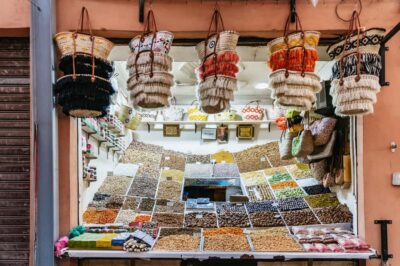
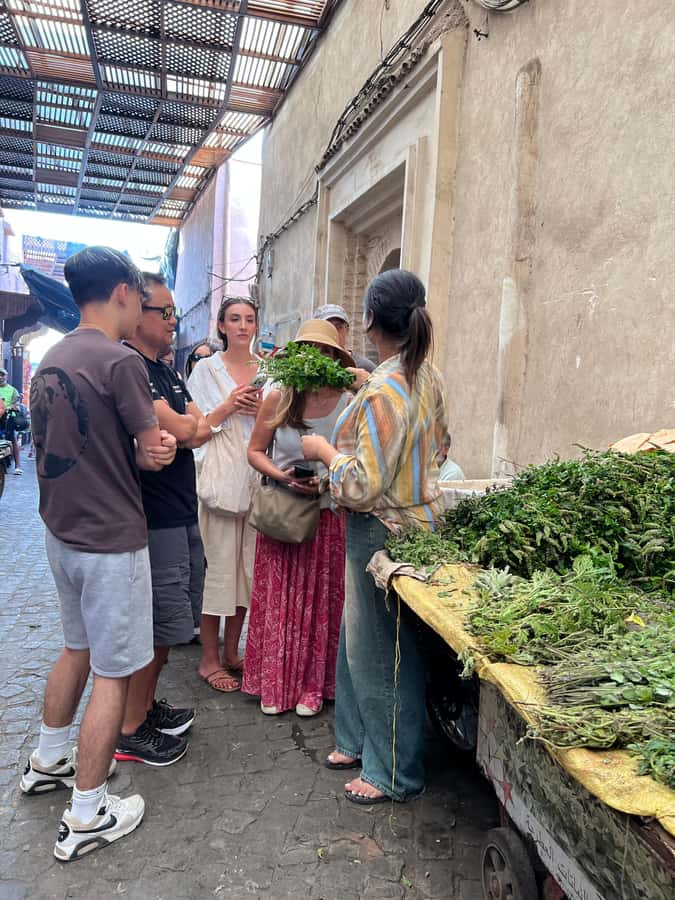
The market visit is short, but it gives the class a useful beginning. Instead of arriving at a kitchen with ingredients already measured, you walk through the souk and help select the produce. The stalls are filled with fresh products, spices, and familiar Moroccan market goods.
This is not designed as a full market tour. You will not spend hours studying every lane or shopping for souvenirs. The point is to see where the ingredients come from and understand how a Moroccan meal begins. I find that practical link more useful than a long explanation of spices in a classroom.
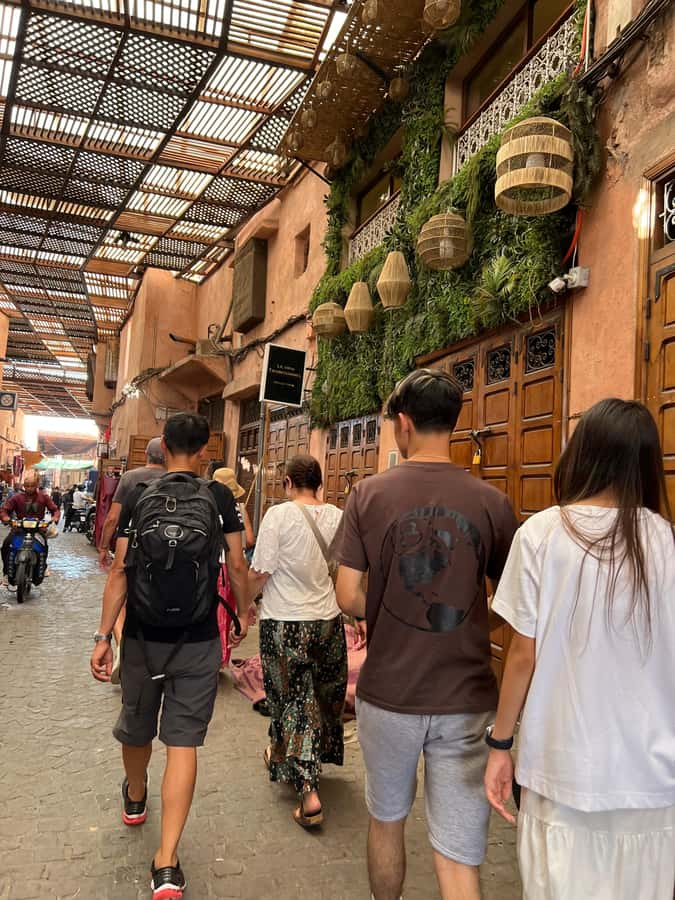
The Medina can be confusing, so pay attention to the meeting instructions. One participant found the mosque easy to identify but the exact meeting spot less clear because the landmark covered a large area. Ask for the front entrance if needed, especially if you are arriving independently.
More Cooking Classes with a Market Tour in Morocco
- Marrakech: Moroccan Cooking Class with Market Visit and Meal
★ 4.9 · 347 reviews - Edgy 8 Dish Private, Fusion Cooking Class, Menu Plan, Market
★ 4.9 · 31 reviews - Marrakesh: Private Cooking Class & Local Market Shopping
★ 4.7 · 15 reviews
A welcoming riad workshop in the Medina
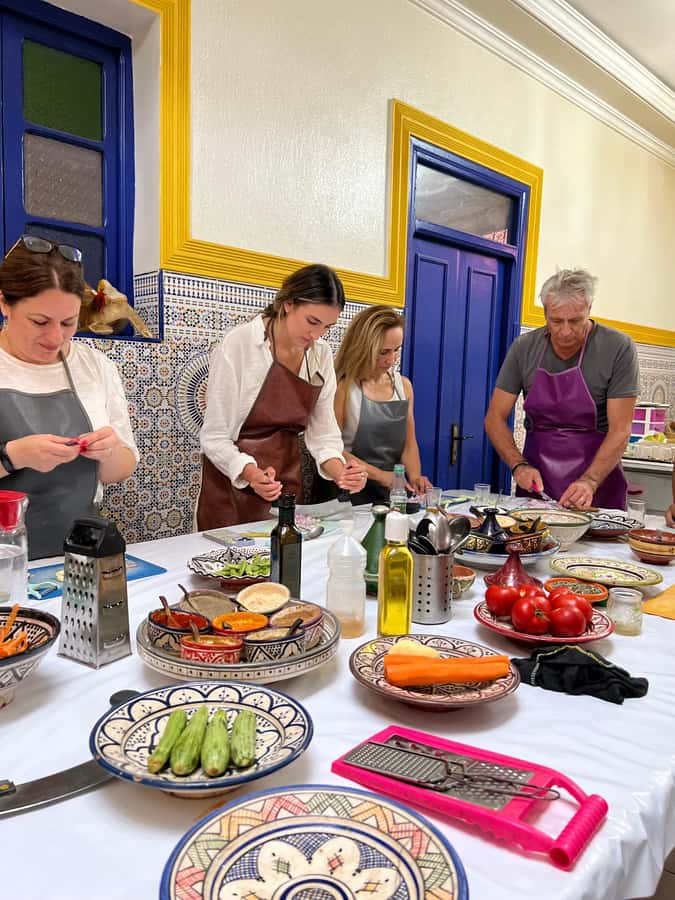
After the market, you walk to Khmisa’s workshop, an intimate riad in the heart of Marrakech’s Medina. The setting is part of the appeal. You are cooking in a Moroccan home-style space rather than a large commercial kitchen, and the class has a family feel.
Khmisa Workshops is run by local Moroccan women and chefs with experience in cooking, catering, restaurants, and hotel work in Morocco and abroad. Kawtar often helps lead the experience, while Khmisa and other local cooks assist with the preparation. Depending on the session, another guide such as Ilham may help translate.
The language mix is English, French, and Arabic. English-speaking visitors have found the class easy to follow, although the amount of explanation may vary with the group and translator. The cooking itself helps bridge any language gap. A demonstration, a bowl of vegetables, and a spice jar usually communicate quite well.
The group is generally limited to around 12 people, though it can vary. Some sessions are much smaller, with six people or fewer. A small group gives you more time at the chopping board and stove, while a larger group creates more of a shared dinner atmosphere.
You can attend alone, with a partner, or as part of a larger group. Private sessions are available on demand, but the standard experience is shared. That arrangement keeps the price reasonable and gives you a chance to meet people from different places.
Moroccan mint tea is the first lesson
The welcome tea is not just a drink before class. It is the first cooking lesson.
Your hosts explain the Moroccan mint tea ritual, including the steps involved in preparing and serving it. You will learn why the process is more involved than steeping mint in boiling water and adding sugar. Tea preparation is a social custom as well as a recipe, and it sets the tone for the rest of the class.
This is one of the most useful parts to watch closely because it is easy to copy at home. The class treats tea as a proper part of the meal, not a quick refreshment placed on the table.
The tea ceremony also gives the group time to settle in. You meet the cooks, learn what you will prepare, and get a first look at the riad. The atmosphere is friendly and informal, with the instructors using humor and patience to keep everyone involved.
Preparing three to six Moroccan dishes
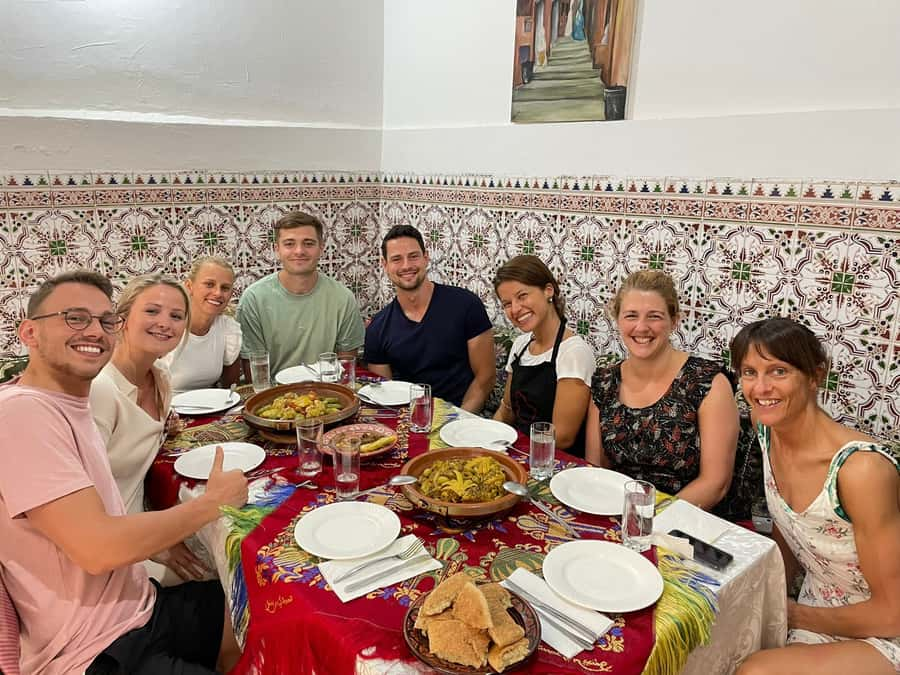
The menu changes, but the class typically includes three to six dishes. Expect a meal built around starters, a main course, and dessert. The exact combination can include several Moroccan salads, a vegetarian tagine, a chicken tagine, and pastilla of milk.
The starters are often vegetable-based, which gives you a useful introduction to Moroccan seasoning before the heavier dishes begin. You may prepare several salads with different textures and spices, then move to the tagines.
The tagine section is the heart of the class. You help prepare the ingredients, add spices, and follow the cooking process. Chicken with preserved lemon flavors is one possible dish, and vegetarian tagine is another. The team also demonstrates how small changes in seasoning affect the finished food.
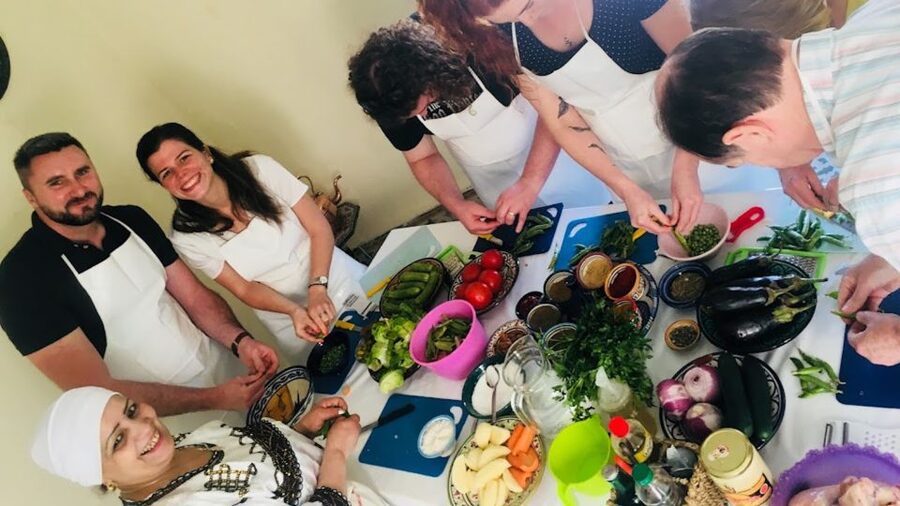
I like that the cooking is done as teamwork. You are not expected to produce an entire restaurant meal alone, but you are also not standing at the edge of the room taking notes. Participants take turns selecting produce, chopping vegetables, adding spices, and working with the tagines.
The chefs guide the pace closely. One instructor may tell you what to add while another adjusts the seasoning. This keeps the food on track and still allows you to take part. It is a good setup for beginners, families, and anyone who enjoys cooking but does not want a stressful technical lesson.
The class has also worked well for families with children and teenagers. Younger participants can help with simple preparation tasks and take part in the shared meal. You should still expect to remain involved and attentive around knives, hot pans, and cooking surfaces.
More Moroccan Cooking Classes around Marrakesh:
- Marrakech: Moroccan Cooking Class with Pickup
★ 4.6 · 1,862 reviews - Marrakesh: Moroccan Dishes Cooking Class with a Local Chef
★ 5.0 · 1,615 reviews - Marrakech: Moroccan Cooking Class with a Local Family
★ 4.9 · 668 reviews - Marrakech: Moroccan Cuisine Cooking Class in Local Home
★ 4.8 · 508 reviews
Eating together after the cooking
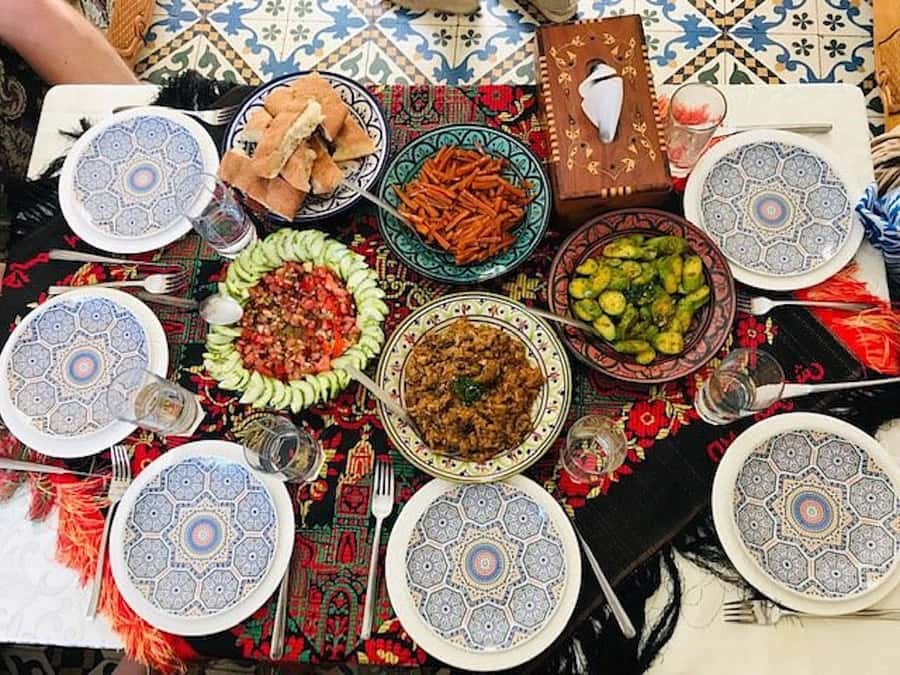
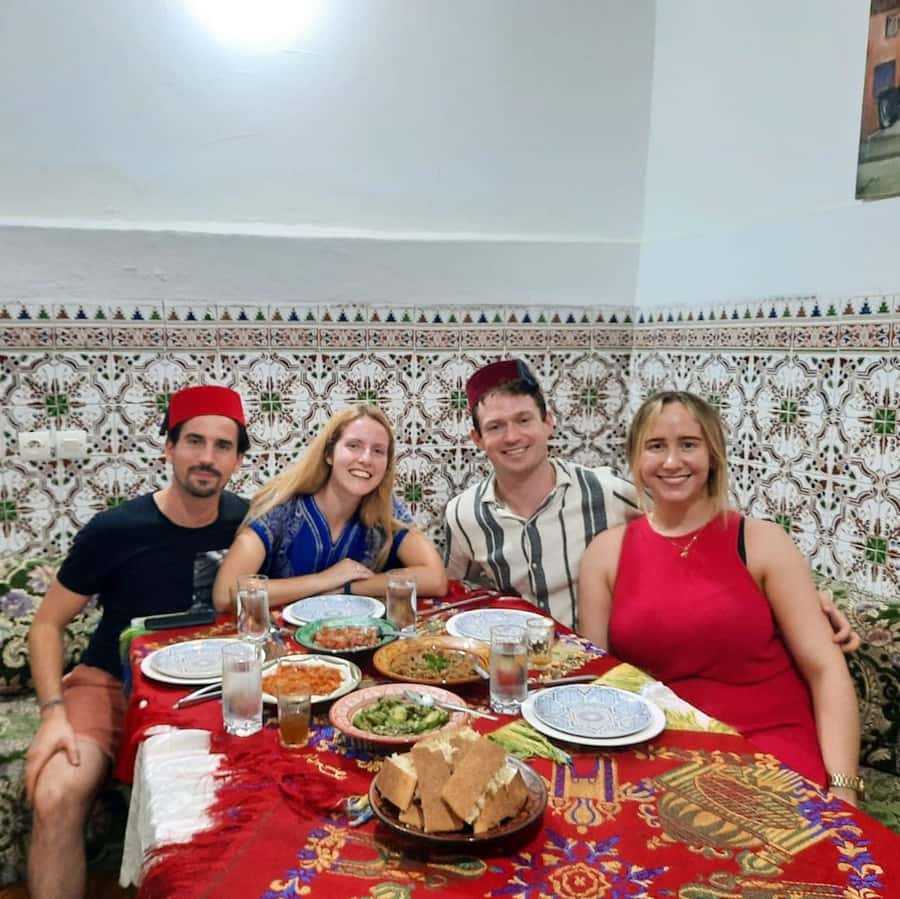
Once the dishes are ready, everyone sits down to eat. Lunch or dinner is included, and the portions are generous. You may end up with several starters, two tagines, dessert, and tea, so arrive ready for a substantial meal.
The shared table is an important part of the experience. You do not simply collect the food you prepared and leave. You eat with the group, compare the dishes, and have time to talk with the hosts.
The dessert may be pastilla of milk, a traditional Moroccan sweet with a delicate pastry element. It gives the meal a different finish from the savory tagines and makes the class feel like a complete Moroccan menu rather than a single-dish lesson.
The food is the strongest reason to book this activity, but the value comes from the full sequence. You shop, prepare, cook, and eat. Each stage explains the next one, and the final meal gives you a clear reward for the work.
If you have a limited appetite or several other food stops planned, keep that in mind. The meal is described as very filling, and the menu can contain more dishes than you might expect from a standard two-hour demonstration.
What you can realistically learn
This is a practical introduction, not professional culinary training. You will learn how Moroccan cooks use spices, how ingredients are prepared for tagines and salads, and how the mint tea ritual works.
The recipes are especially useful because they are sent electronically after the class. That makes it possible to recreate the dishes at home rather than relying on memory. The recipes are also said to be manageable outside Morocco, where you may need to find substitutes for certain ingredients.
You can ask questions while preparing the food, and the instructors explain the reasoning behind the dishes. The class is suitable for beginners because the chefs provide hands-on guidance and keep everyone moving through the steps.
The experience may be less useful for an advanced cook looking for precise professional technique, detailed knife training, or a highly specialized regional menu. The focus is on participation, cultural context, and a satisfying meal.
You may also be able to purchase homemade spices before leaving. This is a convenient way to continue cooking with flavors similar to those used in the workshop. Ask about availability during your session, since the supplied information does not promise a specific spice selection or quantity.
How the $40 price measures up
At $40, the class is priced well for Marrakech, especially when you count the meal. The fee includes the ingredients, the chef, the local guide, the market walk, tea, and recipes. You also receive an activity that takes you beyond the usual restaurant meal.
A typical cooking class can feel expensive if you only watch someone else prepare food. This one avoids that problem by involving you from the market onward. The meal you eat is part of the lesson, and the recipes give the experience value after your holiday.
The class also offers a personal setting at a lower cost than a private food experience. The tradeoff is a shared group and a menu that may not be tailored entirely to your preferences.
There is no hotel pickup or drop-off. You need to make your own way to the meeting point in the Medina, so allow extra time for finding it. Comfortable shoes are important for the market walk and Medina streets, and a hair tie is recommended for the cooking session.
You can reserve and pay later, which helps if your Marrakech plans are still shifting. Cancellation is allowed up to 24 hours before the activity for a full refund. The experience is not suitable for wheelchair users, and pets, smoking, alcohol, and drugs are not allowed.
Who should book this cooking class
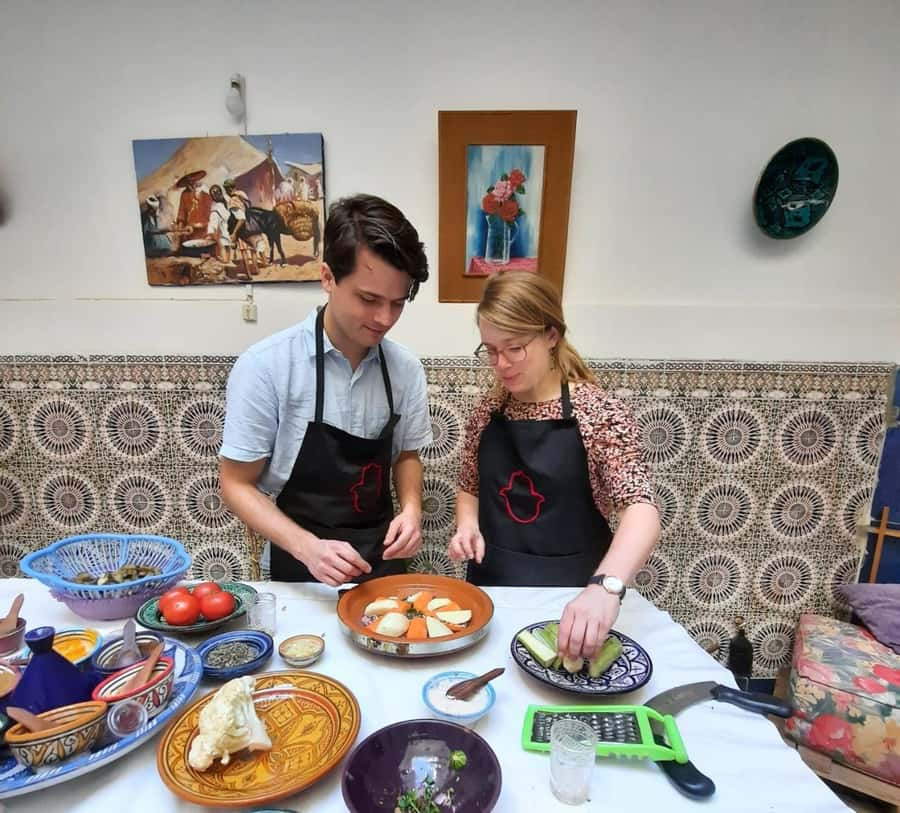
I would recommend it to anyone who wants food to be part of the cultural experience in Marrakech, especially first-time visitors who want a useful activity beyond sightseeing.
It suits solo visitors because the shared format makes it easy to meet other people. Couples and families also fit well, particularly if everyone wants to participate rather than watch.
Vegetarians should ask about the menu when discussing restrictions. Sessions have included vegetarian starters and a vegetarian tagine, but the menu can vary, so it is wise to state your needs before shopping.
This is a good choice for people who want recipes they can make at home. If you are mainly interested in eating without cooking, a food tour or restaurant meal may be more relaxing. Here, the chopping and preparation are central to the experience.
The setting may not suit someone who needs step-free access or a fully private class. The Medina location, shared group, and active kitchen format require some flexibility.
Practical tips for a smoother visit
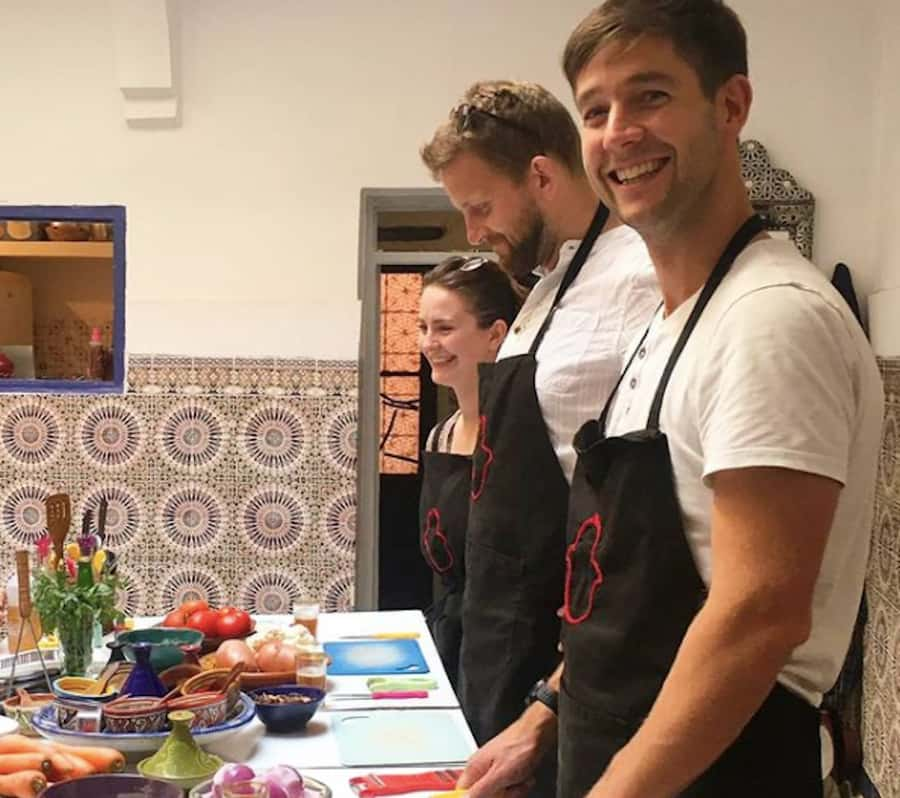
Wear shoes that are comfortable for walking through the souk and Medina. Choose clothing that allows you to work at a counter, and bring a hair tie if you have long hair.
Give clear information about allergies and dietary restrictions before the market visit. The team can then take those needs into account when planning the meal.
Keep your phone ready for the recipes sent after the class, usually by email or another electronic message. If you want to remember the spice combinations or tea steps, ask permission before taking photographs in the workshop.
For the meeting point, do not rely on the name of the mosque alone. Confirm the exact entrance, since a large landmark can still leave you searching in the wrong spot.
Allow enough time for the full activity. Some sessions have lasted about two and a half hours, although the exact pace can change with group size, menu, and market stop. Do not schedule a tight appointment immediately afterward.
Should you book the Khmisa cooking workshop?
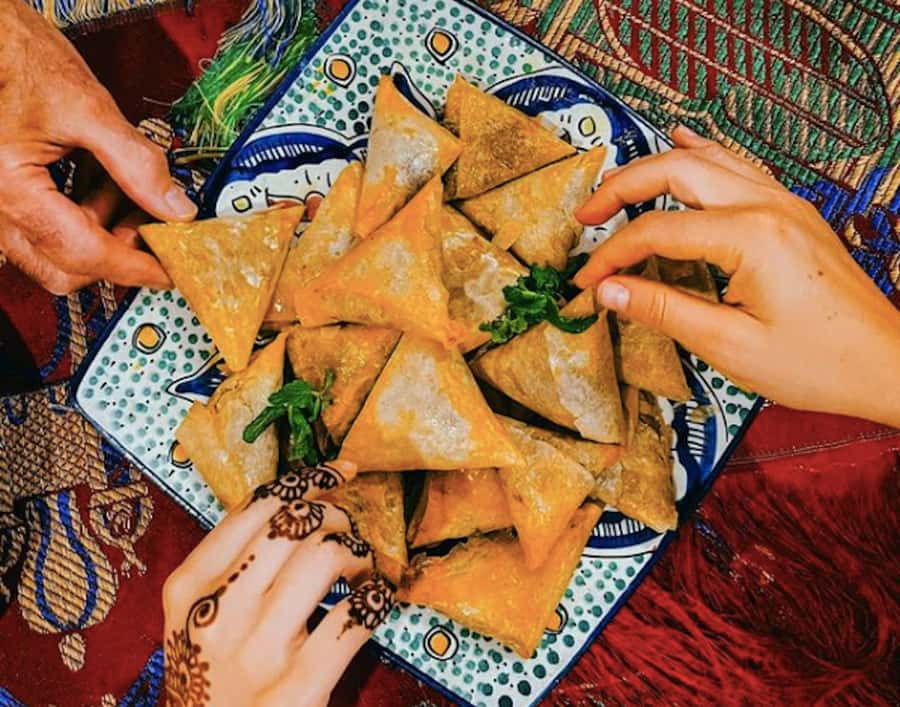
Book it if you want a hands-on Moroccan food experience with a local market visit, a home-style riad setting, and a full meal at the end. The market shopping and mint tea ritual make it more useful than a class that begins with ingredients already laid out.
The $40 price is fair because it covers the food, instruction, market walk, and recipes. The main compromises are the shared group, no hotel transport, possible confusion at the meeting point, and limited wheelchair access.
For a first visit to Marrakech, this is one of the better ways to connect a meal with local daily life. Come hungry, wear comfortable shoes, clarify the meeting point, and tell the hosts about dietary needs early.
FAQ
How much does the Marrakech cooking class cost?
The experience costs $40 per person.
What does the price include?
The price includes lunch or dinner, a local guide, a Moroccan chef, all ingredients, a short market walk, Moroccan tea, and electronic recipes.
Is hotel pickup included?
No. Hotel pickup and drop-off are not included, so you must reach the meeting point yourself.
Which languages are spoken?
The experience is offered in English, French, and Arabic.
How many people are in the group?
The group is listed as around 12 people, though the size can vary. Some sessions may be smaller.
Can I attend alone?
Yes. You can come individually or with a group. The regular class is shared with other participants.
Is a private cooking class available?
Private sessions are available on demand. The standard booking is a shared session.
What dishes will I cook?
The menu can include three to six dishes, such as starters, Moroccan salads, chicken or vegetarian tagine, and pastilla of milk for dessert. The exact menu may vary.
Are recipes provided after the class?
Yes. The recipes are sent electronically after the experience.
What should I bring?
Bring comfortable shoes for the market walk and a hair tie for the cooking session. You should also share food allergies or dietary restrictions before shopping.
Is the class suitable for wheelchair users?
No. The experience is not suitable for wheelchair users.
Can I cancel for a full refund?
Yes. You can cancel up to 24 hours in advance for a full refund.
Are food restrictions discussed?
Yes. The hosts discuss allergies and restrictions before the market visit so the meal can be planned accordingly.
Are pets, smoking, alcohol, or drugs allowed?
No. Pets, smoking, alcohol, and drugs are not allowed during the experience.
More Cooking Classes with a Market Tour in Marrakesh
- Marrakech: Cooking Class and Market Visit
★ 4.4 · 5 reviews - Hanoi Cooking Class: Culture, Local Market & Meaning CSR Impact
★ 5.0 · 5,147 reviews - 5 Traditional Dishes Hanoi Cooking Class with Market Trip
★ 5.0 · 4,890 reviews - Cooking Class and Lunch at a Tuscan Farmhouse with Local Market Tour from Florence
★ 5.0 · 4,831 reviews
New cooking classes around Marrakesh
- Moroccan Food Cooking Class with a Local Chef in Marrakech★ 4.7 · 90 reviews
- Marrakech: 3-Hour Open-Air Moroccan Cooking Course★ 4.9 · 74 reviews
- Moroccan cooking class in Marrakech with berber chef★ 5.0 · 16 reviews
- Edgy 8 Dish Private, Fusion Cooking Class, Menu Plan, Market★ 4.9 · 31 reviews
- Marrakesh: Private Cooking Class & Local Market Shopping★ 4.7 · 15 reviews
- Marrakech: Moroccan Cooking Class for vegetarians and vegan★ 4.9 · 156 reviews
- Marrakech: Moroccan Cooking Class with Amazing Local Chef!★ 4.9 · 100 reviews
- Marrakech: Moroccan Cooking Class with Local Chef★ 4.6 · 87 reviews
Marrakech Cooking Classes, side by side.

Marrakech: Moroccan Cooking Class with Pickup
Read our review →
Marrakesh: Moroccan Dishes Cooking Class with a Local Chef
Read our review →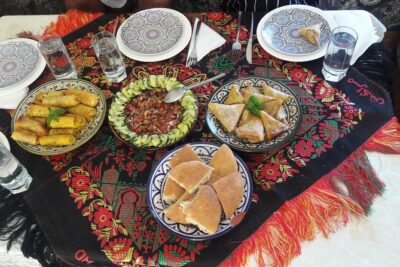
Moroccan Cooking Class & Marrakech Market Visit with Chef Khmisa
Read our review →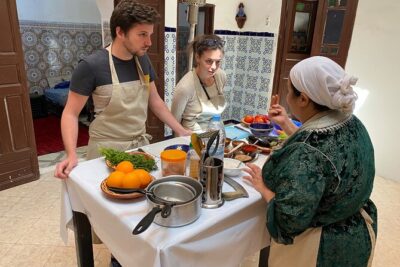
Half-Day Cooking Class with Local Chef Laila in Marrakech
Read our review →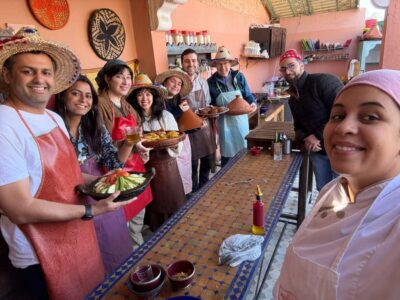
Marrakech: Moroccan Cooking Class with a Local Family
Read our review →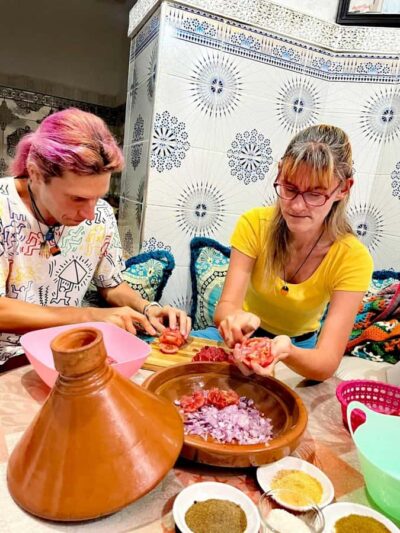
Marrakech: Moroccan Cuisine Cooking Class in Local Home
Read our review →
Marrakech: Moroccan Cooking Workshop at La Maison Arabe
Read our review →