
Review · OAXACA CITY
Oaxaca de Juarez: Traditional Oaxacan Cooking Class
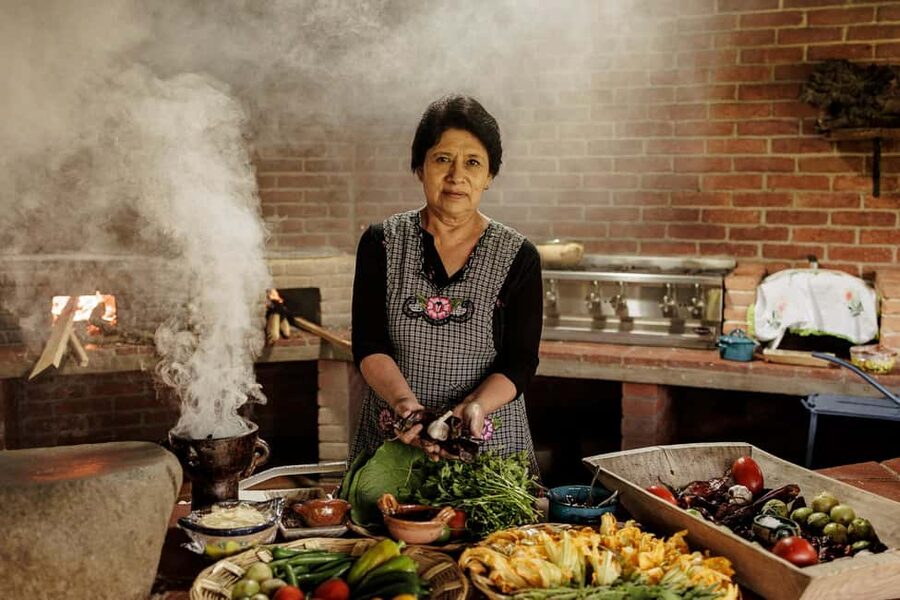
Oaxaca’s cooking makes the most sense when you work with the tools and ingredients that shape it. This class takes you outside the city to a mountain-surrounded village, where you’ll grind mole on a metate, cook over firewood and charcoal, and shape tortillas by hand. I like the organic garden and the chance to make quesillo and fresh cheese, and I like that the class includes plenty of food, drinks, and dessert. The main consideration is the five-hour length and the rustic cooking setup, which may not suit anyone wanting a quick, polished demonstration.
I especially like the warm, family-run feel led by Baldo, Sonia’s son, along with Teresa and Esperanza. The mezcal tasting and unusual Oaxacan snacks, including gusanos, chicatanas, and chapulines, add something you will not get from a standard cooking lesson. Just arrive hungry, wear comfortable shoes, and remember that wheelchair access is not available.
Key things to know before booking
- Cook in a real smoke kitchen: Use comals, metates, molcajetes, firewood, and charcoal embers rather than watching from the sidelines.
- Make several Oaxacan staples: Prepare tortillas, tetelas, memelas, tlayudas, seasonal salsas, and one of the seven traditional moles.
- Taste beyond the usual menu: Mezcal, gusanos, chicatanas, chapulines, fresh cheese, quesillo, water chocolate, pot coffee, ice cream, and cake are included.
- Meet at Santo Domingo Temple: Baldo will collect you at the church’s main door, with the exact clothing details provided on the day.
- Expect a small class: The group is limited to 10 people, with instruction in English and Spanish.
- Plan on a full half-day: The five-hour experience includes transport from central Oaxaca, cooking, tasting, and a final dessert.
From Santo Domingo to a village kitchen
Your day begins at the main entrance of Santo Domingo’s church in Oaxaca de Juárez. You meet Baldo, Sonia’s son, and the team provides details about what he will be wearing on the day. That small bit of practical information matters because the meeting point is a busy central landmark, and it is easier to identify a person than search for a vehicle in the street.
The included van takes you out of the city to a village surrounded by mountains. You do not need to arrange a taxi or find your way to a rural home. The vehicle has air conditioning, comfortable seats, passenger insurance, and a child seat when required.
The drive is part of the change in mood. You leave the city behind and reach a home setting where the cooking is built around garden ingredients, smoke, stone tools, and shared work. The class is limited to 10 people, so you should expect more opportunity to ask questions and take part than you would in a large culinary demonstration.
The return trip also ends at Santo Domingo Temple. Since the whole experience lasts about five hours, leave enough room in your day for a relaxed half-day rather than trying to fit it between tightly timed visits.
More cooking classes around Mexico:
- Cabo San Lucas Mexican Cooking Class Experience and Local Markets
★ 5.0 · 915 reviews - Puerto Vallarta Cooking Class Experience with Market Tour
★ 5.0 · 698 reviews - Mexican Cooking from Scratch in a Local Home in Tulum
★ 5.0 · 585 reviews
Starting with Oaxacan ingredients
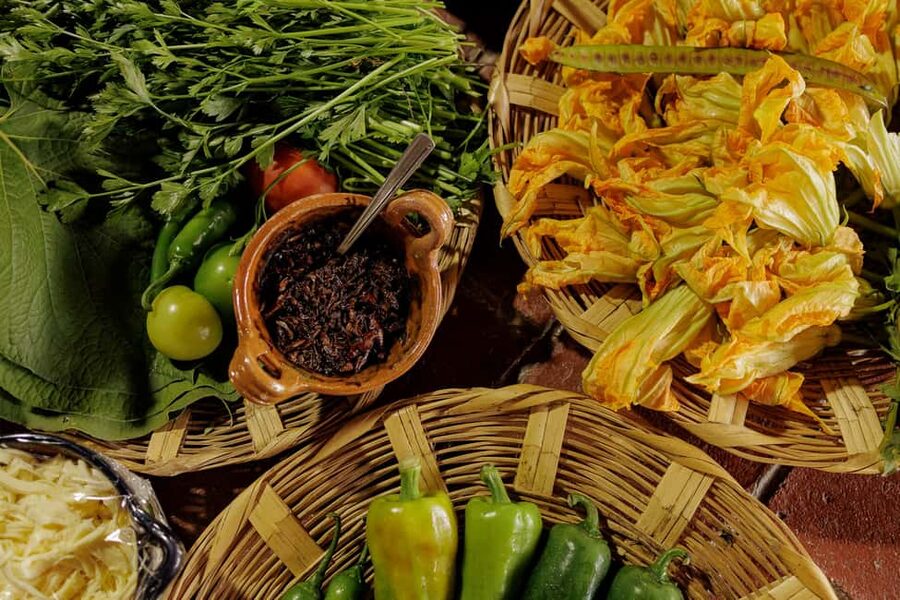
The first lesson introduces ingredients found in Oaxacan homes. The hosts have an organic garden with herbs and chiles, and you can see how fresh ingredients fit into the dishes you are about to prepare.
I like this opening because it connects the finished food to its source. Instead of receiving a list of recipes with no context, you begin with the items that give Oaxacan cooking its character. Seasonal ingredients are used for the sauces, so the exact flavors may vary.
You also make quesillo and fresh cheese. These are not just side details. Cheese is a familiar part of Oaxacan food, and making it yourself helps show how a few basic ingredients can become something used across many dishes.
The cooking is hands-on from the start. Everyone participates by cutting, grinding, making sauces, and eating. If you prefer to watch rather than work, this may feel demanding, but that is also where the class earns its value. You are not simply being served a plate. You are helping produce it.
Learning the comal, metate, and molcajete
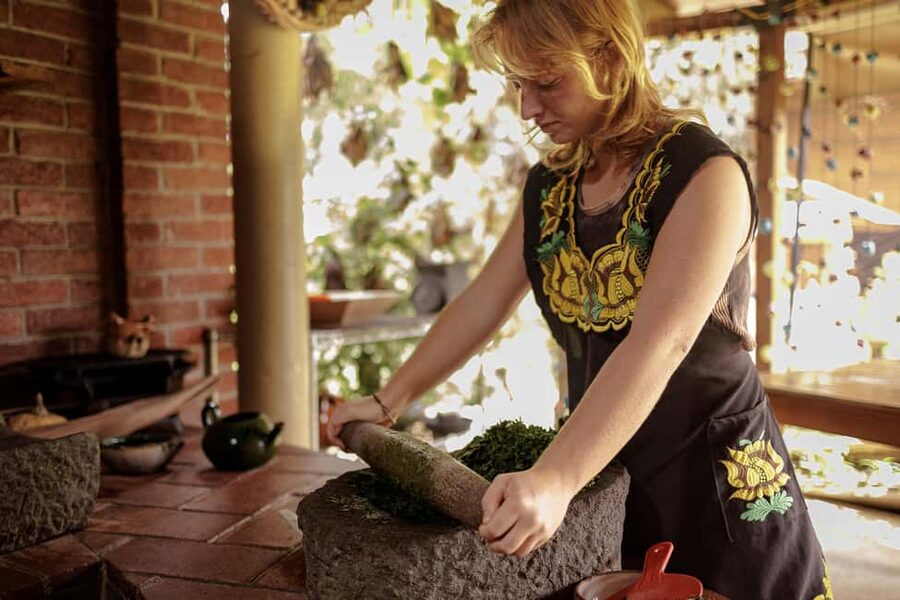
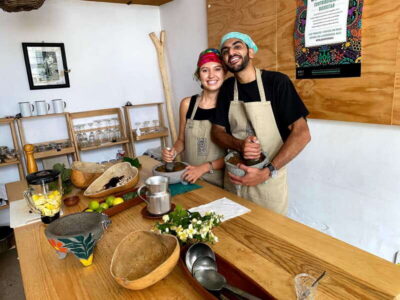
The equipment gives this class much of its appeal. You cook with comals, metates, and molcajetes, along with firewood and charcoal embers. These tools require more effort than an electric stove or food processor, but they also make the process easier to understand.
The comal is used for tortillas and sauces. The metate is used to grind ingredients for mole. The molcajete helps with sauces and other preparations. You get a practical look at how texture and flavor develop through grinding, roasting, and cooking.
The smoke kitchen adds another layer. Smoke, heat, and charcoal are not decoration here. They are part of the cooking method. You should wear clothes and shoes that are comfortable for an active kitchen setting, and you should expect the experience to feel rustic rather than restaurant-like.
That rustic setup is a strength for anyone seeking a close look at traditional food preparation. It can be a drawback if you have mobility concerns, dislike smoke, or want a quiet class with every step handled for you. Wheelchair users should not book this experience, as it is specifically listed as unsuitable for them.
Making tortillas, tetelas, memelas, and tlayudas
A major part of the class focuses on corn dough and the many forms it can take. You learn how tortillas are made by hand, then prepare tetelas, memelas, and tlayudas.
These dishes share a basic connection to corn, but they are not interchangeable. Working with the dough helps you see how shape, thickness, and cooking time change the finished result. It is also the part of the class where your own hands matter most. You will cut, shape, press, and cook rather than simply repeat a recipe from a book.
The setting makes the lesson more memorable. A tortilla cooked on a comal over heat has a different sense of place than one made in a modern kitchen. You will also receive a digital recipe book, so you have a chance to repeat the techniques at home.
Do not expect perfect results on your first try. The point is to learn the method and understand the food. The small group size helps here because the bilingual instructors can guide you in English or Spanish.
Same kitchen, a different dish:
- Authentic Mexican Legacy Cooking Class in Cabo San Lucas
★ 5.0 · 530 reviews - Mexican Cooking Class with Food Market Visit in Mexico City
★ 5.0 · 506 reviews - Authentic Mayan Cooking Class in Cozumel
★ 5.0 · 344 reviews - Flavors of Oaxaca: Cooking Class with No Set Menu and Local Market Tour
★ 4.5 · 333 reviews
Grinding one of Oaxaca’s seven moles
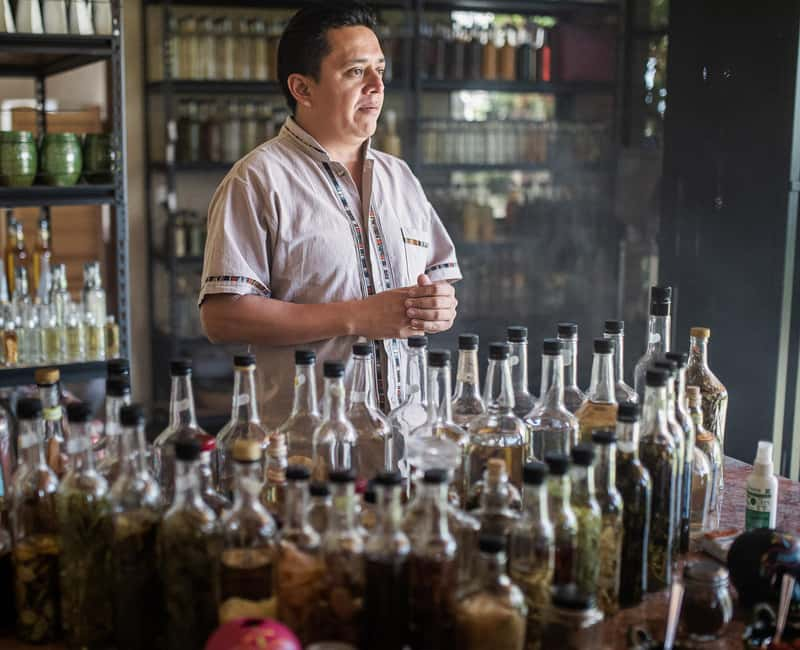
Mole is one of the most important parts of Oaxacan cooking, and this class prepares one of the seven traditional moles using a metate. The exact mole prepared during your session is not specified, so you should not book expecting a particular variety during the cooking portion.
The experience does include black mole later in the meal. Black mole is one of Oaxaca’s best-known dishes, and tasting it after working with the tools gives you a better sense of the labor behind a complex sauce.
Grinding on a metate is slower and more physical than using a blender. That is precisely why it adds value. You see how ingredients are combined into a sauce through repeated effort, rather than treating the finished mole as something that appears instantly.
This part may be the most demanding section for some people. If you have limited strength or prefer short activities, the five-hour schedule and hands-on grinding could feel like a lot. If you enjoy learning through action, it is one of the clearest links between the cooking lesson and the food on your plate.
Mezcal, local snacks, and a full Oaxacan meal
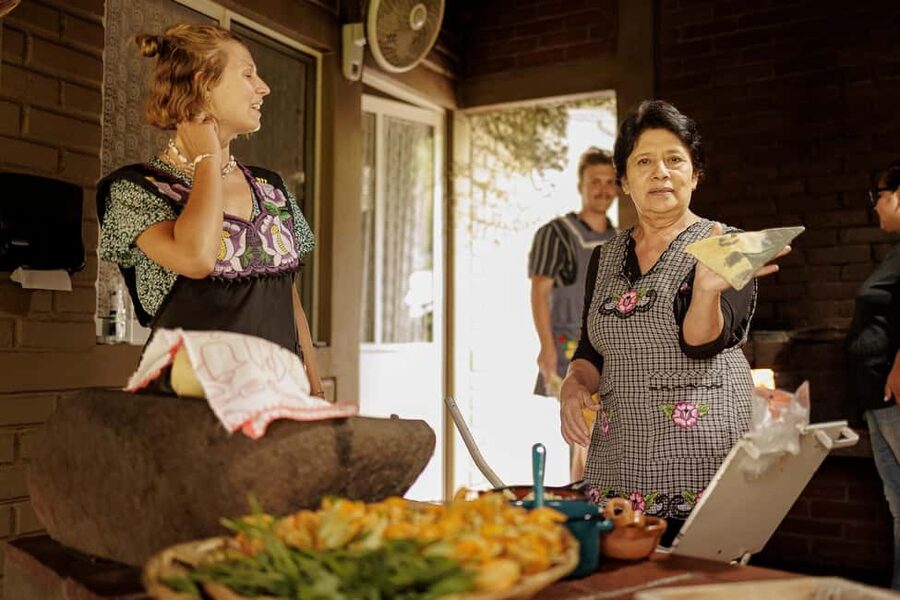
Baldo leads the mezcal portion of the experience. You can sample mezcal along with fresh water, soft drinks, and juices. The tasting is included, and the description allows you to sample as much as you like, so pace yourself and choose what suits you.
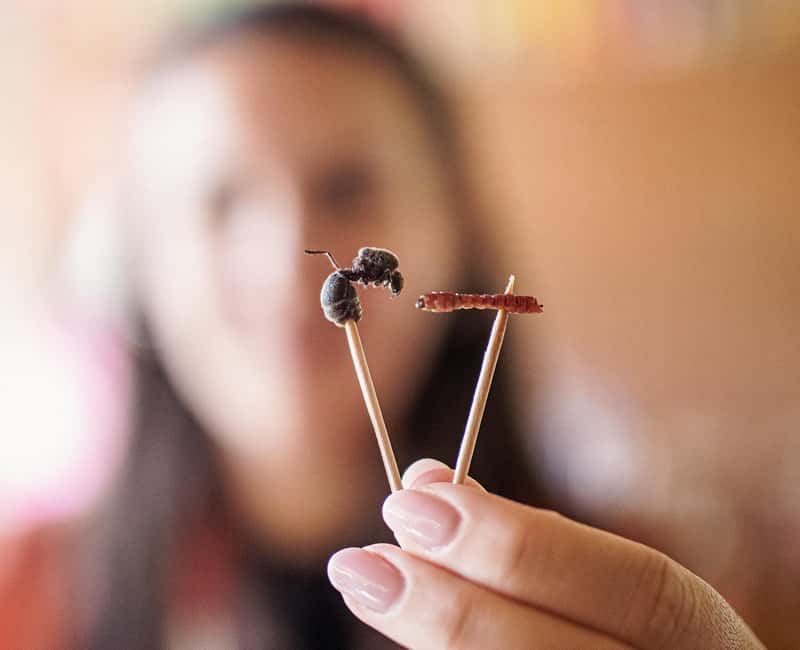
The snacks follow the Oaxacan way: gusanos, chicatanas, and chapulines. These may be a hurdle if you are not used to eating insects, but you do not need to pretend they are ordinary chips. They are a chance to try local flavors in a setting where you can ask questions and decide what you want to taste.
I like this part because it goes beyond the dishes most people already know. It also makes the class useful for curious eaters who want more than a safe list of tacos, tortillas, and salsa.
The meal continues with black mole, water chocolate, pot coffee, ice cream, and cake. Drinks and food are unlimited, and dessert is included at the end. You should take the advice to arrive with an empty stomach seriously. This is not a light tasting menu. It is a long, food-centered morning or afternoon with many chances to eat.
Because mezcal is part of the day, you may want to keep the rest of your schedule simple. No specific amount of alcohol is promised beyond the tasting, but the class includes enough food and drink to make it a substantial outing.
What the $87 price includes
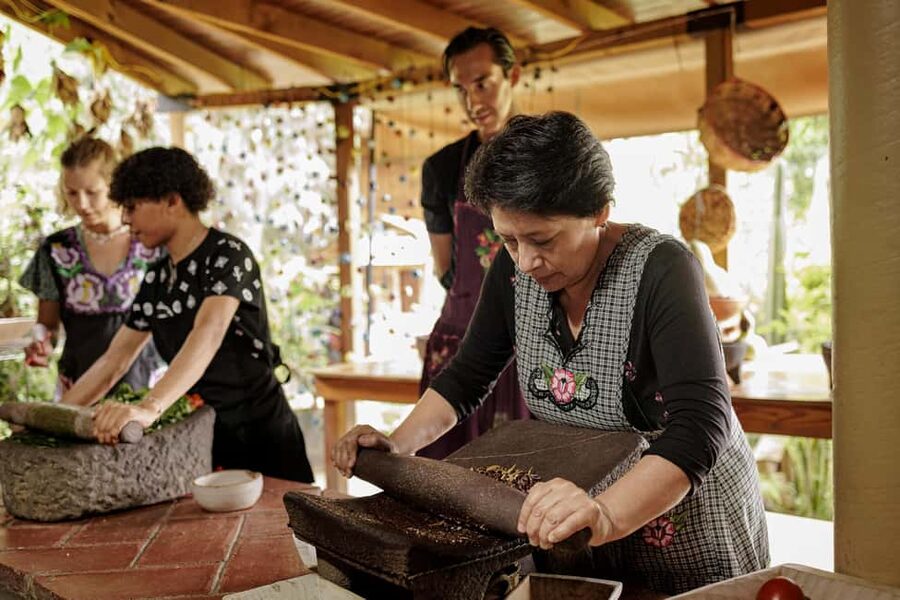
At $87 per person, this class is not the cheapest way to eat in Oaxaca. It is also more than the cost of buying a few market snacks or ordering a plate at a local restaurant. The value comes from combining transport, instruction, food, drinks, cultural context, and a recipe book in one five-hour experience.
You are not paying only for a meal. The price includes pickup and drop-off from Santo Domingo Temple, an air-conditioned van, passenger insurance, aprons, bilingual instruction, unlimited food and drinks, dessert, and the digital recipes.
The included transport matters because the cooking takes place outside Oaxaca City. You do not have to organize a separate trip to the village, and the air conditioning is useful after time around a hot comal and firewood.
The maximum group size of 10 also supports the price. A smaller class gives you a better chance to work with the equipment and receive help. The value is strongest if you want to cook actively and try many foods. It is weaker if you only want to eat, take photos, and leave quickly.
Free cancellation up to 24 hours before the experience and the option to reserve now and pay later add useful flexibility. Availability and starting times vary, so check the schedule before planning the rest of your day.
Who will enjoy this class most
I would recommend this experience to people who enjoy food as a way to understand a place. You should be willing to work with your hands, try unfamiliar ingredients, and spend a full five hours on the activity.
It suits:
- Couples and friends who want a shared activity outside the city
- Families, since a child seat is available when required
- Vegetarians and vegans, if you notify the hosts in advance
- English or Spanish speakers
- Curious eaters who want to try insects, mezcal, and traditional dishes
- Home cooks who will use the digital recipe book afterward
It may not suit you if you need wheelchair access, want a short class, or prefer a modern kitchen with minimal heat and smoke. It is also not the right pick for someone who dislikes communal cooking or is unwilling to taste unfamiliar ingredients.
The class received a perfect rating from all 31 recorded ratings, with praise focused on the friendly treatment, the fun and well-planned structure, and the quality of the food. That matches the strongest feature of the experience: the hosts aim to make you feel at home while still giving you plenty to do.
Practical tips for a better day
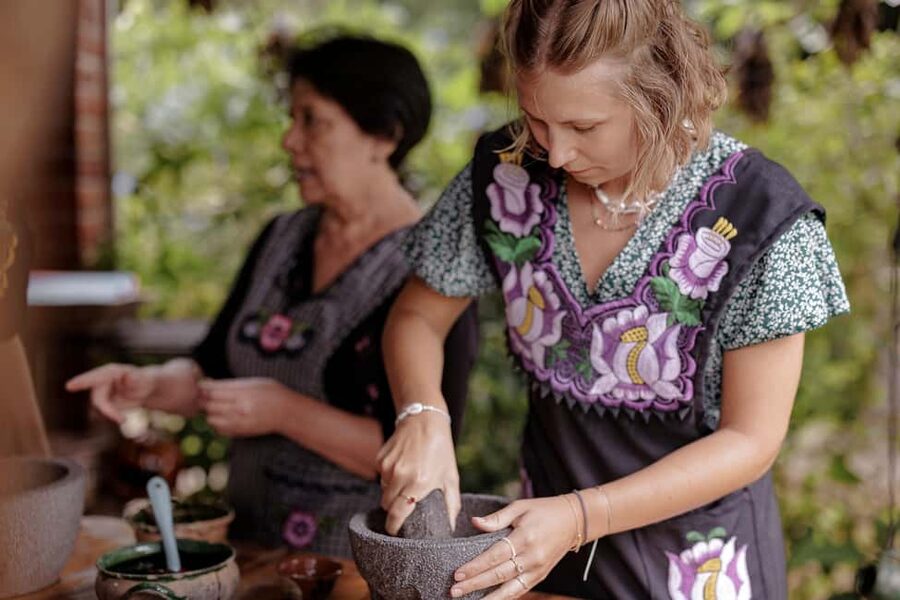
Meet at the main door of Santo Domingo’s church, not at a vague point somewhere in the surrounding streets. Baldo’s clothing details are provided on the day, so keep an eye out for that information.
Wear comfortable shoes. You will be involved in food preparation and working around a traditional cooking area, so practical footwear is more useful than anything stylish.
Tell the hosts ahead of time if you are vegan or vegetarian. The class can accommodate both, but advance notice is required.
Arrive hungry, but not so hungry that you rush through the early part of the class. There is a lot to taste, and the meal builds gradually from snacks and drinks to tortillas, sauces, mole, and dessert.
Bring an open mind for the insect snacks. You can sample gusanos, chicatanas, and chapulines, but the point is to try something new at your own pace. The mezcal tasting also deserves moderation, especially since the activity includes a long period of cooking afterward.
Should you book the Oaxacan cooking class?
Book it if you want a hands-on food experience that reaches beyond a restaurant meal. The village setting, organic garden, smoke kitchen, traditional tools, mezcal tasting, and generous menu give you a fuller picture of Oaxacan cooking than a short city demonstration.
The strongest reasons to go are the small group, the family-run instruction from Baldo and the team, and the chance to make several dishes yourself. At $87, the package makes sense if you value transport, unlimited food and drinks, bilingual teaching, and a recipe book.
Skip it if your schedule is tight, you need wheelchair access, or you dislike rustic cooking conditions. For everyone else, this is a well-rounded half-day built around food, family hospitality, and the satisfying work of making a meal from the ground up.
FAQ
Where does the cooking class meet?
Meet Baldo at the main door of Santo Domingo’s church in Oaxaca de Juárez. You will receive information on the day about what he will be wearing.
How long does the experience last?
The cooking class lasts five hours. Check availability for the specific starting times.
How many people are in the class?
The group is limited to 10 participants.
Is transportation included?
Yes. Pickup and drop-off at Santo Domingo Temple are included in an air-conditioned vehicle with comfortable seats.
Which languages are available?
The class is offered in English and Spanish, with bilingual instructors.
Can vegans and vegetarians participate?
Yes. Vegan and vegetarian options are available if you notify the hosts in advance.
What food and drinks are included?
Food and drinks are unlimited. The experience includes mezcal, fresh water, soft drinks, juices, local snacks, traditional dishes, black mole, water chocolate, pot coffee, ice cream, and cake.
What should I bring?
Bring comfortable shoes. An apron is provided.
Is the experience suitable for wheelchair users?
No. The activity is not suitable for wheelchair users.
New cooking classes around Mexico
- San Miguel de Allende: Mexican Cooking Class | Mole & Salsas★ 4.8 · 7 reviews
- San José del Cabo:Cooking Class +Margaritas & Mezcal tasting★ 4.8 · 12 reviews
- Puerto Escondido: Mexican Cooking Class, enjoy mexican food★ 5.0 · 9 reviews
- Playa del Carmen: Isa’s Authentic Mexican Cooking Class★ 4.9 · 18 reviews
- Playa del Carmen: Mexican Cooking Class★ 5.0 · 16 reviews
- PDC Traditional Mexican Cooking Experience★ 5.0 · 6 reviews
- Oaxaca: Vegetarian Cooking Class★ 4.8 · 139 reviews
- Oaxaca: Traditional Oaxacan Cooking Class with Market Visit★ 4.9 · 80 reviews
Oaxaca City Cooking Classes, side by side.
Flavors of Oaxaca: Cooking Class with No Set Menu and Local Market Tour
Read our review →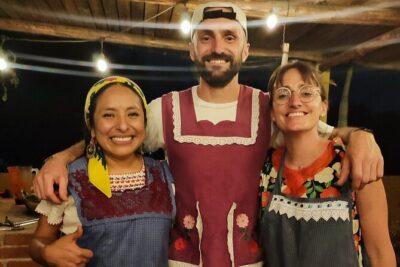
Traditional Oaxaqueña Cooking with Grandma’s Recipes
Read our review →
The Real Traditional Oaxaca culinary Cooking experience
Read our review →
Oaxaca: Traditional Oaxacan Cooking Class with Market Visit
Read our review →
Oaxaca: 10 Mexican Salsas Cooking Class with Taco Tasting
Read our review →This kitchen also appears in