
Review · MOROCCO
Rabat: Cooking Class in a Family Home
Rabat’s best food lesson may begin with a shopping basket, not a recipe card. You stroll through a neighborhood market, choose fresh ingredients with your host, then cook them in a family kitchen. I like the market-to-table format and the chance to learn small cooking habits from a Moroccan home cook. I also like that the menu is shaped around your preferences, not fixed in advance.
The main consideration is the setting. This is a family-home experience, not a polished cooking school, so the kitchen may feel informal and the work may be hands-on. You also need to reach the meeting point at Hopital Moulay Youssef Tramway station, since transport is not included.
What makes this four-hour Rabat class special
- Market shopping comes first: Choose fresh ingredients and learn about local customs before cooking.
- The menu can change: Your host asks what you like, then helps you select a suitable three-course meal.
- Cooking takes place in a family home: You work in a real Moroccan kitchen rather than a demonstration studio.
- Imane and her family may host: One especially praised setup includes Imane and her mother-in-law, a former chef for ambassadors.
- Recipes are available: You can photograph and write down the methods as you cook.
- The meal ends with Moroccan tea: Tea, coffee, and bottled water are included with the meal.
Starting at Hopital Moulay Youssef Tramway station
The experience begins at the tramway station Hopital Moulay Youssef. This is your responsibility to reach, as transportation is not part of the $72 price. Check the start time when booking and allow enough time to find the station without rushing.
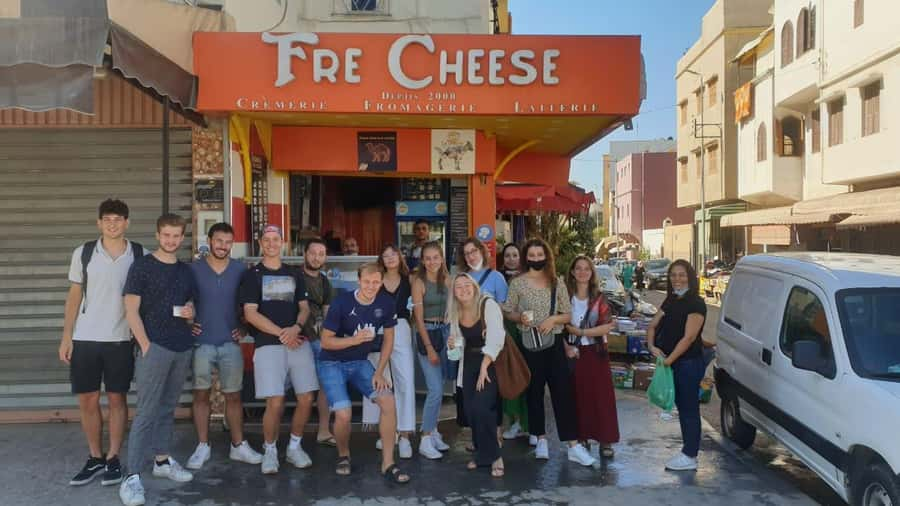
A host or greeter meets you there and leads you to a nearby local market. The activity is offered in French and English, which matters during a cooking lesson where small instructions can affect the final dish. The group is limited to eight people, so you should get more direct help than you would in a large culinary class.
The meeting point is practical, but it is not a central hotel pickup. If you are staying elsewhere in Rabat or across the river in Salé, plan your route before the class. A taxi or tram ride may be needed, but the cost is separate from the activity.
More Home Cooking Classes in Morocco
- Marrakech: Moroccan Cooking Class with a Local Family
★ 4.9 · 668 reviews - Marrakech: Moroccan Cuisine Cooking Class in Local Home
★ 4.8 · 508 reviews - Fez: Souk Tour and Traditional Home Cooking Class
★ 4.9 · 186 reviews
Shopping for a menu instead of following a script
The market visit gives the class its local pulse. You do not simply arrive at a kitchen with ingredients already measured. You walk through a neighborhood market, look at the available produce, and help buy what you will later prepare.
Your host asks about your food preferences and recommends a menu. That makes this a better fit for curious eaters than for people who want a rigid, pre-set lesson. If you have a dish in mind, such as Moroccan couscous or chicken tajine, say so early. One class included a traditional couscous meal at the participant’s request.
This part also helps explain Moroccan cooking beyond the finished plate. You can ask about ingredients, household customs, and how food fits into daily life. The class description specifically frames the market visit as a chance to learn about local traditions, not just shop for vegetables.
Do not expect a long guided tour of every market stall. The visit is one stage of a four-hour cooking experience, so its purpose is focused: select ingredients, discuss the meal, and get ready to cook. That balance is useful because you spend enough time in the market to understand the process without losing the main event.
Entering a historic family-owned Moroccan home
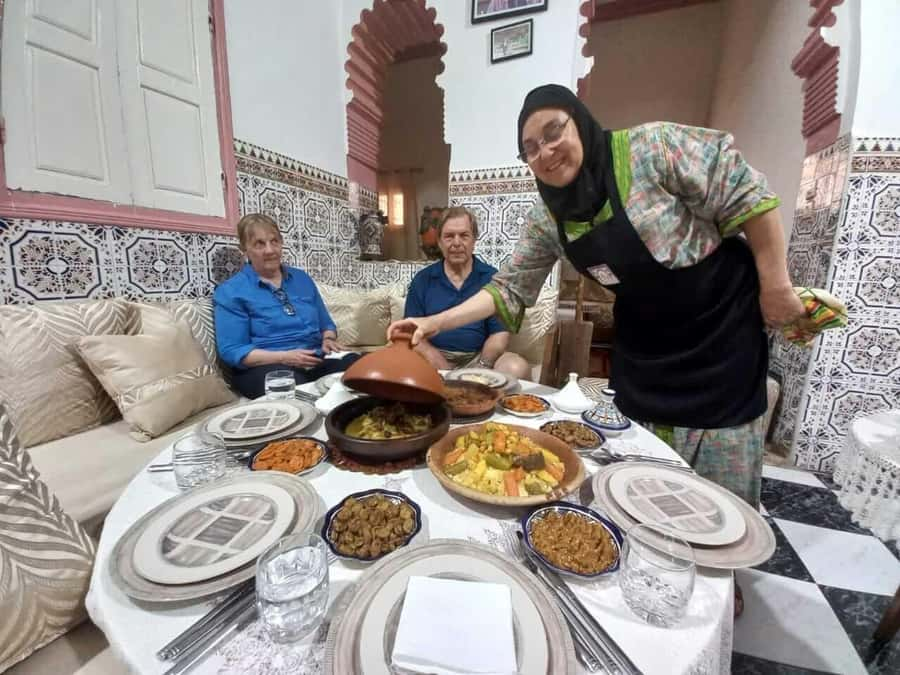
After shopping, you continue to a historic family-owned home. The setting is central to the experience. Instead of cooking in a restaurant kitchen built for classes, you prepare the food in a family space with people who use these methods in ordinary home cooking.
The hosts have been praised for a warm welcome and easy conversation. In one particularly interesting arrangement, Imane cooks with her mother-in-law, who was formerly a chef for ambassadors. That combination offers two kinds of value: a family perspective and serious professional experience.
The atmosphere is likely more personal than formal. You may work beside the cook, ask questions as you go, and watch how ingredients are handled without the strict routine of a commercial lesson. One useful detail from the experience is that cooking may include the classic a bit of this and a bit of that approach. You learn not only a list of ingredients, but also how an experienced cook adjusts seasoning and texture.
That can be both a strength and a small challenge. If you want exact measurements at every stage, ask questions and take notes. Full recipes are provided, and you can photograph the process, so you have a way to preserve what you learned.
Preparing a three-course Moroccan meal
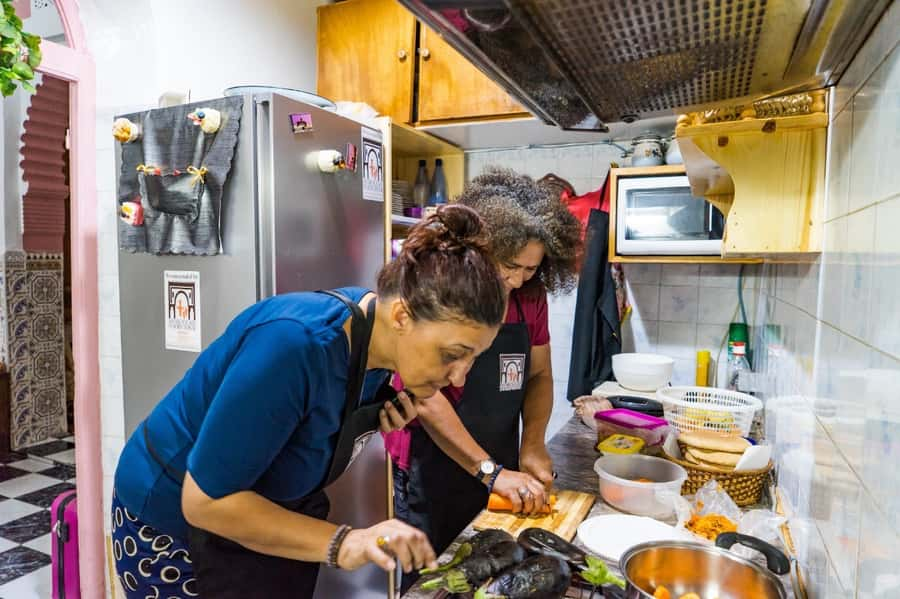
The class includes a full three-course menu, with an appetizer, main course, and dessert. The exact dishes depend on your preferences and the ingredients chosen at the market. That flexibility keeps each session personal, but it also means you should not book expecting one guaranteed menu.
The dishes prepared in past sessions show the range. One menu began with eggplant and peeled peppers, cut into small pieces and seasoned with several spices, then served with bread. The main course was chicken tajine, followed by fruit salad and freshly pressed orange juice.
Another class centered on Moroccan couscous prepared in the traditional Friday style. Dessert was a Moroccan millefeuille with pastry cream flavored with orange blossom and saffron. The pastry was made from very thin sheets prepared with flour, water, and salt. The sheets were cooked, cut into rounds, fried, and layered into the finished dessert.
That pastry lesson sounds especially worthwhile if you enjoy technique. You are not just stirring a filling or arranging a plate. You see how a simple dough becomes almost transparent, then turns into a delicate layered sweet. Ingredients for the pastry are bought at the market, adding a clear link between the first and second parts of the day.
The class is not only about eating a famous Moroccan dish. You get to see how a meal is built from several small preparations. Salads, sauces, spiced vegetables, bread, tajine, couscous, and dessert each require different handling. The result is a fuller picture of Moroccan home cooking than a restaurant meal can provide.
Same kitchen, a different dish:
- Marrakech: Moroccan Cooking Class with Pickup
★ 4.6 · 1,862 reviews - Marrakech: Traditional Moroccan Cooking Class & Market Visit
★ 4.8 · 1,861 reviews - Marrakesh: Moroccan Dishes Cooking Class with a Local Chef
★ 5.0 · 1,615 reviews - Moroccan Cooking Class & Marrakech Market Visit with Chef Khmisa
★ 5.0 · 1,504 reviews
Eating the meal you helped create
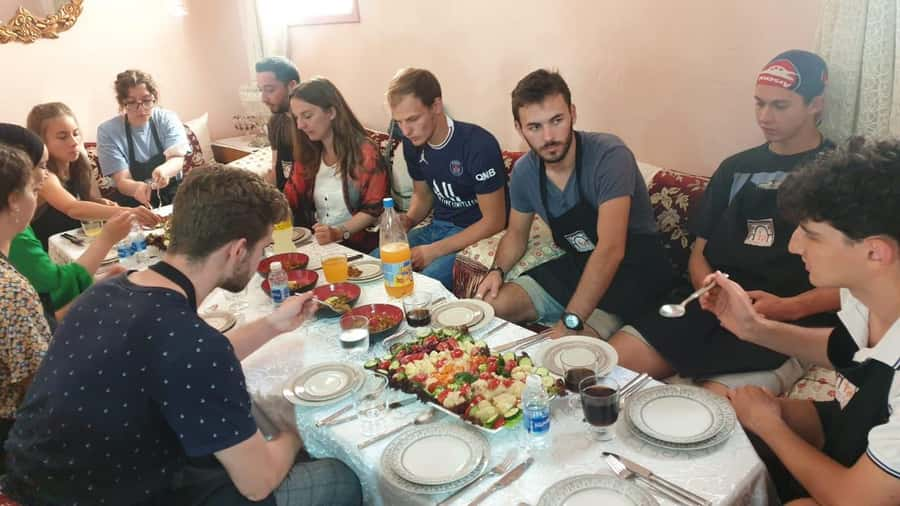
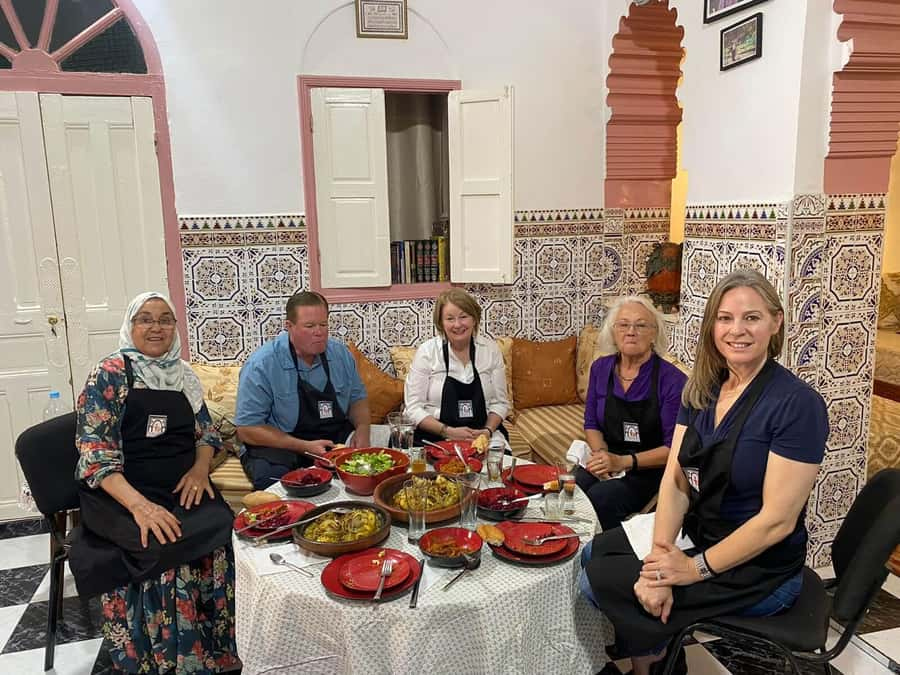
After cooking, you sit down to eat the complete menu. This is where the four-hour schedule makes sense. You have time to shop, prepare several dishes, and enjoy them without turning the meal into a rushed tasting.
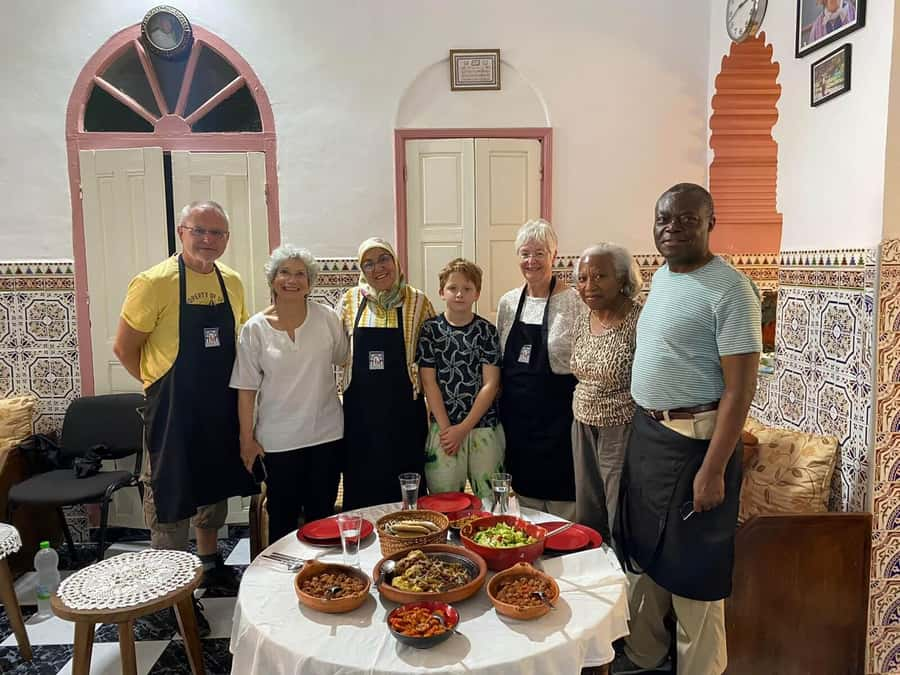
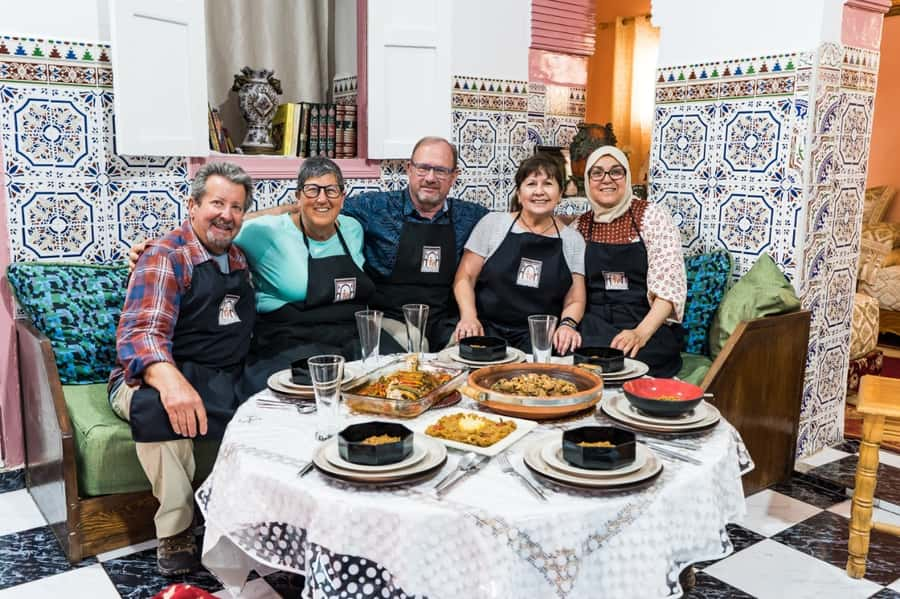
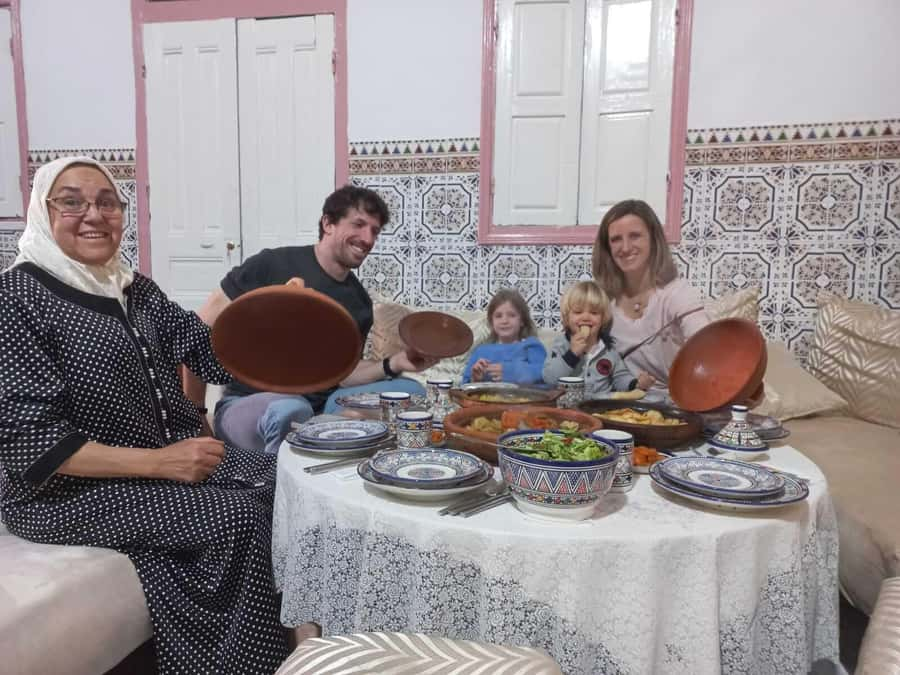
The meal is served with Moroccan hospitality, and conversation is part of the experience. The small group size helps here. With no more than eight participants, you can compare cooking results, ask follow-up questions, and talk with the host in French or English.
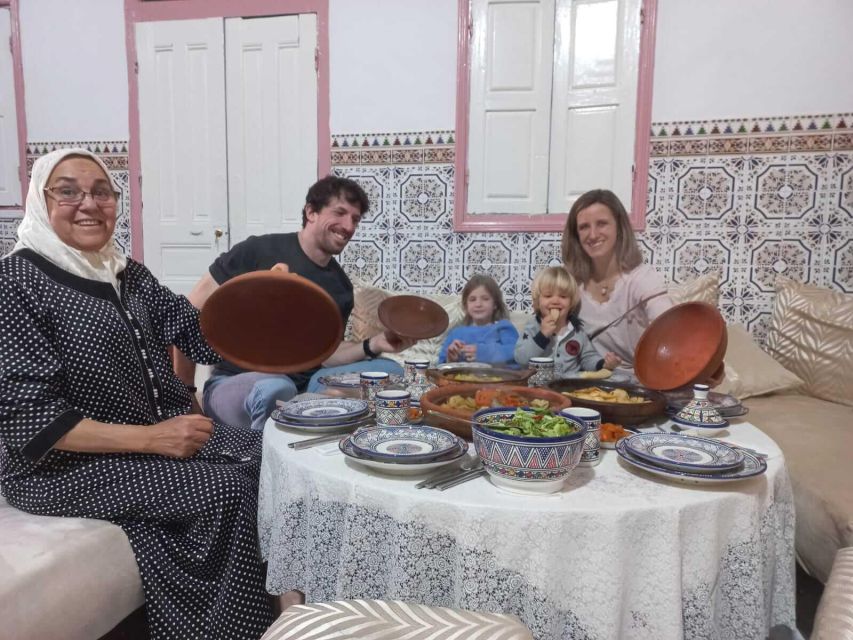
In one session, the meal included the hosts and a small granddaughter. That detail captures the family character of the visit, though you should not assume every class will have the same people present. The setting is a home, not a staged restaurant performance.
Tea or coffee and bottled water are included. Moroccan tea is the natural finish, and the final tea service gives you a quiet moment to ask about recipes or customs before leaving. If friends or family members want to join only for the meal, they can do so for an additional €15 per person. They do not take part in the cooking portion under that arrangement.
Is $72 a fair price?
At $72 per person, this is not the cheapest way to eat in Rabat. You could certainly buy a meal for less. The price makes more sense when you count the market visit, the four-hour duration, the cooking instruction, the three-course meal, drinks, and the small group setting.
You are paying for access to a family kitchen and for the time spent preparing the food, not simply for a plate at the end. If you want to learn how Moroccan dishes are made, the value is good. If you only want a quick lunch, a restaurant will be faster and less expensive.
The flexible menu also improves the value for many people. You can ask about dishes that interest you, and the host can guide the shopping. The inclusion of recipes, plus the chance to photograph and record the process, gives the class lasting value after you leave Rabat.
There are two costs to remember. Transportation to the tramway meeting point is not included, and additional friends joining the meal pay €15 each. The base price covers the booked participant, the class, the meal, and the listed drinks.
Who will enjoy this class most?
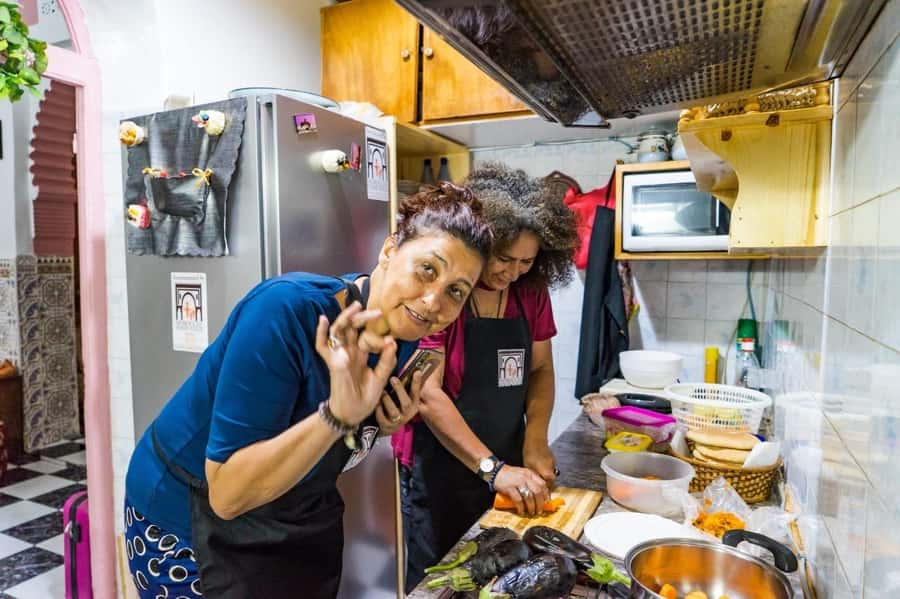
I would choose this experience if you want food to open a door into Moroccan family life. It suits people who like asking questions, working with their hands, and eating a full meal at an unhurried pace.
It is also a strong choice for couples, families, and small groups who want more than a standard restaurant outing. The eight-person limit keeps the class from becoming a crowd, while the French and English options make it accessible to a mixed-language group.
You do not need to be an experienced cook. The point is to take part, follow instructions, and learn. The host guides you through the process, and the recipes give you a record of what you made.
The class may be less suitable if you dislike flexible plans or want a highly polished culinary studio. The menu is chosen around preferences and market ingredients, and the kitchen is a real family home. That informality is the attraction, but it is also the reason to set sensible expectations.
Practical details before you reserve
The activity lasts four hours, but starting times vary, so check availability before booking. Wear comfortable clothing suitable for cooking, though no special equipment is listed as required.
Tell the host about food preferences when discussing the menu. The activity specifically allows the host to recommend dishes based on what you enjoy, so this is the right moment to raise any concerns. The supplied information does not specify allergy arrangements, so ask before confirming if that matters to you.
The class offers free cancellation up to 24 hours before the start time for a full refund. You can also reserve now and pay later, which helps if your Rabat schedule is still changing.
The experience provider is MoroccanFoodTour. The host or greeter speaks French and English, and the group is limited to eight people. Since transport is excluded, make the tramway station part of your day plan rather than assuming a hotel pickup.
Should you book this Rabat cooking class?
Book it if you want to shop, cook, and eat with a Moroccan family rather than simply order Moroccan food. The strongest features are the market-to-kitchen format, the flexible menu, the small group, and the chance to learn dishes such as couscous, tajine, spiced vegetables, and Moroccan pastries.
The class offers especially good value for food lovers who will use the recipes later. Keep in mind that the experience is informal, transport is separate, and the exact menu depends on your preferences and the market. If that sounds appealing, $72 buys four useful hours and a meal with a story behind it.
FAQ
Where does the Rabat cooking class meet?
The meeting point is Hopital Moulay Youssef Tramway station in Rabat.
How long does the experience last?
The cooking class and market visit last four hours.
How much does the experience cost?
The price is $72 per person.
What languages are available?
The host or greeter speaks French and English.
How large is the group?
The activity is limited to eight participants.
What is included in the price?
The price includes the market visit, cooking session, three-course menu, tea or coffee, and bottled water.
Is transportation included?
No. Transportation is not included, so you need to reach the tramway meeting point yourself.
Can friends join just for the meal?
Yes. Friends can join the meal after the cooking class for an additional €15 per person.
Can I cancel the booking?
Yes. You can cancel up to 24 hours in advance for a full refund. You can also reserve now and pay later.
New cooking classes around Morocco
- Rabat: Authentic Moroccan Cooking Class with Expert Chefs★ 5.0 · 17 reviews
- From Marrakech: Ouzoud Waterfalls Guided Hike and Boat Trip★ 4.9 · 75 reviews
- Moroccan Food Cooking Class with a Local Chef in Marrakech★ 4.7 · 90 reviews
- Moroccan Food Cooking Class with a Local Chef in Marrakech★ 4.7 · 6 reviews
- Marrakech: 3-Hour Open-Air Moroccan Cooking Course★ 4.9 · 74 reviews
- Moroccan cooking class in Marrakech with berber chef★ 5.0 · 16 reviews
- Edgy 8 Dish Private, Fusion Cooking Class, Menu Plan, Market★ 4.9 · 31 reviews
- From Marrakech: Atlas Mountains & Berber Lunch★ 5.0 · 6 reviews
Morocco Cooking Classes, side by side.

Marrakech: Moroccan Cooking Class with Pickup
Read our review →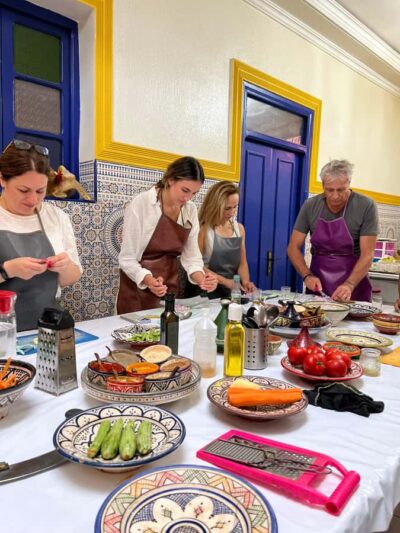
Marrakech: Traditional Moroccan Cooking Class & Market Visit
Read our review →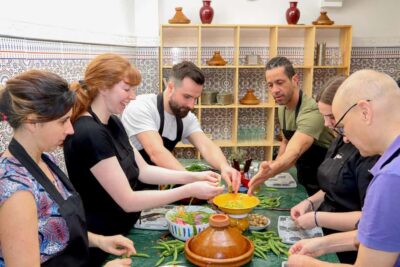
Marrakesh: Moroccan Dishes Cooking Class with a Local Chef
Read our review →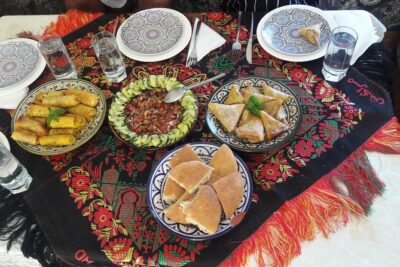
Moroccan Cooking Class & Marrakech Market Visit with Chef Khmisa
Read our review →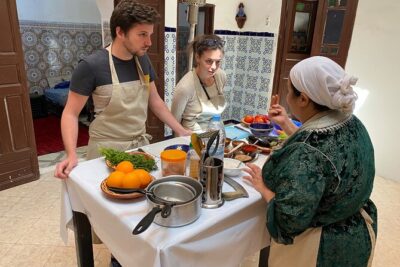
Half-Day Cooking Class with Local Chef Laila in Marrakech
Read our review →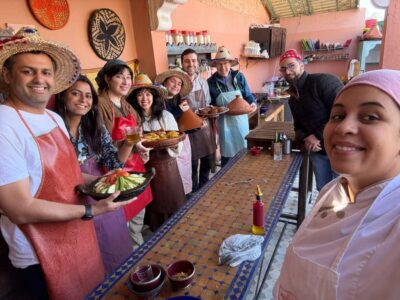
Marrakech: Moroccan Cooking Class with a Local Family
Read our review →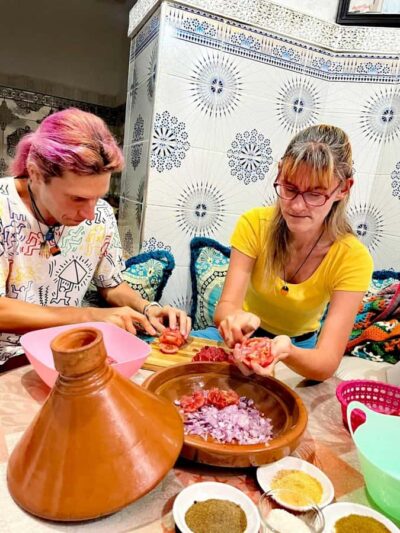
Marrakech: Moroccan Cuisine Cooking Class in Local Home
Read our review →
Marrakech: Moroccan Cooking Workshop at La Maison Arabe
Read our review →This kitchen also appears in