Review · ROME
Rome: pasta and tiramisu cooking class in the city center
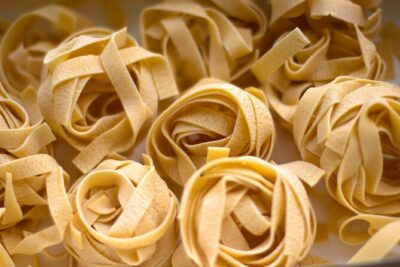
Fresh pasta is the star here, and you do not simply watch a chef turn flour into dinner. At Cantiere Gastronomico, you work the dough, shape fettuccine, tagliatelle, and tagliolini, then make tiramisu before sitting down to eat. The elegant salon near Via Veneto gives the class a pleasant Roman setting without sending you across town.
I like two things in particular: the class stays practical enough for you to repeat at home, and the team takes time to explain each step. Francesco and Oliviero lead the kitchen, with French-language help available when needed. The welcome prosecco, full tasting meal, water, soft drinks, and participation certificate add real value to the $70 price.
The main consideration is time. Two hours is enough for a lively introduction, but not a slow, full restaurant-style cooking course. You will cover several pasta shapes and tiramisu in one sitting, so the pace may feel brisk if you want long lessons on sauces, regional pasta traditions, or ravioli.
Key points to know before booking
- Near Via Veneto: The class takes place in an elegant Roman salon close to the famous street linked with La Dolce Vita.
- Hands-on pasta making: You prepare the dough and shape fettuccine, tagliatelle, and tagliolini yourself.
- Tiramisu is included: Dessert is made from a traditional recipe, with a personal touch added during the lesson.
- A meal is part of the price: You taste the dishes you prepare, with prosecco, wine, water, and soft drinks included as specified.
- Several teaching languages: Instruction is offered in English, Italian, Russian, and French.
- Good practical value: For $70, you receive a two-hour class, food, drinks, and a paper or digital certificate.
A Roman cooking class near Via Veneto
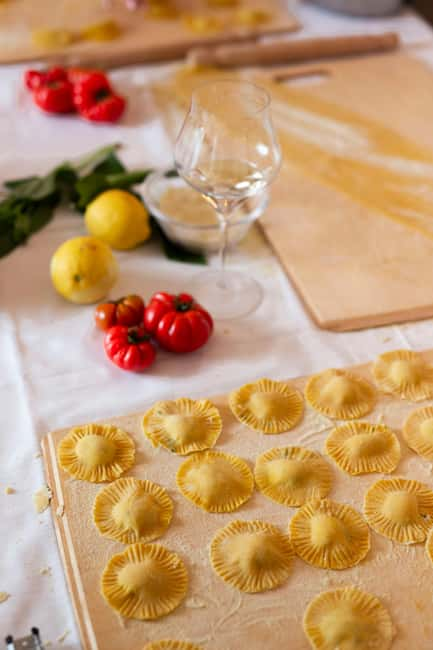
The setting helps give this class its character. You are in central Rome, only a short distance from Via Veneto, the street most closely tied to the city’s glamorous Dolce Vita era. The class itself takes place in an elegant, well-kept salon rather than a plain demonstration room.
That matters because the surroundings shape the mood. You can combine the class with a walk around Via Veneto, the Spanish Steps area, or nearby central Rome sights. The food lesson becomes part of your day in the city, not a separate trip out to a distant cooking school.
Cantiere Gastronomico is a young school built around learning by doing. The emphasis is not only on recipes. You work alongside the instructors, ask questions, compare techniques, and share the meal at the end. That social element is useful if you want an activity that feels more personal than a standard restaurant meal.
The school also works with Chinappi, a Roman haute cuisine restaurant with more than 15 years of experience. You should not expect a formal restaurant kitchen service or a professional chef qualification. What this connection offers is a cooking team shaped by restaurant experience, with attention to technique and presentation.
More Pasta Making Classes in Rome
- 3 in 1 Cooking Class near Navona: Fettuccine, Ravioli & Tiramisu
★ 5.0 · 7,376 reviews - Rome: Pasta Making Class with Wine, Limoncello, and Dessert
★ 4.9 · 3,177 reviews - Rome Cooking Class: Make Pasta and 3 Spritz Cocktails
★ 5.0 · 2,937 reviews
Your first taste: prosecco and introductions
The activity begins with a welcome prosecco. It is a small detail, but it gives everyone a chance to settle in before the flour appears. A cooking class can feel awkward for the first few minutes, especially when people do not know one another. A shared drink takes some of that stiffness away.
The instructors then introduce the basic ingredients and the process. The class focuses on traditional fresh pasta, starting with the dough rather than a pre-prepared base. You get to see how a small group of simple ingredients becomes something you can cut and cook.
This part is especially useful for first-time pasta makers. You are not expected to arrive knowing how firm the dough should feel or how much work it needs. The teaching is step by step, and the instructors explain the small decisions that make the difference between dough that works and dough that fights back.
Reviews of the class repeatedly praise the calm explanations and helpful advice. That fits the format well. Francesco and Oliviero are described as taking time with each stage, while the French-speaking support makes the class easier for French visitors. English, Italian, Russian, and French are listed as available teaching languages.
Working the dough by hand
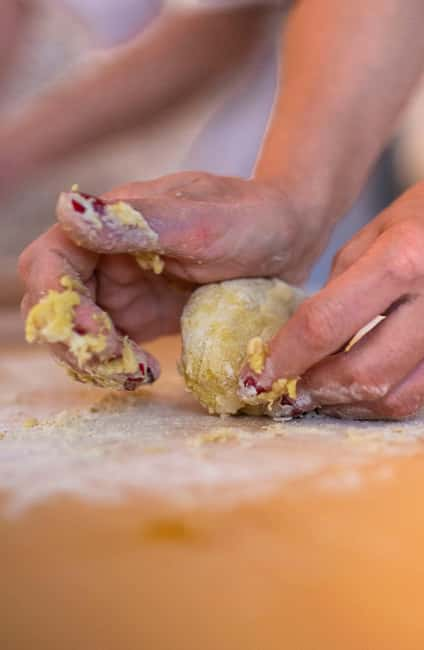
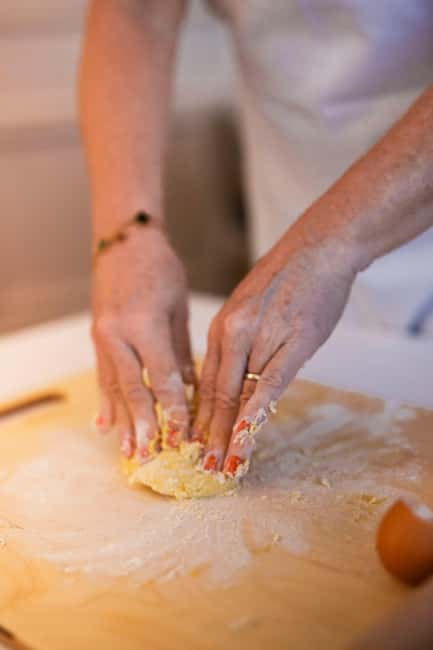
The central part of the lesson is the pasta itself. You begin with the basic dough, then work it until it reaches the right consistency. This is the part that turns a recipe into a skill. You feel the dough change under your hands, rather than simply hearing a chef describe the process.
You then create several shapes, including fettuccine, tagliatelle, and tagliolini. These names can blur together on a menu, but making them yourself shows the difference in width and cut. The class gives you a short tour through familiar pasta forms without requiring a long culinary background.
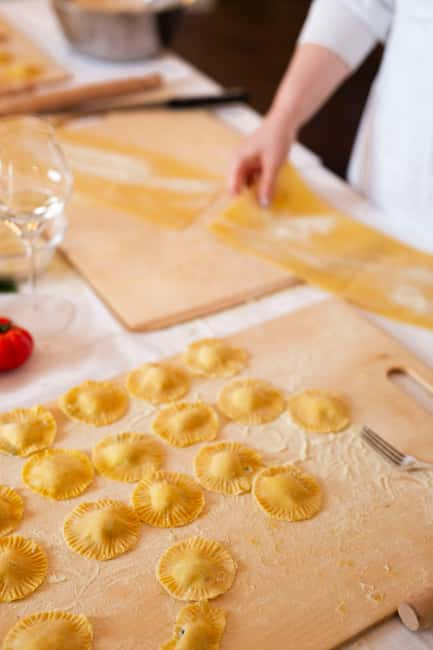
Ravioli may be available on request. That is worth clarifying when you book or arrive, since the main advertised pasta work centers on the three long shapes. If stuffed pasta is your main reason for taking a class, do not assume it is part of every standard session.
The instruction aims to give you recipes you can use at home. That practical angle comes through strongly. You are not just producing pasta for a photograph. You are learning a process that can be repeated in your own kitchen, with ordinary ingredients and basic equipment.
You should still keep your expectations sensible. A two-hour class cannot cover every regional pasta style, sauce, filling, and drying method. It gives you a useful foundation and a few shapes to practice, not a complete course in Italian pasta.
Making tiramisu the Roman way
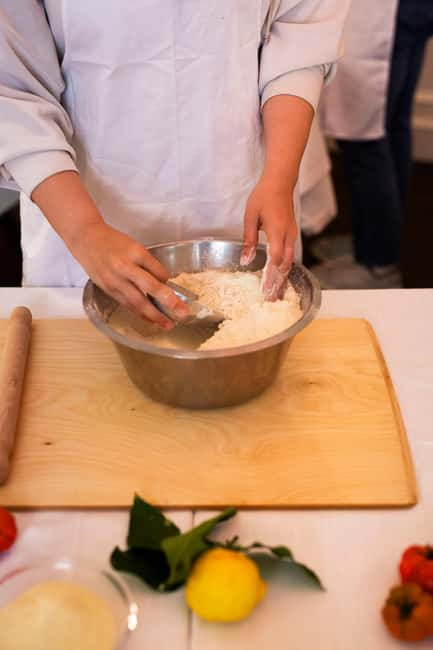
After the pasta, the class turns to dessert. You make tiramisu by hand using a traditional recipe, then add a personal touch. This creates a nice change of pace after the dough work, and it gives you a second recipe to take home mentally.
Tiramisu is familiar to many people, but making it yourself reveals the balance behind the finished dessert. You follow the classic preparation rather than simply receiving a portion at the table. The instructors can explain the steps and offer small tips as you work.
The dessert also helps make the class feel like a complete meal. You have not spent two hours preparing one component of dinner. You have worked through a pasta lesson and finished with one of Italy’s best-known sweets.
One useful feature is the variety. The class does not force you to choose between pasta and dessert. You get both, though the short format means each subject receives a focused introduction. If you want a long pastry session, this is not the right choice. If you want a compact Italian cooking activity with a clear beginning, main course, and dessert, it fits nicely.
More Tiramisu and Dessert Classes in Rome
- Rome: 3-in-1 Fettuccine, Ravioli, and Tiramisu Cooking Class
★ 4.9 · 2,704 reviews - Fettuccine & Tiramisù: Cooking Class with Wine & Limoncello
★ 4.9 · 2,103 reviews - Rome: Pasta & Tiramisu Cooking Class near the Spanish Steps
★ 4.8 · 1,395 reviews - Cooking Class in the Heart of Rome: Pizza and Tiramisu Making
★ 5.0 · 1,330 reviews
Sitting down to eat what you made
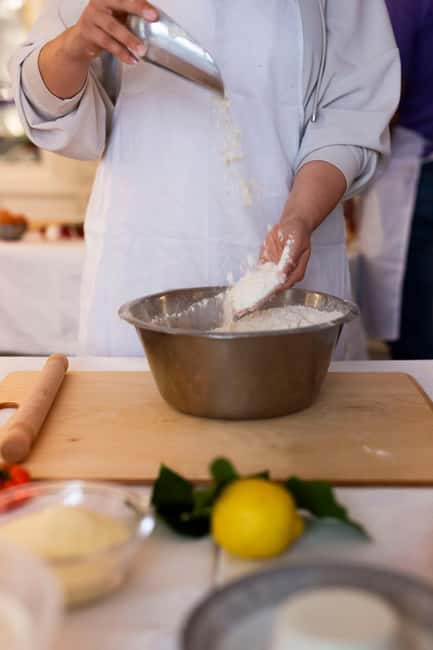
The final part is the reward for all the rolling, cutting, and mixing. You sit at the table and taste the dishes prepared during the lesson. The activity includes a full meal based on the recipes covered, along with water and soft drinks.
A good glass of wine is also part of the closing meal, while prosecco is served as a welcome drink. The supplied details list the meal, water, and soft drinks as included, and the experience description also specifies wine with the meal. That makes the $70 fee easier to assess because you are paying for both instruction and food.
I like this structure more than a class that sends you away with a box of uncooked pasta. Eating together lets you see the final result immediately. You can judge the texture, taste the work of your hands, and ask questions while the lesson is still fresh.
The meal is also where the social side of Cantiere Gastronomico matters most. The class is presented as a shared moment, with food, conversation, and stories around the table. It is a good match for couples, friends, and solo visitors who enjoy meeting people through food.
Do not book it as a substitute for a long evening meal at a Roman trattoria. The point is the combination of cooking and tasting. You are there to make the food first, then enjoy it in a relaxed setting.
What the Chinappi connection adds
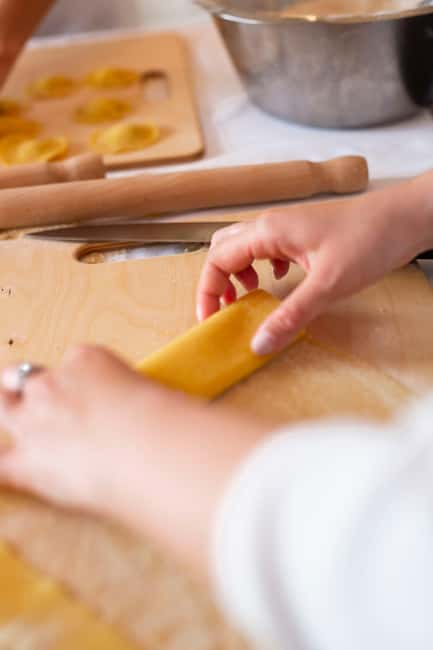
The partnership with Chinappi gives the teaching team a restaurant background. Chinappi is described as a Roman haute cuisine restaurant operating for more than 15 years, so the instructors bring more than casual home cooking experience to the session.
For you, the main benefit is guidance. The class is designed to explain technique clearly, from the first ingredients through the finished pasta. It is not presented as a competitive cooking event, and the tone is meant to stay friendly and open.
The strongest praise centers on the instructors’ patience and advice. Francesco and Oliviero are named as the chefs leading an especially warm session, and the teaching is repeatedly described as clear and generous. That is important for beginners, who often need help with texture, timing, and shaping rather than a long speech about culinary theory.
The restaurant link should not lead you to expect a tasting menu or advanced professional training. The class remains accessible. Its appeal is that you receive restaurant-informed guidance while still making the food yourself.
Is $70 a fair price?
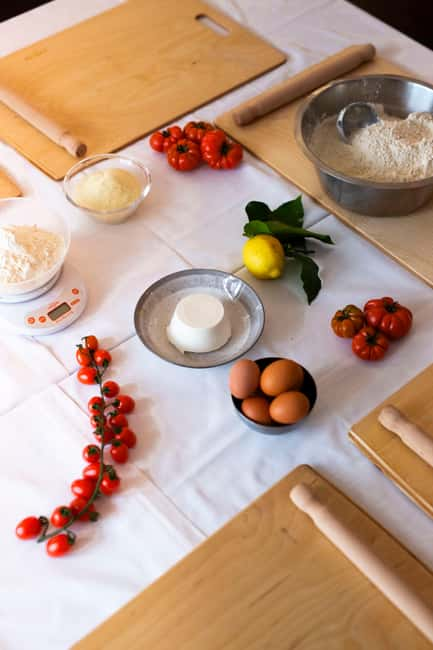
At $70 per person, the value is solid if you want more than a demonstration. You receive a two-hour hands-on lesson, pasta preparation, tiramisu making, the food you prepare, a welcome prosecco, a glass of wine as described, water, soft drinks, and a paper or digital participation certificate.
The meal is the biggest factor in the price. A basic cooking demonstration might cost less, but it would not give you the same amount of direct work or include a sit-down tasting of the dishes. On the other hand, a longer class with more recipes or a market visit could cost more and offer a broader lesson.
You are paying for the setting and the teaching as well as the ingredients. The central location near Via Veneto is convenient, and the elegant room offers a more polished setting than a bare workshop. The two-hour length also makes it easier to fit into a busy Rome itinerary.
The price works best for people who value participation. If you only want to eat fresh pasta, a restaurant may be a better use of your money. If you want to learn a repeatable recipe, meet the cooks, and eat the result, the package makes sense.
Who should take this class?
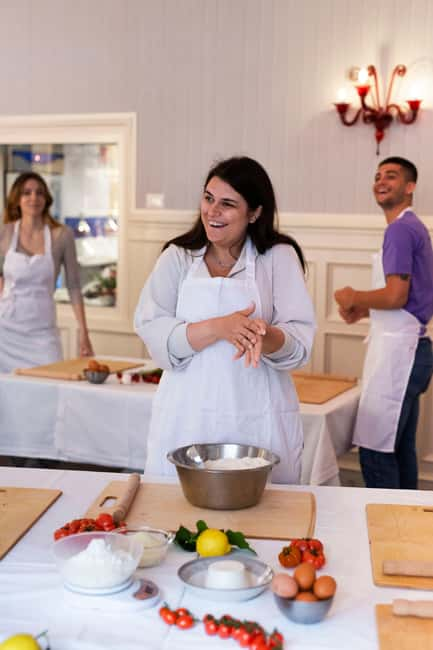
This is a strong choice for first-time pasta makers. The instructions are broken into simple stages, and the class gives you several shapes without assuming serious kitchen experience. The tiramisu adds another easy-to-remember recipe.
It also suits couples and families looking for a shared activity. Everyone has something to do, and the meal gives the group a clear finish. Children’s participation rules are not provided, so families should confirm suitability before booking.
Food lovers who have already taken several pasta classes may find the material familiar. The session focuses on traditional methods and practical advice rather than advanced regional dishes. It is better for building confidence than for mastering specialist techniques.
The language options are another plus. English, Italian, Russian, and French are available, and the class has received particular praise for French-language assistance. If you are more comfortable learning in French, ask for that support when arranging your place.
The venue is wheelchair accessible, which makes it an option for visitors who need an accessible activity. Details about specific kitchen equipment or seating arrangements are not provided, so it is sensible to confirm any personal requirements in advance.
Timing, cancellation, and useful planning notes
The activity lasts two hours, but starting times vary. Check the available schedule before you build the rest of your day around it. Since the class is in central Rome near Via Veneto, you can pair it with sightseeing nearby rather than planning a long transfer.
You can cancel up to 24 hours in advance for a full refund. The reserve-now, pay-later option also helps if your Rome plans are still shifting.
Photo shoots and transfer service are not included, though both are available on request. The certificate is provided in paper or digital form, so you can keep a small record of the class after returning home.
Some content may be shown in its original language. That should not be a concern for most people because the listed instruction languages include English, Italian, Russian, and French, but it is worth noting if you need every part of the session translated.
Should you book Cantiere Gastronomico?
I would book this class if you want a friendly, central Rome activity that gives you real kitchen work and a proper meal at the end. The strongest reasons are the hands-on pasta shaping, the included tiramisu, and the patient instruction from Francesco and Oliviero.
It is especially good value for beginners, couples, and anyone who wants recipes that can be repeated at home. The elegant location near Via Veneto and the included drinks make the two-hour schedule easy to fit into a sightseeing day.
I would choose another option if you want a full-day food experience, a market visit, extensive sauce lessons, or advanced ravioli work. For a compact introduction to fresh pasta and tiramisu, though, Cantiere Gastronomico offers a well-priced and personal taste of Roman cooking.
FAQ
Where does the cooking class take place?
The class takes place in an elegant salon in central Rome, a short distance from Via Veneto.
How long does the activity last?
The cooking class lasts two hours.
What types of pasta will I make?
The standard lesson includes fresh fettuccine, tagliatelle, and tagliolini. Ravioli is available on request.
Is tiramisu included?
Yes. You make tiramisu by hand using a traditional recipe with a personal touch.
What drinks are included?
The experience includes a welcome prosecco, water, and soft drinks. The meal is also described as being served with a glass of wine.
Is a meal included?
Yes. You sit down to taste the dishes prepared during the lesson, including the pasta and tiramisu.
What languages are available?
Instruction is available in English, Italian, Russian, and French.
Is the cooking class wheelchair accessible?
Yes. The activity is listed as wheelchair accessible.
New cooking classes around Rome
- ROME:Hands-On Lasagna & Marsala Tiramisu Cooking Experience”★ 5.0 · 3 reviews
- Rome: Vatican Food Tours, Cooking classes & Free Tours★ 4.9 · 11 reviews
- Rome: Trastevere Pasta Making Class★ 4.9 · 33 reviews
- Rome: Traditional Pasta, Spritz & Tiramisu Cooking Class★ 4.9 · 279 reviews
- Rome: Traditional Pasta and Tiramisu Cooking Class★ 5.0 · 4 reviews
- Rome: Small Group Pasta cooking class near Piazza Navona★ 4.9 · 8 reviews
- Rome: Traditional Cooking Class in the Jewish Ghetto★ 4.9 · 75 reviews
- Rome: “Rooftop Pasta and Cocktails Cooking Class”★ 5.0 · 12 reviews
Rome Cooking Classes, side by side.

3 in 1 Cooking Class near Navona: Fettuccine, Ravioli & Tiramisu
Read our review →
Rome: Pasta Making Class with Wine, Limoncello, and Dessert
Read our review →
Rome Cooking Class: Make Pasta and 3 Spritz Cocktails
Read our review →
Rome: 3-in-1 Fettuccine, Ravioli, and Tiramisu Cooking Class
Read our review →
Rome: Fettuccine Pasta Cooking Class in Rome’s City Center
Read our review →
Fettuccine & Tiramisù: Cooking Class with Wine & Limoncello
Read our review →
Pasta Cooking Class Near the Colosseum with 3 Spritz Cocktails
Read our review →