
Review · THE USA
Undiscovered Charleston: Half Day Food, Wine & History Tour with Cooking Class
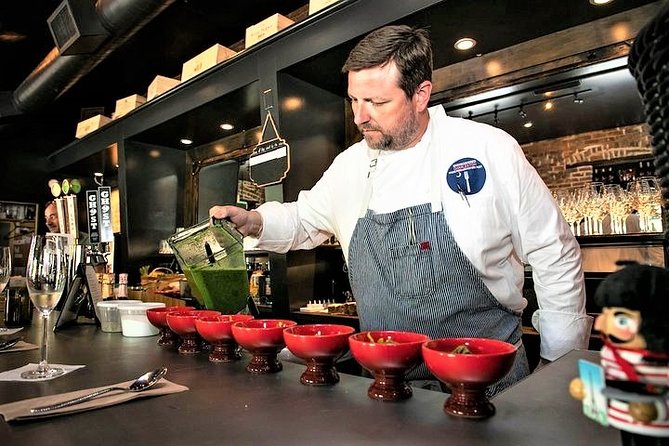
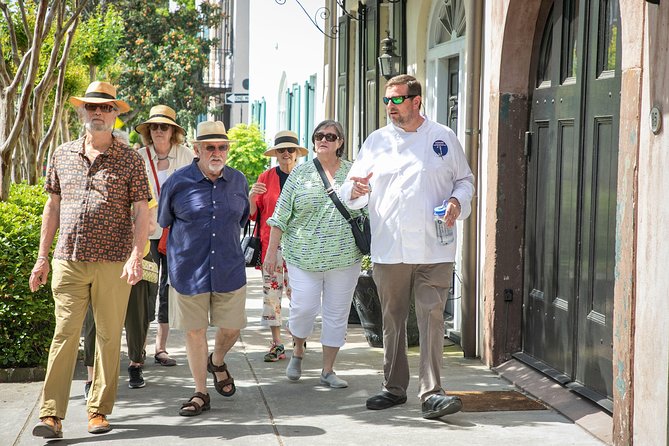
Charleston’s past makes more sense when you taste it. Chef Forrest Parker leads a 90-minute walk from the Pineapple Fountain through the historic district, tying architecture, slavery, crops, and local cooking to places such as Waterfront Park and Rainbow Row. Then he takes you to Bistro Au Vin for a cooking demonstration and three-course lunch with wine.
I like the way this tour joins food and history instead of treating them as separate subjects. I also like the small-group format, capped at 11 people, which gives the morning a more personal feel. The main drawback is physical and practical: you will walk for about 90 minutes, and the experience depends on decent weather.
Key points at a glance
- Chef Forrest Parker leads the entire experience: He is a certified chef-guide, South Carolina Chef Ambassador, historian, cook, and storyteller.
- The walk looks beyond postcard Charleston: You visit major sights, but also lesser-known places connected to enslaved cooks, local crops, and the city’s food traditions.
- Lunch is part of the lesson: Forrest demonstrates three Lowcountry recipes before serving them with carefully matched wine.
- The group stays small: A maximum of 11 people makes it easier to hear the stories and follow the cooking.
- You take the recipes home: The printed recipes give you a practical souvenir instead of another trinket.
- Special diets need advance notice: Vegetarians, vegans, pescatarians, people with dairy or nut allergies, and those with celiac disease can be accommodated when arranged ahead of time.
Why Charleston food history works so well
Charleston’s food is not just a collection of shrimp, grits, rice, greens, and seafood. It reflects the people who grew, cooked, traded, and ate those ingredients over four centuries. This tour uses food as a way into the city’s complicated past.
That matters because the city’s pretty streets can make its history look polished and simple. Forrest brings in the harder parts, including slavery and the overlooked work of enslaved chefs whose recipes still influence Lowcountry menus. The result is not a sugar-coated stroll.
I especially like that the food story includes both culture and technique. You learn not only what Charleston cooks, but why certain crops mattered, how culinary traditions changed, and how the city became such a strong food destination.
Forrest’s style is part of the appeal. The descriptions consistently point to his humor, warmth, sharp observations, and willingness to tell difficult truths. He uses the nickname Gump at times, and the tone appears relaxed rather than formal. If you prefer a quiet lecture, this may feel lively. If you enjoy a guide who can keep a group laughing while discussing serious subjects, it should suit you well.
More Cooking Classes with Wine Tasting in the USA:
- Florence: Pasta Cooking Class with Unlimited Wine
★ 4.9 · 10,285 reviews - Florence: Pasta & Tiramisu Cooking Class with Unlimited Wine
★ 4.9 · 6,708 reviews - Florence: Pasta Cooking Class with Unlimited Wine
★ 5.0 · 6,413 reviews
Starting at the Pineapple Fountain
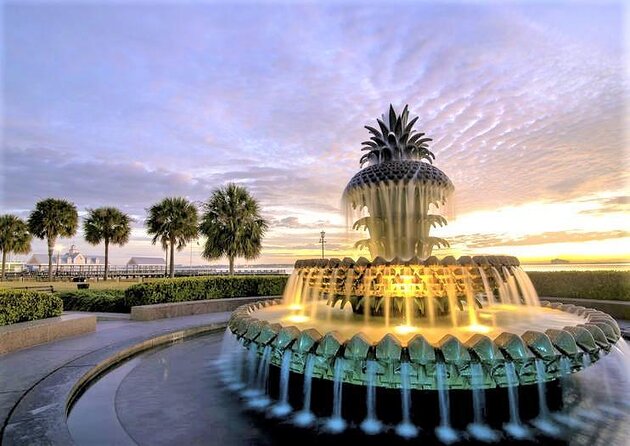
The tour begins at the Pineapple Fountain at 9:00 a.m. in Waterfront Park. This is a practical meeting point in the historic center, close to public transportation and easy to connect with before a full day of sightseeing.
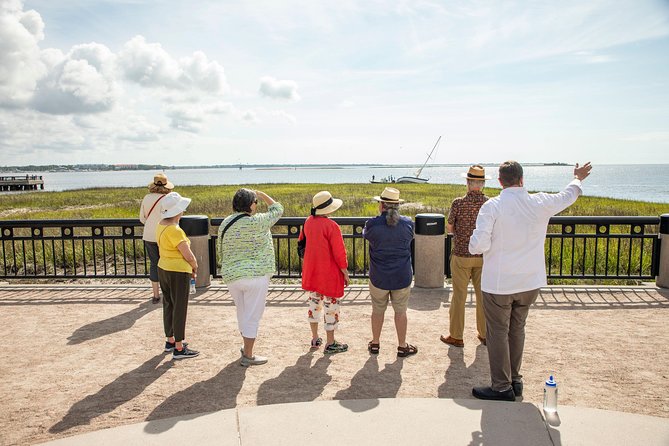
Waterfront Park gives you an immediate sense of Charleston’s setting. You are near the water, old streets, and the historic core, but the tour is not designed as a simple view-and-photo walk. Forrest uses the opening section to frame the city through its food and cultural contacts.
The early start has a benefit: the morning schedule leaves much of the day open. You can plan an afternoon museum visit, shopping, another meal, or a slower walk through the neighborhoods after the tour ends. The tradeoff is that you need to arrive ready to go at 9:00, not wander in at your leisure.
Wear comfortable shoes. The walking portion lasts about 90 minutes, and Charleston’s historic streets can be tiring even when the pace is described as leisurely. The activity calls for a moderate fitness level, so it is not the right pick if you need a fully seated morning.
From Rainbow Row to the overlooked corners
Rainbow Row is one of Charleston’s most recognizable stretches of historic houses. It is photogenic, but its value on this tour is less about taking another picture and more about placing the architecture inside a wider story.
Forrest also leads you away from the most obvious route. That is where the experience gains much of its character. You may pass locations that are easy to miss on a standard sightseeing walk, including places tied to food production, cooking, and the city’s social structure.
The tour information does not promise a fixed list of every street or stop beyond Waterfront Park and Rainbow Row. That is worth noting if you want a rigid itinerary. The route is built around storytelling, and the exact path may shift with weather, group needs, or the guide’s focus.
The best way to think about this section is as a food-centered introduction to Charleston. You still see important architecture and historic sights, but you are not simply collecting landmarks. You are learning how buildings, crops, kitchens, labor, and trade connect.
The stories behind Lowcountry cooking
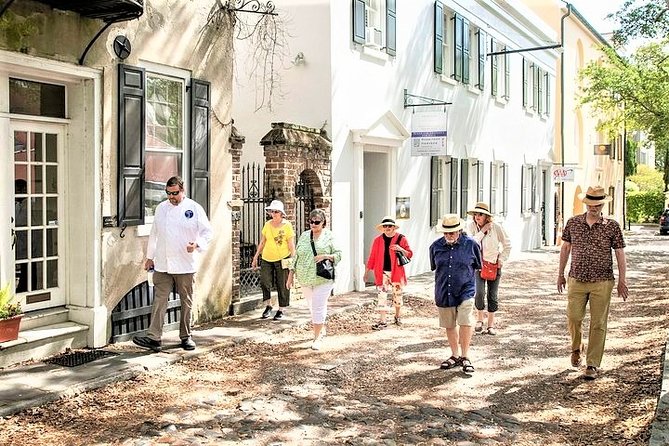
The food discussion reaches beyond familiar menu words. Forrest explores the influences that shaped Lowcountry cooking and points to the people whose work has often been left out of traditional city narratives.
One especially meaningful thread concerns an enslaved chef whose recipe continues to help define local menus. That detail gives the tour a useful purpose. It shows how food history can restore attention to people who had a major role in Charleston’s culinary identity but little control over how their contributions were remembered.
The walk also covers the history of crops and food in the region. These details help explain why certain ingredients became central to the Lowcountry table. You are not just told that a dish is traditional. You get context for how tradition formed.
I would recommend taking notes mentally or asking questions as you go. The tour is only 90 minutes, and a lot is packed into that time. Since the lunch follows soon after, the stories remain fresh when you begin tasting the dishes.
More food history around the USA:
- Atlanta: Historic Market Food Tour and Biscuit Cooking Class
★ 4.9 · 25 reviews - Taipei Cooking Class & Market Adventure in Historic Dadaocheng
★ 5.0 · 77 reviews - Cooking Class in a Historic Home in the Heart of Brindisi
★ 4.7 · 28 reviews - Catania: Cooking class set in a sea front historic villa
★ 5.0 · 5 reviews
Lunch and the cooking demonstration at Bistro Au Vin
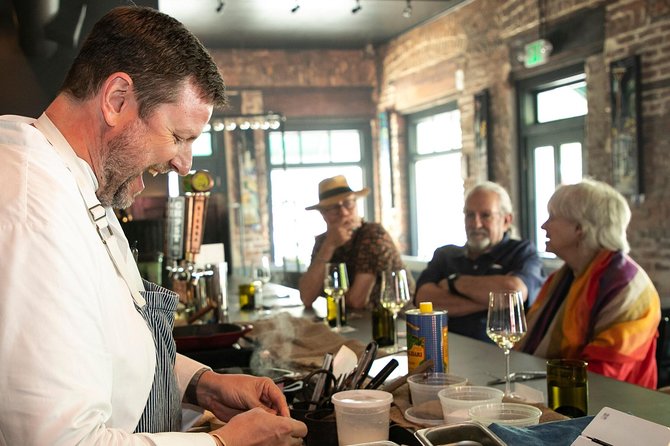
The walking portion leads to a cozy bistro, identified as Bistro Au Vin. Here the tour changes pace. You move from standing and walking to sitting, watching, tasting, and talking around a meal.
Forrest demonstrates three of his own recipes, each based on Lowcountry classics and heritage ingredients. He explains how to prepare the dishes and draws on techniques developed over more than two decades of cooking. This is not a cooking class where you spend the meal measuring and chopping. It is a demonstration paired with lunch, so you can focus on the methods, stories, and flavors.
That format is a smart choice for a half-day tour. You get useful cooking instruction without turning the entire morning into kitchen work. You also see the chef prepare the food directly rather than receiving a generic tasting plate with little explanation.
The exact menu can change, so do not book expecting a guaranteed list of three dishes. Shrimp and grits appears in the experience feedback as a memorable course, along with gazpacho and other Lowcountry preparations. The menu is built around Forrest’s recipes and the ingredients available for the day.
Three courses with wine pairings
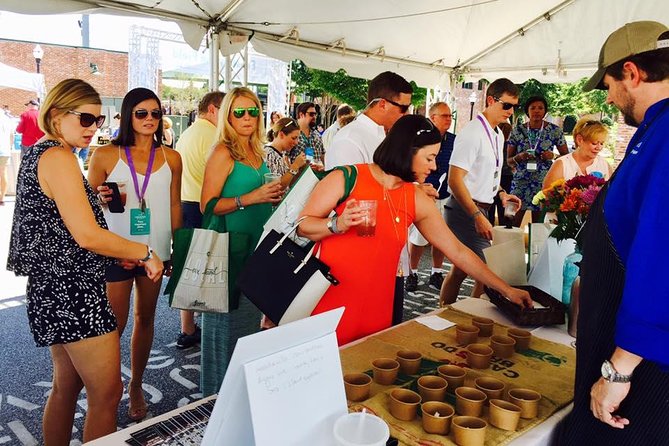
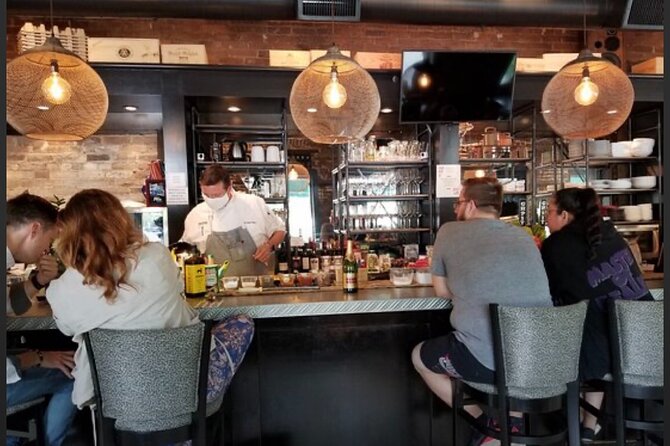
Lunch includes three courses, each paired with wine tasting pours from Bistro Au Vin. The pairings add value because the meal becomes a guided tasting rather than a standard restaurant lunch.
You can expect the wine to be served as part of the planned meal, with additional wine available for purchase if you want more. If you do not drink wine, coffee, tea, Charleston sweet tea, and filtered water are available.
The food appears to be the most praised part of the experience. The strongest reactions focus on the quality of the meal, the generosity of the portions, the shrimp and grits, and the sense that the lunch can rival the best meal of a Charleston stay. That is high praise in a city with a serious food scene, but it should be understood as a reflection of the experience’s overall appeal, not a promise that every diner will rank it the same way.
The meal is also where the tour’s ideas come together. After hearing about local ingredients, cultural influences, and the people behind the cooking, you get to taste Forrest’s interpretation of those traditions. That connection gives the lunch more meaning than a restaurant stop chosen simply for convenience.
What the small group changes
The maximum group size is 11 people. Several accounts describe groups of four, six, seven, or about eight, so the tour can feel quite intimate rather than like a large city walk.
A small group helps in two ways. First, it is easier to hear Forrest on city streets. Second, the cooking demonstration can feel more direct, with a better chance to follow the preparation and ask questions.
Small groups also create a social element. This works well for couples, friends, birthday groups, and family visits. The experience has been used for birthday celebrations and milestone trips, though there is no formal private-event guarantee in the information provided.
The tradeoff is that small-group departures may have limited availability. The tour also requires a minimum number of people to operate, so a departure can be changed or canceled if that minimum is not met.
Recipes you can actually use later
The printed recipes are one of the best practical touches. You leave with copies of Forrest’s recipes, giving you a way to recreate part of the meal at home.
A recipe card cannot reproduce every detail of a chef’s timing, ingredients, or technique. Still, it is more useful than a vague promise to remember what you tasted. If you enjoy cooking, you can use the recipes as a starting point for a Lowcountry meal.
This also makes the tour a good fit for someone in your group who likes food but is not especially interested in standard sightseeing. The cooking demonstration gives that person something active to follow, while the walk provides the wider Charleston context.
Food allergies and special diets
Food planning matters here because Forrest regularly handles meats, shellfish, eggs, dairy, nuts, and gluten. You should disclose allergies, aversions, or dietary needs before the tour, not at the table.
The experience states that common requests can be accommodated with advance notice, including vegetarian, vegan, pescatarian, dairy-free, nut-free, and celiac-friendly meals. The kitchen is not described as a restaurant with every possible substitution ready at all times, so direct communication is important.
If you have a serious allergy, contact the provider before booking or as soon as you book. Do not assume that a request added at the last minute can be handled safely.
Timing, weather, and practical comfort
The full experience lasts about four hours and begins at 9:00 a.m. It ends back at the original meeting point, so you do not need to arrange a separate ride from the bistro.
The activity requires good weather because the walking portion is central. Poor weather can lead to a different date or a full refund. Forrest has also shown flexibility in difficult conditions, including reversing the order so lunch came before the walk while waiting for heavy rain to pass. That kind of adjustment can protect the experience, but you should still bring weather-appropriate clothing.
Service animals are allowed, and the meeting point is near public transportation. The activity is offered in English. Guests must generally be 21 or older, with older teenagers allowed when accompanied by parents.
The cancellation terms are straightforward: cancel at least 24 hours before the start time for a full refund. Cancellations or changes inside 24 hours are not refunded or accepted, except when the provider cancels because of weather or insufficient numbers.
Is the combined format worth it?
The price is not provided here, so I cannot judge the exact dollar amount. I can judge what is included: a 90-minute chef-led historic walk, a cooking demonstration, three courses, wine pairings, nonalcoholic options, and take-home recipes.
Compared with booking a separate walking tour and a good restaurant meal, this format may offer strong value because the two parts explain each other. You are not simply paying for lunch and a tour placed back to back. You are paying for Forrest’s role as guide, chef, storyteller, and interpreter of Charleston’s food culture.
The value is strongest if you care about local cooking, cultural context, and small-group conversation. It is less compelling if you want a fast list of landmarks, a large amount of free time, or a hands-on class where you prepare every dish yourself.
Who should book this Charleston experience?
I would choose this tour for a first visit when you want a useful introduction to the historic center and the local food scene at the same time. It also works well later in a trip, when you have already seen the postcard sights and want a more focused way to understand the city.
Food lovers should give it serious consideration, especially if shrimp and grits, heritage ingredients, and regional cooking appeal to you. History fans who want a guide willing to address slavery and cultural influence will also find more here than in a standard architecture walk.
Couples, small friend groups, and families with older teenagers are a natural fit. The experience has also worked well for birthdays and other celebrations.
I would skip it if you dislike walking, cannot commit to advance dietary planning, or want a guaranteed menu and fixed route. The morning works best when you arrive curious, hungry, and ready for both the charm and the difficult truths of Charleston.
FAQ
Where does the tour start?
It starts at the Pineapple Fountain, 1 Vendue Range, Charleston, South Carolina 29401.
What time does the tour begin?
The tour begins at 9:00 a.m.
How long does the experience last?
The full experience lasts approximately four hours.
How long is the walking tour?
The walking portion lasts about 90 minutes.
Where does the tour end?
The activity ends back at the original meeting point.
What food is included?
Chef Forrest Parker demonstrates three recipes and serves lunch based on Lowcountry classics and heritage ingredients.
Is wine included?
Yes. Bistro Au Vin provides wine tasting pours paired with the recipes. Additional wine can be purchased separately.
Are nonalcoholic drinks available?
Yes. Charleston sweet tea, filtered water, coffee, and tea are available for those who do not want wine.
Can dietary restrictions be accommodated?
Vegetarian, vegan, pescatarian, dairy-free, nut-free, and celiac-friendly requests can be accommodated when arranged in advance. Contact the provider directly before the tour.
What is the cancellation policy?
You can cancel at least 24 hours before the start time for a full refund. Cancellations or changes made less than 24 hours before the start time are not refunded or accepted. Weather or minimum-group cancellations may lead to another date or a full refund.
Should you book it?
Book this experience if you want Charleston explained through its cooking, not just its buildings. Chef Forrest Parker’s combination of honest history, humor, a small walking group, a three-course lunch, wine pairings, and usable recipes gives the morning a clear purpose.
The key question is not simply whether you like food. It is whether you want to understand where that food came from. If the answer is yes, this is a strong choice for a Charleston morning.
New cooking classes around the USA
- San Diego: 2-Hour Pasta Cooking Class at a Local Brewery★ 5.0 · 2 reviews
- San Francisco: Dumpling Cooking Class & 3-Course Dinner★ 5.0 · 10 reviews
- New Orleans: Food Walking Tour & Cooking Class Experience★ 5.0 · 8 reviews
- New Orleans: Hands-on Cajun Roux Cooking Class★ 4.9 · 7 reviews
- New Orleans: Traditions Cooking Class★ 5.0 · 9 reviews
- New Orleans: Cooking Class & Cocktail Walking Tour★ 4.7 · 16 reviews
- Atlanta: Historic Market Food Tour and Biscuit Cooking Class★ 4.9 · 25 reviews
- Chinese Dumplings Cooking Class in NYC – Fun & Delicious!★ 5.0 · 4 reviews
USA Cooking Classes, side by side.
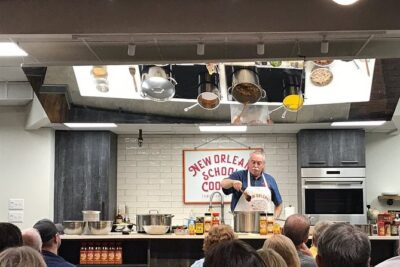
New Orleans Demonstration Cooking Class with Meal
Read our review →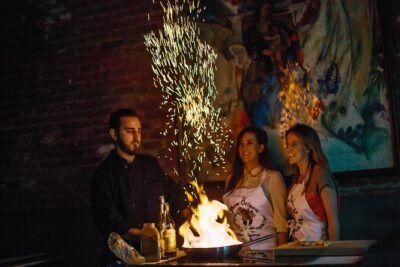
New Orleans Hands-On Cooking Class with Meal
Read our review →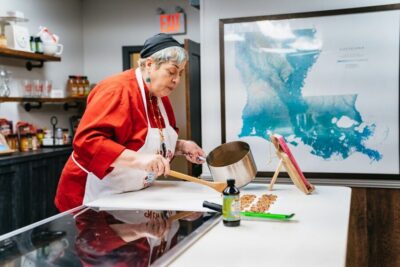
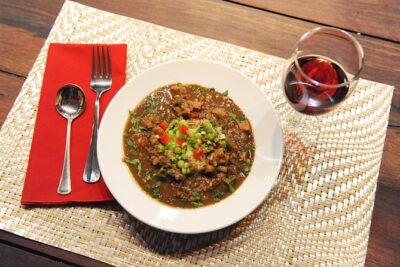
Hands-on Cajun Roux Cooking Class in New Orleans
Read our review →
Atlanta: Historic Market Food Tour and Biscuit Cooking Class
Read our review →
New Orleans: Cooking Class & Cocktail Walking Tour
Read our review →
Private New Orleans Cajun Cooking Class with a Local Courtland
Read our review →
San Francisco: Dumpling Cooking Class & 3-Course Dinner
Read our review →This kitchen also appears in