
Review · ZANZIBAR
Zanzibar: Spice Farm Tour with Traditional Cooking Lesson
Zanzibar’s spices make the most sense when you meet them on the plant. On this three-hour tour, you can rub fresh cinnamon bark between your fingers, smell vanilla and cardamom before they reach a kitchen, and taste fruit picked at the farm. The visit ends with a Swahili lunch you help prepare.
I like the hands-on cooking, especially making coconut milk and working with cassava leaves. I also like the guides’ mix of spice knowledge, local history, and humor. Chiquito, Ahmad, Abdullah, Khamis, and Juma have all received warm praise for making the morning easy and engaging. The main consideration is that the cooking portion may be more of a demonstration than a full class, and some decorative leaf crafts can feel touristy.
Key points to know before you book
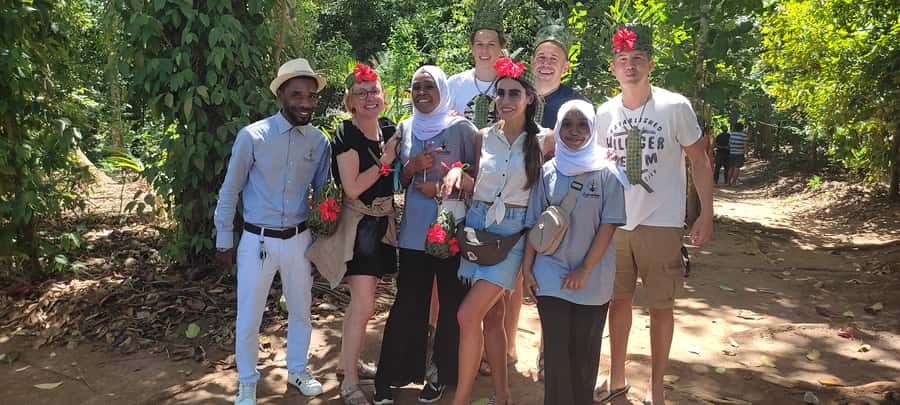
- Fresh spices in plant form: Smell, touch, and taste cloves, vanilla, cinnamon, nutmeg, cardamom, black pepper, turmeric, ginger, and lemongrass as living plants or freshly prepared produce.
- Lunch is part of the activity: You help with parts of a traditional meal before eating it at the farm.
- Coconut work is a highlight: Watch a climber pick young coconuts, then taste the fresh fruit and learn how coconut milk is made.
- Pickup keeps the morning simple: Meet at the Old Fort in Stone Town at 9:00 AM, or arrange pickup from a beach hotel anywhere in Zanzibar.
- Bring cash for the farm shop: Spices can only be purchased with cash.
- Allow for an uneven cooking experience: Some people take part directly, while others may mainly watch demonstrations.
Why Zanzibar is called the Spice Islands
Spices are not just a souvenir theme here. Cloves, cinnamon, nutmeg, black pepper, vanilla, cardamom, turmeric, ginger, and lemongrass have shaped Zanzibar’s food, trade, household remedies, and economy.
The Zanzibar Archipelago, along with Tanzania’s Mafia Island, is often called the Spice Islands because of this long connection. A farm visit gives you a useful link between the finished jars in a market and the plants that produce them.
I find that this is the strongest part of the experience. In a shop, a bundle of cinnamon sticks is easy to admire and just as easy to forget. On the farm, you can see where the scent comes from, feel the texture, and learn how the ingredient is used in cooking or traditional medicine.
The guide explains the plants as you walk. English and Swahili are offered, so you can ask questions directly in English or pick up a few Swahili words along the way. Several guides are praised for adding stories about daily life and Zanzibar’s past rather than giving only a list of plant names.
More Farm Cooking Classes in the world:
- Half-Day Thai Cooking Class at Organic Farm in Chiang Mai
★ 5.0 · 19,087 reviews - Cooking Class and Lunch at a Tuscan Farmhouse with Local Market Tour from Florence
★ 5.0 · 4,831 reviews - Chiang Mai: Cooking Class, Market & Thai Herbs Garden Tour
★ 4.9 · 4,824 reviews
The spice walk: smell before you taste
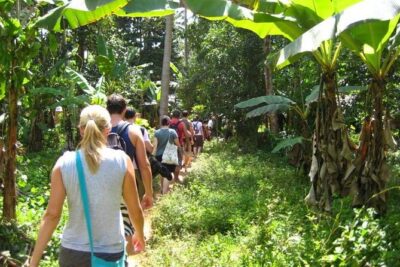
The tour begins at an organic spice farm in the Unguja South Region. This is a working farm, not simply a display garden, so the experience is built around seeing useful plants in their growing setting.
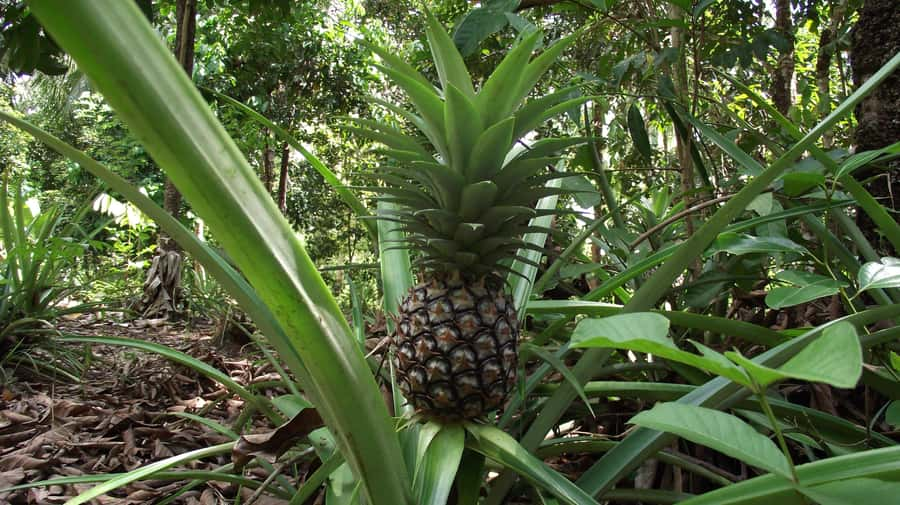
You may encounter familiar spices such as cinnamon, vanilla, nutmeg, clove, black pepper, cardamom, turmeric, ginger, and lemongrass. The fun is in recognizing a scent you know from your kitchen, then meeting the fresh plant behind it.
Fresh spices can smell and feel quite different from dried supermarket versions. Cinnamon bark has a direct, woody scent. Lemongrass is bright and sharp. Ginger and turmeric show their connection to the soil, while vanilla gives you a chance to see an ingredient that is usually sold as a pod or extract.
You are encouraged to touch, smell, and taste selected plants and herbs. That makes this a good choice for people who learn through their senses, including families and curious cooks. The guide also explains how different plants are used to flavor food and as traditional remedies.
Do not expect a formal botany lesson with labels at every turn. The value comes from the guide’s explanations and your chance to interact with the plants. The quality of the morning can depend on who leads your group, but guides such as Chiquito, Abdullah, and others have been singled out for clear explanations and a good sense of humor.
Tropical fruit, jackfruit, and a fresh coconut
Spices are only half the farm visit. Tropical fruit adds a welcome change of pace and gives you flavors you may not often find at home.
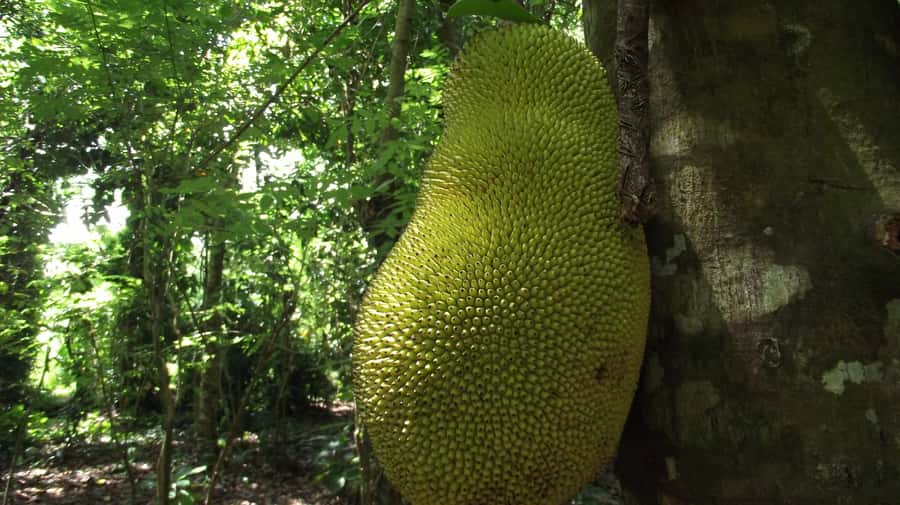
One highlight is fresh jackfruit, described here as the largest fruit in the world. It is big, heavy, and striking to see, with a sweet fruit inside. Tasting it at the farm makes the fruit more memorable than seeing prepared pieces at a hotel breakfast.
You also get to try young coconut. A coconut climber goes up the tree to pick fresh fruit, giving you a direct look at how coconuts reach the table. The result is simple but special: fresh coconut is a very different experience from packaged coconut water or dried coconut.
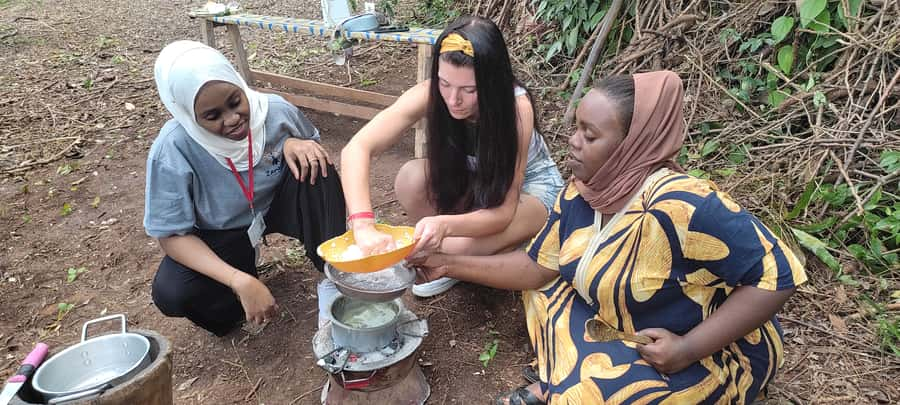
The coconut segment also leads into the cooking lesson. You learn how to make coconut milk, an important base for many East African and Swahili dishes. This is one of the best links between the farm walk and lunch because you see an ingredient being prepared from its source.
A small practical note: bring water, a sun hat, sunscreen, and comfortable shoes. The activity takes place outdoors, and the midday sun can be strong.
Harvesting cassava leaves and preparing lunch
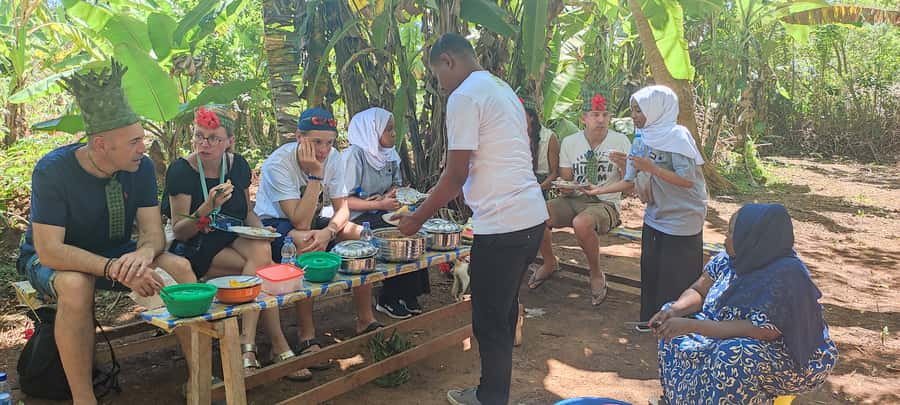
The cooking section is the heart of the tour. You may join a cassava leaf harvest, help prepare ingredients, make coconut milk, and take part in some of the food preparation before lunch.
The wording matters here. This is not guaranteed to be a full cooking school where you prepare every dish from start to finish. One person may be actively involved with several tasks, while another may watch a demonstration and help with a small part of a side dish.
That difference is the main weakness to keep in mind. If your priority is a detailed, step-by-step cooking lesson, you may find the participation lighter than expected. If you mainly want to understand how a local meal comes together and then eat it fresh, the format works well.
The food itself is repeatedly praised, and for good reason: you eat it soon after seeing the ingredients and helping with the preparation. The meal is a traditional Swahili lunch, made with local produce and spices from the farm.
I like this arrangement better than a cooking class built around a prepared recipe card. It puts the focus on food as part of everyday life. You see the ingredients, take part in basic work, and then share the result at the same place.
Do not eat a large breakfast before you go. Fruit tasting, coconut, cooking, and lunch add up to a generous morning of food.
More cooking classes around the world:
- Florence: Pasta Cooking Class with Unlimited Wine
★ 4.9 · 10,285 reviews - 3 in 1 Cooking Class near Navona: Fettuccine, Ravioli & Tiramisu
★ 5.0 · 7,376 reviews - Florence: Pasta & Tiramisu Cooking Class with Unlimited Wine
★ 4.9 · 6,708 reviews - Florence: Pasta Cooking Class with Unlimited Wine
★ 5.0 · 6,413 reviews
What the guides add to the experience
The guide makes a major difference. A good guide does more than identify a plant. You want someone who can explain how the spice connects with food, household use, local work, and Zanzibar’s past.
Chiquito is praised for being funny as well as well informed. Ahmad is mentioned as a driver who added useful conversation about life in Zanzibar, while Abdullah is praised for making the activity especially enjoyable. Khamis and Juma have also been remembered for their humor, photography, and friendly approach.
These names do not mean you can request a particular guide or that one person will lead every departure. They show the kind of service the activity aims to provide: a local guide, a driver when transfers are included, and plenty of room for questions.
The private group format is useful. You are not placed into a large shared crowd, so the guide can adjust the pace and let you spend more time at plants that interest you. It also makes the cooking section more personal, although the exact amount of hands-on work can still vary.
The guide may teach you a few Swahili words along the way. That is a small detail, but it helps turn the outing into more than a farm tour.
The farm shop and buying spices
The tour finishes with time to purchase spices from the farm shop. This is a practical chance to take home cinnamon, cloves, teas, or other products you have just seen growing.
I recommend buying only what you can use. It is easy to get carried away after smelling everything in fresh form, but spices lose their appeal if they sit unopened in your luggage. Small amounts of the ingredients you actually cook with are usually the best souvenir.
Bring cash. Spice purchases can only be made with cash, and this is not the place to rely on a card or phone payment. Cash is also useful for any optional tipping connected with extra demonstrations or decorative items.
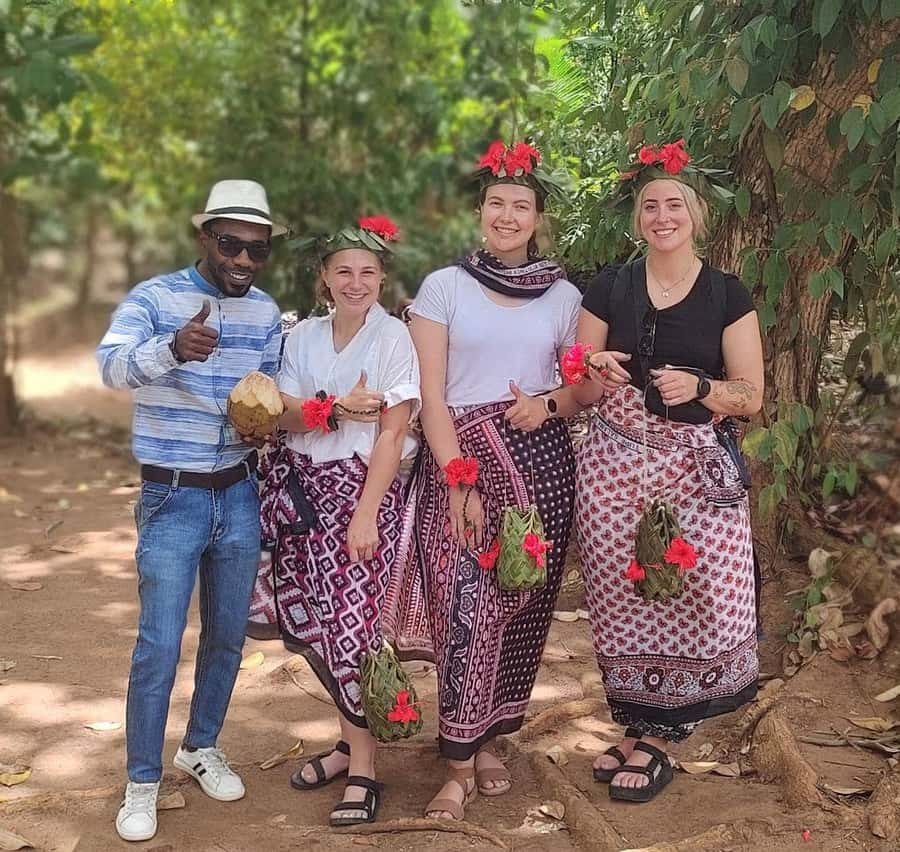
One past experience raised an important point: leaf-made crowns, ties, and handbags can feel like a tourist add-on, especially if tipping is then expected. You can enjoy the playful side of the visit without feeling obliged to treat every extra performance as part of the core tour.
The shop is still worthwhile because you can connect the product with the plant you have just seen. That makes the purchase more meaningful than buying anonymous spice packets in a city souvenir store.
Transport, timing, and the $65 price
The tour costs $65 per person and lasts three hours. Pickup is available from the meeting point in front of the Old Fort on Mizingani Road in Stone Town at 9:00 AM, or from beach hotels anywhere in Zanzibar.
The price includes the local guide, lunch, community contribution, and transportation from the listed pickup points. That is fair value if you want transport, a guided farm visit, a meal, and a cooking activity in one package.
The value is strongest for visitors based in Stone Town or at a beach hotel who would otherwise need to arrange their own transport to the farm. It also helps that the activity combines several small experiences: spice education, fruit tasting, coconut preparation, cooking, lunch, and shopping.
Three hours is enough for a focused introduction, but it is not a full-day farm program. A few hours gives you a clear taste of Zanzibar’s spice culture without taking over the entire day. On the other hand, one lower-rated experience found the timing poorly planned and had to shorten the tour. If you want to examine every plant at length, the schedule may feel tight.
Pickup from a beach hotel can make the total morning longer than the stated three hours because the tour duration refers to the activity itself. Confirm the start time and pickup details when booking.
Free cancellation is available up to 24 hours ahead for a full refund, and you can reserve now and pay later. The tour is wheelchair accessible, offered in English and Swahili, and designed as a private group. It is not suitable for pregnant women.
Who should book this Zanzibar spice tour?

I would choose this tour if you want a cultural activity with food at its center. It suits first-time visitors who want a quick introduction to Zanzibar’s plants, cooking, and local life without committing to a full-day excursion.
It is also a good match for cooks, gardeners, families, and anyone who likes to learn by touching and tasting. The fresh coconut, jackfruit, and spice plants give children more to do than a talk-heavy historical tour, though the outdoor setting means you should prepare for sun and walking.
You may want a different activity if your main goal is an advanced cooking course. The participation can be uneven, and the farm team may demonstrate some dishes rather than have you prepare every part. You should also skip it if you are pregnant, since the activity is not considered suitable.
Should you book it?
Book this spice farm tour if you want an easy, food-focused morning that connects Zanzibar’s famous spices with real plants and local cooking. The best parts are the sensory spice walk, fresh tropical fruit, coconut preparation, and lunch made with your help.
Go in with realistic expectations. This is a guided farm visit with a cooking component, not a professional culinary workshop. Bring sun protection, water, comfortable shoes, and cash for the shop. If that balance suits you, $65 is a sensible price for a private three-hour experience with transport, lunch, and a local guide.
FAQ
Where does the tour take place?
The tour takes place at an organic spice farm in the Unguja South Region of Zanzibar, Tanzania.
Where is the Stone Town meeting point?
Meet in front of the Old Fort on Mizingani Road in Stone Town at 9:00 AM.
Is hotel pickup available?
Yes. Pickup is available from beach hotels anywhere in Zanzibar, as well as from the Stone Town meeting point.
How long does the activity last?
The guided activity lasts three hours.
What is included in the price?
The price includes pickup from the listed locations, a local guide, a contribution to the local community, and lunch.
Which languages are offered?
The tour is offered in English and Swahili.
Is the tour private?
Yes. The activity is arranged for a private group.
Can I buy spices at the farm?
Yes. You can purchase fresh spices from the farm shop, but you need cash because spice purchases can only be made with cash.
What should I bring?
Bring comfortable shoes, a sun hat, sunscreen, water, and cash.
Is the tour suitable for pregnant women?
No. The activity is listed as not suitable for pregnant women.
New cooking classes around the world
- Shinjuku Tokyo: Authentic Japanese Home-Style Culinary Class★ 4.9 · 125 reviews
- Shibuya Tokyo: Onigiri & Tamagoyaki Cooking Class★ 5.0 · 4 reviews
- M.O.M COOKING CLASS★ 4.8 · 6 reviews
- Seville: Paella-Cooking Experience with Sangria & Full Meal★ 4.9 · 42 reviews
- Shanghai: Authentic Chinese Cooking Class with Master Chef★ 5.0 · 2 reviews
- Sestri Levante: Pesto & Cooking Classes, Wine Tasting★ 4.9 · 56 reviews
- Seville: Paella Cooking Class & 30-Min Local Expert Q&A★ 4.8 · 37 reviews
- Seoul: Korean Kimchi Cooking Class in the Heart of the City★ 5.0 · 3 reviews
Zanzibar Cooking Classes, side by side.

Half-Day Kuza Cave Swimming Adventure and Cooking Class
Read our review →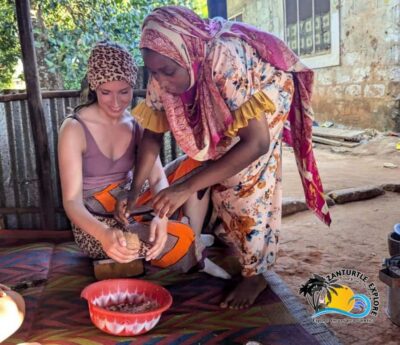
Zanzibar: Spice Farm Tour with Traditional Cooking Class
Read our review →
Cooking Class Tour, Stone Town Tour, Horseback Riding
Read our review →This kitchen also appears in