
Review · MARRAKECH
Marrakech: Atlas Mountains Cooking Class with Berber Family
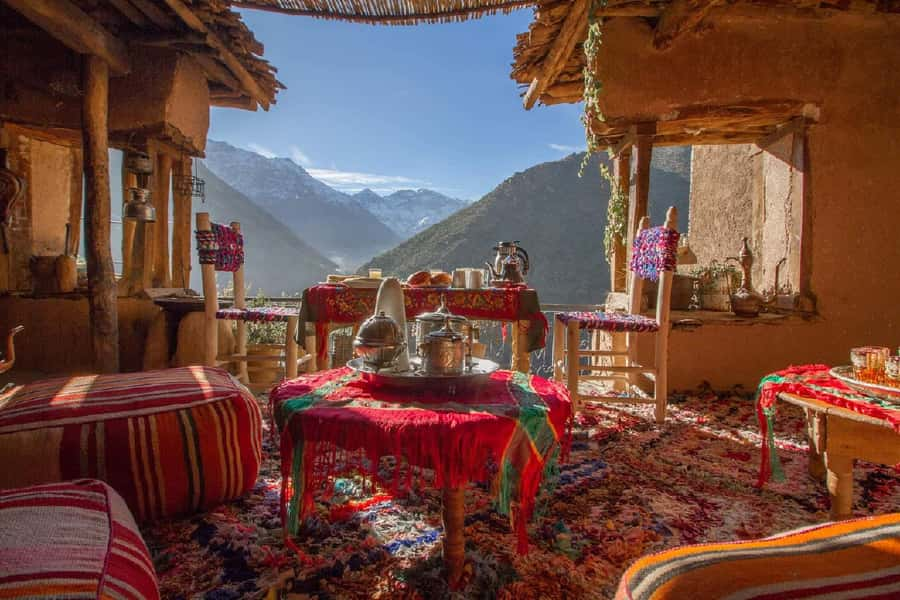
The best part of this day is not simply learning to make tagine. It is cooking in a family home with a local grandmother, then eating what you prepared on a terrace above an Atlas Mountain village. The drive from Marrakech brings changing views, Berber villages, and a welcome break from the city heat.
I like the market stop, where you help choose the vegetables used in lunch. I also like the small groups, often six people or fewer, which give you time to ask guides such as Ibrahim, Badr, or Ismail about Amazigh culture, village life, and local traditions. The main catch is timing: lunch may not be ready until 2:30 to 4 p.m., and several people found the full day took about nine hours.
Key points to know before you go
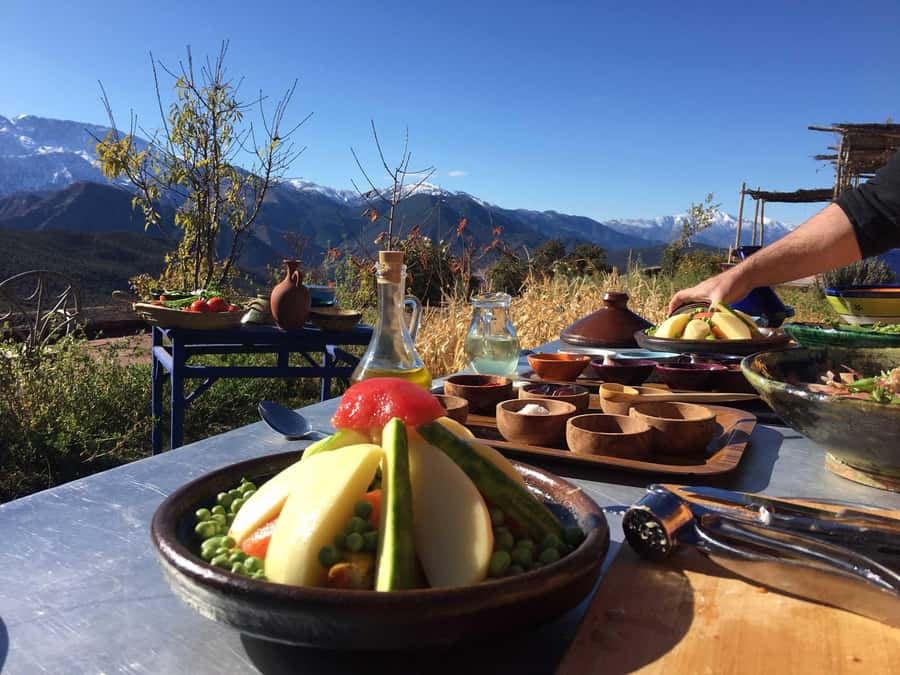
- You shop for the cooking ingredients at a local market before reaching the mountain village.
- The menu commonly includes chicken tagine, couscous, and firewood-baked bread, with tea or coffee and a three-course lunch.
- The class takes place in a real family home, often led by the guide’s mother, aunt, or grandmother.
- A short uphill walk on narrow paths and steps leads from the vehicle to the house.
- The Atlas scenery is part of the value, especially from the family terrace near Imlil and views toward Jebel Toubkal.
- Plan for a late lunch and a long day, even though the advertised duration is seven hours.
Leaving Marrakech for the High Atlas
Your day begins with hotel pickup in Marrakech. If you stay in a riad inside the Medina, the vehicle cannot usually reach the door, so pickup is arranged at the nearest accessible point. That small detail matters. Confirm the meeting place in advance, ideally by WhatsApp a day or two before the tour.
The drive takes you away from Marrakech’s ochre walls and busy streets toward the Atlas Mountains. You pass Berber villages and open countryside, with the views becoming the main entertainment between stops. The vehicle is air-conditioned, and bottled water is included.
The road can be winding, especially as it climbs. If you suffer from motion sickness, bring medication such as Gravol and sit where the ride feels most comfortable. One practical point is easy to miss: the car may be warm on the return trip even with air-conditioning running, so carry water and dress in layers.
The mountain air is often cooler than in Marrakech. In winter, the difference can be sharp, so bring warm clothing as well as a sun hat. Comfortable shoes are important from the start, since this is not a vehicle-only outing.
More cooking classes around Marrakesh:
- Marrakech: Moroccan Cooking Class with Pickup
★ 4.6 · 1,862 reviews - Marrakech: Traditional Moroccan Cooking Class & Market Visit
★ 4.8 · 1,861 reviews - Marrakesh: Moroccan Dishes Cooking Class with a Local Chef
★ 5.0 · 1,615 reviews
Choosing vegetables at a local market
Before reaching the family home, you stop to buy the ingredients. This is a simple part of the day, but I think it gives the cooking class more meaning. Instead of receiving a prepared basket of produce, you see the shopping process and help select the vegetables that will become lunch.
The stop is generally at a local grocery or roadside market rather than a grand food hall. Guides help you choose good produce and may explain the ingredients as you go. You can also see how a meal begins in ordinary mountain life: with fresh vegetables, basic supplies, and careful preparation.
This is a useful contrast with a cooking class held in a city restaurant. You are not only learning a recipe. You are seeing the connection between the market, the kitchen, and the table.
The class is not aimed at professional cooks. The methods are practical and hands-on. You may help wash and cut vegetables, arrange a tagine, prepare couscous, and shape bread. The food is traditional and straightforward, although one person found the cooking technique itself fairly simple. The real value comes from doing it alongside the family and learning how the meal fits into daily life.
Walking uphill to the family home
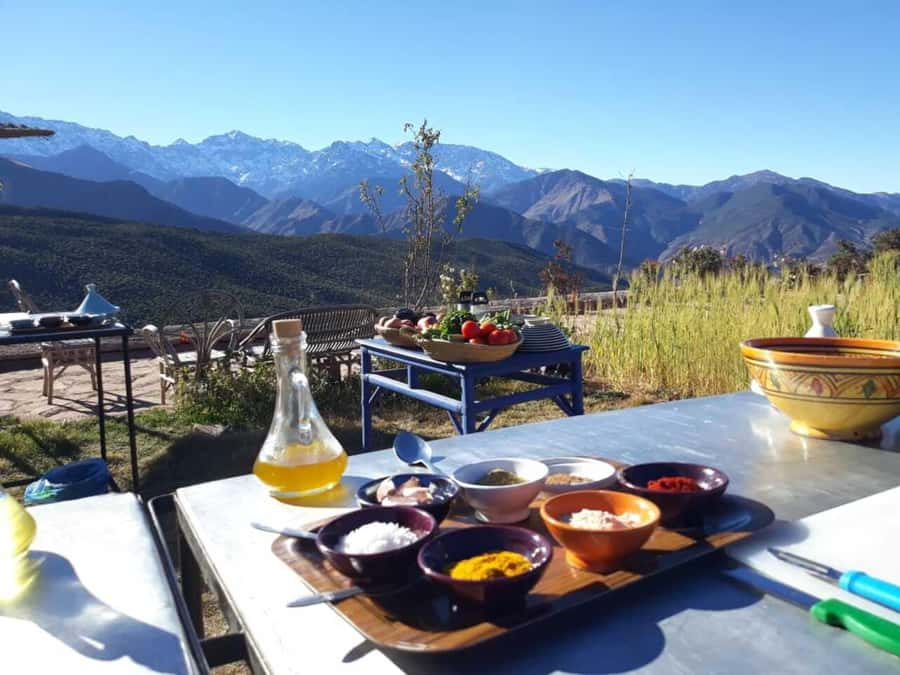
After the market and mountain drive, you reach the village area. From there, expect a short walk to the house. Descriptions from the day vary from about five minutes to 15 minutes, but the common point is that it goes uphill on narrow paths with steps.
This walk is manageable for many people, yet it is not suitable for anyone with serious mobility difficulty. The experience is not wheelchair accessible, and the tour is specifically listed as unsuitable for wheelchair users. Wear shoes with a firm grip, especially if the path is wet or uneven.
The walk also explains why the setting feels different from a standard day tour. You are heading into a family compound rather than pulling up beside a large restaurant. The home may include terraces, a garden, traditional cooking equipment, and mountain views. Cats are also part of the scene at some homes, a detail that younger children tend to enjoy.
The family homes are lived-in places, not staged cultural displays. That can mean simple surroundings and a slower pace. It also creates the personal quality that makes this experience different from a city cooking lesson.
Cooking tagine, couscous, and bread with a grandmother
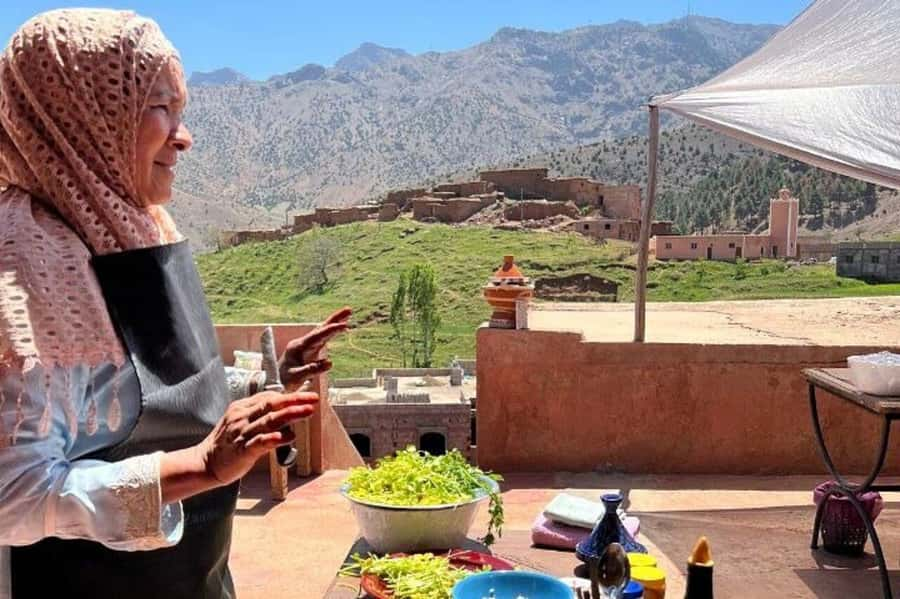
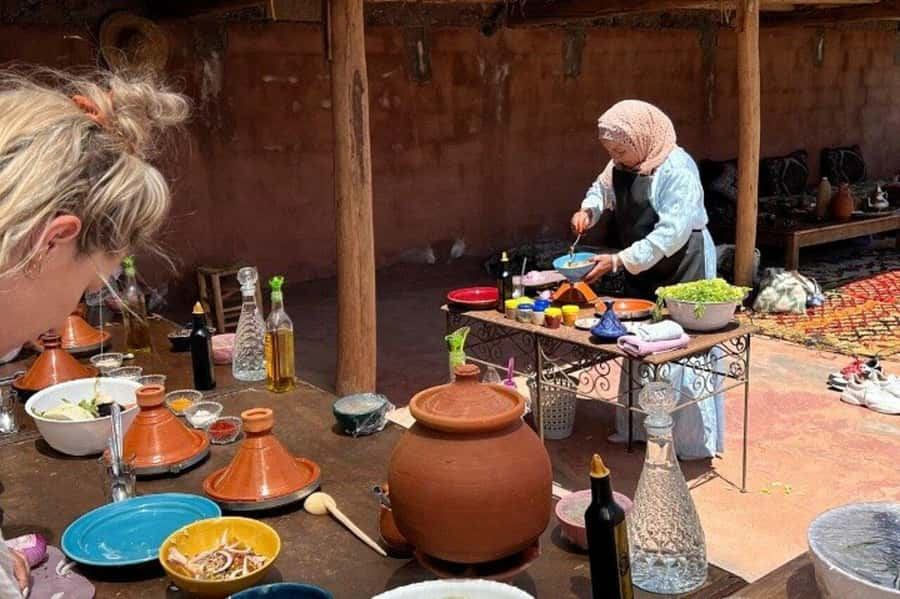
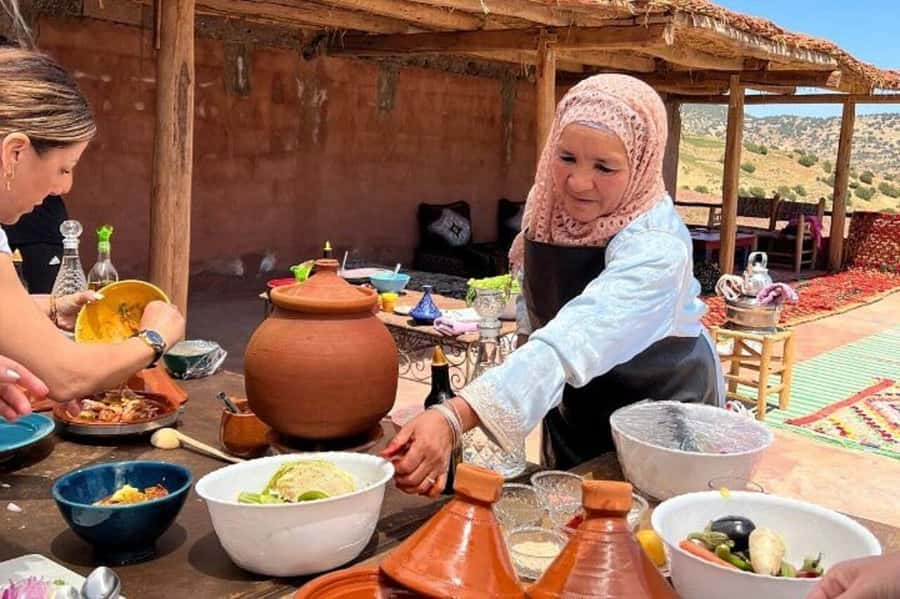
The cooking session is usually led by the guide’s mother, aunt, or grandmother. Names vary by host family, with Yemna, Yamina, and other family members teaching the group while guides translate and explain in English or French.
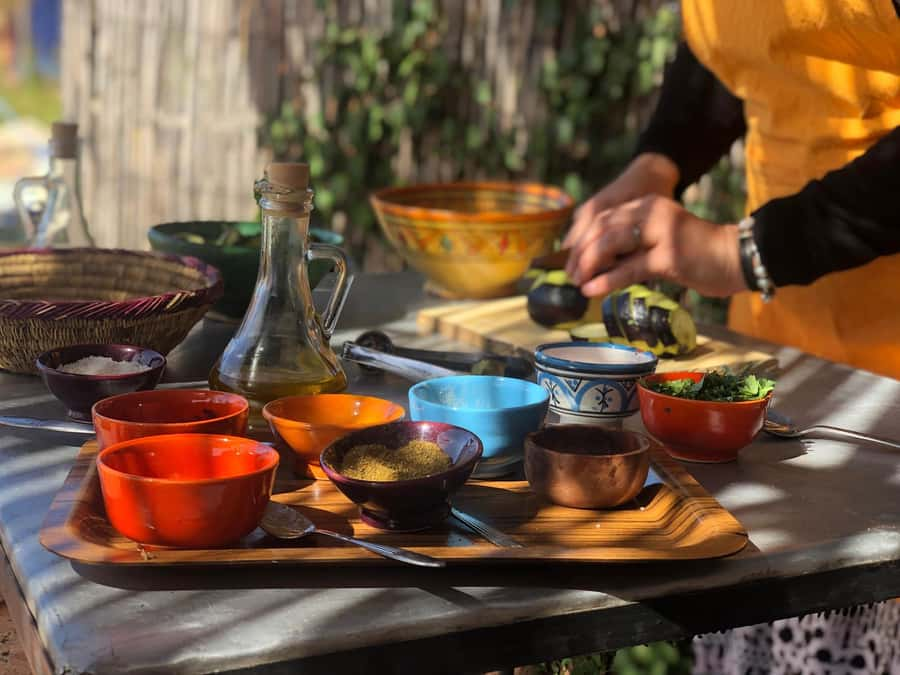
The recipes commonly include a chicken tagine, vegetable couscous, and traditional bread. You may also prepare tea or use fresh herbs from the garden. The class often covers the order of preparation, how to arrange vegetables in the tagine, how couscous is handled, and how bread is baked in a wood-fired oven.
The most memorable element is the human contact. A guide such as Ibrahim or Badr may explain Amazigh language, customs, and the history of the area while his mother or aunt demonstrates the food. Communication is usually supported by the guide, so you do not need to speak French or Arabic to take part.
The experience is hands-on, but it is not a formal cooking school with printed recipes, individual workstations, or restaurant-style instruction. You should book it for the setting and family exchange as much as for advanced culinary training. If you want to master restaurant techniques, a dedicated cooking school in Marrakech may offer more precise instruction. If you want to understand how a mountain family prepares lunch, this setting has the advantage.
Food allergies and special diets can sometimes be accommodated. One family prepared a separate tagine for a gluten-free participant and took care with a child’s nut allergy. Still, you should state your requirements clearly when booking and repeat them to the guide before cooking begins.
Same kitchen, a different dish:
- Marrakech: Moroccan Cooking Class with a Local Family
★ 4.9 · 668 reviews - Marrakech: Moroccan Cuisine Cooking Class in Local Home
★ 4.8 · 508 reviews - Marrakech: Moroccan Cooking Workshop at La Maison Arabe
★ 5.0 · 446 reviews - Marrakech: Tajine Cooking Class in a Traditional Riad
★ 4.8 · 424 reviews
Tea, stories, and a three-course lunch
Arrival often includes tea, coffee, or a small snack such as cake. This gives you time to settle in and hear about the village before the food is ready. Guides who grew up in the area can add useful context about the mountains, family life, farming, and local traditions.
Lunch is the payoff for the long preparation. The food is served in the family home, often on a terrace with broad mountain views. The meal is generally plentiful and includes the dishes you helped prepare, making it more satisfying than simply ordering the same food at a restaurant.
The usual meal is a three-course lunch, but do not expect to sit down early. Several schedules placed the meal around 2:30 p.m., while others said it arrived between 3 and 4 p.m. Eat a solid breakfast before pickup. A small snack in your bag is also sensible, provided you follow the tour’s food and allergy guidance.
The food uses fresh ingredients selected earlier in the day. That does not mean every dish will suit every palate, and the cooking is intentionally home-style rather than refined. Still, eating a tagine you helped prepare, with the family nearby and the mountains beyond the terrace, gives the meal a stronger sense of place.
Meeting women at a local cooperative
The day also includes a visit with women at a cooperative in the valley, described in the program as being in the Ourika Valley. This adds another look at community life beyond the family kitchen.
The cooperative visit is not the main reason to book the tour, and the exact balance between the market, cooperative, cooking, and driving may vary. Still, it helps place the family experience in a wider setting. You see that local traditions are not only preserved in the home. They are also part of organized community work.
Keep expectations practical. This is a full-day mountain and food outing, not a detailed social enterprise tour. The strongest part remains the time spent with the host family and the meal you prepare together.
What the $54 price really covers
At $54 per person, the price includes hotel pickup and return, an air-conditioned vehicle, a local guide, the cooking class, lunch, bottled water, and tea or coffee. You are also paying for the drive into the Atlas Mountains and the time spent with a family rather than only for the food on the plate.
That makes the price reasonable for a full day, particularly if your priority is a small-group experience with transport from Marrakech. A restaurant cooking class may give you more structured instruction, but it may not include the mountain drive, market shopping, family home, village walk, or cultural conversation.
The value is strongest for people who see the meal as part of a wider cultural visit. If you only want to learn a reliable tagine recipe in a short session, the seven-hour commitment may feel excessive. You also need to account for the late return. A few people found the total outing closer to nine hours, so do not schedule a tight dinner reservation or evening activity.
The group limit is 10 people, though some outings have had only four or six participants. That size keeps the class personal and makes it easier to help with the food. It also means the balance of English and French can matter. If a group includes many French speakers, an English-speaking participant might miss some of the guide’s explanations.
Who will enjoy this Atlas Mountains cooking class
I would choose this experience if you want a day outside Marrakech that combines scenery, food, and contact with a local family. It suits couples, families with children who can manage the walk, and people who prefer a small group to a large coach tour.
It is especially good for:
- Food lovers who want to shop for ingredients and prepare the meal themselves.
- Families looking for a cultural activity with practical participation and a generous lunch.
- First-time visitors to Morocco who want an introduction to Amazigh culture and mountain life.
- Couples who value a warm, personal setting, including special touches such as traditional dress for celebrations.
- Photographers and walkers who want mountain views without signing up for a full trekking day.
I would hesitate if you have limited mobility, severe car sickness, or a firm evening schedule. The mountain road can be winding, the walk can be steep, and lunch comes late. This is also not the right choice if you expect a polished school kitchen or a detailed written recipe book.
Bring comfortable walking shoes, warm layers, a hat, water, and a camera. Pets are not allowed. The activity is offered in English and French, with pickup included from Marrakech accommodations.
Should you book it?
Yes, if you want the family connection as much as the food. The cooking itself is simple, but the combination of market shopping, mountain scenery, a village walk, home cooking, and conversation with people who live there gives the day its value.
Book it with realistic timing. Eat breakfast, allow up to nine hours, prepare for winding roads, and confirm your pickup point. If you can handle the uphill walk and late lunch, this is one of the better ways to trade Marrakech’s crowded streets for a generous meal and a close look at everyday Amazigh hospitality.
FAQ
How long does the Atlas Mountains cooking class last?
The advertised duration is seven hours, but the full outing may take closer to nine hours. Allow extra time if you have dinner reservations or evening plans.
What food do you cook?
The cooking commonly includes traditional chicken tagine, vegetable couscous, and bread. The bread may be baked in a wood-fired oven.
Is lunch included?
Yes. A three-course lunch is included, along with bottled water and coffee or tea.
Where does the cooking class take place?
The class takes place in a Berber family home in a High Atlas village, generally in the Imlil area according to the activity details and day descriptions.
Do I need to walk to the family home?
Yes. After arriving by vehicle, you take a short uphill walk on narrow paths and steps. The walk may take about five to 15 minutes.
Is this tour suitable for wheelchair users?
No. The activity is not suitable for wheelchair users or people with mobility impairments because of the uphill village path and steps.
What languages does the guide speak?
The live tour is offered in English and French.
Is hotel pickup included?
Yes. Hotel pickup and return are included. If your riad is inside the Medina and cannot be reached by car, pickup is arranged from the nearest accessible point.
Can dietary restrictions be accommodated?
Dietary needs and allergies can sometimes be accommodated. Tell the operator in advance and remind the guide before the cooking begins.
Can I cancel the booking?
You can cancel up to 24 hours in advance for a full refund. A reserve-now, pay-later option is also available.
New cooking classes around Marrakesh
- Moroccan Food Cooking Class with a Local Chef in Marrakech★ 4.7 · 90 reviews
- Marrakech: 3-Hour Open-Air Moroccan Cooking Course★ 4.9 · 74 reviews
- Moroccan cooking class in Marrakech with berber chef★ 5.0 · 16 reviews
- Edgy 8 Dish Private, Fusion Cooking Class, Menu Plan, Market★ 4.9 · 31 reviews
- Marrakesh: Private Cooking Class & Local Market Shopping★ 4.7 · 15 reviews
- Marrakech: Moroccan Cooking Class with Amazing Local Chef!★ 4.9 · 100 reviews
- Marrakech: Moroccan Cooking Class with Local Chef★ 4.6 · 87 reviews
- Marrakech: Moroccan Cooking Class for vegetarians and vegan★ 4.9 · 156 reviews
Marrakech Cooking Classes, side by side.
Marrakech: Moroccan Cooking Class with Pickup
Read our review →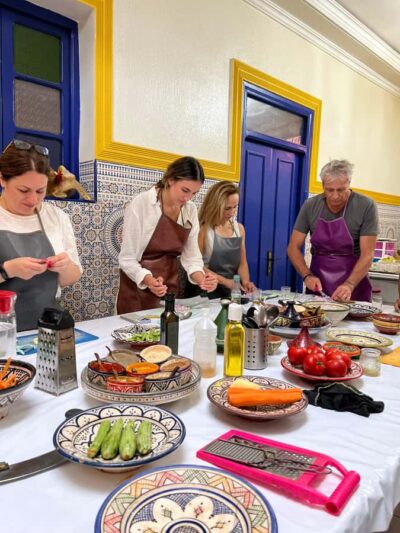
Marrakech: Traditional Moroccan Cooking Class & Market Visit
Read our review →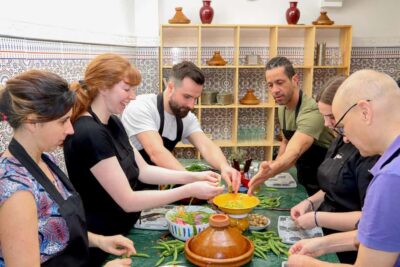
Marrakesh: Moroccan Dishes Cooking Class with a Local Chef
Read our review →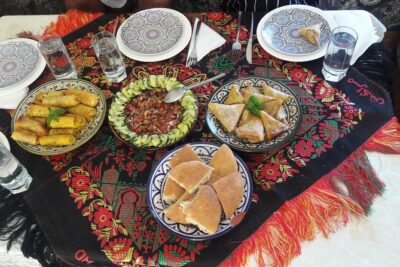
Moroccan Cooking Class & Marrakech Market Visit with Chef Khmisa
Read our review →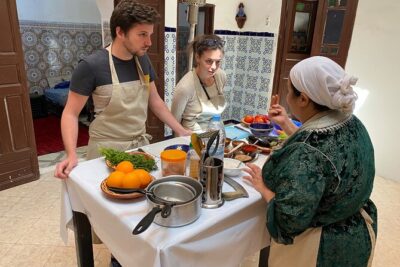
Half-Day Cooking Class with Local Chef Laila in Marrakech
Read our review →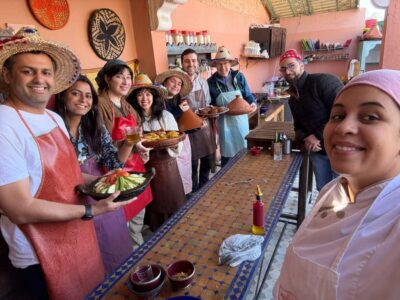
Marrakech: Moroccan Cooking Class with a Local Family
Read our review →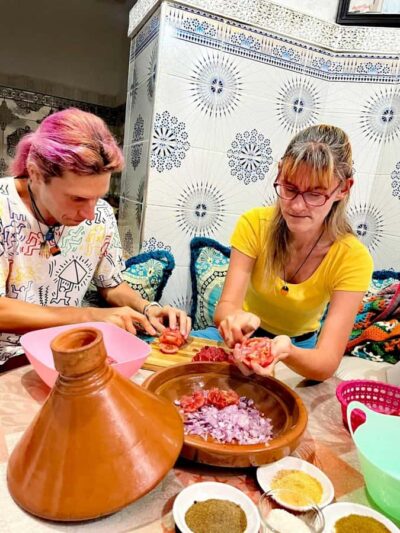
Marrakech: Moroccan Cuisine Cooking Class in Local Home
Read our review →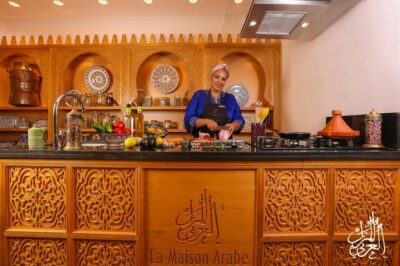
Marrakech: Moroccan Cooking Workshop at La Maison Arabe
Read our review →This kitchen also appears in