
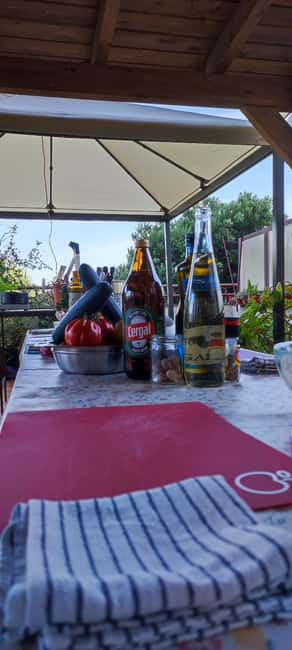
Review · PORTO
Porto: Portuguese Cooking Class on the Terrace
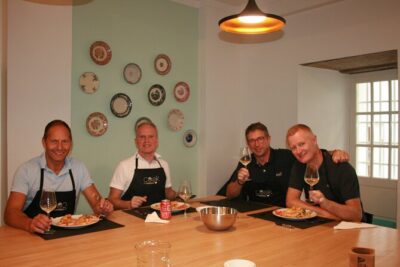
The best part of this Porto cooking class is that you are welcomed into a small family home, not seated in a polished restaurant kitchen. You help make the whole meal, then sit down on the terrace to eat it with the people who live there. Jorge, João, Isabel, and Miguel bring a warm, easygoing feel, with music, drinks, chat, and even a neighborhood cat joining the scene.
I like the full-menu format, which gives you more than a single dish or pastry lesson. I also like the personal touch: the hosts can adapt the menu for some dietary needs, and the class includes practical tips as you work. The main consideration is space. This takes place in a one-bedroom apartment, so it is intimate rather than roomy or professionally equipped.
Key points
- A complete Portuguese meal: Prepare bacalhau fritters, fresh salad, pork with chestnuts, tomato rice, and pastel de nata.
- A private family setting: The class takes place in a small one-bedroom apartment with a spacious terrace.
- Hands-on from start to finish: You help prepare the ingredients, cook the dishes, and sit down for the finished meal.
- A relaxed social evening: Music, drinks, conversation, and the neighborhood cat make this feel like a home visit.
- Flexible menu planning: The pork can be replaced to meet some customer requirements.
- A 3.5-hour pace: There is enough time to cook, eat, and talk without rushing through the meal.
A Portuguese dinner begins at the family door
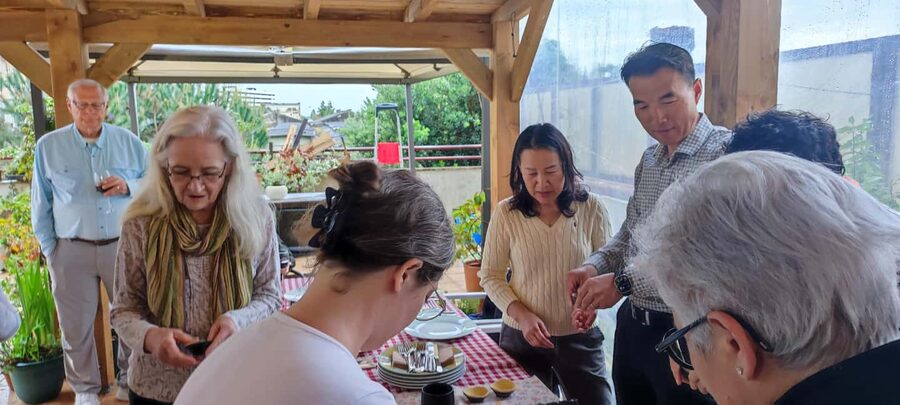
This experience starts at the door of the apartment, at 41.17914581298828, -8.614091873168945. There is no separate restaurant or market meeting point. You arrive at the place where the cooking and meal will happen, which keeps the evening direct and personal.
The welcome begins with a drink and an appetizer. You are introduced to the resident family, then given a short explanation of how the class will work. That simple beginning matters. You are not dropped into a kitchen with a list of tasks. You first get a sense of the household and the people who will guide you.
The class is offered in Portuguese, English, and French. Since it is a private group, the tone should suit your party more easily than a large shared class. The hosts can talk about local habits, customs, and interesting facts about Porto and Portugal while you work.
This is still a home, not a cooking school. The one-bedroom apartment has a spacious terrace, but the indoor area may feel close if you are used to commercial kitchens with multiple workstations. I see that as part of the character, though it is worth keeping in mind if you prefer lots of room and formal instruction.
More cooking classes around Portugal:
- Lisbon: Pastel de Nata Baking Class
★ 4.9 · 2,106 reviews - Porto: Pastel de Nata Cooking Class with Grandma’s Recipe
★ 5.0 · 1,565 reviews - Porto: Pastel de Nata Cooking Class with Port Wine – Sé
★ 4.8 · 888 reviews
Welcome drinks, appetizers, and a look at the menu
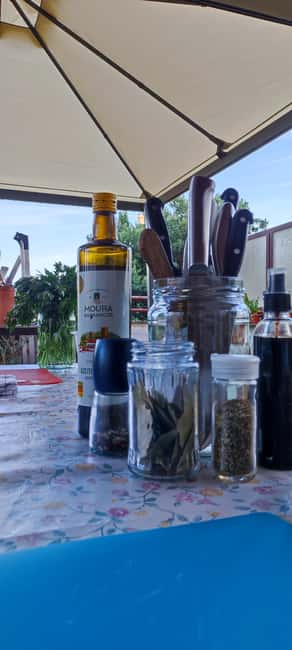
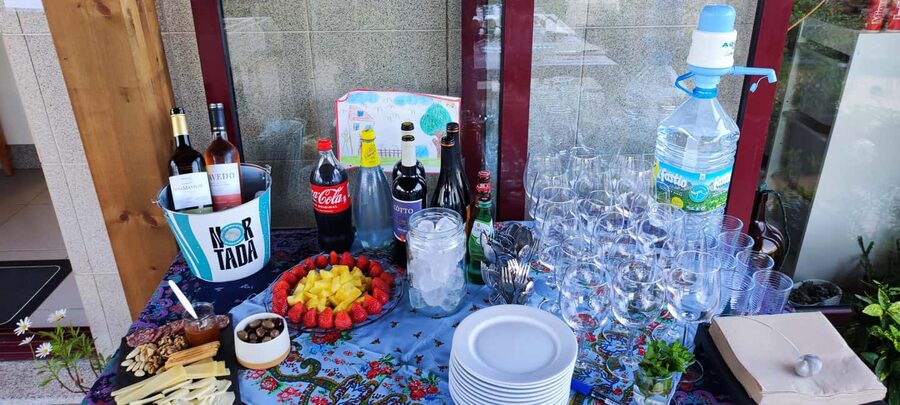
Once everyone has arrived, drinks and small appetizers are available as the cooking gets under way. This helps the class feel like a social evening rather than a strict lesson with a stopwatch.
The planned menu covers several familiar Portuguese ingredients and techniques. You begin by preparing all the ingredients, with explanations and tips along the way. The focus is not only on getting dinner onto the table. You also learn how the different parts are handled and how they fit into a Portuguese meal.
The menu includes:
- Pataniscas de Bacalhau, or cod fritters
- A fresh salad
- Rojões de Porco with chestnuts
- Tomato rice
- Pastéis de Nata for dessert
The meal is not presented as one single traditional set menu from a specific region. Instead, it brings together products and dishes that are widely used in Portuguese cooking. That is useful for you as a home cook because the lesson gives a broad taste of Portugal rather than concentrating on one narrow recipe.
The hosts also explain preparation tips as you go. The supplied information does not list every technique in detail, so you should not expect a printed cooking syllabus or a formal chef demonstration unless the hosts provide one on the day. The value is in taking part, asking questions, and learning through the work in front of you.
Pataniscas de Bacalhau and the first taste of Portugal
The starter is Pataniscas de Bacalhau, a familiar Portuguese preparation built around salted cod. It is a good opening dish for a hands-on class because it introduces you to one of Portugal’s best-known ingredients in a simple, shareable form.
You help prepare the ingredients rather than simply watching someone fry the finished fritters. That gives you a chance to see how the mixture comes together and to ask about texture, seasoning, and cooking time. The exact steps are not specified, so the class is better understood as guided participation than as a fixed technical workshop.
The cod also gives the meal a clear Portuguese identity from the start. If you have eaten bacalhau in restaurants, this is a chance to meet it in a more casual home setting. If you are new to it, the fritters offer an approachable introduction.
One practical point: the menu can be adapted for some customer requirements, but the available information specifically notes substituting the meat, not every possible allergy or dietary restriction. Tell the hosts about your needs in advance rather than assuming every ingredient can be changed.
Salad and the easy rhythm of the terrace
The fresh salad provides a lighter part of the meal and breaks up the richer dishes. It is also one of the simpler preparations, giving you time to settle into the rhythm of the evening.
This is where the setting matters. You are not moving from a cooking counter straight to a crowded dining room. Once the food is ready, the spacious terrace provides the place to sit, talk, and eat. Music plays during the experience, and the neighborhood cat may make an appearance, adding a small bit of local life that no formal restaurant class can plan.
The terrace is not just a backdrop. It helps the event feel like a meal shared at someone’s home. You can expect conversation about Porto, Portuguese customs, and everyday habits alongside the food. For me, that social exchange is a major part of the value, especially if you want more than a recipe to take home.
Still, this format may not suit someone seeking quiet concentration. There are drinks, chat, music, and family interaction throughout the class. The atmosphere is relaxed and lively, not silent or highly structured.
Same kitchen, a different dish:
- Lisbon: Traditional Portuguese Cooking Class
★ 4.9 · 592 reviews - Porto: Pastel de Nata Cooking Class from Scratch
★ 4.9 · 468 reviews - Lisbon: 2-Hour Pastel de Nata Cooking Class
★ 4.8 · 461 reviews - Lisbon Portuguese Cooking Class with 3-Course Dinner
★ 5.0 · 445 reviews
Rojões de Porco with chestnuts and tomato rice
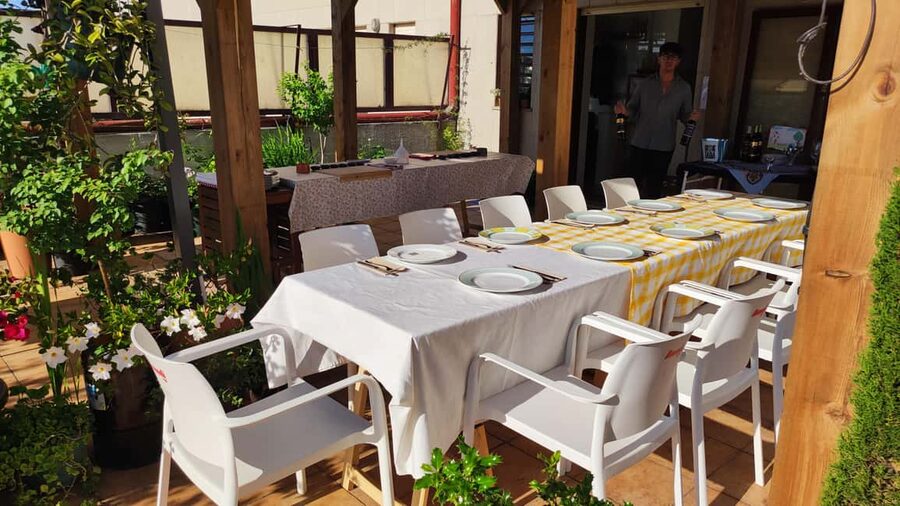
The main course pairs Rojões de Porco with chestnuts and tomato rice. The dish is not described as a strict traditional combination, but the ingredients are widely used in Portuguese cooking. That makes the course a practical look at how familiar local products can be brought together at home.
You take part in preparing the ingredients and cooking the meal. The hosts share tips as you work, so you can focus on the choices that affect the final result rather than treating the dish as a black box. The class is especially useful for people who want to repeat the meal after returning home, since you see the whole process instead of only the final plating.
The pork can be substituted for some customer requirements. The information does not say which replacement will be used or how far the hosts can change the menu, so ask before booking if the main course is important for your diet.
The tomato rice is a useful companion to the pork and chestnuts. It gives you another preparation to learn, rather than making the class revolve around one centerpiece. By the time you reach the main course, you have worked with fish, vegetables, meat, rice, and dessert pastry.
Pastel de Nata finishes the cooking
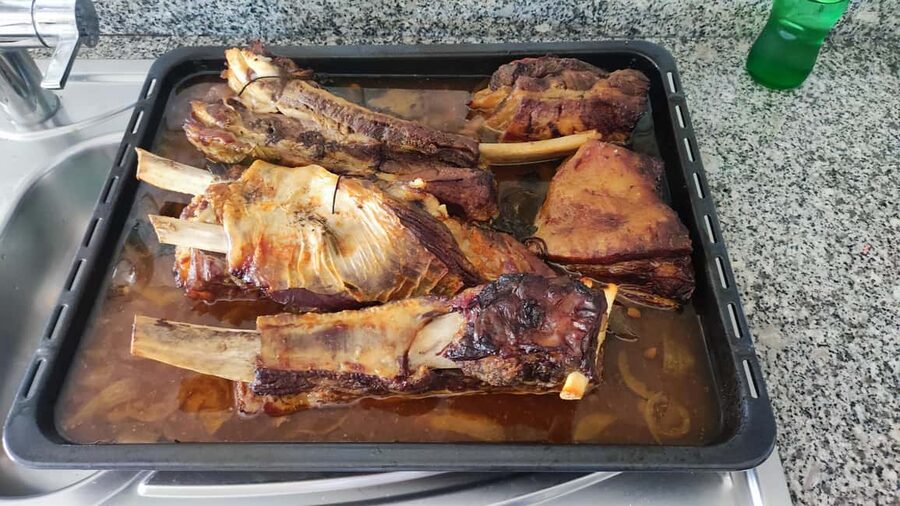
Dessert is Pastel de Nata, Portugal’s famous custard pastry. Making it at home with the family gives the evening a clear finish and adds a pastry lesson to the savory cooking.
The supplied details do not specify if the pastry is made fully from scratch or if some parts are prepared ahead. You should ask if that distinction matters to you. The clear point is that pastel de nata is included in the menu and that you take part in preparing the complete meal.
One booking option listed elsewhere focuses only on pastel de nata, but this experience gives you the pastry as part of a wider dinner. That makes it a better fit if you want variety. If your main goal is to master the pastry in fine detail, a dedicated workshop may offer more time on that one recipe.
Sitting down to eat with Jorge, João, Isabel, and Miguel
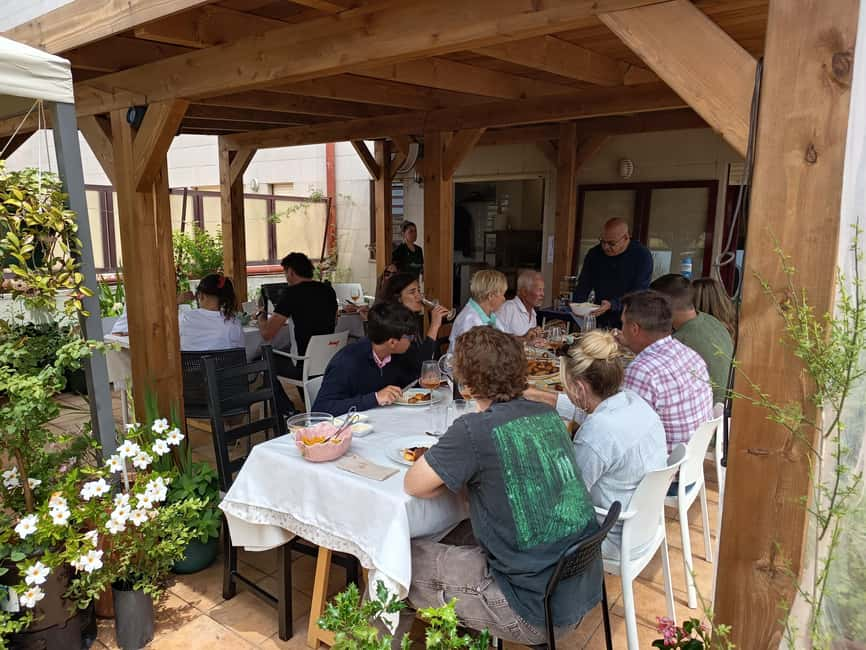
After the menu is made, everyone sits down at the table to enjoy the meal. This is when the class shifts from cooking lesson to shared evening.
The family members named in the experience are Jorge, João, Isabel, and Miguel. Their role is not limited to demonstrating recipes. They welcome you into their home, cook alongside you, and talk about the city and country. That personal contact is the strongest reason to choose this activity instead of a standard chef-led class.
The atmosphere is especially suited to you if you enjoy meeting local people and asking questions. You can talk about customs, habits, and picturesque facts about Porto and Portugal while eating what you helped prepare. The meal becomes a setting for conversation, not just a reward at the end.
Alcoholic drinks are served only to people over 21. Drinks and appetizers are available for tasting during the cooking period, but the information does not specify the exact beverages included. If you do not drink alcohol, the class still includes food preparation, conversation, and nonalcoholic options, though the full drink menu is not stated.
What the 3.5-hour schedule means for you
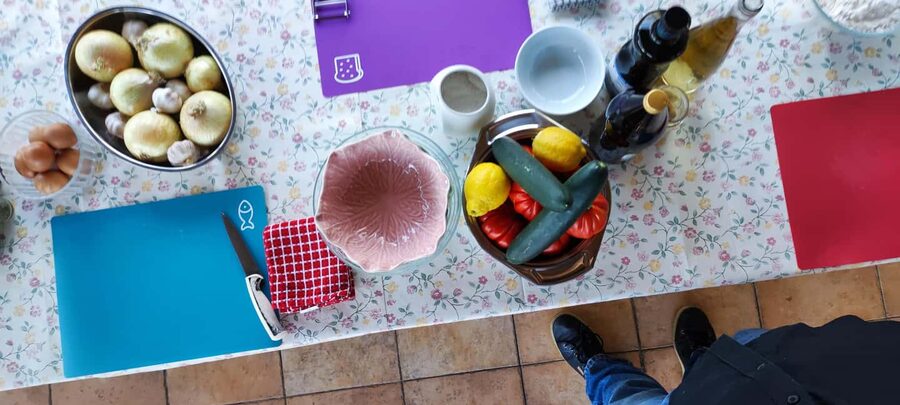
Three and a half hours is a generous length for this kind of activity. You have time to meet the family, prepare several dishes, cook, eat, and talk without compressing the meal into a quick demonstration.
The pace also means this is a significant part of your Porto day. I would not place it immediately before a fixed evening show or a tight train departure. The activity has a social flow, and the dining portion may feel less rushed than a restaurant reservation.
The private-group format is another advantage. It allows the hosts to respond to your questions and adjust some menu details more easily than a large class. The tradeoff is that you should not expect the scale or equipment of a professional culinary studio.
The exact starting times vary, so check availability when booking. The meeting point is the apartment door, not a central tourist office. Plan to arrive at the stated location with enough time to identify the entrance calmly.
Value compared with other Porto food classes
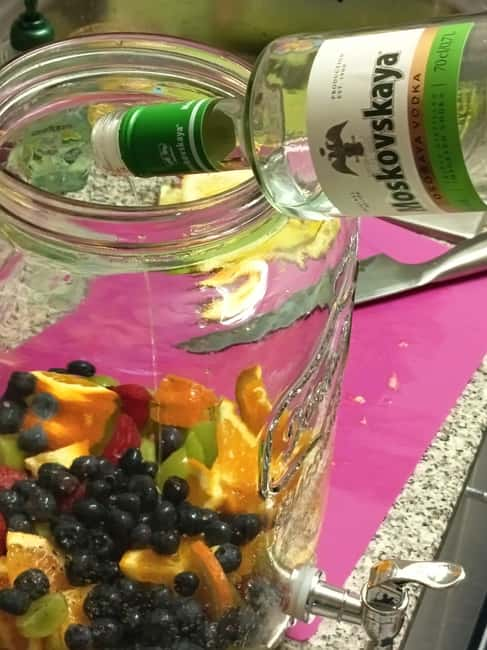
No price is provided here, so I cannot judge whether this is the cheapest cooking class in Porto. I can judge what you receive for the fee: three and a half hours, a private group, a full menu, drinks and appetizers during the preparation, a home setting, and a shared meal with the family.
That is strong value for you if personal contact matters. You are paying for the food, but also for time in a local home and access to conversation that a restaurant kitchen may not offer.
A market tour and tapas class would suit you better if shopping for ingredients and tasting small plates are the main draw. A dedicated pastel de nata workshop would make more sense if you want to spend most of your time on one pastry. This apartment class gives you the broadest meal and the most family-centered setting of those options.
The class also offers free cancellation up to 24 hours before the start time, and you can reserve while paying later. Those terms make it easier to fit into a changing Porto schedule, though you should still check the exact booking conditions at the time you reserve.
Who should book this Porto terrace class
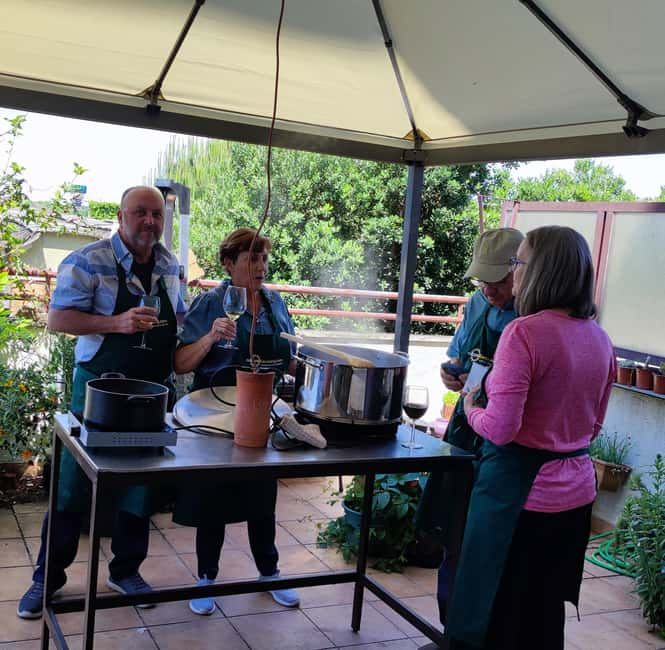
I would choose this experience for you if you want a relaxed evening with local hosts, enjoy active participation, and like the idea of eating food prepared in a family home. It is also a good match for people who prefer a private group over a large class.
The menu makes it appealing to mixed-interest groups. One person can enjoy fish, another can focus on pastry, and everyone has several dishes to help prepare. The hosts can substitute the meat for some requirements, which adds flexibility, but you should confirm specific allergies and dietary needs ahead of time.
You may want another type of class if you need professional kitchen space, a formal chef-led lesson, a market visit, or detailed instruction on one recipe. The small apartment setting is part of the charm, but it will not suit everyone.
Should you book it?
Book this class if you want to spend an evening cooking, eating, and talking with a Portuguese family rather than simply watching a chef work. The warm welcome from Jorge, João, Isabel, and Miguel, the complete menu, and the terrace setting give it a personal feel that is hard to reproduce in a standard food tour.
Skip it if you prefer a large, highly structured cooking school or need firm guarantees about every dietary substitution. For most people seeking an authentic, social Porto food experience, the combination of hands-on cooking, family conversation, music, and a full dinner makes this a strong choice.
FAQ
Where does the cooking class take place?
The class takes place at the hosts’ small one-bedroom apartment, which has a spacious terrace. You meet at the door at 41.17914581298828, -8.614091873168945.
How long does the experience last?
The cooking class lasts 3.5 hours. Check the available starting times when booking.
What dishes will I prepare?
The planned menu includes Pataniscas de Bacalhau, a fresh salad, Rojões de Porco with chestnuts, tomato rice, and Pastéis de Nata.
Can the menu be changed?
The menu can be adapted to some customer requirements, including substituting the meat. Contact the hosts in advance about specific dietary needs.
Who leads the experience?
The resident family includes Jorge, João, Isabel, and Miguel. The experience is provided by Final Touch.
What languages are available?
The class is offered in Portuguese, English, and French. Some content may be presented in its original language.
Are drinks included?
A welcome drink, appetizers, and drinks for tasting are available during the cooking period. Alcoholic beverages are served only to people over 21.
New cooking classes around Portugal
- Porto: Cooking Class with Local Market Visit★ 5.0 · 15 reviews
- Porto: Local Market Tour & Cooking Class/Showcooking★ 4.9 · 32 reviews
- Porto: Coastal Villages Market & Seafood Cooking Tour★ 5.0 · 2 reviews
- Lagos: Market Tour and Cataplana Cooking Class★ 5.0 · 9 reviews
- Lisbon: Traditional Portuguese Cooking Class★ 5.0 · 41 reviews
- Lisbon: Setúbal Market and Wine tour with Cooking class★ 5.0 · 4 reviews
- Lisbon: Portuguese Cooking Class with Wine Tasting★ 5.0 · 4 reviews
- Lisbon: Portuguese street food cooking class with Drinks★ 4.9 · 37 reviews
Porto Cooking Classes, side by side.
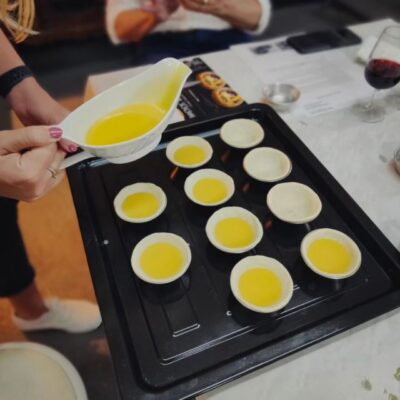
Porto: Pastel de Nata Cooking Class with Port Wine – Sé
Read our review →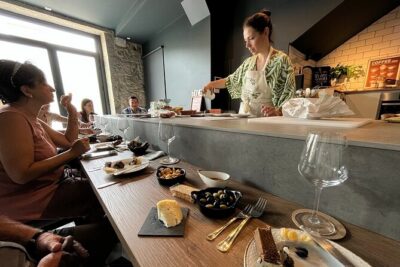
Portuguese Cooking Class in Porto with Portuguese Wine
Read our review →This kitchen also appears in