
Review · BEIJING
China’s Favourite Street Food Cooking Workshop
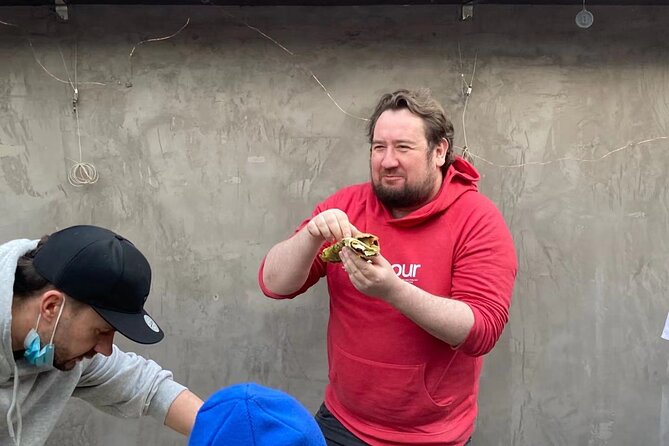
Beijing’s favorite street food becomes your lunch lesson in this private jian bing workshop. In about 90 minutes, Dom explains where the dish comes from, shows you how to prepare the batter, and lets you cook your own creations on the pan. You are not just watching a demonstration. You get to make the food yourself, with help when your technique needs work.
I like the one-party format, since Dom can give your group direct attention instead of sending you through a crowded class. I also like the broad choice of fillings, from familiar savory combinations to chocolate and banana. The main thing to consider is the price: at $80, this makes more sense as a private cultural activity than as a quick, inexpensive meal.
Key points to know before booking
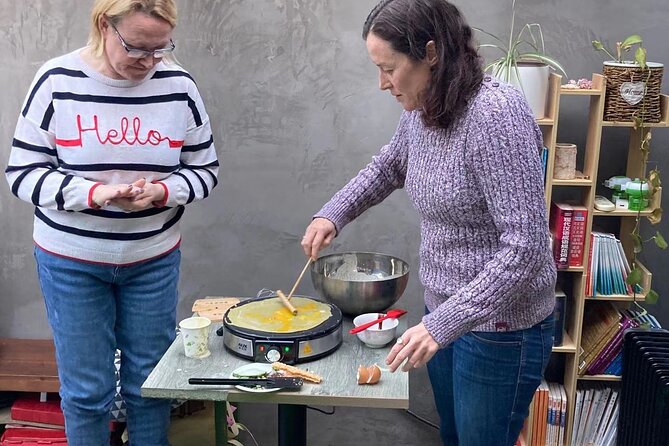
- You make the jian bing yourself: Prepare the batter, cook it on the pan, and practice until the technique feels natural.
- Dom leads the class: He explains the food’s background in an entertaining, easy-to-follow way.
- Savory and sweet fillings are available: You can stay traditional or try combinations such as chocolate and banana.
- Your group has the room to itself: The private setup works well for families, friends, and couples.
- The class meets in Dongcheng: Start and finish at 10 Shi Que Hutong, with public transportation nearby.
Why jian bing makes a good Beijing activity
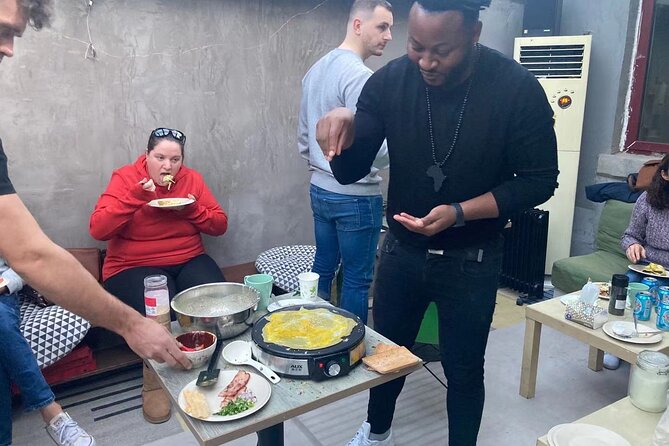
Jian bing is one of those foods that gives you a quick connection to daily life in Beijing. It is a popular street food, but the process is hands-on enough to turn it into a useful cooking lesson.
The basic task looks simple: spread the batter, add fillings, cook it, and fold it. In practice, getting the technique right takes a few tries. The pancake needs to be handled at the right moment, and your first attempt may not look like the one in your imagination. That is part of the fun, especially when Dom is there to show you what to adjust.
I like this kind of activity because it gives you something to do with your hands. You leave with more than a meal. You understand how one of Beijing’s everyday foods is made, and you may be able to recreate it at home.
The class also works well as a break from sightseeing. Beijing can involve long walks, large historic sites, and plenty of time on your feet. A 90-minute food session offers a slower change of pace without taking up half your day.
More cooking classes around China:
- Half-Day Chengdu Cooking Class with a Local Market Visit
★ 5.0 · 465 reviews - Online Cooking Class Beijing Dumplings and Cuisine by Sunflowerli Renowned Chef
★ 5.0 · 65 reviews - Chengdu: Cooking Class with Fresh Market Half Day Experience
★ 5.0 · 42 reviews
Meeting Dom in the Dongcheng hutong
The class begins at 10 Shi Que Hutong, Dongcheng District, in central Beijing. The meeting point is also the ending point, so you do not need to arrange a separate return transfer after eating.
The hutong setting fits the subject. Jian bing is closely linked with ordinary city life, quick breakfasts, and neighborhood food stalls. The activity gives you a chance to encounter that side of Beijing through cooking rather than simply passing a street cart and taking a photograph.
Public transportation is nearby, which helps if you are building the class into a day of sightseeing. Still, you should allow enough time to find the exact address. Hutong streets can be less straightforward than a large hotel or major attraction, so checking the meeting details before you set out is sensible.
The supplied information does not give a detailed route from a particular subway station, so you should not assume a specific walking time. Plan around the stated address and confirm the booking details before leaving.
The story behind Beijing’s favorite street food
The first part of the experience covers where jian bing comes from. Dom uses an entertaining story to explain its background, rather than treating the dish as a list of ingredients and instructions.
That introduction matters because it gives the food a place in Beijing life. You begin to see jian bing as more than a pancake with fillings. It is a familiar local staple, the kind of food people associate with quick meals and city routines.
I would pay attention here even if you are mainly interested in cooking. The history section is brief enough to keep the class moving, but it helps explain why this dish is such a useful choice for a Beijing food activity. You are learning a food that local people know well, not a dish chosen only because it photographs nicely.
Dom’s style also appears suited to mixed groups. The activity has worked for adults, children, friends, and parents with middle-school-aged children. That range suggests the introduction is accessible rather than overly technical.
Making the batter and learning the technique
After the introduction, you move into the practical part of the class. You learn how to make the batter, then cook it yourself on the pan.
This is where the private format earns its keep. Jian bing may look easy when someone experienced makes it, but spreading and cooking the mixture takes coordination. You may need several attempts before your technique feels comfortable. Dom can step in with hands-on guidance while still letting you do the work.
The class is not described as a formal professional cooking course, and you should not expect restaurant training. Its appeal is simpler: you learn enough to make the dish with ease, understand the basic method, and enjoy the process.
I especially like that you can make as many jian bings as you want during the session, according to the available class format described by participants. That gives you room to improve rather than treating your first attempt as the final result. It also turns mistakes into part of the activity instead of a problem.
The class can be rewarding for children because the result comes quickly. They mix, spread, cook, fill, and eat their own food. Parents should still expect to take part, since the cooking process involves a hot pan and active instruction.
Same kitchen, a different dish:
- Flavors of Beijing: Eat Like A Real Chinese
★ 5.0 · 78 reviews - Shanghai-Cooking Dumpling & Meal in Local Family-w/Vegan
★ 4.9 · 36 reviews - Private Cooking Class: Make Your Own Dim Sum In Shanghai
★ 5.0 · 27 reviews - Half-Day steamed Buns Cooking Class with a Local Market Visit
★ 5.0 · 26 reviews
Choosing fillings, from savory to chocolate and banana
Once you have the basic method, you can try different flavors and fillings. The options include traditional savory choices as well as sweeter combinations such as chocolate and banana.
This range gives the class flexibility. If you want a taste closer to the food sold around Beijing, you can focus on savory fillings. If your group includes children or anyone with a sweet tooth, the dessert-style version adds variety.
I would suggest treating the filling choices as a chance to experiment, not as a promise of one fixed recipe. The experience is built around making the dish your own, and the available information specifically highlights different flavors and fillings.
The sweet option is also useful for families. It gives younger cooks another reason to stay interested after the first pancake. Adults may prefer the savory combinations, but sharing both styles can make the meal feel more like a tasting session.
The activity ends back at the meeting point, so you can decide what to do next without a complicated transfer. You might continue exploring the hutong area, find another local meal, or return to your hotel.
What makes the private format worthwhile
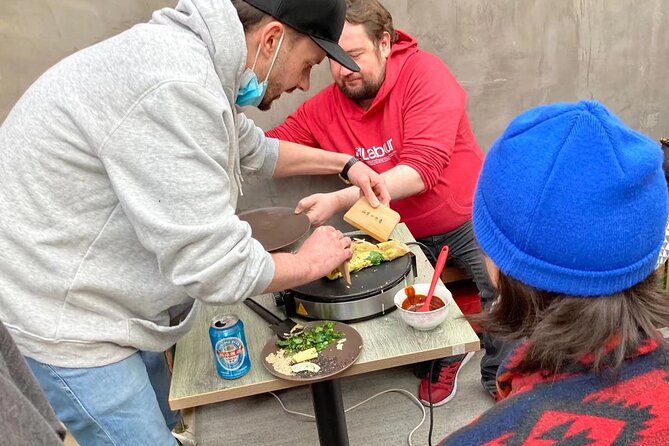
This is a private activity for only you and your party. That changes the feel of the class in several practical ways.
First, you can ask questions without waiting for a large group to catch up. Second, Dom can focus on your group’s pace. If you need more attempts with the batter, you have room to practice. If everyone picks up the method quickly, you can spend more time trying different fillings.
The format suits friends who want a shared activity, couples looking for something more active than a restaurant meal, and families who need a flexible pace. It also works for people already living in Beijing who know jian bing from daily life but have never made it themselves.
The drawback is value for solo visitors. At $80, the cost may feel high if you are paying alone for a short food class. For a full private group, the price is easier to justify because you are paying for instruction, ingredients, a private setup, and an activity you share together.
The duration is approximately 1 hour and 30 minutes. That is long enough to cover the food’s background and give you several chances to cook, but short enough to fit into a busy Beijing schedule.
Is $80 a fair price?
The right way to judge the $80 price is to compare it with the type of experience you are buying. This is not simply a plate of jian bing. It includes a private class, instruction from Dom, hands-on cooking, several filling options, and time to practice.
If you only want to eat jian bing, a street stall will almost certainly be a more economical choice. If you want to understand how it is made and spend time doing something with your group, the workshop offers more value.
The class also has a useful take-home quality. One session gives you the basic method and the confidence to try making the food for family or friends later. Ingredients to take home have been included in the experience for some sessions, but you should confirm that detail when booking because it is not listed as a guaranteed feature in the main tour information.
The strongest value comes when you book with several people. Families and small groups get a private activity, a meal, and a shared memory without committing an entire day.
Who should book this workshop
I would recommend this class most strongly to:
- Families looking for a child-friendly Beijing activity
- Friends who want a relaxed group experience
- Couples who prefer an active food lesson to a standard meal
- People who enjoy learning local dishes by doing rather than watching
- Beijing residents who know jian bing but want to learn the method
- Anyone planning to cook the dish at home after the trip
You may want to skip it if your schedule is extremely tight, if you are looking only for the cheapest meal, or if you dislike hands-on cooking. The class depends on your willingness to prepare, cook, and try again.
It is also worth remembering that the duration is approximate. If you have a train, flight, or timed attraction immediately afterward, leave a comfortable buffer.
Booking, timing, and practical details
Your booking confirmation is sent within 48 hours, subject to availability. Because of that, do not assume the class is final until the confirmation arrives.
A mobile ticket is provided, which makes it easier to keep the booking on your phone while moving around Beijing. You should still save the meeting address separately in case you need to show it to a driver or check it while offline.
The activity allows service animals and is near public transportation. No other accessibility details are provided, so you should contact the provider directly if you have specific mobility or dietary needs.
Free cancellation is available when you cancel at least 24 hours before the local start time. Cancellations made less than 24 hours ahead are not refunded, and late changes are not accepted.
My take: a small class with real local flavor
I like this workshop because it turns a familiar Beijing food into a practical lesson. Dom’s explanation gives the dish context, the private format keeps the pace personal, and the cooking itself gives you a reason to slow down and take part.
The best details are the simple ones: you make the batter, cook the pancake yourself, try different fillings, and get another attempt if the first one is not quite right. That is a more lasting experience than eating one jian bing and moving on.
At $80, this is not the right pick for a budget meal. It is a better choice for a private group that wants a friendly, child-friendly activity with food at its center. If that sounds like your kind of Beijing afternoon, I would book it, especially if you want to return home able to make the city’s favorite street food yourself.
FAQ
Where does the jian bing workshop begin?
The activity begins at 10 Shi Que Hutong, Dong Cheng Qu, Beijing, China, 100010.
Where does the activity end?
The workshop ends back at the meeting point.
How long does the experience last?
The activity lasts approximately 1 hour and 30 minutes.
How much does the workshop cost?
The listed price is $80.
Is this a private activity?
Yes. Only your group participates in the activity.
Who leads the cooking class?
The workshop is led by Dom from Our Beijing.
What will I learn to make?
You will learn how to make jian bing, a popular Chinese street food, including the batter, cooking method, and fillings.
Can I choose different fillings?
Yes. The class offers different flavors and fillings, including traditional savory choices and options such as chocolate and banana.
Can I cancel for a full refund?
Yes, if you cancel at least 24 hours before the experience’s local start time. Cancellations made less than 24 hours before the start are not refunded.
New cooking classes around China
- Shanghai: Authentic Chinese Cooking Class with Master Chef★ 5.0 · 2 reviews
- Online Cooking Class Hand Pulled Noodles by Sunflower Li★ 5.0 · 3 reviews
- Online Cooking Class Steamed Buns by Chef Sunflower Li★ 5.0 · 2 reviews
- Chengdu Sichuan Cuisine Cooking Class and Savor Local Snacks★ 4.4 · 2 reviews
- Beijing: Vegan Home Cooking & Local Market Tour with Sanxia★ 4.8 · 4 reviews
- 2.5hrs Chinese Kitchen Cooking Class: Xiaolongbao Soup Dumplings★ 5.0 · 12 reviews
- Private Cooking Class: Make Your Own Dim Sum In Shanghai★ 5.0 · 27 reviews
- Private Home Cooking Class with Shanghai Mama★ 5.0 · 14 reviews
Beijing Cooking Classes, side by side.
Online Cooking Class Beijing Dumplings and Cuisine by Sunflowerli Renowned Chef
Read our review →
Private Hutong Culture Tour with Dumpling Cooking Class plus Cricket Fighting Game
Read our review →
Beijing: Vegan Home Cooking & Local Market Tour with Sanxia
Read our review →
This kitchen also appears in