
Review · TOKYO
AKEMI’s SUSHiKiTCHEN: A fun sushi cooking lesson in Tokyo
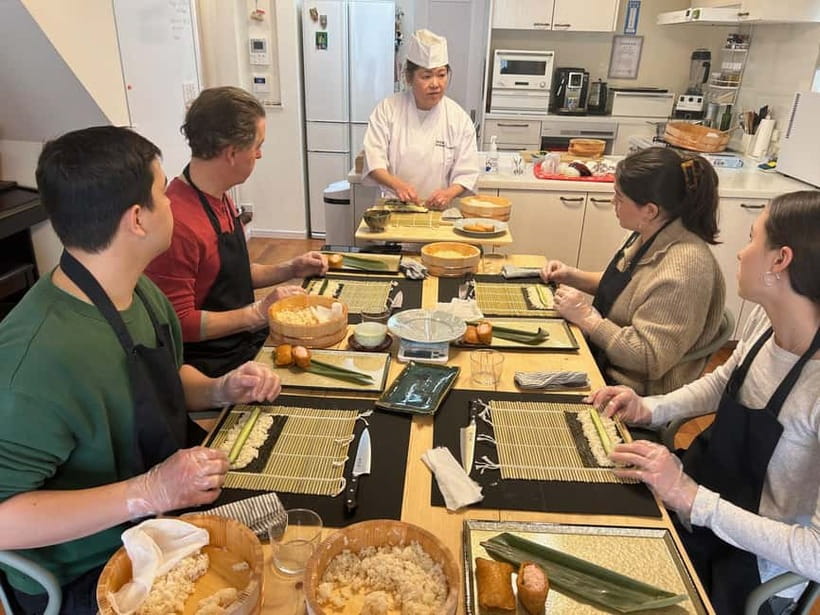
The best part of AKEMI’s SUSHiKiTCHEN is the setting: you learn sushi in a real Japanese home, not a polished restaurant classroom. Akemi Castellano explains the food, the technique, and the story of Edo-style sushi while guiding you through four types: nigiri, maki, gunkan, and inari.
I like the small groups of up to six, which give Akemi room to correct your hand position and answer questions. I also like the warm, personal welcome from Akemi and her husband Dan, plus the sake, matcha tea, drinks, and dessert served after the cooking.
The main limitation is the fixed menu. You cannot choose which sushi you make, and the kitchen cannot accommodate food or animal allergies, so check that point carefully before booking.
Key points at a glance
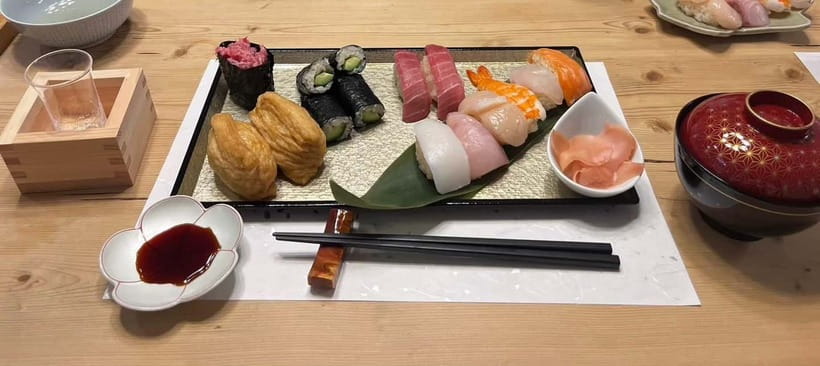
- Four sushi styles in one lesson: Make hand-pressed nigiri, rolled maki, seaweed-wrapped gunkan, and tofu-pocket inari.
- A real home kitchen: The relaxed setting feels more like cooking with a Japanese family than attending a formal demonstration.
- Akemi teaches the foundations: You begin with vinegar rice and learn how fish are prepared for sushi.
- A very small class: The maximum is six people, making it easier to get personal help.
- Food and culture together: The lesson includes sushi history, Japanese food customs, sake, dessert, and a meal you prepare yourself.
- Convenient Tokyo access: The home is reachable from Shinjuku and Shibuya, with an optional station meeting service.
Learning sushi in Akemi’s Tokyo home
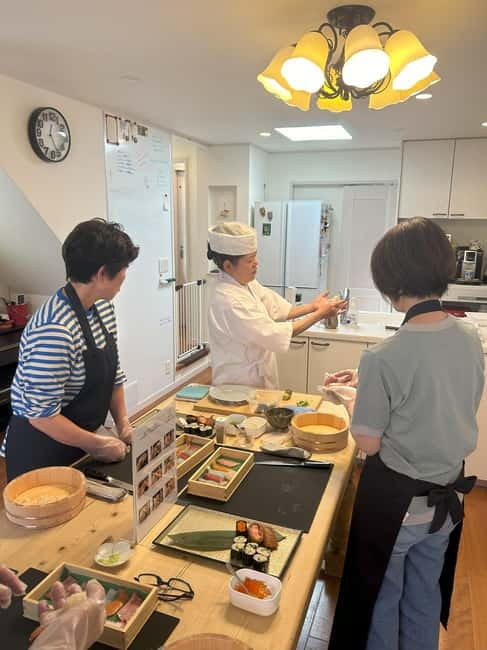
Many Tokyo cooking classes take place in studios built for instruction. This one takes a more personal route. You go to Akemi Castellano’s home, where the lesson unfolds in a relaxed, at-home environment.
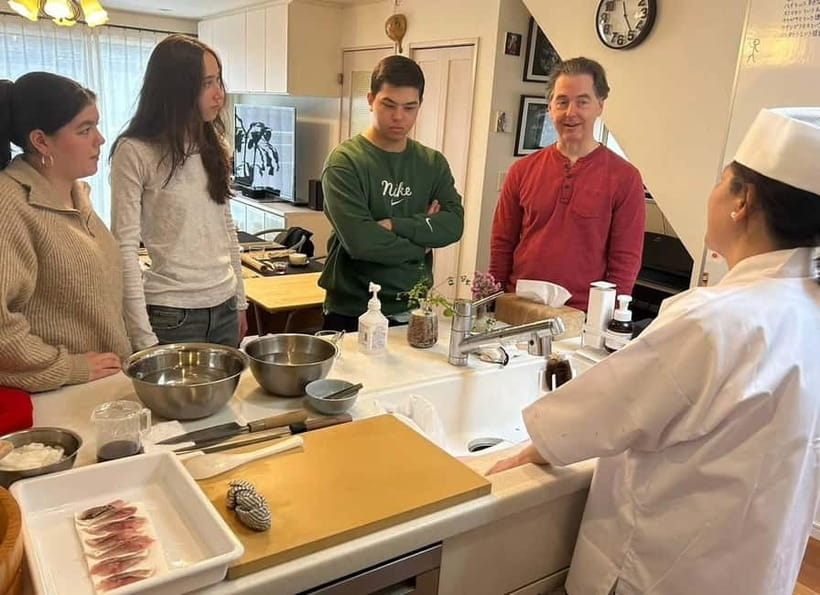
That setting changes the mood. You are not simply watching a chef assemble sushi behind a counter. You are sitting in a small group, asking questions, handling the ingredients, and learning the rhythm of a Japanese meal in a domestic space. Dan, Akemi’s husband, helps create the welcoming atmosphere and can assist with communication and hosting.
The class is taught in English and Japanese. That matters if you want more than a quick recipe demonstration. Akemi explains the purpose of each step and gives you a chance to try it yourself rather than rushing through a long list of techniques.
The class is limited to six participants. A family of four has previously had the entire small group to itself, but you should not assume that will happen on your date. The small maximum still gives you a better chance of receiving individual help than you would in a large cooking workshop.
You should allow about three hours. A morning session leads into lunch, while an afternoon session leads into dinner. That timing fits well into a Tokyo day, especially if you want a cultural activity that does not consume the entire afternoon or evening.
More Sushi Making Classes around Tokyo:
- Tokyo Tsukiji Fish Market Tour and Sushi Making Lesson
★ 5.0 · 390 reviews - Ramen and Sushi Cooking Class with Sake Pairing Set in Tokyo
★ 5.0 · 291 reviews - Japanese Knife Skills & Tuna Don/Sushi Workshop in Tokyo
★ 5.0 · 3 reviews
Getting there from Shinjuku or Shibuya
The home is conveniently located for access from both Shinjuku and Shibuya, two of Tokyo’s main transport hubs. The exact route depends on where you start, so use Google Maps or a similar navigation app and allow time for the final walk.
The walk from the nearest station takes about ten minutes. One participant described the route as passing through a pleasant residential neighborhood, which is part of the appeal. You leave the major station crowds behind and see a quieter side of Tokyo before the lesson begins.
If you prefer not to find the house on your own, Akemi’s team can meet you at the nearest train station. Tell them in advance that you would like this help. This is especially useful if you are arriving after a long flight, carrying luggage, or feeling less confident with Tokyo’s train system.
You should pay attention to the meeting instructions you receive. A private home is different from a restaurant with a large sign out front, so do not rely on wandering around the area and hoping to spot it.
Starting with rice, vinegar, and sushi history
The lesson begins with the foundation of nearly every sushi style you will prepare: seasoned vinegar rice. This is a useful choice because sushi rice is easy to underestimate. The rice needs the right texture, and the vinegar seasoning must support the fish and other fillings rather than overwhelm them.
Akemi explains how the rice is prepared before you shape anything. That gives you a better understanding of why sushi made at home can turn out differently from sushi served at a restaurant. You are not just copying a shape. You are learning what holds the dish together.
The class also covers the history and culture of sushi, including the origins of Edo sushi. This gives context to the food in front of you. Tokyo was historically known as Edo, and the sushi associated with the city developed as a practical style of prepared food. Akemi connects that background with the techniques you use during the class.
I appreciate this combination of history and hands-on work. A cooking class can become a craft exercise if it focuses only on getting the final plate right. Here, the cultural explanation helps you understand why sushi is prepared and served in particular ways.
There is also a demonstration of how fish are prepared for sushi. The available information does not specify every fish or cutting technique used on your date, so you should think of this as an introduction to preparation rather than a full professional fish-cutting course.
Making four different kinds of sushi
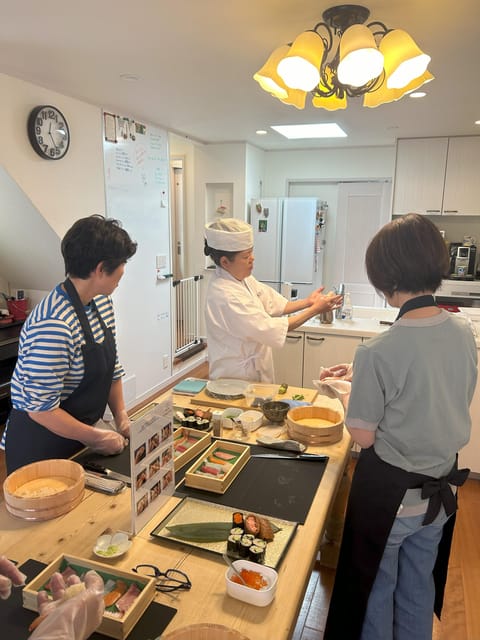
The fixed menu takes you through four familiar but distinct forms of sushi. You do not select the dishes yourself, but the set combination gives you a broad introduction to sushi-making.
More cooking classes around Tokyo:
- Ramen & Gyoza Cooking Class in Tokyo with Local Supermarket Visit
★ 5.0 · 823 reviews - Tokyo: Easy Ramen Cooking Experience in Kabukicho, Shinjuku
★ 4.6 · 321 reviews - Private Home Cooking in Yanaka – Local Flavors in a Warm Setting
★ 5.0 · 173 reviews - Unique Private Cooking Class with a Tokyo Local Emi
★ 5.0 · 131 reviews
Nigiri sushi
Nigiri is the classic hand-pressed form: a small portion of vinegar rice topped with fish or another ingredient. The challenge is balance. The rice must hold together without becoming dense, and the topping must sit neatly on top.
This is usually the style people most want to learn, but it can be harder than it looks. Akemi guides you through the hand movements and proportions. The small class size helps here, since a quick correction can make the difference between rice that falls apart and rice that holds its form.
Nigiri also shows why sushi depends on restraint. There is nowhere to hide a heavy hand or an awkward shape. You taste the rice, the topping, and the seasoning together.
Maki sushi
Maki sushi is rolled sushi, usually made with seaweed, rice, and fillings. Rolling is the most playful part of the class, but it can also be the messiest. You need to spread the rice evenly, place the fillings in the right position, and apply enough pressure to create a firm roll.
Akemi demonstrates the process before you try it. You can expect to work on the technique rather than simply watch a finished roll being cut. The final pieces may not look perfectly uniform, and that is part of the fun. The point is to understand how the roll is built.
Gunkan sushi
Gunkan, sometimes called battleship sushi, uses a strip of seaweed around a base of rice to create a small open container. The form is useful for softer or loose toppings that would be difficult to place on ordinary nigiri.
This style adds variety to the lesson. You are not repeating the same hand motion four times. You learn how sushi can be shaped to suit its topping, which is one of the practical ideas behind Japanese food preparation.
Inari sushi
Inari is made with seasoned fried tofu pockets filled with sushi rice. It is different from the raw fish styles and may be the biggest surprise for people who think sushi always means seafood.
The tofu pocket gives the rice a sweet, savory flavor and a soft texture. One participant singled out the tofu sushi as a memorable discovery. If you are curious about the wider range of Japanese sushi, inari is an especially useful inclusion.
Vegetarian participants can request a vegetarian option when booking. The menu is still set, so you should not expect to design a custom lesson. Also note the important restriction: the kitchen cannot accommodate food or animal allergies. If you have any allergy, contact the provider before making plans.
Eating what you made, with sake and dessert
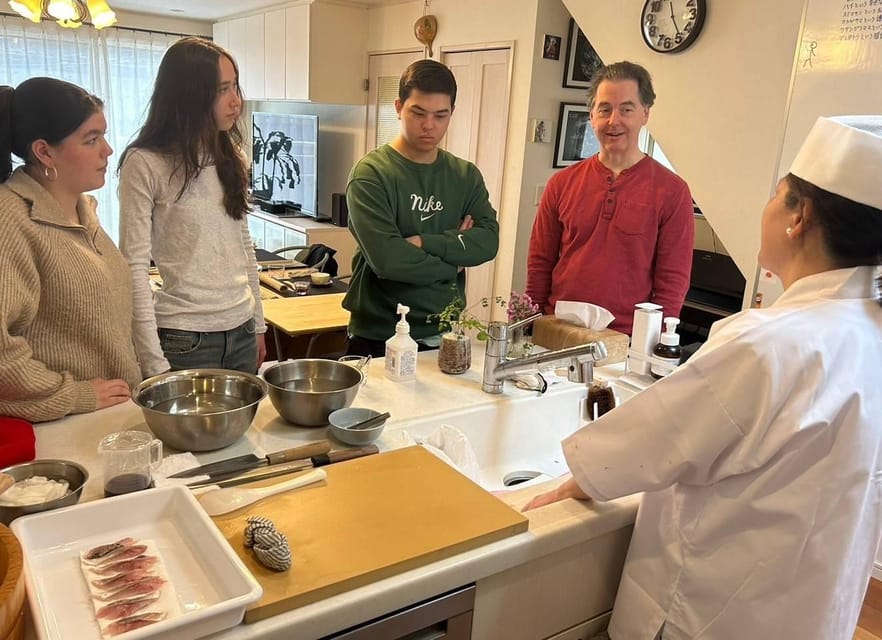
After the preparation, you sit down to eat the sushi you made. This is where the three-hour format earns its keep. You are not hurried out after the final demonstration, and the meal gives you time to appreciate the work behind each piece.
A morning lesson includes lunch, and an afternoon lesson includes dinner. Sake is available for adults, while drinks are provided for children who are old enough to take part. The meal also includes dessert, and matcha tea has been part of the welcome and finishing touches.
The exact extras may vary, so you should not treat every informal detail as a guaranteed menu item. Still, the food and drink make the experience feel like a shared meal rather than a class that ends when the last roll is cut.
You also get a chance to compare the four styles. The rice is the common thread, but the textures and shapes change the experience. Nigiri feels direct and precise. Maki is familiar and adaptable. Gunkan is structured around its topping, while inari offers a sweet tofu contrast.
That meal has practical value, too. You can leave with a clearer sense of what you like. If you have mostly ordered sushi in restaurants, making each style yourself can help you notice rice seasoning, seaweed texture, and the role of the topping.
What the $103 price includes
At $103 per person, this is not the cheapest way to eat sushi in Tokyo. It is also not priced like a simple restaurant meal. You are paying for three hours of instruction, ingredients, cultural explanation, fish preparation, a full hands-on lesson, and the meal at the end.
The value is strongest if you want an activity rather than just food. You make four different types of sushi and learn a foundation you can try to repeat later. The small class is another reason the price may make sense, since a six-person maximum allows more attention than a large group session.
The price is less compelling if you mainly want an inexpensive sushi lunch or dinner. Tokyo has many places to eat sushi without taking a class. You should book this for the combination of food, instruction, and access to a private home, not simply for the amount of sushi on the plate.
Sake, dessert, matcha tea, and other drinks add to the sense of a hosted meal. They are pleasant extras, but I would base your decision on the teaching and small-group setting first.
Who will enjoy this class most
I would choose this experience for adults, couples, families with older children, and anyone who wants food culture explained in a personal setting. Children under 10 cannot take part, so families should check the age rule before booking.
It is especially suitable for someone who already likes sushi and wants to understand how it is made. You do not need professional cooking experience, but you should be ready to handle food, follow instructions, and try several different techniques.
The class also suits people who prefer a calm neighborhood setting to a crowded sightseeing stop. You get a look at a residential part of Tokyo and a hosted meal in a home, while still staying within easy reach of Shinjuku and Shibuya.
Vegetarians can request an option when booking. People with food or animal allergies should not book without first confirming that their needs can be handled. The stated policy is that allergies cannot be accommodated.
A practical look at the schedule
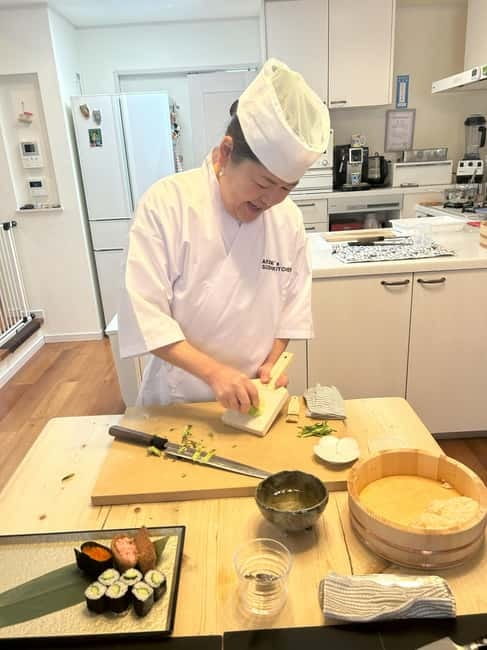
The experience lasts three hours, though the exact start time depends on availability. Select a morning class if you want sushi for lunch, or choose an afternoon class for dinner.
A typical flow includes:
- Meeting at the home, or arranging a station pickup if needed
- A welcome and introduction to sushi history and Japanese food culture
- A demonstration of fish preparation
- Preparation of vinegar rice
- Instruction and practice with nigiri, maki, gunkan, and inari
- Eating the sushi you prepared
- Sake for adults, along with dessert and tea
The order of these parts can vary. You should keep the rest of your schedule reasonably flexible, since hands-on cooking often moves at a slower pace than a formal sightseeing tour.
The class is offered in English and Japanese. English-speaking participants have found communication easy, and the instruction is described as clear and well organized. If you prefer extra help with the route, request the station meeting before the day of the activity.
Should you book AKEMI’s SUSHiKiTCHEN?
Book it if you want to learn sushi in a personal setting, eat the results, and hear the story behind the food. The strongest reasons are the maximum six-person group, Akemi’s direct instruction, the home environment, and the chance to make four contrasting sushi styles in one session.
I would be more cautious if you need a fully customized menu, have any allergy, or only want a quick meal. The set menu leaves little room for choosing specific sushi, and the allergy policy is strict.
For most suitable participants, the $103 cost is fair because it covers a full three-hour activity rather than a meal alone. If you can spare the time and want a Tokyo memory you can partly recreate at home, this is a thoughtful choice.
FAQ
Where does AKEMI’s SUSHiKiTCHEN take place?
The activity takes place in Akemi Castellano’s home in Tokyo, on Honshu, Japan. It is conveniently accessible from Shinjuku and Shibuya.
How long does the sushi class last?
The class lasts three hours.
How much does the experience cost?
The listed price is $103 per person.
Which sushi types will I make?
You will learn to make nigiri sushi, maki sushi, gunkan sushi, and inari sushi.
Is a meal included?
Yes. You eat the lunch or dinner you prepare during the class.
Is a vegetarian option available?
Yes. You can request a vegetarian option when placing your order.
Can I choose which sushi I will make?
No. The menu is set, so participants cannot select the sushi styles included in the lesson.
Is the class taught in English?
Yes. Instruction is available in English and Japanese.
How many people can join the class?
The class is limited to six participants.
Can children attend?
Children under 10 years old cannot take part.
Can the kitchen accommodate allergies?
No. The provider states that food and animal allergies cannot be accommodated. Contact the provider beforehand if you have any allergy.
Can I be met at the train station?
Yes. The team can meet you at the nearest station if you request this in advance.
New cooking classes around Tokyo
- Shinjuku Tokyo: Authentic Japanese Home-Style Culinary Class★ 4.9 · 125 reviews
- Shibuya Tokyo: Onigiri & Tamagoyaki Cooking Class★ 5.0 · 4 reviews
- Ramen Making from Scratch +Akihabara Tour –Cooking Class★ 5.0 · 25 reviews
- Japanese Knife Skills & Tuna Don/Sushi Workshop in Tokyo★ 5.0 · 3 reviews
- Tokyo: Private Japanese Cooking Class with a Local Chef★ 5.0 · 81 reviews
- Unique Private Cooking Class with a Tokyo Local Emi★ 5.0 · 131 reviews
- Japanese Home Cooking Class & Walk in Todoroki Temple Tokyo★ 5.0 · 88 reviews
- Private Home Cooking in Yanaka – Local Flavors in a Warm Setting★ 5.0 · 173 reviews
Tokyo Cooking Classes, side by side.
Ramen & Gyoza Cooking Class in Tokyo with Local Supermarket Visit
Read our review →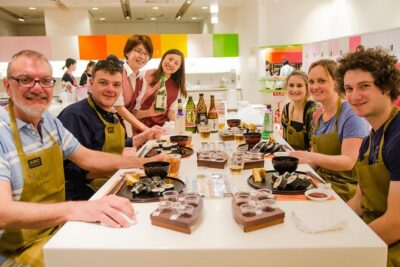
Tokyo Tsukiji Fish Market Tour and Sushi Making Lesson
Read our review →
Tokyo: Easy Ramen Cooking Experience in Kabukicho, Shinjuku
Read our review →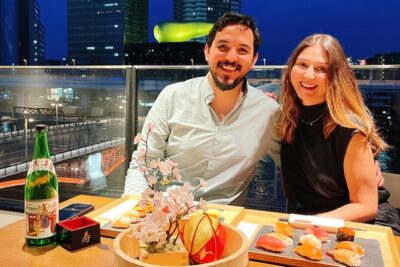
Ramen and Sushi Cooking Class with Sake Pairing Set in Tokyo
Read our review →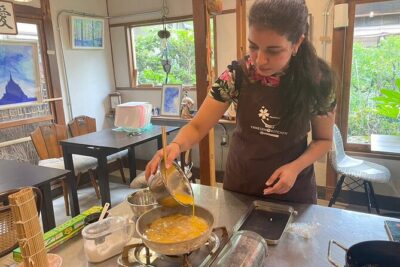
Private Home Cooking in Yanaka – Local Flavors in a Warm Setting
Read our review →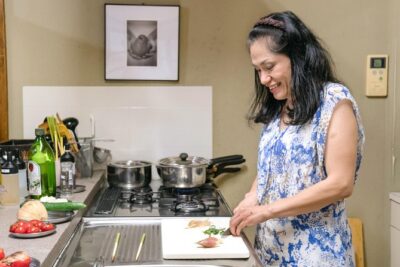
Unique Private Cooking Class with a Tokyo Local Emi
Read our review →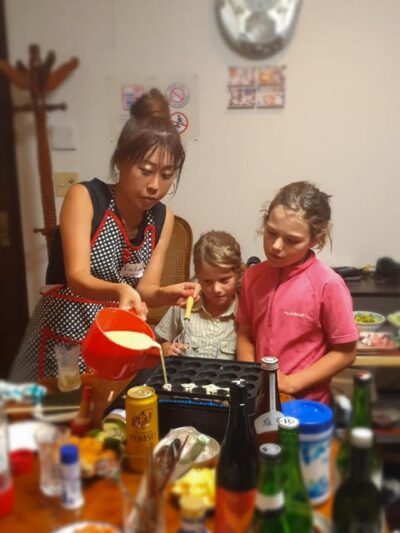
Shinjuku Tokyo: Authentic Japanese Home-Style Culinary Class
Read our review →
Japanese Home Cooking Class & Walk in Todoroki Temple Tokyo
Read our review →This kitchen also appears in