
Review · COOKING CLASSES WORLDWIDE
Buenos Aires: Empanada & Alfajor Cooking Lesson in Palermo
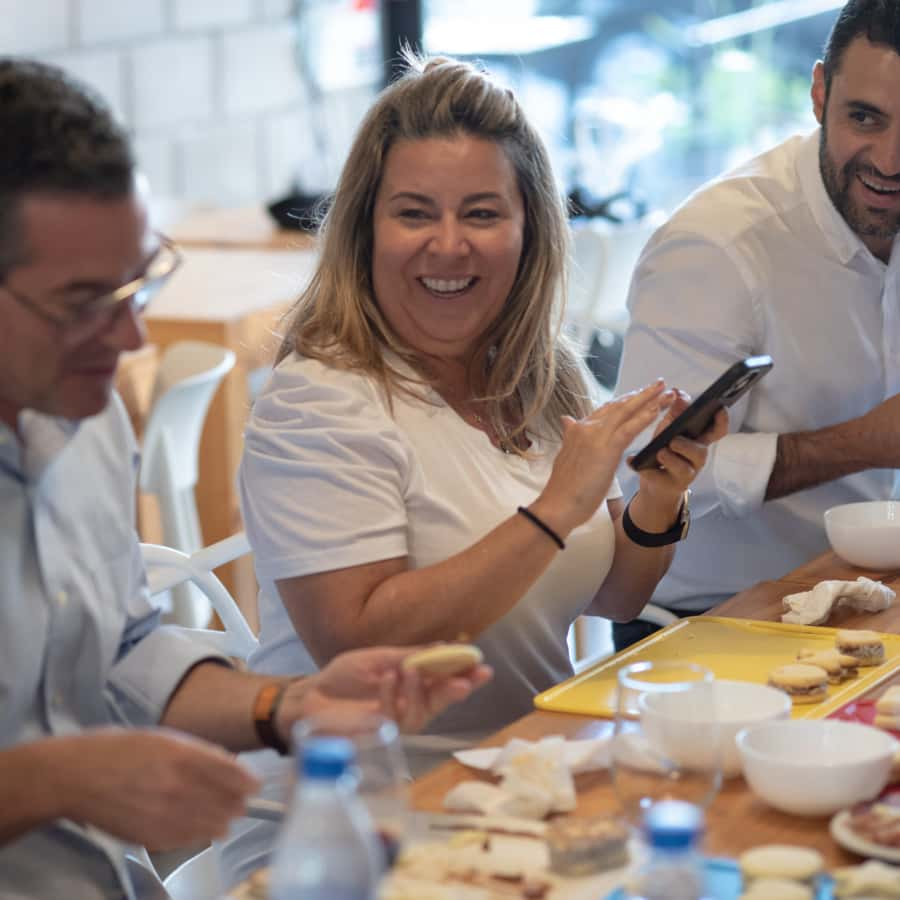
Argentine cooking becomes much more personal when you make the food yourself. In this 150-minute Palermo class, you prepare empanadas from the filling to the famous folded edge, then bake alfajores and sandwich them with dulce de leche. It is an easy way to learn two national favorites without giving up half a day.
I like the hands-on format, especially because you are not simply watching a chef work. I also like the family-friendly pace, the chance to choose a meat or vegan empanada, and the mate tea that adds a small but useful window into Argentine social life. The main consideration is that some parts may be demonstrated rather than cooked by every person, particularly in a family group.
Key points to know before booking
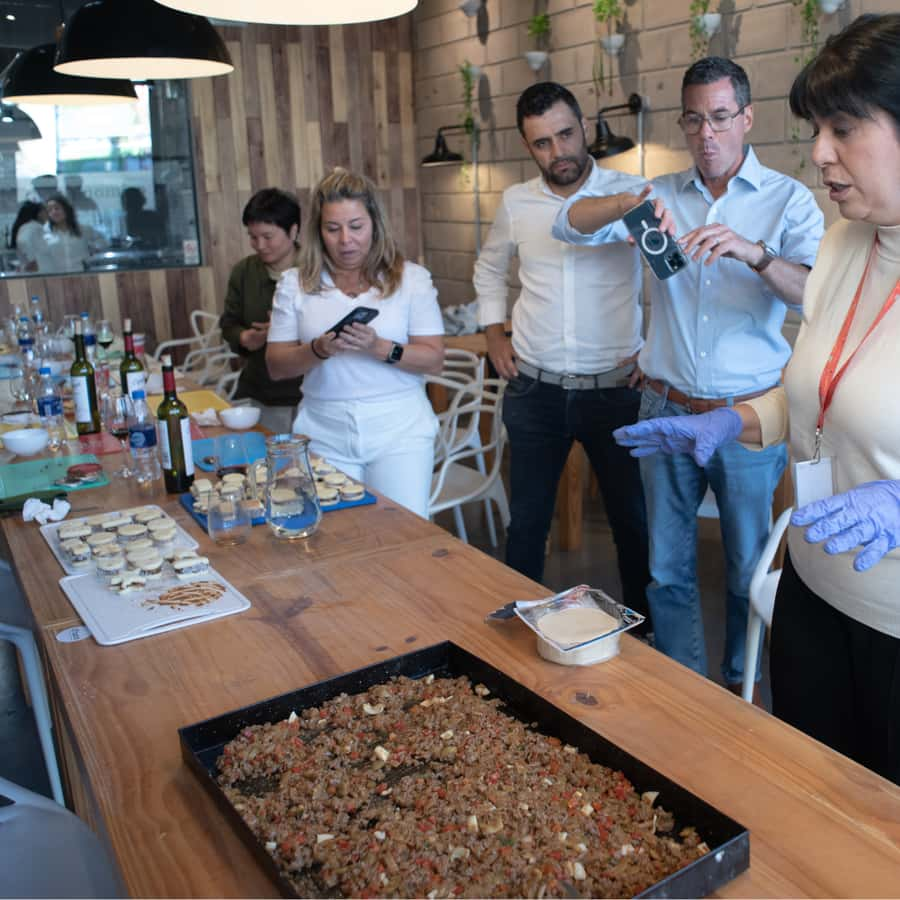
- Two Argentine classics in one class: Make savory empanadas and sweet dulce de leche alfajores.
- You do the important work: Mix, fill, fold, bake, and assemble rather than only observing.
- Good for families: Children and adults can take part, with the activity described as suitable for all ages.
- Meat or vegan filling: The class can accommodate either preference for the empanadas.
- A local social touch: Mate tea and cultural conversation are part of the experience.
- Central Palermo meeting point: Meet at Gorriti 4882 or confirm the exact address, listed elsewhere as Gorriti 4886.
Starting in Palermo with empanada basics
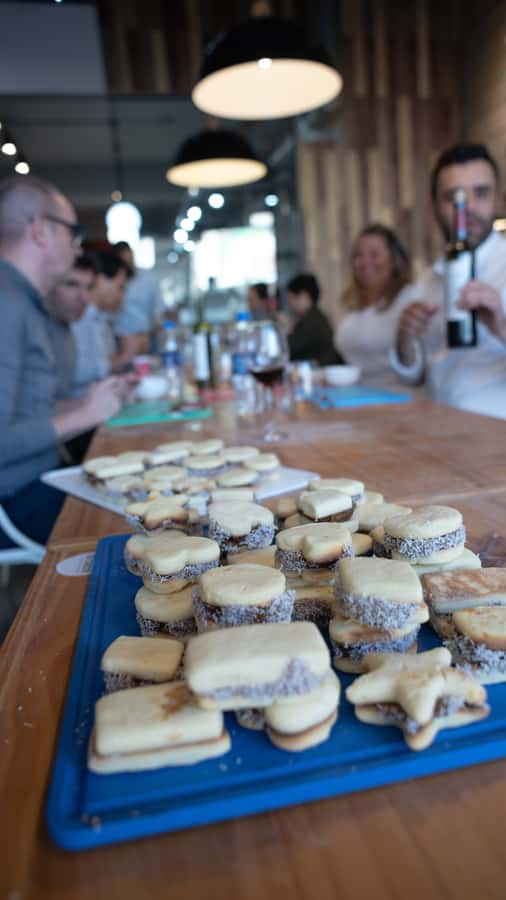
The class begins at the Palermo meeting point on Gorriti Street. The address appears as number 4882 in one place and 4886 in another, so I would confirm the precise doorway before setting out. Hotel pickup is not included, which means you arrange your own way to the venue.
Once you arrive, a local instructor introduces the food and the plan for the session. Hosts have included Carolina, Tomás, Catalina, Lourdes, Paulina, Nyla, and others, with instruction offered in English, Spanish, or Portuguese. The exact teacher can vary, but the central idea remains the same: learn by doing, ask questions, and eat what you prepare.
Empanadas are a smart starting point because they are simple in concept but full of local detail. You work with dough, filling, and the distinctive folded edge that seals each pastry. That final step is more of a craft than it first appears. A patient instructor can show you how to close the dough neatly and help you avoid losing the filling in the oven.
The class includes the empanada ingredients, so you do not need to shop before arriving. Meat and vegan options are available. If you have a firm preference, I would state it when booking or at the start, since the useful part of a cooking lesson is learning a version you will actually want to prepare at home.
One especially practical feature is the comparison between packaged empanada dough and freshly made dough. That gives you a realistic view of Argentine home cooking. You learn the traditional method, but you also see where a shortcut might save time on a busy evening.
More cooking classes around the world:
- Half-Day Thai Cooking Class at Organic Farm in Chiang Mai
★ 5.0 · 19,087 reviews - Florence: Pasta Cooking Class with Unlimited Wine
★ 4.9 · 10,285 reviews - 3 in 1 Cooking Class near Navona: Fettuccine, Ravioli & Tiramisu
★ 5.0 · 7,376 reviews
Folding, baking, and eating the savory course
The preparation is not just a demonstration. You handle the ingredients, shape the pastries, and practice the fold. This makes the class more memorable than a meal where someone else does all the work. It also gives you a recipe you can repeat, even if your first few empanadas look more artistic than tidy.
The instructors are praised for being patient and clear. Tomás, in particular, is described as giving detailed instructions, while Carolina is noted for guiding each step with enthusiasm. That matters here because the folding technique can feel awkward at first. A calm teacher keeps the class moving without making beginners feel clumsy.
The finished empanadas are served during the meal portion of the class. You get to taste the result while the cooking is still fresh in your mind. Some sessions have also included wine or a small spread of food, but wine is not listed as a standard inclusion, so I would treat that as a possible extra rather than a promise.
The amount of food appears generous. You are not paying for a token sample after a short demonstration. You prepare enough to make the cooking feel worthwhile, then sit down and enjoy what you have made. That is one reason the $49 price feels fair for someone who values both a meal and a practical lesson.
Making alfajores with dulce de leche
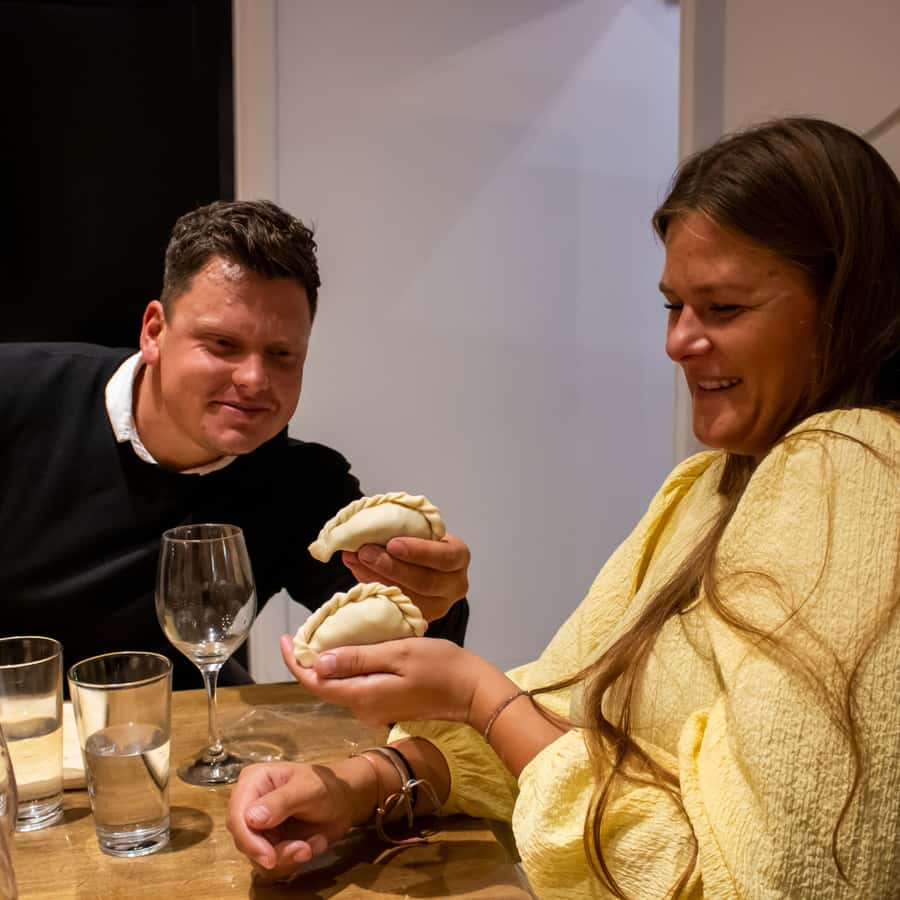
After the savory work, the class turns to alfajores. These Argentine cookies are made from a baked dough and filled with creamy dulce de leche. The process includes mixing, baking, and assembling the cookies, so you see how the separate pieces become the finished sweet.
This is the part I would especially recommend to anyone with a serious sweet tooth. Alfajores are easy to buy all over Argentina, but making them gives you a better sense of why they are such a beloved treat. The contrast is also useful: empanadas teach shaping and sealing, while alfajores focus on texture, baking, and careful assembly.
The dulce de leche filling makes the finished cookies feel indulgent, but the method is approachable. You do not need advanced baking skills to take part. The instructions are designed for beginners, and the teacher helps with the steps that require more care.
The recipes are meant to be useful beyond the class. Several participants have gone home planning to make the dishes again, and one person taught a parent how to prepare alfajores after returning from Argentina. I like that practical result. A good cooking activity should leave you with something more lasting than a photograph and a full stomach.
Mate tea and the Argentine social side
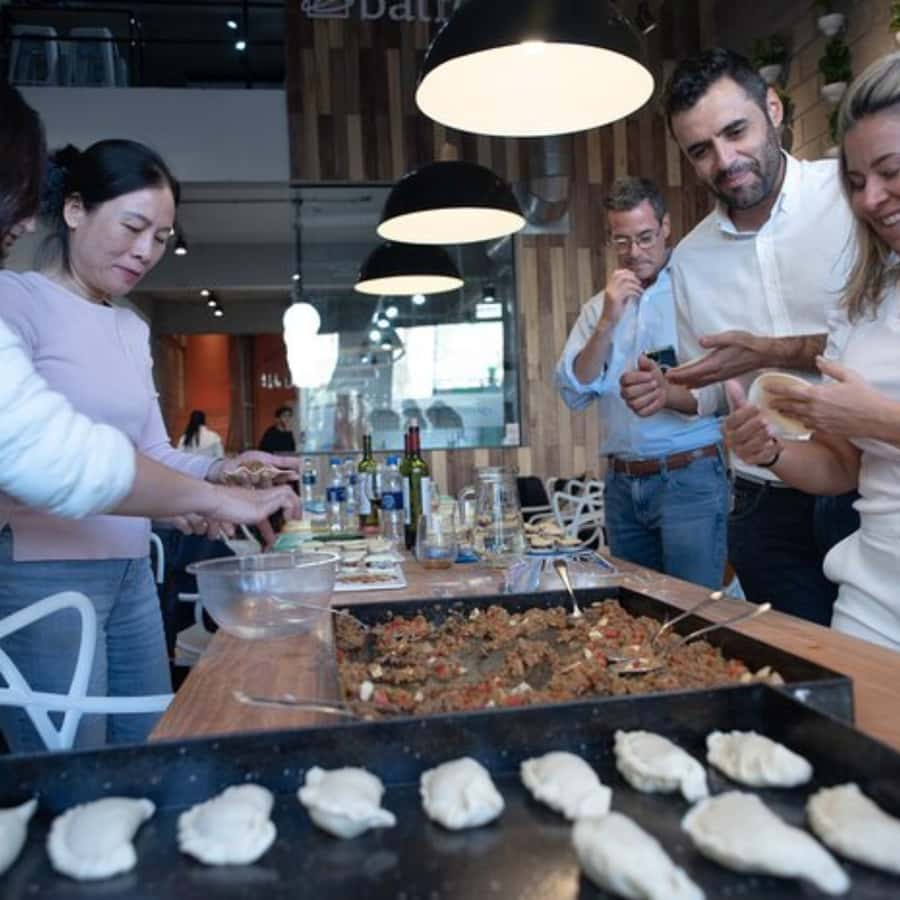
Mate tea adds cultural context without turning the lesson into a formal lecture. You can enjoy it while preparing the food and talking with the guide. The drink is closely tied to daily social life in Argentina, so it helps explain why food and conversation often go together.
The class is built around that social exchange. You cook alongside other people, share tasks, and sit down together afterward. The setting has been described as relaxed and friendly, and some sessions have included a conversation over the finished meal.
That social element is important if you want more than a recipe. You learn what the food means in ordinary Argentine life, how people approach familiar dishes, and why folding an empanada can become a small point of pride. The activity is less formal than a professional culinary school and more personal than a standard food tasting.
Language should be manageable for many visitors. English, Spanish, and Portuguese are offered, but I would choose the language you can follow most easily when booking. Cooking instructions move quickly when dough, fillings, and ovens are involved, so clear communication makes a real difference.
Same kitchen, a different dish:
- Florence: Pasta & Tiramisu Cooking Class with Unlimited Wine
★ 4.9 · 6,708 reviews - Florence: Pasta Cooking Class with Unlimited Wine
★ 5.0 · 6,413 reviews - Hanoi Cooking Class: Culture, Local Market & Meaning CSR Impact
★ 5.0 · 5,147 reviews - 5 Traditional Dishes Hanoi Cooking Class with Market Trip
★ 5.0 · 4,890 reviews
Why families tend to enjoy the format
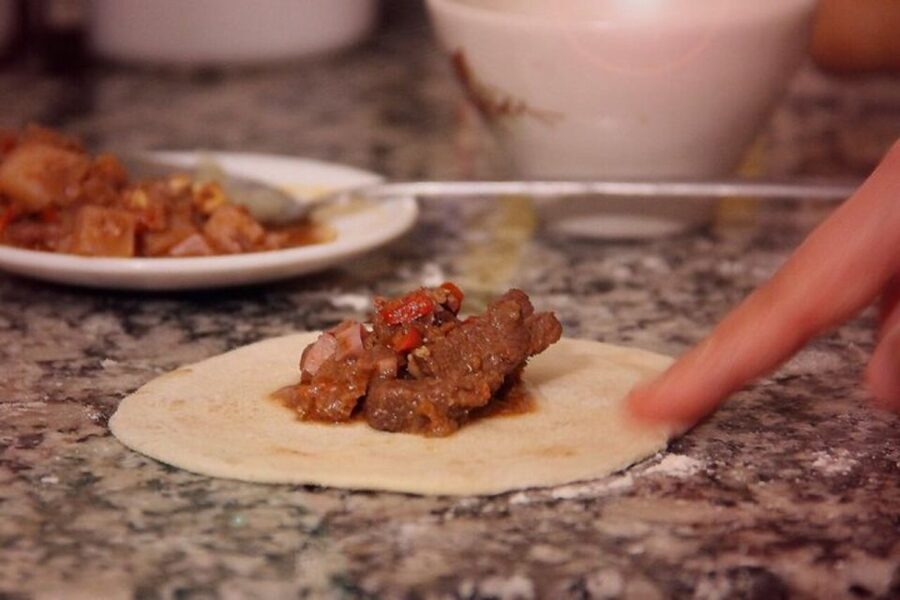
This is a strong choice for a family in Buenos Aires. The class gives children a job they can see and complete, such as adding filling, folding dough, or assembling alfajores. It also avoids the problem of keeping younger participants quietly seated through a long restaurant meal.
The activity is described as suitable for children and adults, and families have found the pace enjoyable. One family group with ages ranging from 11 to 48 appreciated the chance to cook while learning about Argentine food traditions.
Still, I would keep expectations realistic. Not every person may be actively cooking during every stage. One family-friendly note points out that some parts were demonstrations rather than hands-on work for everyone. If your children want constant activity, ask the instructor how tasks are divided when you arrive.
The class also suits adults who already cook. One participant who was familiar with empanadas still learned new techniques. The comparison between ready-made and fresh dough is useful even if you already know your way around a kitchen.
What the $49 price gives you
At $49 per person, the price covers the empanada ingredients, alfajor ingredients, local instruction, and mate tea. You also eat the food you prepare, which makes this part cooking lesson and part lunch or snack.
I see the value in the combination. A short food tour can explain local dishes, but it cannot teach you how to make them. A restaurant meal can be delicious, but it gives you no practical skill. Here, your payment covers time with an instructor, hands-on work, cultural conversation, and a substantial tasting.
The value is strongest if you enjoy participation. If you only want to sample empanadas and alfajores, you can likely spend less at a bakery or restaurant. If you want to take home recipes and understand the process, the price is easier to justify.
The ingredients are included, but hotel transportation is not. Build that into your plans and allow enough time to reach Palermo. The class lasts 150 minutes, so it is long enough to feel like a proper activity but short enough to fit alongside other Buenos Aires plans.
Practical details that make the day easier
The experience operates in rain or shine, since the cooking takes place indoors. That makes it a useful backup for a wet day in Buenos Aires, though it is also worth booking on a clear day if food is high on your list.
Free cancellation is available up to 24 hours before the activity for a full refund. You can also reserve now and pay later, which helps if your schedule is still changing.
The venue is wheelchair accessible. Since the meeting address is shown as both Gorriti 4882 and Gorriti 4886, confirm the exact number and entry instructions before you leave. This is a small detail, but it is the sort of thing that prevents an avoidable delay at the start.
The guide can speak English, Spanish, or Portuguese. The activity provider is Signaturetours. A live instructor leads the session rather than sending you through a self-guided recipe workshop.
Who should book this Palermo cooking class
I would book this for families, couples, solo visitors who enjoy meeting people, and anyone who wants a useful food memory from Argentina. It is especially good for visitors who like to return home with recipes they can make for friends.
It also works well early in a Buenos Aires stay. You learn about two foods you will see throughout the country, then recognize the differences when you order them elsewhere. The class can give you a better eye for dough, filling, folding, and dulce de leche during the rest of your trip.
I would think twice if you dislike group cooking, prefer a quiet private meal, or have little interest in preparing food. The point is participation. You will spend much of the two and a half hours handling ingredients rather than simply sitting back.
The activity has a 4.6 rating from 186 reviews, and the strongest pattern is clear: people value the friendly instructors, the hands-on work, the quality of the food, and the generous amount prepared. A smaller concern is that not every part may involve every participant, and the cooking tools may not feel top quality in every session.
Should you book it?
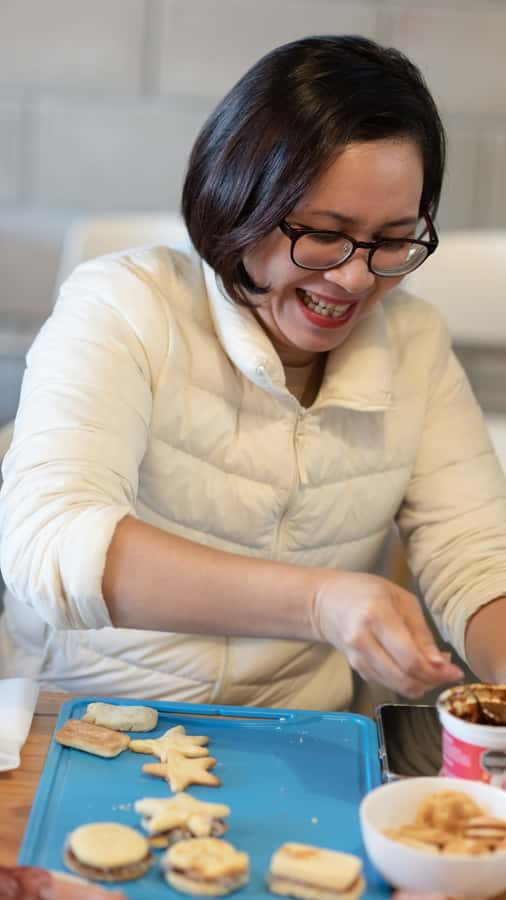
Book this class if you want to make two important Argentine foods, eat a satisfying result, and learn a little about the culture around them. The combination of empanadas, alfajores, mate tea, and a local guide gives you more substance than a quick tasting stop.
I would choose it for a family day, a rainy afternoon, or an early trip activity that helps you understand the food you will encounter across Argentina. Just confirm the Gorriti address, mention your meat or vegan preference, and remember that the experience is best for people who want to take part.
FAQ
How long does the cooking class last?
The experience lasts 150 minutes, or two and a half hours.
Where does the class meet?
It meets on Gorriti Street in Palermo, Buenos Aires. The provided address appears as Gorriti 4882 in one place and Gorriti 4886 in another, so confirm the exact meeting number before arrival.
What foods will I make?
You will prepare Argentine empanadas and dulce de leche alfajores. You will mix, shape, bake, and assemble the food with guidance from the instructor.
Are vegan empanadas available?
Yes. Meat and vegan empanada options are available.
Is mate tea included?
Yes. Local mate tea is included along with the ingredients and live instruction.
What languages are offered?
The class is offered in English, Spanish, and Portuguese.
Is the activity suitable for children and wheelchair users?
The experience is described as suitable for families and children, and it is wheelchair accessible. Some parts may be demonstrated rather than actively cooked by every participant.
New cooking classes around the world
- Shinjuku Tokyo: Authentic Japanese Home-Style Culinary Class★ 4.9 · 125 reviews
- Shibuya Tokyo: Onigiri & Tamagoyaki Cooking Class★ 5.0 · 4 reviews
- M.O.M COOKING CLASS★ 4.8 · 6 reviews
- Seville: Paella-Cooking Experience with Sangria & Full Meal★ 4.9 · 42 reviews
- Shanghai: Authentic Chinese Cooking Class with Master Chef★ 5.0 · 2 reviews
- Sestri Levante: Pesto & Cooking Classes, Wine Tasting★ 4.9 · 56 reviews
- Seville: Paella Cooking Class & 30-Min Local Expert Q&A★ 4.8 · 37 reviews
- Seoul: Korean Kimchi Cooking Class in the Heart of the City★ 5.0 · 3 reviews