
Review · FEZ
Unforgettable Cooking Class in Fez
Fez’s best cooking lessons begin before anyone turns on the stove. This one takes you into a local market to choose the meat, vegetables, herbs, and spices for your meal, then brings you to a riad kitchen to prepare and eat it. You are not just watching a chef work. You are part shopper, part cook, and part cultural detective.
I like the market-to-table format, since it shows how Moroccan meals begin with ordinary local produce rather than a costly list of hard-to-find ingredients. I also like the small, private setting, where guides such as Badr, Mohammed, Moundir, and Fatima can adjust the menu and explain the food at your pace.
The main caution is that the quality of the teaching can depend on who leads your class. Most experiences appear warm and well organized, but one booking with a newly trained guide included little explanation and delayed recipes. Ask questions as you go, and confirm that you want the recipes before leaving.
Key points to know before booking
- The souk comes first: You choose ingredients in a Fez market before cooking, which gives the meal a useful local context.
- You cook the food yourself: Typical dishes include tagine, zaalouk, taktouka, salads, and sometimes couscous.
- Your menu can be flexible: Guides help you choose dishes to suit your tastes, with vegetarian options available.
- Pickup makes the morning easy: Collection from a riad or hotel is offered, followed by transport or a guided walk to the market.
- The class is private: Only your own group participates, making it a good choice for families and couples.
- Budget around four and a half hours: Some past sessions took closer to three and a half hours from pickup through the meal, so avoid booking a tight afternoon plan.
Why this Fez cooking class feels more useful than a standard demonstration
Many cooking classes ask you to arrive at a prepared kitchen, watch a chef chop a few ingredients, and eat the result. That can be pleasant, but it leaves out the part that explains Moroccan food best: how people select and combine everyday ingredients.
Here, the experience starts with shopping. Your guide takes you through a local market and helps you choose what will go into the meal. You might select chicken, lamb, or beef, along with vegetables, herbs, spices, and fruit. The exact menu is not fixed in the supplied details, and that is part of the appeal. You can discuss your preferences instead of being locked into one recipe.
I find this approach especially helpful if you plan to cook Moroccan food at home. You learn which ingredients are used together, how the produce is handled, and how a dish develops from a few basic items. It is a better lesson than simply watching someone place a finished tagine on the table.
The experience also gives you a gentle introduction to Fez’s food culture. The market is not a staged cooking set. It is where you see the raw materials of daily meals, and your guide can explain herbs, spices, and local customs while you shop.
More cooking classes around Morocco:
- Marrakech: Moroccan Cooking Class with Pickup
★ 4.6 · 1,862 reviews - Marrakech: Traditional Moroccan Cooking Class & Market Visit
★ 4.8 · 1,861 reviews - Marrakesh: Moroccan Dishes Cooking Class with a Local Chef
★ 5.0 · 1,615 reviews
Pickup, the 11:00 am start, and the route to the souk
The published start time is 11:00 am, and pickup is offered. Several past bookings included collection from a riad or hotel, with a porter or driver helping bring the group to the market. If your accommodation is inside or near the medina, the pickup matters more than it may at first seem. Fez’s lanes can be confusing, and finding a meeting point while carrying a phone and trying to read directions is not the best way to begin a hands-on class.
The exact arrangement may vary. In some cases, a porter brings you to meet the guide. In others, a driver takes you near the market, where you meet someone such as Badr or Mohammed. The supplied information does not promise a particular guide, so treat the names as examples rather than a guarantee.
Allow more time than the formal duration if you are planning another activity afterward. The class is listed at about four hours and 30 minutes, while one past account put the full pickup, shopping, cooking, and eating sequence at roughly three and a half hours. That difference may reflect the size of the group, the dishes selected, or the time spent at the market.
I would book this early in your Fez stay if cooking is a priority. You may pick up useful food tips for the rest of your visit, and the guide can sometimes answer broader questions about Fez and Morocco as you walk.
Choosing ingredients in a real Fez market
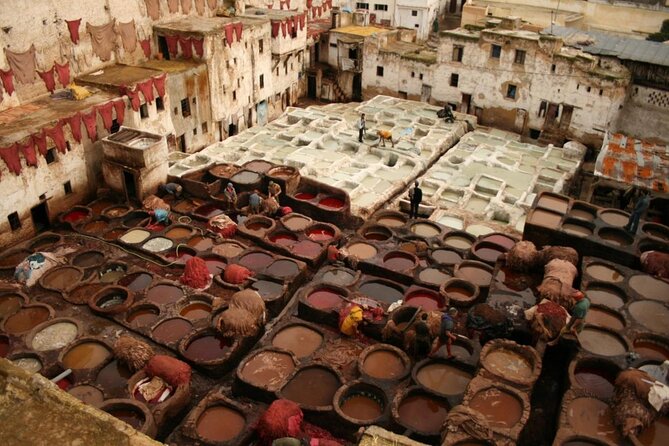
The market visit is the most distinctive part of the class. Instead of receiving a fixed basket, you take part in the decisions. Your guide helps you select the ingredients, explains the uses of herbs and spices, and can steer the menu toward meat, vegetables, or dishes that match your tastes.
Past menus have included lamb tagine, beef tagine with prunes, chicken tagine, Moroccan couscous, zaalouk made with roasted eggplant and cilantro, and taktouka made with roasted peppers. Other meals included several salads and babaganoush-style dishes. You should not assume that every dish appears in every class, but the range shows how much the menu can change.
This is also where the private format helps. One family was able to accommodate a picky eater, while another pair chose a lamb tagine and worked through the preparation at their own pace. Vegetarian cooking is specifically available, so mention that preference when booking or at the start of the class.
Do not expect a guided market tour with a long historical lecture at every stall. The focus is on buying what you need for lunch. One disappointing session involved a guide who purchased the vegetables and meat with little explanation. That seems to be an exception among the available accounts, but it is a useful reminder to ask what you are looking at and why it belongs in the dish.
A simple question such as Why are we choosing this pepper? or What can I use instead of this herb at home? should make the lesson more practical. If you want a recipe you can repeat, ask the guide to note measurements and cooking times during the shopping stage, not only afterward.
Cooking in a riad kitchen with a local chef
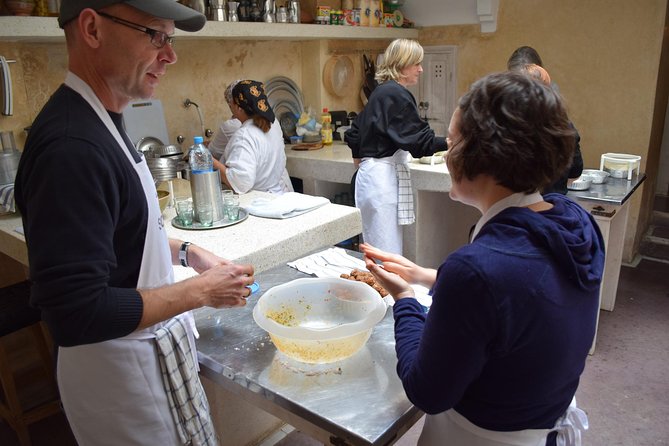
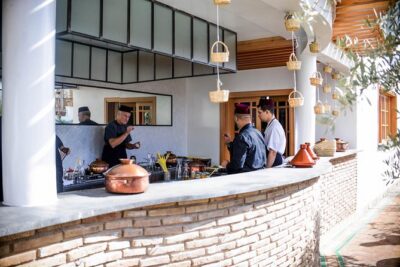
After shopping, you move to a kitchen in a riad or a similar local setting. This is not described as a large professional school with rows of separate workstations. It is a more personal class, often with a chef and a guide sharing the work of teaching and translating.
Fatima and Fatiha are named as chefs in past sessions, while Badr, Mohammed, Moundir, and other guides helped with market shopping, preparation, and communication. The roles may overlap. Your guide may explain the food and demonstrate techniques, while the chef leads the actual cooking.
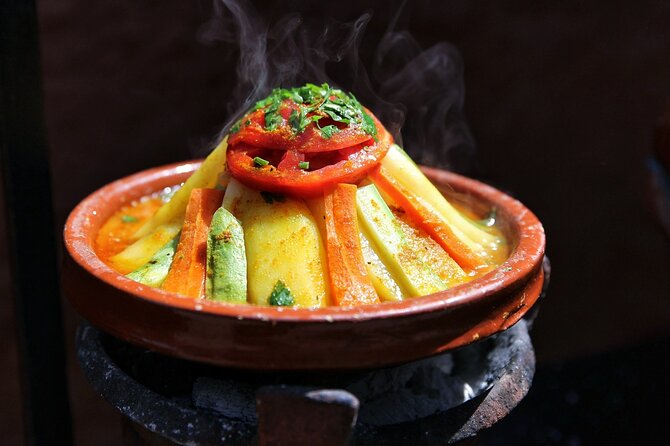
The meal often includes more than one main dish. You could prepare a tagine alongside roasted eggplant, peppers, carrots, or other Moroccan salads. That makes the class useful because Moroccan meals are not only about the famous conical pot. You learn how a complete table comes together, with a rich main dish balanced by vegetable starters and salads.
The pace is generally relaxed. Families have found the hosts patient with children, and couples have been able to decide how much of the work they wanted to do. You should still expect to take part. The point is to chop, mix, season, and prepare, not simply sit near the stove.
English is spoken by some guides, and several sessions were described as easy to follow. Language ability may vary by guide, however. If a step is unclear, ask for it to be demonstrated again. A cooking class is a poor place to be polite about confusion, particularly when the recipe depends on the order in which ingredients are added.
Same kitchen, a different dish:
- Moroccan Cooking Class & Marrakech Market Visit with Chef Khmisa
★ 5.0 · 1,504 reviews - Half-Day Cooking Class with Local Chef Laila in Marrakech
★ 5.0 · 952 reviews - Marrakech: Moroccan Cooking Class with a Local Family
★ 4.9 · 668 reviews - Marrakech: Moroccan Cuisine Cooking Class in Local Home
★ 4.8 · 508 reviews
What you may cook, and what you take home
The central lesson is Moroccan tagine, but the class can include several accompanying dishes. Tagine refers both to the cooking vessel and to the slow-cooked dish prepared in it. You may work with chicken, lamb, or beef, depending on your choice and what is available at the market.
One menu included beef with prunes and three salads. Another combined chicken tagine with babaganoush and other vegetable dishes. A separate session focused on Moroccan couscous. These examples show why it is worth discussing your preferences before shopping.
Vegetarians should feel comfortable asking for a meat-free menu. The class specifically offers vegetarian options, and the market visit makes it possible to choose suitable produce from the start. If you have allergies or strict dietary needs, explain them clearly before the cooking begins. The supplied details do not list a formal allergy policy, so do not rely on substitutions being automatic.
The biggest practical benefit is that the food is familiar enough to recreate. The classes use fresh market ingredients rather than rare luxury products, and the dishes are built around techniques you can adapt at home. You may not receive a printed recipe on the spot, so ask how the recipe will be shared. One past participant was still waiting for recipes four days later, even after sending a message.
Sitting down to eat what you prepared
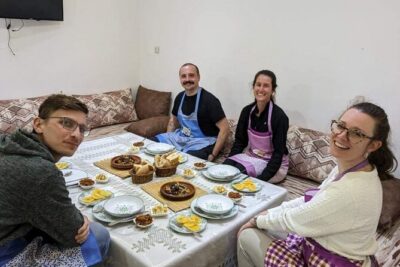
The class ends with the best kind of test: lunch. You sit down and eat the meal you helped prepare, usually in the riad setting. This gives the experience a clear rhythm. First you see the ingredients in the market, then you handle them in the kitchen, and finally you taste the finished dishes.
The meal is also a chance to slow down. Several sessions were described as relaxed and friendly, with time for questions about Moroccan food and life in Fez. One guide shared favorite songs with the group, and the group returned the favor. That kind of exchange is not a formal part of the menu, but it shows how the private format can feel more personal than a standard demonstration.
You should not expect a restaurant-style service experience. Timing may be informal, and the meal depends on how quickly the dishes cook. That is not a problem if you allow the full morning or early afternoon. It can be frustrating if you have booked a museum visit, train, or tour immediately afterward.
The food itself is the strongest payoff. You know what went into it, and the final meal lets you compare your preparation with the chef’s guidance. Even a simple salad feels different when you have chosen the produce and prepared it yourself.
Price, private format, and overall value
At $35 per person, this is a reasonable price for roughly four and a half hours, especially when pickup, market shopping, instruction, and a meal are included. The value is strongest for people who want several elements in one outing rather than a short cooking demonstration.
The private format improves the calculation. You are not being placed in a large class where the chef must keep to one fixed recipe and divide attention among many people. Your group can choose dishes, ask questions, and adjust the pace. Families also gain from having more room to accommodate children and different appetites.
Still, $35 is not the absolute cheapest way to eat in Fez. If your only goal is a filling Moroccan lunch, a local restaurant will cost less. You are paying for the market visit, personal instruction, transport help, and the chance to repeat the dishes later.
The class is also more valuable for a couple or small group than for someone who dislikes cooking. You will spend a meaningful part of the session preparing food. The market and shared kitchen are the attraction, not an obstacle to reach the meal.
Who will enjoy this class most
I would recommend it most strongly to:
- Couples who want a relaxed, hands-on activity
- Families with children who enjoy choosing and preparing food
- First-time visitors who want a practical introduction to the Fez medina
- Home cooks who want recipes they can adapt after returning home
- Vegetarians who prefer to discuss the menu before shopping
- Anyone who likes food experiences with conversation and local contact
It is less suitable if you want a polished school with a fixed curriculum, printed recipes, and perfectly consistent instruction. The experience depends partly on the assigned guide and chef. Most of the available feedback is highly favorable, with a 4.9 rating from 89 reviews and 99 percent recommending it, but the isolated poor experience should not be ignored.
To get the best class, tell the guide what you want to learn. Ask to participate in each stage, request explanations at the market, and confirm how recipes will be sent. If you are staying at a riad, arrange pickup details clearly so you know where to meet the porter or driver.
Should you book this Fez cooking experience?
Yes, if you want food, shopping, and conversation in one private outing. The trip to the souk gives the class its character, and cooking a tagine with fresh ingredients makes the lesson more useful than a demonstration where everything is already prepared.
Book it if you have at least half a day free and can accept some variation in teaching style. I would be particularly happy to recommend it to families, couples, and curious home cooks. Just leave your afternoon open, state dietary needs early, and ask for the recipes before the class ends.
Free cancellation is available up to 24 hours before the 11:00 am start for a full refund. Cancellations or changes made within 24 hours are not refunded, and the class may be rescheduled or refunded if its minimum number is not reached.
FAQ
Where does the cooking class take place?
The experience takes place in Fez, beginning with shopping at a local market or souk and continuing in a kitchen or riad.
What time does the class start?
The published start time is 11:00 am.
How long does the experience last?
The approximate duration is four hours and 30 minutes. One account described the full pickup, shopping, cooking, and meal at about three and a half hours, so allow extra time for changes in pace.
Is pickup available?
Yes. Pickup is offered, and past sessions included collection from a hotel or riad.
Is this a private activity?
Yes. Only your own group participates.
What food will I learn to cook?
The class focuses on Moroccan tagines and may also include salads, zaalouk, taktouka, couscous, babaganoush-style dishes, and other local preparations.
Are vegetarian options available?
Yes. Vegetarian options are available, and your guide can help choose ingredients to suit your tastes.
How much does the class cost?
The listed price is $35 per person.
What is the cancellation policy?
You can cancel up to 24 hours before the start time for a full refund. Cancellations or changes made less than 24 hours before the experience are not refunded.
New cooking classes around Morocco
- Rabat: Authentic Moroccan Cooking Class with Expert Chefs★ 5.0 · 17 reviews
- Rabat: Cooking Class in a Family Home★ 5.0 · 27 reviews
- From Marrakech: Ouzoud Waterfalls Guided Hike and Boat Trip★ 4.9 · 75 reviews
- Moroccan Food Cooking Class with a Local Chef in Marrakech★ 4.7 · 90 reviews
- Moroccan Food Cooking Class with a Local Chef in Marrakech★ 4.7 · 6 reviews
- Marrakech: 3-Hour Open-Air Moroccan Cooking Course★ 4.9 · 74 reviews
- Moroccan cooking class in Marrakech with berber chef★ 5.0 · 16 reviews
- Edgy 8 Dish Private, Fusion Cooking Class, Menu Plan, Market★ 4.9 · 31 reviews
Fez Cooking Classes, side by side.
This kitchen also appears in