
Review · CASABLANCA
Casablanca : Traditional Moroccan Cooking Class with Locals
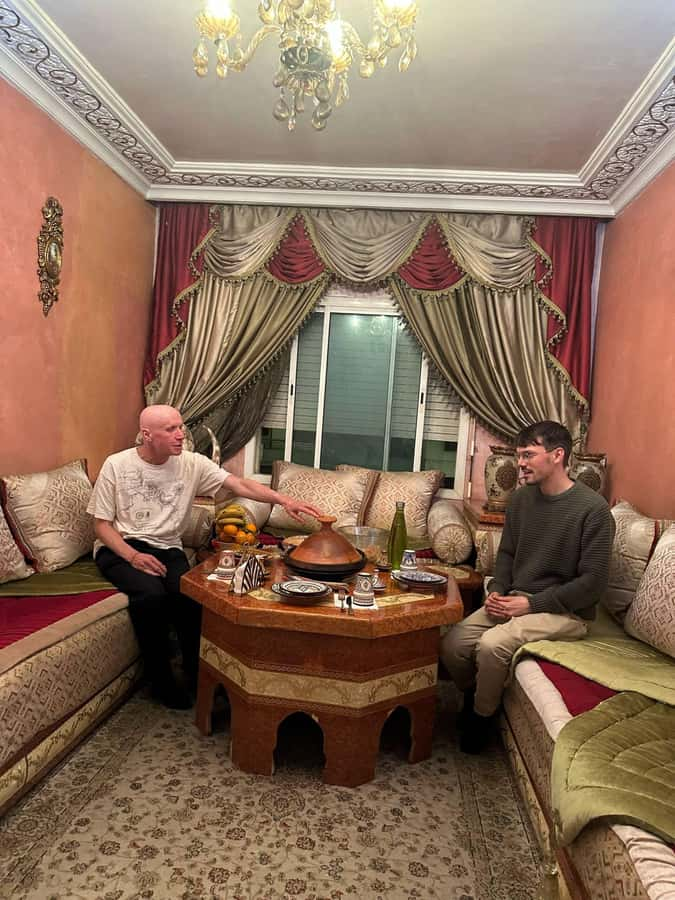
Casablanca’s best food experience may be found away from a restaurant table. Inas welcomes you into her family home, where you learn to prepare Moroccan dishes with recipes passed down from her grandmother and mother. You cook, eat, and talk together, which gives the class a more personal feel than a standard demonstration.
I like the small-group setting, limited to 10 people, and the fact that you do the work rather than simply watch. I also like the cultural side: Inas explains customs, family traditions, and the little kitchen habits that turn tagine, couscous, and salads into everyday Moroccan food.
The main drawback is practical rather than culinary. You must make your own way to the meeting point at Résidence El Fath on Abdellah Ibrahim Street, near BIM Attacharok, and the exact dishes can vary. If you want a polished restaurant kitchen or a fixed menu, this homestyle format may feel less predictable.
Key points to know before booking
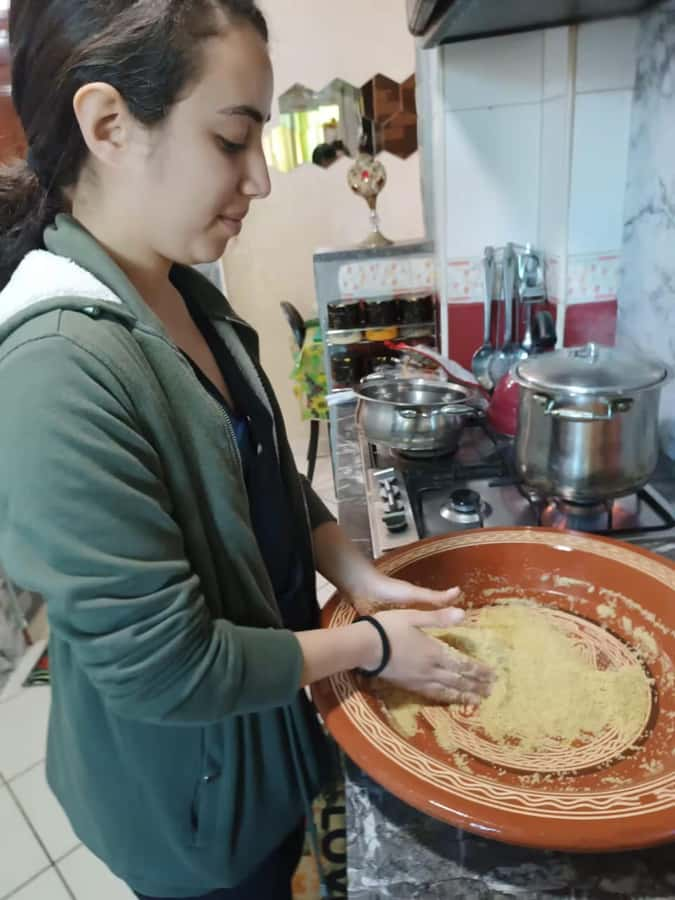
- Cook inside a real Casablanca family home: This is a home-based experience, not a restaurant workshop or a formal cooking school.
- Learn from Inas in three languages: Instruction is available in Arabic, French, and English.
- Prepare classic Moroccan dishes: The class may include tagine, couscous, pastilla, and Moroccan salads, with tagine and vegetable couscous specifically featured in one session.
- Eat what you make with the family: The four hours end with a shared meal and time for conversation.
- Keep the group small: The maximum is 10 participants, allowing room for hands-on work and questions.
- Pay $60 for a four-hour cultural activity: That price includes the class, ingredients, cultural exchange, and shared meal, but not transportation.
Cooking Moroccan food in Inas’s family home
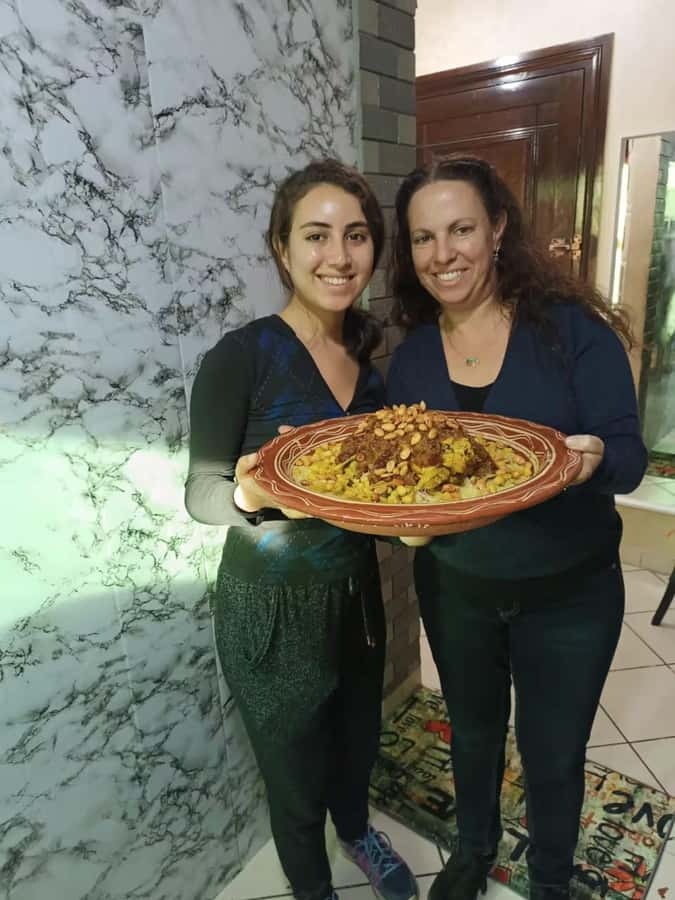
This experience begins at a private home in Casablanca, not at a commercial kitchen. That distinction matters. You are not only learning how a dish is assembled. You are seeing how food connects with family life, hospitality, and daily customs.
Inas learned from her grandmother and mother, each with more than 40 years of experience cooking Moroccan food. Her teaching is built around those family methods, including traditional techniques and small tips that are usually passed from one generation to the next.
You should expect a friendly, informal setting. The supplied information does not promise a staged performance or a professional chef’s kitchen, and that is part of the appeal. You are entering a family environment where cooking is treated as a shared activity.
The language choice is useful for international visitors. Inas teaches in Arabic, French, or English, so you can ask questions and follow the steps without relying only on gestures. Her patience is also a practical strength. The experience suits beginners, including people who do not often cook Moroccan food at home.
More Moroccan Cooking Classes around Morocco:
- Marrakech: Moroccan Cooking Class with Pickup
★ 4.6 · 1,862 reviews - Marrakech: Traditional Moroccan Cooking Class & Market Visit
★ 4.8 · 1,861 reviews - Marrakesh: Moroccan Dishes Cooking Class with a Local Chef
★ 5.0 · 1,615 reviews
A four-hour lesson built around classic dishes
The class is described as hands-on, so you should expect to take part in preparation rather than sit back and watch. The menu can include tagine, couscous, pastilla, and Moroccan salads. Since the description uses options such as tagine or couscous or pastilla, you should not assume that every dish appears in every session.
Tagine is one of the likely centerpieces. In one class, the group prepared tagine with preserved lemon, a familiar Moroccan combination with a bright, salty flavor. The point is not just to follow a recipe. Inas explains the process and the family techniques that help the ingredients work together.
Couscous may also feature prominently. One group prepared couscous with vegetables, giving you a chance to learn a dish that is both hearty and central to Moroccan home cooking. The class uses fresh, local ingredients, so the preparation connects the finished plate with the food customs of the country.
Pastilla offers a different lesson. This dish combines delicate pastry with a seasoned filling and is often associated with special occasions. The information provided does not specify which version you will make, so ask Inas about the day’s menu if pastilla is especially important to you.
Moroccan salads round out the meal. These are useful dishes for home cooks because they show how vegetables, seasoning, and simple preparation can create variety without a long list of ingredients.
The format leaves room for questions. You can ask why a method is used, how a dish fits into Moroccan family life, or how to repeat it at home. That practical exchange may be more valuable than receiving a printed recipe alone.
The family stories are part of the lesson
A cooking class can teach you what to do with an onion or a spice. This one also gives you a way to understand how food fits into Moroccan culture.
Inas shares stories, customs, and family traditions as you work. The cultural side is not presented as a separate lecture. It unfolds around the food, which keeps the conversation natural and easy to follow.
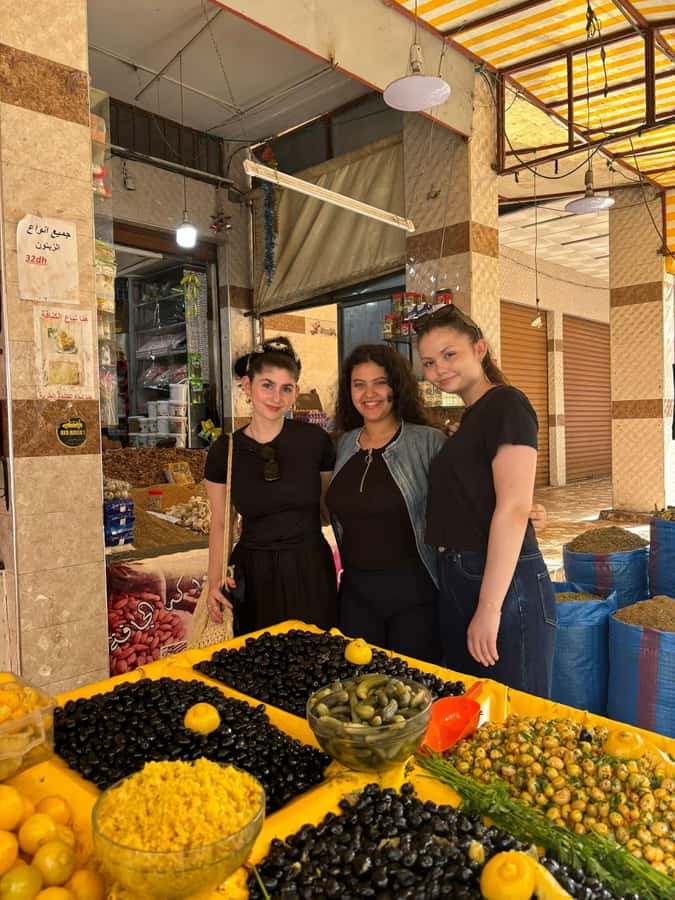
That is one reason I would choose this activity over a standard market visit if you want personal contact. A market can show you ingredients and daily commerce. Here, you see how those ingredients become a meal and how hospitality works inside a local home.
The family welcome is repeatedly described as warm and personal. People who joined the class were received as friends, and one participant described leaving with a new friend. You should still respect the fact that this is someone’s home. A little courtesy, patience, and willingness to talk will help the experience work well for everyone.
The atmosphere also makes this a good choice for people traveling together. Friends can cook side by side, couples can share the work, and solo visitors can meet a small group. One class included participants from Australia, showing that the setting can create easy conversation among people who did not arrive together.
Sitting down for the meal you prepared
After the cooking session, you sit down with the family to eat. This closing meal is more than a free lunch or dinner. It lets you taste the result while the preparation is still fresh in your mind.
You can connect each dish with the work behind it. The tagine is no longer just a menu item. You helped prepare it, watched the ingredients come together, and learned the family method behind the flavor.
The shared table also completes the cultural exchange. Moroccan hospitality is expressed through food and conversation, and the meal gives you time to continue asking questions without the pressure of the cooking steps.
The timing is important. Four hours is long enough to cover preparation, cooking, conversation, and eating without feeling like a quick recipe demonstration. You should set aside a full half-day rather than trying to squeeze the class between several tightly timed sights.
If you have dietary needs, tell Inas ahead of time. The information provided confirms that she has accommodated dietary requests, but it does not list every possible restriction or guarantee a particular menu. Early notice gives the household a better chance to plan.
More cooking classes around Morocco:
- Moroccan Cooking Class & Marrakech Market Visit with Chef Khmisa
★ 5.0 · 1,504 reviews - Half-Day Cooking Class with Local Chef Laila in Marrakech
★ 5.0 · 952 reviews - Marrakech: Moroccan Cooking Class with a Local Family
★ 4.9 · 668 reviews - Marrakech: Moroccan Cuisine Cooking Class in Local Home
★ 4.8 · 508 reviews
Why the $60 price can make sense
At $60 per person, this is not the cheapest way to eat in Casablanca. You could certainly buy a Moroccan meal for less. The value here comes from combining food, instruction, a home visit, and several hours of conversation.
The price includes the hands-on cooking class, fresh ingredients, cultural sharing, and the meal you enjoy with the family. It does not include transportation or accommodation, so you need to budget for getting to and from the meeting point.
For someone who only wants to taste Moroccan food, a restaurant is the simpler choice. For someone who wants to learn how the food is made and gain a personal view of Casablanca life, the four-hour format gives you more substance for the money.
The class also has a maximum of 10 participants. That is small enough to keep the activity personal, though it is not necessarily a private class. If you are looking for one-on-one instruction, confirm the group arrangement before booking.
Getting to Résidence El Fath
The meeting point is Résidence El Fath on Abdellah Ibrahim Street, at BIM Attacharok. Transportation to the location is not included, so you are responsible for reaching the address.
Take this detail seriously. A home-based activity is less obvious than a tour departing from a hotel lobby or major monument. Confirm the meeting instructions with the provider before setting out, and allow extra time if you are unfamiliar with this part of Casablanca.
The location is described as a local community rather than a tourist venue. That supports the authentic feel, but it also means you should not expect the signs and systems of a large attraction.
One participant received indoor protected parking for a car. That was a helpful personal arrangement, but parking should not be treated as a standard included feature unless Inas confirms it for your visit.
The provider offers free cancellation up to 24 hours before the activity for a full refund. You can also reserve now and pay later, which helps if your Casablanca schedule is still shifting.
Who will enjoy this class most
I would recommend this experience to you if food is one of your main ways of understanding a place. You do not need advanced cooking skills. The patient instruction makes it suitable for beginners, and the small group gives you a chance to take part.
It is also a strong choice for anyone who prefers personal contact over a checklist of sights. You will spend time with a local family, hear about Moroccan customs, and share a meal in a private home.
Families and small groups should find the format easy to enjoy, provided everyone is comfortable cooking together. Solo visitors can also benefit from the social side, especially if they like meeting people around a table.
This may not suit you if you need a guaranteed menu, a formal teaching kitchen, or included transport. The dishes can vary, and the class takes place in a real home. That makes it more personal, but less standardized.
The experience is also best for people who are happy to give the afternoon its own space. Four hours is not a quick stop. The conversation and meal are part of the value, so rushing away early would miss much of what makes the class different.
Practical details for a smoother visit
Wear comfortable clothing that allows you to work in a kitchen. The activity involves traditional cooking techniques, so you should expect to participate in preparation rather than remain seated throughout.
Confirm your preferred language when booking or before arrival. Arabic, French, and English are available, and knowing who will lead your session can help you feel prepared.
Ask what dishes are planned if you have a strong preference. Tagine, couscous, pastilla, and Moroccan salads are all listed as possible preparations, but the menu is not fixed in the information provided.
Tell Inas about dietary restrictions in advance. She has shown flexibility with dietary requests, but specific substitutions depend on the menu and the household’s ability to prepare them.
Remember that the home setting calls for normal respect. Follow the family’s guidance, ask before photographing private spaces, and treat the kitchen as someone’s personal environment rather than a public attraction.
Should you book this Casablanca cooking class?
I would book it if you want a personal, food-centered afternoon and are curious about life beyond Casablanca’s main sights. Inas’s patient teaching, family recipes, shared stories, and meal at the end create a complete experience rather than a simple cooking lesson.
The strongest reasons to go are the home setting, the chance to learn traditional methods directly from Inas, and the generous time allowed for eating and conversation. The reported rating is 5 out of 5 from 22 reviews, and the praise consistently centers on hospitality, clear instruction, cultural learning, and the quality of the food.
Skip it if your schedule cannot spare four hours, if you need transportation included, or if you want a fixed menu and a commercial kitchen. Otherwise, $60 is a fair price for a hands-on class plus a personal introduction to Moroccan food and family customs.
FAQ
How long does the Casablanca cooking class last?
The activity lasts four hours. That time covers hands-on cooking, cultural conversation, and a shared meal with the family.
Where does the cooking class meet?
The meeting point is Résidence El Fath on Abdellah Ibrahim Street at BIM Attacharok in Casablanca.
Which languages does Inas speak during the class?
Instruction is available in Arabic, French, and English.
What dishes might I prepare?
The class may include tagine, couscous, pastilla, and Moroccan salads. The exact selection can vary. One session included tagine with preserved lemon and couscous with vegetables.
Is transportation included?
No. Transportation to and from the meeting point is not included.
Can I cancel the booking?
You can cancel up to 24 hours in advance for a full refund. The activity also offers a reserve-now, pay-later option.
New cooking classes around Morocco
- Rabat: Authentic Moroccan Cooking Class with Expert Chefs★ 5.0 · 17 reviews
- Rabat: Cooking Class in a Family Home★ 5.0 · 27 reviews
- From Marrakech: Ouzoud Waterfalls Guided Hike and Boat Trip★ 4.9 · 75 reviews
- Moroccan Food Cooking Class with a Local Chef in Marrakech★ 4.7 · 90 reviews
- Moroccan Food Cooking Class with a Local Chef in Marrakech★ 4.7 · 6 reviews
- Marrakech: 3-Hour Open-Air Moroccan Cooking Course★ 4.9 · 74 reviews
- Moroccan cooking class in Marrakech with berber chef★ 5.0 · 16 reviews
- Edgy 8 Dish Private, Fusion Cooking Class, Menu Plan, Market★ 4.9 · 31 reviews
Casablanca Cooking Classes, side by side.
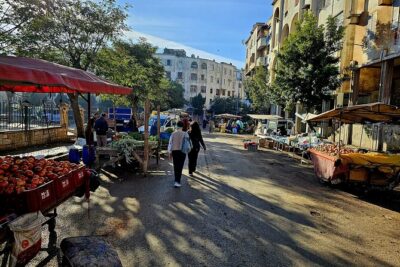
Old local Market visit+Moroccan cooking class with a local family
Read our review →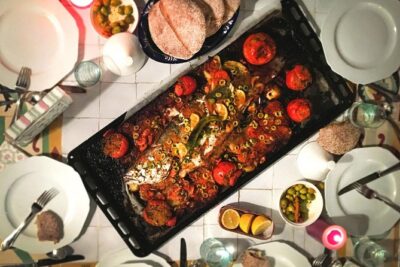
Private Casablanca Market Tour and Cooking Class with Chamsi
Read our review →This kitchen also appears in