Review · CATANIA
Catania: Pistachio Ravioli, Pasta Home Cooking Class w/ Wine
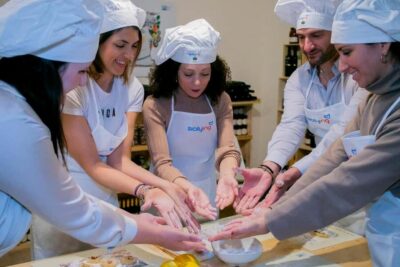
Catania’s most memorable food lesson may begin with a bell at an ordinary apartment building. Inside, Angela leads you through pistachio ravioli from scratch, from dough to filling to the final plate, with plenty of laughter along the way. Her son Victor sometimes helps with English, though Google Translate may also be part of the evening.
I like the small group of no more than eight, which gives you real time at the work surface instead of watching a chef from the back of a room. I also like the meal that follows: bruschetta with pear, cheese, walnuts, and chestnut honey, homemade ravioli, Sicilian wine, and dessert.
The main consideration is communication. The class is advertised in English and Italian, but Angela speaks limited English, so explanations may rely on Victor, gestures, or a translation app. The meeting point can also be hard to identify, so arrive with the address and look for the bell marked Vignolo.
Key points to know before booking
- Pistachio ravioli is the main event: You make the dough, filling, and ravioli shapes by hand.
- Angela hosts in her Catania apartment: Expect a personal home setting rather than a commercial cooking school.
- The group is capped at eight people: You should have room to practice instead of simply observing.
- The meal includes more than pasta: Bruschetta, dessert, wine, water, and coffee are included.
- Plan for three to four hours: The stated duration is three hours, but the meal and conversation can make the evening run longer.
- Translation may be needed: English and Italian are offered, with Victor sometimes helping Angela communicate.
Angela’s Catania kitchen and the first welcome
This cooking class feels different from a lesson in a polished culinary studio. You ring the bell at Vignolo, walk into the building, and make your way to Angela’s apartment. The outside setting may look plain, but the home itself is described as bright, beautiful, and carefully prepared for the meal.
I like that contrast. You are not being ushered into a staged restaurant kitchen. You are entering the host’s home, sitting around her table, and seeing how an Italian meal comes together in a real domestic setting. That gives the evening a more personal tone, though it also means you should not expect commercial signage or a formal reception desk.
The meeting point deserves care. One person had trouble knowing if they were in the right place, while another found that an earlier address had been corrected shortly before the class. I would save the exact address, check the name Vignolo, and allow a few extra minutes to find the bell.
Angela is the central personality of the experience. She is warm, funny, energetic, and willing to correct your technique when needed. That direct approach is part of the fun. You may be teased about a clumsy fold or uneven pasta, but the goal is to help you improve, not leave you to guess.
More Cooking Classes with Wine Tasting in Italy
- Florence: Pasta Cooking Class with Unlimited Wine
★ 4.9 · 10,285 reviews - Florence: Pasta & Tiramisu Cooking Class with Unlimited Wine
★ 4.9 · 6,708 reviews - Florence: Pasta Cooking Class with Unlimited Wine
★ 5.0 · 6,413 reviews
Starting with pasta dough and Sicilian food traditions
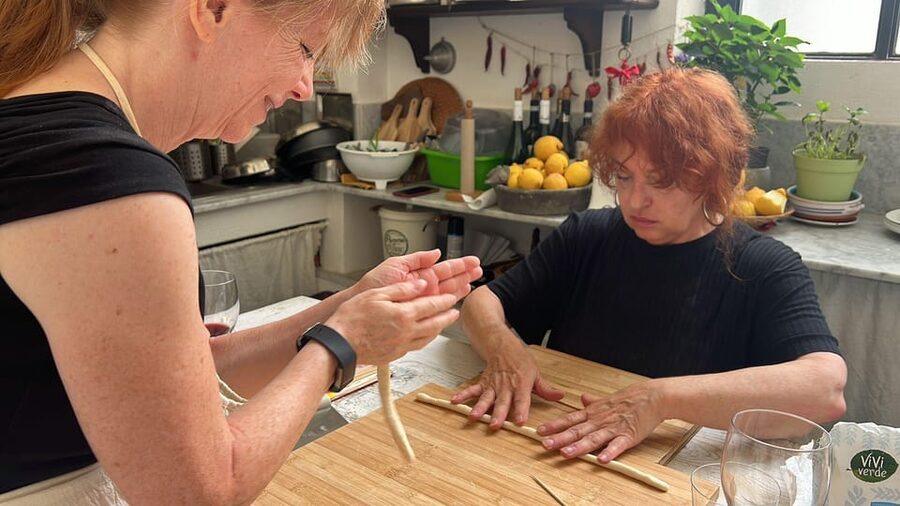
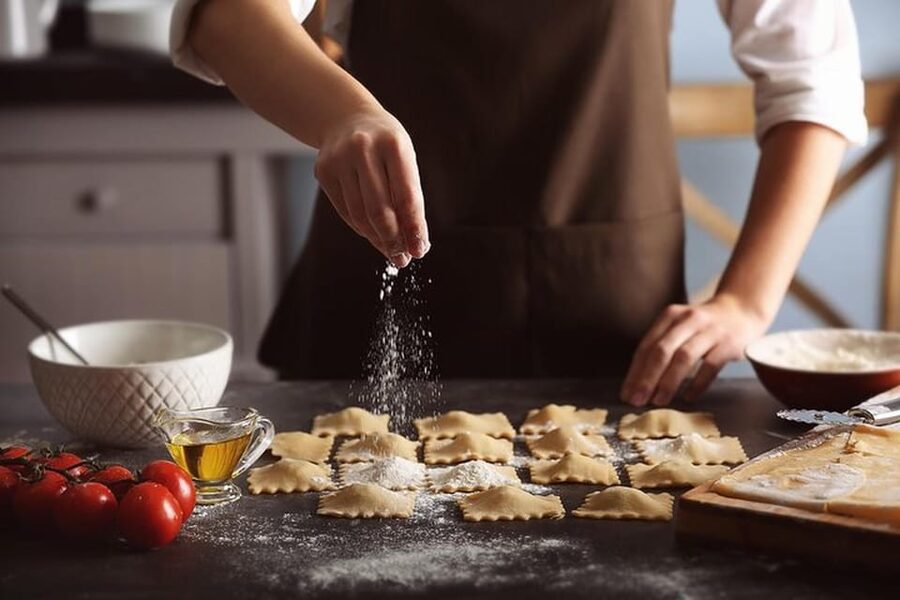
The class begins with the basics of fresh pasta. You prepare the dough from scratch, learn how it should feel, and work through the steps under Angela’s eye. This is not a demonstration where you simply watch her produce a perfect plate. You are expected to handle the ingredients and take your turn.
That hands-on approach is valuable because pasta making is mostly about touch. A recipe can tell you quantities, but it cannot fully explain when dough feels ready, how much pressure to use, or how thin the sheet should be. Angela’s corrections give you the practical clues you can use when you try the dish at home.
The lesson also places pistachios in a Sicilian setting. Sicily is famous for its pistachios, especially those associated with Bronte, and Angela explains the role of this prized local ingredient. You are not just making generic ravioli with a green filling. The dish connects a simple pasta technique with one of Sicily’s signature foods.
The pace is generally relaxed. Some of the class is active work, and some is waiting for the dough to rest. That pause is useful rather than wasted time. It gives Angela a chance to serve the first course and gives you time to talk with the other people around the table.
Bruschetta with pear, cheese, walnuts, and honey
While the dough rests, Angela serves a bruschetta topped with cheese, pear, walnuts, and chestnut honey. It is an unusual combination if you are expecting tomato, basil, and olive oil, but the sweet and savory balance is a deliberate part of the meal.
I would treat this course as more than a snack while you wait. It shows how Sicilian home cooking can combine contrasting flavors without becoming complicated. The pear brings freshness, the cheese adds weight, the walnuts provide crunch, and the honey ties the plate together.
The bruschetta is also one of the parts that makes the evening feel like a full dinner rather than a short pasta workshop. You sit down in the dining area, share food and wine, and let the dough rest while the social side of the class develops.
The exact presentation may differ from one evening to another. Some meals have included a carefully arranged pear and cheese bruschetta, while other descriptions refer to Angela’s own creative version. Either way, this course is included in the meal and is one of the more distinctive elements of the menu.
Shaping pistachio ravioli by hand
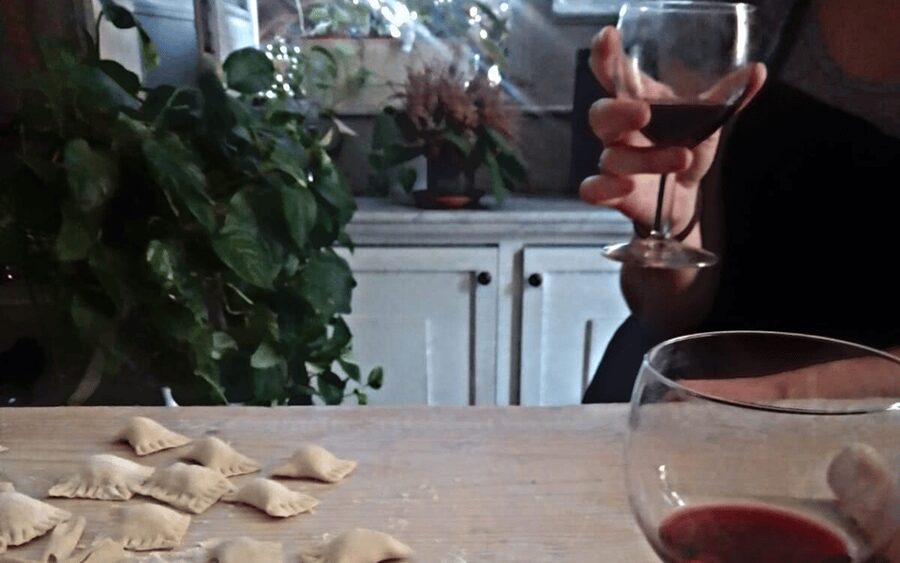
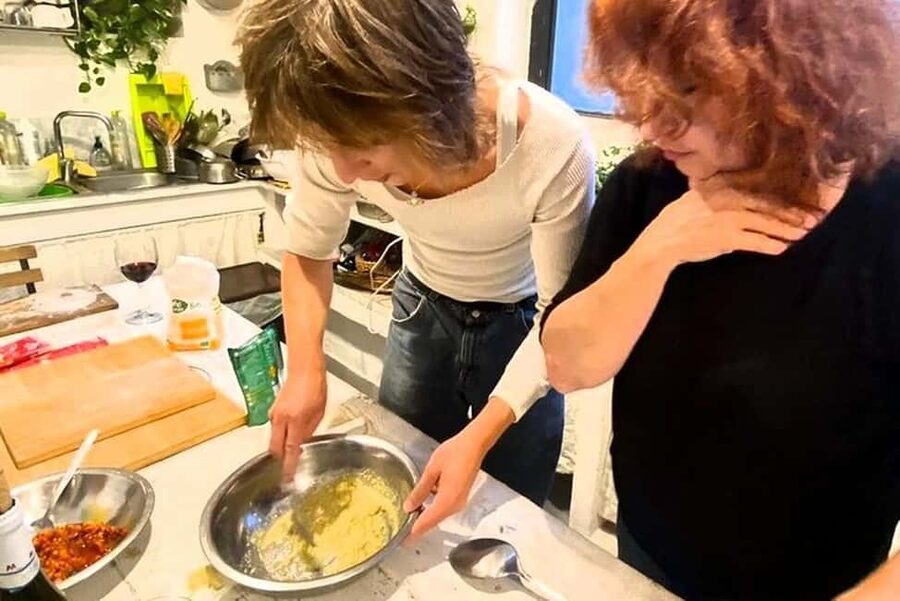
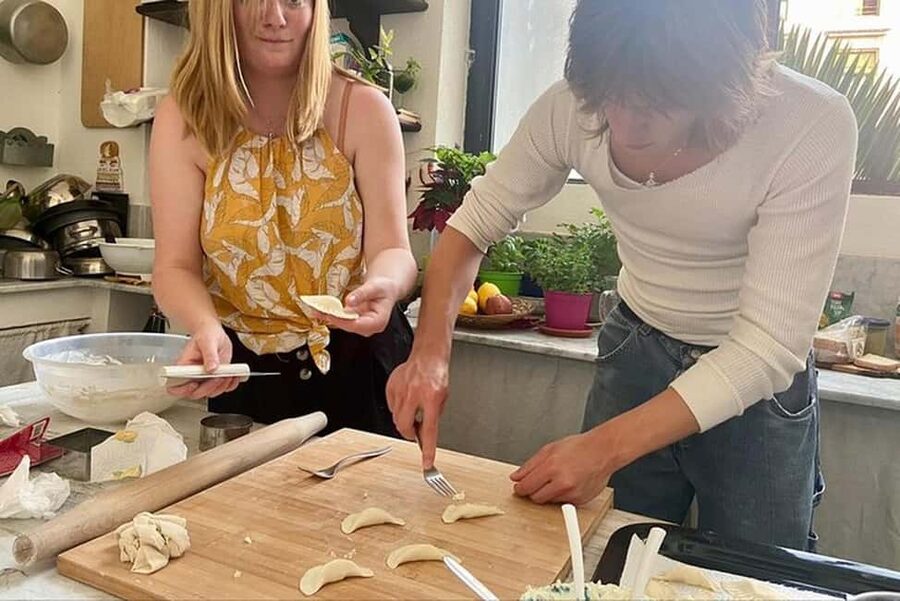
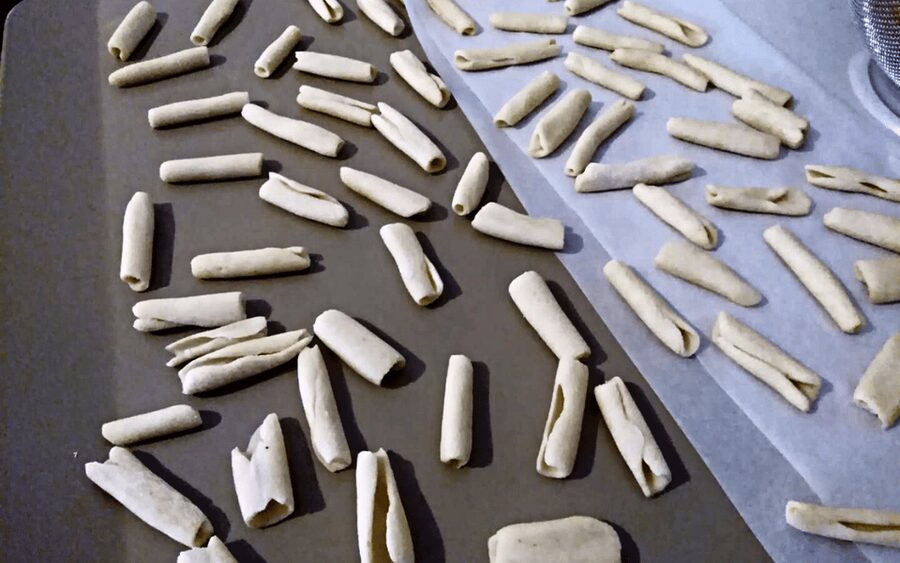
After the dough has rested, you return to the main task: making the ravioli. Angela prepares the creamy pistachio filling and shows you how to place it, seal the pasta, and shape the individual pieces.
This is where the class becomes especially satisfying. Ravioli can look simple on a plate, but the details matter. Too much filling can break the dough. Too little can leave the pasta flat and dull. Poorly sealed edges may open during cooking. Angela’s close attention helps you understand those small choices.
You should expect to make mistakes. Uneven shapes are part of the lesson, and the class is designed for people with different levels of kitchen experience. Several accounts describe Angela patiently guiding beginners while still allowing each person to take part.
The final pasta is served with a white sauce, according to the detailed meal descriptions. The result is fairly simple, which lets the pistachio filling remain the focus. You get to taste the difference between pasta you have just shaped yourself and a restaurant dish prepared by someone else.
I particularly like that the cooking lesson does not end when the ravioli are sealed. The reward comes at the table, when you eat the finished dish with the people who helped make it. That turns the meal into part of the lesson rather than an unrelated dinner afterward.
More Home Cooking Classes in Italy
- Pasta Cooking Class: Mastering Nonna’s Recipes
★ 5.0 · 554 reviews - Pastamama, Home Cooking Classes at Grace’s Home
★ 5.0 · 521 reviews - Traditional Home Cooking Experience in Venice
★ 5.0 · 377 reviews - 3-Recipe Italian Cooking Class in Como – Cesarine Best NYT Hosts
★ 5.0 · 186 reviews
Wine, dessert, and the long finish
The included Sicilian wine works as the natural companion to the pasta and bruschetta. Water and coffee are also included, so you are not paying extra for the basic drinks during the meal.
Dessert is part of the three-course dinner, though the exact sweet may vary. Tiramisu has been served, and other meals have included ricotta with strawberries. If you are choosing this class for a specific dessert, I would not count on one fixed recipe unless the provider confirms it.
The end of the meal can be leisurely. One account allowed about four hours for the full experience instead of the advertised three. That is not a problem if you have left your evening open, but it matters if you are trying to fit in a performance, late train, or another reservation.
I would book this as your main evening plan, not as a tightly timed stop between other activities. The point is not only to learn a recipe. It is to cook, sit down, talk, drink wine, and let the meal finish at its own pace.
Group size, language, and the style of teaching
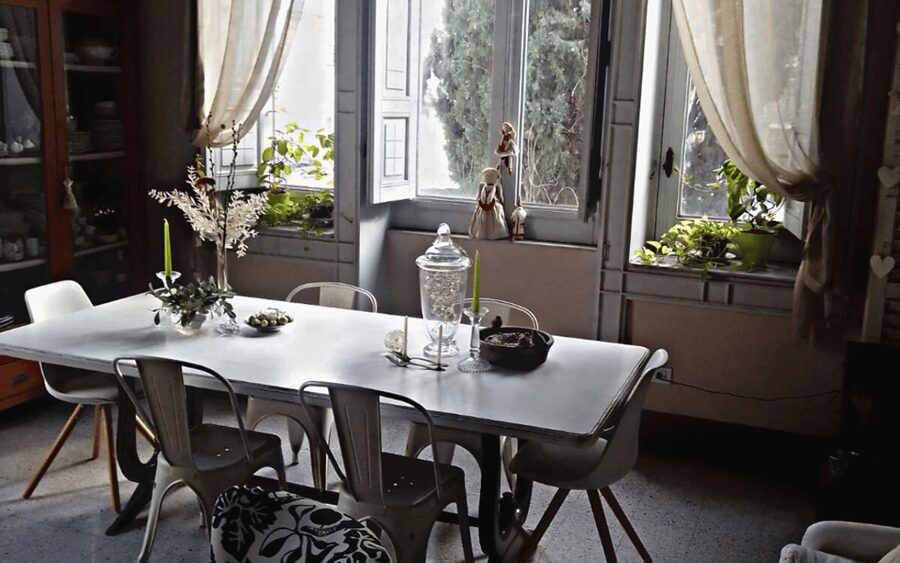
With a maximum of eight people, the class has enough room for personal instruction and enough company to make the meal social. A typical group may include couples and solo participants sharing one kitchen and dining table. That mix can work well if you enjoy meeting people while you cook.
Angela is the teacher, host, and personality at the center of the evening. Her style is lively and hands-on. She demonstrates each stage, then expects you to try it. She pays attention to technique and does not hesitate to offer corrections, which is helpful if you want to leave with skills rather than just photographs.
The language point is worth taking seriously. English and Italian are listed, but Angela speaks little English according to several detailed accounts. Victor, her son, sometimes translates, and people have also used Google Translate or another app successfully.
I would not let this stop you if you are comfortable with a little improvisation. Pasta making is visual, and much can be shown with hands, tools, and examples. Still, if you need a fully English-speaking teacher and long technical explanations, this may feel less smooth than a formal cooking school.
Is the $100 price good value?
At $100 per person, this is not the cheapest way to eat pasta in Catania. You are paying for a three-hour activity, a small group, instruction, a three-course dinner, wine, water, and coffee. The price makes more sense if you value the personal setting and the chance to learn a dish you can try again at home.
A restaurant meal might cost less, especially if you choose a simple pasta dish. It will not usually include a lesson, direct help with fresh pasta, or an evening in a local home. On the other hand, you should not book this expecting a professional cooking-school certificate or a long printed course manual.
One useful point is that you get genuine practice. You are not just sampling pistachio ravioli. You prepare the dough, filling, and shapes yourself, then eat the results. For many people, that makes the price fair, especially when compared with a standard sightseeing activity that lasts only a few hours and leaves you with no usable skill.
A recipe card is not consistently provided, so bring a note-taking app if you want to record quantities and methods. One person specifically wished for a recipe card. Your best souvenir may be the memory and the technique, but writing down the key steps will make it easier to recreate the meal.
Who will enjoy this class most?
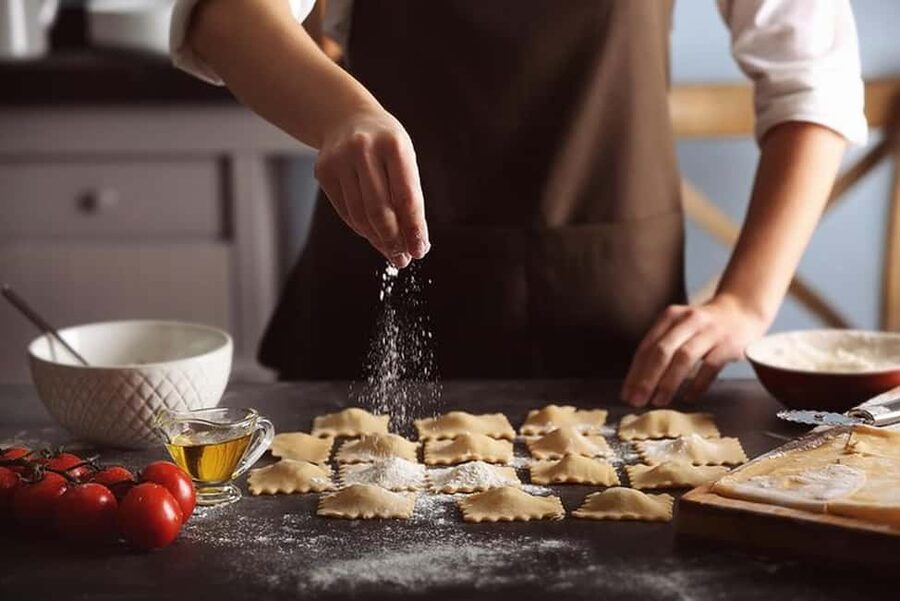
I would recommend it to couples, families with older children, solo food lovers, and anyone who prefers local contact over a polished tourist production. You should enjoy cooking with other people and be willing to laugh when your ravioli are not perfectly shaped.
It is a particularly good choice for a free evening in Catania. The class gives you a full meal and a social activity in one booking, so you do not have to plan a separate dinner afterward.
It may be less suitable if you need wheelchair access. The activity is not suitable for wheelchair users. It is also not the best fit for anyone with a strict schedule, a strong need for fluent English instruction, or no interest in eating the food prepared during the class.
The menu includes dairy ingredients such as cheese, and several dishes contain nuts or pistachios. The supplied details do not explain allergy substitutions, so contact the provider before booking if you have a serious food allergy or dietary restriction.
Practical details for a smoother evening
The class lasts three hours, but I would reserve closer to four hours in your schedule. That gives you breathing room for the lesson, the meal, and the relaxed conversation that often follows.
Bring the exact address and confirm the meeting point before you leave. Ring the bell at Vignolo, and do not assume the building will have a large cooking-class sign. A phone with a translation app can help if Victor is not available.
The provider allows cancellation up to 24 hours before the start for a full refund, and you can reserve now and pay later. Starting times vary, so check availability for the date you want.
The experience is offered in English and Italian, but communication may be a mix of spoken language, translation, and demonstration. I would see that as part of the home-style character, provided you are comfortable with a less formal teaching setup.
Should you book Catania’s pistachio ravioli class?
Book it if you want a warm, personal evening built around food, laughter, and active participation. Angela’s hospitality, careful pasta instruction, unusual bruschetta, Sicilian wine, and homemade ravioli give the class a strong sense of place.
Skip it if you want a polished studio, guaranteed fluent English, a fixed dessert menu, or a firm three-hour finish. For everyone else, the $100 price is reasonable for a small-group meal and lesson, especially if you want to carry a Sicilian recipe home with you.
FAQ
How long does the cooking class last?
The stated duration is three hours. You should allow extra time because the full evening has sometimes lasted about four hours.
What will I cook?
You will make fresh pasta dough, prepare a creamy pistachio filling, and shape pistachio-filled ravioli by hand.
What food is included?
The meal includes bruschetta, pistachio ravioli, dessert, wine, water, and coffee. Desserts described for the experience include tiramisu and ricotta with strawberries.
Is wine included in the price?
Yes. Sicilian wine is included, along with water and coffee.
How many people can join the class?
The group is limited to eight participants.
Which languages are offered?
The activity is offered in English and Italian. Angela speaks limited English, and her son Victor may help translate. A translation app can also be useful.
Where do I meet the host?
You should ring the bell at Vignolo at the provided address. The meeting point may not be clearly marked, so check the address carefully before arrival.
Is the activity wheelchair accessible?
No. The experience is not suitable for wheelchair users.
Can I cancel or pay later?
You can cancel up to 24 hours in advance for a full refund. You can also reserve your place and pay later, keeping your plans flexible.
More Pasta Making Classes in Italy
- 3 in 1 Cooking Class near Navona: Fettuccine, Ravioli & Tiramisu
★ 5.0 · 7,376 reviews - Rome: Pasta Making Class with Wine, Limoncello, and Dessert
★ 4.9 · 3,177 reviews - Pastamania – Florence Pasta Making Class
★ 5.0 · 3,050 reviews - Rome Cooking Class: Make Pasta and 3 Spritz Cocktails
★ 5.0 · 2,937 reviews
New cooking classes around Italy
- Sestri Levante: Pesto & Cooking Classes, Wine Tasting★ 4.9 · 56 reviews
- Sardinia Cooking Class: Fresh Handmade Pasta★ 5.0 · 53 reviews
- San Gimignano: Tuscan Cooking Class★ 5.0 · 2 reviews
- San Gimignano: Truffle Cooking Class with Wine Tasting★ 5.0 · 5 reviews
- San Gimignano: “Hands in dough” Cooking Class with Lunch★ 5.0 · 6 reviews
- Salento: Authentic Cooking Experience with Fresh Pasta and Local Products★ 5.0 · 8 reviews
- ROME:Hands-On Lasagna & Marsala Tiramisu Cooking Experience”★ 5.0 · 3 reviews
- Rome: Private Wine Tour and Pasta Making Class in a Winery★ 5.0 · 6 reviews
Catania Cooking Classes, side by side.
Cooking lesson in Catania with lunch or dinner
Read our review →
Catania: Market Tour and Cooking Class with Chef Riccardo
Read our review →
Catania: Pasta & Tiramisu Cooking Class at a Local’s Home
Read our review →
Catania: Private Cooking Class at a Local’s Home
Read our review →