
Review · CHENGDU
Chengdu Sichuan Cuisine Cooking Class and Savor Local Snacks
The most unusual part of this Chengdu outing is the museum itself: it is built around food, cooking, farming, brewing, and dining rather than glass cases alone. You’ll see ancient kitchen tools, raw ingredients, a giant Kitchen God ancestral hall, and even a pickle jar described as the world’s most expensive.
I like the hands-on cooking class, where you prepare three Sichuan dishes and eat them afterward. I also like the mix of culture and play, from palm-leaf raincoats to blindfolded golden-silk noodle cutting and covered-bowl tea.
The main drawback is the location. The museum sits about 23 kilometers from downtown, and transportation is not included. People with food allergies or wheelchair users should also choose another activity.
Key points to know
- A food museum with a working feel: See more than 6,000 collections, old processing tools, ingredients, and restaurant traditions.
- Three Sichuan dishes: Change into a chef uniform, cook under the direction of senior chefs, and eat what you prepare.
- A rare Kitchen God visit: Enter the world’s largest Kitchen God ancestral hall and take part in an incense ritual.
- Snack tasting is part of the fun: Try Northern-Sichuan pea jelly, tofu pudding, and Zhong’s dumplings.
- Tea house time slows the pace: Drink covered-bowl tea, play Mahjong, and rest after the cooking.
- Plan your ride: The museum is in Gucheng township, Pidu district, about 23 kilometers from central Chengdu.
A food museum far beyond display cases
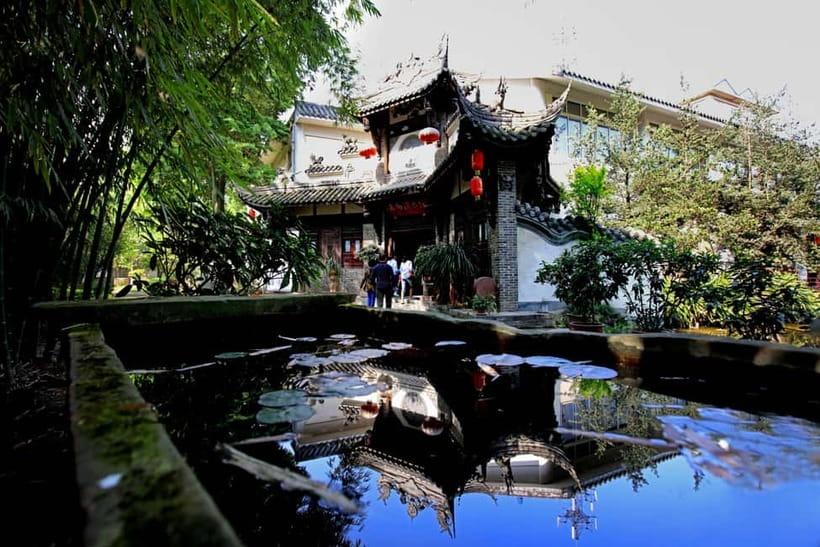
Sichuan Cuisine Museum sits outside central Chengdu, in the Pidu district along Shaxi Road. The setting includes a western-Sichuan garden, old restaurant lanes, ingredient displays, cooking tools, and dining spaces.
The museum calls itself the world’s only eatable museum. That description makes sense once you see how the visit is arranged. You are not only looking at objects from the past. You are also handling ingredients, learning cooking methods, tasting finished dishes, and sitting down to eat.
The museum holds more than 6,000 collections dating back as far as 4,000 years. The exact objects you see can vary, but the collection gives useful context for a cuisine that depends on more than heat and chili. Preserving food, fermenting ingredients, preparing grains, and working with seasonal produce are all part of the story.
I find this approach more useful than a standard museum visit because the information leads directly to lunch. You see an old tool, then use a modern version of the same idea in the kitchen. You learn about an ingredient, then taste it in a dish.
More Chinese Cooking Classes around China:
- Flavors of Beijing: Eat Like A Real Chinese
★ 5.0 · 78 reviews - Online Cooking Class Beijing Dumplings and Cuisine by Sunflowerli Renowned Chef
★ 5.0 · 65 reviews - Shanghai-Cooking Dumpling & Meal in Local Family-w/Vegan
★ 4.9 · 36 reviews
Walking through the western-Sichuan garden
Your guided visit begins with the museum’s cultural relics and garden areas. The western-Sichuan setting helps frame the displays, especially if you have already spent time in Chengdu and want to understand the food beyond restaurant menus.
One eye-catching object is a pickle jar described as the world’s most expensive. You will also see traditional equipment used for processing raw materials and preparing food. Some items may interest serious food historians more than casual visitors, but the guide’s explanations give the objects a practical purpose.
The museum’s goal is to show how Sichuan cooking developed through daily work. Pickling, grinding, steaming, chopping, and stir-frying are not separate tricks. They form a food system that uses preservation and careful preparation to build flavor.
This part lasts about an hour when combined with the other museum stops. Wear comfortable shoes. You will walk through several areas before sitting down for the cooking lesson.
Raw ingredients, palm-leaf raincoats, and Pixian bean paste
The raw material display area gives you a look at organic vegetables, poultry, and livestock being raised at the site. That may sound like a small stop, but it helps explain why ingredient quality matters in Sichuan cooking.
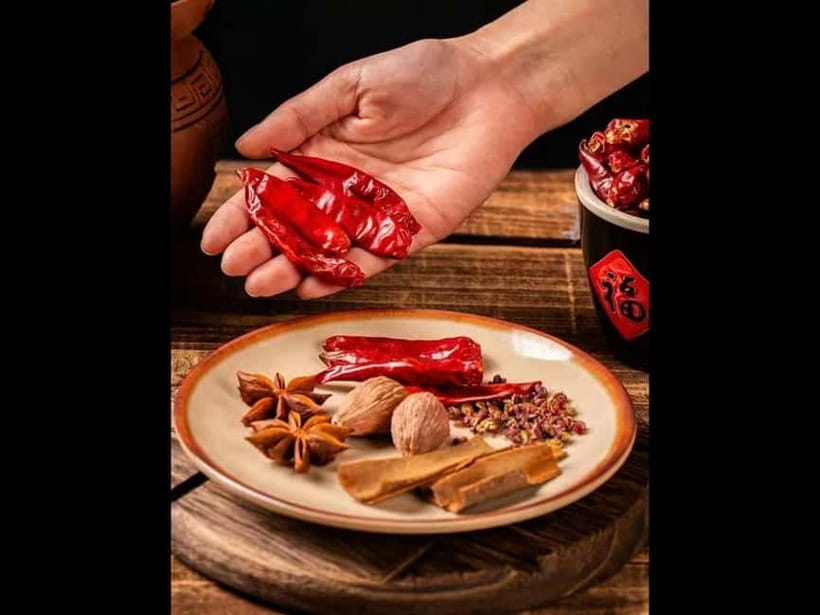
You also learn about the 300-year heritage of making Pixian chili bean paste. This fermented paste is one of the key building blocks of Sichuan flavor. The cooking class gives you a chance to see how a strong ingredient can be balanced with other tastes rather than simply adding more spice.
Another memorable detail is the traditional Chinese raincoat woven from palm leaves. It is a modest object, yet it connects food production with older rural life. The museum is at its best when it shows these everyday tools instead of treating Sichuan cuisine as a collection of famous dishes alone.
The visit also includes a display of traditional raw-material processing tools and an old Sichuan restaurant alley. The alley gives you a sense of how food was prepared and served before the modern restaurant kitchen took over.
Meeting the Kitchen God
The Kitchen God Ancestral Hall is one of the most distinctive stops. It is described as the largest in the world and is dedicated to the Kitchen God, regarded here as a grandmaster of Chinese chefs.
You take part in a worship ritual by offering incense. The meaning is broader than asking for a good meal. The ceremony centers on respect for food, drinks, family, and the things people have been given.
You do not need to share the religious beliefs behind the ritual to understand its cultural point. Sichuan cuisine is presented as a craft with duties attached to it. Food should be prepared carefully, not wasted, and shared with respect.
This stop also gives the tour a welcome pause from the more playful parts of the day. After looking at jars, tools, and ingredients, you are asked to think about why cooking matters in family life and Chinese culture.
More cooking classes around China:
- Half-Day Chengdu Cooking Class with a Local Market Visit
★ 5.0 · 465 reviews - Chengdu: Cooking Class with Fresh Market Half Day Experience
★ 5.0 · 42 reviews - Private Cooking Class: Make Your Own Dim Sum In Shanghai
★ 5.0 · 27 reviews - Half-Day steamed Buns Cooking Class with a Local Market Visit
★ 5.0 · 26 reviews
Changing into a chef uniform
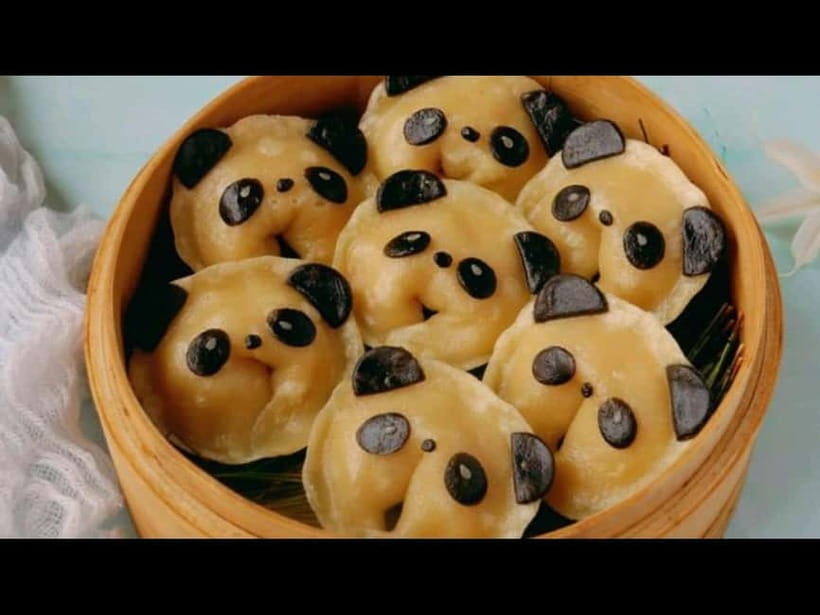
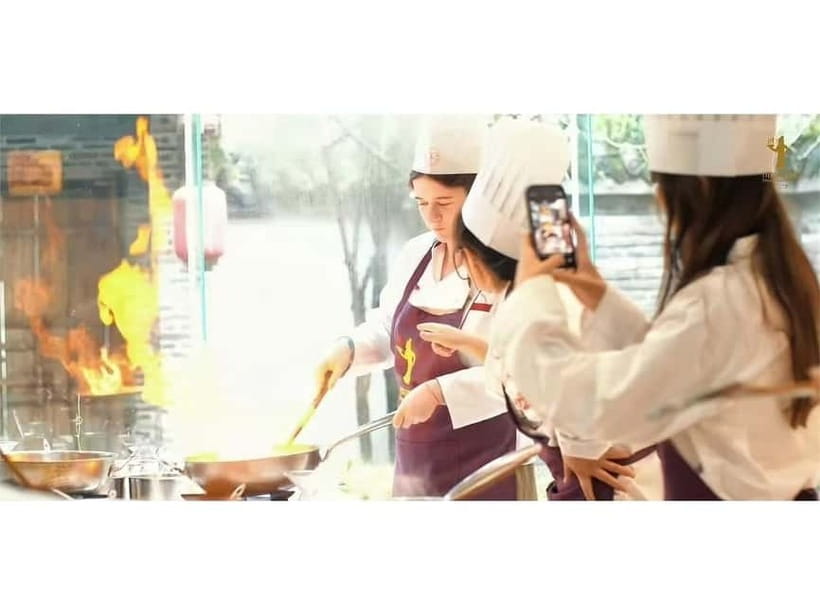
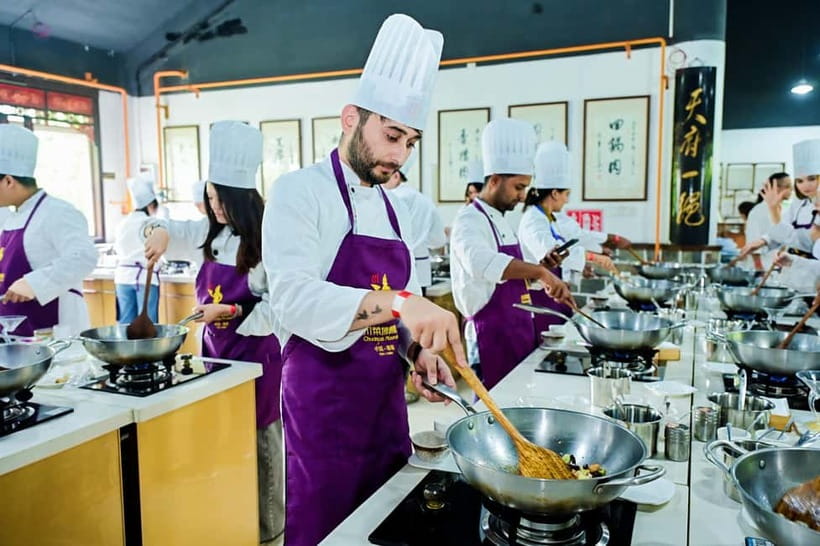
The cooking class lasts about an hour. You change into a chef uniform and work under the direction of senior chefs. The lesson centers on three typical Sichuan dishes, though the supplied details do not name the exact recipes.
That missing detail is worth noting if you want to choose a class based on a particular dish. You can expect traditional Sichuan cooking methods, but you should not book this solely because you hope to make mapo tofu, kung pao chicken, or another favorite unless the operator confirms the menu first.
The practical focus is on firing the wok, quick stir-frying, and presenting the finished food. These skills matter because Sichuan cooking is not just about putting ingredients into a pan. Heat control and speed affect texture, aroma, and how well the flavors come together.
A blindfolded knife-cutting activity with golden-silk noodles is also included. It is clearly meant as a lighthearted challenge rather than a serious knife lesson. Follow the instructor closely and treat it as entertainment, not a chance to show off.
At the end, the chief executive chef comments on your results and awards a rookie master chef certificate. It is a souvenir rather than a professional qualification, but it makes the class feel complete.
Eating the dishes you prepared
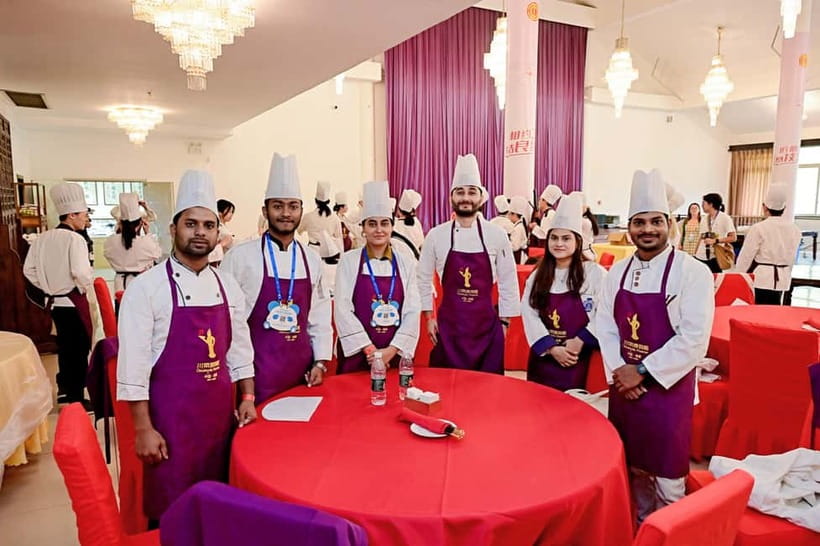
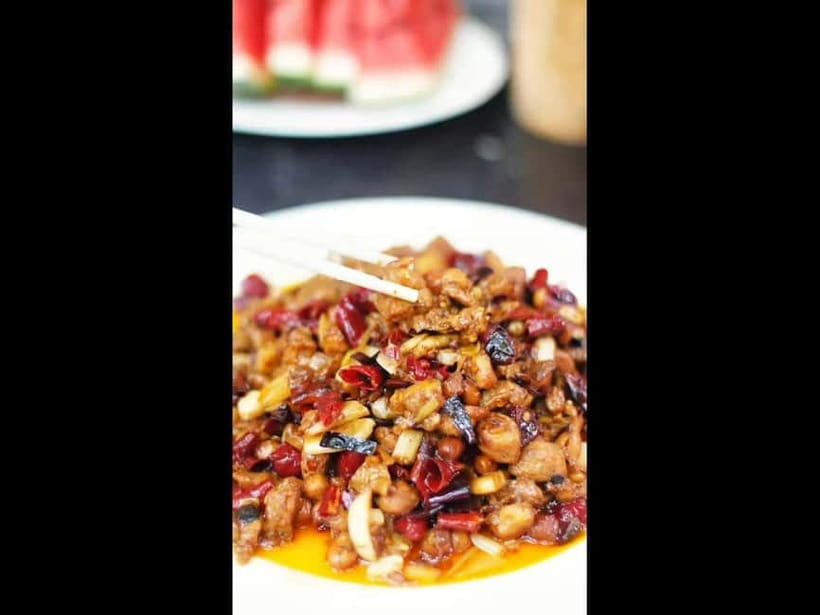
The meal is the natural payoff. You sit with your classmates and eat the three dishes made during the lesson. That shared table changes the class from a demonstration into a social meal.
Daily soup, steamed rice, pickles, and fruit juice are included with the food. These additions matter because a Sichuan meal works best with balance. Rice and soup temper the stronger flavors, while pickles add another layer of sourness and crunch.
Optional drink service is available at an extra cost. The choices listed include tea, wine, soft drinks, fresh fruit juice, red wine, and beer. Traditional Chinese medicinal wine is also offered for tasting. Check the price before ordering if you are trying to keep the $54 base cost intact.
A private dining room is another optional upgrade. It can include rice, soup, and other accompaniments, along with a Sichuan Cuisine Master certificate. For most people, the shared meal should be enough. The private room makes more sense for a celebration or a group that wants a quieter setting.
Local snacks and a slower cup of tea
The final food portion focuses on local snacks rather than the dishes from the cooking class. You can taste Northern-Sichuan style pea jelly, tofu pudding, and Zhong’s dumplings.
These snacks show how broad Sichuan food can be. Not every local specialty is a fiery stir-fry. Pea jelly brings a cool, soft texture, tofu pudding offers a gentle contrast, and dumplings provide a familiar format with a distinctly Sichuan identity.
Unlimited local snack tasting is included, so you can pace yourself. I would save room for this section rather than treating the cooking-class meal as the only food of the day.
You then rest in the Sichuan tea house, sitting at a bamboo chair and desk with a covered-bowl tea. You may also play Mahjong and take your time. This is a good ending because it reflects a slower side of Chengdu food culture. The class is noisy and active; the tea house asks you to sit, sip, and let the meal settle.
How the timing works
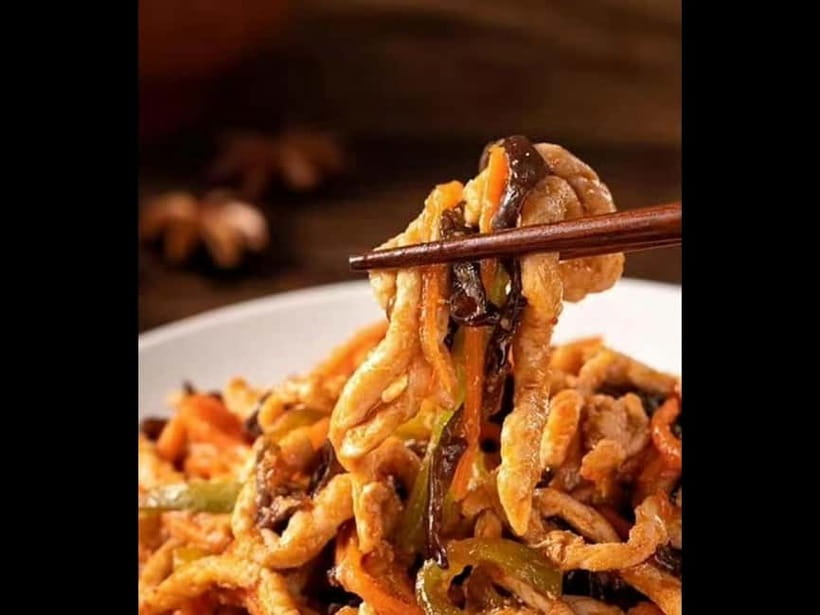
The published duration is 2.5 to 4 hours. The rough schedule gives one hour for the guided museum tour, one hour for cooking, and one hour for food tasting. In practice, the full visit can vary because of walking, changing clothes, the ritual, snack tasting, and tea house time.
I would keep at least half a day open around this activity. Do not schedule a tight appointment immediately afterward, especially if you need to return to central Chengdu.
The meeting point is the Sichuan Cuisine Museum in Gucheng township, Pidu district, about 23 kilometers from downtown by way of Shaxi Road. Transportation to and from the museum is not included, so you must arrange that separately.
The group is private, and the tour is offered in English or Chinese. A private group can make the cooking lesson easier to follow than a large public class, especially when you need help with wok timing or knife work. The names of individual guides are not provided, so you should not expect to request a particular instructor.
Is $54 a fair price?
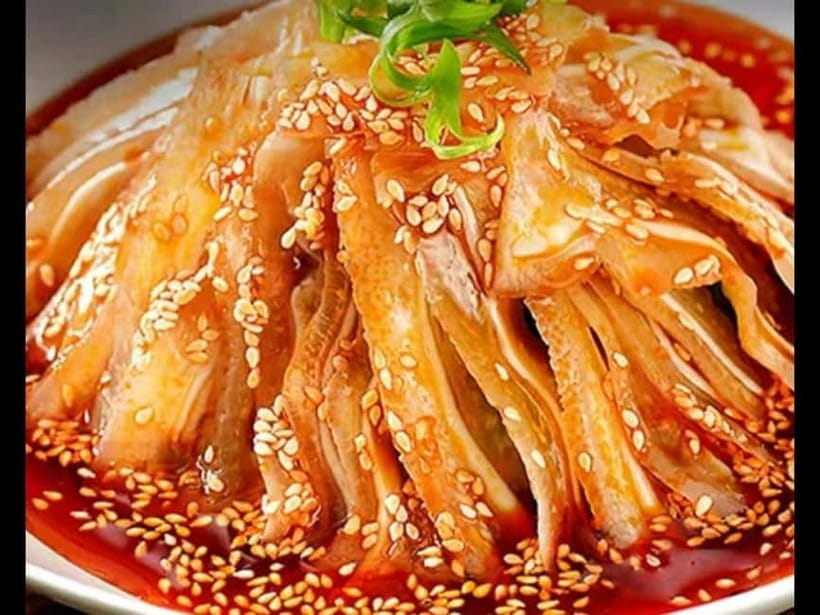
At $54 per person, the value depends on how much of the day you use. You are paying for a museum visit, a guided cultural tour, a cooking lesson, the meal you prepare, unlimited local snacks, tea house time, and the ingredient display areas. That is a fair package for someone who wants food culture and an activity in the same outing.
The price is less attractive if you only want a quick cooking lesson. The museum is a major part of the experience, and the travel time from downtown adds to the commitment.
Extra spending can change the total. Private dining rooms, additional accompaniments, unlimited drinks, and a higher-level Sichuan Cuisine Master certificate are optional. Ask about those costs before you arrive if you want a fixed budget.
The included food is the strongest value. You do not merely watch a chef cook three dishes. You take part, sit down to eat them, and then continue with regional snacks and tea.
Who should book this cooking class?
I would recommend this for you if you want a food-focused cultural activity rather than a standard restaurant meal. It suits first-time visitors who need an introduction to Sichuan cooking, as well as people who enjoy trying ingredients and cooking methods in a relaxed group setting.
It is also a good choice for families with older children, couples, and friends who like to eat together. The noodle challenge, chef uniform, certificate, tea house, and snack tasting keep the day varied.
The class is less suitable if you have food allergies. The activity specifically lists people with food allergies as unsuitable, so do not assume the kitchen can adapt dishes safely.
It is also not suitable for wheelchair users. The garden, museum areas, restaurant alley, and cooking spaces may require walking and movement between sections.
Wear comfortable shoes and bring a camera. You will have several visually interesting stops, including the garden, the Kitchen God hall, old tools, the ingredient area, and the finished dishes.
You can cancel up to 24 hours in advance for a full refund, and the reserve-now, pay-later option keeps your plans flexible. Booking ahead is recommended, especially if you need an English-language tour or want a particular start time.
Should you book it?
Book this experience if you want to understand Sichuan cuisine through its ingredients, rituals, tools, cooking methods, and snacks. The combination is more useful than a cooking class alone, and the museum’s unusual food-centered displays give the outing a clear sense of place.
Skip it if your schedule cannot spare the trip outside central Chengdu, if you need wheelchair access, or if food allergies make a shared cooking environment risky. For everyone else, $54 buys a well-organized, instructive, and genuinely fun half-day centered on eating, cooking, and the customs behind both.
FAQ
Where does the Sichuan cooking class take place?
It takes place at the Sichuan Cuisine Museum in Gucheng township, Pidu district, Chengdu, Sichuan province. The museum is about 23 kilometers from downtown by taking Shaxi Road.
How long does the experience last?
The activity lasts about 2.5 to 4 hours. The planned sections are roughly one hour for the guided tour, one hour for cooking, and one hour for food tasting.
How much does the experience cost?
The listed price is $54 per person. Private dining rooms, extra accompaniments, unlimited drinks, and a higher-level Sichuan Cuisine Master certificate are optional and are not included in that price.
Is transportation included?
No. Transportation to and from the Sichuan Cuisine Museum is not included, so you need to arrange your own way to the meeting point.
What is included in the activity?
The visit includes the museum and local street tour, the raw-material display area, the cooking class, the meal of dishes you prepare, tea house time, unlimited local snack tasting, and blindfolded knife cutting of golden-silk noodles.
Which languages are available?
The tour is available with a live guide in English or Chinese. The group type is private.
Can I cancel the booking?
Yes. You can cancel up to 24 hours in advance for a full refund. You can also reserve now and pay later.
Is the activity suitable for wheelchair users or people with food allergies?
No. The activity is listed as unsuitable for wheelchair users and people with food allergies.
New cooking classes around China
- Shanghai: Authentic Chinese Cooking Class with Master Chef★ 5.0 · 2 reviews
- Online Cooking Class Hand Pulled Noodles by Sunflower Li★ 5.0 · 3 reviews
- Online Cooking Class Steamed Buns by Chef Sunflower Li★ 5.0 · 2 reviews
- Beijing: Vegan Home Cooking & Local Market Tour with Sanxia★ 4.8 · 4 reviews
- Shanghai-Cooking Dumpling & Meal in Local Family-w/Vegan★ 4.9 · 36 reviews
- 2.5hrs Chinese Kitchen Cooking Class: Xiaolongbao Soup Dumplings★ 5.0 · 12 reviews
- Private Cooking Class: Make Your Own Dim Sum In Shanghai★ 5.0 · 27 reviews
- Private Home Cooking Class with Shanghai Mama★ 5.0 · 14 reviews
Chengdu Cooking Classes, side by side.
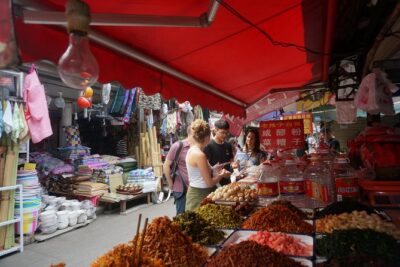
Half-Day Chengdu Cooking Class with a Local Market Visit
Read our review →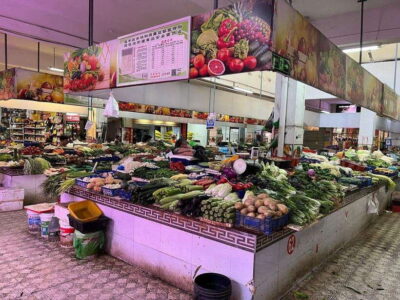
Chengdu: Cooking Class with Fresh Market Half Day Experience
Read our review →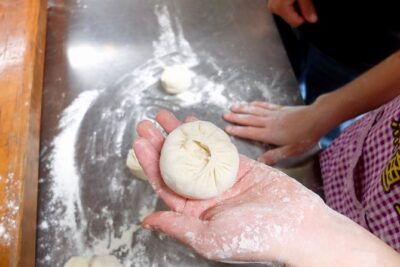
Half-Day steamed Buns Cooking Class with a Local Market Visit
Read our review →
Half-Day Professional Mapo Tofu Cooking with a Local Market Visit
Read our review →This kitchen also appears in