Review · NEW DELHI
Indian Cooking Class in an Authentic Local Home – Learn 6 Dishes
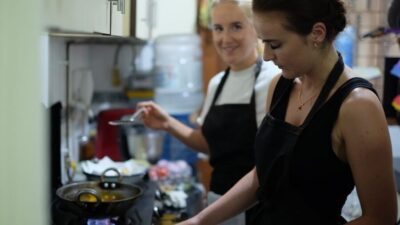
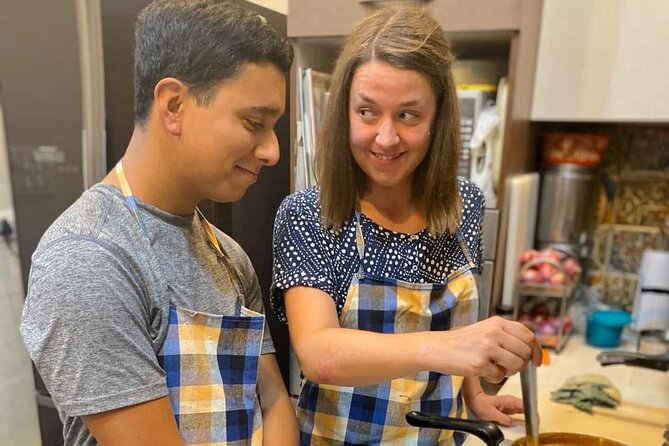
The best part of this Delhi experience is simple: you cook in a real family home, not a polished cooking studio. JD and his father guide you through family recipes, spice choices, breads, curry, rice, and dessert, then sit down with you to eat what you made. The family setting gives the class a warm, personal feel.
I like the focus on spice technique rather than busy chopping. I also like that the meal is built around practical dishes you can try again at home, including vegetarian and non-vegetarian options. The main consideration is time: two and a half hours goes quickly, and the exact dish count or menu may vary.
Key points to know before booking
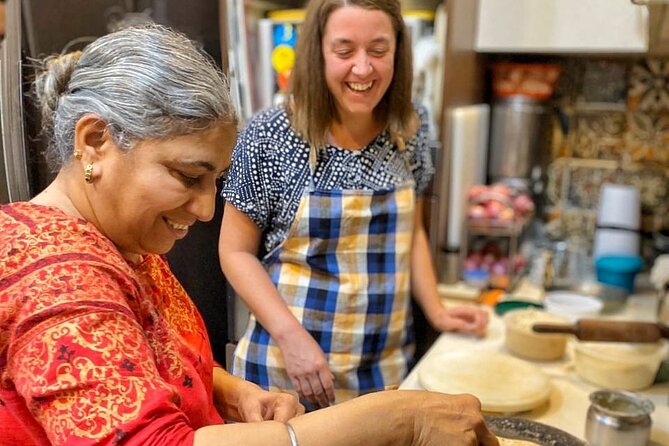
- Cook in JD’s family home: The class takes place at R-142, Greater Kailash 1, rather than in a commercial kitchen.
- Learn the logic of Indian spices: JD explains how spices shape aroma and flavor, along with small family methods that affect the final dish.
- Prepare a full meal: The planned menu includes a main dish, rice, breads, and dessert, with the advertised experience centered on six dishes.
- Eat with the family afterward: Lunch or dinner, tea, coffee, and bottled water are included, depending on the class time.
- Small group format: The experience is described as intimate, with a maximum listed between eight and ten people.
- Plan for a home setting: The kitchen is air-conditioned, a restroom is available, and the activity ends where it begins.
Cooking in a Greater Kailash family home
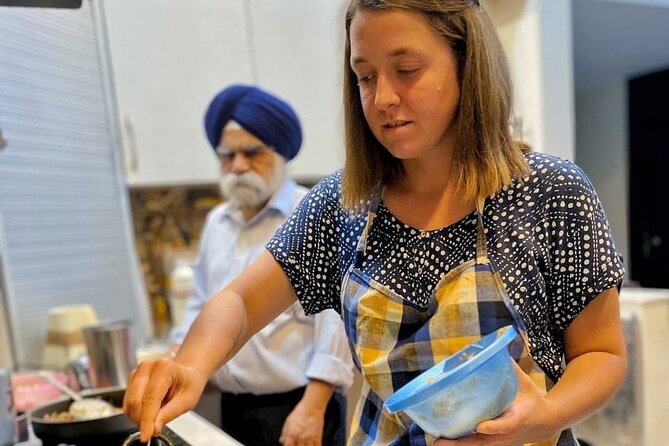
You meet at R-142, Greater Kailash 1, in New Delhi’s Block R. The meeting point is at Bindra’s House, and the activity returns there at the end, so you do not need to arrange a second pickup location.
This is part of what makes the experience easy to fit into a Delhi schedule. You arrive at one address, spend the session in the home, eat the food you helped prepare, and leave from the same place. The location is near public transportation, though your booking confirmation should be your guide for the exact meeting details.
The setting matters. A restaurant cooking demonstration can show you polished results, but a home class gives you a better sense of how food is prepared for family life. You see how the host approaches ingredients, spice balance, breads, and timing in a working kitchen.
The space is air-conditioned, which is useful in Delhi’s heat. A restroom is available too. Those details may sound minor, but they make a difference during a hands-on class, especially when you are cooking and eating in one place for several hours.
More Home Cooking Classes in India
- Jaipur Market Tour & Vegetarian Rajasthani Home Cooking Class
★ 5.0 · 113 reviews - Interactive Cooking Class with a Local Family in Jaipur
★ 5.0 · 90 reviews - Delhi: AI Cooking Class and Much More in a Local Family Home
★ 5.0 · 85 reviews
Meeting JD and his father
JD and his father lead the class, with the wider family helping create the welcoming atmosphere. Their teaching style is practical and personal. You are not simply watching someone cook a finished dish while standing at a distance.
The class focuses on methods passed down through the family. JD explains why a certain spice is used, how it changes during cooking, and what small step can affect the finished taste. His father adds the family connection, giving the food a sense of place beyond a list of ingredients.
The tone is relaxed. Several details make that clear, including tea and biscuits offered at the start, patient explanations, and time for conversation. If you are traveling alone, the format can be especially appealing because the shared meal gives you an easy way to meet people without the pressure of a formal group tour.
The group size is intended to stay small. The experience is described as having a maximum of eight people in one place and up to ten in another, so check the current booking details if group size is important to you. Either way, this is designed to feel personal rather than crowded.
Building a complete Indian meal
The advertised class teaches six dishes, while the meal description includes a main dish, a rice dish, two types of bread, and a dessert. Some class accounts also describe seven dishes or additional bread preparation, so you should treat the exact menu as flexible rather than fixed.
That flexibility is not necessarily a weakness. Indian home cooking often works through a set of related techniques rather than one rigid recipe. A spice base can lead to several different dishes. A bread method can produce more than one variation. The value is in learning how the pieces work, not just checking six names off a menu.
The main dish gives you the clearest lesson in spice balance. You learn how ingredients work together instead of treating curry powder as a single shortcut. The instruction covers the role of individual spices, the timing of their use, and the small adjustments that shape aroma and heat.
The rice dish adds another useful skill. Rice can look easy, but the result depends on preparation and cooking control. Here, it forms part of a complete meal rather than appearing as a side dish with no explanation.
Bread is one of the most hands-on parts of the class. You work with dough and learn techniques that are difficult to pick up from a recipe alone. The planned meal includes two bread types, while some descriptions refer to three. If bread is your main reason for booking, ask for the current menu when you reserve.
Dessert completes the meal. The class includes a sweet course, and one especially noted option is rice pudding. This is a useful finish because it shows how Indian cooking continues beyond savory dishes, with familiar ingredients treated in a different way.
Why the spice lesson is the real value
Many Indian cooking classes give you ingredients and tell you what to do. This one puts more attention on why the steps matter. That makes the recipes easier to adapt when you cook at home.
You learn how spices affect both smell and taste. You also hear about subtle family methods that are easy to miss in a written recipe. The difference may be when an ingredient goes into the pan, how it is prepared first, or how long the mixture cooks before the next step.
I like this approach because Indian food can seem complicated when you look at a long ingredient list. The class breaks that list into decisions you can understand. You begin to see that the important question is not simply how much spice to use, but how each spice is treated.
The teaching is also aimed at home cooks. You leave with recipes, cooking techniques, and a better sense of how to build an Indian meal. You will not become a professional chef in 150 minutes, but you can leave with methods you can repeat.
A useful detail is the limited time spent on vegetable chopping. The preparation is organized so more of the session goes toward cooking, seasoning, and technique. That is good news if you want to learn the character of Indian food rather than spend the class doing basic kitchen prep.
More Indian Cooking Classes around India:
- New Delhi: Indian Cooking Class in a Local Home
★ 5.0 · 65 reviews - Mumbai: Indian Cooking Class & Cultural Delights
★ 5.0 · 38 reviews - New Delhi: Traditional Indian Cooking Class & Market Visit
★ 5.0 · 32 reviews - Private South Indian Tamil Cooking Class in Chennai with Srividya
★ 5.0 · 24 reviews
Eating what you prepared
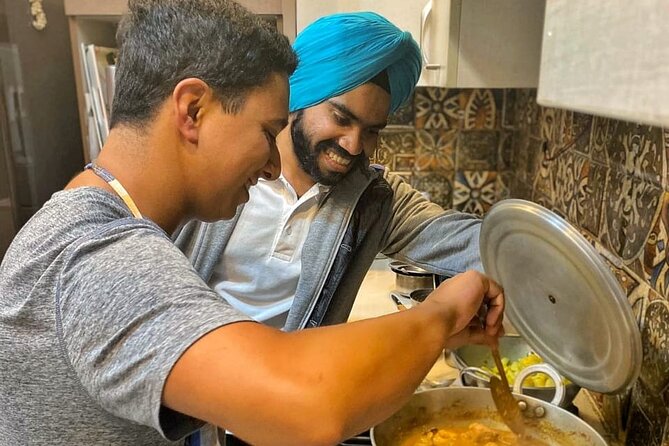
The class ends around the dining table, with the food served and shared as a family meal. Lunch or dinner is included, along with tea or coffee and bottled water. The timing of the meal depends on the start time you book.
This final part is more than a reward after cooking. It gives you a chance to compare the dishes, ask last questions, and talk about Indian food and culture in a relaxed way. You see how the separate components work together as a meal.
The shared table also helps explain the dishes in context. A curry, rice dish, breads, and dessert are not isolated recipes. They form a complete meal with different textures, flavors, and levels of richness.
Past class descriptions highlight dishes such as dal, paratha, and rice pudding. These are useful foods to learn because they are practical, familiar parts of North Indian home cooking and can be adapted for a range of meals.
The food is prepared in a spotless kitchen and presented carefully. Still, remember that this is a family home, not a restaurant dining room. The appeal is the informal setting and personal contact, not formal service.
A welcoming option for solo visitors and couples
You do not need to arrive with a large group. The small format works well for solo visitors, couples, and friends who want an activity with more conversation than a standard sightseeing stop.
Solo booking can work particularly well because the class naturally creates contact with the hosts and other participants. The meal gives everyone a shared subject, and the cooking keeps conversation from feeling forced.
The class also handles different food preferences better than many fixed-menu experiences. Vegetarian and non-vegetarian options are available, and dietary requirements can be discussed. You should provide those details when booking rather than waiting until you arrive.
Families and mixed groups may also find the class useful, though the hands-on format requires attention and participation. If someone in your party only wants to watch, this may not be the best choice. The point is to take part.
The class has received a strong overall response, with a five out of five rating from 195 ratings and a 100 percent recommendation figure. That record fits the experience’s main strengths: warm hosting, clear instruction, hands-on cooking, and a meal shared at home. It does not mean every person will want the same level of social contact, so consider your own style before booking.
Is $50.22 a fair price?
At $50.22 per person, this is more than the cost of an ordinary Delhi meal. You are paying for instruction, food, drinks, a small group setting, and access to a private family home.
The price makes more sense if you value the learning. You prepare several parts of a meal, learn spice techniques, receive recipes, and eat the result. A restaurant can feed you for less, but it cannot give you the same practical guidance.
The value is also strong for anyone who plans to cook Indian food after returning home. Learning the method behind a spice base or bread dough can save you from buying ingredients without knowing how to use them.
Group discounts are available, which may improve the price for couples, friends, or family groups. Gratuity is not included, so bring that extra cost into your planning if you want to thank JD and his father for the hospitality.
Timing, cancellations, and practical planning
The activity lasts about two hours and thirty minutes. That is enough time for instruction, cooking, eating, and conversation, but not enough for a slow, multi-course restaurant-style production.
The meeting point and end point are the same. The address is R-142, Greater Kailash 1, Block R, part 1, Greater Kailash, New Delhi, Delhi 110048. Mobile tickets are accepted, and confirmation is sent when you book.
Free cancellation is available up to 24 hours before the start time for a full refund. Changes or cancellations within 24 hours are not accepted for a refund. The activity can also be affected by poor weather or by failing to meet the minimum number of participants. In those cases, you are offered another date, another experience, or a full refund.
Because the class takes place in a home and the group is small, late changes can have more effect than they would on a large sightseeing tour. Give yourself enough time to reach Greater Kailash and arrive ready to cook.
Who should book this Delhi cooking class?
I would choose this class if you want food to be your way into Indian culture. It gives you recipes, but the stronger point is the family setting and the explanation behind each dish.
It suits you best if you:
- Enjoy hands-on activities rather than demonstrations
- Want to understand spices and cooking methods
- Prefer small groups to large organized tours
- Like eating with your hosts after an activity
- Want vegetarian or non-vegetarian choices
- Are traveling alone and would enjoy an easy social setting
- Plan to cook Indian food at home later
You may want something else if you only have time for a quick meal, dislike cooking, or prefer a formal culinary school. The class is also not ideal if you need a guaranteed, precisely fixed list of dishes. The core structure is clear, but the final menu may change.
Should you book it?
Book this experience if you want to spend an evening or afternoon with a Delhi family, learn the working logic of Indian food, and sit down to eat what you helped make. JD and his father offer the kind of personal contact that is hard to find in a standard restaurant meal.
The strongest reasons to go are the family kitchen, the focus on spices and technique, and the shared meal at the end. The main caution is that the exact dish count can vary, and the experience requires active participation.
For a food-focused visit to New Delhi, I think the $50.22 price is fair. You are buying a meal, but also a lesson, a cultural exchange, and recipes you can use long after the class ends.
FAQ
Where does the Indian cooking class take place?
The class takes place at R-142, Greater Kailash 1, Block R, part 1, Greater Kailash, New Delhi, Delhi 110048, India.
Where does the activity end?
The activity ends back at the meeting point in the family home.
How long does the class last?
The class lasts approximately two hours and thirty minutes.
How much does the experience cost?
The listed price is $50.22 per person.
How many people can join the class?
The experience is described as an intimate small-group class with a maximum of eight people in one description and a maximum of ten in the additional details. Check the current booking information for the exact group size.
Who teaches the class?
JD and his father host and teach the cooking experience.
What food will I prepare?
The class includes a main dish, a rice dish, two types of bread, and a dessert. The experience is promoted as learning six dishes, but the exact menu may vary.
Are vegetarian options available?
Yes. Vegetarian and non-vegetarian options are available.
Are food and drinks included?
Yes. Lunch or dinner, coffee or tea, and bottled water are included.
Can I cancel for a full refund?
Yes. You can cancel at least 24 hours before the start time for a full refund. Cancellations or changes made within 24 hours are not refunded.
New cooking classes around India
- Private Cooking Class In Jodhpur With Family★ 5.0 · 2 reviews
- New Delhi: Full-Day Cooking Class learn 8 dishes with Locals★ 5.0 · 7 reviews
- New Delhi: Indian Cooking Class in a Local Home★ 5.0 · 65 reviews
- New Delhi: 5-Hour Traditional Cooking Class with Local Chef★ 5.0 · 2 reviews
- Mumbai Coastal Cooking: From Fishing Net to Flavourful Plate★ 5.0 · 5 reviews
- Kerala: Cooking Class in Munnar★ 5.0 · 2 reviews
- Kerala Traditional village cooking class (Munnar)★ 4.8 · 15 reviews
- Jodhpur 11 Dishes Cooking Class With REKHA Pick Up & Drop OF★ 5.0 · 24 reviews
New Delhi Cooking Classes, side by side.
Delhi: AI Cooking Class and Much More in a Local Family Home
Read our review →
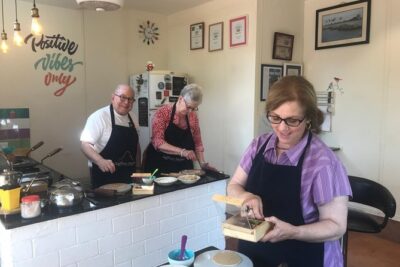
Spice Knight (Cooking Class -> Meal -> Local Market walk)
Read our review →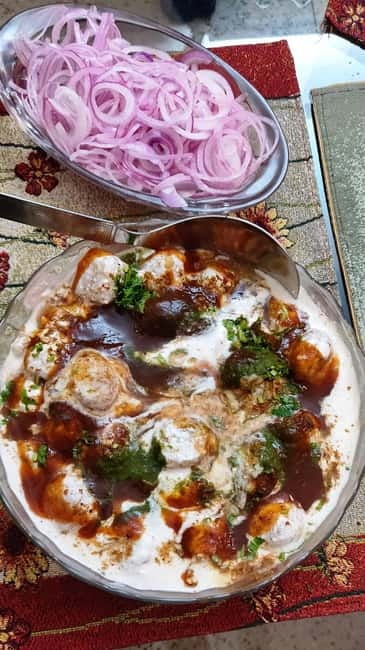
New Delhi: Traditional Indian Cooking Class & Market Visit
Read our review →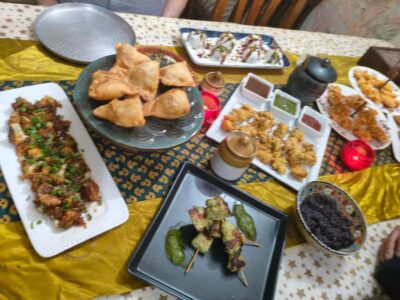
New Delhi: Full-Day Cooking Class learn 8 dishes with Locals
Read our review →