
Review · JAIPUR
Jaipur Market Tour & Vegetarian Rajasthani Home Cooking Class
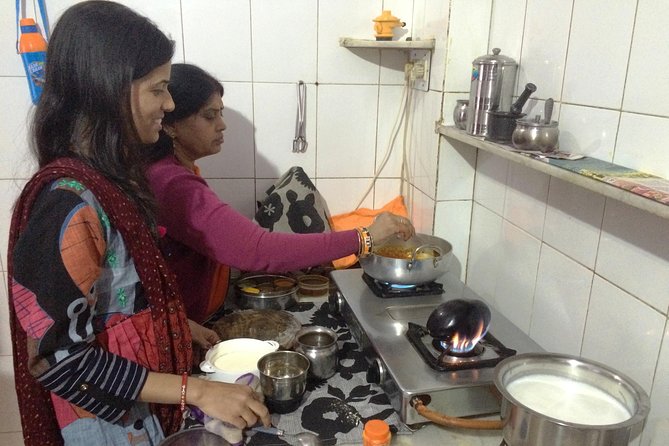
The best part of this Jaipur experience happens before the cooking begins. Shalini takes you through a local market, explains the ingredients used in Rajasthani kitchens, and helps you choose fresh vegetables for a meal you will later prepare in her family home. I like the market-to-table format and the chance to cook with Shalini and her mother-in-law, rather than simply watching a demonstration.
I also like that this is a private, flexible experience with a choice of lunch or dinner. You can ask questions freely, discuss spice levels, and learn family methods at a comfortable pace. The main consideration is that this is a home visit, not a polished restaurant school. The menu changes with the season, and the meal is strictly vegetarian.
Key points at a glance
- Market shopping comes first: Learn how Jaipur families select vegetables, spices, and other cooking ingredients before buying what you will use.
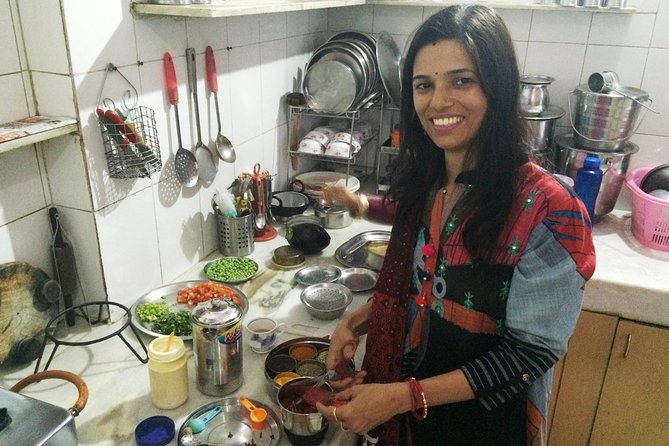
- Shalini and her mother-in-law teach together: Expect practical instruction on dal, vegetable dishes, chapatis, parathas, and other home-style food.
- The meal is prepared in a family home: You cook with household equipment and then eat with the family.
- You choose lunch or dinner: The four-hour schedule works well as a food-focused half day.
- The menu changes seasonally: Tell Shalini about allergies, dietary restrictions, and cooking preferences when you book.
- This is vegetarian only: Meat and seafood are not part of the class.
Starting at Crystal Mall and entering Jaipur’s food scene
The experience begins at Crystal Mall in Barodia Scheme, Gopalbari, Jaipur. You meet there and finish back at the same point, which gives you a clear start and end to a four-hour outing.
The opening market visit is more useful than a quick shopping stop. Jaipur’s food culture can be hard to read when you do not know the local names, uses, or quality signs for ingredients. With Shalini beside you, you can ask what a particular vegetable is used for, which spices belong in which dishes, and how seasonal produce affects the meal.
You may visit local grocery shops and a vegetable market during this part of the experience. The exact selection depends on the season, so do not expect a fixed shopping list. That is part of the appeal. Your meal reflects what is available rather than following a rigid demonstration menu.
This is also a good way to get your bearings around Indian ingredients. The market portion can help you understand the difference between familiar vegetables and foods that may be new to you. Shalini guides you through the process, which removes much of the language barrier and lets you focus on what you are seeing, smelling, and choosing.
I would keep some room in your attention for questions here. Ask how an ingredient is used at home, how much spice is typical, and which items are easy to find outside India. The market is not only a place to purchase food. It sets up the cooking lesson and gives the dishes a local context.
More Cooking Classes with a Market Tour in India
- Spice Knight (Cooking Class -> Meal -> Local Market walk)
★ 5.0 · 59 reviews - New Delhi: Traditional Indian Cooking Class & Market Visit
★ 5.0 · 32 reviews - Pondicherry: Indian Cooking Class with Market Visit
★ 4.7 · 18 reviews
Choosing vegetables for your own Rajasthani meal
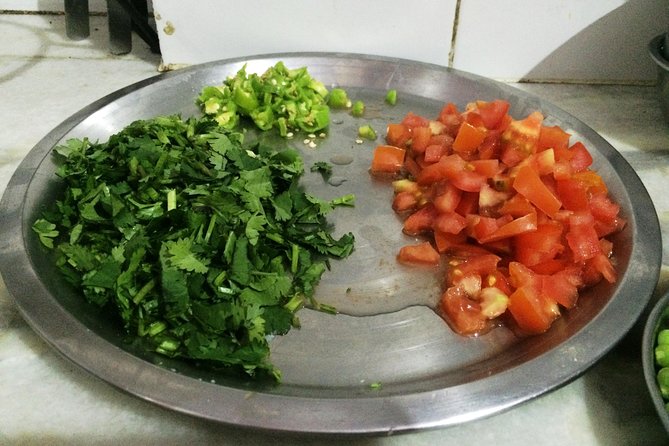
One pleasant feature is that you help choose some of the vegetables you will cook. This gives you a small but meaningful role in shaping the meal. You are not simply handed a plate at the end. You see the ingredients before they are cleaned, seasoned, and turned into finished dishes.
The seasonal menu may include several vegetable preparations along with dal and flatbreads. The food is described as traditional vegetarian Rajasthani cooking, but the exact dishes are not fixed. Previous classes have included dal, various vegetable dishes, chapatis, and parathas, with additional family recipes prepared in advance.
That changing menu is useful for anyone who wants to take the lessons home. You learn methods that can be adapted to whatever produce you find later. You may not be given the same dishes on a return visit, but you can expect the cooking to follow the produce and family habits of the day.
If you have allergies, dietary restrictions, or particular cooking preferences, state them when booking. The host can then plan around them where possible. If you dislike strong heat, mention that early. Shalini has adjusted spice levels for people who prefer milder food, but it is better to discuss this before cooking starts.
Cooking with Shalini and her mother-in-law
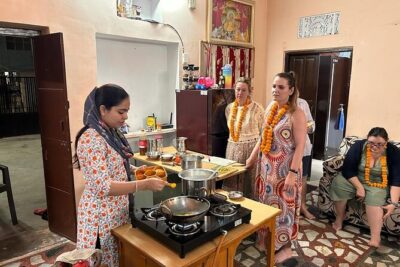
After the market, you return to Shalini’s home. There, Shalini and her mother-in-law guide you through the meal. The setting matters. A class in a local home shows you how food fits into ordinary family life, including the tools, order of preparation, and small techniques that a restaurant kitchen may not explain.
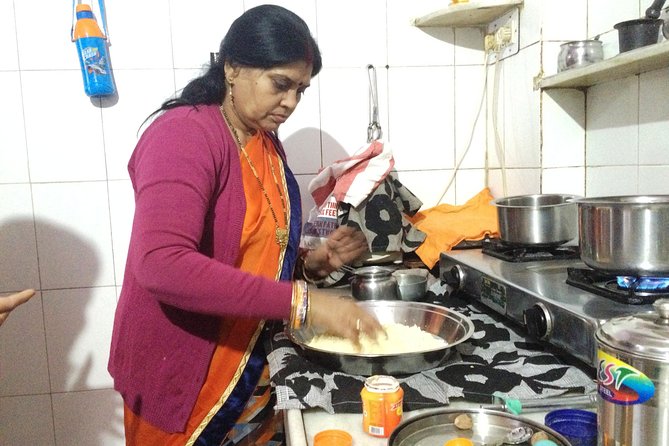
The lesson is hands-on. You help prepare the dishes from scratch and learn how the ingredients are handled, seasoned, and cooked. The class is suitable even if you are not confident in the kitchen. Shalini’s mother-in-law is described as a patient teacher, and the instruction includes clear help with basic tasks such as making chapatis and parathas.
Flatbreads can be the most useful part of the class for a home cook. A recipe alone does not always explain how dough should feel or how thin it should be rolled. Watching the process in person, then trying it with guidance, gives you a better chance of repeating it later.
The same applies to spices. You can learn not only which spices are used, but how they are combined with vegetables and dal. The market tour introduces the ingredients, while the home session shows their practical role in a meal.
There is also room for conversation. The experience brings you into contact with Shalini’s family, including her husband, children, and mother-in-law when they are present. You can ask about daily life in Jaipur, family food habits, and the differences between home cooking and restaurant dishes.
Do not expect a formal lecture with a printed curriculum. The value comes from being able to interrupt, ask, taste, and try again. The pace is personal because the activity is private, so your group can spend more time on a difficult technique or move ahead when something is easy.
Sitting down to a thali-style feast
Cooking ends with a shared meal. You eat the dishes you helped prepare, along with some family recipes made in advance. One menu described by a participant included tea, breakfast snacks, dal, vegetable dishes, chapatis, parathas, and a full thali-style spread.
The meal is a chance to taste the difference between separate ingredients and the finished combination. A vegetable dish may seem simple when prepared alone, but it takes on a different character beside dal and fresh flatbread. You can also ask questions while eating, which is often when details about family habits and recipes come up naturally.
The food is home-style rather than designed for a tourist restaurant. That is a benefit if you want to understand how people cook and eat at home. It may be less appealing if you are looking for a highly theatrical class, elaborate plating, or a fixed menu of famous restaurant dishes.
The setting can also make this a special evening for couples, families, or small groups. You are welcomed into a private home, but it is worth remembering that this is still someone’s personal space. Arrive with respect, listen to household preferences, and treat the family setting with the same care you would show in any private visit.
More Home Cooking Classes in India
- Indian Cooking Class in an Authentic Local Home – Learn 6 Dishes
★ 5.0 · 195 reviews - Interactive Cooking Class with a Local Family in Jaipur
★ 5.0 · 90 reviews - Delhi: AI Cooking Class and Much More in a Local Family Home
★ 5.0 · 85 reviews - New Delhi: Indian Cooking Class in a Local Home
★ 5.0 · 65 reviews
What the $60 price includes in practical terms
At $60 per person, this costs more than simply eating a vegetarian meal in Jaipur. You are paying for about four hours of time, private instruction, market guidance, ingredients, a meal, and access to a family home.
The value is strongest if you want more than food. You get help understanding the market, practice with cooking methods, and a chance to ask questions that would be hard to resolve alone. The recipes and techniques can continue to be useful after your trip, especially if you cook Indian food at home.
The private format also changes the calculation. Your group does not share the class with strangers, and the schedule offers a choice of lunch or dinner. That makes the experience easier to fit around a Jaipur sightseeing day. It also gives you more direct attention than a large group class.
The price may feel high if your main aim is to eat cheaply or if you prefer a quick cooking demonstration. It makes better sense for someone who values personal contact, practical instruction, and the chance to spend time with a local family.
The experience is booked, on average, about 31 days in advance. If it fits your Jaipur plans, reserve early rather than assuming you can arrange it at the last minute.
Who will enjoy this Jaipur cooking class most
I would recommend this for a first visit to Jaipur, especially if you want a gentle introduction to Indian food. The market tour explains ingredients before you use them, and the private setting gives you space to ask basic questions without feeling rushed.
It is also a strong choice for people who like to cook at home. You learn techniques rather than only eating finished food, and you can take away ideas for dal, vegetable dishes, chapatis, and parathas. The recipes come from Shalini’s family, so the lesson has a personal connection rather than feeling like a generic class.
Families and couples should find the private format comfortable. The class can also suit people who do not usually cook. Patient instruction and guided practice make the experience less intimidating than it may sound.
Vegetarians will have the clearest match with the menu. Anyone expecting meat, seafood, or a mixed menu should choose a different food experience. The same applies to anyone who wants a fixed list of dishes. Here, the season and the market help decide what appears on the table.
Timing, comfort, and useful planning advice
The activity lasts about four hours and offers lunch and dinner options. A dinner booking can work well after a morning of sightseeing, while a lunch option may suit you if you want a relaxed afternoon afterward. Leave enough time around the experience so you do not have to rush the market visit or the meal.
The meeting point is near public transportation, and the activity ends where it begins. Since the experience includes walking through a market and cooking in a home, wear comfortable clothing and shoes. No special cooking skill is required, but you should be ready to take part rather than simply observe.
Confirmation is provided when you book, and the ticket is mobile. The experience requires good weather and a minimum number of participants. If the activity is canceled for either reason, you are offered another date or a full refund.
Free cancellation is available up to 24 hours before the start time. Changes or cancellations made within 24 hours are not accepted for a refund, so check your Jaipur schedule before the deadline.
My take: book it for the family connection
Book this experience if you want a personal introduction to Jaipur through food, especially if you enjoy markets, home cooking, and conversation. The strongest elements are the market visit with Shalini, the patient instruction from her and her mother-in-law, and the shared meal in the family home.
Skip it if you want a restaurant-style class, a guaranteed menu, or nonvegetarian food. The seasonal format means you give up some control over the final dishes, and the home setting will not suit everyone.
For the right person, the $60 price buys more than dinner. You get a practical lesson, a look at everyday food shopping, and recipes you can try after returning home. I would make this one of my food-focused bookings in Jaipur, and I would reserve it well ahead of time.
FAQ
How long does the Jaipur cooking experience last?
The experience lasts approximately four hours, including the market visit, cooking class, and meal.
Is the cooking class vegetarian?
Yes. Shalini serves vegetarian food only.
Can I choose between lunch and dinner?
Yes. The experience offers lunch and dinner options.
Where does the experience begin and end?
It begins at Crystal Mall, Barodia Scheme, Gopalbari, Jaipur, Rajasthan 302006, India, and ends back at the same meeting point.
Can I mention allergies or dietary restrictions?
Yes. You should advise the provider about allergies, dietary restrictions, or cooking preferences at the time of booking.
What happens if I need to cancel?
You can cancel up to 24 hours before the start time for a full refund. Cancellations or changes made less than 24 hours before the start time are not accepted for a refund.
More Indian Cooking Classes around India
- Mumbai: Indian Cooking Class & Cultural Delights
★ 5.0 · 38 reviews - Private South Indian Tamil Cooking Class in Chennai with Srividya
★ 5.0 · 24 reviews - Indian Curry 5-Hour Cooking Classes In Mumbai
★ 5.0 · 22 reviews - Agra: Indian Food Private Cooking Class
★ 4.6 · 21 reviews
More Vegetarian and Vegan Cooking Classes in India
- Private Vegetarian Indian Cooking Class in Mumbai
★ 5.0 · 17 reviews - South Indian Vegetarian Cooking Class in Chennai with Meena
★ 5.0 · 17 reviews - Traditional Vegetarian Cooking Class in Chennai with Gayathri
★ 5.0 · 14 reviews - Authentic local vegetarian Kerala cooking class in Wayanad
★ 5.0 · 3 reviews
New cooking classes around India
- Private Cooking Class In Jodhpur With Family★ 5.0 · 2 reviews
- New Delhi: Indian Cooking Class in a Local Home★ 5.0 · 65 reviews
- New Delhi: Full-Day Cooking Class learn 8 dishes with Locals★ 5.0 · 7 reviews
- New Delhi: 5-Hour Traditional Cooking Class with Local Chef★ 5.0 · 2 reviews
- Mumbai Coastal Cooking: From Fishing Net to Flavourful Plate★ 5.0 · 5 reviews
- Kerala Traditional village cooking class (Munnar)★ 4.8 · 15 reviews
- Kerala: Cooking Class in Munnar★ 5.0 · 2 reviews
- Jodhpur 11 Dishes Cooking Class With REKHA Pick Up & Drop OF★ 5.0 · 24 reviews
Jaipur Cooking Classes, side by side.

Cooking Class in Jaipur – Family Experience with Meal & Transport
Read our review →
Interactive Cooking Class with a Local Family in Jaipur
Read our review →
Jaipur: Traditional cooking class and storytelling session
Read our review →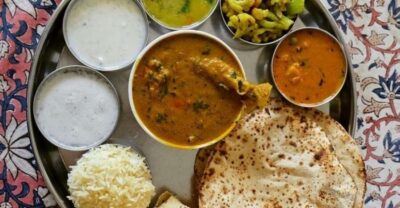
Jaipur Home Cooking Experience with Authentic Lunch/Dinner
Read our review →
Jaipur: Cooking class at the host family’s house for 3 hours
Read our review →
Jaipur: Kitchen is your’s Cooking class with Pickup & Drop
Read our review →This kitchen also appears in