
Review · NEW ORLEANS
New Orleans Hands-On Cooking Class with Meal
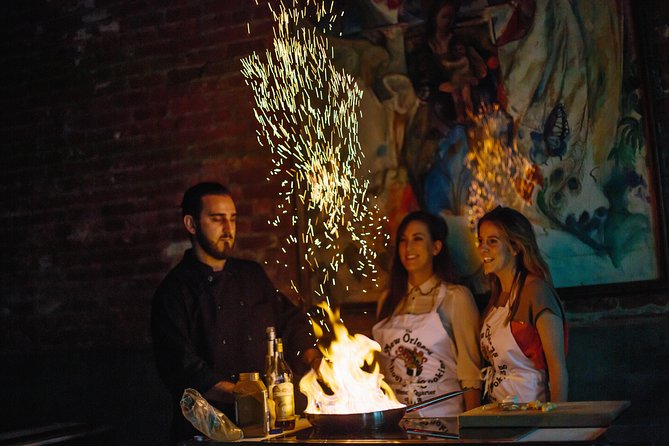
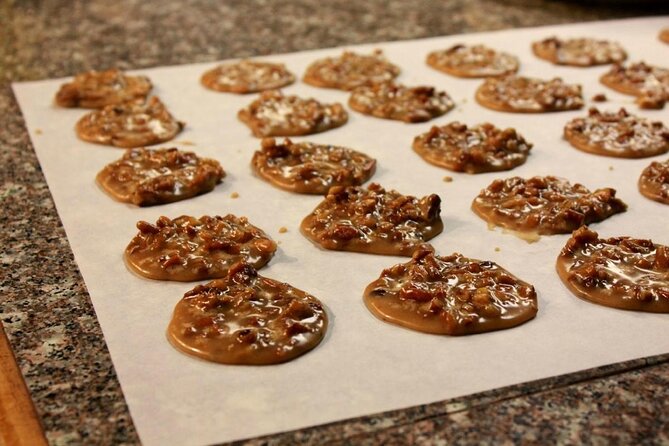
The best part of this New Orleans experience is simple: you cook the meal you eat. In about three hours, you may make gumbo or yam-crab bisque, BBQ shrimp and grits or jambalaya, then finish with bananas Foster or pralines.
I like the small setup, with up to 10 people sharing five cooktops, and I like the useful take-home package: recipes, a white apron, and the chance to earn a diploma by sending in photos of your cooking. The main drawback is that you spend much of the class standing, and the $162 price is a serious splurge for a meal.
Key points at a glance
- Five cooktops for up to 10 people: Singles may be paired with another person, keeping the work hands-on rather than purely demonstrational.
- A full Louisiana menu: Your possible dishes include gumbo, yam-crab bisque, BBQ shrimp and grits, jambalaya, bananas Foster, and pralines.
- Chefs with personality: Instructors including Eric, Austin, Cindy, Ricardo, Vivian, and G bring humor, cooking tips, and local context.
- Drinks are part of the meal: Red and white wine, Abita Amber beer, iced tea, lemonade, and coffee are included.
- Useful souvenirs: You leave with class recipes and a New Orleans School of Cooking apron valued at $18.99.
- Plan for a standing class: Casual dress works best, but comfortable shoes matter more than dressing up.
Cooking Louisiana food instead of only eating it
New Orleans is easy to enjoy from a restaurant table. This class gives you a different angle: you learn how the food comes together, then sit down with the people around you and eat the result.
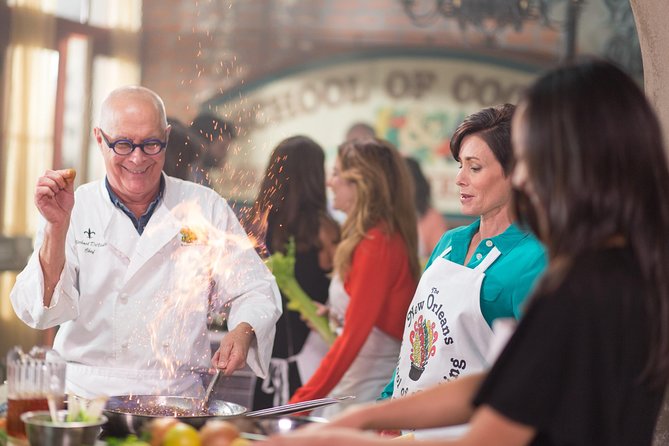
The format is practical. You cut, season, stir, and prepare the dishes under the direction of a professionally trained chef. The goal is not to watch a cooking show from the sidelines. You have a part in making the meal.
That makes the class useful for beginners and cooks who already know their way around a kitchen. You do not need to arrive with advanced skills. The chef handles the instruction, and an assistant may help when a step needs extra attention.
The class also connects food with New Orleans culture. The teaching includes local history and an explanation of how different cultures shaped the region’s cooking. That context matters because gumbo, jambalaya, grits, pralines, and bananas Foster are not just isolated recipes. They show how ingredients, methods, and traditions meet in Louisiana kitchens.
More cooking classes around the USA:
- New Orleans Demonstration Cooking Class with Meal
★ 5.0 · 3,000 reviews - Undiscovered Charleston: Half Day Food, Wine & History Tour with Cooking Class
★ 5.0 · 948 reviews - New Orleans: Cajun and Creole Cooking Class
★ 4.9 · 730 reviews
Inside the New Orleans School of Cooking
The activity begins at 524 St. Louis Street, in the French Quarter. You return to this same meeting point at the end, so there is no second drop-off to arrange.
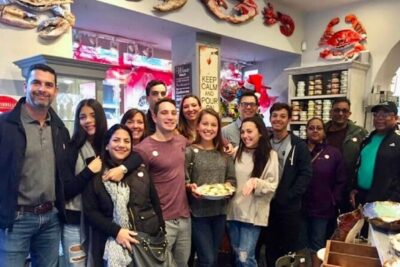
The School of Cooking keeps the group small, with a maximum of 10 people and five cooktops. If you book alone, you may be paired with another person. That arrangement gives you a partner for the work and helps keep the class active without turning it into a crowded kitchen.
The small format is one of the strongest features here. A large demonstration can be entertaining, but it may leave you unsure how to repeat the recipe at home. With a cooktop in front of you, you get a better sense of timing, texture, seasoning, and kitchen rhythm.
The class is casual and social. Several instructors are praised for mixing clear directions with humor, including Chef Eric, Chef Austin, Chef Cindy, Chef Ricardo, Chef Vivian, and Chef G. The experience can vary slightly with the chef leading your session, but the teaching style is built around participation rather than a formal lecture.
The three-course rhythm
The meal is taught in stages. You prepare one course, eat it, then move on to the next part of the menu. This keeps the class from becoming one long period of cooking followed by a rushed meal at the end.
A typical starter is yam-crab bisque or gumbo. The gumbo lesson can be especially useful because it introduces the importance of building flavor gradually. The reviews of the class place particular attention on making the roux, a basic step that can make or break the dish.
For the main course, you may prepare BBQ shrimp and grits or jambalaya. These recipes give you a chance to work with familiar Louisiana ingredients in a way that is still approachable at home. One practical benefit of making them yourself is that the chef can explain technique while you are actually handling the food.
Dessert may be bananas Foster or pralines. Bananas Foster is a lively finish and one of the class highlights, while pralines offer a more traditional sweet option to recreate later.
Menu choices can vary, so do not book expecting every dish listed at once. The supplied menu presents alternatives, not a promise that you will cook the entire list during one session.
What makes the instruction worthwhile
The strongest part of the class is not simply getting a recipe sheet. It is learning why a step matters while you are doing it.
Chef Eric is described as patient and clear. Chef Austin is known for practical tips, humor, and an easy manner. Chef Cindy’s format moves from cooking to eating through each course, which helps keep the session lively. Chef Ricardo adds information about cooking styles, spices, and ingredients, while Chef Vivian brings music, dancing, and a playful mood to the kitchen.
Those details matter because the chef shapes the experience. You may get a calm, methodical lesson, or a louder and more theatrical one. Either way, the repeated praise for clear instruction suggests that the class is designed to help you succeed, not to show off difficult techniques.
The history is also part of the value. You learn how the region’s different cultures influenced the food, giving more meaning to the ingredients on your plate. If you enjoy understanding the story behind a dish, this adds something a standard restaurant meal cannot provide.
Same kitchen, a different dish:
- Hands-on Cajun Roux Cooking Class in New Orleans
★ 5.0 · 356 reviews - Atlanta: Historic Market Food Tour and Biscuit Cooking Class
★ 4.9 · 25 reviews - New Orleans: Cooking Class & Cocktail Walking Tour
★ 4.7 · 16 reviews - Private New Orleans Cajun Cooking Class with a Local Courtland
★ 5.0 · 14 reviews
Eating the food you helped prepare
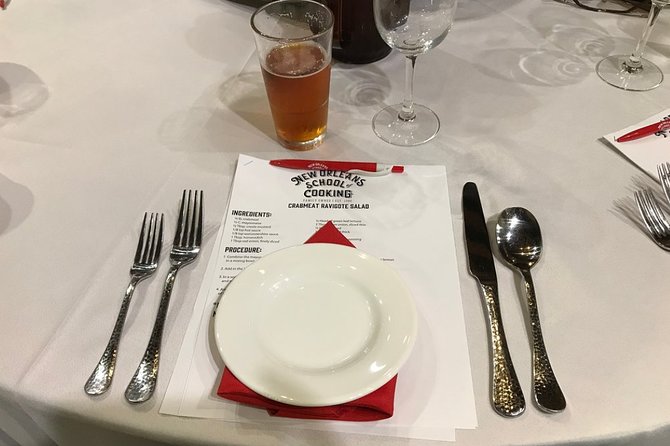
After each course is made, you sit down and eat. Drinks include red wine, white wine, Abita Amber beer, iced tea, lemonade, and coffee, with alcoholic and non-alcoholic choices available.
The meal is substantial enough that you should avoid scheduling a full lunch or dinner immediately before the class. The class includes several courses, drinks, and time at the table, so it is better treated as a full meal rather than a small cooking demonstration with a snack.
The shared-table setup is part of the appeal. You cook with a small group, then eat together. A solo participant can join another person at a cooktop, and couples, families, and friends can take part without needing to be expert cooks.
This is also a good date-night option if you want something more active than sitting across from each other in a restaurant. It works for families with adult children too, since the minimum age is 18.
Price and what you take home
The price is $162 per person. That is not a bargain if you are comparing the activity with the cost of an ordinary meal in New Orleans. You are paying for the chef-led instruction, ingredients, a full meal, drinks, a small group, and the use of the cooking stations.
The value improves if you care about the activity as much as the food. You get to learn several Louisiana dishes, eat what you prepare, and take home a recipe collection. The included School of Cooking white apron has a stated value of $18.99, and it is more useful than a generic souvenir because you can wear it when you try the recipes again.
You can also submit photos of your cooking at home to receive a diploma. That is a fun extra rather than a major reason to book, but it gives you a small incentive to use the recipes instead of letting them sit in a drawer.
The drinks add value, too, especially if you would normally order wine or beer with dinner. Still, the price will feel high to someone who only wants to taste New Orleans food. I would book it for the hands-on lesson and the social meal, not simply for the portion size.
Practical details before you book
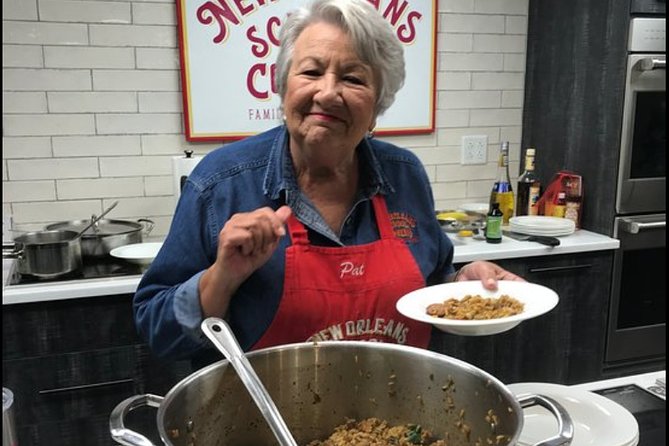
The experience lasts about three hours. Allow a little breathing room around it, since the class begins and ends at the School of Cooking on St. Louis Street and you may want time to settle in before cooking.
The dress code is casual. Comfortable shoes are a smart choice because you are on your feet for much of the session. One participant specifically found the standing tiring, so anyone with difficulty standing for a long period should think carefully before booking.
The activity is offered in English. It is near public transportation, and the meeting point is in the French Quarter, making it convenient to combine with other plans in the area.
The minimum age is 18. Specific dietary needs should be provided when you book, and special dietary requests carry a $10 fee payable on site. Do not wait until arrival to mention an allergy or restriction.
The class requires a minimum number of people. If that minimum is not met, the experience can be canceled after confirmation, with an alternative date or experience, or a full refund offered. You can cancel for a full refund up to 24 hours before the start time; cancellations or changes inside 24 hours are not refunded or accepted.
Who will enjoy this class most
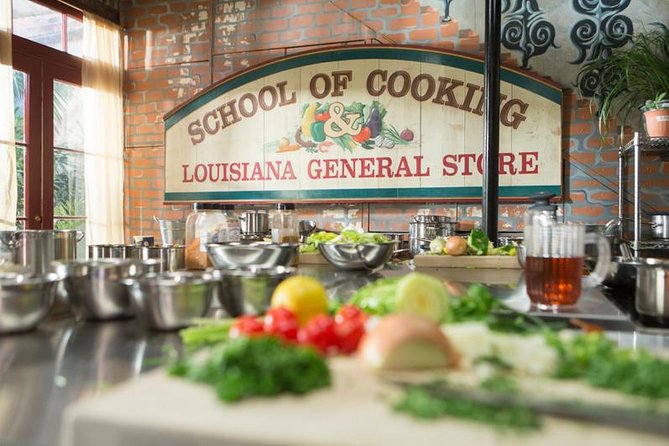
I would recommend this to you if food is one of the main reasons you came to New Orleans. You get a meal, but you also learn techniques you can try at home and gain a clearer sense of what makes Louisiana cooking distinctive.
It suits beginners especially well. You do not need to be a serious cook to take part, and the chefs keep the tone relaxed. The class also works for experienced home cooks who want to learn a few regional dishes and pick up tips about seasoning, roux, grits, or dessert preparation.
Solo participants can book, though you may be paired with someone else. Couples and friends will find it easy to share the experience, and the small group keeps the session from feeling anonymous.
I would be less enthusiastic if you want a quiet, seated food tour or a quick tasting. The class is active, social, and fairly long. You need to stand, follow directions, work with others, and accept that the exact menu and teaching personality can vary.
Should you book the New Orleans cooking class?
Book it if you want to do more than order gumbo in the French Quarter. The combination of hands-on cooking, local food context, a full meal, drinks, recipes, and an apron makes this one of the more useful food activities in New Orleans.
At $162, it deserves a place in your budget rather than an impulse booking. I would choose it for a first visit when you want an enjoyable introduction to Louisiana cooking, or for a return visit when you have already sampled the city’s restaurants and want to understand the food from the kitchen side.
Skip it if standing for three hours is a concern, if you need a strictly controlled dietary menu, or if you are only looking for the cheapest meal. For everyone else, especially curious eaters and willing beginners, the class offers a memorable way to put your own fingerprints on a New Orleans dinner.
FAQ
Where does the cooking class begin?
It begins at the New Orleans School of Cooking, located at 524 St. Louis Street, New Orleans, Louisiana 70130.
Where does the experience end?
The class ends back at the meeting point at the New Orleans School of Cooking.
How long does the class last?
The experience lasts approximately three hours.
What dishes might I prepare?
The possible starter is yam-crab bisque or gumbo. The main course is BBQ shrimp and grits or jambalaya, followed by bananas Foster or pralines.
Are drinks included?
Yes. Included drinks are red and white wine, Abita Amber beer, iced tea, lemonade, and coffee.
Is the class suitable for people who do not cook often?
Yes. The class is hands-on, but a professionally trained chef provides instruction and assistance during the preparation.
What is included to take home?
You receive a copy of the class recipes and a New Orleans School of Cooking white apron. You can also receive a diploma by submitting photos of the recipes you prepare at home.
Is there a minimum age?
Yes. The minimum age is 18.
What is the cancellation policy?
You can cancel at least 24 hours before the start time for a full refund. Cancellations and changes made less than 24 hours before the start time are not accepted or refunded.
New cooking classes around the USA
- San Diego: 2-Hour Pasta Cooking Class at a Local Brewery★ 5.0 · 2 reviews
- San Francisco: Dumpling Cooking Class & 3-Course Dinner★ 5.0 · 10 reviews
- New Orleans: Food Walking Tour & Cooking Class Experience★ 5.0 · 8 reviews
- New Orleans: Hands-on Cajun Roux Cooking Class★ 4.9 · 7 reviews
- New Orleans: Traditions Cooking Class★ 5.0 · 9 reviews
- New Orleans: Cooking Class & Cocktail Walking Tour★ 4.7 · 16 reviews
- Atlanta: Historic Market Food Tour and Biscuit Cooking Class★ 4.9 · 25 reviews
- Chinese Dumplings Cooking Class in NYC – Fun & Delicious!★ 5.0 · 4 reviews
New Orleans Cooking Classes, side by side.
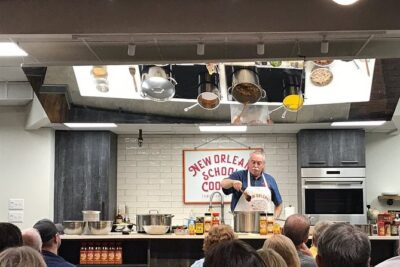
New Orleans Demonstration Cooking Class with Meal
Read our review →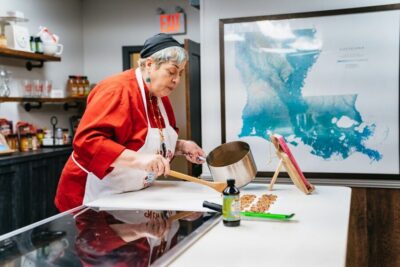
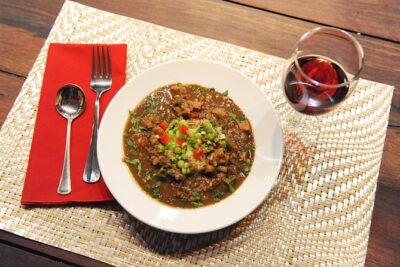
Hands-on Cajun Roux Cooking Class in New Orleans
Read our review →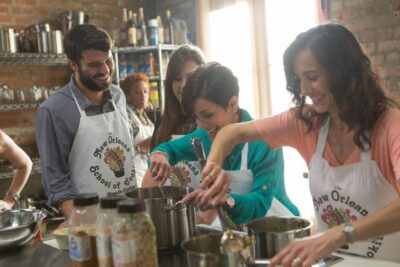
New Orleans: Cooking Class & Cocktail Walking Tour
Read our review →
Private New Orleans Cajun Cooking Class with a Local Courtland
Read our review →
New Orleans: Food Walking Tour & Cooking Class Experience
Read our review →This kitchen also appears in