
Review · COOKING CLASSES WORLDWIDE
Experience Singapore: Cultural Cooking Class
Singapore’s food culture makes the most sense when you work with the ingredients yourself. At Food Playground, you prepare three local dishes, which may include laksa, chicken satay, curry chicken, Hainanese chicken rice, or ondeh ondeh, then eat what you have made.
I like the small class size, capped at 12 and often much smaller, and the mix of cooking with food history. I also like that ingredients, equipment, lunch, recipes, and photos are included. The main drawback is that some instructors spend a little too long on introductions, so the hands-on cooking may begin later than you expect.
Key points to know before booking
- You cook three Singaporean dishes: The menu changes, but classes have included laksa, curry chicken, chicken satay, Hainanese chicken rice, and ondeh ondeh.
- The setting is a heritage shophouse: Food Playground is at 24A Sago Street in Chinatown, near several MRT stations and close to a Pagoda temple and food hall.
- The class is genuinely hands-on: You help prepare the food rather than simply watching a chef work.
- Local instructors explain the culture: Teachers such as Monica, Sara, Mary, Nur, Sara, Cindy, Ann, YY, and Kiat have led classes.
- Lunch and extras are included: You eat the dishes you make, with water, coffee, and tea, and receive recipes and class photos afterward.
- Allow about three hours: The 9:30 am class ends back at the meeting point, with no hotel pickup or drop-off.
Cooking Singaporean food on Sago Street
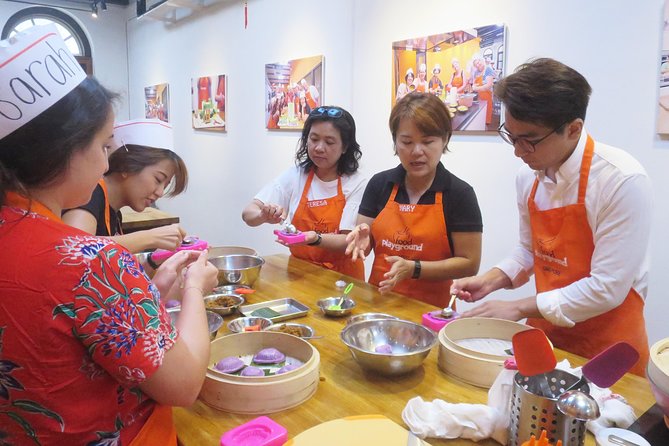
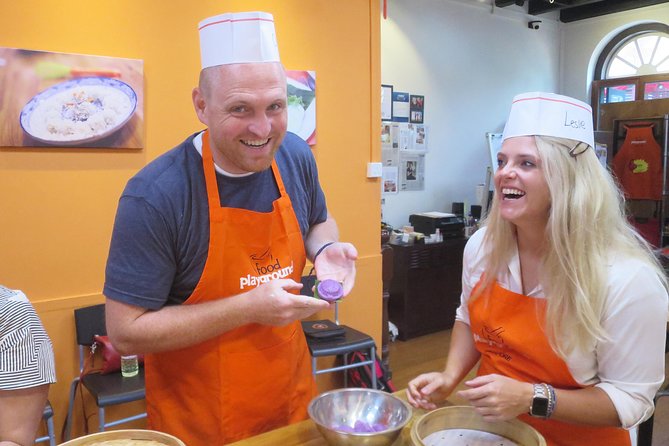
The class begins at 9:30 am at Food Playground, 24A Sago Street, in Chinatown. You arrive at a working cooking school in a restored shophouse, put on an apron, and meet the instructor and other cooks.
This location adds something that a hotel kitchen would not. You are in one of Singapore’s older urban districts, with temples, food halls, and traditional shophouses close by. The cooking class itself does not include a walking tour, but you can easily explore Chinatown after lunch.
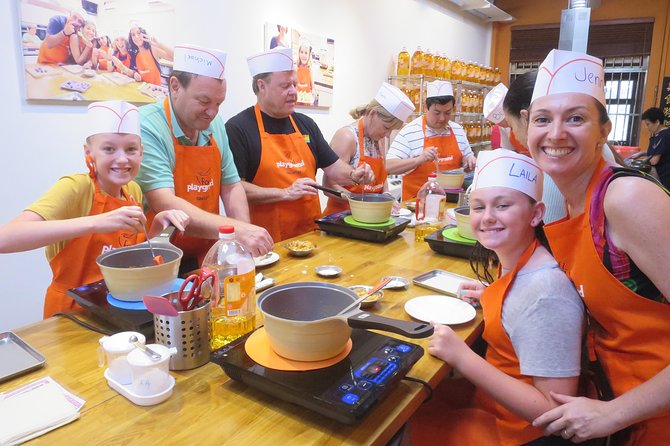
The room is set up for group instruction. Your teacher first demonstrates the recipes and techniques, then the class works through the preparation together. In some sessions, two people share a cooking station. Solo participants may have a station to themselves, depending on the group size and setup.
That format is worth understanding before you book. This is not a private lesson with your own chef and a separate workstation. It is a social class where you cook alongside other people, ask questions, and share tasks. For most visitors, that is part of the fun. If you want intense one-on-one instruction or complete control over every step, the group arrangement may feel less tailored.
The class size ranges from a minimum of two to a maximum of 12 people. A group of six gives you a good balance: enough company to make the morning social, but not so many people that the teacher disappears across the room.
More cooking classes around the world:
- Half-Day Thai Cooking Class at Organic Farm in Chiang Mai
★ 5.0 · 19,087 reviews - Florence: Pasta Cooking Class with Unlimited Wine
★ 4.9 · 10,285 reviews - 3 in 1 Cooking Class near Navona: Fettuccine, Ravioli & Tiramisu
★ 5.0 · 7,376 reviews
Three dishes, changing menu
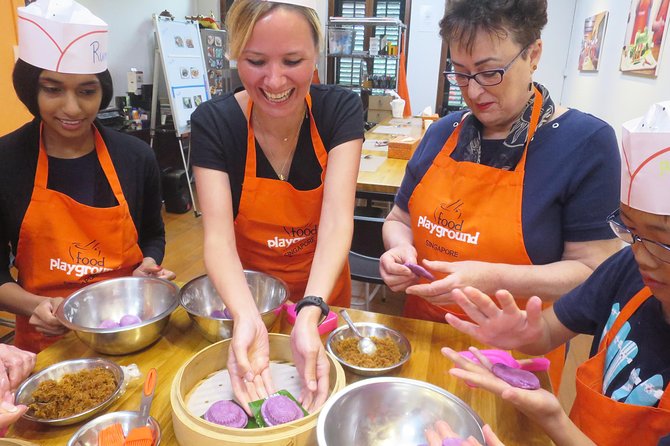
The menu is not fixed, so you should not book expecting one guaranteed set of recipes. Classes have included Singapore favorites such as laksa, chicken satay, curry chicken, Hainanese chicken rice, and ondeh ondeh. Ingredients and instructions can change.
That flexibility makes sense in a cooking school, but it is worth checking the current menu if one particular dish is your main reason for booking. If you dream of making laksa, ask before you reserve. The experience promises three dishes, not a specific three.
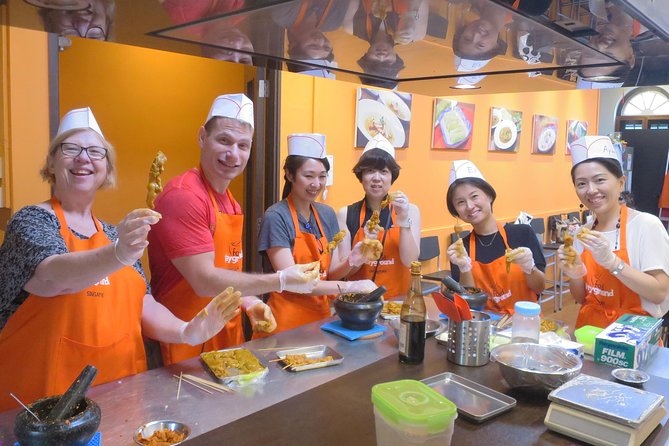
The cooking starts with preparation. You learn how ingredients are handled, how spices are combined, and how a dish gets its flavor before it reaches the table. One especially useful part is making curry paste from scratch. That step gives you a better feel for Singaporean cooking than simply stirring a packaged sauce into a pot.
Your instructor demonstrates each stage, then guides you as you repeat it. The pace is suited to beginners, and the recipes are explained in clear, manageable steps. You do not need professional kitchen experience. The class welcomes everyone from first-time cooks to people who already cook often.
The food also shows why Singapore’s cuisine cannot be reduced to one national style. Local dishes draw on Chinese, Malay, Indian, and British influences. You learn about those connections while working with the recipes, not in a long museum-style lecture detached from the meal.
The cultural lesson behind the recipes
The best part of this class is the link between cooking and place. Your teacher explains where dishes come from, how they became local favorites, and how food reflects Singapore’s mixed cultural traditions.
That context gives the meal more meaning. Laksa is not just noodle soup, and chicken rice is not simply chicken with rice. The ingredients, techniques, and ways of serving them point to the communities that shaped Singapore’s food.
Instructors bring different personalities to the class. Mary has led a food quiz at the start, which makes a good warm-up for families and groups. Nur has been praised for a fun and informative teaching style. Monica has guided small classes through three dishes and their cultural background, while Sara and Cindy have combined practical cooking tips with stories about food heritage.
The teaching style may vary. Some instructors move quickly into the recipes. Others spend more time introducing Singaporean dishes or talking about their own connection to food. I see that as the main weakness to watch for. A longer introduction can be interesting, but if you have come primarily to cook, you may find the first part slow.
Still, the cultural material is not filler when it is tied to the dishes in front of you. You leave with a better idea of why Singapore is such a rewarding place to eat, and you can recognize more than just the names on a hawker-center menu.
Eating lunch with the class
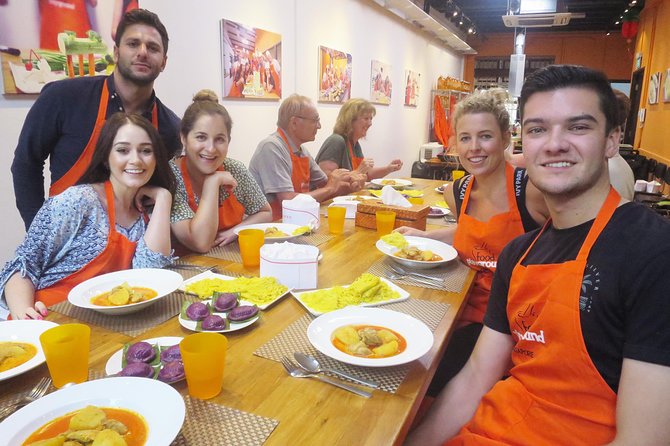
Once the cooking is finished, everyone sits down to eat the results. Lunch is included, along with water, coffee, and tea.
This shared meal is an important part of the morning. You are not rushing off after the final pan is washed. Instead, you get time to taste the food, compare results, and talk with the people at your table.
The class naturally works well for couples, families, and solo visitors. Children aged seven and older can participate, so this can be a useful family activity for a child who likes cooking. The group format also makes it easy to meet other people without forcing a formal social program on you.
Do not plan a large lunch immediately afterward. Three dishes can make for a substantial meal, and the point is to eat what you prepared. Chinatown is still worth exploring after class, but you may prefer a walk before considering more food.
Recipes and photos are shared after the session. That is a real benefit. Many cooking classes are enjoyable in the moment but hard to repeat once you return home. Here, you have written instructions and pictures to help you recreate the dishes for friends and family.
Same kitchen, a different dish:
- Florence: Pasta & Tiramisu Cooking Class with Unlimited Wine
★ 4.9 · 6,708 reviews - Florence: Pasta Cooking Class with Unlimited Wine
★ 5.0 · 6,413 reviews - Hanoi Cooking Class: Culture, Local Market & Meaning CSR Impact
★ 5.0 · 5,147 reviews - 5 Traditional Dishes Hanoi Cooking Class with Market Trip
★ 5.0 · 4,890 reviews
Why the Chinatown location matters
Food Playground’s address puts you in a useful part of Singapore for a half-day plan. The class ends at the same place where it begins, so you do not lose time changing neighborhoods.
A Pagoda temple is next door, and its upper garden and museum have been noted as worthwhile nearby stops. A food hall is also close, along with several MRT stations. These details make the location practical, especially if you want to combine the cooking class with Chinatown sightseeing.
The class does not provide hotel pickup or drop-off. You need to make your own way to Sago Street and return from there. Since the meeting point is central and near public transport, that is less of a problem than it would be for a cooking school outside the city.
Arrive with enough time to find 24A Sago Street. A morning start leaves the rest of the day open, but the fixed 9:30 am time may be less convenient if you are dealing with jet lag or a late arrival.
What the $96.97 price covers
At $96.97 per person, this is not a bargain meal, but it is more than a restaurant lunch. The fee covers about three hours of instruction, ingredients, all cooking equipment, the meal, water, coffee, tea, and local English-speaking teachers.
You are also paying for the cultural explanation and the chance to repeat the recipes at home. If you cook even one of the dishes again, the value improves. The included recipes and photos make that more likely than with a casual food tasting.
The price is easier to justify for people who enjoy cooking. A person who only wants to sample Singaporean food can eat for less at a hawker center. You should choose this class for the combination of meal, instruction, and cultural context, not simply because it is the cheapest way to eat local food.
Group discounts are available, which may help families or friends booking together. The class is limited to 12 people, and the small-group format gives you a better chance to receive help with each preparation step.
Who should book this cooking class
I would put this near the top of the list for several types of visitors:
- First-time Singapore visitors who want food context, not just a list of dishes.
- Home cooks who want recipes they can use after the trip.
- Families with children aged seven or older who enjoy practical activities.
- Solo visitors and couples who like meeting people over a shared meal.
- Food-focused visitors who want to understand local flavors before exploring hawker centers.
- Repeat Singapore visitors looking for a different way to connect with Chinatown.
It is less suited to anyone who dislikes group activities, has a strict need for a fixed menu, or wants a private chef-led lesson. It may also be frustrating if you expect nonstop cooking from the first minute, since some teachers spend time on introductions and food background.
Tell the provider about dietary requirements when booking. The menu, ingredients, and instructions can change, so do not assume every dietary need can be handled unless it has been confirmed.
Practical details that affect your morning
The activity lasts about three hours and ends at the meeting point. The minimum age is seven, and the class operates with at least two people and no more than 12.
You receive booking confirmation at the time of reservation. Mobile tickets are available, and group discounts may apply. There is no hotel transportation.
The cancellation policy is straightforward: cancel at least 24 hours before the local start time for a full refund. Cancellations or changes made within 24 hours are not refunded or accepted. If the minimum number is not reached and the class is canceled, you are offered another date or experience, or a full refund.
The strongest practical tip is to treat this as both a cooking lesson and a social meal. You will get more from it if you are willing to share a station, listen to the instructor’s stories, and take part in the group rhythm.
Should you book Food Playground?
Book it if you want to leave Singapore with more than a full stomach. The class gives you three dishes, local food context, an informal lunch, and recipes you can try at home. The heritage shophouse setting and Chinatown location add useful atmosphere without requiring a separate tour.
The main tradeoff is the changing menu and group format. You may not cook the exact dish you had in mind, and the opening discussion can run long. Still, the combination of hands-on work, friendly instruction, and food history makes the $96.97 fee reasonable for people who enjoy cooking.
If your ideal Singapore morning is a hawker-center breakfast followed by a cooking lesson and a Chinatown walk, this fits neatly into the plan. If you only want to eat local food quickly and cheaply, save your money for the food stalls.
FAQ
Where does the cooking class begin?
The class begins at Food Playground, 24A Sago Street, Singapore 059020.
What time does the class start?
The scheduled start time is 9:30 am.
How long does the experience last?
The cooking class lasts approximately three hours.
What dishes will I cook?
The menu changes, but dishes can include laksa, chicken satay, curry chicken, Hainanese chicken rice, and ondeh ondeh. The class prepares three dishes, and the menu, ingredients, and instructions may change.
Are ingredients and cooking equipment included?
Yes. The price includes all ingredients and equipment, along with lunch, water, coffee, and tea.
How many people can join the class?
The class requires at least two people and accepts a maximum of 12 participants.
Can I cancel for a refund?
Yes. You can receive a full refund if you cancel at least 24 hours before the experience start time. Cancellations or changes made less than 24 hours in advance are not refunded or accepted.
New cooking classes around the world
- Shinjuku Tokyo: Authentic Japanese Home-Style Culinary Class★ 4.9 · 125 reviews
- M.O.M COOKING CLASS★ 4.8 · 6 reviews
- Shibuya Tokyo: Onigiri & Tamagoyaki Cooking Class★ 5.0 · 4 reviews
- Seville: Paella-Cooking Experience with Sangria & Full Meal★ 4.9 · 42 reviews
- Shanghai: Authentic Chinese Cooking Class with Master Chef★ 5.0 · 2 reviews
- Sestri Levante: Pesto & Cooking Classes, Wine Tasting★ 4.9 · 56 reviews
- Seville: Paella Cooking Class & 30-Min Local Expert Q&A★ 4.8 · 37 reviews
- Seoul: Korean Kimchi Cooking Class in the Heart of the City★ 5.0 · 3 reviews