
Review · ROME
Authentic Roman Cooking Class & Market Experience
Rome’s ancient monuments are only half the story. This five-hour cooking experience takes you from market stalls to a private kitchen, where you shop for ingredients, make several types of pasta, and sit down to eat the results. It is a practical way to spend a morning with food at the center.
I like the guided shopping at Campo de’ Fiori, where you learn to choose produce instead of simply walking past it. I also like the hands-on format, especially when chefs such as Monica, Nicoletta, Luca, Fabio, Victoria, and Francesco give personal help with pasta dough, shaping, sauces, and timing.
The main consideration is that the class can feel busy because it covers a lot: three pastas, a main course, and lunch. The stated group limit is eight, but one account describes a 12-person session, so confirm the group size if personal instruction matters greatly to you.
Key points at a glance
- Market shopping comes first: Start around Campo de’ Fiori and nearby food shops, selecting produce, meat, cheese, and other ingredients for the meal.
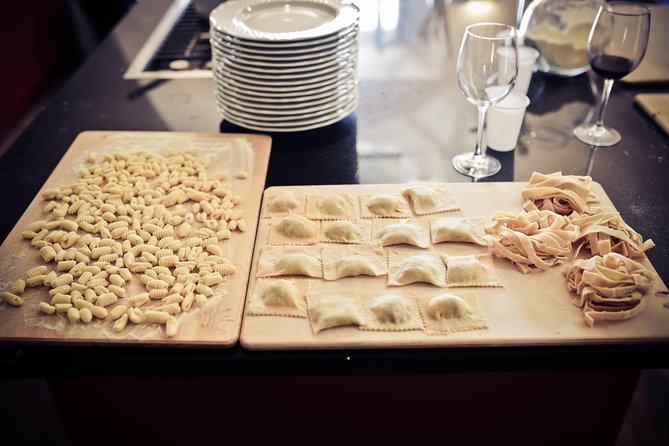
- Three pasta styles are prepared: Depending on the day, you may make ravioli, fettuccine, fusilli, or other hand-shaped pasta.
- Lunch is the payoff: Sit down for a four-course meal made from the food prepared in class, with Italian wine included.
- The kitchen setting gets high marks: The cooking space is described as professional, spacious, organized, and located in a distinctive part of Rome.
- Small groups are the goal: The advertised maximum is eight people, with a minimum of two required to run the class.
- This is food-focused Rome: Choose it if you want market culture, practical kitchen work, and a long social lunch rather than another monument tour.
From Campo de’ Fiori to the kitchen
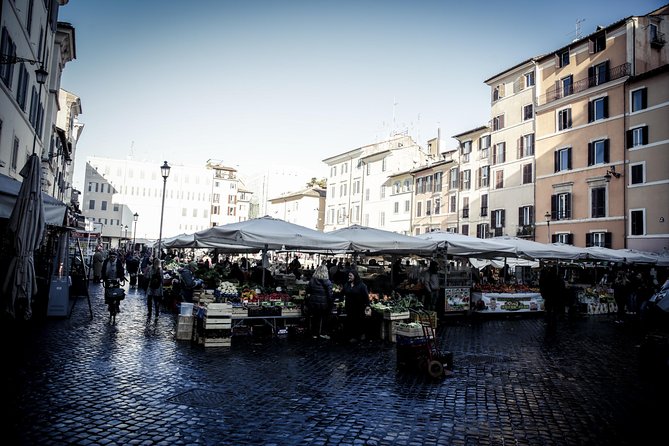
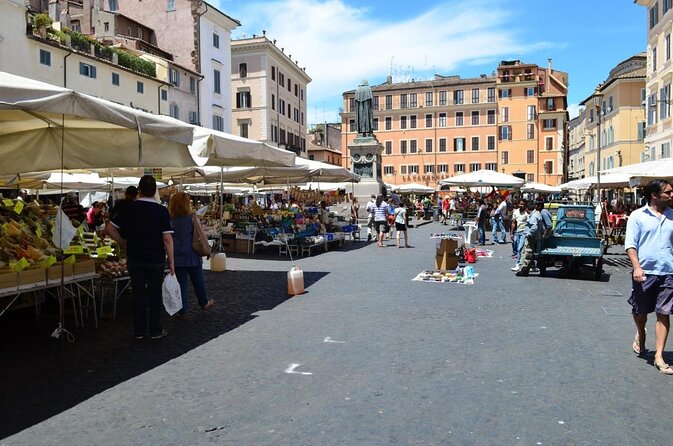
The morning begins at 9:30 am at Rossopomodoro, Largo di Torre Argentina 1. From there, you head toward Campo de’ Fiori, one of central Rome’s best-known food markets, with your guide leading the shopping.
This is more than a quick stop to collect ingredients. You follow the guide past stalls and small food shops, looking at the basics of Italian cooking: fresh vegetables, meat, cheese, and other ingredients that will later appear on your table. The useful part is learning what to look for. You can ask about quality, seasonality, and how an Italian cook chooses produce for a specific dish.
The market visit also gives the class a sense of place. Instead of beginning in a sealed-off kitchen, you first see the food in its everyday setting. You walk through central Rome, hear a little about the area, and then carry those ingredients into the cooking lesson.
There is a practical limit here. Campo de’ Fiori is a public market, not a private food tour with long tastings at every stall. The emphasis is on buying what the class needs. If you want an extended market walk with a full focus on Roman food vendors, this experience may feel brief. If you want a useful introduction before cooking, the format works well.
More Cooking Classes with a Market Tour in Italy
- Rome: Pasta Cooking Class with Market Visit and Wine
★ 4.9 · 277 reviews - Kitchen of Mamma: Pasta Cooking Class with market visit in Rome
★ 5.0 · 140 reviews - Rome: Market and Cooking Class at a Local’s Home
★ 4.0 · 3 reviews
Making pasta with a chef beside you
After shopping, you move to a private cooking space. The class is designed for all skill levels, so you do not need to arrive already knowing how to knead dough or shape ravioli.
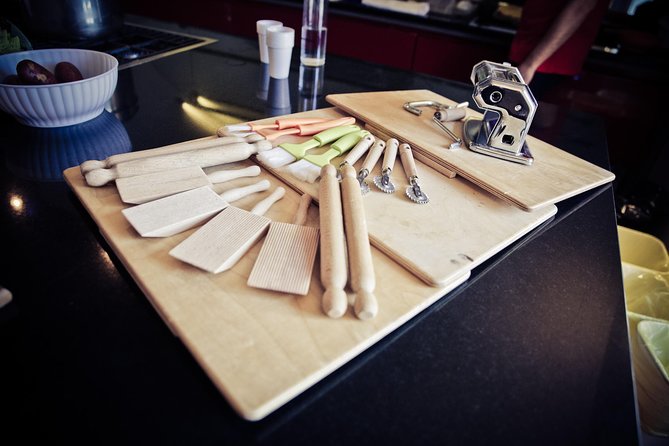
The central activity is making three different varieties of homemade pasta. The exact shapes can vary, but the food described for different sessions includes ravioli, fettuccine, and fusilli. You may work with dough, roll it, cut it, fill it, or shape it by hand. One technique specifically appreciated in the class is rolling fusilli, while another useful lesson involves adding pasta water to thicken a sauce.
That kind of detail is where the class can be most valuable. You are not only watching a chef plate a finished dish. You get to handle the dough and learn the small choices that affect the result. How thin should the pasta be? When is the dough ready? Which steps require care, and which can be done quickly? These are the details that help you repeat the meal at home.
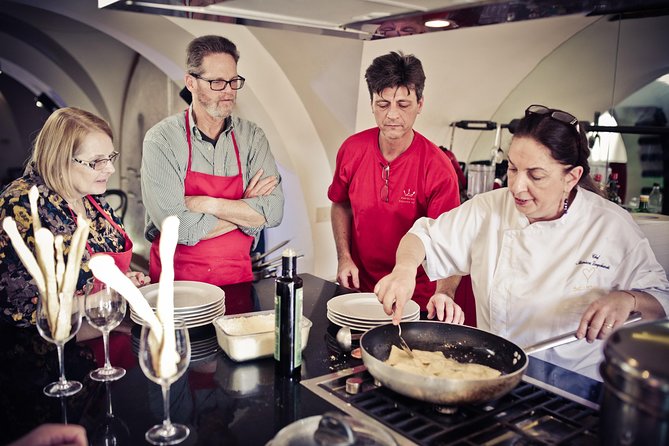
The chefs named in the feedback include Victoria, Francesco, Luca, Fabio Bongianni, Monica, Nicoletta, Mary, and their assistants. The individual instructor matters because the class depends heavily on how clearly the chef explains each step. Strong sessions are described as warm, organized, and hands-on, with the chef and assistant moving around to help at the work surface.
The format can also be hectic. You are making several dishes in one morning, and the chefs may need to keep multiple preparations moving at once. One account describes a class where the instructor demonstrated a step and then told participants what to do, with less explanation than expected. If your main goal is a detailed pasta school with precise measurements and long technique drills, this may not be the right choice.
Ask for clarification as you go. If you want to know why a sauce is handled a certain way, how much pasta water to add, or how to judge dough by feel, say so. The available information suggests that personal feedback is part of the experience, but your questions will help make sure you get the level of teaching you want.
More than pasta on the table
Pasta is the star, but the class also includes a main course. Depending on the day, that may be a meat dish such as saltimbocca. Some sessions also include tiramisu, though the formal description specifically promises three pasta preparations plus a main course and a four-course lunch.
That distinction matters. The dishes can vary, so you should not book expecting one fixed menu every time. The market shopping helps determine what goes into the meal, while the chef selects the recipes and wine to fit the food.
You prepare the dishes with the group, then sit down to eat. This shared meal is an important part of the experience. It turns a cooking lesson into a long lunch, with time to taste the results and talk with the other people in the class.
The meal includes complimentary beverages and Italian wine. Wine pairing is part of the appeal, especially if you want a relaxed, adult food experience rather than a short demonstration. You should still check the current details at booking, since the general inclusion says beverages and wine are provided while the general exclusion says food and drinks are not included unless specified. The experience description does specify lunch and wine, but it is sensible to confirm what is covered before paying.
Plan to arrive hungry. Several sessions include three pastas, a main dish, and sometimes dessert, so breakfast should be light. The portions are not described in exact terms, but the meal is clearly intended to fill you.
The kitchen setting and group size
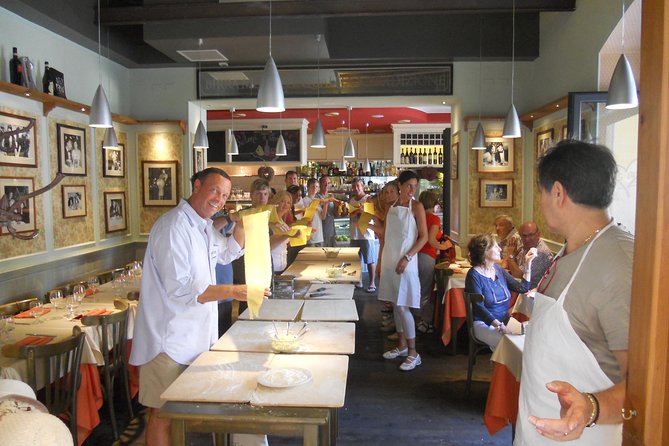
The cooking space receives unusually strong praise. It is described as professional, well organized, comfortable, and spacious enough for a family of four. Other accounts place the kitchen near a beautiful piazza or in a distinctive part of Rome, reached by walking through the city after shopping.
This setting matters. A cooking class can become frustrating if everyone is squeezed around one small counter. Here, the intended maximum is eight people, which should give the chef enough room to demonstrate while participants work. The minimum is two booked participants, and the activity is offered in English and Spanish.
There is one important caution. One account describes a class with 12 people, despite the stated maximum of eight. That would change the experience considerably, since not everyone could see the work surface or receive equal help. If you are booking this specifically for personal instruction, contact the provider, Gray Line I Love Rome by Carrani Tours, and ask how many places are currently sold for your date.
A smaller class can also change the tone. Some sessions have had only three people, and one person ended up receiving a private lesson when the rest of the group did not arrive. That is an unusual bonus, not something to count on, but it shows how much the group size can affect the class.
More Cooking Classes with a Market Tour in Rome:
- Hanoi Cooking Class: Culture, Local Market & Meaning CSR Impact
★ 5.0 · 5,147 reviews - 5 Traditional Dishes Hanoi Cooking Class with Market Trip
★ 5.0 · 4,890 reviews - Cooking Class and Lunch at a Tuscan Farmhouse with Local Market Tour from Florence
★ 5.0 · 4,831 reviews - Chiang Mai: Cooking Class, Market & Thai Herbs Garden Tour
★ 4.9 · 4,824 reviews
How much value do you get for $225.01?
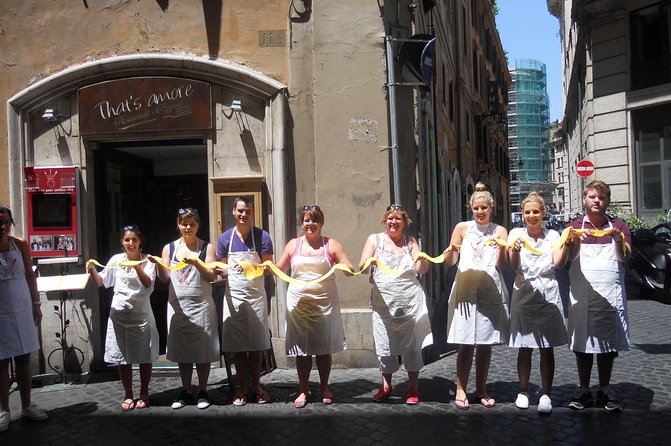
At $225.01 per person, this is not a cheap lunch. You are paying for about five hours, a market visit, a chef-led class, ingredients, kitchen use, several dishes, wine, and a meal in central Rome.
The value depends on what you want from a food experience. If you only want to eat fresh pasta, Rome has countless restaurants where you can spend far less. If you want to shop for the ingredients, learn techniques, make several dishes, and eat in a social setting, the price is easier to justify.
I would compare it with the cost of separate activities. A market visit, a cooking lesson, and a substantial lunch would each take time and money. This combines all three in one morning and early afternoon. You also leave with methods you can try at home, such as shaping pasta and using pasta water to improve a sauce.
The value is strongest for families, couples, and small groups who will enjoy working together. It is also a good choice if you want a break from churches, ruins, and museums. The class gives your Roman sightseeing schedule a different rhythm.
The value is weaker if you dislike group cooking, do not drink wine, or want a tightly structured lesson with written recipes and exact quantities. One dissatisfied participant specifically found the instruction too light and did not receive recipes. The supplied details do not promise take-home recipe cards, so do not assume they are included.
Timing, meeting point, and planning
The start time is 9:30 am, and the activity lasts approximately five hours. It ends back at the meeting point. Since the class includes both walking and cooking, wear comfortable shoes and clothing you can work in.
The meeting point is Rossopomodoro at Largo di Torre Argentina 1, in central Rome. It is near public transportation, but give yourself time to find the exact restaurant and arrive before the group moves toward the market.
The cooking and lunch portion may feel like the heart of the day, but the market walk is part of the scheduled experience. Do not treat it as a late arrival activity. If you miss the shopping, you may miss the context that connects the ingredients to the meal.
Vegetarian options are available if requested during booking. Make that request early and clearly. No other dietary arrangements are specified, so anyone with allergies or strict restrictions should ask the provider before committing.
The activity is non-refundable and cannot be changed for any reason after booking. It also requires at least two participants to operate. If the provider cancels because that minimum is not met, you are offered another date or experience, or a full refund. That makes the date choice important, since you cannot count on changing plans later.
The experience is usually booked well ahead, with an average advance booking time of 68 days. That is a useful warning for a Rome itinerary. If this is a priority, do not wait until the week of your visit.
Who will enjoy this most?
I would choose this class for you if you like food, enjoy learning by doing, and want a social activity with a real meal at the end. It suits families especially well because several people can work on different pasta shapes and share the results. It also suits couples and friends who want an experience more active than a restaurant dinner.
It is a good match for a first-time pasta maker. The chefs work with beginners, and the menu gives you several chances to practice. If you already make pasta regularly, you may still enjoy the Roman recipes, market shopping, and chef feedback, but you should not expect an advanced culinary course.
The class may not suit you if you want a quiet, private lesson or if standing and working at a counter for part of the morning is difficult. It also may disappoint you if you expect every minute to be a formal demonstration. The cooking has a social, group rhythm, and the amount of individual instruction can depend on the chef and the number of people present.
The strongest parts are clear: the market visit, the friendly chefs, the professional kitchen, the variety of pasta, and the long lunch. The weak points are also clear: the price, the possibility of a crowded session, and inconsistent depth of instruction.
Should you book this Rome cooking class?
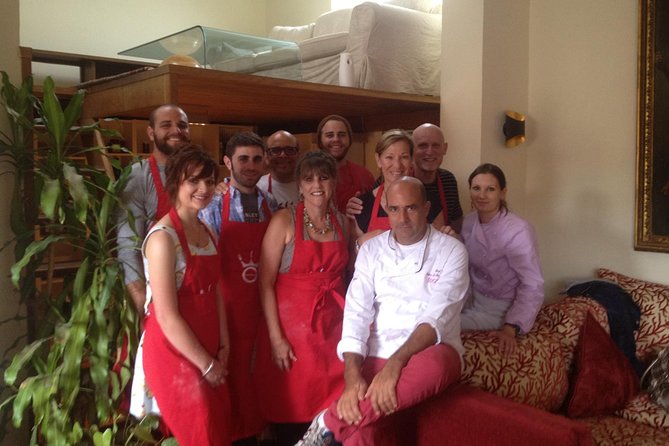
I would book it if you want to spend half a day eating, cooking, walking through central Rome, and meeting people around a shared table. The market stop gives the class a local starting point, and the meal gives you a satisfying finish. The chance to make three pasta styles is a better deal than a short class focused on one recipe.
Before booking, confirm the expected group size, ask whether recipes are supplied, and state any vegetarian needs. If the group is kept to eight or fewer and you want an active food experience rather than a formal culinary course, $225.01 can be fair value.
Skip it if you mainly want a cheap meal, a private lesson, or advanced instruction with exact measurements and extensive written material. For everyone else, this is a strong way to put your hands to work in Rome and remember the city through its food.
FAQ
Where does the cooking class start?
It starts at Rossopomodoro, Largo di Torre Argentina 1, 00186 Rome.
What time does the experience begin?
The start time is 9:30 am.
How long does the experience last?
It lasts approximately five hours.
Where does the market visit take place?
The market visit begins at Campo de’ Fiori and includes nearby stalls and small specialty shops.
What will I cook?
You will prepare three varieties of homemade pasta and a main course. Examples include ravioli, fettuccine, fusilli, and a meat dish such as saltimbocca, but the exact menu can vary.
Is lunch included?
Yes. You sit down to eat the dishes prepared during the class as a four-course lunch.
Is wine included?
Complimentary beverages, including Italian wine, are included in the stated experience.
What languages are available?
The class is available in English and Spanish.
Can I request vegetarian cooking?
Yes. You should indicate that you need vegetarian options during booking.
How many people can join the class?
The stated maximum is eight people, and at least two participants are required for the activity to operate. One account describes a larger group, so you may wish to confirm the number booked for your date.
New cooking classes around Rome
- ROME:Hands-On Lasagna & Marsala Tiramisu Cooking Experience”★ 5.0 · 3 reviews
- Rome: Vatican Food Tours, Cooking classes & Free Tours★ 4.9 · 11 reviews
- Rome: Trastevere Pasta Making Class★ 4.9 · 33 reviews
- Rome: Traditional Pasta, Spritz & Tiramisu Cooking Class★ 4.9 · 279 reviews
- Rome: Traditional Pasta and Tiramisu Cooking Class★ 5.0 · 4 reviews
- Rome: Small Group Pasta cooking class near Piazza Navona★ 4.9 · 8 reviews
- Rome: Traditional Cooking Class in the Jewish Ghetto★ 4.9 · 75 reviews
- Rome: “Rooftop Pasta and Cocktails Cooking Class”★ 5.0 · 12 reviews
Rome Cooking Classes, side by side.

3 in 1 Cooking Class near Navona: Fettuccine, Ravioli & Tiramisu
Read our review →
Rome: Pasta Making Class with Wine, Limoncello, and Dessert
Read our review →
Rome Cooking Class: Make Pasta and 3 Spritz Cocktails
Read our review →
Rome: 3-in-1 Fettuccine, Ravioli, and Tiramisu Cooking Class
Read our review →
Rome: Fettuccine Pasta Cooking Class in Rome’s City Center
Read our review →
Fettuccine & Tiramisù: Cooking Class with Wine & Limoncello
Read our review →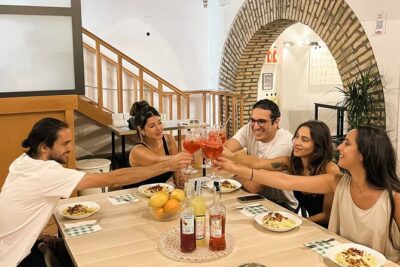
Pasta Cooking Class Near the Colosseum with 3 Spritz Cocktails
Read our review →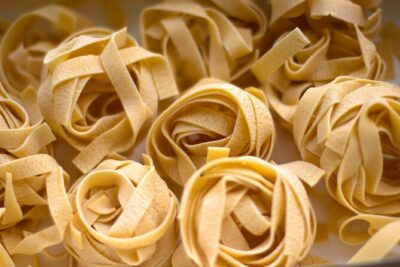
Enjoy Spritz and Pasta Making in Piazza Navona
Read our review →This kitchen also appears in