
Review · KANDY
Authentic Sri Lankan Cooking Class in Kandy by Local Family
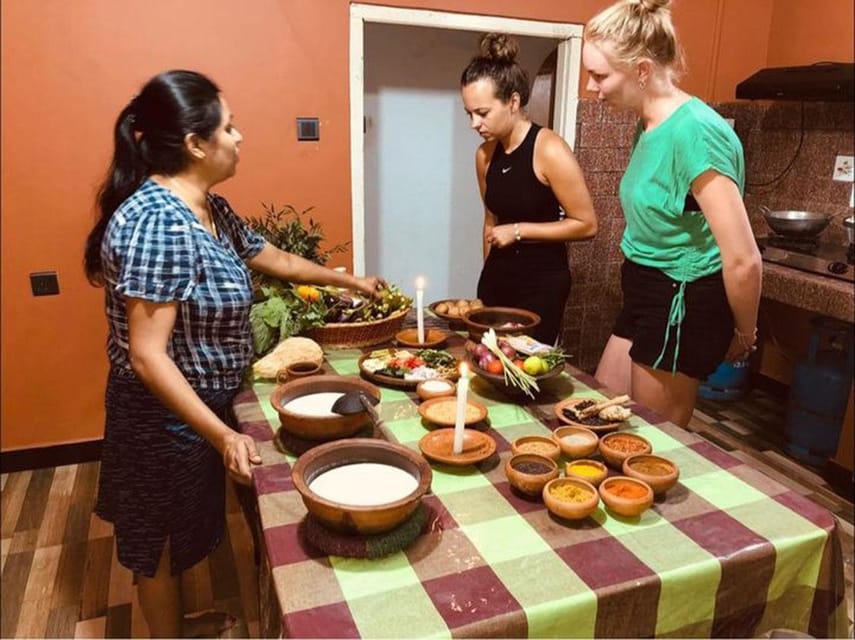
A cooking class in Kandy rarely gets more personal than this. You cook inside a family home near the Bahirawakanda Buddha statue, with Dinesha, her sister, and her mother guiding you through a large Sri Lankan meal. The highlight is the 100-year-old sambol stone, still used to grind coconut and spices.
I like the chance to visit a local market with Dinesha before cooking, and I like the sheer range of food: ten vegetable dishes, fish or chicken, coconut sambol, and coconut roti. The trade-off is that three hours is a short time for such a large menu, so the family handles some of the cooking while you season, prepare, and learn the methods.
Key points to know before booking
- A family kitchen near Bahirawakanda: You cook in the hosts’ home, not in a polished cooking school.
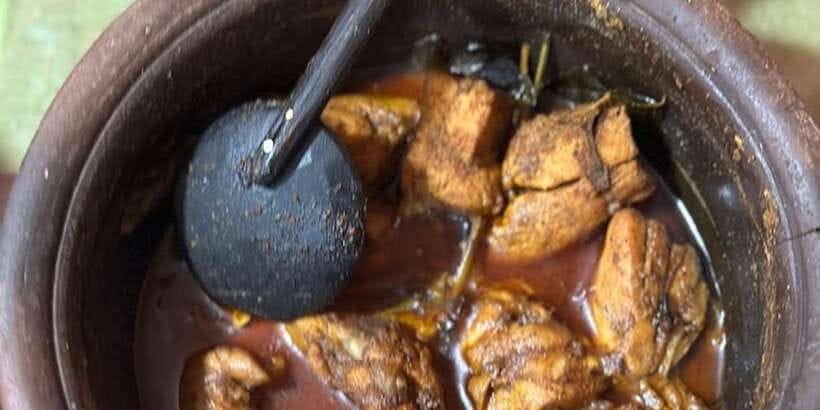
- A large Sri Lankan feast: The menu includes ten vegetable dishes, your choice of fish or chicken, coconut sambol, and coconut roti.
- Market shopping is available: Dinesha can guide you through a local market and explain the spices and vegetables.
- The old sambol stone is a star: The family uses a roughly 100-year-old stone board for making coconut sambol.
- A very small group: The price is $99 for up to two people, making this best for a couple, friends, or a private pair.
- Pickup is available around Kandy town: Hotel pickup and drop-off can be arranged, with details supplied when you book.
Inside a Kandy family home
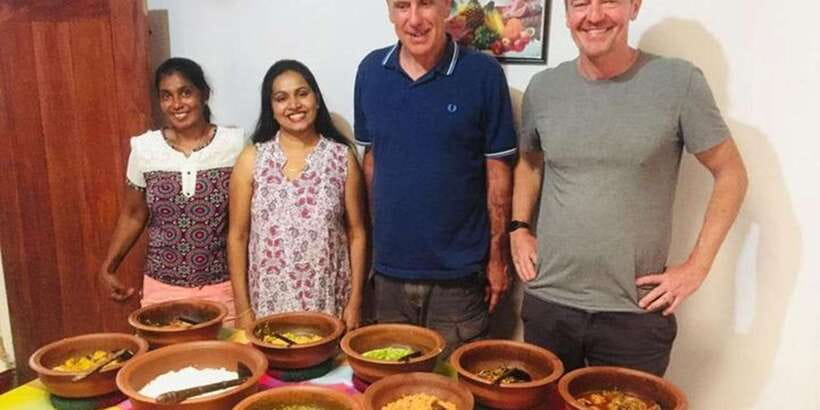
The appeal here begins before the first curry is cooked. The class takes place in a traditional family home close to Kandy city center and the large Buddha statue on Bahirawakanda Mountain.
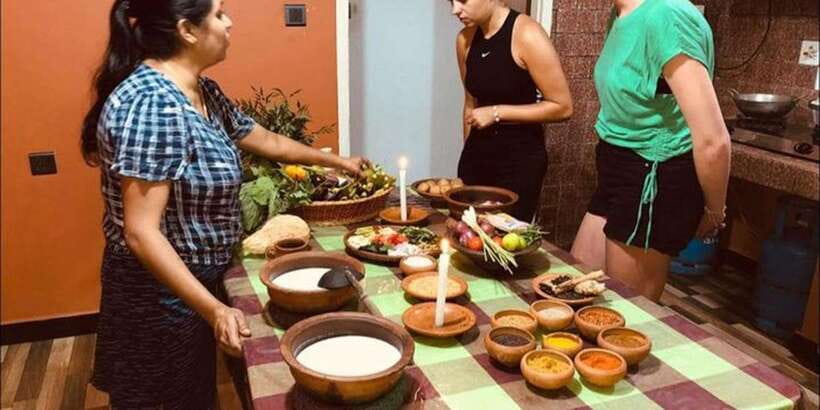
You are not entering a restaurant kitchen built for tourists. You are entering the family’s own cooking space, where the hosts prepare food as part of daily life. That setting gives the class its strongest sense of place. You see how Sri Lankan food fits into a household, rather than learning a few dishes in an artificial demonstration room.
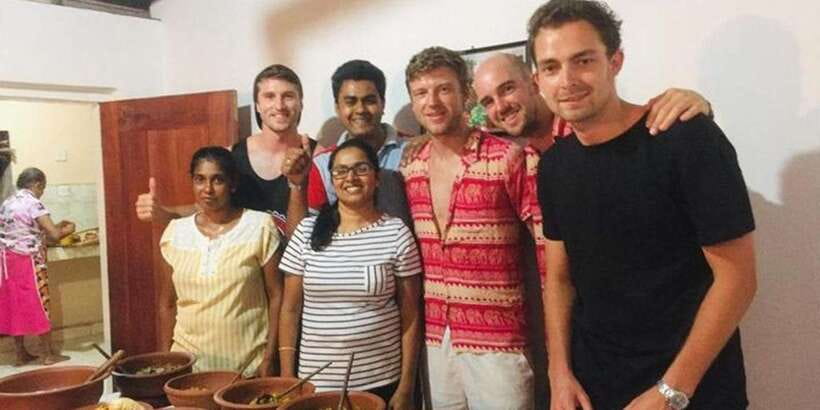
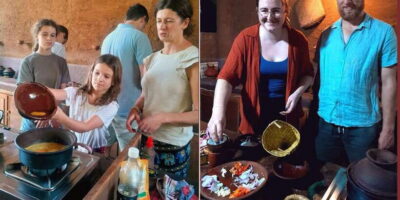
The teaching team is Dinesha’s wife, sister, and mother, with the family’s young daughters sometimes joining in. The hosts speak English, and the class is designed around conversation, questions, and hands-on preparation.
I would expect a warm and informal welcome rather than a tightly timed professional kitchen lesson. That is a plus if you want family contact and local context. It may be less suitable if you want every step handled by one chef with precise measurements and a fixed menu.
More Home Cooking Classes in Sri Lanka:
- Galle: Cooking Class at a Local Home and Market Tour
★ 5.0 · 47 reviews - Nilaveli: Sri Lankan Cooking Class with a Local Family
★ 5.0 · 16 reviews - Khmer Cooking Class at a Local’s Home in Krong Siem Reap
★ 5.0 · 2,731 reviews
Optional market visit before the cooking
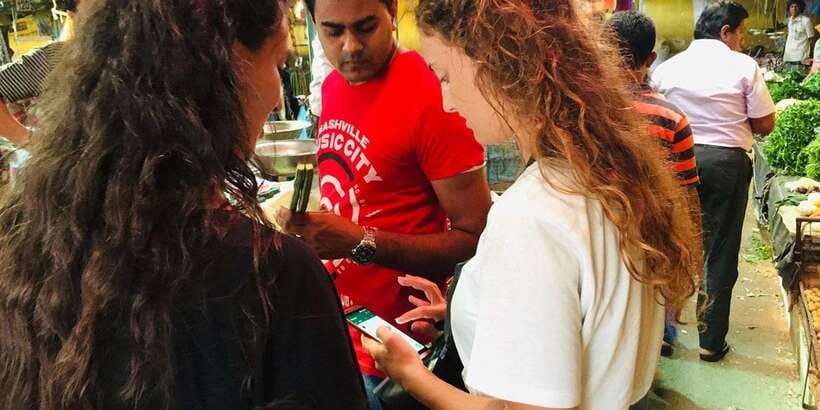
If you want more than the kitchen session, ask for the local market visit. Dinesha can accompany you to buy ingredients and explain the vegetables and spices used in the meal.
This part matters because Sri Lankan cooking depends on combinations more than on one signature ingredient. A market walk helps you connect the finished curry with the produce and seasonings that go into it. It also gives you a better sense of what local cooks actually buy.
The market visit is not described as a separate fixed stop for every booking, so confirm that you want it when arranging the class. The food shopping also adds a useful practical lesson: you learn what to look for before you start cooking.
For me, this is one of the best reasons to choose this class over a simple meal at a restaurant. You do not just taste unfamiliar dishes. You get a look at the ingredients behind them and a chance to ask why particular vegetables or spices are used.
Learning a generous menu in three hours
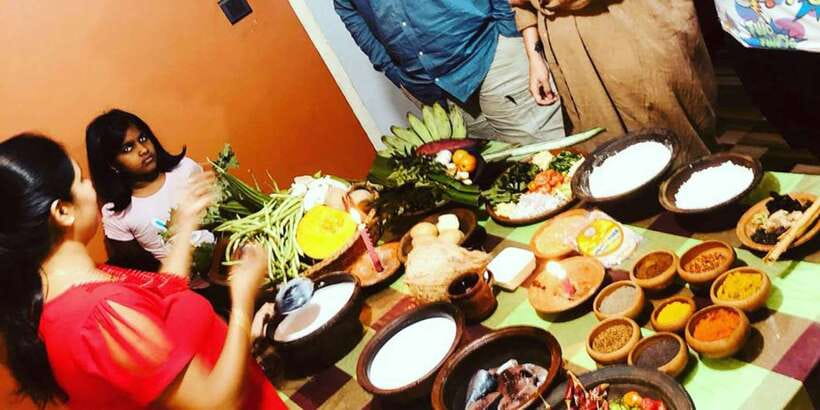
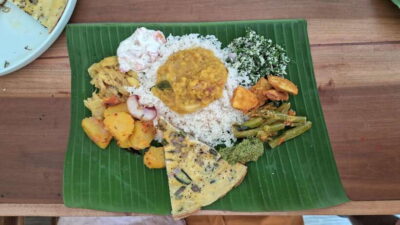
The meal is ambitious. You prepare ten vegetable dishes, fish or chicken, coconut sambol, and coconut roti. That is a lot of food for a three-hour class, and it explains why the session is part hands-on lesson and part family demonstration.
You season the dishes and take part in preparation, while the family completes some of the cooking so the meal can be served within the available time. This is important to understand before booking. You will not necessarily cook every dish from start to finish by yourself.
That is not a weakness in itself. Sri Lankan meals often include several curries and side dishes served together, so the broad menu shows how a full home meal is built. You learn the balance of different textures and flavors rather than focusing on one curry in isolation.
The number of dishes also makes the class good value for someone who wants a wide introduction to Sri Lankan food. You may cook eggplant and mushroom curry, among other preparations, and you can ask questions as the family works through the meal.
A smaller menu would give you more time to repeat each technique. This menu gives you more variety. If your priority is to master one recipe in exact detail, say so at the start. If your priority is to understand a full Sri Lankan table, the large menu works in your favor.
Coconut sambol on a century-old stone
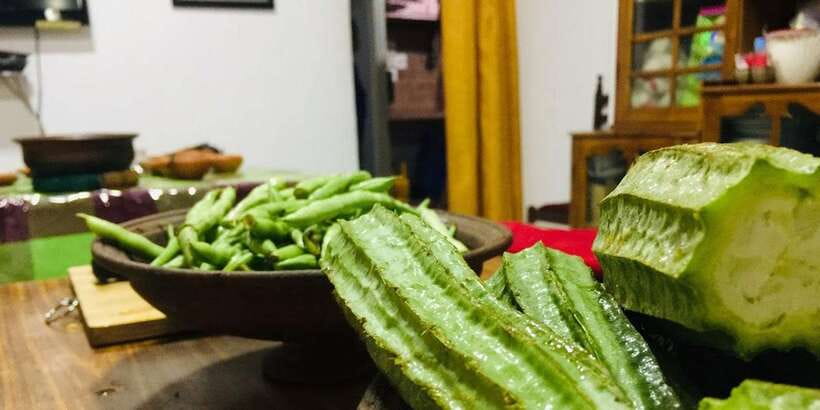
The coconut sambol preparation is one of the most memorable details of the class. The family uses a stone board said to be about 100 years old, rather than relying only on modern kitchen equipment.
That old tool is not just a photo opportunity. It shows how ingredients were traditionally ground and mixed in a Sri Lankan home. The texture produced by a stone surface is part of the lesson, and it gives the preparation a physical link to the family’s own cooking practice.
Coconut sambol is also a useful introduction to Sri Lankan flavor balance. It is served as a sharp, fresh companion to rice, curries, or roti. Making it yourself helps you understand how a small side dish can change the feel of a larger meal.
Bring your camera if you like documenting food and tools, but remember that this is a working family kitchen. Ask before photographing people, especially the children who may join the class.
More cooking classes around Sri Lanka:
- Ella: Traditional Sri Lankan Cooking Class
★ 4.9 · 788 reviews - Organic cooking class sigiriya (kumara & family)
★ 5.0 · 650 reviews - Sri Lanka Cooking Class with Granny
★ 5.0 · 587 reviews - Kandy Village Cooking Class
★ 5.0 · 536 reviews
From coconut roti to the final meal
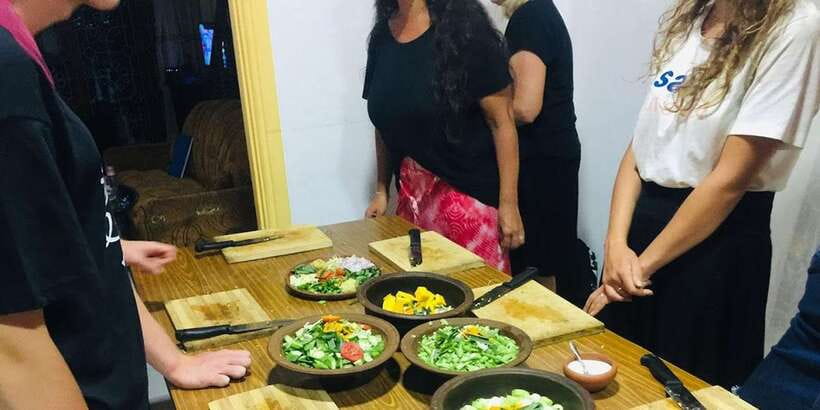
Coconut roti adds a welcome change of pace to the curry-heavy menu. The class includes instruction in making it, along with the curries and sambol.
The meal at the end is not a small tasting plate. The portions are generous enough that you should arrive hungry. One useful tip is to avoid scheduling a large lunch immediately beforehand. You will want room for the many vegetable dishes, the fish or chicken, the sambol, and the roti.
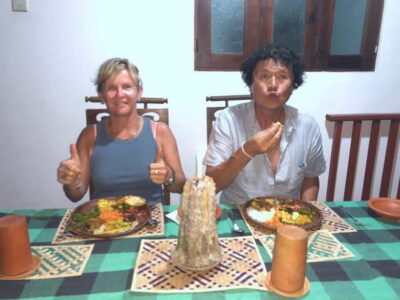
The final meal is where the separate lessons come together. You can taste how the vegetable dishes work alongside one another and compare the main ingredient you selected. The meal also gives you time to talk with the family without standing over a hot pan.
I like this shared ending because it keeps the class tied to everyday home cooking. You do not simply prepare food and leave it on a counter. You sit down to eat what the family helped you make.
What the family teaching style is like
The hosts are the wife, sister, and mother of the family, rather than a hired chef brought in for the class. That distinction shapes the whole experience.
The women cook traditional food regularly, and the class draws on that daily practice. You can ask about spices, methods, and family cooking habits while the dishes are being prepared. The presence of several family members also means the lesson can feel more like being shown around a household kitchen than attending a formal course.
The family has been described as kind, welcoming, and fun, and the hosts make room for questions. Dinesha also handles the market visit and communication around the class.
The informal setting has limits. You may not receive exact professional measurements for every ingredient, and the pace can depend on how much food is being prepared. Still, you receive the recipes at the end, which gives you a useful record for trying the dishes at home.
Price, group size, and what you receive
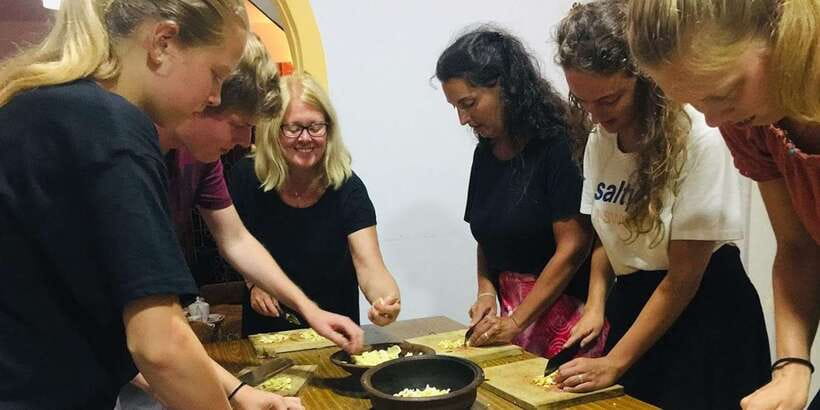
The price is $99 for a group of up to two people. For a pair, that works out to $49.50 each, before considering the included meal, water bottles, instruction, recipes, and possible hotel transport around Kandy town.
The small group is a major part of the value. You are not sharing a cooking bench with a large class, and you have direct access to the family while the food is being prepared. A couple or two friends can ask questions without competing for attention.
The price also covers a substantial meal rather than a single dish. Ten vegetable dishes plus fish or chicken, sambol, and roti is a wide spread. The included pickup and drop-off around Kandy town add value if you do not want to arrange local transport separately.
Pickup is not described as covering every place outside Kandy town, so check your hotel location when booking. You should wait in your hotel lobby ten minutes before the scheduled pickup time if transport has been arranged.
Who will enjoy this class most
I would choose this for you if you want direct contact with a Sri Lankan family and care more about home cooking than polished presentation.
It suits:
- Couples and friends who want a private activity for two
- People who enjoy tasting many dishes in one meal
- Visitors who want market context as well as cooking instruction
- Anyone interested in family life and traditional kitchen tools
- Diners who want recipes to recreate the meal at home
It is less ideal for you if you need a wheelchair-accessible activity. The experience is not suitable for wheelchair users.
It may also be a weaker match if you want a chef-led class where you personally prepare every dish from beginning to end. Because the menu is so large, the family does some of the cooking to keep the meal on schedule.
Practical planning for the three-hour visit
Allow three hours for the class itself. Starting times depend on availability, so choose a slot that leaves you time to eat afterward without rushing to another appointment.
Wear clothes that can handle kitchen work and bring a change of clothes, as well as a camera, cash, and a charged smartphone. The activity information specifically recommends those items.
Ask in advance about your main dish. You can choose fish or chicken, and it is sensible to confirm your preference when arranging the booking. If you have dietary needs, ask before the visit, since the listed menu centers on vegetable dishes, fish or chicken, coconut sambol, and roti.
The class is conducted in English. Pets are not allowed, although assistance dogs are allowed.
Cancellation is flexible up to 24 hours before the activity for a full refund, and you can reserve now and pay later. Those policies are useful if your Kandy schedule is still changing.
How this compares with a standard cooking school
A conventional cooking school often gives you a clean workstation, a fixed lesson plan, and a smaller number of recipes. This class takes the opposite approach.
You get a home kitchen, several family teachers, and a full meal with many components. The result is less about perfect technique and more about seeing how Sri Lankan food is prepared and served in a real household.
The market option adds another layer. You can learn what the ingredients look like before they are chopped and cooked. The 100-year-old sambol stone adds a traditional object you are unlikely to encounter in a modern cooking studio.
The compromise is structure. The family may prepare parts of the meal while you work on others, and the exact flow may change with the menu and the household. I would see that as part of the character, but you should know what you are booking.
Should you book The Best Kandy Kitchen?
Book it if your ideal Kandy afternoon or evening includes a local family, a market visit, a large home-cooked meal, and plenty of chances to ask questions. The small group size, optional pickup, recipes, and unusually broad menu make the $99 price reasonable for two people.
The strongest reasons to go are the family setting, the market and spice lessons, and the old sambol stone. The main caution is that you will not personally complete every dish from start to finish, because ten vegetable dishes plus sides is too much for a short class.
For an informal, food-focused look at daily life near Kandy, I would make this a strong choice. Go hungry, confirm the market visit and your fish or chicken preference, and leave room for dinner.
FAQ
Where does the cooking class take place?
The class takes place inside a traditional family home near Kandy city center and close to the large Buddha statue at Bahirawakanda Mountain.
How long does the class last?
The cooking class lasts three hours.
How many people can join?
The price covers a group of up to two participants, and the activity is described as a small-group experience.
What food is included?
The menu includes ten types of vegetable dishes, fish or chicken according to your choice, coconut sambol, and coconut roti. Water bottles are also included.
Can I visit a local market?
Yes. If you want a market visit, the family can guide you through a local market and explain the spices and vegetables.
Is hotel pickup available?
Pickup and drop-off can be arranged around Kandy town. You should provide your pickup details when confirming the booking and wait in the hotel lobby ten minutes before the scheduled pickup time.
What language is used during the class?
The class is conducted in English.
Is the activity suitable for wheelchair users?
No. The activity is not suitable for wheelchair users.
New cooking classes around Sri Lanka
- Private Traditional Sri Lankan Cooking Class in Kandy★ 5.0 · 7 reviews
- Private cooking class – Personalized classic menu★ 5.0 · 5 reviews
- Nilaveli: Sri Lankan Cooking Class with a Local Family★ 5.0 · 16 reviews
- Mirissa: Cooking Class with Beer and Meal★ 3.3 · 4 reviews
- Kandy Cooking Class with Granny★ 4.9 · 95 reviews
- Kandy: Village Cooking Class 12 Dishes with Market Tour★ 5.0 · 6 reviews
- Hands-On Cooking Class in Anuradhapura: Cook Like a Local★ 5.0 · 5 reviews
- Galle: Traditional Sri Lankan Cooking Class★ 5.0 · 21 reviews
Kandy Cooking Classes, side by side.
Private Traditional Sri Lankan Cooking Class in Kandy with Hotel Transfers
Read our review →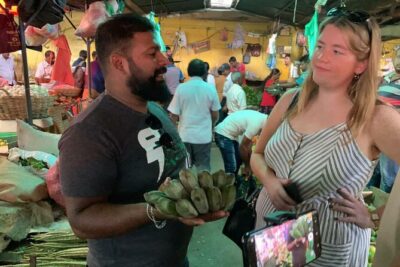
Kandy: Village Cooking Class 12 Dishes with Market Tour
Read our review →This kitchen also appears in