
Review · KANDY
Kandy Village Cooking Class
The best part of this Kandy experience happens before the cooking begins. At the central market, Shyama helps you choose five vegetables, explains unfamiliar spices, and lets you select chicken or fish. Then you head to her family’s village kitchen to turn those ingredients into a full Sri Lankan meal.
I like the market-to-table format and the chance to cook in a traditional outdoor kitchen rather than a polished hotel classroom. I also like the personal scale: solo visitors, couples, families, and groups of up to 15 can join. The main thing to clarify is transport home, since pickup is offered but some arrangements require you to organize or pay for the return.
Key points
- Choose your ingredients at Kandy Municipal Central Market, including five vegetables and either chicken or fish.
- Cook a large spread of Sri Lankan dishes, with past classes producing about eight to 11 dishes, depending on the group and choices.
- Learn from Shyama and her family in a village kitchen surrounded by countryside.
- Expect hands-on work, including spice preparation, curry cooking, and coconut milk made from scratch.
- Suitable for solo visitors and groups, with a maximum of 15 people.
- Budget-friendly at $25 per person, especially if you value both a meal and a cultural activity.
Starting with Sri Lankan Ingredients at Kandy Market
The experience begins at Kandy Municipal Central Market, at 144 Central Market, Kandy 20000. This is not just a quick shopping stop. It gives you a useful introduction to the ingredients that shape Sri Lankan cooking.
You will select five vegetables from the market’s range, then choose either chicken or fish. Shyama explains the spices and other ingredients as you move through the stalls. This is a good way to learn how local cooks think about a meal, since you are not simply handed a prewritten menu and told to follow instructions.
I especially like this part for first-time visitors to Sri Lanka. Vegetables, curry leaves, coconut, and spices can look familiar in a market, but their uses are not always obvious. Seeing the ingredients in their everyday setting helps connect the finished meal with ordinary life in Kandy.
The market also adds some movement and local contact to the day. You can ask questions, see the produce before it is prepared, and understand why the finished dishes taste so different from a standard restaurant curry. If you prefer a quiet, tightly controlled cooking lesson, the market can feel less structured. For most people, that is exactly what makes it worthwhile.
More cooking classes around Sri Lanka:
- Ella: Traditional Sri Lankan Cooking Class
★ 4.9 · 788 reviews - Organic cooking class sigiriya (kumara & family)
★ 5.0 · 650 reviews - Sri Lanka Cooking Class with Granny
★ 5.0 · 587 reviews
From Kandy City to a Village Kitchen
After the market visit, you return to the village for the cooking session. The village is described as being outside central Kandy, with one account placing the house about 10 kilometers from the city. Pickup is offered from a designated point, and some arrangements include hotel pickup before the market visit.
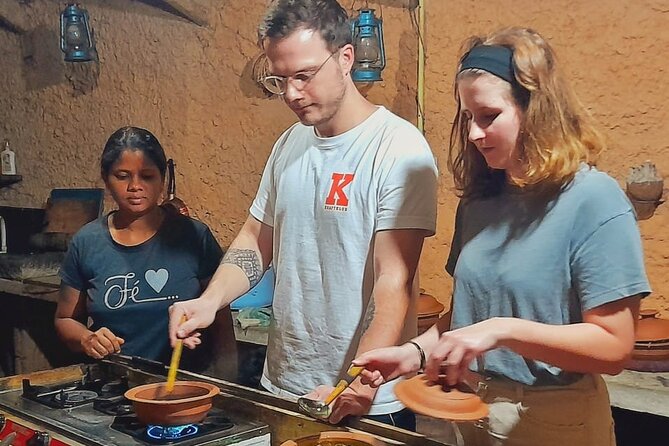
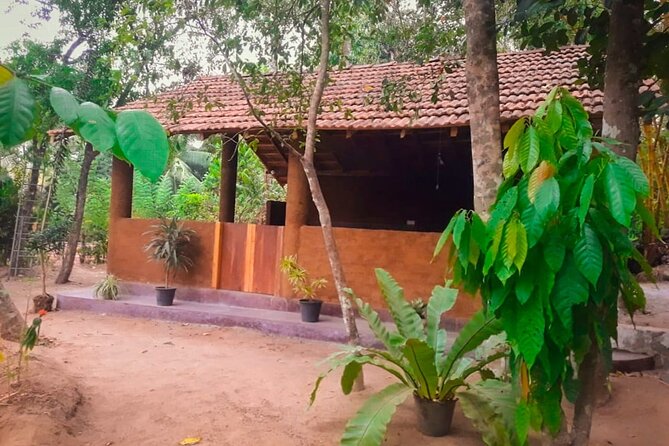
The cooking takes place at a traditional kitchen next to the family home. Descriptions of the setting include a clay house, a countryside location, and a kitchen surrounded by tropical vegetation. You are not cooking in a restaurant demonstration space. You are working in a family setting where the kitchen itself is part of the lesson.
That matters because Sri Lankan cooking depends on method as much as ingredients. You will see how spices, vegetables, coconut, and curry components are handled in a real home-style setting. The class is designed to keep you involved, rather than having you watch while someone else does the work.
The setting also makes this more than a standard cooking class. A brief visit to a nearby village is included, giving you a look at local life outside central Kandy. The visit is short, so do not book this expecting a full village tour. Think of it as a useful extra attached to the meal and cooking lesson.
Preparing Eight to Eleven Sri Lankan Dishes
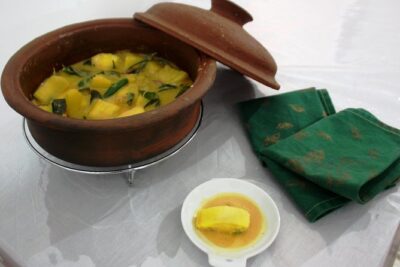
The exact number of dishes depends on the group, but the experience can produce a surprisingly large meal. Different sessions have included eight, nine, and about 11 dishes. Participants have prepared several curries, rice, sambal, vegetable dishes, chicken or fish, and a sweet finish such as caramel pancakes with coconut.
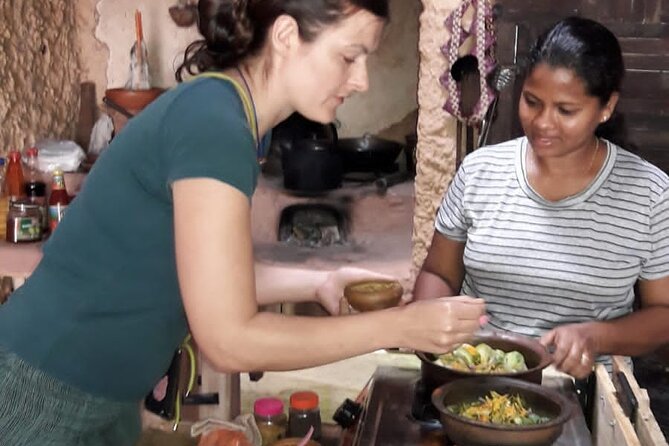
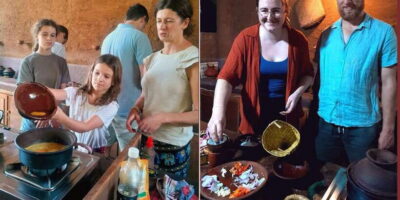
You will work through the recipes with Shyama’s guidance. The focus is practical. You handle ingredients, follow the cooking steps, and learn how the separate dishes come together into a Sri Lankan rice-and-curry meal.
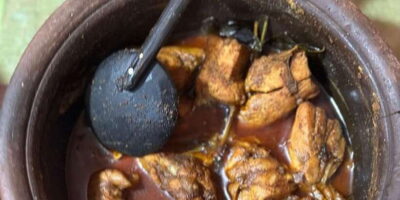
Some of the most frequently praised dishes include sambal, aubergine curry, and chicken curry. Those details are useful because they show the class is not limited to one basic curry. You are likely to build a varied plate with different textures and levels of spice.
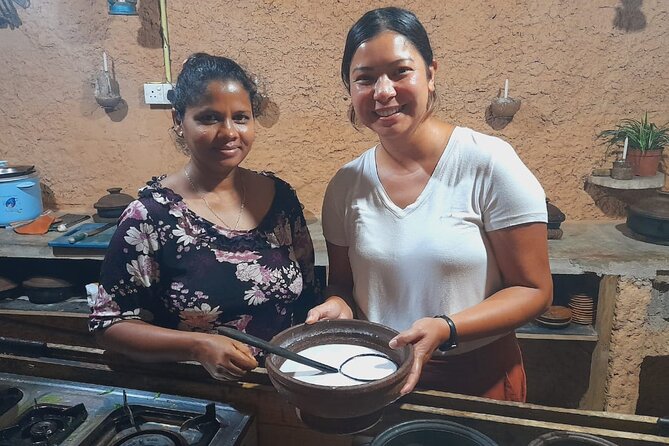
One particularly useful skill is learning how to make coconut milk from scratch. Coconut is central to many Sri Lankan dishes, and this step helps explain the creamy texture and gentle sweetness found in local curries. You also get instruction on herbs and spices, not just a list of ingredients to take home.
The recipes are provided so you can try the dishes again. That gives the $25 price more value than a meal alone. You are paying for the market visit, instruction, food, and a recipe collection you can use after returning home.
Eating the Meal You Helped Prepare
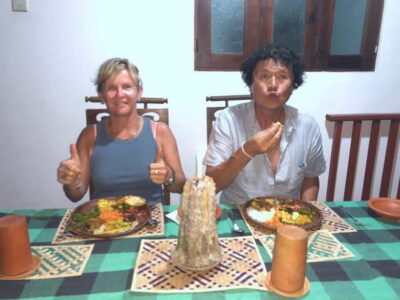
At the end, you sit down and eat the food prepared during the class. This is a generous meal rather than a token tasting, with several curries and side dishes served together.
I like this format because the meal gives you a clear sense of how each technique affected the final result. You have seen the raw vegetables, worked with the spices, and watched the dishes develop. By the time you eat, the food has a story and a sequence behind it.
The meal can also be adapted to some preferences. You choose chicken or fish at the market, and the class asks about preferences during the cooking process. Still, you should raise dietary needs before booking. One person with celiac disease was accommodated by removing ingredients such as soy sauce, mustard, papadam, and pancakes, but there were no special gluten-free options provided.
That is a useful warning. The class may be able to adjust some dishes, but you should not assume that every dietary restriction can be handled safely. Ask in advance and explain exactly what you cannot eat.
Same kitchen, a different dish:
- Sea waves sri lankan cooking class
★ 5.0 · 467 reviews - Ella: Sri Lankan Cooking Class with Neranji at Homestay
★ 5.0 · 276 reviews - Cook with Wasantha
★ 5.0 · 248 reviews - Ella : Cooking class with amazing Spice Garden Tour
★ 5.0 · 239 reviews
What the Kandy Stops Mean for Your Day
Several Kandy points are associated with the broader activity information: Kandy City Center, Kandy Lake, Kandy View Point, Kandy Lake Club’s cultural dance show, Kandy District, Kandy, and the Temple of the Sacred Tooth Relic.
These places help identify the wider Kandy setting, but the core cooking experience is the market and village kitchen. Do not assume you will receive a full sightseeing tour of every named landmark during the three-hour class. If you want time at the Temple of the Sacred Tooth Relic, Kandy Lake, or the viewpoint, plan those separately.
Kandy City Center and the central market are useful reference points for arranging your day. Kandy Lake is a natural stop to combine with other sightseeing, while the cultural dance show and Temple of the Sacred Tooth Relic are separate attractions worth treating as their own visits. The cooking class works best as one focused activity in a larger Kandy schedule.
This distinction matters because the class already has a full rhythm: market shopping, transport to the village, preparation, cooking, eating, and a short look at village life. Trying to add several major sights around it could make the day rushed.
The Price: Strong Value at $25
At $25 per person, this is inexpensive for a roughly three-hour experience that includes a market visit, ingredients, instruction, a substantial meal, and a village visit. I would consider it one of the better-value food activities in Kandy, especially if you want more than a restaurant meal.
The value improves for families and small groups. Children, parents, and grandparents can take part together, and the maximum group size is 15. A larger group may feel less personal than a private lesson, but the family kitchen and hands-on format help keep it social.
The price does not necessarily cover every transport arrangement. Pickup is offered, but the meeting point is the Kandy Municipal Central Market, and the activity ends back at the meeting point according to the stated details. Some booking arrangements require you to pay for or find your own way back from the village.
Before confirming, ask three simple questions: where exactly will pickup happen, is transport to the village included, and how will you return to Kandy? This small check can prevent the one major surprise associated with the experience.
Who Will Enjoy This Cooking Class Most
This class suits you if you want to learn by doing. It is a good choice for solo visitors because the group format gives you an easy way to meet people, but it also works well for couples and families.
Food lovers will get the most from the market explanations and the chance to choose ingredients. You do not need advanced cooking skills. The lesson is built around guidance and participation, not professional technique.
It also suits anyone interested in everyday Sri Lankan life. The village kitchen, family welcome, market shopping, and shared meal offer more local contact than a class held inside a city hotel.
The class may be less suitable if you want a short demonstration with no preparation work. You should also think twice if you need a tightly controlled menu, have serious allergies, or dislike uncertain transport arrangements. Ask about dietary changes and the return journey before paying.
Service animals are allowed, and the meeting point is near public transportation. The group limit is 15 people. Confirmation is received at booking, and free cancellation is available up to 24 hours before the start time. Cancellations or changes made later are not refunded or accepted.
Small Details That Improve the Experience
Wear clothing you can cook in and expect to spend time moving between the market, village, and kitchen. The information provided does not give a formal dress code, so practical, comfortable clothing is the sensible choice.
Bring questions about spices and recipes. The class is at its best when you ask why a particular vegetable is used, how coconut milk changes a dish, or how to repeat the recipe at home.
If you are traveling alone, do not worry about joining as an individual. The experience accepts solo participants, and the shared cooking format gives the class a friendly social feel without requiring you to arrive with a group.
If you are booking for a large family, the maximum is 15 people. That is enough for a substantial family outing, but confirm how the group will be divided around the cooking space if everyone wants a hands-on turn.
Should You Book the Kandy Village Cooking Class?
I would book this if you want an affordable, practical introduction to Sri Lankan food with a genuine family setting. The strongest features are the market shopping, the large shared meal, the hands-on cooking, and the chance to learn from Shyama and her family in their village kitchen.
The main cautions are simple: the class can involve a large group, dietary adaptations need advance discussion, and return transport should be confirmed clearly. If those points work for you, $25 buys much more than a cooking demonstration. It gives you ingredients, instruction, lunch or dinner, recipes, and a closer look at daily life outside central Kandy.
FAQ
How much does the Kandy Village Cooking Class cost?
The experience costs $25 per person.
How long does the cooking class last?
The activity lasts approximately three hours.
Where does the experience begin?
It begins at Kandy Municipal Central Market, 144 Central Market, Kandy 20000, Sri Lanka.
Is hotel pickup available?
Pickup is offered from a designated point, and some arrangements include pickup from a hotel before the market visit. Confirm the exact pickup point when booking.
Where does the experience end?
The stated meeting details say the activity ends back at the meeting point.
How many people can join?
The activity accepts individuals, couples, and groups, with a maximum of 15 travelers.
What do you choose at the market?
You choose five vegetables from the market selection, along with either chicken or fish. The class also explains spices and other ingredients.
Are service animals allowed?
Yes. Service animals are allowed, and the meeting point is near public transportation.
What is the cancellation policy?
You can cancel at least 24 hours before the start time for a full refund. Cancellations or changes made less than 24 hours before the experience are not accepted for a refund.
New cooking classes around Sri Lanka
- Private Traditional Sri Lankan Cooking Class in Kandy★ 5.0 · 7 reviews
- Private cooking class – Personalized classic menu★ 5.0 · 5 reviews
- Nilaveli: Sri Lankan Cooking Class with a Local Family★ 5.0 · 16 reviews
- Mirissa: Cooking Class with Beer and Meal★ 3.3 · 4 reviews
- Kandy Cooking Class with Granny★ 4.9 · 95 reviews
- Kandy: Village Cooking Class 12 Dishes with Market Tour★ 5.0 · 6 reviews
- Hands-On Cooking Class in Anuradhapura: Cook Like a Local★ 5.0 · 5 reviews
- Galle: Traditional Sri Lankan Cooking Class★ 5.0 · 21 reviews
Kandy Cooking Classes, side by side.
Private Traditional Sri Lankan Cooking Class in Kandy with Hotel Transfers
Read our review →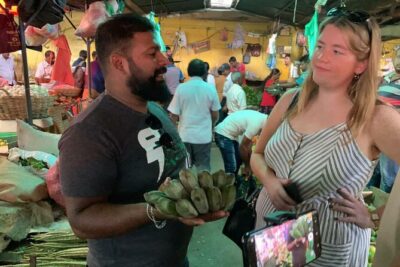
Authentic Sri Lankan Cooking Class in Kandy by Local Family
Read our review →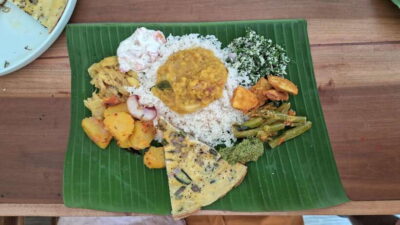
Kandy: Village Cooking Class 12 Dishes with Market Tour
Read our review →This kitchen also appears in