
Review · ISTANBUL
Authentic Turkish Cooking at a Local’s Home in Istanbul
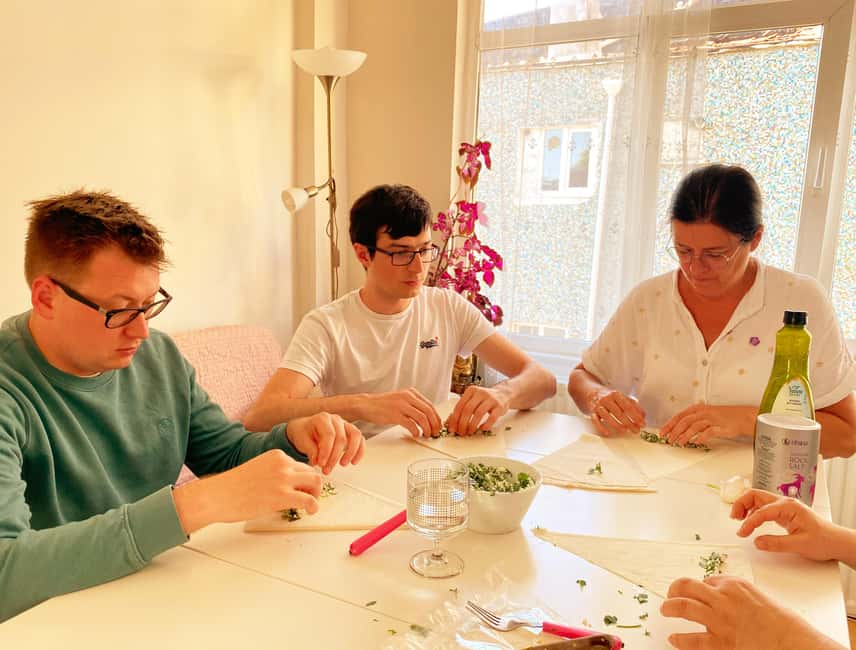
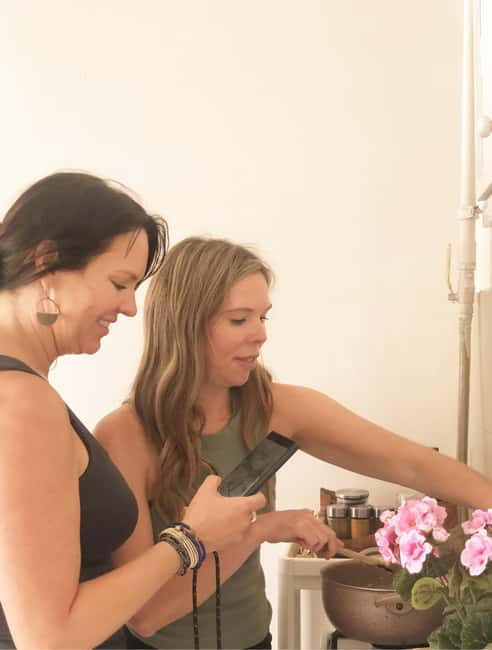
The best part of this Istanbul cooking class is the setting: you are not in a restaurant kitchen or a staged cultural center. You are welcomed into a local home by two sisters, starting with Turkish tea or coffee before preparing family-style dishes together. I especially like the small-group feel and the chance to learn how spices and simple ingredients work in Turkish home cooking.
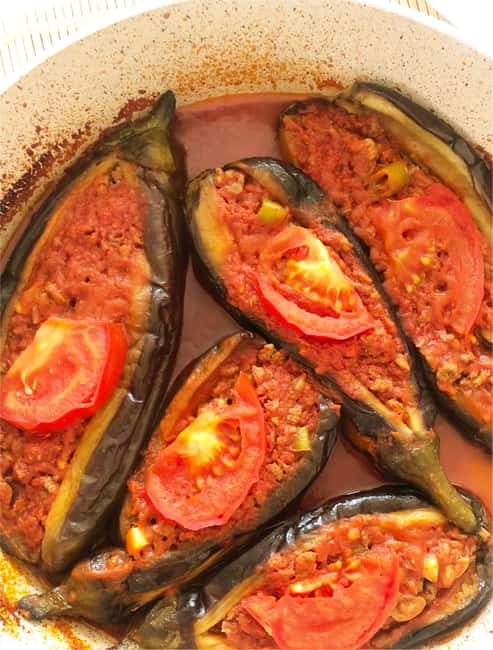
I also like that the menu can shift for dietary needs. Past menus have included vegetarian baba ghanoush, cacık, and patatesli köfte, while other sessions featured sarma, eggplant with meat, dolma, and pastries. The main drawback is location: the home is in Sarıyer, and getting there from central Istanbul can take about an hour or more, especially on the way back in traffic.
Key points to know before booking
- A real home kitchen: You cook with local hosts rather than simply watching a chef demonstrate.
- Özge and Asyu host the experience: The sisters welcome you with tea or coffee and share family cooking habits.
- The menu can be adjusted: Tell the hosts about allergies or dietary preferences after booking.
- Lunch or dinner depends on your start time: A 12 pm booking is lunch, while a 5 pm booking is dinner.
- Allow extra time for Sarıyer: Public transport is recommended because Istanbul traffic can be slow.
- Expect animal company: A friendly cat lives in the home, and some sessions have also included a dog named Penny.
Entering a local home in Sarıyer
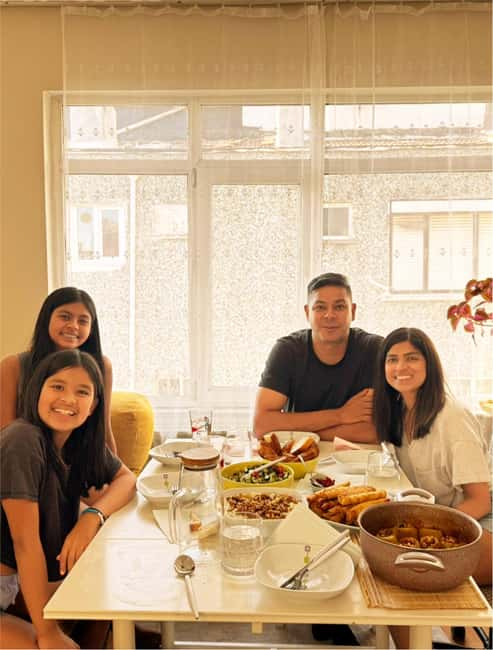
This is a cooking class, but it is also a social visit. The session begins with Turkish tea or coffee and a little conversation. That opening matters. Turkish hospitality often starts at the table, not with a formal introduction, and the relaxed start gives you time to settle in before handling ingredients.
The hosts are two sisters, with Özge named often in the guest feedback and Asyu mentioned in earlier accounts. The tone is informal and personal. You are not rushed from one cooking station to another. Instead, you prepare food together, ask questions, and hear about everyday Turkish food customs as you work.
The home setting also changes the rhythm of the meal. You may be learning how much seasoning to use, but you are also seeing how a family meal comes together. This is useful if you want more than a list of dishes to photograph. You leave with methods you can repeat at home.
A friendly cat shares the house. That will be a pleasant bonus for many people, but it matters if you have allergies or simply prefer a pet-free setting. The hosts invite you to ask about this in advance.
More Home Cooking Classes in the world:
- Khmer Cooking Class at a Local’s Home in Krong Siem Reap
★ 5.0 · 2,731 reviews - Porto: Pastel de Nata Cooking Class with Grandma’s Recipe
★ 5.0 · 1,565 reviews - Siem Reap: Khmer Cooking Class at a Local’s Home
★ 5.0 · 1,108 reviews
What you actually cook during the three hours
The advertised menu includes several familiar Turkish dishes, although the exact selection can vary with dietary requests and the hosts’ plans. The standard examples give you a good idea of the range.
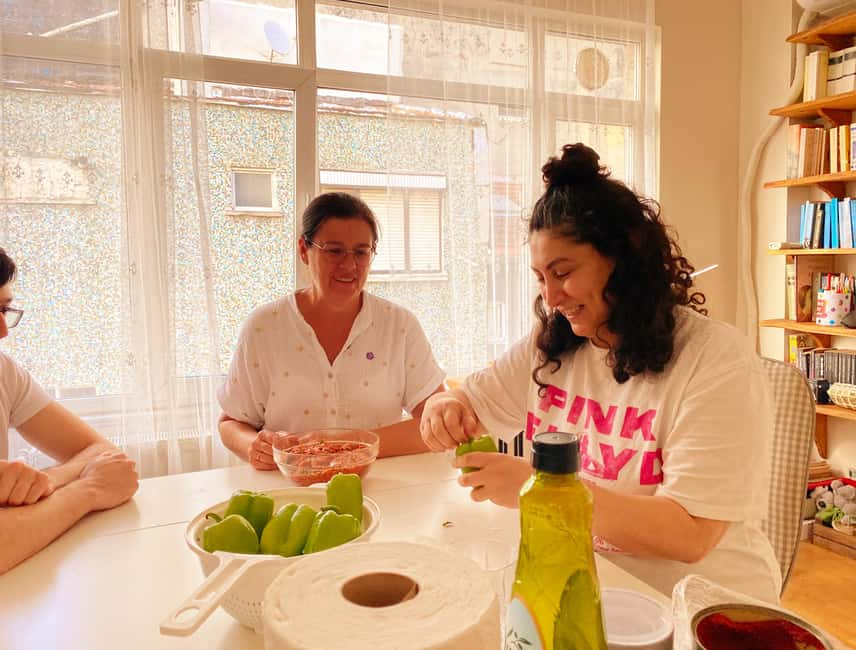
Dolma is made with peppers stuffed with meat, rice, vegetables, and spices. This is the sort of dish where technique matters as much as ingredients. You learn how the filling is balanced and how the vegetables are prepared before cooking.
Havuç tarator is a creamy carrot meze with garlic. It is simpler than dolma, but it shows an important part of Turkish eating: a meal is not just one large main course. Small vegetable and yogurt-based dishes add contrast, color, and texture to the table.
Sigara böreği are thin, crisp pastries filled with feta cheese and herbs. They are a good hands-on dish because you can help shape and prepare them before they are cooked. The result is familiar, practical food that works as a snack, side dish, or part of a larger spread.
The menu has also included sarma, eggplant and meat dishes, baba ghanoush, cacık, and patatesli köfte. Vegetarian cooking is not an afterthought here. One participant requested a fully vegetarian menu and prepared baba ghanoush, cacık, and potato köfte.
Do not expect a rigid cooking-school syllabus. The strength of this experience is its flexibility. If you want to learn a specific dish, ask about it before arrival. The hosts can tell you what is possible and adjust around allergies or dietary preferences.
The real lesson is in the seasoning
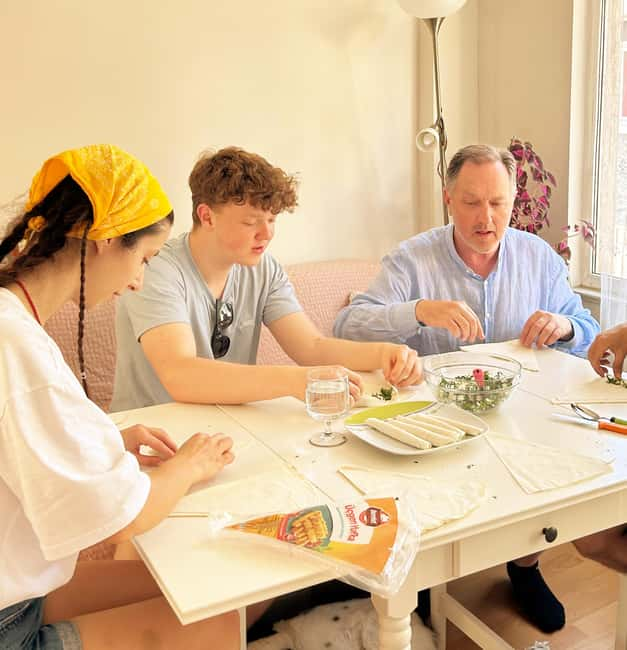
The most useful cooking insight is likely to come from the small explanations between steps. One particularly valuable part of the experience is learning how Turkish cooks combine spices and flavors without making every dish taste the same.
You may learn why garlic works differently in a yogurt meze than in a cooked vegetable dish, or how herbs and cheese give börek their character. The recipes use familiar ingredients, but the balance is what makes the food taste Turkish rather than generic Mediterranean food.
This is also why the class can be more useful than simply eating at a restaurant. At a restaurant, you enjoy the finished plate. Here, you can ask what went into it, how the texture was achieved, and what might be changed when you cook it in your own kitchen.
The food is home-style rather than theatrical. That is good news if you want practical recipes. You are learning dishes that fit into a family meal, not elaborate restaurant presentation.
Sitting down for the homemade feast
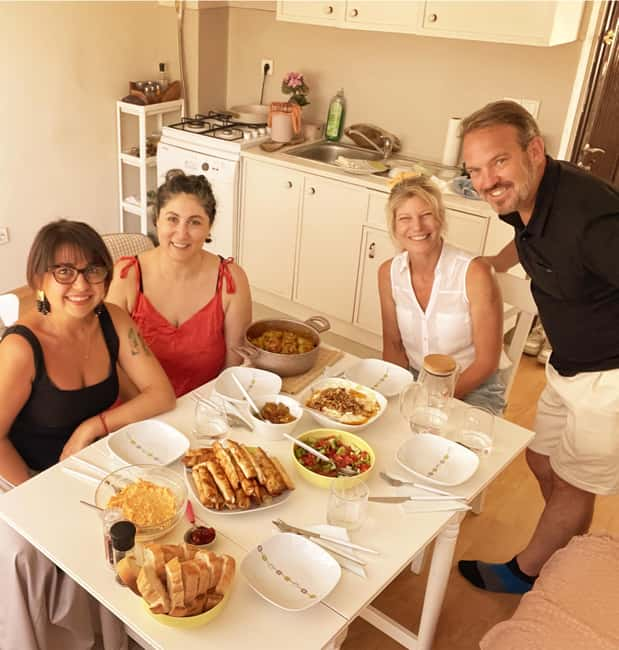
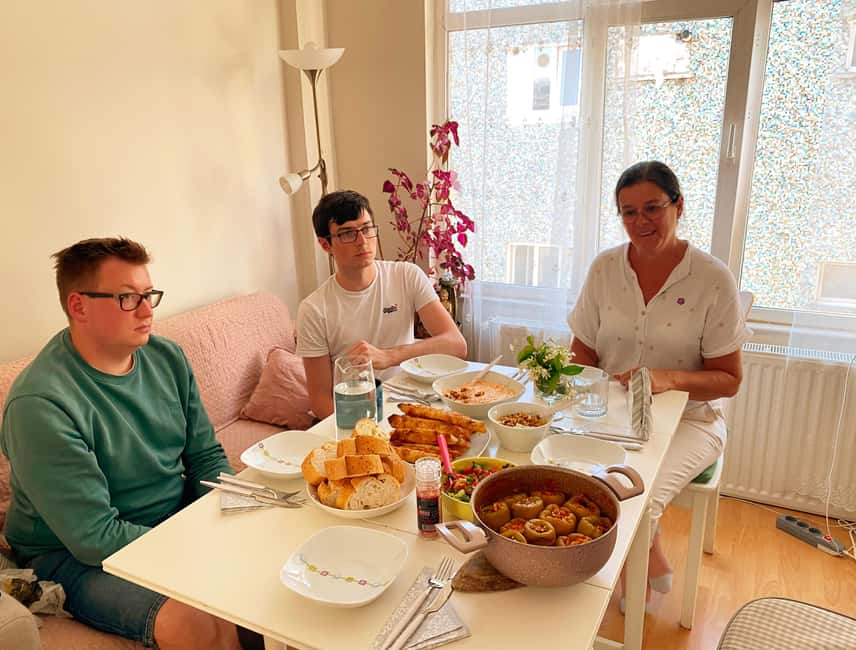
Once the cooking is finished, everyone sits down to eat. A 12 pm booking is served as lunch, while a 5 pm booking becomes dinner. The meal is included in the $84 price, along with tea or coffee.
This shared table is the heart of the experience. You have worked on the dishes, so the meal feels connected to the preparation. It also leaves room for conversation about Turkish customs, local life, family favorites, spice markets, and places to shop.
The social side has been one of the most praised features. The atmosphere is often described as cooking with a friend rather than attending a formal class. That makes this a good choice for solo visitors, couples, and small groups who want direct contact with local people.
The hosts have also shared extra information about Turkish eating habits and favorite family foods. Those details are easy to miss on a standard food tour, where the focus is usually on tasting several stops and moving on.
More cooking classes around the world:
- Half-Day Thai Cooking Class at Organic Farm in Chiang Mai
★ 5.0 · 19,087 reviews - Florence: Pasta Cooking Class with Unlimited Wine
★ 4.9 · 10,285 reviews - 3 in 1 Cooking Class near Navona: Fettuccine, Ravioli & Tiramisu
★ 5.0 · 7,376 reviews - Florence: Pasta & Tiramisu Cooking Class with Unlimited Wine
★ 4.9 · 6,708 reviews
Why the location matters
The address is in Huzur, in Istanbul’s Sarıyer district, at Oyak Sitesi No:21. This is not near Sultanahmet, the Grand Bazaar, Taksim, or Galata. The distance is the main practical issue, and you should plan around it rather than treating it as a quick side trip.
From the Old Town, take the T1 tram to Laleli, İstanbul Ü. Walk to Vezneciler, then take the M2 metro toward Hacıosman. At Sanayi Mahallesi, transfer toward Seyrantepe, exit at Otopark 3, and walk downhill for about 10 minutes.
From Taksim or Şişhane, take the M2 toward Hacıosman. Get off at Sanayi Mahallesi, transfer to Seyrantepe, use the Otopark 3 exit, and continue with the 10-minute downhill walk.
The instructions recommend public transport because traffic can be heavy. That advice is worth following. One person needed about an hour to reach the home from the central tourist areas in non-rush-hour traffic, then nearly two hours to return to Kadıköy during rush hour.
That travel time is the price of the personal setting. If you have only one free afternoon in Istanbul, consider the transit carefully. If you enjoy meeting locals and have room in your schedule, the trip becomes part of the experience rather than a nuisance.
Is $84 a fair price?
At $84 per person, this is not the cheapest way to eat in Istanbul. You can have a very good Turkish meal for much less. The price makes more sense when you count the three-hour class, the meal, drinks, private-home setting, and time with local hosts.
You are paying for instruction and conversation as much as for dinner. The value is strongest if you want to take the recipes home, understand Turkish food beyond restaurant menus, and enjoy a personal meeting with the people preparing it.
The private or small-group format helps justify the cost. You get more opportunity to ask questions and participate than you would in a large demonstration class. Still, you should not book this solely for a bargain meal. The cooking lesson and social connection are the main products.
The flexible menu also adds value for vegetarians and people with food restrictions. Tell the hosts your needs after booking, rather than waiting until you arrive. They can then plan dishes that work for you.
Who will enjoy this most?
I would choose this for someone who values food as a way to understand daily life. It suits you if you like cooking, asking questions, and sitting down for an unhurried meal with local people.
It is also a strong option for repeat visitors to Istanbul who have already seen the major sights. The experience gives you a different view of the city, one based in a residential home rather than a famous square or historic monument.
Vegetarians should consider it, especially if they contact the hosts ahead of time. A fully vegetarian session has included baba ghanoush, cacık, and potato köfte, showing that the menu can go well beyond the meat-filled dishes listed as examples.
Families and groups should ask about the exact format and group size. The activity is available for private or small groups, which can make the home setting more comfortable and personal.
This may be less suitable if you dislike pets, have severe allergies, or want a class in central Istanbul. It is also not ideal for a tightly packed sightseeing day. The transport time can be significant.
Timing, communication, and practical details
The activity lasts three hours. Choose noon for lunch or 5 pm for dinner. Since the class involves cooking and then eating together, give yourself enough time before any evening plans.
English and Turkish are available. The hosts can communicate in English, and the cooking itself gives you many visual ways to follow along.
Communication before the event appears to be the one weak point. One person found the messages leading up to the class confusing. I would confirm the meeting details, start time, menu, and dietary needs clearly after booking.
Free cancellation is available up to 24 hours before the experience for a full refund. You can also reserve and pay later, which helps if your Istanbul schedule is still shifting.
Should you book this Istanbul cooking class?
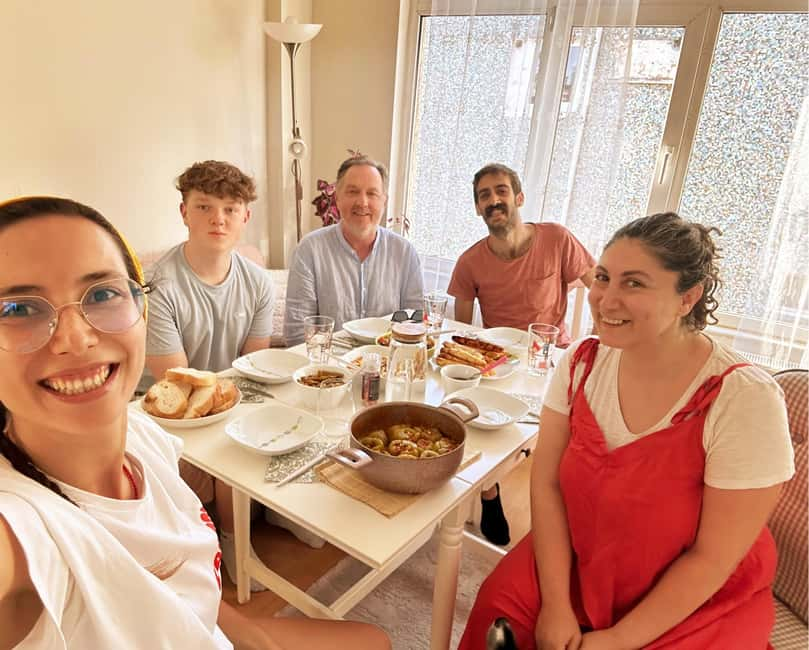
Book it if you want a personal food experience and do not mind traveling to Sarıyer. Özge and Asyu offer something more intimate than a standard cooking workshop: tea at home, family-style recipes, practical spice guidance, and a shared meal.
The strongest reasons to go are the warm hosting, the flexible menu, and the chance to learn dishes you can cook again. The main caution is the distance from the tourist center. Plan your transport carefully, avoid a rushed schedule, and confirm the menu in advance.
If those conditions suit you, this is a thoughtful way to spend three hours in Istanbul and leave with more than a full stomach. You may also leave with a recipe, a local connection, and a new reason to visit a Turkish market.
FAQ
Where does the Turkish cooking class take place?
The experience takes place in a local home at Huzur, Oyak Sitesi No:21, 34475 Sarıyer, Istanbul, Türkiye.
How long does the experience last?
The cooking class lasts three hours.
Is the activity lunch or dinner?
A booking at 12 pm is held as lunch. A booking at 5 pm is held as dinner.
What food might I learn to prepare?
Example dishes include dolma, havuç tarator, and sigara böreği. Other sessions have included sarma, baba ghanoush, cacık, patatesli köfte, and eggplant with meat.
Can dietary restrictions be accommodated?
Yes. You should tell the hosts about allergies or dietary preferences after booking so the menu can be adjusted.
How do I reach the home from central Istanbul?
From the Old Town, take the T1 tram to Laleli, İstanbul Ü, walk to Vezneciler, and take the M2 toward Hacıosman. From Taksim or Şişhane, take the M2 toward Hacıosman. In both cases, transfer at Sanayi Mahallesi toward Seyrantepe, exit at Otopark 3, and walk downhill for about 10 minutes.
Are pets present in the home?
Yes. The home has a friendly cat. Some sessions have also included a dog named Penny, so ask the hosts in advance if you have concerns about pets.
New cooking classes around the world
- Shinjuku Tokyo: Authentic Japanese Home-Style Culinary Class★ 4.9 · 125 reviews
- Shibuya Tokyo: Onigiri & Tamagoyaki Cooking Class★ 5.0 · 4 reviews
- M.O.M COOKING CLASS★ 4.8 · 6 reviews
- Seville: Paella-Cooking Experience with Sangria & Full Meal★ 4.9 · 42 reviews
- Shanghai: Authentic Chinese Cooking Class with Master Chef★ 5.0 · 2 reviews
- Sestri Levante: Pesto & Cooking Classes, Wine Tasting★ 4.9 · 56 reviews
- Seville: Paella Cooking Class & 30-Min Local Expert Q&A★ 4.8 · 37 reviews
- Seoul: Korean Kimchi Cooking Class in the Heart of the City★ 5.0 · 3 reviews
Istanbul Cooking Classes, side by side.
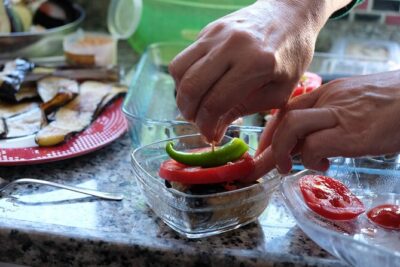
Private Turkish Cuisine Cooking Class with Local Moms
Read our review →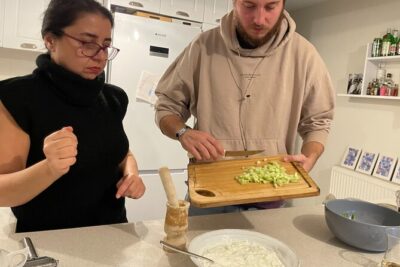
Traditional Home Cooking with a Local in İstanbul City Center
Read our review →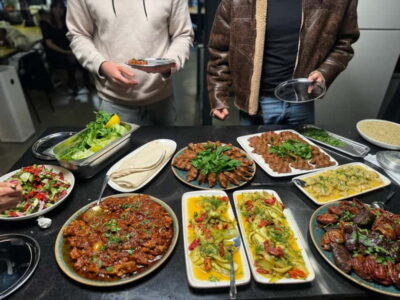
Istanbul: Turkish Cooking Class with a Professional Chef
Read our review →
Istanbul: Vegan/Vegetarian Cooking Class with Locals at Home
Read our review →
Authentic Turkish Breakfast Cooking at Home with Locals
Read our review →
Istanbul: Turkish Baklava Cooking Class with a Local Host
Read our review →
Istanbul: Traditional Cooking Class with a Local Mom
Read our review →This kitchen also appears in