Review · UBUD
Jambangan bali cooking class with morning market tour
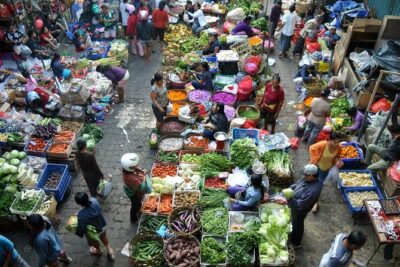
Jambangan Bali Cooking Class begins where good cooking should: at the market, choosing fresh herbs, spices, vegetables, and meat before you sit down with a knife. The morning continues through Kelabang Moding village, rice fields, a family home, and a working kitchen, so you see how food fits into daily Balinese life.
I like two things right away. First, you do the shopping instead of simply finding ingredients already measured in bowls. Second, the class includes small cultural moments, such as making a daily offering and seeing coconut oil processed. The main consideration is the early start and the five-hour schedule, which may feel long if you want a quick demonstration rather than a full morning.
Key points to know
- Morning market visit: Choose ingredients for the meal and see the day begin with local produce, herbs, spices, and meat.
- Putu and his family: The class takes place at a Balinese home, with English instruction and a personal look at family life.
- Beyond the kitchen: Visit rice fields, see farmers at work, and pass village temples and a school.
- Hands-on cooking: You prepare every recipe using traditional Balinese methods, then eat the results.
- Useful take-home value: Your recipes and a certificate come with the class, making it easier to repeat the dishes at home.
- Good price for a full morning: At $27 per person, the combination of transport, market visit, cultural activities, cooking, and lunch or dinner offers strong value.
A market start that puts the food in context
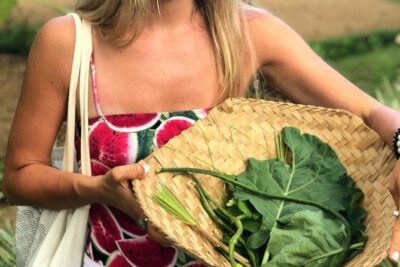
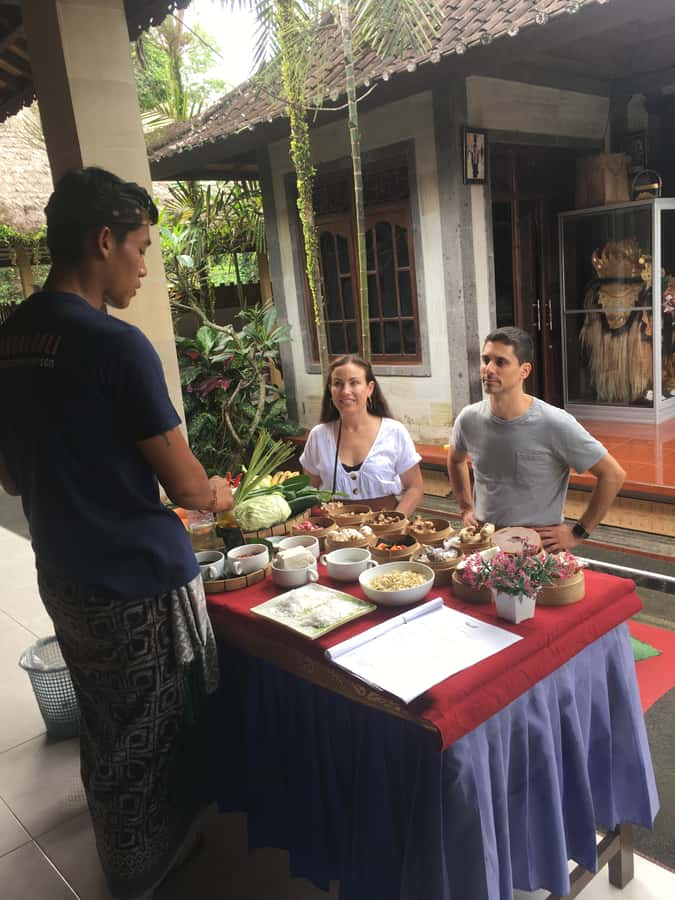
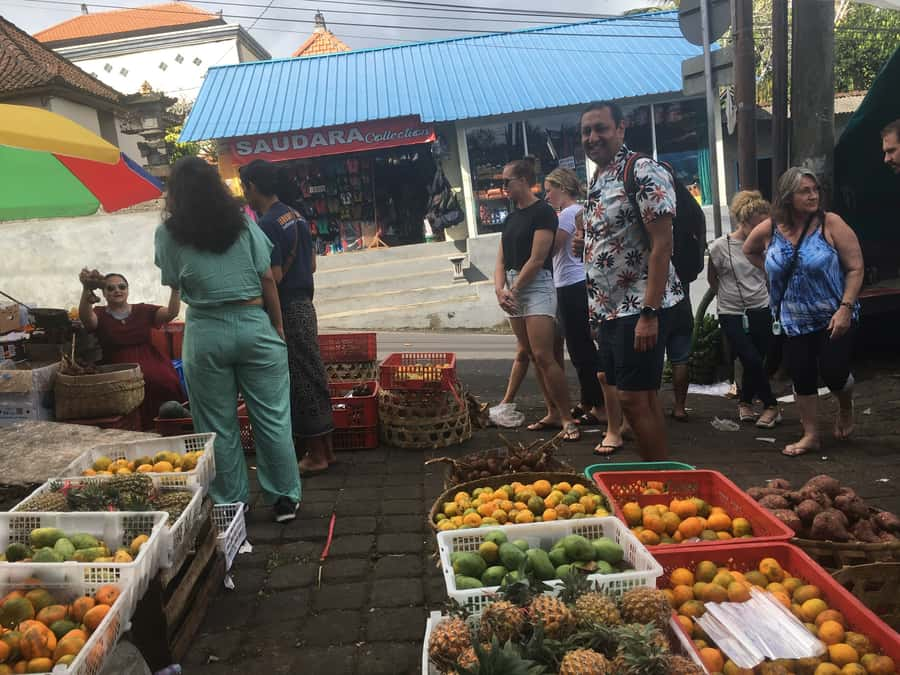
The morning class starts at a local market, not at a polished cooking studio. That matters. Before you cook, you get to see the ingredients as people buy and use them in everyday life.
You can choose fresh herbs and spices, crisp vegetables, and cuts of meat for the meal. The exact dishes are not specified, so you should book this for the market-to-table process rather than for one particular recipe.
This part also gives you a useful introduction to Balinese flavor. Instead of treating spices as anonymous ingredients in a recipe packet, you handle them before learning how they work together. You can ask questions in English and connect the finished dish with what you saw earlier that morning.
The market visit is included only with the morning class. If you want this part, check the starting time carefully when booking. The activity lasts 270 minutes, or four and a half hours, so allow a good portion of your morning and early afternoon.
More Cooking Classes with a Market Tour in Indonesia
- Ubud: Cooking Class with Transfers and Optional Market Visit
★ 4.9 · 824 reviews - Balinese Ubud cooking school (9 Dish Cooking and Market Tour)
★ 5.0 · 540 reviews - Ubud: Balinese Cooking Class and Market Tour
★ 4.8 · 531 reviews
Rice fields and village life in Kelabang Moding
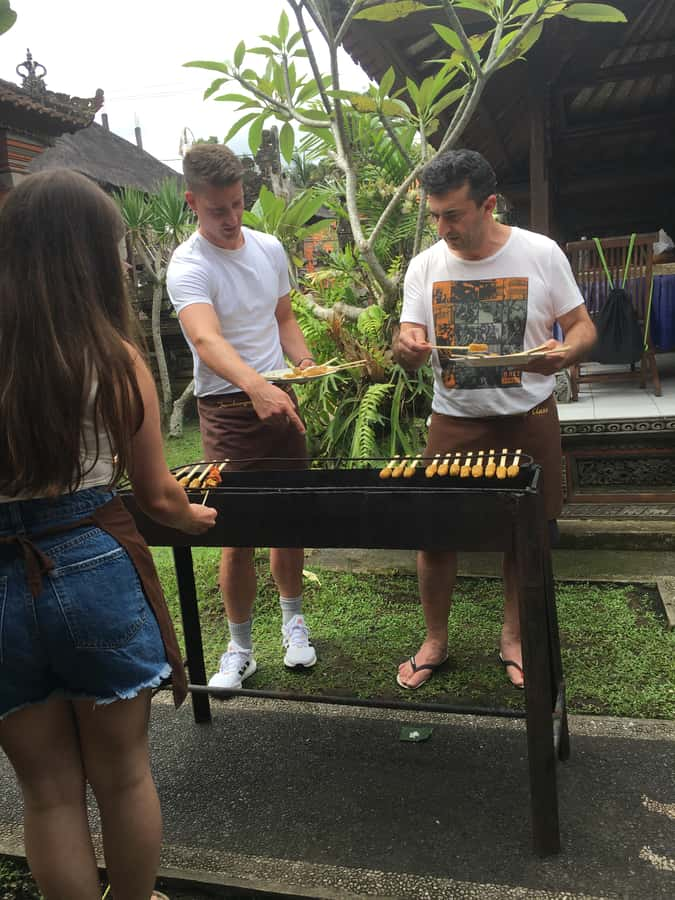
After the market, the day moves back to Kelabang Moding village. The route includes rice fields, where you can see farmers carrying out their daily activities and speak with local farmers.
This is a useful pause between shopping and cooking. Rice is central to Balinese food and culture, and seeing the work behind it gives your lunch more meaning. You are not only learning how to prepare food. You are seeing part of the system that supplies the table.
You also pass village temples, a school, and ordinary homes. The point is not grand sightseeing. It is a look at the setting where local families live, worship, work, and raise children.
Keep your expectations practical. This is a cooking class with village visits, not a dedicated farm tour or a long guided walk through the countryside. The supplied details do not give a walking distance or specific time at each stop, so comfortable footwear is sensible, but do not expect a tightly scripted sightseeing circuit.
Entering a Balinese family home
The class takes place in a Balinese home, which gives the day a more personal feel than a commercial kitchen. You are welcomed into the house and shown something of Balinese family life before the cooking begins.
That setting is one of the strongest reasons to choose this activity. A kitchen in a family home helps explain how food, hospitality, and household traditions connect. The home is described as having a pleasant garden setting, and the cooking is carried out there rather than in an anonymous classroom.
Putu and his family welcome the group, and the teaching is in English. The information provided identifies Putu but does not list the names of other cooks, so you should not expect a large team of celebrity chefs. The appeal is the family connection and the chance to ask about local customs in a relaxed setting.
A small group atmosphere has been noted, which should make it easier to follow the steps and receive help. Group size is not fixed in the available details, so ask the operator directly if that is important to you.
Coconut oil and the daily offering
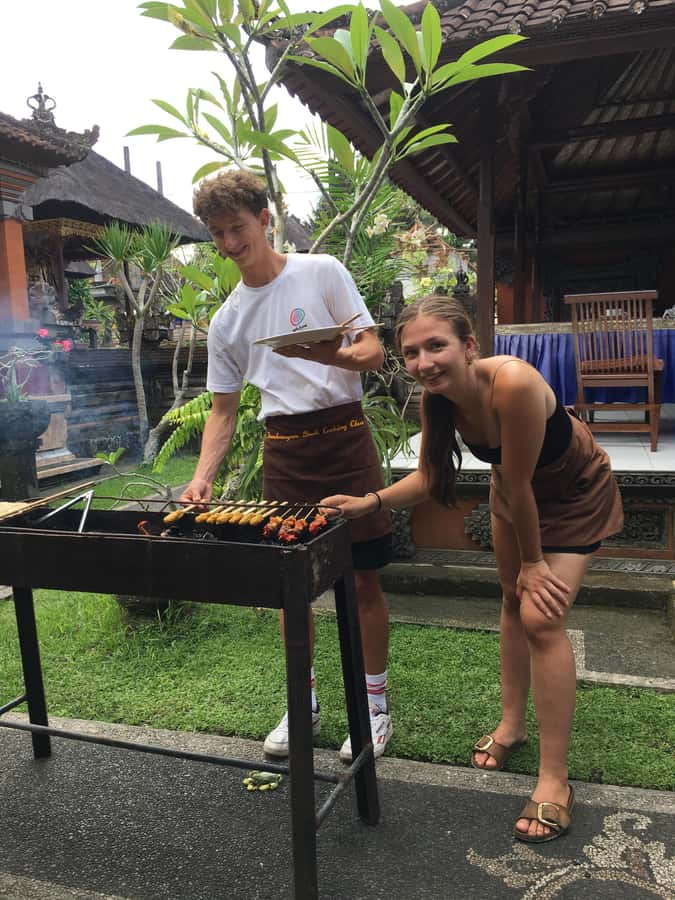
The cultural activities are short but worthwhile. You see coconut oil processing, which connects a familiar cooking ingredient to the work needed to produce it. This is the sort of detail that can disappear when you only eat in restaurants.
You also make a daily offering. Offerings are part of routine Balinese religious life, and making one gives you a simple hands-on way to learn about that practice. It is not just a talk from a guide. You take part.
These activities help break up the cooking lesson and give you a clearer sense of the culture around the food. They also make this class different from a standard recipe session where the cultural explanation is limited to a few words about spices.
At the same time, the experience is designed for participation, not an academic study of Balinese religion or agriculture. If you want detailed background on every ritual, this may feel light. If you want a respectful introduction that fits into a food-focused day, the balance works well.
More Cooking Classes with a Market Tour in Ubud
- Balinese Cooking class with traditional morning market visit
★ 5.0 · 161 reviews - Balinese cooking class/Go shopping at the market, cook, eat
★ 5.0 · 12 reviews
Preparing traditional Balinese dishes by hand
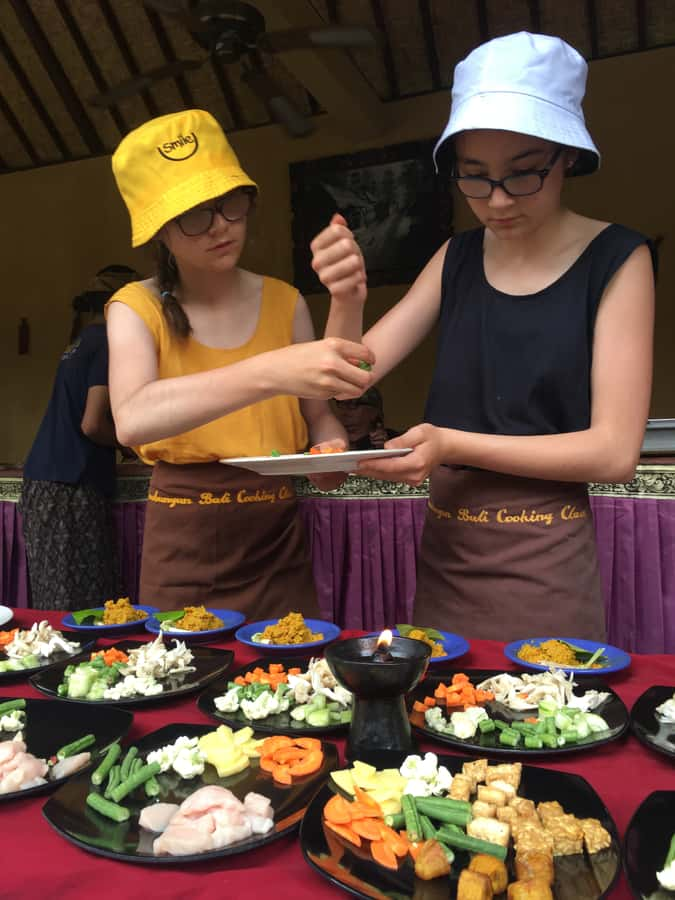
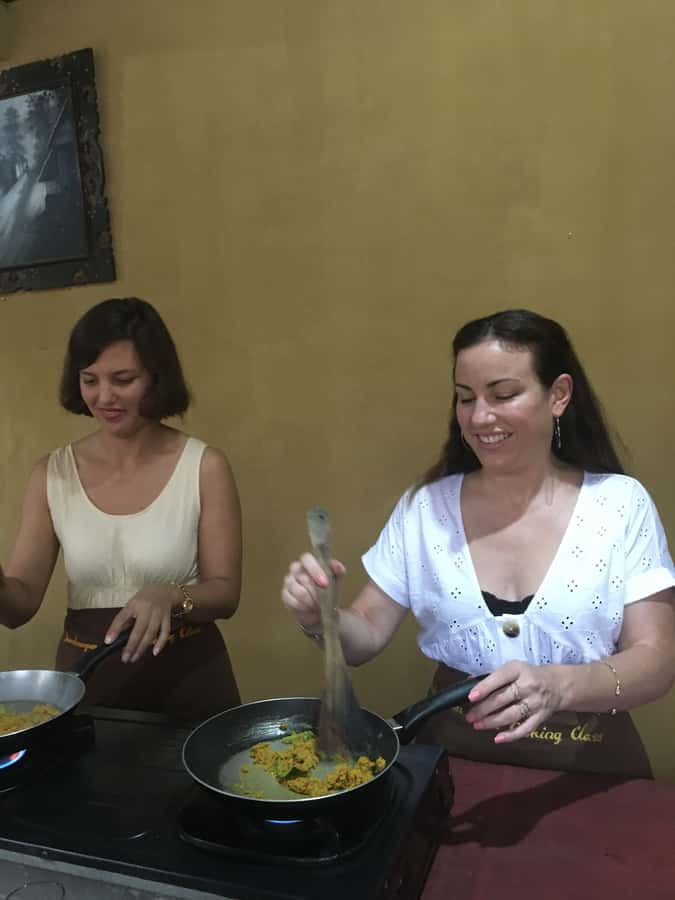
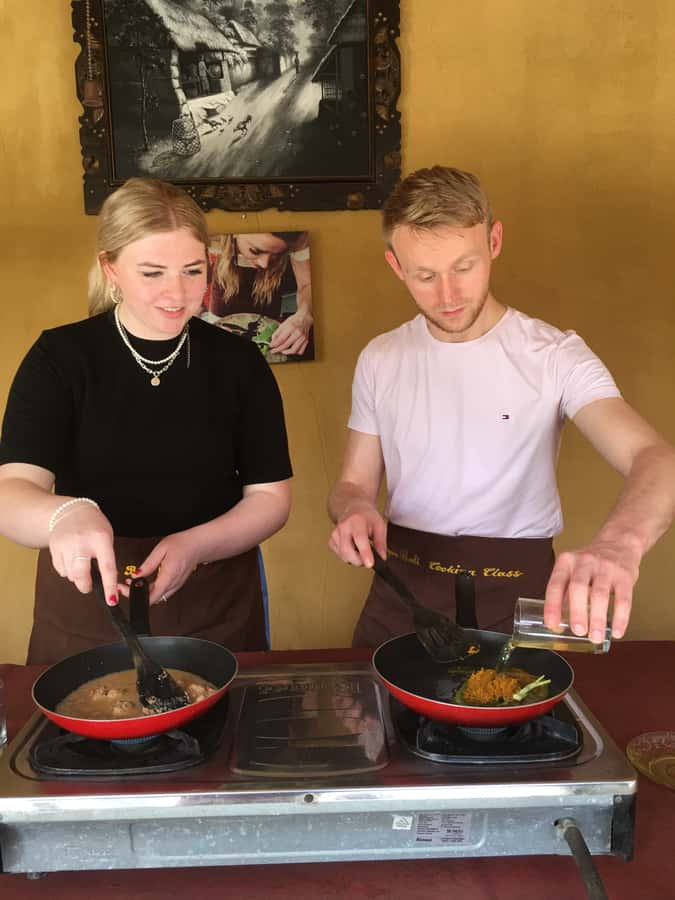
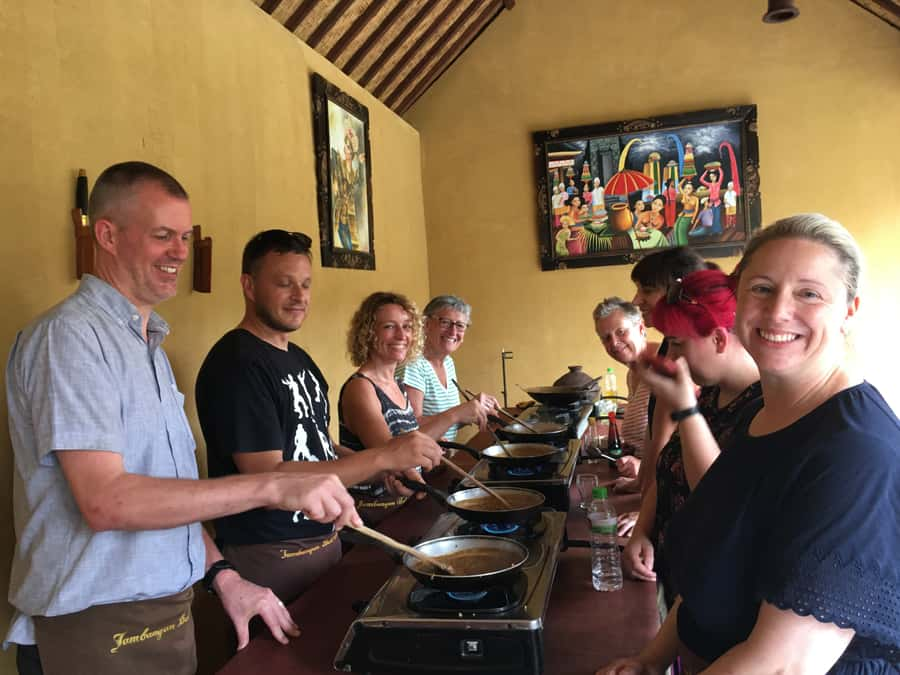
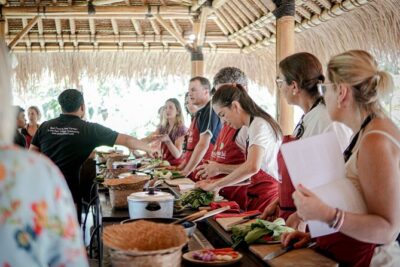
Once the cultural visits are done, you begin cooking at the home. The key promise is hands-on work: you make the recipes yourself, using traditional techniques rather than watching a chef do everything for you.
That distinction matters. Demonstrations can be pleasant, but they do not always prepare you to repeat the meal at home. Here, you handle the ingredients and follow the cooking process, with an English-speaking Balinese chef explaining the steps.
The available information does not list the dishes, number of courses, or exact cooking methods. You should therefore avoid booking based on a particular menu unless the operator confirms it first. The dependable part is the format: local ingredients, traditional Balinese recipes, instruction in English, and a shared meal after the work is finished.
The class is suitable for people who enjoy learning by doing. You may chop, mix, season, and cook under direction, though the exact tasks will depend on the menu and the group. If you prefer to sit back and take notes, you can still follow along, but you will miss much of what makes the session worthwhile.
Bring a camera if you want to record the setting and dishes. Cash is also listed among the recommended items, though the activity price covers the main experience.
Eating what you prepared
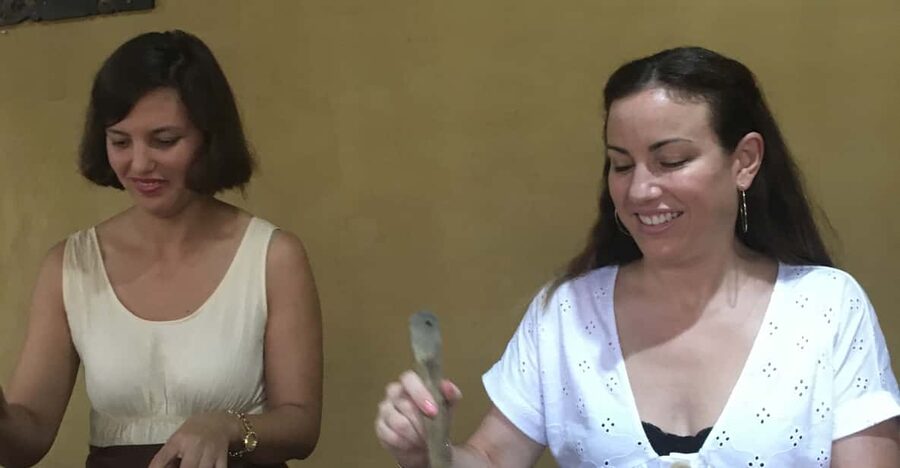
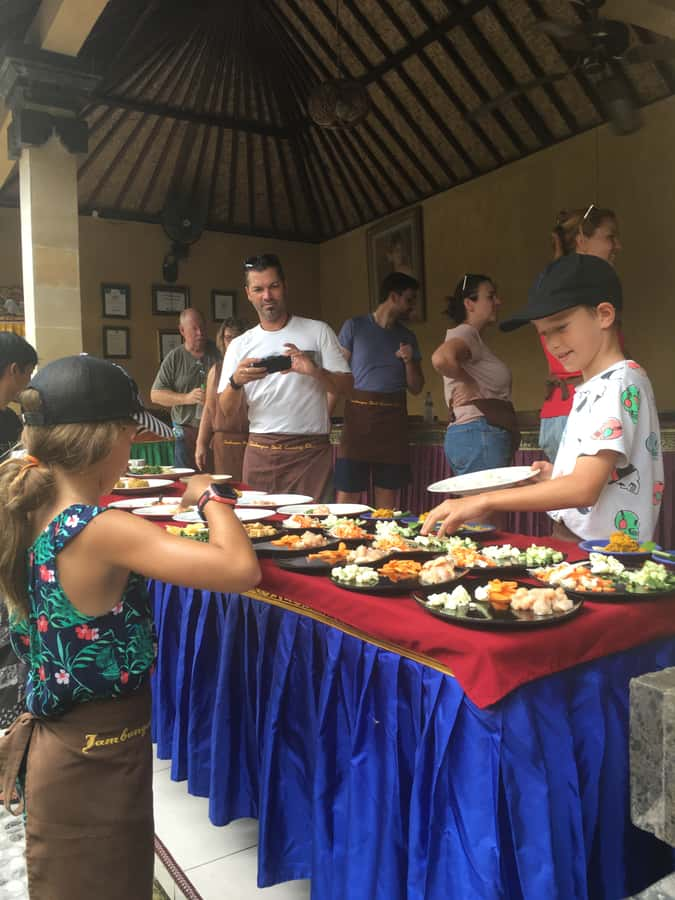
The reward comes at the end, when you eat the food you have made. The meal is served in the local warung and garden, and the format includes food for lunch and dinner.
Eating the finished dishes immediately gives the class a clear shape. You see ingredients at the market, prepare them in the home, and then sit down with the result. That simple chain makes the meal feel more connected to the place than a restaurant dish ordered from a menu.
The food has been a major strength of the experience. You should expect fresh local ingredients and traditional flavors, though exact spice levels and recipes are not provided. Tell the instructor about dietary needs before booking if they matter to you, since the available information does not confirm vegetarian, vegan, allergy, or gluten-free options.
Beer is not included. That is a small point, but it is useful to know if you are imagining a drinks-led lunch. Water is provided, and one detailed account noted that the family kept people supplied with enough water in the heat.
What the $27 price really covers
At $27 per person, this is a strong-value half-day experience if you want more than a cooking lesson. The fee includes hotel pickup and drop-off in the Ubud area, the morning market visit, rice fields, the Balinese home visit, coconut-oil processing, the daily offering, cooking, the shared meal, recipes, and a certificate.
Many cooking classes charge for the kitchen session alone. Here, the price also covers transport within the stated pickup zone and several cultural stops. That makes the cost especially appealing for solo visitors or couples who would otherwise pay separately for a market visit and a village outing.
The value depends partly on your location. Pickup and drop-off are free in the Ubud area only. Hotels outside that area may require an extra transport charge based on the location. Confirm that cost before booking so the low headline price does not surprise you later.
The certificate is not a major reason to choose the class, but it is a pleasant extra. The recipes are more useful. They give you something practical to take home, and they can help you recreate the dishes after your Bali trip.
Timing, pickup, and comfort
The activity lasts 270 minutes. That is long enough for the market, village, home visit, cultural activities, cooking, and meal without turning the day into a rushed checklist.
Pickup is included for Ubud-area hotels. Wait in your hotel lobby 10 minutes before the scheduled pickup time, and look for a driver asking for your name. Transport has received a very high satisfaction score, with 95 percent of ratings giving it a perfect mark.
The early start is both a benefit and a drawback. You reach the market while the morning is underway, and the cooler part of the day is better for outdoor stops. But you will need to organize breakfast, sleep, and hotel pickup around the class.
Bali can be hot, especially once you move between the market, rice fields, and house. Wear light clothing, bring water, and carry cash and a camera. The activity is listed as wheelchair accessible, although the information does not explain the surfaces or access at every stop, so contact the operator if you need detailed mobility arrangements.
Who will enjoy this class most
I would choose Jambangan Bali Cooking Class if you want food and everyday culture in the same morning. It suits first-time visitors who want a gentle introduction to Balinese life, as well as returning visitors who would rather spend time with a family than in a resort kitchen.
It is also a good fit for couples, families, and small groups who enjoy active participation. You do not need to be an experienced cook. The recipes are taught in English, and the format gives you plenty to look at even if you are not confident with kitchen work.
The class may be less suitable if your main goal is a specific named dish, a professional cooking credential, or a short one-hour activity. The menu is not stated, and the complete program takes four and a half hours.
The not-suitable guidance lists people with altitude sickness and people over 95 years old. Bali is not generally associated with high-altitude activity in this description, so this warning may be standard booking language. If either point applies to you, ask the provider for clarification rather than guessing.
Booking details worth checking first
Free cancellation is available up to 24 hours before the activity for a full refund. You can also reserve now and pay later, which helps if your Ubud plans are still shifting.
The class is taught in English, and pickup is included in the Ubud area. For hotels outside that area, ask about the extra transport charge before confirming.
Because the morning market tour is specifically tied to the morning class, select the correct session. Also ask about the menu if you have dietary restrictions or want to learn a certain Balinese recipe.
Should you book Jambangan Bali Cooking Class?
Book it if you want a personal, good-value introduction to Balinese food and home life, not just a chef demonstration. The market, rice fields, offering, coconut-oil work, family home, cooking, meal, recipes, and certificate create a full morning for $27.
Skip it if you need a fixed menu, a very short activity, or a class outside the Ubud pickup area without paying extra for transport. For most people staying in Ubud who enjoy food, culture, and a little hands-on work, this is an easy choice. Come ready for an early start, a warm day, and a meal you helped make from the first ingredient onward.
FAQ
Where does the Jambangan Bali cooking class take place?
The cooking class takes place at a Balinese home in Kelabang Moding village, near Ubud. The program also includes a local market and rice fields.
How long does the experience last?
The activity lasts 270 minutes, which is four and a half hours.
Is hotel pickup included?
Free hotel pickup and drop-off are included for hotels in the Ubud area. Transport outside Ubud may cost extra, depending on the hotel location.
Does the morning class include a market tour?
Yes. The market tour is included with the morning class. You can choose herbs, spices, vegetables, and meat for the cooking session.
What language is the class taught in?
The class is conducted in English by Balinese chefs who can discuss Balinese cuisine and culture.
Will I cook the food myself?
Yes. You make the recipes yourself during the hands-on cooking session, then eat the food you prepare.
What cultural activities are included?
The experience includes a visit to rice fields, a look at village temples and a school, a Balinese home visit, coconut-oil processing, and making a daily offering.
Is a meal included?
Yes. After cooking, you eat the food you have prepared at the warung and garden.
What should I bring?
Bring a camera and cash. You should also wait in your hotel lobby 10 minutes before the scheduled pickup time.
Can I cancel the booking?
You can cancel up to 24 hours in advance for a full refund. The activity also allows you to reserve now and pay later.
More morning classes around Ubud
- Tingly Thai Cooking Class with Morning Market Tour
★ 5.0 · 589 reviews - Kyoto: Morning Japanese Bento Cooking Class
★ 5.0 · 149 reviews - Chiang Mai: Morning Cooking Class with Market Visit
★ 4.9 · 81 reviews - Krabi: Morning/Afternoon Thai Cooking Class at Ya’s Cookery
★ 4.9 · 30 reviews
New cooking classes around Ubud
- Ubud: Organic Farm Harvest, Bali Cooking Class by Pemulan★ 4.8 · 12 reviews
- packages cooking class and romantic dinner in a local home★ 5.0 · 4 reviews
- Balinese cooking class/Go shopping at the market, cook, eat★ 5.0 · 12 reviews
- Bali: Cooking Class with Monkey Forest and Art Village Tour★ 5.0 · 2 reviews
- Ubud: Balinese Cooking Class with Hotel Transfers★ 4.8 · 17 reviews
- From Ubud: Authentic Bali Farm Cooking School & Organic Farm★ 5.0 · 122 reviews
- Balinese Vegan Cooking Class with Fresh Harvesting & Garden Tour★ 5.0 · 86 reviews
- Balinese Cooking class with traditional morning market visit★ 5.0 · 161 reviews
Ubud Cooking Classes, side by side.
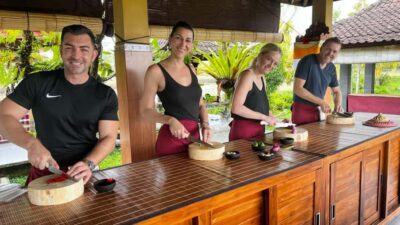
Ubud: Cooking Class with Transfers and Optional Market Visit
Read our review →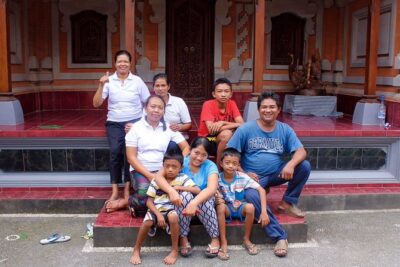
PRIVATE Authentic Balinese Cooking Class in Ubud at Putu’s Home
Read our review →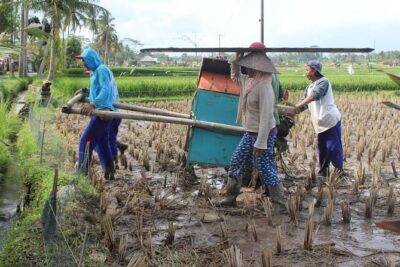
Balinese Ubud cooking school (9 Dish Cooking and Market Tour)
Read our review →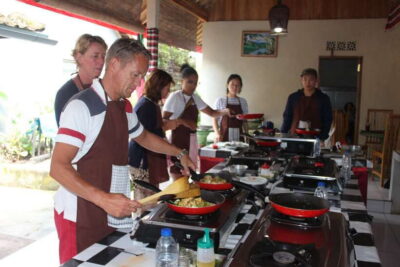
Balinese Cooking class with traditional morning market visit
Read our review →