
Review · COOKING CLASSES WORLDWIDE
Cebu Traditional Bamboo Cooking Class
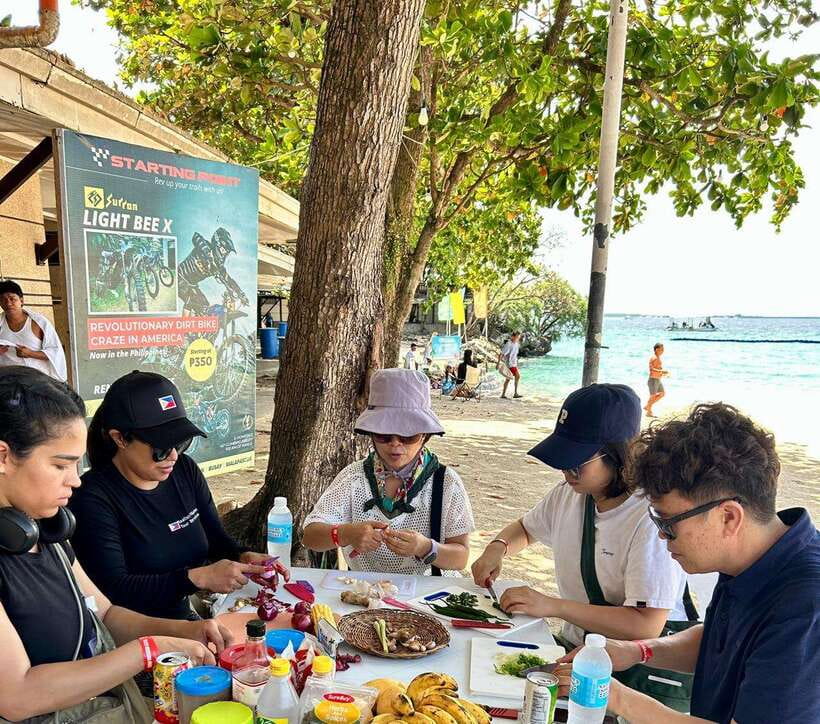
At Hadsan Cove Resort, Filipino cooking is tied to the beach. You prepare chicken, shrimp, fish, garden salad, hanging rice, and a local dessert, then wait for the bamboo cooking to finish over charcoal with the option of taking a swim. Cooking in bamboo gives the class a hands-on local feel that a standard restaurant meal cannot match.
I like two things in particular: you learn the background of Filipino cooking before picking up a knife, and you leave with the recipes and photos by email. The food is also prepared without MSG, and vegetarian additions can be requested. The main point to check is timing: the activity is advertised as three hours, while the detailed plan describes up to four hours.
Key points
- Bamboo and charcoal cooking: Prepare Filipino food using a traditional method, with time for the cooking to finish over charcoal.
- Three main dishes: Work with chicken, shrimp, and fish, plus native garden salad, hanging rice, and a seasonal dessert.
- Beach setting: Swim at Hadsan Cove Resort while the food cooks, so the waiting time becomes part of the outing.
- Useful take-home material: Receive recipes and photos by email after the class.
- Flexible food choices: The dishes contain no MSG, and additional vegetarian dishes may be requested.
- Plan ahead: Bamboo must be ordered, so you need to give at least one week’s notice.
Filipino cooking beside the water
This is not a class held in a sealed kitchen. Your setting is Hadsan Cove Resort in Marigondon, Lapu-Lapu City, where the cooking takes place in front of a beach. That changes the rhythm of the experience. You are not simply moving from chopping board to stove and back again. There is room to pause, talk, and take a swim while the charcoal does its work.
That beach setting is one of the strongest reasons to consider the class. Cooking food over charcoal takes patience, and the water gives you something pleasant to do during that pause. Bring beachwear, a change of clothes, sunscreen, and a towel if you plan to swim. The activity runs rain or shine, so keep that in mind when planning your day.
The location is in Marigondon, within Lapu-Lapu City in the Visayas. You meet at the designated location and tell the guards you are there for the bamboo cooking class. The activity finishes back at the same meeting point, which keeps the arrival and departure simple.
More cooking classes around the world:
- Half-Day Thai Cooking Class at Organic Farm in Chiang Mai
★ 5.0 · 19,087 reviews - Florence: Pasta Cooking Class with Unlimited Wine
★ 4.9 · 10,285 reviews - 3 in 1 Cooking Class near Navona: Fettuccine, Ravioli & Tiramisu
★ 5.0 · 7,376 reviews
Starting with Filipino food traditions
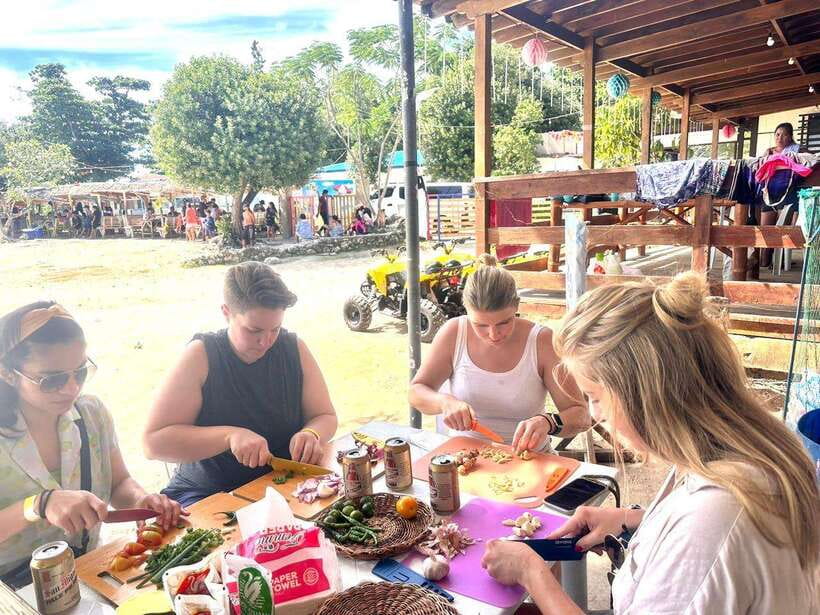
Before cooking begins, the instructor gives a short introduction to Filipino cooking history. This is a useful opening because it puts the dishes in context before you start preparing them. You get more than a list of ingredients and instructions. You also hear why local methods and familiar ingredients matter.
The class is conducted in English. The owner has taught some sessions, which may give the experience a personal, small-business feel rather than the atmosphere of a large cooking school. The exact instructor is not named in the available details, so you should not book expecting a particular person.
The history talk is described as brief, which suits the overall design. This is a three-hour activity on the schedule, not a long academic course. You will get enough background to understand the food, then spend most of your time doing the work yourself.
Preparing chicken, shrimp, and fish
The main cooking session covers three traditional Filipino dishes featuring chicken, shrimp, and fish. The exact recipes are not specified in advance, so you should not expect to choose from a fixed menu of named dishes. That uncertainty is worth accepting if you prefer a practical introduction to home-style Filipino cooking rather than a class built around one famous recipe.
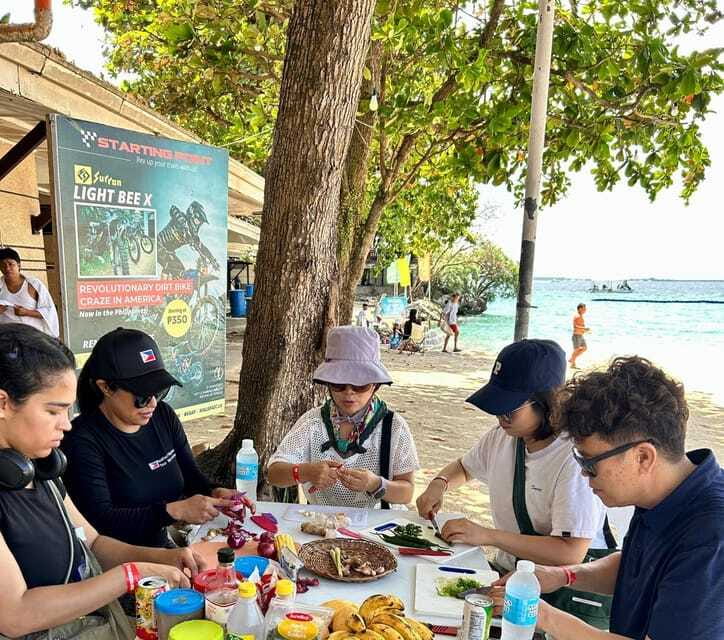
You prepare spices and herbs for the dishes. This part matters because Filipino cooking often depends on the balance of aromatics, seasoning, and cooking time. You are not simply watching an instructor assemble everything. The hands-on preparation helps you understand the basic building blocks you can use again at home.
The three proteins also make the class varied. Chicken gives you one familiar starting point, while shrimp and fish bring a stronger connection to the coastal setting. If you have dietary restrictions, ask before booking. The food is free of MSG, and additional vegetarian dishes can be requested, but the standard plan centers on chicken, shrimp, and fish.
Bamboo cooking over charcoal
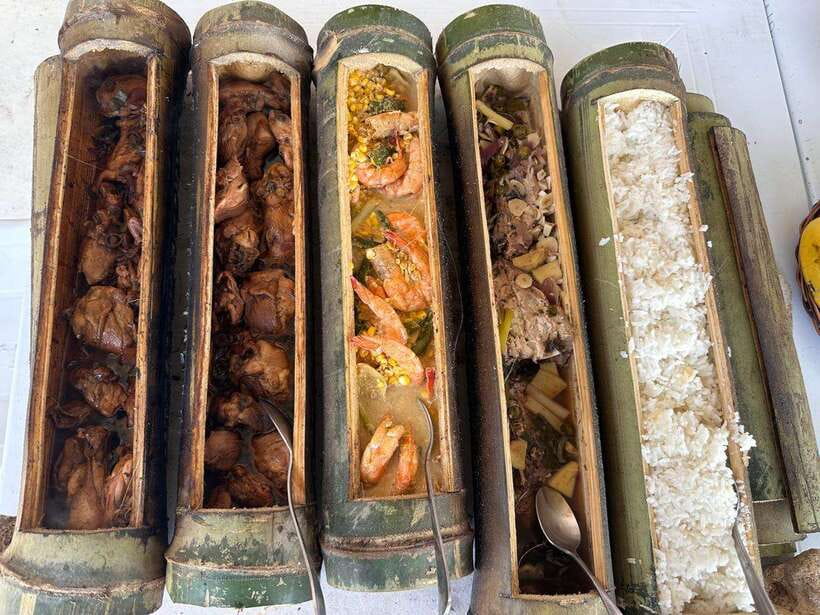
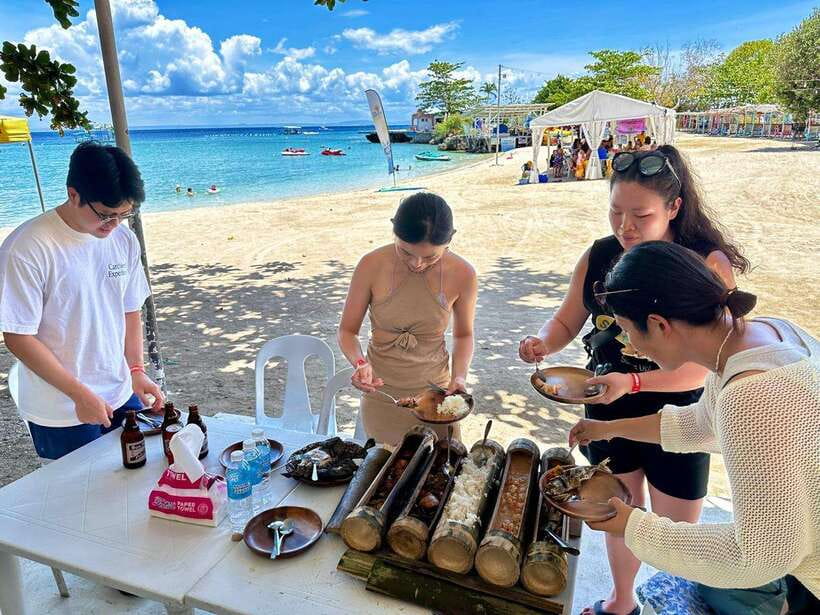
The defining feature is the bamboo. The food is cooked over charcoal, using bamboo ordered especially for the class. This method takes more time and preparation than cooking on a modern stovetop, but it is exactly what gives the activity its character.
You should give at least one week’s notice before the class so the needed bamboo can be arranged. This is not a last-minute activity to add casually between island trips. If you are booking close to your travel date, contact the provider first.
The charcoal cooking also explains the relaxed pace. After preparing the ingredients, you wait for the food to cook. You can use this time to talk, enjoy the setting, or swim at the beach. Do not expect a tightly packed series of cooking demonstrations with no pauses. The waiting is part of the method.
Because the class takes place outdoors, comfortable clothing and shoes make sense. Flip-flops are useful for the beach, while comfortable shoes are listed among the suggested items. Bring sun protection, including a hat, sunglasses, and sunscreen.
Same kitchen, a different dish:
- Florence: Pasta & Tiramisu Cooking Class with Unlimited Wine
★ 4.9 · 6,708 reviews - Florence: Pasta Cooking Class with Unlimited Wine
★ 5.0 · 6,413 reviews - Hanoi Cooking Class: Culture, Local Market & Meaning CSR Impact
★ 5.0 · 5,147 reviews - 5 Traditional Dishes Hanoi Cooking Class with Market Trip
★ 5.0 · 4,890 reviews
Making salad, hanging rice, and dessert
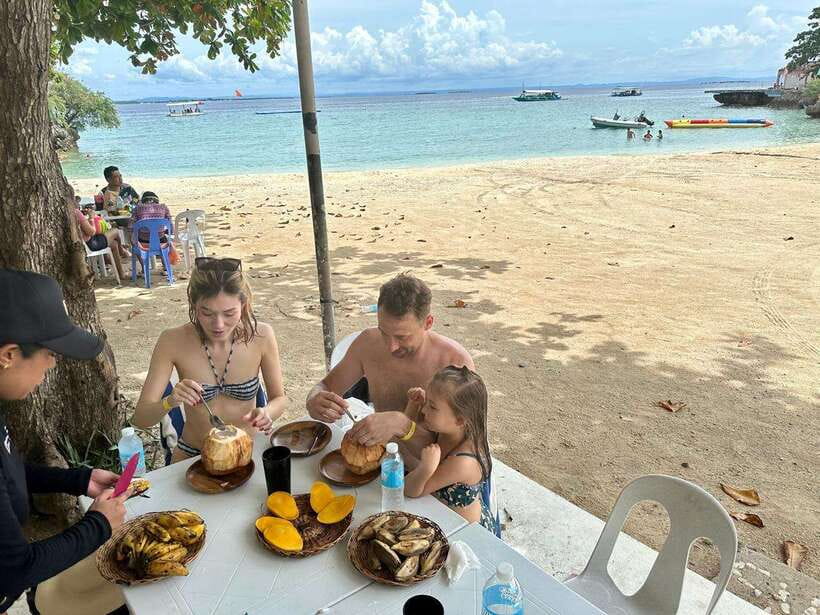
The meal goes beyond the three main dishes. You also prepare a native Filipino garden salad and hanging rice. The rice is an important part of the meal presentation and gives you another traditional element to learn, rather than leaving the main dishes to carry the whole class.
A local dessert made with seasonal fruit is prepared while the savory food cooks. Since the fruit depends on the season, the exact dessert is not specified. That is a small but appealing part of the design. You are not being promised one fixed sweet, but you do get a dessert connected to what is locally available.
The combination makes the meal feel complete: protein, rice, salad, and something sweet. It also gives you a better sense of how the food fits together at the table. You are preparing a shared meal, not just sampling one isolated dish.
Swimming while your meal cooks
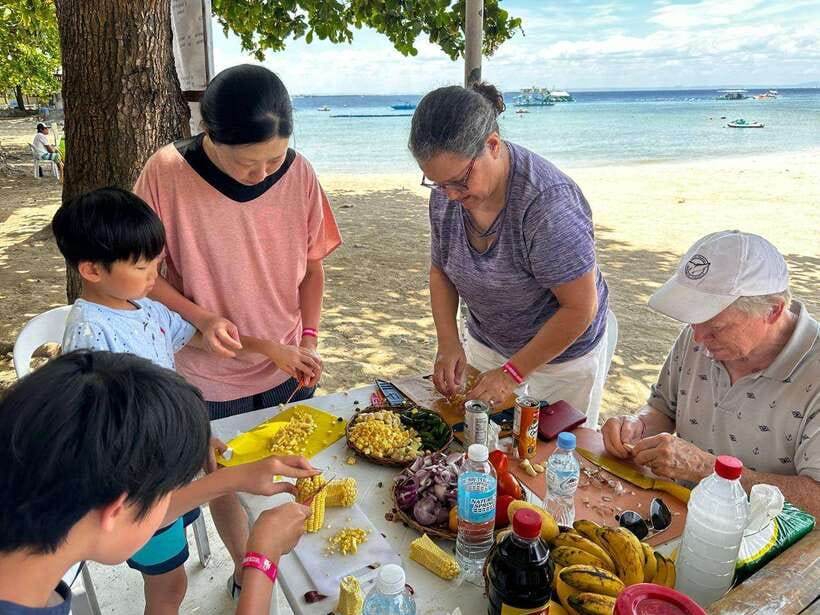
The beach is not decoration only. You are welcome to swim while the food cooks, so pack proper beachwear and a change of clothes. Snorkeling gear is also listed among the items you may bring, though snorkeling is not described as a formal part of the class.
You should treat the swim as an optional extra, not as a guaranteed snorkeling excursion. The central activity remains cooking and eating. Still, the chance to cool off is valuable in a warm outdoor setting, especially if you are spending several hours near a charcoal fire.
Keep valuables at home, as they are specifically discouraged. Drones and weapons or sharp objects are not allowed. A small daypack, camera, hand sanitizer or tissues, and cash are sensible items from the suggested packing list.
Eating what you prepared
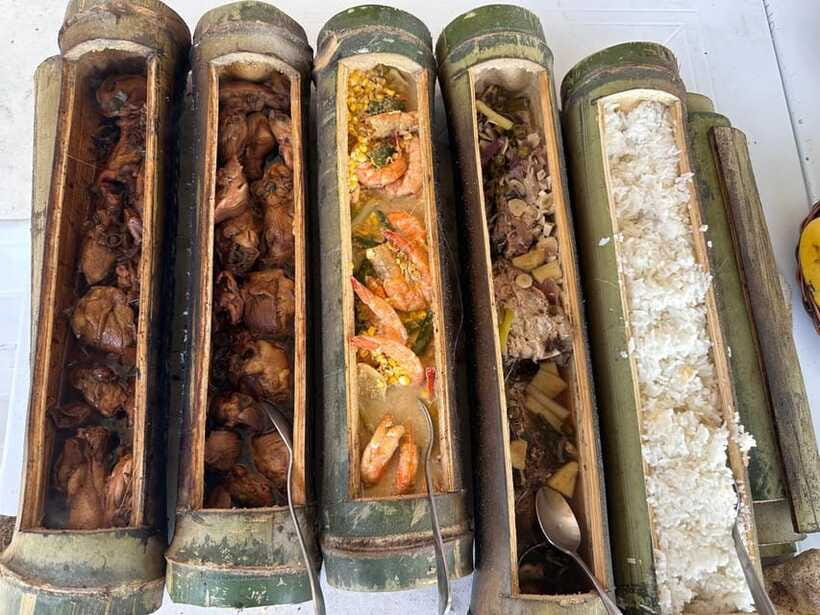
Once the food is ready, you sit down and eat the dishes you helped prepare. That meal is the payoff, but it is also a chance to judge the recipes for yourself. You can taste the balance of the spices, the effect of charcoal cooking, and the way the salad, rice, and dessert work with the main dishes.
The experience is especially well suited to people who like conversation around food. One account describes the class as a chance to discuss Filipino history while enjoying the meal, and the setting supports that slower pace. You are not rushing through a tasting menu or being moved from one activity to the next.
The no-MSG approach may appeal to you if you prefer food prepared without added monosodium glutamate. Still, no-MSG does not mean the food is bland. The class focuses on spices and herbs, so the flavor comes from the ingredients and preparation.
Recipes and photos after the class
The follow-up material adds real value. After the session, you receive an email with photos taken during the class and the recipes. That makes the experience easier to repeat at home, assuming you can find the needed ingredients and a suitable way to adapt the bamboo method.
This is more useful than leaving with only a full stomach and a few memories. You can use the recipes to recreate the dishes, while the photos help you remember the preparation. If you enjoy collecting cooking ideas during a trip, this feature gives the class a longer life.
The recipes may require some adaptation outside the Philippines. Bamboo cooking over charcoal is not practical for every home kitchen, and the exact local ingredients may not be available everywhere. Still, the seasoning methods and general dish ideas should give you a starting point.
Is $112 a fair price?
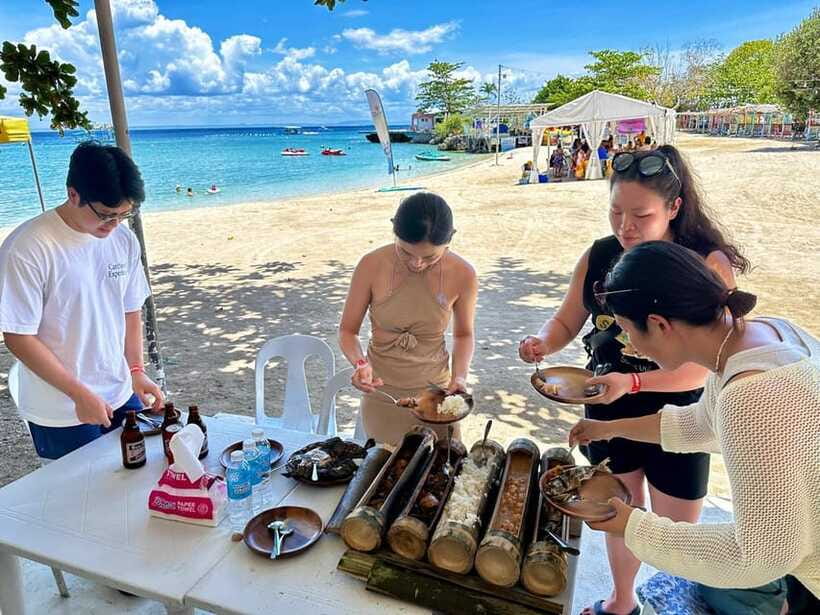
At $112 per person, this is not a cheap meal or a quick market demonstration. You are paying for a guided cooking activity, three protein-based dishes, side dishes, dessert, charcoal preparation, the beach setting, the meal itself, and the recipes and photos afterward.
The value improves if you would otherwise book a separate beach activity and a Filipino food experience. Here, the swim is built into the cooking schedule, and you get several hours at one location. The class also suits people who value personal instruction and a cultural introduction more than simply finding the lowest-cost lunch.
The price is harder to justify if your main goal is a large meal or a formal culinary certificate. The duration is moderate, and the class is designed as a relaxed cultural activity. You should also confirm the schedule because the headline duration is three hours, while the detailed description says the cooking and meal can take up to four hours.
Free cancellation up to 24 hours before the activity and reserve-now, pay-later booking make the financial commitment easier to manage. Those terms are useful if your Cebu schedule is still shifting, though the bamboo requirement means you should still plan at least a week ahead.
Who should book this class?
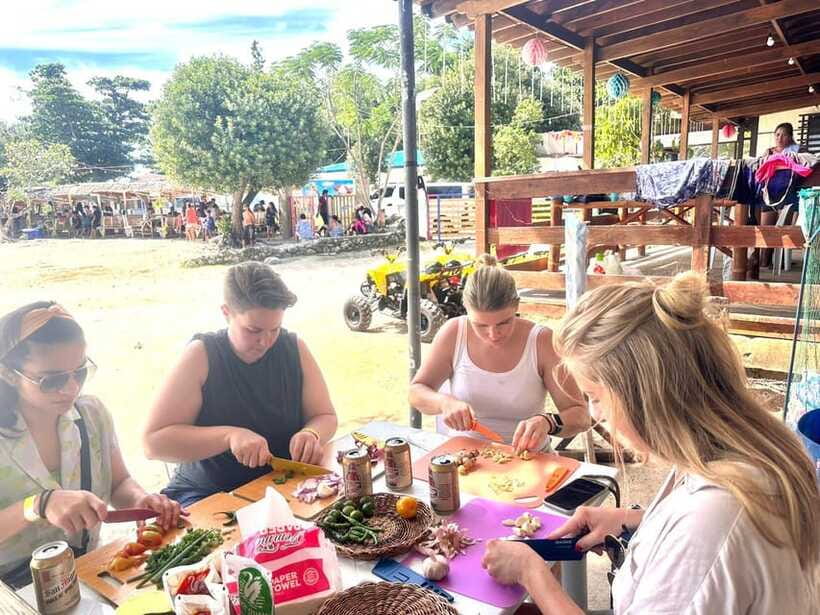
I would recommend it to couples, families, and small groups who enjoy food, conversation, and a slower afternoon by the water. It is a good fit if you want to do something connected to local life rather than simply visit another viewpoint or take another boat ride.
It also suits people who want a practical souvenir. The recipes and photos give you something to use after the holiday, and the absence of MSG plus the vegetarian request option provides some flexibility.
You may want to skip it if you dislike seafood, do not want to swim or sit outdoors, or prefer a tightly timed cooking lesson with exact recipe details announced in advance. The standard menu includes chicken, shrimp, and fish, and the class takes place rain or shine. Ask about vegetarian additions before you reserve rather than assuming the standard plan can be changed on arrival.
My call: book it if the pace suits you
Book the Cebu Traditional Bamboo Cooking Class if you want a beachside food experience with real preparation, charcoal cooking, and a meal you help create. The strongest points are the bamboo method, the three-protein menu, the swim break, and the recipes sent afterward.
Before paying, confirm the actual start time, total duration, and food requests with Realist Filipino Tour Services. Give at least one week’s notice for the bamboo, tell the guards you are attending a bamboo cooking class, and bring sun protection plus beachwear. If you value local cooking and do not mind a relaxed wait while the charcoal works, $112 can be fair value. If you only want lunch, it is more than you need.
FAQ
Where does the bamboo cooking class take place?
The class takes place at Hadsan Cove Resort in Marigondon, Lapu-Lapu City, in the Visayas, Philippines.
How long does the activity last?
The activity is listed as three hours, but the detailed description says the cooking, waiting, swimming, and meal can take up to four hours. Check the available start times and confirm the expected duration when booking.
What dishes will I prepare?
You will prepare three traditional Filipino dishes featuring chicken, shrimp, and fish. The experience also includes native Filipino garden salad, hanging rice, and a local seasonal dessert.
Is MSG used in the food?
No. The dishes are prepared without MSG. Additional vegetarian dishes may also be requested.
Can I swim during the class?
Yes. The class takes place in front of a beach, and you are welcome to swim while the food cooks. Bring beachwear, a change of clothes, sunscreen, and other items you need for the beach.
How far in advance should I book?
You need to provide at least one week’s notice so the necessary bamboo can be ordered. If you want to book the cooking class alone, send a message to the provider before booking.
New cooking classes around the world
- Shinjuku Tokyo: Authentic Japanese Home-Style Culinary Class★ 4.9 · 125 reviews
- Shibuya Tokyo: Onigiri & Tamagoyaki Cooking Class★ 5.0 · 4 reviews
- M.O.M COOKING CLASS★ 4.8 · 6 reviews
- Seville: Paella-Cooking Experience with Sangria & Full Meal★ 4.9 · 42 reviews
- Shanghai: Authentic Chinese Cooking Class with Master Chef★ 5.0 · 2 reviews
- Sestri Levante: Pesto & Cooking Classes, Wine Tasting★ 4.9 · 56 reviews
- Seville: Paella Cooking Class & 30-Min Local Expert Q&A★ 4.8 · 37 reviews
- Seoul: Korean Kimchi Cooking Class in the Heart of the City★ 5.0 · 3 reviews