
Review · ALBANIA
Cook Like a Local – Authentic Cooking Class in Gjirokastra
Gjirokastra’s best food lesson may be the one that ends with lunch. In this two-hour cooking class, you prepare qifqi, the town’s herb-filled rice balls, and hand-rolled pasta with slow-cooked lamb inside the atmospheric Old Bazaar. The setting is not a modern cooking studio. It is an old stone house or family-run guesthouse, surrounded by cobbled lanes and Ottoman-era buildings.
I like two things right away. First, the class teaches dishes that belong specifically to southern Albania, not a generic set of Balkan recipes. Second, you get the useful parts of a food experience: a full meal, local drinks, stories about family cooking, and recipe cards for your kitchen at home. The main drawback is that the class is not suitable for wheelchair users or people with mobility impairments, and the modest 3.2 rating from four reviews suggests the experience may vary.
Key points to know
- Cook two Gjirokastrian specialties: Prepare qifqi rice balls and pasta with tender lamb.
- Work in the Old Bazaar: The class takes place in a historic setting with cobbled alleys and Ottoman-era architecture.
- Expect a personal format: The experience is described as very private, with a friendly local host.
- Eat what you make: Lunch includes lamb pasta, qifqi, salad, dessert, and drinks.
- Learn local food customs: Hear about herbs, hospitality, folklore, and recipes passed through families.
- Take home practical recipes: Written recipe cards help you recreate the meal after your trip.
Why Gjirokastra is the right place for a cooking class
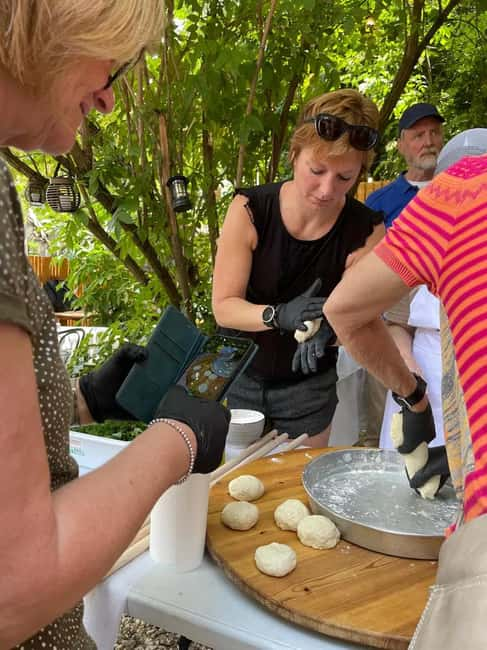
Gjirokastra is known for its stone houses, steep streets, and Ottoman-era Old Bazaar. A cooking lesson here makes sense because food and place are tied together. You are not simply preparing dishes from a printed menu. You are learning how a town in southern Albania uses herbs, rice, pasta, lamb, honey, nuts, and seasonal fruit.
The setting gives the class much of its character. The Old Bazaar is a UNESCO World Heritage site, and the cooking space may be an old stone house or a family-run guesthouse tucked into the bazaar. That means the experience has a strong sense of place before the first ingredient is chopped.
You should expect a traditional setting rather than a polished culinary school. That can be a strength if you want local atmosphere and personal conversation. It can also mean uneven surfaces and access issues, so wear comfortable shoes and take the mobility warning seriously.
The class is offered in English, Italian, Greek, and Albanian. That gives you a good chance of following the instructions and asking questions, though the exact language of your session depends on the instructor assigned that day.
More cooking classes around the world:
- Half-Day Thai Cooking Class at Organic Farm in Chiang Mai
★ 5.0 · 19,087 reviews - Florence: Pasta Cooking Class with Unlimited Wine
★ 4.9 · 10,285 reviews - 3 in 1 Cooking Class near Navona: Fettuccine, Ravioli & Tiramisu
★ 5.0 · 7,376 reviews
The first lesson: qifqi and Gjirokastra’s herb cupboard
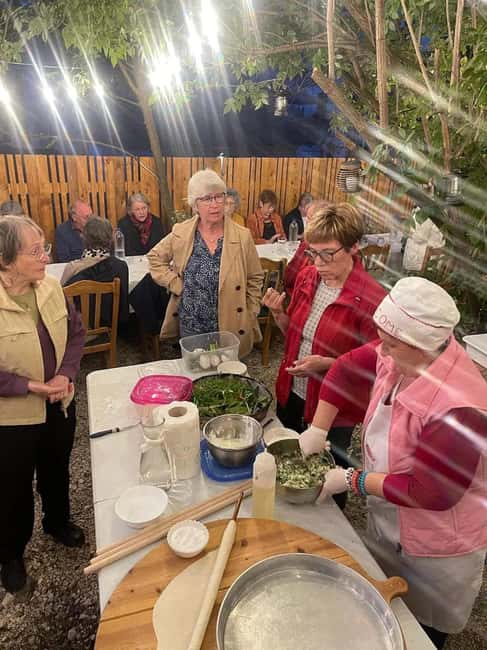
The cooking begins with qifqi, savory rice balls flavored with fresh herbs such as mint and oregano. These are a signature Gjirokastrian food, and the method is part of what makes the dish interesting.
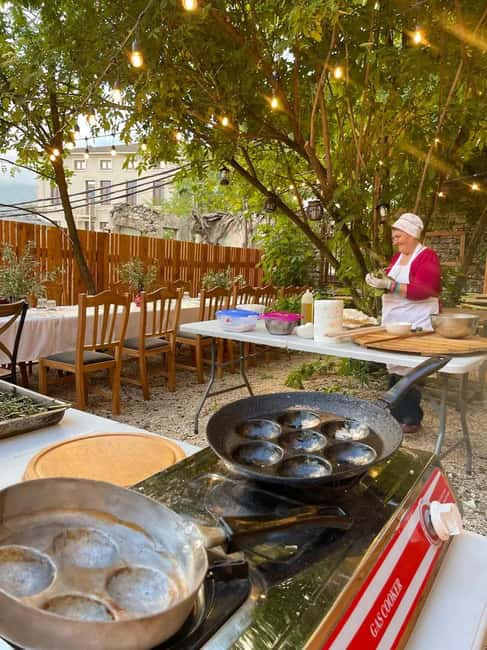
You learn how the rice mixture is seasoned, shaped, and fried in a traditional cast-iron mold. That mold is not just a kitchen tool. It is a small piece of local cooking culture, giving the rice balls their form and connecting the dish to older household methods.
The class also introduces the herbs and spices used in southern Albanian cooking. You may hear how herbs are dried, preserved, and blended. This is one of the most useful parts for home cooks because it explains where the flavor comes from, not just what goes into the pan.
Mint and oregano give qifqi a fresh, savory character. The dish is simple in its ingredients, but the technique matters. You will get a better feel for the texture and seasoning by making it with a local cook than by reading a short recipe online.
Food stories are part of this stage, too. Your host explains how recipes move through families, how ingredients can carry meaning, and how food fits into Albanian hospitality. The class is therefore part recipe lesson and part conversation about daily life.
Rolling pasta for lamb in a mountain-style meal
The second main dish is osa me mish qengji, hand-rolled pasta served with tender, slow-cooked lamb. It is a hearty dish, and it gives the class a different rhythm from qifqi.
Here you should expect more hands-on work with dough and preparation. The pasta is made by hand, then paired with lamb seasoned with local spices. The dish reflects the food traditions of a mountainous part of Albania, where lamb and filling pasta dishes have a natural place at the table.
The slow-cooked lamb is especially important to the finished meal. It provides the savory center of the dish, while the pasta adds weight and texture. You learn how local seasoning choices shape the final flavor rather than simply following a list of ingredients.
This is the kind of cooking lesson that suits you if you like to understand the food while making it. You are not just watching a chef prepare lunch. You are working through the steps and then eating the result.
The pace should be relaxed, but the class lasts only two hours. That is enough time for a focused introduction and meal, not a full professional cooking course. If you want to master every detail of Albanian pasta making, you will need more practice at home. The recipe cards help with that.
A seasonal dessert and the value of flexible menus
The final cooking task is a seasonal Albanian dessert. Depending on the time of year and the available ingredients, this might be a fruit compote with local honey and nuts, or a traditional sweet such as sheqerpare.
The changing dessert is a good feature for a food-focused visitor. It keeps the meal connected to the season instead of forcing the same item onto every table all year. It also lets you see how Albanian sweets can range from fruit and honey to syrup-soaked pastries.
You should not book this class expecting a guaranteed dessert menu. The exact sweet depends on timing and availability. That uncertainty is worth accepting because seasonal cooking is part of the point.
The dessert also rounds out the meal in a sensible way. After savory rice and lamb pasta, something made with fruit, honey, nuts, or syrup gives you a clear taste of the sweeter side of local cooking.
Same kitchen, a different dish:
- Florence: Pasta & Tiramisu Cooking Class with Unlimited Wine
★ 4.9 · 6,708 reviews - Florence: Pasta Cooking Class with Unlimited Wine
★ 5.0 · 6,413 reviews - Hanoi Cooking Class: Culture, Local Market & Meaning CSR Impact
★ 5.0 · 5,147 reviews - 5 Traditional Dishes Hanoi Cooking Class with Market Trip
★ 5.0 · 4,890 reviews
Sitting down to lunch in the Old Bazaar
Once the food is ready, you sit down for a shared lunch. The meal includes the pasta with lamb, qifqi, a seasonal salad, and dessert. Drinks include tea or raki, and local wine may also be served as part of the meal setting.
This is where the class becomes more than a cooking demonstration. You eat what you helped prepare, talk with the host, and have time to ask about ingredients or customs. A shared table is central to Albanian hospitality, so the meal helps explain the culture in a way that a short tasting often cannot.
The atmosphere is warm and informal rather than formal or restaurant-like. The host may talk about family secrets, folklore, and the role of food in celebrations and daily life. The available information also describes the class as very private, which may appeal to you if you prefer direct conversation over a large group setting.
One practical point: the $73 price includes lunch and drinks, so compare it with the cost of a separate meal plus a guided cultural activity. You are paying for instruction, ingredients, a meal, conversation, and recipe cards. That makes the price reasonable for someone who values personal contact and hands-on work.
It is less compelling if you only want a quick lunch. Gjirokastra has other ways to eat local food for less money. The value here comes from participating in the preparation and learning why these dishes matter.
What the friendly host adds to the experience
The host is central to the quality of this class. A friendly local cook can explain small details that a standard recipe leaves out: how much mint feels right, how the rice mixture should hold together, how herbs are stored, and how a family changes a dish over time.
The available feedback describes the host as friendly and the class as lovely, with particular approval for the food. That is the strongest signal in the response: personal contact and the meal are likely to be the highlights.
At the same time, the overall score is 3.2 from four reviews, so I would keep expectations measured. There is not enough feedback to promise a perfect session every time. The experience depends heavily on the individual host, the setting, and how much conversation your group wants.
The class is offered in four languages, which is helpful for international visitors. If you have food allergies or dietary restrictions, the provided information does not explain how substitutions are handled. Ask before booking rather than assuming the menu can be changed.
The Old Bazaar setting and mobility concerns
The Old Bazaar is a major part of the appeal. You get the feel of Gjirokastra’s historic center while cooking and eating, rather than treating the town as a backdrop for a quick photo.
The setting also brings practical limits. Gjirokastra’s old streets and stone buildings can be difficult for anyone with limited mobility. This activity is specifically not suitable for people with mobility impairments or wheelchair users.
You may want to avoid carrying a large bag and choose shoes with a firm grip. The activity information does not provide exact details about stairs, walking distance, or the precise cooking venue, so ask the provider if those points matter for you.
The class lasts two hours. That makes it easy to fit around sightseeing in the bazaar, a visit to Gjirokastra Castle, or an afternoon walk through the old town. Check the available starting times when booking, since the schedule can vary.
Who should book this cooking class
I would choose this class if you want a personal food experience tied closely to one town. It is a good match for curious beginners because you do not need professional cooking skills. You also get enough instruction to understand the dishes, then sit down for a proper meal.
It suits couples, small groups, and solo visitors who enjoy conversation. The private feel can be especially useful if you want to ask questions about Albanian homes, food customs, and family recipes without rushing.
Food lovers will appreciate that the menu includes two distinctive savory dishes rather than a broad but shallow tasting. Qifqi gives you a local specialty, while the hand-rolled pasta with lamb shows a heartier side of southern Albanian cooking.
The class is less suitable if you dislike lamb, want a guaranteed dessert, need step-free access, or prefer a large, highly structured culinary school. It may also disappoint anyone expecting a long workshop. Two hours gives you a focused introduction and meal, not an all-day course.
Booking flexibility and practical value
You can cancel up to 24 hours before the activity for a full refund. You can also reserve now and pay later, which helps if your Gjirokastra schedule is still changing.
The price is $73 per person. Since lunch, drinks, instruction, and recipes are included, the cost covers more than food alone. The key question is how you value the local setting and personal attention.
If you are already planning to eat lunch in the Old Bazaar, the extra cost buys you a cultural activity and hands-on instruction. If your main goal is simply to sample qifqi, a restaurant meal may be the cheaper choice. If you want to understand how the dish is made and recreate it later, this class offers better value.
Bring an appetite, patience, and a willingness to work with traditional methods. The recipe cards are a practical bonus. They turn the class from a pleasant meal into something you can use after leaving Albania.
Should you book Cook Like a Local?
Book it if you want to cook distinctive Gjirokastrian food in a historic setting, share a relaxed meal, and meet a friendly local host. The strongest reasons are the hands-on qifqi lesson, the lamb pasta, the personal format, and the recipe cards.
Skip it if mobility is a concern, if you need firm dietary guarantees, or if you want a longer and more technical cooking course. The modest rating means you should keep your expectations realistic, but the core idea is appealing and well suited to visitors who care more about local food and conversation than polished production.
For most food-minded visitors spending time in Gjirokastra, this is a worthwhile two-hour addition to a day in the Old Bazaar.
FAQ
Where does the cooking class take place?
The class takes place in Gjirokastra’s Old Bazaar, a UNESCO World Heritage site. The cooking space may be an old stone house or a family-run guesthouse within the bazaar.
How long does the activity last?
The cooking class lasts two hours.
How much does the class cost?
The price is $73 per person.
What dishes will I prepare?
You will prepare qifqi, savory rice balls with herbs, and osa me mish qengji, hand-rolled pasta served with tender lamb. You will also prepare a seasonal Albanian dessert.
Is lunch included?
Yes. Lunch includes pasta with lamb, qifqi, seasonal salad, and dessert.
Are drinks included?
Yes. Drinks include tea or raki. Local wine may also be part of the meal setting.
Which languages are available?
The instructor can provide the activity in English, Italian, Greek, or Albanian.
Can I cancel for a refund?
You can cancel up to 24 hours in advance for a full refund.
Can I reserve now and pay later?
Yes. You can reserve your place and pay later.
Is the activity suitable for wheelchair users?
No. The activity is not suitable for wheelchair users or people with mobility impairments.
New cooking classes around the world
- Shinjuku Tokyo: Authentic Japanese Home-Style Culinary Class★ 4.9 · 125 reviews
- Shibuya Tokyo: Onigiri & Tamagoyaki Cooking Class★ 5.0 · 4 reviews
- M.O.M COOKING CLASS★ 4.8 · 6 reviews
- Seville: Paella-Cooking Experience with Sangria & Full Meal★ 4.9 · 42 reviews
- Shanghai: Authentic Chinese Cooking Class with Master Chef★ 5.0 · 2 reviews
- Sestri Levante: Pesto & Cooking Classes, Wine Tasting★ 4.9 · 56 reviews
- Seville: Paella Cooking Class & 30-Min Local Expert Q&A★ 4.8 · 37 reviews
- Seoul: Korean Kimchi Cooking Class in the Heart of the City★ 5.0 · 3 reviews
Albania Cooking Classes, side by side.
Tirana: Traditional Cooking Class with Wine & Raki Tasting
Read our review →
Cooking Classes and Traditional food tasting in Tirana
Read our review →
Berat: Discover Albania with Cooking Class w/ Drink Tastings
Read our review →
Gjirokastër: Traditional Albanian Vegetarian Cooking Class
Read our review →
Berat: Farm-to-Table Cooking Class with Local Family
Read our review →
Berat: Traditional Cooking Class with Wine Tasting
Read our review →This kitchen also appears in