
Review · GALLE
Cook with Wasantha
The best part of Cook with Wasantha happens before the cooking begins. You ride by tuk-tuk to local vegetable and fish markets, choose what will go into your meal, then return to Wasantha’s family kitchen to turn those ingredients into curry. It is a food lesson tied to real shopping, not a polished studio show.
I like the market visit and the clear focus on fresh coconut milk and properly cooked rice, two basics that make Sri Lankan food work. I also like the family setting, with Wasantha, her husband Sam, and sometimes their daughter Sasa sharing the work. The main thing to consider is that this can feel more like a cooking demonstration than a fully hands-on class, especially if you want to prepare every dish yourself.
Key points at a glance
- Market shopping comes first: Visit a Dutch Market and a fish market, then help select the ingredients for lunch.
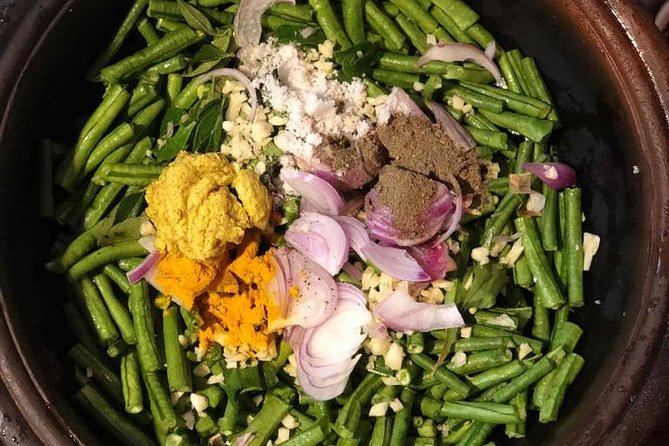
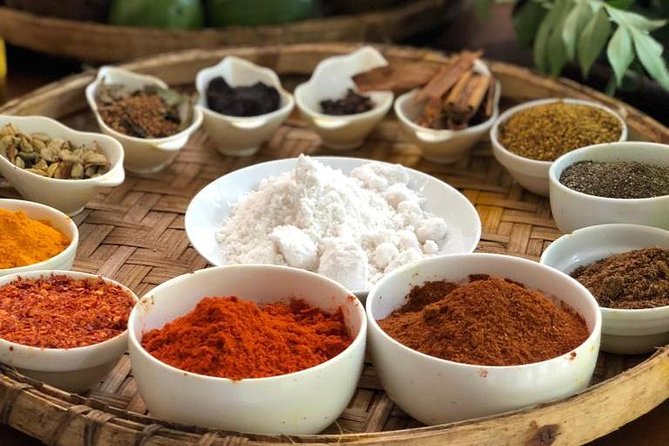
- Learn the Sri Lankan basics: Make coconut milk, blend spices, and cook fluffy rice using local methods.
- Five curries from fresh produce: The advertised meal includes four vegetable curries and a choice of tuna or chicken curry.
- A family-run experience: Wasantha teaches in her restaurant and home, with Sam or Sasa helping at different stages.
- Small groups matter: Numbers are capped at 10, so you get a more personal setting than at a large cooking school.
- Lunch is part of the lesson: Eat the food you helped prepare, buffet-style and in the local way, with your fingers.
What makes this Unawatuna cooking class different
At $30 for about four hours, this is not simply a lesson in chopping vegetables. You are paying for a small cultural outing that includes local transport, market visits, instruction, ingredients, and lunch.
The format also gives you a useful look at how Sri Lankan meals come together. You see the produce before it reaches the cooking pot. You learn why coconut milk matters. You watch how spices are judged by smell and balance rather than by a strict list of spoon measurements.
That last point is important. Wasantha’s cooking comes from long family experience, and her method is not built around restaurant-style precision. She may add spices by instinct and adjust the dishes around your preferences. If you want to understand the feel of Sri Lankan home cooking, that is a real strength.
If you want a formal class where every student has a separate station and cooks every course from start to finish, this may not be the right choice. Several parts are demonstration-led. You may cut some vegetables and fruit, assist with preparation, and take part in the process, but Wasantha remains the person doing much of the cooking.
More cooking classes around Sri Lanka:
- Ella: Traditional Sri Lankan Cooking Class
★ 4.9 · 788 reviews - Organic cooking class sigiriya (kumara & family)
★ 5.0 · 650 reviews - Sri Lanka Cooking Class with Granny
★ 5.0 · 587 reviews
Starting at Wasantha’s family kitchen
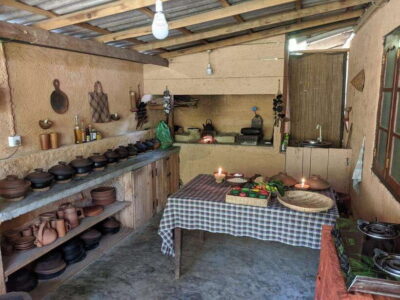
The day starts at 10am at Wasantha’s Sri Lanka Cuisine, at 180/A Yaddehimulla Road in Unawatuna. The same place is also the finishing point, which keeps the day simple. You do not need to find your way through Galle after the meal.
The cooking takes place in a family setting rather than a large commercial school. Wasantha is the main teacher, while her husband Sam and daughter Sasa may help with the market trip or the class. Her mother, son, and daughter have also been part of the family operation, giving the session a distinctly domestic feel.
That family involvement is one of the strongest reasons to choose this experience. You are not only being shown a recipe. You are seeing food as it is handled and shared at home, with stories, practical advice, and plenty of room for questions.
The setting may feel informal. That is part of its appeal, but it also means the pace and presentation can vary. If you value warmth and local contact more than a polished classroom, you will probably feel comfortable here.
The Dutch Market: choosing vegetables for lunch
The first major stop is the Dutch Market, reached by tuk-tuk. The market visit is not just a sightseeing detour. You help choose the vegetables and fruit that will become your meal.
This gives you a useful lesson before the knives and pans appear. You learn what local produce looks like, how to select ingredients, and which foods work well in curry. The exact selection can change, but past menus have included pineapple, pumpkin, aubergine, onion, and other vegetables that may be less familiar if you cook mostly European or North American food.
Sasa has led some market visits, while Sam has also taken on the role. Sam is a tour guide, so the ride and shopping trip can include practical information about Sri Lanka beyond food. You may find this especially useful if you are still getting your bearings around Unawatuna and Galle.
The market is also where the class feels most connected to daily life. You are not cooking from ingredients laid out in advance. You see where the meal begins, make choices, and return with food that has a clear connection to the place.
One small caution: market commentary can depend on who is leading the visit and the energy of the day. The shopping is a valuable part of the experience, but do not expect a formal lecture at every stall.
A second stop for fresh fish
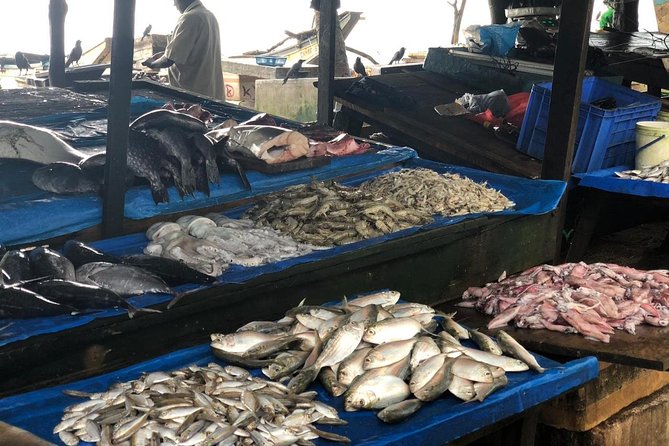
The day also includes a visit to a fish market. The class information describes a choice of tuna or chicken curry, and the fish market is where you can select fresh fish when tuna is your choice.
This short stop adds a useful contrast to the vegetable market. It shows how a Sri Lankan meal balances vegetable dishes with a more substantial curry. It also gives you the chance to choose ingredients based on what looks good that morning.
The advertised meal is built around four colorful vegetable curries plus a tuna or chicken curry. Some menus described in the experience have included tuna, while particular classes have prepared dishes such as tuna ambitar. The final combination can depend on what is available and what the group selects.
That flexibility is part of the charm, though it means you should not expect one fixed menu every time. If you have a strong preference, make it clear when the ingredients are being chosen. The class has also adapted recipes for food intolerances, but you should communicate those needs in advance rather than assume every dish can be changed.
Same kitchen, a different dish:
- Kandy Village Cooking Class
★ 5.0 · 536 reviews - Sea waves sri lankan cooking class
★ 5.0 · 467 reviews - Ella: Sri Lankan Cooking Class with Neranji at Homestay
★ 5.0 · 276 reviews - Ella : Cooking class with amazing Spice Garden Tour
★ 5.0 · 239 reviews
Coconut milk, spices, and the right way to cook rice
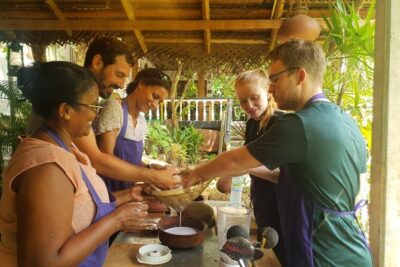
Back at the kitchen, the core lesson begins. Wasantha shows you how to make fresh coconut milk, an essential ingredient in many Sri Lankan curries. This is a more useful skill than simply opening a can, because it helps you understand how coconut changes the texture and flavor of a dish.
You also learn how to combine local herbs and spices. The instruction is practical rather than overly technical. Wasantha’s long experience lets her judge seasoning by smell and taste, and she explains the small adjustments that keep a curry from becoming flat or overpowering.
Rice receives special attention. Getting rice fluffy and separate is one of the most useful takeaways from the class, since rice is the base for the meal and a common trouble spot at home. You are shown the local approach to cooking it properly rather than being left with a vague instruction to cook until done.
This is where the class delivers lasting value. You can buy a jar of curry powder anywhere, but learning how coconut, spices, liquid, and rice work together gives you a better chance of recreating the meal later.
Five curries, with plenty of vegetable variety
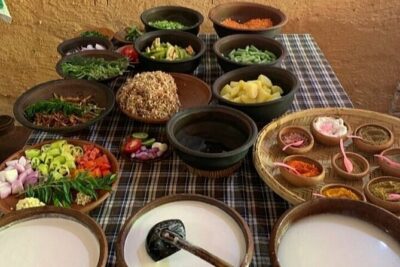
The advertised meal includes five curries: four vegetable curries and your choice of tuna or chicken curry. This is a generous amount of food for a four-hour session, and it gives you a proper introduction to the range of Sri Lankan cooking.
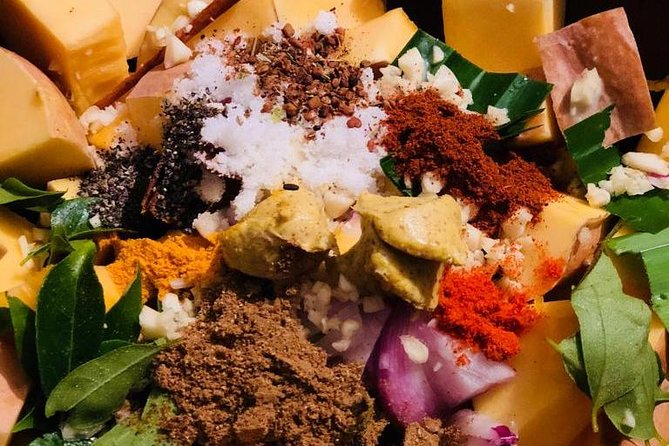
A typical selection may include dishes based on pineapple, dahl, aubergine and onion, or pumpkin. One class also featured an avocado curry, described as a family secret. The point is not just the number of dishes. It is the contrast between sweet, earthy, creamy, sharp, and spicy flavors on one plate.
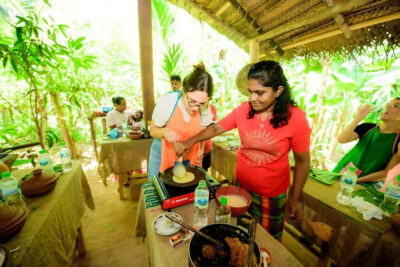
The group helps with preparation, but the division of work varies. You may cut vegetables, prepare fruit, and assist with the dishes. Wasantha handles much of the cooking and demonstrates the techniques, which is why I would describe this as a demonstration with hands-on elements rather than a fully participatory school.
That distinction matters when you book. You will learn a great deal by watching closely and asking questions, but you may not personally cook each curry from beginning to end. If your goal is to bring home a set of reliable family recipes, this format works well. If your goal is to practice every knife cut and seasoning decision yourself, it may feel limited.
A coconut sambol may also appear as an extra touch. It is a good example of how a small fresh side dish can sharpen an entire plate of curry.
The lunch is the reward, not an afterthought
When the cooking is finished, everything is served buffet-style for lunch. You eat the food you helped select and prepare, which gives the meal a satisfying sense of purpose.
The local way is to eat with your fingers. If that is new to you, the family can guide you, and you can take your time. Eating by hand is not a stunt added for visitors. It is a normal part of enjoying rice and curry, allowing you to combine small portions of rice, gravy, and vegetables as you go.
Lunch can be substantial. With five curries, rice, and possible extras such as sambol, you may not need much food later in the day. This is worth keeping in mind if you prefer a light midday meal.
The shared table is also where the family atmosphere is most noticeable. You are not rushing out after the final demonstration. You sit down together, talk about the dishes, and hear more about the food and the family behind it.
Recipes and useful lessons to take home
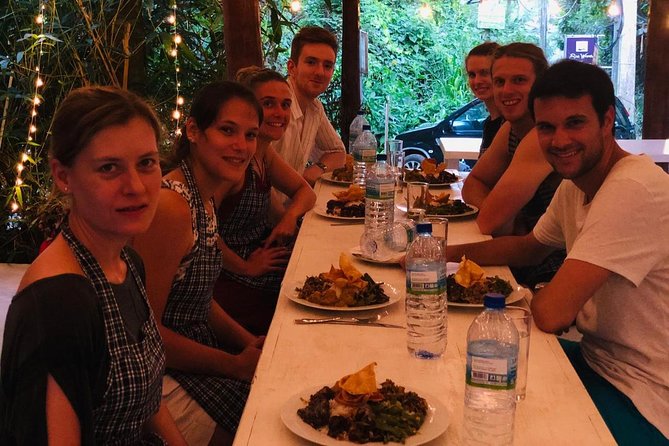
A particularly useful extra is the recipe material provided after the class. One participant received 21 recipes, which is far more practical than leaving with only a few hurried notes.
You are also invited to ask questions when you try the dishes at home. That kind of follow-up can help with the parts that are hard to remember, such as how much coconut milk to use or when to add a spice.
The class is at its best when you treat it as a starting point. Sri Lankan cooking is not always about exact measurements. You learn a method, then adjust it to the ingredients available in your own kitchen.
Price, group size, and practical details
The $30 price is strong value if your class includes the expected market transport, ingredients, instruction, and lunch. A four-hour market-and-meal experience can easily cost more through a larger school, especially when local tuk-tuk rides and a full spread of curries are included.
The group limit is 10 people. That is small enough to keep the family setting personal, although your actual experience will depend on how many people book for your date. A smaller group gives you more opportunity to ask questions and help with preparation.
The experience is near public transportation, and service animals are allowed. The tour starts and ends at the Unawatuna meeting point, with the market transport arranged as part of the day.
Confirmation is provided at booking. The experience requires good weather, and a weather cancellation results in another date or a full refund. You can cancel for a full refund up to 24 hours before the 10am start time. Inside that window, refunds are not offered and changes are not accepted.
Who should book Cook with Wasantha
I would choose this class if you want home-style Sri Lankan food, local market contact, and a family conversation in one outing. It suits curious eaters, couples, families, and anyone who wants recipes that can be tried again at home.
It is also a good choice if you want to see more than a standard restaurant meal. The market visits explain where the ingredients come from, while the kitchen shows how they are transformed.
Families should note that the cooking is not described as a children’s class, but the family setting may work well for older children who enjoy food and hands-on preparation. Anyone with dietary restrictions should raise them before the class, since the recipes can sometimes be adapted.
I would look elsewhere if your priority is a formal, highly structured cooking school. The teaching is warm and experienced, but it is not built around each person independently preparing every dish.
Should you book it?
Yes, if you want an authentic introduction to Sri Lankan cooking and do not mind a demonstration-led format. The strongest parts are the two markets, fresh coconut milk, the rice lesson, the large range of curries, and the chance to eat with the family afterward.
Book it for the connection between shopping, cooking, and eating. Skip it only if you need a fully hands-on class with individual workstations and strict, measured instruction. At $30, the combination of transport, food, recipes, and four hours with Wasantha’s family makes it a worthwhile choice for most food-focused visits to Unawatuna and Galle.
FAQ
Where does Cook with Wasantha begin?
The experience begins at Wasantha’s Sri Lanka Cuisine, 180/A Yaddehimulla Road, Unawatuna, Sri Lanka.
What time does the class start?
The class starts at 10am.
How long does the experience last?
It lasts approximately four hours.
Where does the experience end?
It ends back at the same meeting point in Unawatuna.
Is transport included?
The market visits are reached by tuk-tuk, and the experience information states that transport is included in the price.
How many people can join?
The group is capped at a maximum of 10 people.
Which markets will you visit?
You visit the Dutch Market and a fish market.
What food will you cook?
The advertised meal includes fresh coconut milk, rice, four vegetable curries, and your choice of tuna or chicken curry.
Is the class fully hands-on?
It includes hands-on preparation, such as cutting vegetables and fruit, but much of the cooking is demonstrated by Wasantha.
Can you cancel for a refund?
Yes. You can cancel at least 24 hours before the start time for a full refund. Cancellations or changes made within 24 hours are not refunded or accepted.
New cooking classes around Sri Lanka
- Private Traditional Sri Lankan Cooking Class in Kandy★ 5.0 · 7 reviews
- Private cooking class – Personalized classic menu★ 5.0 · 5 reviews
- Nilaveli: Sri Lankan Cooking Class with a Local Family★ 5.0 · 16 reviews
- Mirissa: Cooking Class with Beer and Meal★ 3.3 · 4 reviews
- Kandy Cooking Class with Granny★ 4.9 · 95 reviews
- Kandy: Village Cooking Class 12 Dishes with Market Tour★ 5.0 · 6 reviews
- Hands-On Cooking Class in Anuradhapura: Cook Like a Local★ 5.0 · 5 reviews
- Galle: Traditional Sri Lankan Cooking Class★ 5.0 · 21 reviews
Galle Cooking Classes, side by side.
Galle: Cooking Class at a Local Home and Market Tour
Read our review →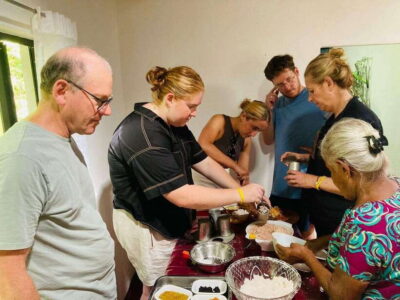
This kitchen also appears in