
Review · AUSTRIA
Cookies and Apple Strudel Cooking Class Including Lunch
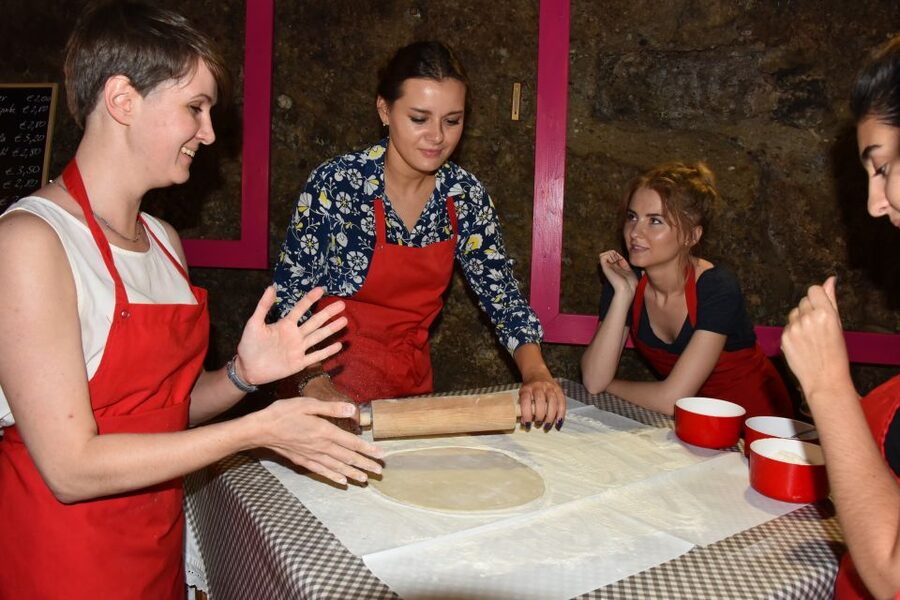
The best part of this Salzburg class is that you do not simply watch a chef work. You stretch the strudel dough, season the apples, shape your own cookies, and eat the results while they are still warm. I especially like the hands-on format and the unusual kitchen built into the rock, which gives the 90-minute lunch stop a cozy sense of place.
I also like that the class works for more than serious cooks. The instructions are clear, children can take part, and the groups are divided into tables of two to four people. The main thing to consider is the timing: a few people find the class slightly brisk, so it suits you best if you enjoy an active lesson rather than a slow, leisurely meal.
Key points to know before booking
- Stretch real Austrian strudel dough: You take part in the full process, from marinating the apples to pulling the pastry thin.
- Bake Salzburg’s favorite cookie: You shape vanilla kipferl, a buttery crescent cookie popular in the region.
- Lunch is built into the lesson: Goulash soup arrives while your desserts bake, and the finished strudel and cookies follow.
- Small groups keep the class practical: Up to 15 people attend, with smaller tables of two to four for easier help.
- The setting is part of the appeal: The cooking school is at Ursulinenplatz 9, near Salzburg’s old town, in a kitchen built into the rock.
- Good value at $70: The price includes the class, food, taxes, fees, and handling charges, but not drinks.
Why this cooking class fits Salzburg so well
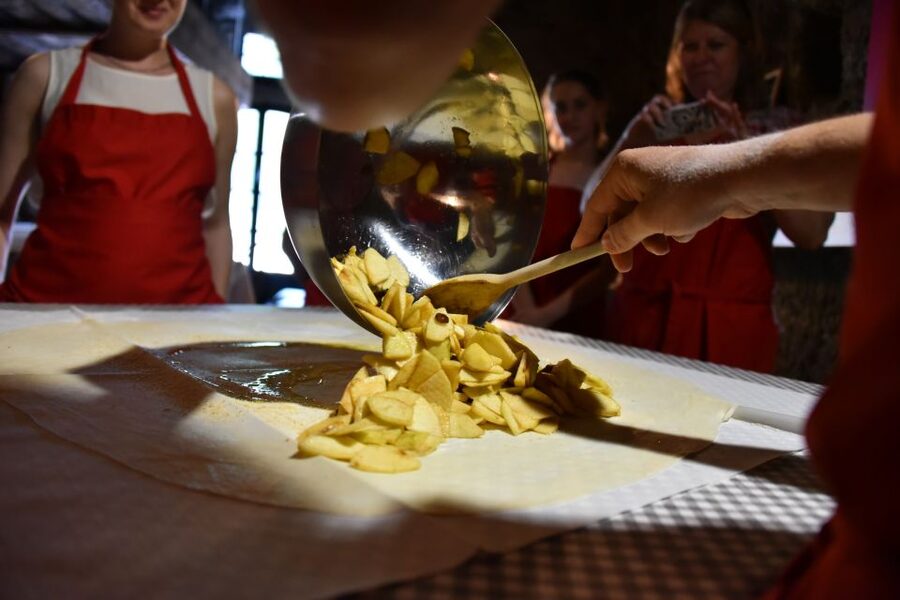
Salzburg is famous for music, grand buildings, and mountain views, but food gives you another way into the city. Apple strudel is not just a dessert here. It is one of the best-known sweets in Austrian cooking, and making it yourself turns a familiar café item into something you understand.
The Edelweiss Cooking School keeps the focus on participation. You are not placed at the back of a large demonstration kitchen, trying to see over someone’s shoulder. The class size is capped at 15, then divided among tables of two to four people. That matters because pastry work can be fiddly. You want room to handle the dough and a teacher who can step in when needed.
I like this setup for couples, families, and solo visitors. You work with others, but the table groups give you a manageable task rather than a noisy free-for-all. The class also creates easy conversation. You are handling apples and pastry beside people from different countries, so the social part happens naturally without needing a formal group activity.
The setting adds character. The school is in a historic building with a kitchen built into the rock, described by past participants as a cooking cave or a kitchen on the side of the mountain. The exact feel will depend on your class location and timing, but you can expect something more memorable than a plain modern classroom.
More cooking classes around the world:
- Half-Day Thai Cooking Class at Organic Farm in Chiang Mai
★ 5.0 · 19,087 reviews - Florence: Pasta Cooking Class with Unlimited Wine
★ 4.9 · 10,285 reviews - 3 in 1 Cooking Class near Navona: Fettuccine, Ravioli & Tiramisu
★ 5.0 · 7,376 reviews
Meeting the chef at Ursulinenplatz 9
The cooking school is at Ursulinenplatz 9, 5020 Salzburg. It is about a 10-minute walk from Mirabell Square or Mozart Square, making it easy to fit into a day in the old town.
The location is useful for planning. You can take the class after a morning tour, then continue with afternoon sightseeing. It also works in reverse if you want a substantial activity before visiting Salzburg’s Christmas markets or other central sights.
The class is taught in English. Instructors have included Agnes, Alina, Ishmael, Johann, and Simone, and the teaching style is warm and practical. You should expect a demonstration before you begin, followed by clear instructions and help at the table when you need it.
This is not a chef-training course. You will not be expected to know pastry terms or arrive with special skills. The value is in learning the basic method, trying it with your own hands, and understanding why the finished dessert works.
Making your own apple strudel from scratch
The strudel is the centerpiece. You begin with the apple filling, including the stage described as marinating the apples. This is a small but useful lesson because the filling needs more than sliced fruit. The apples must be seasoned so the finished pastry has flavor beyond sweetness.
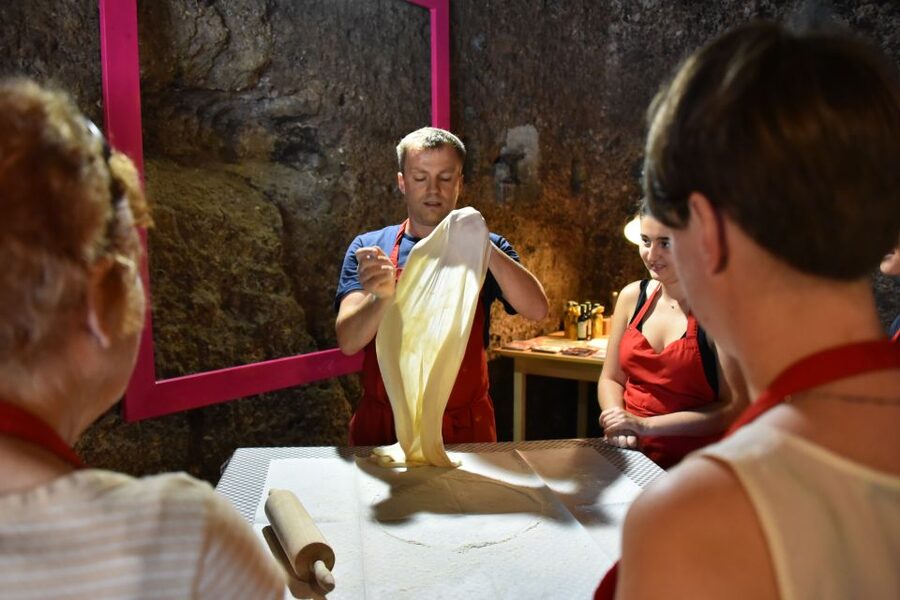
Then comes the part many people find most satisfying: stretching the dough. Strudel pastry needs to become thin, and pulling it out by hand can feel risky at first. You might worry about tearing it, but that is exactly why doing it with an instructor nearby is helpful.
You take part in all stages of preparation rather than handing the difficult work to the chef. That gives you a better sense of what makes Austrian strudel different from a standard apple pie. The pastry is delicate, the filling is lighter, and the finished dessert has a crisp outer layer.
The process is also good for families. Children aged five and eight have taken part successfully, and older children can usually follow the same steps as adults with supervision from their own table. The work is tactile without being too complicated, which makes it a practical family activity on a cold or rainy Salzburg day.
After assembling your strudel, you put it in the oven. This creates the natural pause in the class. You have finished the most technical part, but the food is not ready yet, so the lesson moves to cookies and lunch instead of leaving you standing around.
Shaping vanilla kipferl cookies
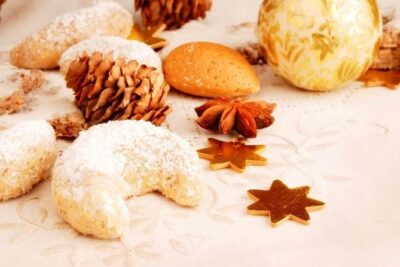
While the strudel bakes, you make vanilla kipferl. These crescent-shaped cookies are among Salzburg’s most popular sweets, especially around the Christmas season, though the class is useful at any time of year.
The cookie activity is simpler than the strudel, but it gives you another Austrian baking tradition to try. You shape the dough yourself, and the process is easy enough for children and first-time bakers. Some classes also offer a small taste of cookie dough, which adds a playful touch to the session.
The cookies are a good counterpoint to the strudel. The strudel teaches pastry stretching and filling, while the kipferl focuses on shaping and texture. You finish with two different baked treats rather than one recipe repeated in several forms.
Do not expect to produce bakery-perfect crescents on your first try. That is part of the fun. Your cookies may vary in size or shape, but they are still yours, and you get to taste them after baking. If you have extra food, you may be able to take some home, though the amount will depend on what you make and eat during the class.
Same kitchen, a different dish:
- Florence: Pasta & Tiramisu Cooking Class with Unlimited Wine
★ 4.9 · 6,708 reviews - Florence: Pasta Cooking Class with Unlimited Wine
★ 5.0 · 6,413 reviews - Hanoi Cooking Class: Culture, Local Market & Meaning CSR Impact
★ 5.0 · 5,147 reviews - 5 Traditional Dishes Hanoi Cooking Class with Market Trip
★ 5.0 · 4,890 reviews
Goulash soup turns the lesson into lunch
The class includes goulash soup, served while the strudel and cookies are in the oven. This is more than a token snack. It turns the cooking lesson into a proper lunch break and gives you something savory before the sweet course.
The soup is especially welcome in winter, when Salzburg can be cold and a warm bowl makes the class feel comfortable rather than rushed. It also balances the dessert-heavy menu. You have a savory Austrian-style dish first, then your own baking for dessert.
The food included in the $70 price is the goulash soup, your prepared strudel, and your cookies. Drinks are not included. Beer, wine, and schnapps may be available to purchase at reasonable prices, but plan to pay extra if you want something with lunch.
This is an important value point. A 90-minute class at $70 is not the cheapest way to eat lunch in Salzburg. You are paying for instruction, ingredients, a memorable setting, and the chance to make the food yourself. If you only want soup and dessert, a café will cost less. If you want an activity that also provides lunch, the price makes more sense.
A closer look at the 90-minute schedule
The lesson is compact. A typical flow looks like this:
- Introduction and demonstration from the English-speaking instructor
- Preparation and seasoning of the apples
- Stretching and assembling the strudel
- Shaping vanilla kipferl cookies
- Goulash soup while the baking finishes
- Tasting the warm strudel and cookies
The schedule keeps you busy, which is one reason the class feels lively. There is little dead time, and each stage leads into the next. The possible downside is that you may not have much time for long questions or relaxed conversation between tasks.
If you want a slow cooking workshop with detailed culinary theory, this may feel too short. If you want a well-organized activity that fits neatly between sightseeing plans, the pace is useful.
I would allow extra time around the 90-minute duration for walking to the school, finding the entrance, and settling in. The official class length is short enough to combine with another central Salzburg activity, but you should not schedule a major attraction immediately afterward if you dislike watching the clock.
Who will enjoy this class most
This is a strong choice for families. Children can participate in the same tasks as adults, and the mixture of stretching dough, shaping cookies, eating soup, and tasting dessert gives the class enough variety to hold attention.
Couples will like it for the same reason. You can work together at a small table, then share the finished food. It is more social than a standard restaurant meal and less demanding than a full-day culinary course.
Solo visitors can also fit in easily. The group format gives you a ready-made social setting, and the cooking tasks offer an easy way to talk with others. You will not need to bring a partner to make the activity worthwhile.
I would also recommend it to visitors who have already taken a morning walking tour or plan to spend the afternoon in the old town. It fills a meal period while adding a distinctly Austrian skill to your day.
You may want to skip it if you dislike sweet foods, prefer a quiet lunch, or have very little flexibility in your schedule. The class centers on dessert, and the hands-on work requires you to take part rather than simply sit back.
Practical details that affect your choice
The price is $70 per person. Taxes, fees, handling charges, and lunch are included, while drinks cost extra. At that rate, the best value comes from treating the class as both an activity and a meal.
The maximum group size is 15, with tables of two to four people. Smaller classes can feel especially personal because the instructor has more time to help each table. Larger sessions should still be manageable, but your experience may depend on where you are seated and how much individual help you need.
English instruction is provided, and the activity is wheelchair accessible. You should check the available start times before booking because the 90-minute lesson runs at set times.
Cancellation is free up to 24 hours in advance for a full refund. You can also reserve now and pay later, which helps if your Salzburg plans are still shifting.
The class has a 4.9 rating from 156 reviews, but the useful point is not just the number. The repeated strengths are clear: friendly instructors, easy-to-follow demonstrations, tasty food, a pleasant group size, and the satisfaction of eating what you made.
Is the Edelweiss Cooking School class worth booking?
I would book this class if you want a practical Salzburg activity that combines food, local tradition, and conversation. The strongest features are the genuine hands-on strudel work, the rock-built kitchen, and the included goulash lunch.
At $70, it is best viewed as a compact cooking experience with a meal, not as a bargain lunch. Book it for a rainy afternoon, a family outing, a break between city sights, or a way to meet people while doing something useful and fun.
Skip it if you are seeking an advanced pastry course or a long, quiet dining experience. For most visitors who enjoy trying local food and learning by doing, the chance to pull your own strudel dough and eat it warm from the oven makes this one of Salzburg’s more memorable short activities.
FAQ
How long does the cooking class last?
The class lasts 90 minutes.
Where does the class meet?
It meets at Ursulinenplatz 9, 5020 Salzburg, about a 10-minute walk from Mirabell Square or Mozart Square.
What food will I make?
You will make an Austrian apple strudel and vanilla kipferl cookies, a popular Salzburg cookie.
Is lunch included?
Yes. Goulash soup is included, along with the food you prepare and bake during the class.
Are drinks included?
No. Drinks are not included in the price.
What language is the class taught in?
The class is taught in English.
Can I cancel the booking?
Yes. You can cancel up to 24 hours in advance for a full refund. Reserve now and pay later is also available.
New cooking classes around the world
- Shinjuku Tokyo: Authentic Japanese Home-Style Culinary Class★ 4.9 · 125 reviews
- Shibuya Tokyo: Onigiri & Tamagoyaki Cooking Class★ 5.0 · 4 reviews
- M.O.M COOKING CLASS★ 4.8 · 6 reviews
- Shanghai: Authentic Chinese Cooking Class with Master Chef★ 5.0 · 2 reviews
- Seville: Paella-Cooking Experience with Sangria & Full Meal★ 4.9 · 42 reviews
- Sestri Levante: Pesto & Cooking Classes, Wine Tasting★ 4.9 · 56 reviews
- Seville: Paella Cooking Class & 30-Min Local Expert Q&A★ 4.8 · 37 reviews
- Seoul: Korean Kimchi Cooking Class in the Heart of the City★ 5.0 · 3 reviews
Austria Cooking Classes, side by side.
Austrian Apple Strudel Cooking Class including Lunch in Salzburg
Read our review →
Salzburg Christmas Cookies and Apple Strudel Cooking Lesson
Read our review →
Vienna: Traditional Kaiserschmarrn Cooking Class & Tasting
Read our review →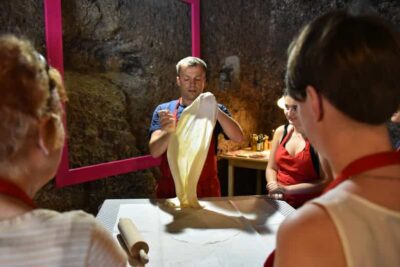
Original Sound of Music Tour & Edelweiss Cooking Class
Read our review →This kitchen also appears in