
Review · MARRAKECH
Marrakech: Authentic Moroccan Cooking Class in a Farm
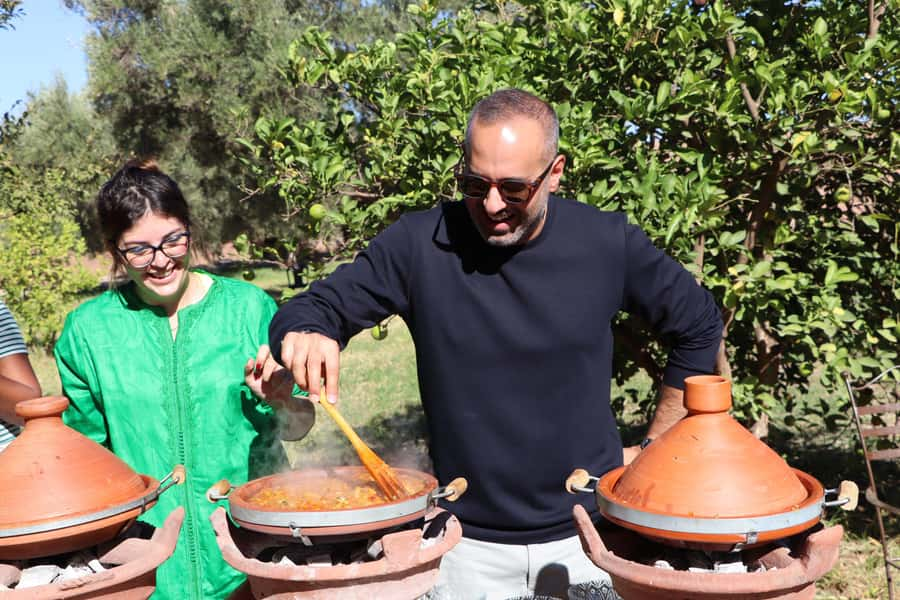
The best part of this three-hour outing is that you do not just watch a chef cook. You peel, chop, season, and slowly cook your own Moroccan tajine at a private farm outside Marrakech. The lesson also covers fresh salad and mint tea, so you leave with a full meal and skills you can use at home.
I especially like the quiet farm setting, a fine change after Marrakech’s noise and traffic. I also like the patient, personal teaching from hosts such as Khaoula, Nisrine, and Zakaria, who explain each step clearly and make room for beginners and families.
One point needs plain warning: the animal area has drawn concern about animal care. If that would upset you, enjoy the cooking and garden without taking the farm walk. The food lesson itself has received a much stronger response than that part of the visit.
Key points to know before booking
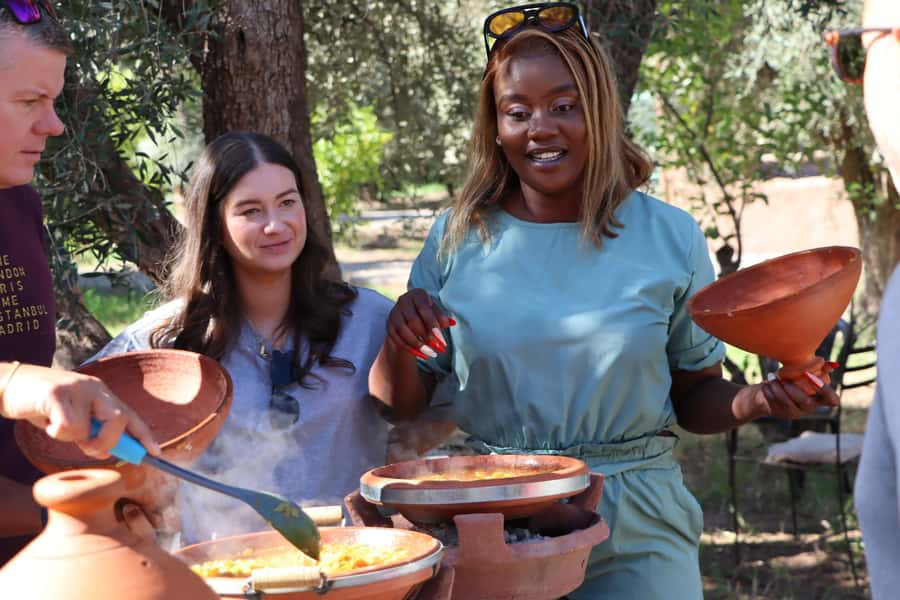
- You cook instead of watching: Prepare tajine, salad, and mint tea with direct help from your host.
- The farm changes the mood: A roughly 25-minute drive from central Marrakech can feel far removed from the city.
- Khaoula is a frequent host: She is described as calm, friendly, patient, and clear with beginners.
- You eat the meal you make: Lunch includes Moroccan salad, a main course, mint tea, and local pastries.
- Organic ingredients are central: The class focuses on healthy produce and Moroccan spices, with farm-grown ingredients used in at least some sessions.
- Animal conditions are worth considering: The farm has chickens, turkeys, horses, a cow, and a chained dog, and the animal areas may not meet every visitor’s expectations.
From Marrakech streets to a farm kitchen
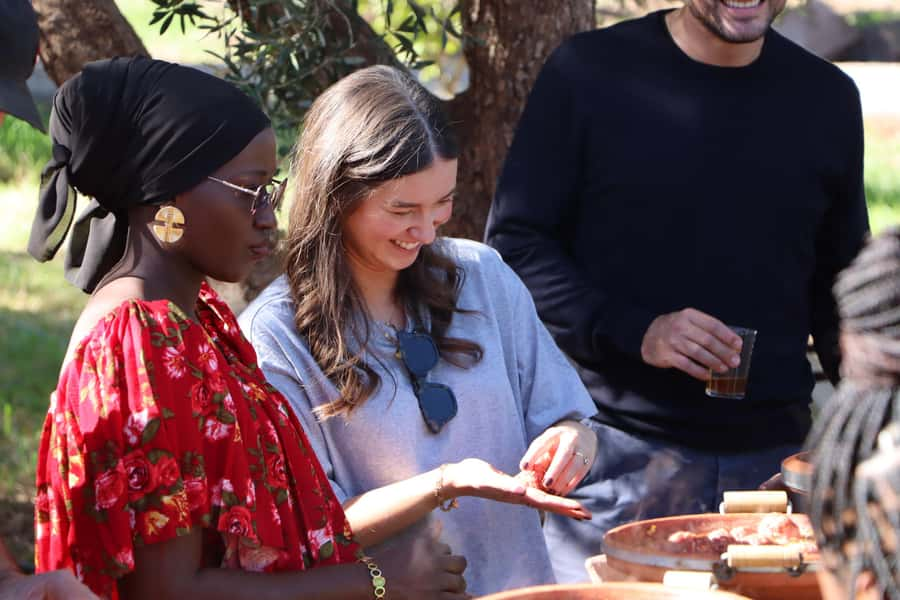
Your driver collects you from your hotel and takes you to a private farmhouse in the Marrakech-Safi region. One family described the journey as about 25 minutes from the city center, though the exact time depends on your pickup point and traffic.
That short ride matters. Marrakech can be loud, crowded, and demanding, especially after a few days in the medina. Here, the cooking class gives you a change of pace without taking up a full day. You trade scooters and shopkeepers for garden space, trees, and a slower lunch.
The setting includes orange, lemon, and olive trees. There are also horses and other animals on the property. The kitchen and meal area use traditional Moroccan cookware and tableware, which helps the class feel tied to local home cooking rather than a standard restaurant lesson.
Your English-speaking host introduces the session and explains how it will work. This is a hands-on class, not a demonstration where you sit back and take notes. You should expect to handle the basic preparation yourself while the host guides you through the process.
More Moroccan Cooking Classes around Marrakesh:
- Marrakech: Moroccan Cooking Class with Pickup
★ 4.6 · 1,862 reviews - Marrakech: Traditional Moroccan Cooking Class & Market Visit
★ 4.8 · 1,861 reviews - Marrakesh: Moroccan Dishes Cooking Class with a Local Chef
★ 5.0 · 1,615 reviews
Preparing tajine one step at a time
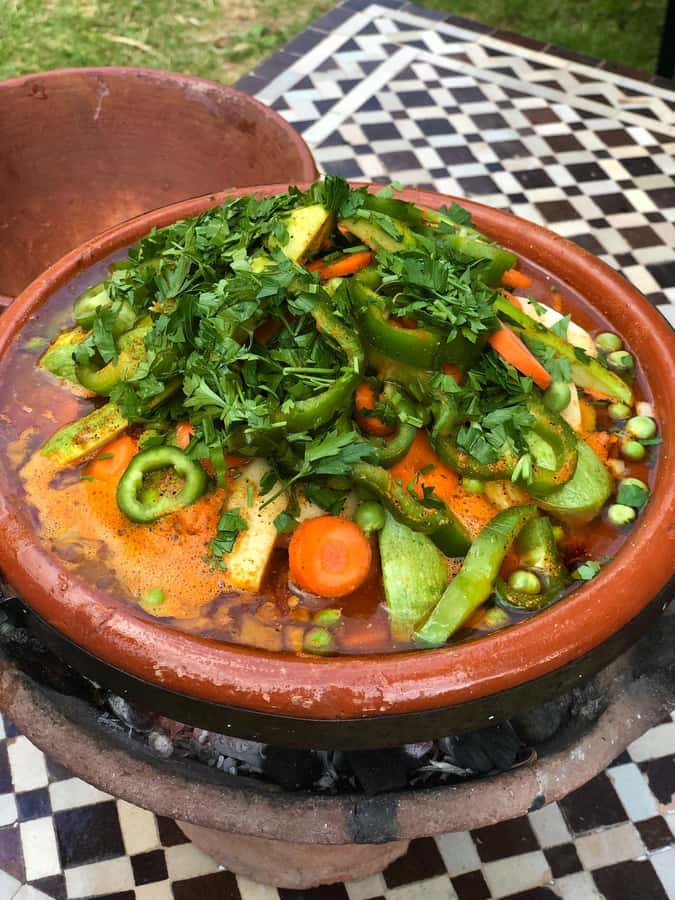
The central dish is Moroccan tajine, a slow-cooked meal named after the distinctive clay cooking vessel. The exact recipes can vary, but the class teaches the method rather than asking you to follow a fixed restaurant menu.
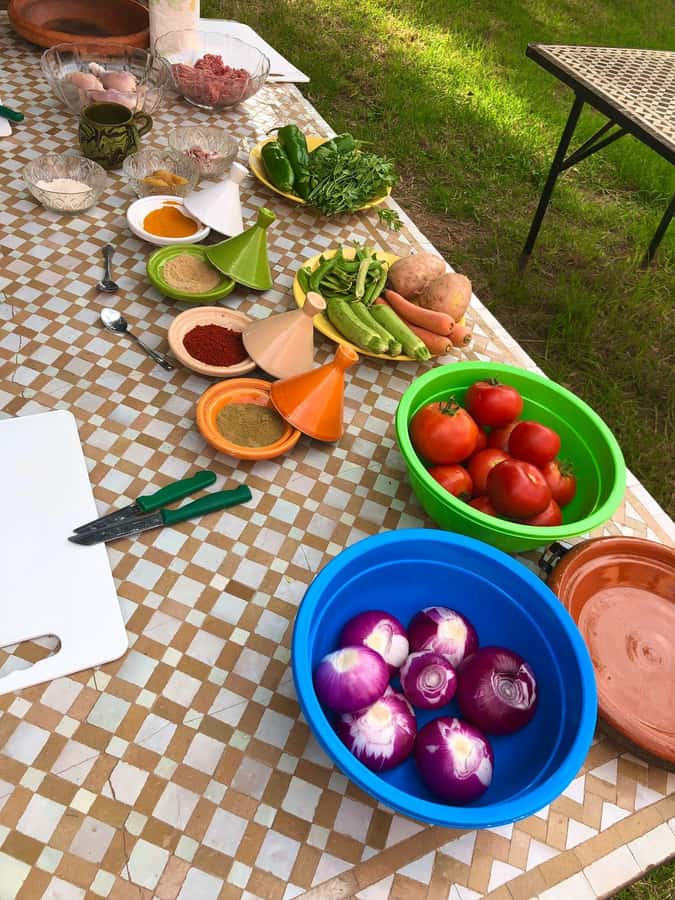
You will work with vegetables, spices, and, depending on the chosen dish, chicken. One session prepared both chicken and vegetable tajines, while another included two different tajine dishes and two salads. That suggests the menu may be adjusted to the group or the day’s ingredients.
The work is practical and simple enough for beginners. You may peel and chop vegetables, prepare chicken, measure or mix spices, and arrange ingredients for cooking. Your host explains what each ingredient does and shows you techniques that can be repeated in your own kitchen.
This is where the class offers real value. Moroccan food can look complicated when you see a finished tajine surrounded by vegetables and sauce, but the basic method is approachable. You learn how to build flavor with spices, fresh produce, and slow cooking rather than relying on hard-to-find equipment.
The class is also useful if you cook for a family. A 12-year-old took part successfully in one family session, and the instruction was described as patient and calm. Younger children may need help with knives and hot cookware, but the format gives them something active to do.
Salad and mint tea complete the meal
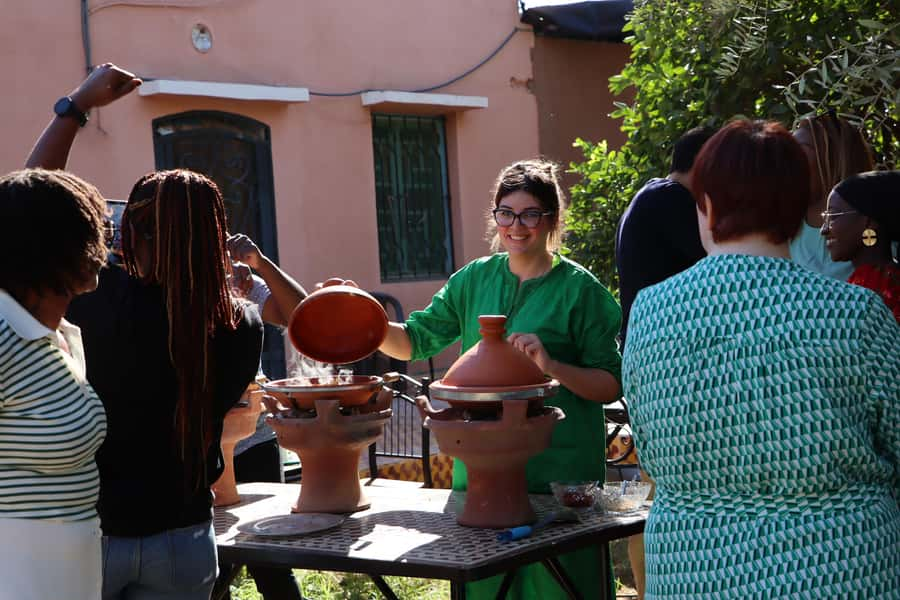
The tajine gets most of the attention, but the salad and tea make the class feel like a full Moroccan meal rather than a single-dish workshop.
You prepare a fresh Moroccan salad alongside the main course. The ingredients and style can vary, but the point is to balance the warm, slow-cooked tajine with something crisp and fresh. It is also another chance to practice seasoning and preparation under your host’s eye.
Then comes Moroccan mint tea. Your host explains the full process, including the traditional preparation. Tea is not just a drink served at the end of a meal in Morocco. It is part of the welcome and the social rhythm, so learning how it is made adds cultural context to the food lesson.
Lunch also includes local pastries. After the cooking is done, you sit with your host and eat the food you prepared. That shared meal is an important part of the experience. You are not rushing off after the final instruction, and you have time to talk about Moroccan cooking and life in Marrakech.
Khaoula, one of the hosts, has been especially appreciated for discussing international food and suggesting other things to do in the city. If you enjoy conversation as much as cooking, that personal time can be one of the strongest parts of the visit.
Why the farm setting works
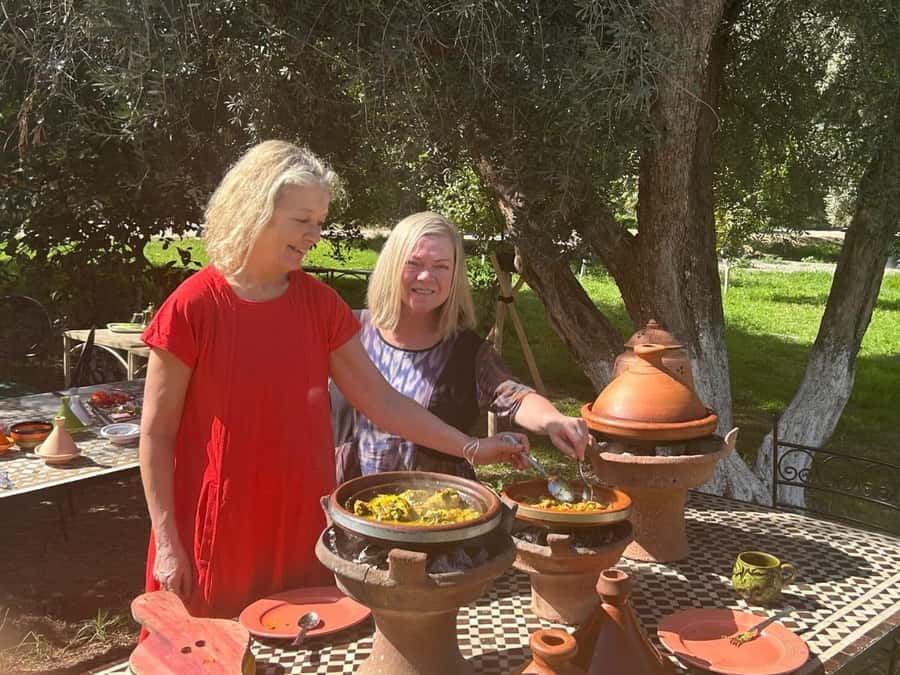
A cooking school in the city could teach you the same basic tajine method. The farm adds a sense of place and gives the class breathing room.
You see fruit trees, olive trees, and farm produce close to where the meal is prepared. One participant noted that the ingredients used during the session were grown on the farm. The class description also emphasizes organic ingredients, healthy produce, and local spices.
You should not expect a large commercial agricultural operation. The property includes some fruit trees and animal sheds, but one account described it as land with a few animals rather than a fully developed farm. That distinction matters if you are booking mainly for an agricultural tour.
The garden setting is best understood as a backdrop for the cooking rather than the main attraction. It gives you a quiet place to prepare and eat lunch, and it helps connect the food to the countryside. The class remains the focus.
More Farm Cooking Classes in Marrakesh:
- Moroccan Cooking Class: Farm-to-Table Tagine
★ 5.0 · 50 reviews - Half-Day Thai Cooking Class at Organic Farm in Chiang Mai
★ 5.0 · 19,087 reviews - Cooking Class and Lunch at a Tuscan Farmhouse with Local Market Tour from Florence
★ 5.0 · 4,831 reviews - Chiang Mai: Cooking Class, Market & Thai Herbs Garden Tour
★ 4.9 · 4,824 reviews
The animal welfare question
I would not skip the experience without considering this issue, but I would make the choice with open eyes.
The property has chickens, turkeys, horses, a cow, and a chained dog. Several accounts describe the horses and garden positively, yet one person found the animal conditions upsetting and felt some animals were neglected. Standards and expectations can differ from country to country, but that concern is specific enough to take seriously.
If you are sensitive to animal welfare, you can keep your visit centered on the cooking, garden, and meal. You do not need to treat the animal area as a required part of the day. If seeing farm animals is a major reason you want to book, you may prefer an experience with a clearly described animal-care program instead.
For most people, this is a food class held on a farm, not an animal visit. That is the most accurate way to set your expectations.
How much value you get for $78
At $78 per person, this is not the cheapest way to eat tajine in Marrakech. A restaurant meal will cost less, and you can find cooking demonstrations at different price points.
The value comes from what is bundled into the three-hour visit. You receive hotel pickup and drop-off, an English-speaking host or chef, hands-on instruction, lunch, Moroccan mint tea, and local pastries. You also get a countryside setting and direct help with techniques that you can use again.
Transport adds practical value. You do not need to arrange a taxi to an unfamiliar rural address or negotiate the return trip. For a first visit to Marrakech, that can remove a fair amount of hassle.
The price makes the most sense if you want more than lunch. You are paying for instruction, transport, setting, and time with a local host. It is also a reasonable option for a couple or family that wants a shared activity instead of another sightseeing stop.
I would be less likely to choose it if your only goal is to eat Moroccan food cheaply, or if you want a formal culinary school with advanced technique. This is relaxed home-style cooking, built around participation and conversation.
Who will enjoy this class most
This outing fits several types of visitors particularly well:
- First-time cooks: The steps are explained clearly, and the class does not assume advanced skills.
- Families: Children can take part in simple preparation with adult supervision.
- Couples: The farm and shared meal create a slower half-day away from the city.
- Food-focused visitors: You learn tajine, salad, spices, and tea in one session.
- Visitors needing a break: The countryside setting provides a pause after time in the medina.
- People interested in Moroccan home cooking: The traditional cookware and meal format add useful local context.
It may suit you less if you want a fast, highly structured class with exact recipes and professional kitchen equipment. The atmosphere is described as relaxed, and the menu may change between chicken, vegetable, or more than one tajine.
What to bring and how to prepare
Wear comfortable clothes that you do not mind cooking in. You will be peeling, chopping, and handling food, so this is not a sit-down tasting.
Bring a little patience. Moroccan tajine is slow food, and the class includes preparation, cooking, tea, lunch, and conversation within three hours. The pace is part of the appeal, but it is not designed for someone trying to squeeze in a quick meal before another appointment.
If you have dietary needs, confirm them before booking. The provided details do not specify vegetarian, vegan, allergy, or halal arrangements. Since the menu has included chicken and vegetable tajines, it may be possible to adapt some sessions, but you should not assume this without asking.
The class is conducted in English. Hosts named in the experience include Khaoula, Khawla, Nisrine, and Zakaria, so the person leading your session may vary. Khaoula in particular has been praised for clear explanations, patience, and a warm manner.
Free cancellation is available up to 24 hours before the activity for a full refund, and you can reserve while paying later. Those policies are useful if your Marrakech plans are still shifting.
My verdict on the cooking, setting, and service
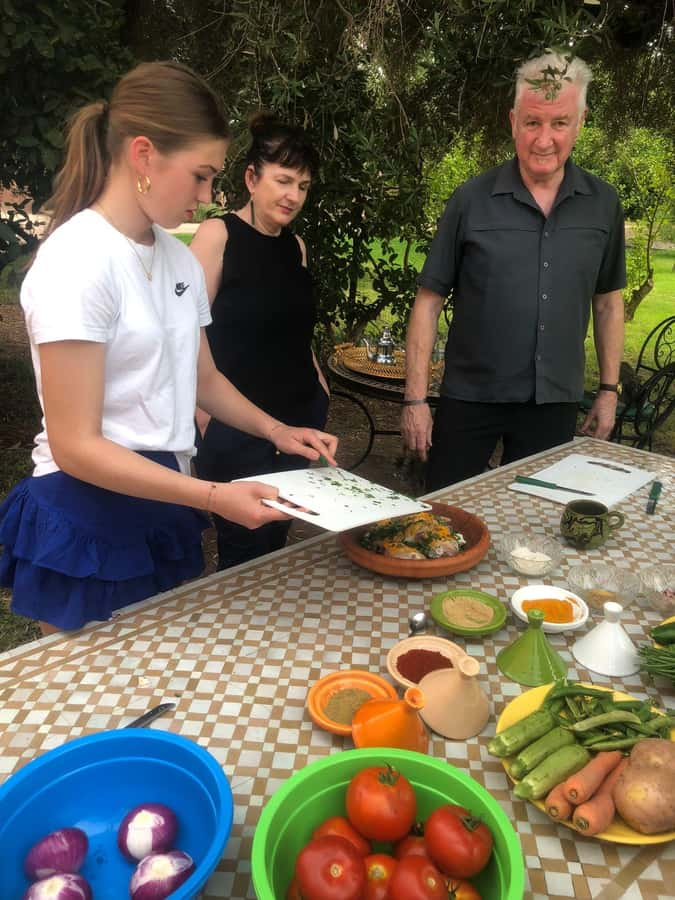
The cooking is the strongest reason to book. You get to prepare several parts of a Moroccan meal, and the instruction is practical enough to repeat at home. The hosts are described as friendly and patient, with Khaoula receiving especially strong praise for her calm teaching.
The farm setting adds a welcome change from Marrakech, but it should not be oversold as a major farm tour. You will find trees, outdoor areas, and animals, yet the property is also described as basic in parts. The animal-care concern is the main drawback and deserves more attention than the usual minor complaints about a tour.
The included pickup and drop-off help justify the cost. So does the meal, since you are eating the result of your own work rather than receiving a prepared lunch alone.
Should you book this Marrakech tajine class?
Book it if you want a personal, low-pressure introduction to Moroccan cooking, especially after a few crowded days in Marrakech. The combination of hands-on food preparation, a quiet farm, hotel transport, and lunch with your host gives you more than a standard restaurant meal.
I would choose it for a family, couple, or first-time visitor who values local conversation and practical cooking skills. I would hesitate only if animal welfare is a major concern, if you expect a polished agricultural attraction, or if you want advanced chef training.
For the right person, this is a satisfying half-day: you leave the city, make a meal with Moroccan spices, learn how mint tea is prepared, and sit down to eat what you cooked. Just keep the farm visit focused on the kitchen and garden if the animal area worries you.
FAQ
How long does the Moroccan cooking class last?
The activity lasts three hours.
What food will I prepare?
You will prepare a traditional Moroccan tajine, a fresh Moroccan salad, and Moroccan mint tea. Lunch also includes local pastries.
Is the class hands-on?
Yes. You take part in the preparation rather than only watching a demonstration. The host explains each step as you work.
Is hotel transportation included?
Yes. Pickup and drop-off from your hotel are included.
How far is the farm from Marrakech?
One family described the drive from central Marrakech as approximately 25 minutes. The exact time depends on your hotel and traffic.
What language is the class taught in?
The instructor teaches in English.
Who leads the cooking class?
The experience uses local hosts and chefs. Names connected with the sessions include Khaoula, Khawla, Nisrine, and Zakaria, though your host may vary.
Can I cancel for a full refund?
Yes. You can cancel up to 24 hours in advance for a full refund. You can also reserve now and pay later.
New cooking classes around Marrakesh
- Moroccan Food Cooking Class with a Local Chef in Marrakech★ 4.7 · 90 reviews
- Marrakech: 3-Hour Open-Air Moroccan Cooking Course★ 4.9 · 74 reviews
- Moroccan cooking class in Marrakech with berber chef★ 5.0 · 16 reviews
- Edgy 8 Dish Private, Fusion Cooking Class, Menu Plan, Market★ 4.9 · 31 reviews
- Marrakesh: Private Cooking Class & Local Market Shopping★ 4.7 · 15 reviews
- Marrakech: Moroccan Cooking Class for vegetarians and vegan★ 4.9 · 156 reviews
- Marrakech: Moroccan Cooking Class with Amazing Local Chef!★ 4.9 · 100 reviews
- Marrakech: Moroccan Cooking Class with Local Chef★ 4.6 · 87 reviews
Marrakech Cooking Classes, side by side.

Marrakech: Moroccan Cooking Class with Pickup
Read our review →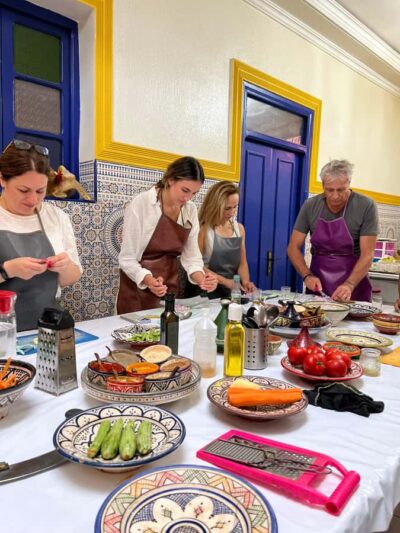
Marrakech: Traditional Moroccan Cooking Class & Market Visit
Read our review →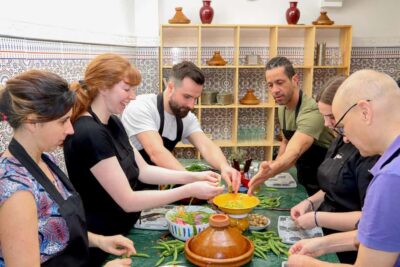
Marrakesh: Moroccan Dishes Cooking Class with a Local Chef
Read our review →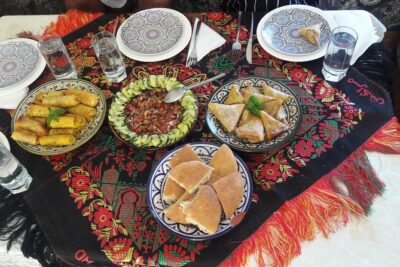
Moroccan Cooking Class & Marrakech Market Visit with Chef Khmisa
Read our review →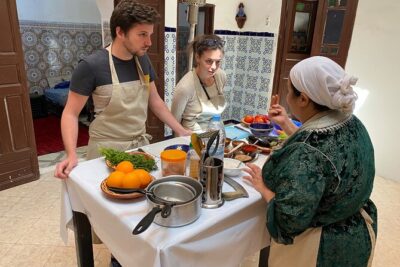
Half-Day Cooking Class with Local Chef Laila in Marrakech
Read our review →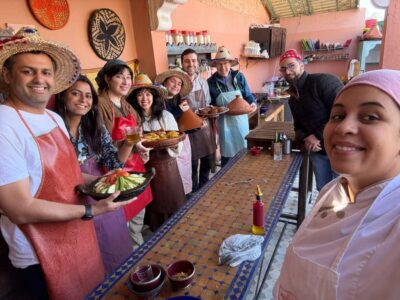
Marrakech: Moroccan Cooking Class with a Local Family
Read our review →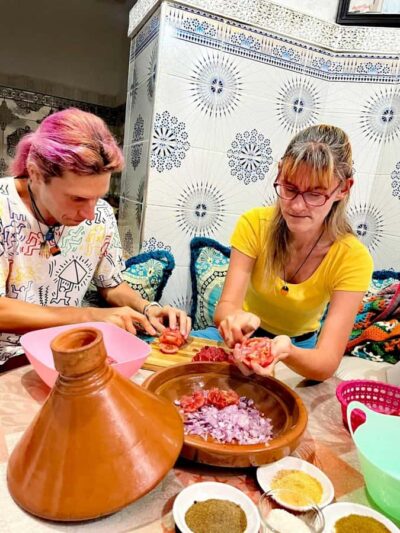
Marrakech: Moroccan Cuisine Cooking Class in Local Home
Read our review →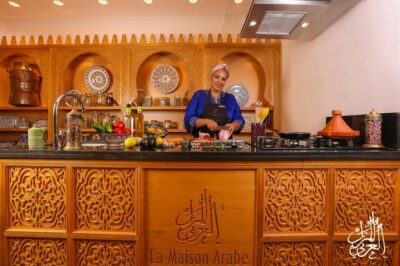
Marrakech: Moroccan Cooking Workshop at La Maison Arabe
Read our review →This kitchen also appears in