
Review · COOKING CLASSES WORLDWIDE
Pachamama – Argentine Cooking Experience in Buenos Aires
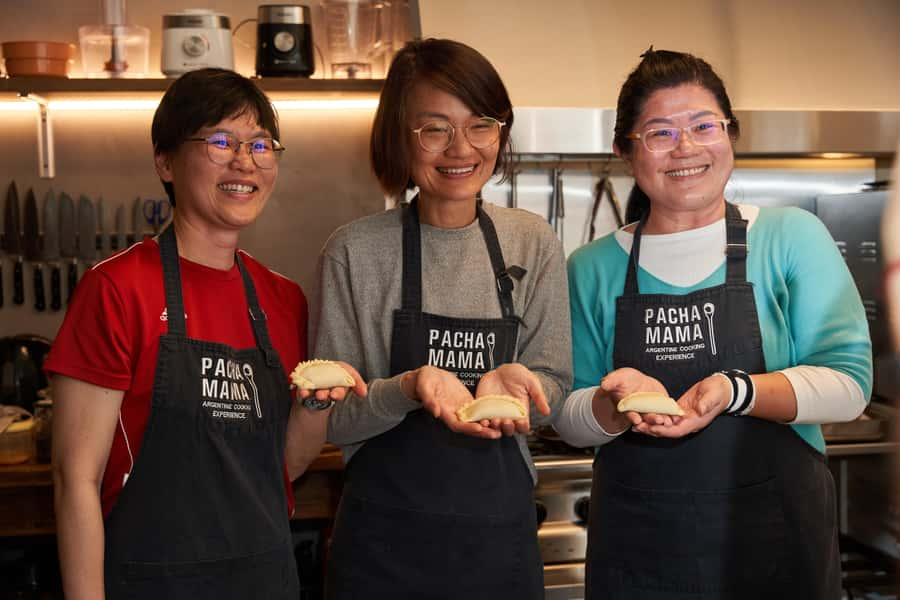
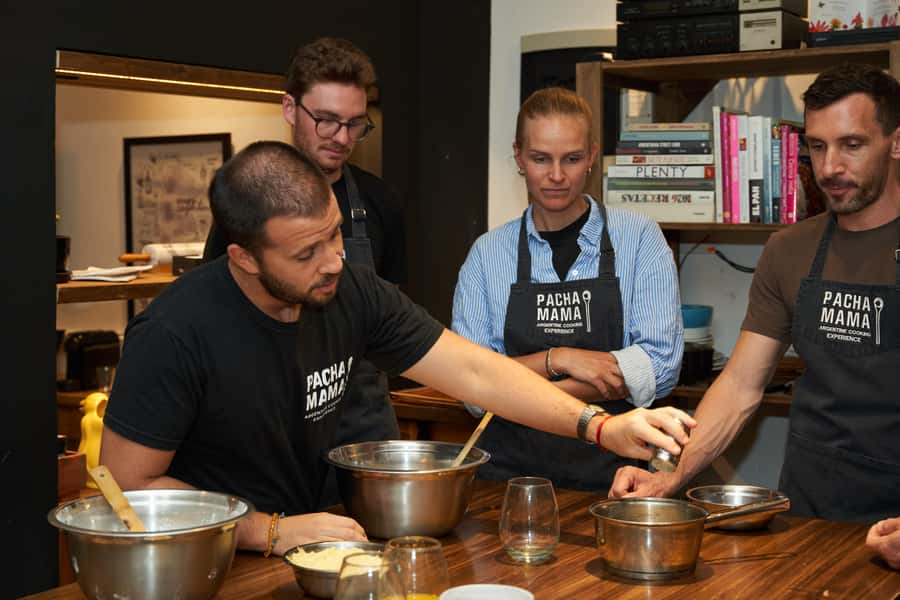
Argentine cooking makes the most sense when you are standing at the counter with flour on your hands and chimichurri nearby. Pachamama turns that idea into a friendly, hands-on meal: you learn about mate, regional spices, preserves, and local customs while preparing a five-step menu with wine from Mendoza.
I like the small-group format, which keeps the class social without making it feel like a cooking demonstration from the back row. I also like the way the menu moves from homemade picada and chipá to beef empanadas, humita, and flamed dulce de leche crepes. The main point to consider is that you work as a group, so you may not personally prepare every dish from start to finish.
Key points to know before booking
- Argentine menu: Prepare chipá, beef empanadas, chimichurri, humita stew, and dulce de leche crepes.
- Wine pairing: The meal comes with Durigutti wines from Las Compuertas, plus vermouth, water, and homemade lemonade.
- Hands-on but communal: You take turns helping with the recipes rather than making four complete dishes individually.
- Useful extras: A PDF recipe book, class photos, and Buenos Aires recommendations are provided.
- Dietary flexibility: The menu can be adapted for vegetarian, gluten-free, and lactose-free diets.
- Friendly instruction: Classes are held in English, with Spanish available for private groups.
A three-hour introduction to Argentine food
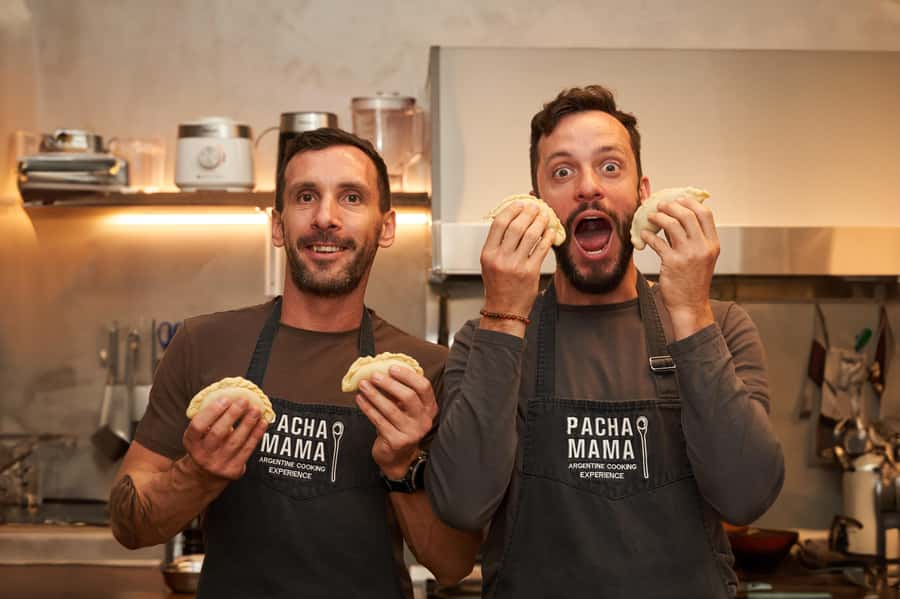
Pachamama is built around one good idea: food tells you how a country lives. Instead of simply sitting down to a plate of empanadas, you learn what goes into them, where the flavors come from, and how the dishes fit into Argentine customs.
The setting is described as cozy and home-like. That matters here. Argentine food is closely tied to sharing, long meals, family tables, and conversation, so a warm kitchen suits the subject better than a formal culinary school.
The experience is advertised as three hours, though the full description also refers to three and a half hours. If your schedule is tight, check the exact start and end time when booking. Private groups can request a shorter version of about two and a half hours.
You are taught in English. For a private group, the class can be held in Spanish. The group size is described as small, with up to 10 participants in the activity details, while another capacity note says up to 14 people. Confirm the final group size if that is important to you.
More cooking classes around the world:
- Half-Day Thai Cooking Class at Organic Farm in Chiang Mai
★ 5.0 · 19,087 reviews - Florence: Pasta Cooking Class with Unlimited Wine
★ 4.9 · 10,285 reviews - 3 in 1 Cooking Class near Navona: Fettuccine, Ravioli & Tiramisu
★ 5.0 · 7,376 reviews
Starting with picada, vermouth, and Argentine food customs
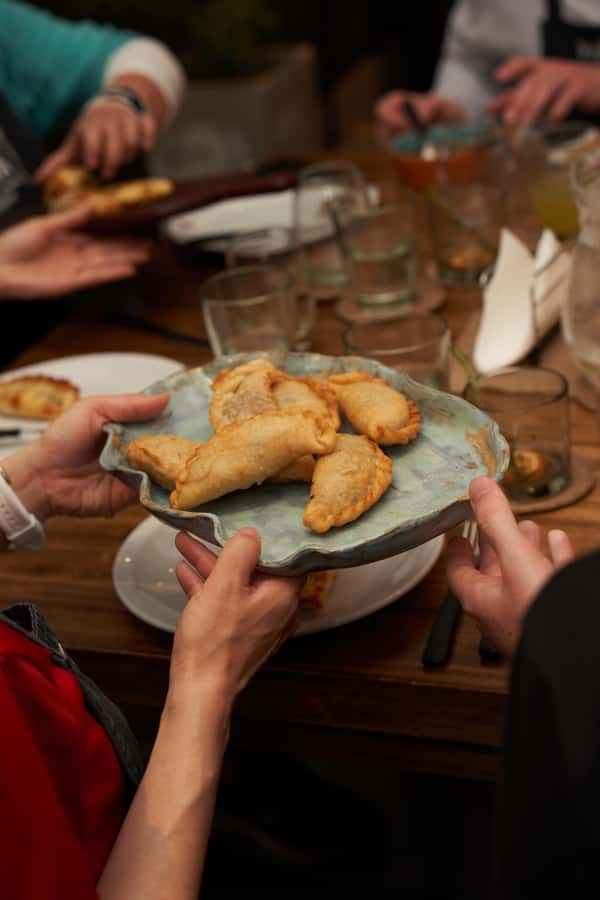
The class begins with a welcome homemade picada. Think of this as a shared spread rather than a single dish: homemade preserves, pickles, local bread, and small bites introduce you to the way Argentines often begin a meal.
A vermouth cocktail accompanies this opening. Vermouth has a strong place in Argentine social life, and starting with a drink gives the class a relaxed rhythm before the cooking begins. Water and homemade lemonade are also included, so you are not limited to wine and cocktails.
This opening section also introduces the background of Argentine cuisine. You hear about mate, chimichurri, regional spices, and the customs tied to shared meals. These details help turn the recipes into more than a list of instructions. You begin to see how local ingredients and European influences meet at the Argentine table.
I especially like this part for first-time visitors to Buenos Aires. You get a few food ideas to look for during the rest of your stay, and you learn what questions to ask when you visit a parrilla, bakery, or neighborhood market.
Chipá brings a Paraguayan and northeastern note
The first prepared dish is chipá with barbecue sauce and fermented spicy sauce. Chipá is a small, chewy cheese bread associated with northeastern Argentina and neighboring Paraguay. It is a useful reminder that Argentine cuisine is not only steak and Italian-style pasta.
The dough and cheese give chipá a satisfying texture, while the sauces add smoke, heat, and acidity. The dish works well early in the menu because it is easy to share and gives you a quick taste of how sauces can change a simple baked bite.
The class is practical rather than strictly individual. You may help with mixing, shaping, seasoning, or preparing the sauces, then watch the group bring the dish together. That approach encourages conversation and keeps the pace moving, but it also means you should not expect to make a full batch alone.
Beef empanadas and the case for chimichurri
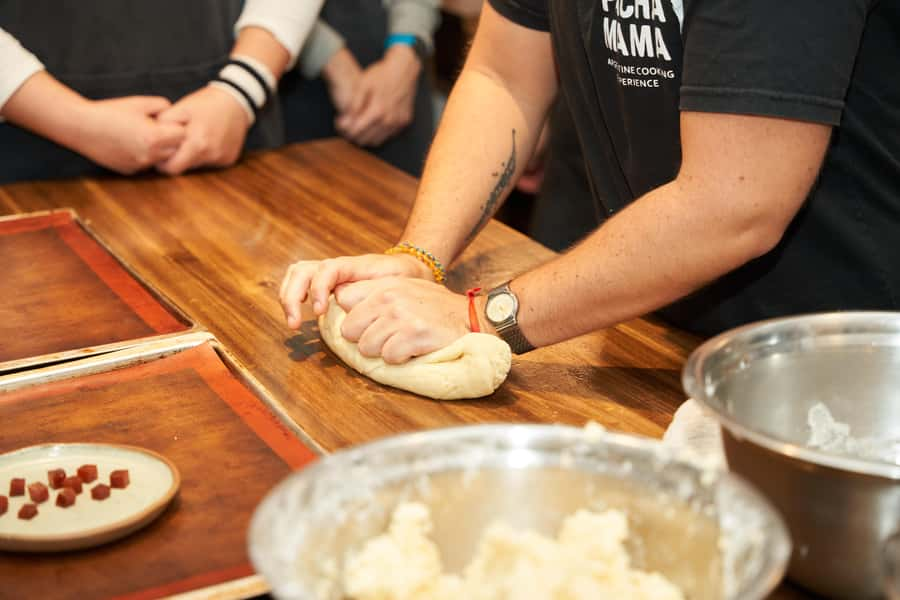
Next come beef empanadas with chimichurri sauce. This is one of the best-known Argentine food pairings, and the class uses it to show the contrast between a warm, savory pastry and a fresh herb sauce.
The value here is in the small decisions. You learn how the filling is assembled, how the pastry is handled, and how chimichurri balances the richness of the beef. The cooking team also explains the connection between regional empanadas and Argentine food traditions.
Empanadas vary across Argentina, so this is not simply one universal national recipe. The class focuses on a local Argentine version, giving you a useful starting point for comparing different styles during your trip.
If you want to recreate the dish at home, the recipe PDF is a real help. It is provided through a QR code, so you can save the instructions rather than trying to write everything down while cooking, drinking, and talking.
Same kitchen, a different dish:
- Florence: Pasta & Tiramisu Cooking Class with Unlimited Wine
★ 4.9 · 6,708 reviews - Florence: Pasta Cooking Class with Unlimited Wine
★ 5.0 · 6,413 reviews - Hanoi Cooking Class: Culture, Local Market & Meaning CSR Impact
★ 5.0 · 5,147 reviews - 5 Traditional Dishes Hanoi Cooking Class with Market Trip
★ 5.0 · 4,890 reviews
Humita stew offers a softer taste of the country
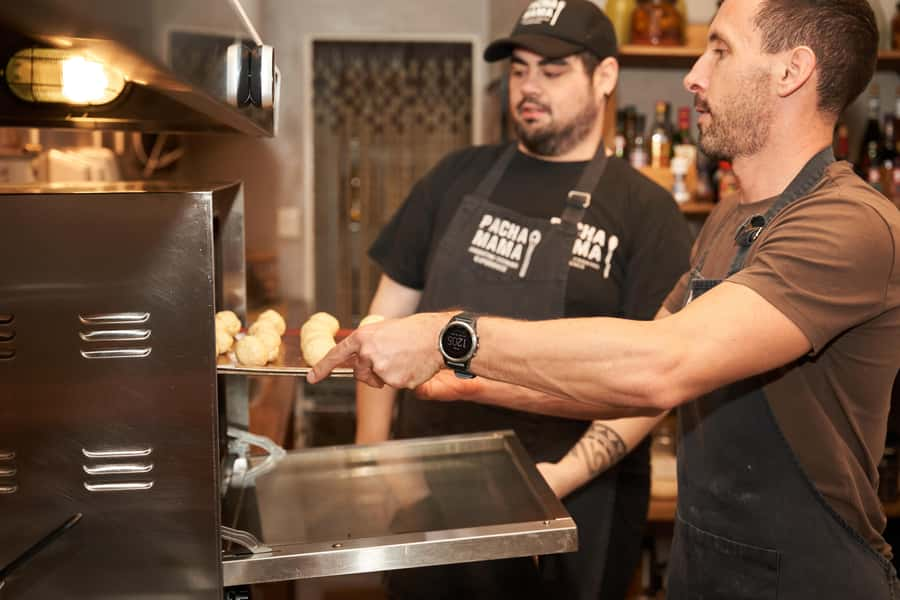
Humita stew gratin brings corn into the center of the meal. Humita is tied to the Andean and northwestern parts of Argentina, where corn-based cooking has long been important. In this format, the mixture is finished as a gratin, giving it a soft interior and a browned top.
This course adds welcome variety. The empanadas and chipá are dough-based and snack-like, while humita is spoonable, warm, and more substantial. It also shows why an Argentine cooking class is useful for anyone who wants to see beyond the usual steak-centered image of the country.
You help prepare the dish as part of the group effort. The class leaders explain the recipe and its background, then the finished food becomes part of the shared meal later. If you prefer detailed individual instruction, you may want a private class. For most people, the group approach is more social and less demanding.
Flamed dulce de leche crepes finish the meal
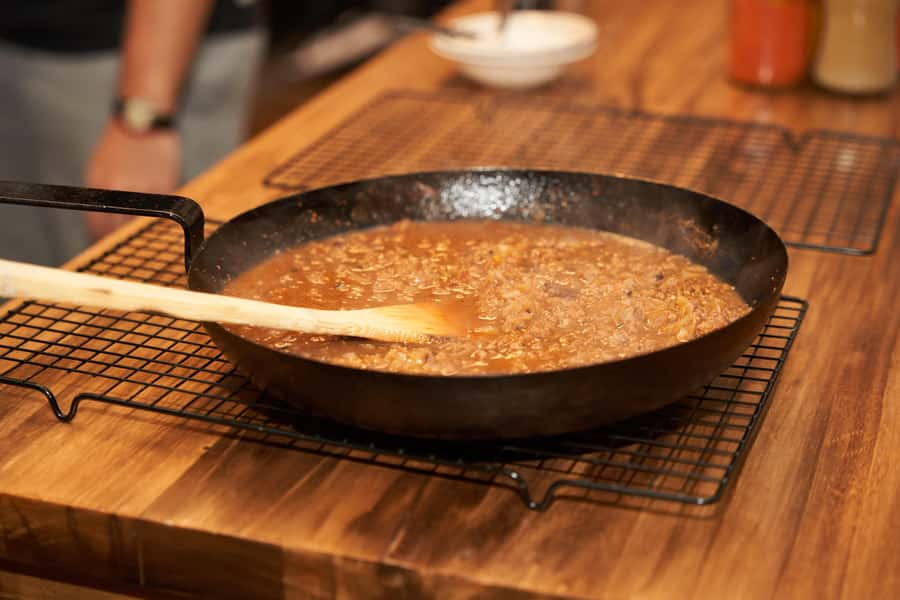
Dessert is made up of flamed dulce de leche crepes with ice cream and homemade limoncello. Dulce de leche is one of Argentina’s defining sweet flavors, and crepes provide a familiar format for showing it off.
The flaming step adds a bit of theater, though it is not the whole point of the dessert. The more useful lesson is how a simple crepe becomes a distinctly Argentine finish through dulce de leche, citrus notes, ice cream, and the final presentation.
Homemade limoncello is included with this course. It gives the end of the meal a bright, sharp note after the sweetness of the crepes. As with the other dishes, the dessert is prepared with the group, then enjoyed together at the table.
This is a generous menu for a three-hour class. You are not just tasting one main dish and going home. You are working through snacks, a starter, a savory centerpiece, and dessert, with enough food to make the final sit-down meal feel substantial.
The shared table is part of the lesson
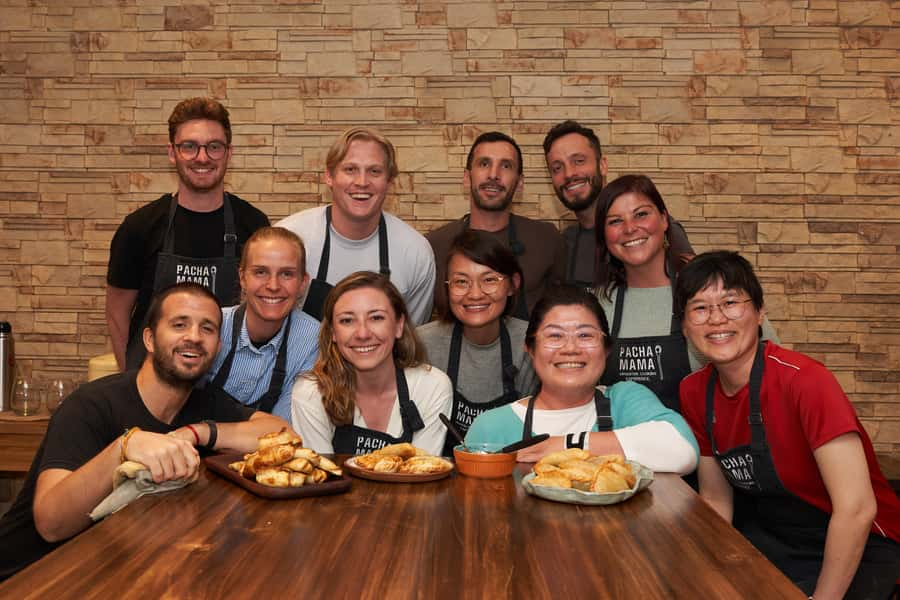
Once the cooking is finished, you sit around the table and eat what the group has prepared. The five-step menu is paired with Durigutti wines from Las Compuertas in Mendoza.
The wine pairing adds value to the $75 price. You are paying for instruction, ingredients, several courses, drinks, and a hosted meal, not just a short recipe lesson. The inclusion of vermouth, wine, lemonade, and limoncello makes this closer to a cultural food evening than a basic kitchen workshop.
The meal also gives you time to meet people from different countries. The atmosphere is described as intimate and social, with the instructors encouraging conversation. That can be a strong choice if you are visiting Buenos Aires alone or want an easy first-night activity.
The social format is not perfect for everyone. If you prefer to cook independently or want every minute devoted to technique, the shared workstations may feel less precise. If you enjoy eating with new people and learning through a group, the setup should suit you well.
What the $75 price really covers
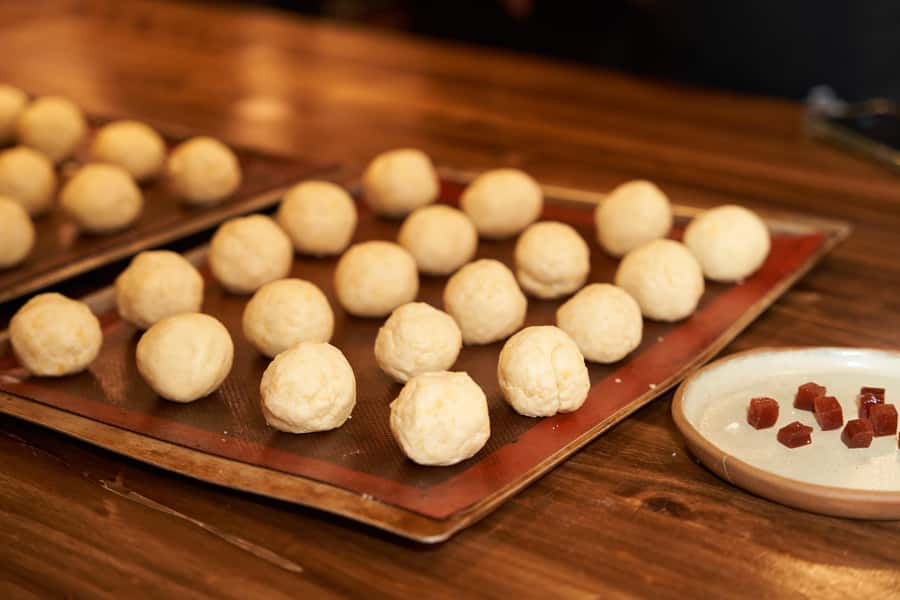
At $75 per person, Pachamama is not the cheapest way to eat in Buenos Aires. You can find a very good restaurant meal for less, especially if you skip the wine pairing and cocktails.
The comparison changes when you count what is included. You receive a welcome picada, a vermouth cocktail, the ingredients and instruction for a five-step menu, Durigutti wines, homemade lemonade, water, dessert, homemade limoncello, a recipe book, class pictures, and local recommendations.
I would see the price as fair for a visitor who wants both food and context. You are getting an organized activity with a meal at the end, rather than paying separately for a cooking class and a dinner. The included recipes and city suggestions also give the experience some value beyond the afternoon itself.
The value is strongest for couples, solo visitors, and small groups who enjoy food-based activities. It may be less attractive if you are mainly looking for a quick lunch or if you have little interest in cooking.
Dietary needs and practical limits
The menu can be adapted for vegetarian, gluten-free, and lactose-free diets. You should provide those requirements when booking so the team has time to plan the changes.
The supplied details do not specify exactly which dishes are altered for each diet. That means you should ask for the planned menu if your restriction is strict, especially for cross-contact concerns or multiple allergies.
The activity is wheelchair accessible. Hotel pickup and drop-off are not included, so you need to arrange your own way to the venue. The location is given as Buenos Aires Province, but the supplied information does not provide a street address or neighborhood, so check the meeting point before setting out.
Cancellation is free up to 24 hours in advance for a full refund. You can also reserve now and pay later, which is useful if your Buenos Aires schedule is still changing.
Who will enjoy Pachamama most
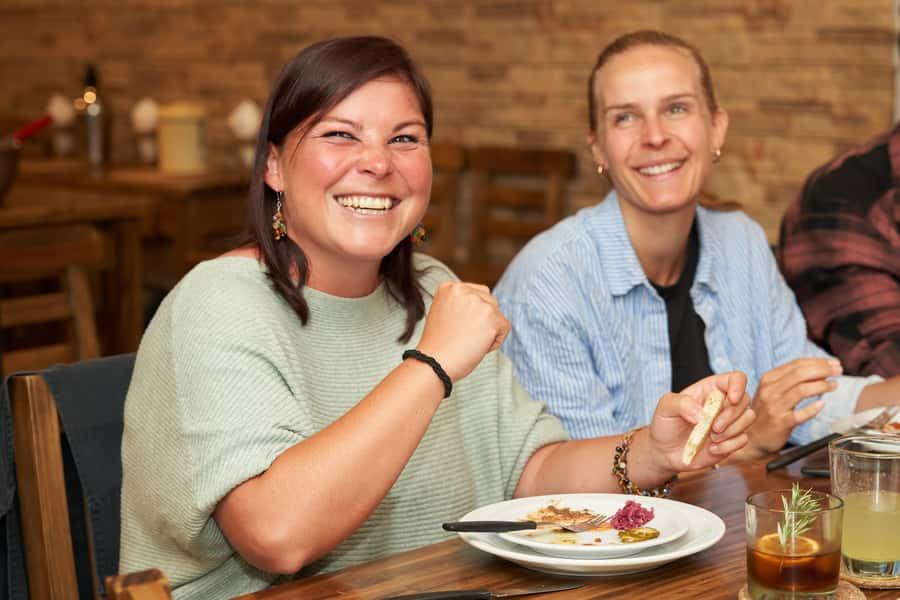
I would choose this experience if you want a friendly introduction to Argentine food without spending an entire day in a formal cooking school. The class has enough structure to feel worthwhile, but the meal and conversation keep it relaxed.
It suits:
- First-time visitors who want context for Argentine dishes
- Couples looking for a food-centered afternoon
- Solo visitors who like meeting people over a shared meal
- Families and friends who enjoy cooking together
- Wine drinkers interested in Mendoza bottles
- Vegetarians and people with selected dietary needs, with advance notice
It may not be the best fit if you want advanced culinary training, a private chef lesson, or complete individual control over every recipe. The group prepares the menu together, and you may only handle part of each dish.
The strong point is the balance. You cook enough to feel involved, eat a full meal, and come away with recipes you can use later. The class leaders are described as organized, friendly, and fun, with Franco and his team making an effort to keep the afternoon moving and welcoming.
Should you book Pachamama?
Book Pachamama if you want to understand Argentine food through your hands, not just your fork. The best reasons are the varied menu, the wine pairing, the home-style setting, and the chance to leave with recipes and practical Buenos Aires food advice.
Go in knowing that this is a communal cooking session. You will take turns and share the work, rather than independently preparing every course. Confirm the exact duration, meeting point, and group size before booking, since the supplied details give slightly different figures.
For $75, I think it is a sensible buy for food-focused visitors who value an organized evening, several drinks, and a proper meal. If you want a quick restaurant stop, spend the money elsewhere. If you want a warm introduction to Argentina’s table customs, Pachamama makes a strong case.
FAQ
How long does the Pachamama cooking experience last?
The activity is advertised as three hours. The full description also refers to three and a half hours, so check the confirmed schedule when booking. Private groups can request a version lasting about two and a half hours.
What food will I prepare?
The menu includes chipá with barbecue and fermented spicy sauces, beef empanadas with chimichurri, humita stew gratin, and flamed dulce de leche crepes with ice cream and homemade limoncello.
Is wine included?
Yes. The five-step menu is paired with Durigutti wines from Las Compuertas. Vermouth, water, and homemade lemonade are also included, along with a vermouth cocktail and homemade limoncello.
Is the cooking fully individual?
No. The class is hands-on, but the dishes are prepared as a group. You take turns helping with different parts of the recipes, so you may not personally make every dish from beginning to end.
Can the menu accommodate dietary requirements?
The experience can be adapted for vegetarian, gluten-free, and lactose-free diets. Tell the team about your needs in advance and ask what the adjusted menu will include.
Is the class taught in English?
Yes. The standard experience is given in English. Private groups can request a Spanish-language class.
Is hotel transportation included?
No. Hotel pickup and drop-off are not included, so you must arrange your own transportation to and from the venue.
Can I cancel my reservation?
Yes. You can cancel up to 24 hours in advance for a full refund. The activity also offers a reserve-now, pay-later option.
New cooking classes around the world
- Shinjuku Tokyo: Authentic Japanese Home-Style Culinary Class★ 4.9 · 125 reviews
- Shibuya Tokyo: Onigiri & Tamagoyaki Cooking Class★ 5.0 · 4 reviews
- M.O.M COOKING CLASS★ 4.8 · 6 reviews
- Seville: Paella-Cooking Experience with Sangria & Full Meal★ 4.9 · 42 reviews
- Shanghai: Authentic Chinese Cooking Class with Master Chef★ 5.0 · 2 reviews
- Sestri Levante: Pesto & Cooking Classes, Wine Tasting★ 4.9 · 56 reviews
- Seville: Paella Cooking Class & 30-Min Local Expert Q&A★ 4.8 · 37 reviews
- Seoul: Korean Kimchi Cooking Class in the Heart of the City★ 5.0 · 3 reviews