
Review · PARIS
Paris Cooking Class: Learn How to Make Macarons
Macarons look simple in a pastry shop window, but they are fussy little things. This three-hour Le Foodist class shows you how to make the shells, prepare buttercream, pipe the filling, and get those smooth, colorful tops without guessing.
I like the tiny class format, which gives the chef time to correct your piping and explain why a batch succeeds or fails. I also like the relaxed finish: tea or coffee, a tasting of your work, and a box of about 20 to 30 macarons for later.
The main caution is that macarons are sweet, and the finished treats may not travel well in checked luggage. Bring patience, and carry your box carefully if you plan to take it home.
Key points before you book
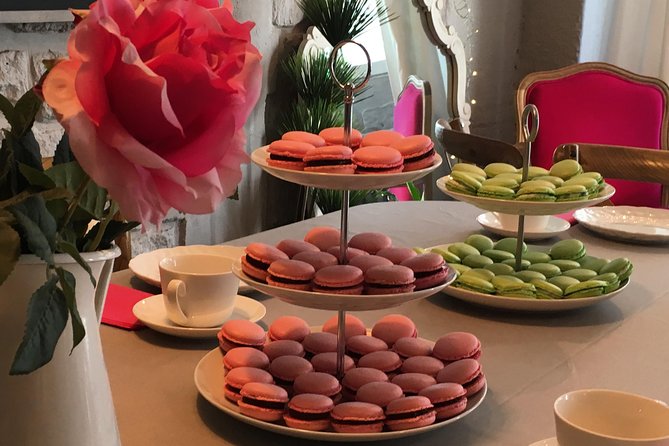
- Make the meringue shells from scratch, then pipe and fill them yourself.
- Work in English with a pastry chef such as Stéphane, Paulo, Luc, Fanny, Florence, or Ann.
- Taste the finished macarons with tea or coffee before taking a large box home.
- Plan on about three hours, starting at 3 p.m. at Le Foodist, 59 Rue du Cardinal Lemoine.
- The advertised class limit is four people, though class formats described by the provider have also included paired work in somewhat larger groups, so confirm the current setup if group size matters to you.
- The minimum age is 12, and children must be accompanied by an adult.
Why macarons make a good Paris cooking class
A Paris pastry class can easily turn into a demonstration where you stand behind a counter and watch someone else do the difficult work. This one is designed around your hands. You mix, pipe, bake, fill, and taste the results.
That matters with macarons. The shells depend on several small decisions: how the meringue is prepared, how the batter is folded, how much pressure you use while piping, and how the shells are baked. You do not need to arrive as a baker, but you should expect a process that rewards care.
The class also gives you something a standard pastry tasting cannot: a better understanding of why French macarons cost what they do. The finished cookies are small, but they require several stages and leave little room for careless handling.
I see this as a good choice for someone who enjoys food but does not want to spend an entire day in a kitchen. Three hours is long enough to learn a real technique, yet short enough to fit into a busy Paris schedule.
More Tiramisu and Dessert Classes in France
- Paris: French Macaron Culinary Class with a Chef
★ 4.9 · 591 reviews - Paris Macarons Small-Group Baking Class with a Chef
★ 5.0 · 316 reviews - Paris: Macaron Baking Class for Families and Kids
★ 4.7 · 270 reviews
Meeting the chef at Le Foodist
You meet at Le Foodist, at 59 Rue du Cardinal Lemoine in the Latin Quarter, at 3 p.m. The school is near public transportation, so you can reach it without turning the afternoon into a complicated trek across Paris.
The class begins with a welcome drink. That small pause is useful. You can meet the chef and the other people in the room before the practical work starts, rather than arriving and immediately being handed a bowl and a recipe.
Instruction is offered in English. The teaching team may vary, and the chefs named in class feedback include Stéphane, Paulo, Luc, Fanny, Florence, Stefan, Ann, and Stephane. Stéphane is described as an accomplished pastry chef with Michelin-star experience, while Paulo, Luc, and Fanny are praised for patient, friendly instruction and humor.
The personalities matter here. Macaron making can feel intimidating at first, especially if your shells do not look perfect. A calm teacher who can show the movement again, explain the reason behind it, and keep the room relaxed is worth more than a fancy kitchen.
Making the meringue shells from scratch
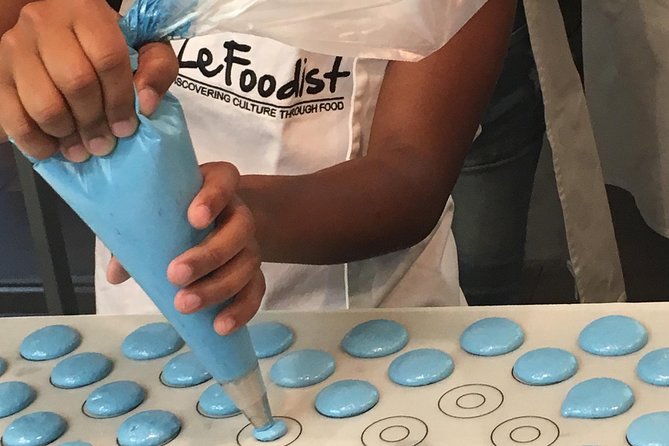
The core of the class is the meringue shell. You learn how to prepare it rather than relying on premade cookies or a prepared mix.
You choose the colors of your shells, which adds a playful touch without taking over the lesson. The important part is learning control. The chef guides you through the steps and watches for the points where the mixture can go wrong.
Expect the work to be hands-on, but not completely independent. You will receive step-by-step direction, and the small format allows the chef to assist with individual problems. Some classes organize people in pairs, with each pair working on a flavor. That arrangement keeps the work social and gives you someone to share the inevitable baking nerves with.
The shape may not be perfect on your first try. That is part of the value. You get to see how small variations affect the final cookie, and the chef can show you how to improve your technique instead of simply handing you a flawless result.
One practical point: this is a pastry class, not a low-sugar tasting. Macarons are sweet by design. If you prefer savory cooking or find rich desserts tiring, three hours focused on macarons may be more than you want.
Piping buttercream and assembling the cookies
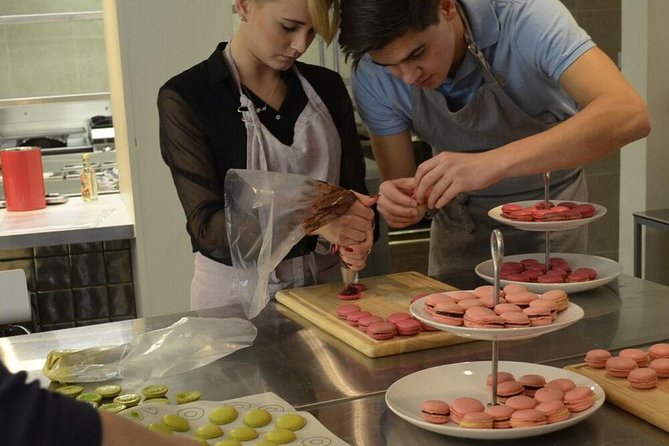
Once the shells are made, you work on the buttercream filling. Piping is one of the most satisfying parts of the class because you can see the macaron take shape as a finished pastry.
The lesson covers how to pipe the filling into the shells and assemble the pairs. It sounds straightforward, but even pressure and consistent portions make a difference. The chef can help you avoid filling one cookie too heavily and another too lightly.
This is also where the class shifts from technical work to presentation. Color, size, and shape all affect how the macarons look in the box. You are not simply baking a tray of cookies. You are producing a French pastry meant to look precise.
The reported class results are encouraging, but you should keep your expectations sensible. Your macarons may not look like the most polished examples in a pâtisserie window. The point is to learn a repeatable method and leave with edible results, not to produce a competition entry.
More Tiramisu and Dessert Classes in Paris:
- Paris: Macaron Baking Class in Central Paris
★ 5.0 · 208 reviews - Paris: Macarons Cooking Class with Pâtisserie Chef Noémie
★ 4.8 · 179 reviews - Paris: 2.5-Hour French Pastry Cooking Class
★ 4.9 · 71 reviews - Paris: French Macarons Baking Class with a Parisian Chef
★ 4.7 · 65 reviews
A pastry lesson with a Parisian side
During waiting time, the chef talks about macarons in French culture and tradition. That gives the class a little more context than a recipe alone.
The chefs also share stories about food and life in France. Stéphane, in particular, has been generous with restaurant and food-shopping suggestions, and has even helped participants with restaurant reservations. Those extras are not the formal product you are paying for, so they will vary with the chef and the flow of the afternoon, but they can make the class more useful for a short Paris visit.
I like this part because it connects the kitchen to the city outside. You are not just learning a dessert in a neutral classroom. You are hearing how a French chef thinks about pastries, restaurants, and local food.
The class can also work well for solo visitors. One participant went alone and found it easy to join the group. Since the activity involves paired work and shared tasting, you do not need to arrive with a large party to feel included.
Tasting with tea or coffee
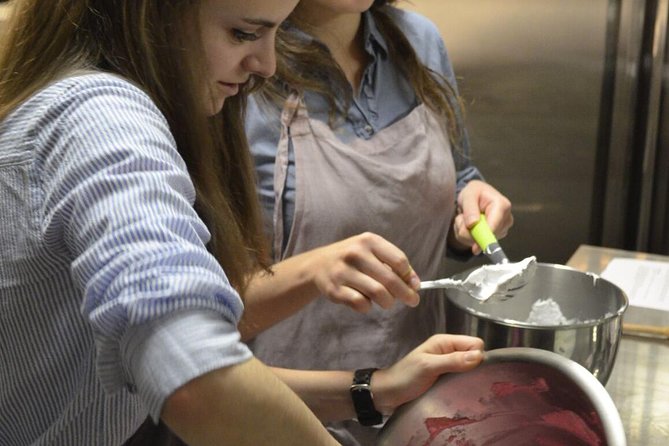
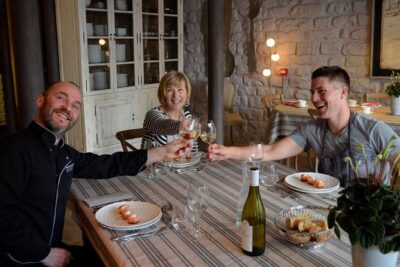
After baking and assembling, you sit down with tea or coffee and sample the macarons. This is the reward at the end, but it is also part of the lesson.
You can compare the textures of the shells and filling while the process is still fresh in your mind. The tasting gives you time to ask final questions and hear more about the finished pastries.
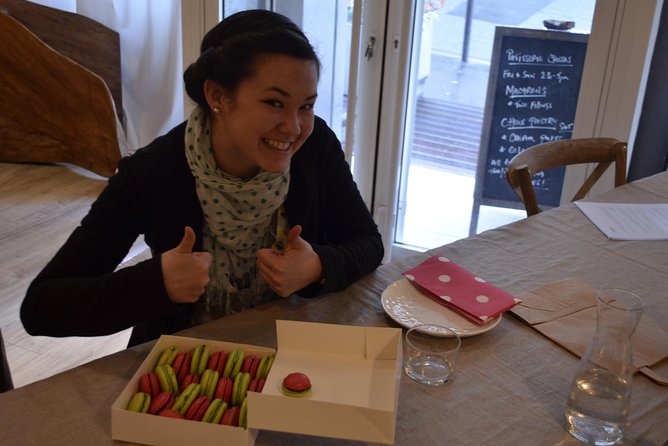
You also receive a box of approximately 20 to 30 macarons to take home. That is a generous amount for a three-hour class, especially when you consider that you have already tasted some at the end.
Do not treat the box as checked luggage. One participant found that the packaging did not protect the macarons well during air travel. The practical solution is to keep the box in your carry-on, handle it gently, or simply enjoy more of the cookies in Paris.
How much value do you get for $156?
At $156 per person, this is not a cheap way to buy macarons. If all you want is a box of French pastries, visit a pâtisserie and spend far less.
The price makes more sense when you count the full experience. You receive about three hours of instruction, the use of equipment and required attire, a welcome drink, tea or coffee, hands-on pastry work, and a sizeable box of finished macarons. You are also paying for a professional kitchen, an English-speaking chef, and personal help during a technique that is easy to mishandle.
The small class is the key value factor. A large demonstration may offer the same recipe, but not the same chance to ask about your batter or receive help with piping. The advertised maximum is four people, which suggests a very personal lesson. However, other class arrangements have included six or eight people working in pairs, so check the current group size if individual attention is your main reason for booking.
The class is also a good use of a rainy or over-scheduled Paris afternoon. You leave with a skill, a story, and food to share. That is more memorable than another quick stop at a pastry counter, though it requires a larger budget.
Who will enjoy this class most?
I would recommend it to:
- Pastry lovers who want to understand the work behind French macarons
- Couples, parents, and teenagers looking for a shared activity
- Visitors who prefer hands-on lessons to demonstrations
- Solo visitors who enjoy meeting people through food
- Bakers who want tips they can try at home
- Anyone with a free afternoon who wants a break from museums and monuments
The minimum age is 12, and children cannot attend alone. The class has also worked well for families with teenagers, including parents who were unsure how involved their children would be.
You should think twice if you dislike sweet desserts, have limited patience for careful kitchen work, or want a quick one-hour activity. The class is friendly, but it is still a real baking session with several stages.
The activity is listed as suitable for people with gluten allergies. If you have a serious allergy, contact the provider before booking so you can confirm that the class setup meets your needs.
Practical timing and cancellation advice
The activity starts at 3 p.m. and ends back at the meeting point after about three hours. Avoid scheduling a museum visit or dinner reservation too tightly around it. Baking has a rhythm, and you will enjoy the class more if you are not watching the clock.
Confirmation is provided when you book, and the activity is offered with a mobile ticket. It is currently listed in English, so you can take part without needing French baking vocabulary.
The cancellation terms are strict enough to plan around. Cancel at least six full days before the start time for a full refund. Cancel two to six full days ahead for a 50 percent refund, and cancellations less than two full days before the class are not refunded. If the minimum number of participants is not met, the provider will offer another date or experience, or a full refund.
Is this Paris macaron class worth booking?
Book it if you want to do more than eat French pastry. The strongest part is the combination of real hands-on work and patient instruction, followed by a relaxed tasting and a large box to take away.
I would especially choose it for a parent and teenager, a couple, or a solo visitor who enjoys food and conversation. The class has enough structure for a beginner, while the technical details give experienced home bakers something to work on.
Skip it if your budget is tight, you do not care about learning the process, or you want a savory cooking class. For everyone else, $156 buys a personal afternoon in a professional kitchen, a useful pastry lesson, and a very sweet souvenir of Paris.
FAQ
Where does the macaron class begin?
The class begins at Le Foodist, 59 Rue du Cardinal Lemoine, 75005 Paris. The activity ends back at the same meeting point.
What time does the class start?
The listed start time is 3 p.m., and the class lasts approximately three hours.
Is the class taught in English?
Yes. The experience is offered in English.
How many people can join the class?
The published maximum is four participants. Some class formats described by the provider have used larger groups working in pairs, so confirm the current arrangement if a very small group is important to you.
What food will I make?
You will make French macarons, including the meringue shells and buttercream filling. You can choose the colors of the shells.
What is included in the price?
The price includes a welcome drink, use of the required equipment and attire, tea or coffee, and a box of approximately 20 to 30 macarons to take home. An advanced macaron class is included only if you select that option.
Can children attend?
The minimum age is 12. Children cannot attend without an accompanying adult.
New cooking classes around Paris
- Paris: The Soufflé Baking Class with Chef★ 4.5 · 2 reviews
- Paris: Traditional Croissant Cooking Class With Local Baker★ 5.0 · 2 reviews
- Paris: Macaron Baking Class★ 4.4 · 26 reviews
- Paris: Macarons Cooking Class with Pâtisserie Chef Noémie★ 4.8 · 179 reviews
- Paris: Millefeuille baking class with a chef★ 5.0 · 5 reviews
- Paris: Evening Cooking Class with Optional Market Visit★ 4.8 · 19 reviews
- Paris: Hands-On Small Group Cooking Class★ 4.9 · 19 reviews
- Paris: Lemon Tart Baking Class with a Pastry Chef★ 5.0 · 4 reviews
Paris Cooking Classes, side by side.
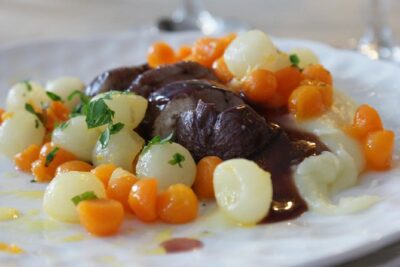
Paris Cooking Class and Lunch with Wine plus Market Visit Option
Read our review →
Paris Croissant Small-Group Baking Class with a Chef
Read our review →
Paris: French Croissant Baking Class with a Chef
Read our review →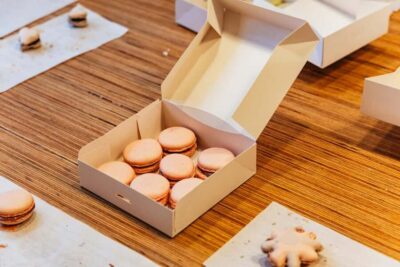
Paris Evening Cooking Class French Dinner and Market Visit Option
Read our review →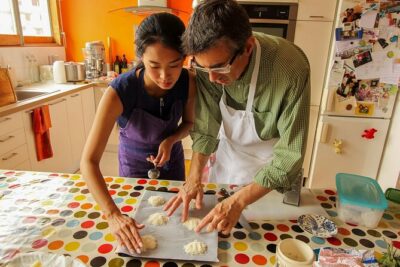
Paris French Cuisine Small Group Cooking Class with Lunch
Read our review →
Paris: Macaron Baking Class for Families and Kids
Read our review →
This kitchen also appears in