
Review · PARIS
Paris: French Croissant Baking Class with a Chef
Fresh from the oven, a croissant has little in common with the one sitting in a bakery case hours later. This class lets you handle the dough, butter, folds, and shaping behind that flaky finish, then eat the results while they are still warm. I especially like the small groups of up to eight and the chance to make more than plain croissants, including pain au chocolat and cinnamon rolls.
I also like that the chefs teach the reasons behind the technique, not just a list of steps. Instructors including Felix, Guillaume, Alice, Erika, and Ines have earned strong praise for clear, patient teaching. The main consideration is the price: $159 per person is a serious charge for a 150-minute activity, though the generous supply of pastries and practical instruction improve the value.
Key points to know before you book
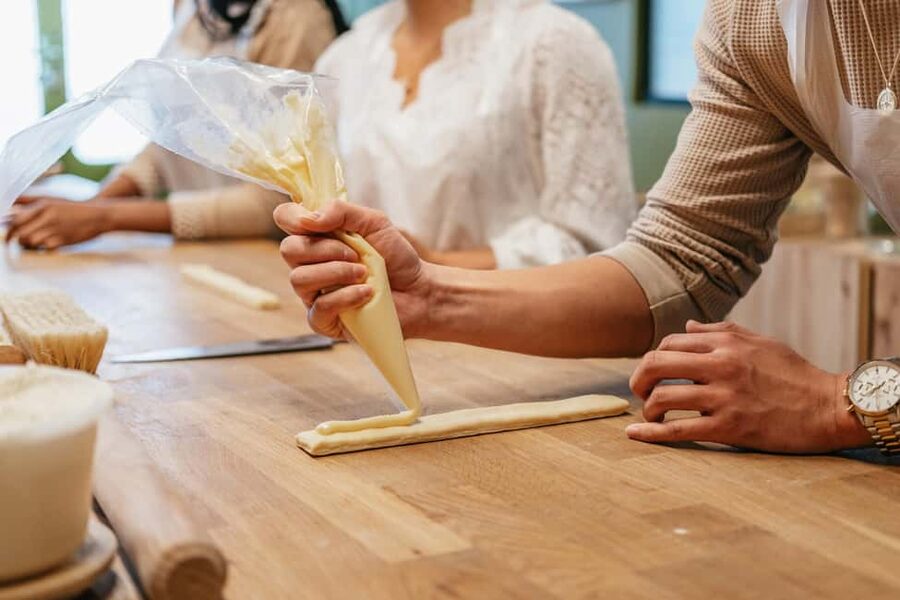
- You work with real laminated dough: Learn how butter and dough are folded to create the crisp, layered texture.
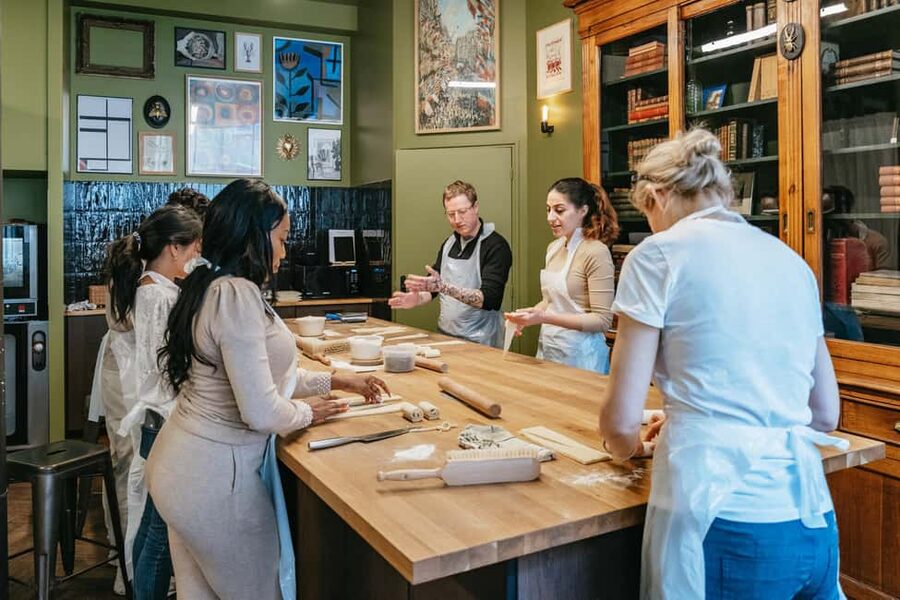
- The class is limited to eight people: That allows the chef to watch your shaping and answer questions.
- You make several French pastries: Expect croissants, pain au chocolat, and often cinnamon rolls or chocolate snails.
- You take food home: Many participants leave with two bags of pastries, enough for breakfast over the next few days.
- It works well on a rainy morning: The indoor setting gives you a useful Paris activity when the weather turns sour.
- You work in pairs: Families and odd-numbered groups should be ready to share a station with another participant.
What the 150-minute Paris pastry class is really like
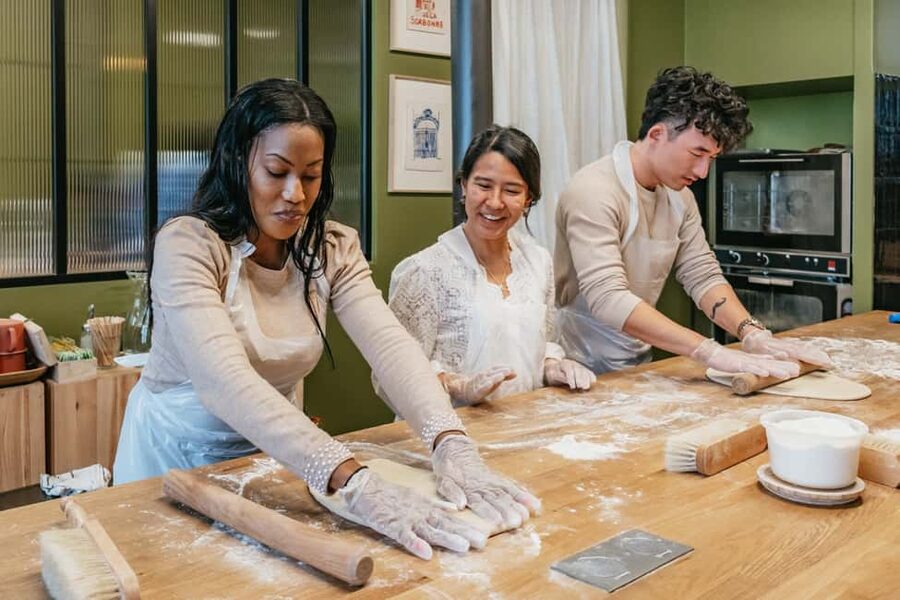
This is not a quick demonstration where you watch a chef shape dough and then receive a pastry at the end. At Maison Fleuret, you take part in the process. The session is built around practical work, with an English-speaking chef guiding you through the stages that make croissant dough both rewarding and fussy.
The setting is a pastry school on the Left Bank, at 3 Rue des 3 Portes. The studio is designed to feel like a traditional French home, rather than a large commercial kitchen. That matters because the small, friendly room encourages questions and conversation. You share the class with other people who are also trying to get their dough right, so the mood is more social than formal.
The class lasts 2.5 hours, or 150 minutes. That is enough time to learn the central method, shape several pastries, bake them, and sample the finished results. You will not become a professional baker in one morning, but you should leave with a useful grasp of the process and a recipe you can try at home.
More Baking and Bread Classes in France
- Paris Croissant Small-Group Baking Class with a Chef
★ 5.0 · 910 reviews - Paris Macarons Small-Group Baking Class with a Chef
★ 5.0 · 316 reviews - Paris: Macaron Baking Class for Families and Kids
★ 4.7 · 270 reviews
Meeting the chef and getting past the butter
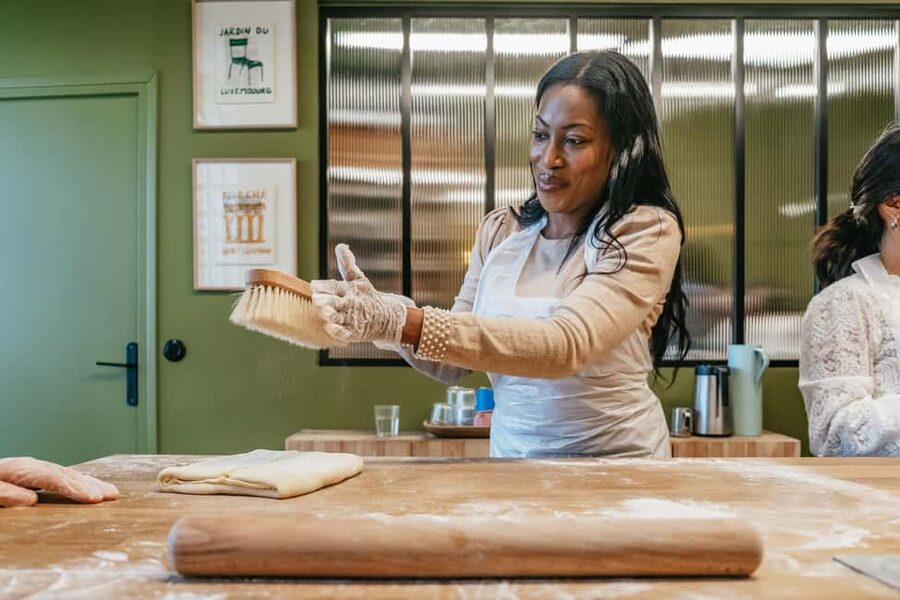
The first useful lesson is understanding why croissants take work. The dough must be folded with butter in a way that creates many thin layers. The butter needs to stay workable without melting into the dough, and the dough needs careful handling so it does not lose its structure.
Your chef demonstrates each stage and then gives you a turn. Instructors have included Felix, Guillaume, Ke, Selma, Ines, Alice, Erika, Lyndsey, Lauren, and Manel, among others. The exact chef depends on the class date, but the strongest pattern is clear: the teaching style is friendly, patient, and hands-on.
Guillaume has been praised for explaining each step slowly and checking that everyone understood before moving on. Felix combines serious pastry technique with a playful manner. Alice has been described as lively and encouraging, while Erika brings patience and humor to beginners who may have little baking experience.
That variety is useful. Croissant making can feel technical at first, especially when you are trying to work quickly and neatly. A chef who can explain the same movement in more than one way makes the class much easier to follow.
Shaping croissants, pain au chocolat, and cinnamon rolls
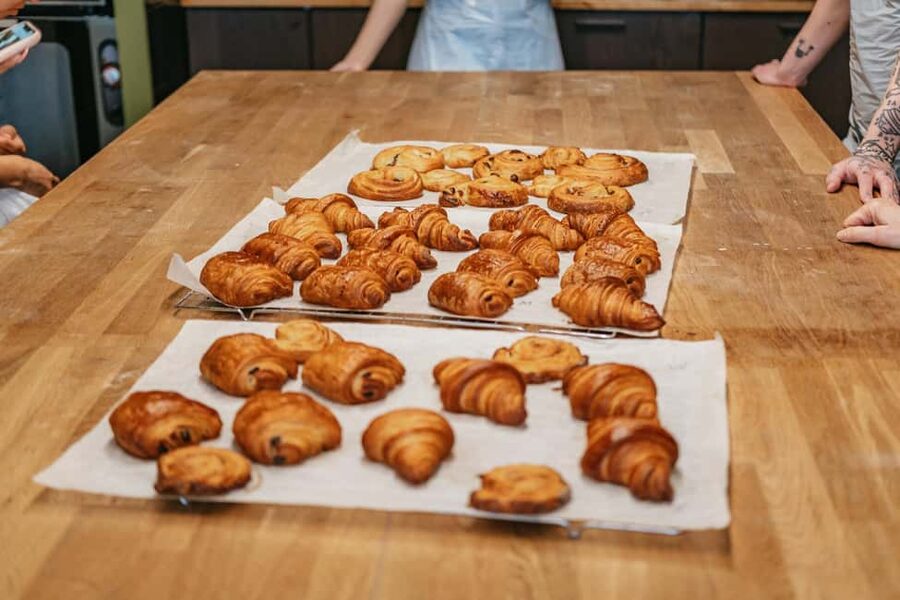
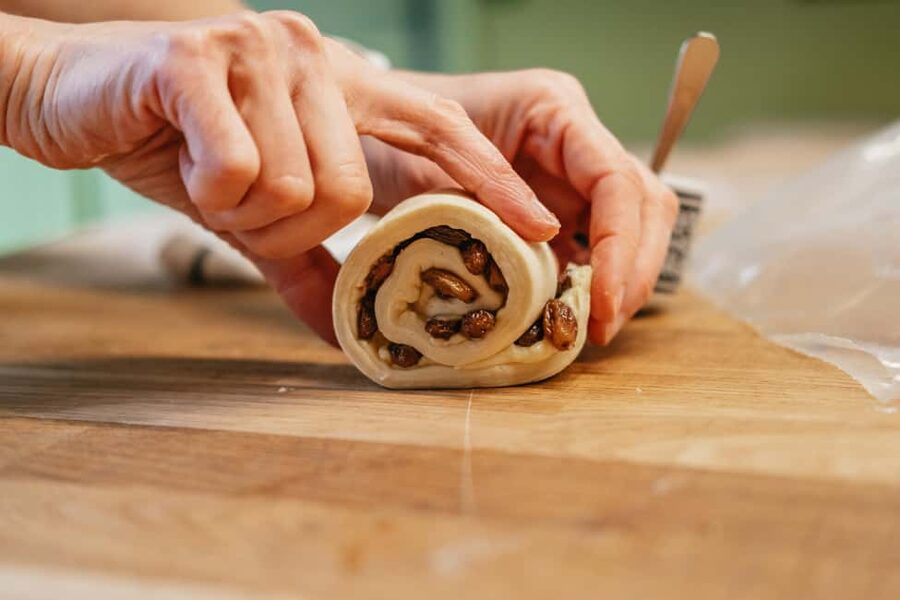
You do not only produce the classic crescent shape. The class also covers chocolate pastries, usually pain au chocolat and chocolate snails, along with cinnamon rolls in some sessions. This gives you a better sense of how one dough can become several familiar French bakery treats.
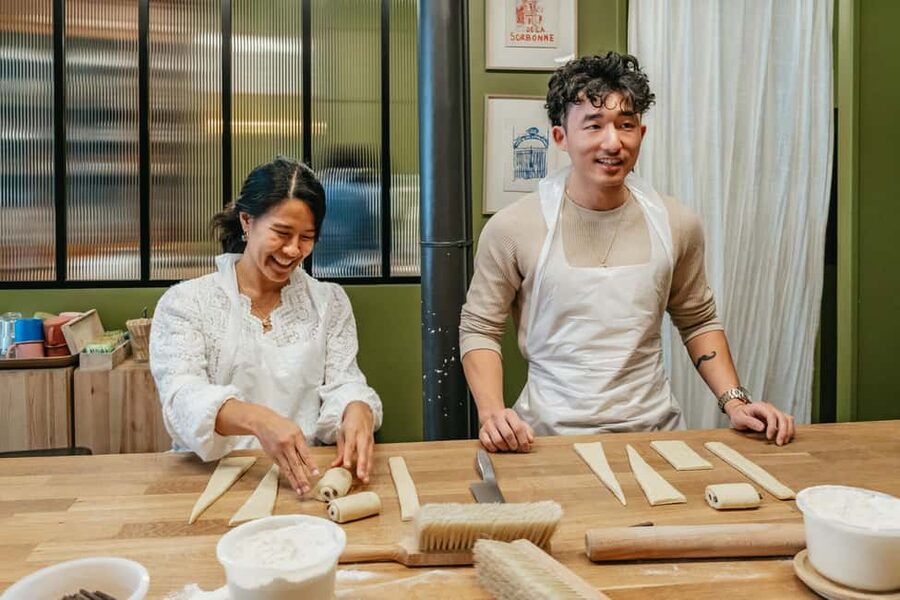
Shaping is where the lesson becomes especially practical. You learn how to cut and roll the dough, how tightly to form each pastry, and how to keep the layers intact. The finished pastries may not all look identical, and that is part of the fun. Your croissants are made by you, not stamped out by a factory.
Working in pairs is an important detail. Two people may share a station and divide the tasks. If you arrive as a family of five, one person may need to work with somebody from another booking. That is not a major problem for most groups, but it is worth knowing before you arrive, especially if everyone expects an individual work area.
The class suits complete beginners. People with little baking experience have been able to follow the instructions, while more practiced home bakers can focus on the finer points of dough handling. Children and teenagers have also done well here, with families bringing children as young as 11 and 12 and teenagers enjoying the activity.
Eating the pastries straight from the oven
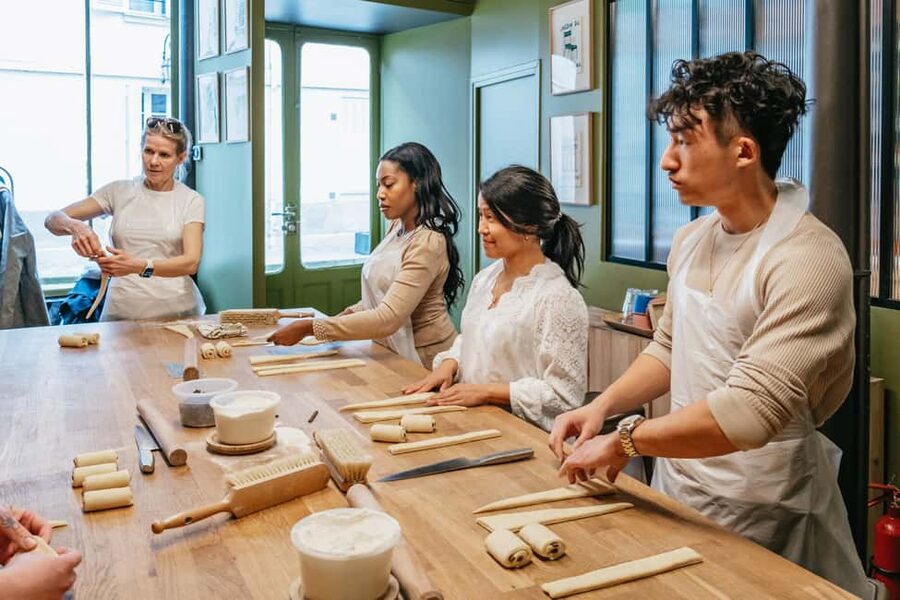
The best part comes when the pastries bake. Warm croissants have a crisp exterior, a soft center, and a strong buttery flavor that is hard to match with a packaged breakfast. You get to sample what you made, and the amount produced is generous enough to take some away.
Several participants have left with two bags of pastries. Some used them for breakfast over the following days, making the class especially convenient when booked early in a Paris stay. If you schedule it on your first or second day, you may have fresh baked goods ready for breakfast while you continue sightseeing.
One thoughtful touch reported during a class was the chef offering freshly baked pastries from her own batch while participants waited for theirs to cool. Details like this add warmth to the session, though you should not assume every class follows exactly the same routine.
You may want to skip a large breakfast before arriving. The pastry tasting can be substantial, especially when you try croissants, chocolate pastries, and cinnamon rolls. There is no need to turn up hungry, but saving room is sensible.
More Baking and Bread Classes in Paris:
- Paris: Macaron Baking Class in Central Paris
★ 5.0 · 208 reviews - Paris: Croissant Baking Class with a Chef
★ 5.0 · 201 reviews - Paris: French Macarons Baking Class with a Parisian Chef
★ 4.7 · 65 reviews - Paris: Macaron Baking Class
★ 4.4 · 26 reviews
The French context beyond the recipe
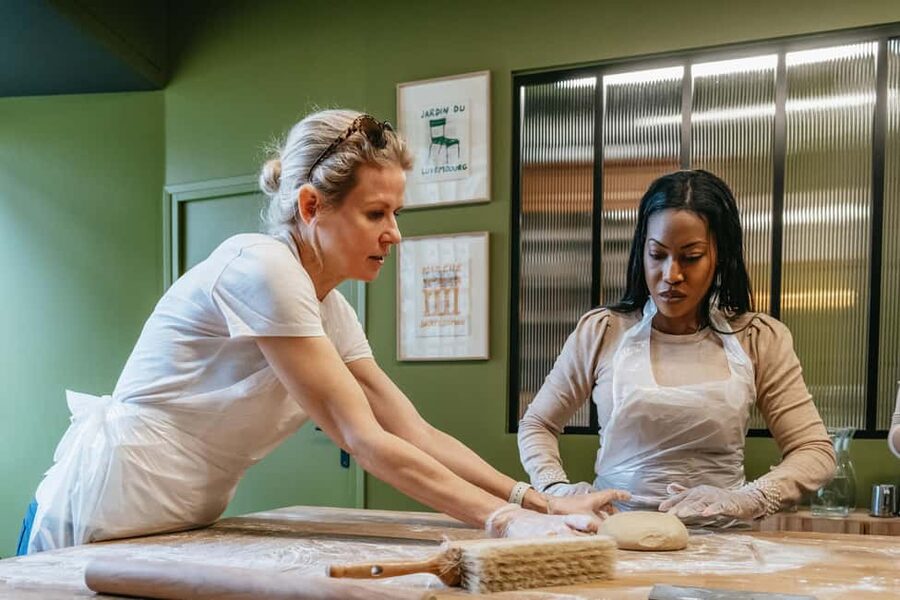
The chef does more than teach the mechanics. You also hear how the croissant became popular with Parisians and the French in the early 20th century. The history portion is brief compared with the hands-on work, but it gives the pastry a place within everyday French food culture.
That context helps explain why croissants matter beyond their shape. In France, a pastry can be part of the daily rhythm of breakfast, a quick stop at a bakery, or a small pleasure shared with friends. The class connects that familiar food with the French idea of enjoying good ingredients, careful work, and time at the table.
Some chefs also share suggestions for restaurants, cafés, pastry shops, and souvenir stores around Paris. This is not a formal sightseeing tour, and you should not book it mainly for city advice. Still, those local suggestions can help you plan the rest of your stay, particularly if the class falls near the beginning of your visit.
Is $159 a fair price?
At $159 per person, this is not a budget breakfast. You can buy excellent croissants in Paris for far less, so the value does not come from the food alone. You are paying for the chef, the equipment, the school setting, the instruction, the ingredients, and the chance to make several pastries yourself.
I see the price as easier to justify if you enjoy cooking, want a practical souvenir, or are looking for an activity rather than another sightseeing stop. The take-home pastries add real value, especially for a couple or family who can use them for several breakfasts. The small group also means you get more attention than you would in a large demonstration.
The price is harder to defend if you only want to eat a croissant or if you have no interest in baking again. In that case, a neighborhood bakery crawl will cost less and offer more variety. This class is for learning and participation, not simply for pastry tasting.
A useful rainy-day activity near Notre Dame
The Left Bank location makes the class easy to pair with time around Notre Dame and nearby streets. One participant described the area as lively and close to Notre Dame, with Shakespeare and Company also nearby, though opening times can vary.
The indoor setting is a strong reason to book this for a wet morning. Paris rain can make a long walking plan tiring, while a pastry class gives you somewhere warm to spend two and a half hours. You still get a taste of local food culture without spending the morning under an umbrella.
It also works on a clear day. You can schedule the class early, eat what you make, then continue sightseeing with a bag of pastries in hand. Just remember that the session takes the full 150 minutes, so do not place an important timed attraction immediately afterward.
Who will enjoy this class most?
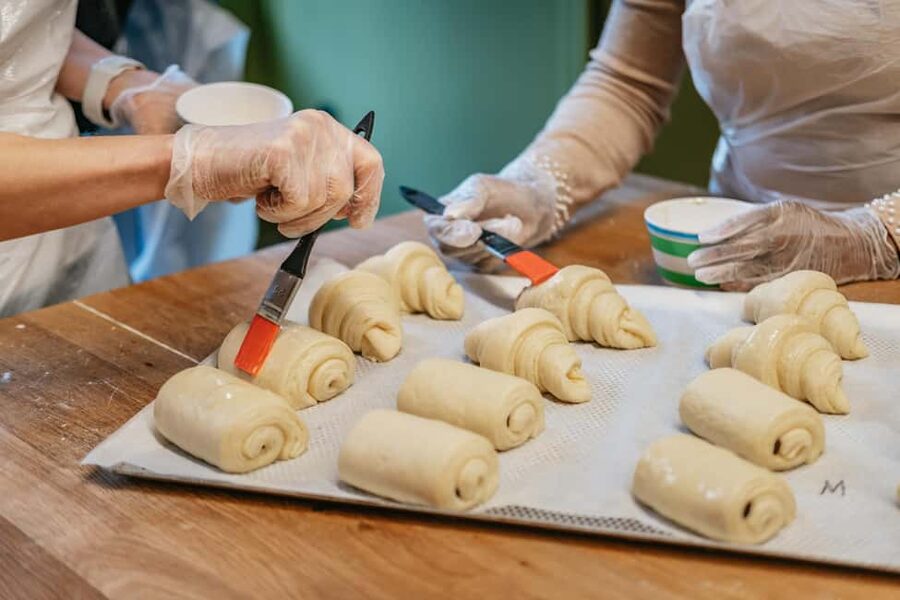
I would recommend it to couples, families, teenagers, and solo visitors who like doing something with their hands. It is particularly good for people who have tried making croissants at home and never quite got the dough right. A clear demonstration from a professional chef can correct small habits that are difficult to spot in a written recipe.
Families should note the pair-work setup. Children aged 11 and 12 have enjoyed the activity, and the chefs have been able to create a welcoming atmosphere for young people with different levels of interest and comfort. The class is not presented as a children-only workshop, so adults and children share the room.
It also suits a first or second day in Paris. You receive food for later, learn about cafés and restaurants from the chef, and begin your trip with an activity tied closely to French daily life. If you are an experienced baker seeking advanced professional training, the class may feel introductory. Its strength is making a difficult pastry approachable.
The experience is wheelchair accessible, and the language is English. Hotel pickup and drop-off are not included, so you make your own way to the Left Bank meeting point.
Booking, cancellation, and timing
You can reserve now and pay later, which helps if you are still arranging your Paris schedule. Cancellation is free up to 24 hours before the class for a full refund. Starting times vary, so check the available slot before building the rest of your day around it.
The group limit is eight people. That small number is important because croissant dough needs close attention, and a chef can spot problems more easily when the room is not crowded.
Arrive with enough time to find 3 Rue des 3 Portes. A busy Metro journey has caused people to arrive late, and one class waited rather than starting without them, but you should not rely on that courtesy. A prompt arrival is fair to the chef and the other people at your station.
Should you book Maison Fleuret?
Book this class if you want a hands-on Paris memory that produces something useful and edible. The strongest reasons are the small group, the patient English-speaking chefs, the range of pastries, and the generous supply to take home.
Skip it if $159 feels too high for a food activity or if you would rather spend your time eating your way through Paris bakeries. For everyone else, particularly families, couples, and home bakers, this is a pleasant way to learn a tricky French skill without needing previous experience.
The most practical tip is to book it early in your trip. You get the class, the pastries, a recipe to try at home, and possibly a few good local food suggestions for the days ahead.
FAQ
Where does the croissant class take place?
The class takes place at Maison Fleuret Ateliers Parisiens, at 3 Rue des 3 Portes on Paris’s Left Bank. The area is close to Notre Dame.
How long does the class last?
The activity lasts 150 minutes, or 2.5 hours.
What language is the class taught in?
The instructor teaches in English.
How many people are in each group?
The class is limited to eight participants.
What pastries do you make?
You learn to make French croissants and may also make pain au chocolat, chocolate snails, and cinnamon rolls.
Do you get to keep the pastries?
Yes. You can take home pastries that you make during the class. The amount is often enough for breakfast over the next few days.
Is the class suitable for beginners?
Yes. The chef explains the process step by step, and people with little or no baking experience can take part.
Is the activity wheelchair accessible?
Yes, the activity is listed as wheelchair accessible.
Is hotel transportation included?
No. Hotel pickup and drop-off are not included. You meet at the Maison Fleuret space on the Left Bank.
New cooking classes around Paris
- Paris: The Soufflé Baking Class with Chef★ 4.5 · 2 reviews
- Paris: Traditional Croissant Cooking Class With Local Baker★ 5.0 · 2 reviews
- Paris: Macaron Baking Class★ 4.4 · 26 reviews
- Paris: Macarons Cooking Class with Pâtisserie Chef Noémie★ 4.8 · 179 reviews
- Paris: Millefeuille baking class with a chef★ 5.0 · 5 reviews
- Paris: Hands-On Small Group Cooking Class★ 4.9 · 19 reviews
- Paris: Lemon Tart Baking Class with a Pastry Chef★ 5.0 · 4 reviews
- Paris: Evening Cooking Class with Optional Market Visit★ 4.8 · 19 reviews
Paris Cooking Classes, side by side.
Paris Cooking Class and Lunch with Wine plus Market Visit Option
Read our review →
Paris Croissant Small-Group Baking Class with a Chef
Read our review →
Paris Cooking Class: Learn How to Make Macarons
Read our review →
Paris Evening Cooking Class French Dinner and Market Visit Option
Read our review →
Paris French Cuisine Small Group Cooking Class with Lunch
Read our review →
Paris: Macaron Baking Class for Families and Kids
Read our review →
This kitchen also appears in