
Review · PARIS
Paris Croissant Small-Group Baking Class with a Chef
The best part of this Paris class is that you do not merely watch a chef fold pastry dough. You work the dough, layer in the butter, shape the pastries, and bake them yourself. The session takes place near Place des Vosges, with instructors such as Clara, Prisca, Felix, Ines, and Milly guiding the work.
I like the small-group format, which gives you room to ask questions and get help with tricky steps. I also like the practical souvenir: a recipe booklet, plus the skills to make flaky pastries at home. The main drawback is the price, $157.21 per person, which is a lot for a two-and-a-half-hour activity. Last-minute cancellations have also occurred, so keep a little flexibility in your Paris schedule.
Key points to know before booking
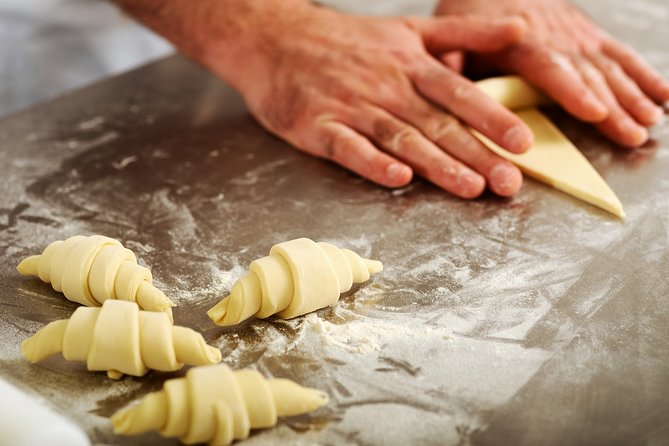
- You make three classic pastries: croissants, pain au chocolat, and pain au raisin.
- The class is genuinely hands-on: you knead, laminate, shape, and bake instead of sitting through a demonstration.
- The Marais location is easy to pair with sightseeing: the studio is at 7 Rue de Béarn, around the corner from Place des Vosges.
- The group is designed to stay small: the workshop is described as limited to eight, with a maximum of 12 people.
- You eat and take away the results: hot and cold drinks, a pastry tasting, and baked goods to take with you are included.
- The class works well for families: children as young as seven have taken part successfully, with older children and teens enjoying it too.
A pastry class in the Marais, not a bakery demonstration
This experience begins at Maison Fleuret, a fully equipped pastry studio at 7 Rue de Béarn in Paris’s third arrondissement. The address puts you in the Marais, close to Place des Vosges, so you can easily add a walk through one of central Paris’s most pleasant districts before or after class.
You meet a professional chef and the other people in your group, then receive an apron and utensils. The class is taught in English, which matters when the work becomes exact. Croissant dough rewards careful timing and technique, and you want to understand why you are folding or rolling rather than simply copy a motion you cannot repeat at home.
The advertised group size is especially useful here. The workshop is described as limited to eight people, though the overall activity allows up to 12. Some sessions have had only two people, while others have had eight to 10. That range means the feel can vary, but even the larger groups remain far smaller than a standard sightseeing tour.
I would ask your chef for help early if the dough feels awkward. The class is built around participation, and instructors such as Clara, Prisca, Milly, Felix, Delphine, Leslie, Lizzy, Rosalie, and Ines have been praised for clear explanations, patience, and a friendly manner. The specific chef can vary, but the teaching style is meant to be personal rather than formal and distant.
More Baking and Bread Classes in France
- Paris: French Croissant Baking Class with a Chef
★ 4.9 · 712 reviews - Paris Macarons Small-Group Baking Class with a Chef
★ 5.0 · 316 reviews - Paris: Macaron Baking Class for Families and Kids
★ 4.7 · 270 reviews
Mixing and kneading the dough
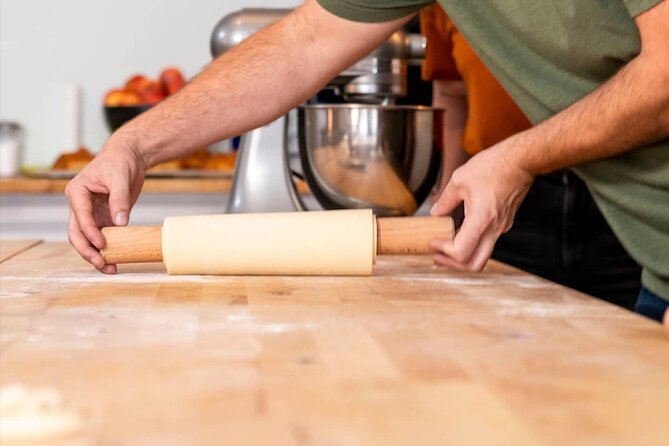
The work starts with the foundation of every pastry: dough. You learn how to combine the ingredients, knead them, and prepare the dough for the butter-laminating process.
This is where the class earns its keep for anyone who has tried to make croissants at home. A recipe can tell you to knead until smooth or roll to a certain size, but a chef can show you what those instructions mean in practice. You can ask about texture, pressure, and the point at which the dough is ready for the next step.
The class also gives you a better sense of why French pastry takes time. Croissants are not simply sweet bread rolled into a crescent. The dough must be handled so the butter and dough form thin layers. If the butter is too hard, it can break through. If it is too soft, it can disappear into the dough. The hands-on format lets you see those problems as they happen.
You will likely appreciate having all supplies provided. There is no need to carry ingredients through Paris or arrive with baking equipment. Aprons and utensils are supplied, as are health and safety items such as hand solution and face masks.
Laminating butter into the croissant dough
Laminating is the key lesson. You fold and roll the dough with butter so that baking creates the thin, crisp layers associated with a proper croissant.
This is the most valuable technical part of the session. You do not simply hear that butter must be enclosed in the dough. You handle it and learn how the layers are built. That knowledge is useful long after your Paris visit, especially if you plan to try the recipe in your own kitchen.
The chef guides you through the process step by step. The instruction is designed for beginners, but experienced home bakers can pick up useful details too. The class has attracted people who had never made pastry as well as people already comfortable in the kitchen.
Do not expect to produce professional bakery shapes on your first attempt. Croissant dough can be sticky, delicate, and difficult to roll evenly. That is part of the point. You get immediate help instead of discovering your mistakes only after the pastries come out of the oven.
The class also gives you a taste of the patience behind French pastry shops. Your total activity lasts about two hours and 30 minutes, so the pace is active but not rushed. You should still expect the chef to manage the timing carefully, since the dough, butter, shaping, and baking all need to happen in the right order.
Shaping croissants, pain au chocolat, and pain au raisin
After the dough is ready, you move on to shaping. You begin with the classic croissant, then work with the dough for pain au chocolat and pain au raisin.
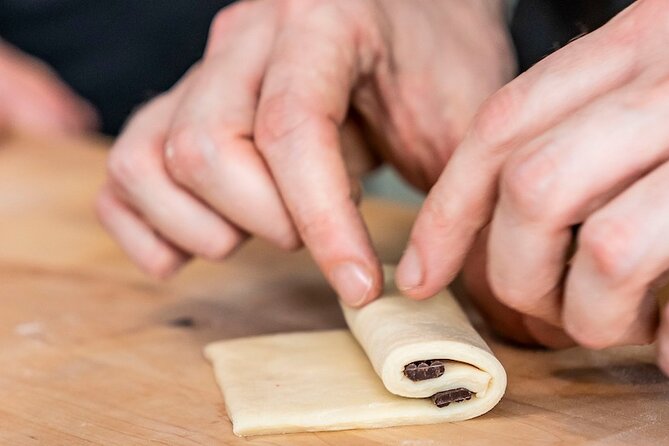
Each pastry shows a different side of the same dough. The croissant depends on a curved shape and an even roll. Pain au chocolat gives you the chocolate-filled version many people know from French cafés and bakeries. Pain au raisin adds a different traditional style to the lesson.
The variety is one of the class’s strongest features. A shorter workshop focused only on croissants might teach one shape well, but this session gives you three French standards in one sitting. You leave with a broader sense of how one dough can become several pastries.
Pay close attention when the chef explains shaping. Small details affect the final bake, including how tightly the dough is rolled and how the pastry is placed. You might find the shapes less uniform than those in a bakery window, but that is not a problem. The lesson is about learning the method and understanding the result.
Families should note that children can take part. A seven-year-old has completed the class successfully, and children aged nine, 12, 13, and 15 have also enjoyed the activity. Very young children may need more adult help with rolling and handling the dough, but the format is not limited to serious adult bakers.
More Baking and Bread Classes in Paris:
- Paris: Macaron Baking Class in Central Paris
★ 5.0 · 208 reviews - Paris: Croissant Baking Class with a Chef
★ 5.0 · 201 reviews - Paris: French Macarons Baking Class with a Parisian Chef
★ 4.7 · 65 reviews - Paris: Macaron Baking Class
★ 4.4 · 26 reviews
Fresh pastries and drinks at the end
The final stage is the reward: the pastries come out of the oven, and you taste what you made. Hot and cold drinks are available throughout the workshop, so the class has the feel of a relaxed food activity rather than a rushed cooking lesson.
Fresh-from-the-oven pastry is the right way to finish. You get to connect the work with the result while the croissants are still warm. The class includes tasting and taking away the baked goods, though the exact number can vary with the session. Some participants have left with two croissants and two pain au chocolat each, while another description notes four pastries per person.
Plan your meals around this. You may have more pastry than expected, especially if your group produces a generous batch. It is not a light tasting in the museum sense. You are likely to eat some on site and carry more with you.
The included recipe booklet is a useful extra. It is illustrated, so you can refer back to the steps after returning home. That makes this more than a one-morning food memory. You have a chance to repeat the process, though your home oven, ingredients, and working space may produce different results.
What $157.21 really buys you
At $157.21 per person, this is an expensive Paris activity. You are paying much more than the cost of buying a croissant and pain au chocolat at a neighborhood bakery.
The value comes from the instruction and the amount of participation. You receive a professional chef, a supplied work station, ingredients and utensils, hot and cold drinks, a tasting, pastries to take away, and an illustrated recipe booklet. For a person who wants to learn a skill, the price is easier to justify than for someone who simply wants breakfast.
I would compare it with other paid food experiences in Paris by asking one question: do you want to make the food, or do you mainly want to eat it? If eating is the goal, visit a bakery and spend the difference elsewhere. If you want to understand the work behind French pastry and repeat it at home, this class offers much more than a bakery purchase.
The class also works well as a change of pace during a busy Paris trip. Two and a half hours on your feet and at a work station can replace another museum or long walking route. It gives you a reason to slow down and makes a good choice for a family or pair looking for an activity everyone can share.
The instructors shape the experience
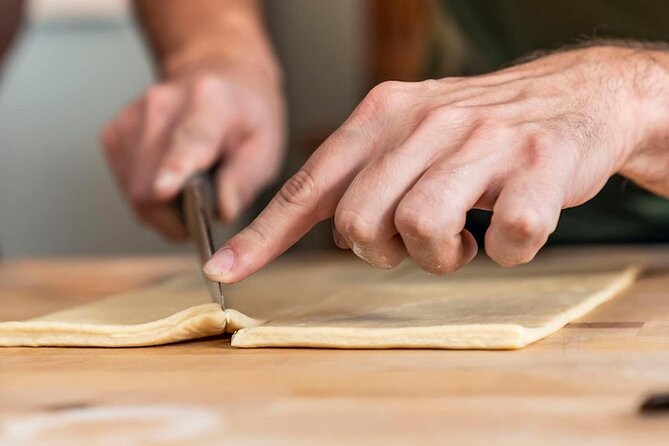
The chef matters a great deal in a practical class. A good instructor spots a torn dough layer, explains why it happened, and helps you fix the next step without making you feel clumsy.
Several instructors have received particularly strong praise. Clara is noted for her teaching and Paris suggestions. Prisca adds French words and cultural context to the pastry lesson. Milly is described as a clear English speaker who explains why each step matters. Felix is remembered for an interactive, fun class, while Ines has been praised for patient instruction and useful techniques.
Other named instructors include Delphine, Leslie, Lizzy, and Rosalie. Rosalie taught one session on her first day and was still described as welcoming, funny, and helpful. That suggests the experience can vary slightly by chef, but the repeated strengths are consistent: clear directions, patience, and a willingness to help.
You should not book this expecting a private lesson with one chef focused only on you. The group may be as large as 12. Still, the small format gives you a better chance to ask questions than a large cooking school class.
Location, timing, and practical concerns
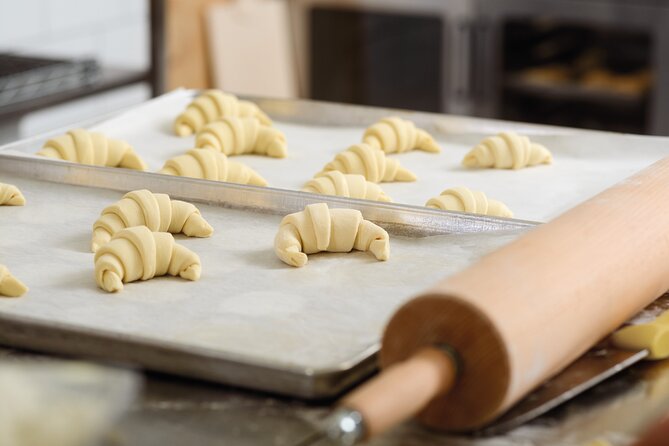
The meeting point is 7 Rue de Béarn, 75003 Paris, and the activity ends at the same location. It is near public transportation, and its position by Place des Vosges makes it easy to combine with Marais sightseeing.
The class is offered in English and accepts mobile tickets. Confirmation is provided when you book. Since the experience is often reserved well ahead of time, with bookings averaging 43 days in advance, you should not assume a preferred date will remain open during a busy Paris visit.
Build a little flexibility into your plans. Two separate one-star experiences involved a chef not appearing or a same-day cancellation. In one case, an alternate Maison Fleuret location was offered after an unexpected illness. These incidents appear to be exceptions rather than the normal pattern, but a pastry class booked on the same day as a major timed attraction leaves little room for trouble.
Free cancellation is available up to 24 hours before the start time. Within 24 hours, changes and refunds are not accepted. The cut-off uses Paris local time, so check the clock carefully if you are changing plans from another time zone.
Who should book the Maison Fleuret class?
I would recommend this for anyone who wants a hands-on food activity in Paris, especially couples, families, and friends who enjoy working together. It is also a strong choice for a parent and child. The class gives children a real job to do, and the final pastries provide a clear reward.
It suits beginners because the chef walks you through each stage. It also suits capable home bakers who want to improve their croissant technique and learn from a professional in a proper pastry studio.
I would be more cautious if you have a tight schedule, dislike rich food, or only want a quick taste of French baking. The class takes about 2.5 hours, the price is high, and you may leave carrying several pastries. The group size is small, but it is not guaranteed to be an intimate private lesson.
Should you book this Paris baking class?
Book it if you want to bring home more than a photograph. You will learn a repeatable process, work with real pastry dough, eat warm baked goods, and receive a recipe booklet for another attempt later.
Skip it if your main goal is value measured by food quantity alone. A bakery will give you excellent pastries for far less money. But for a hands-on class in the Marais, with English instruction, drinks, equipment, multiple pastry styles, and a chef who can correct your technique, Maison Fleuret offers a worthwhile splurge. I would reserve it early, avoid placing it beside an unmissable timed booking, and choose it as a relaxed centerpiece for a Paris morning or afternoon.
FAQ
Where does the croissant baking class take place?
The class begins and ends at Maison Fleuret, 7 Rue de Béarn, 75003 Paris, France. The studio is near Place des Vosges in the third arrondissement.
How long does the workshop last?
The workshop lasts approximately two hours and 30 minutes.
Is the class taught in English?
Yes. The experience is offered in English.
Which pastries will I make?
You will learn to make a classic croissant, pain au chocolat, and pain au raisin.
How many people are in the class?
The workshop is described as limited to eight participants, while the maximum activity size is 12 people. Actual group sizes can vary.
Are drinks and baking equipment included?
Yes. Hot and cold drinks, aprons, utensils, cooking supplies, and instruction are included. Health and safety items such as hand solution and face masks are also provided.
Can I take pastries home?
Yes. The baked goods are available for tasting and taking away. Participants also receive an illustrated recipe booklet.
What is the cancellation policy?
You can cancel up to 24 hours before the start time for a full refund. Cancellations or changes made less than 24 hours before the start time are not accepted for a refund.
New cooking classes around Paris
- Paris: The Soufflé Baking Class with Chef★ 4.5 · 2 reviews
- Paris: Traditional Croissant Cooking Class With Local Baker★ 5.0 · 2 reviews
- Paris: Macaron Baking Class★ 4.4 · 26 reviews
- Paris: Macarons Cooking Class with Pâtisserie Chef Noémie★ 4.8 · 179 reviews
- Paris: Millefeuille baking class with a chef★ 5.0 · 5 reviews
- Paris: Hands-On Small Group Cooking Class★ 4.9 · 19 reviews
- Paris: Lemon Tart Baking Class with a Pastry Chef★ 5.0 · 4 reviews
- Paris: Evening Cooking Class with Optional Market Visit★ 4.8 · 19 reviews
Paris Cooking Classes, side by side.
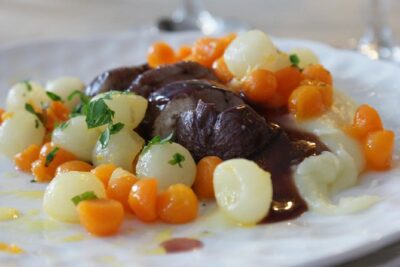
Paris Cooking Class and Lunch with Wine plus Market Visit Option
Read our review →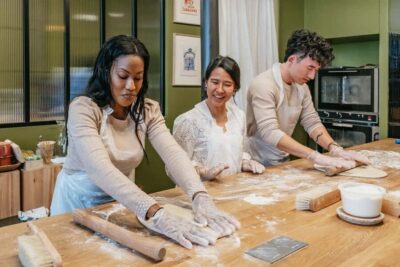
Paris: French Croissant Baking Class with a Chef
Read our review →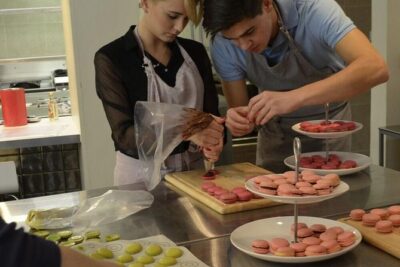
Paris Cooking Class: Learn How to Make Macarons
Read our review →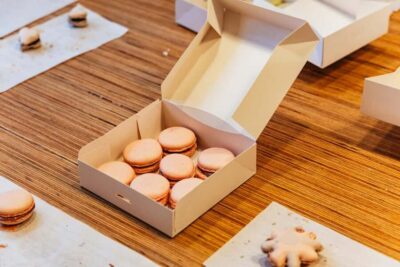
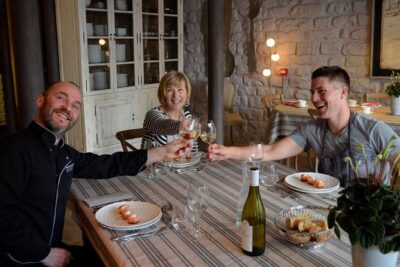
Paris Evening Cooking Class French Dinner and Market Visit Option
Read our review →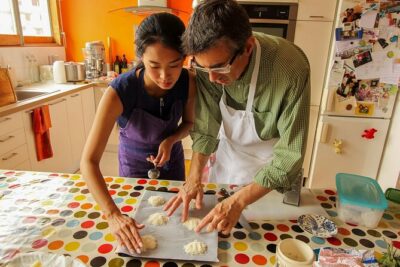
Paris French Cuisine Small Group Cooking Class with Lunch
Read our review →
Paris Macarons Small-Group Baking Class with a Chef
Read our review →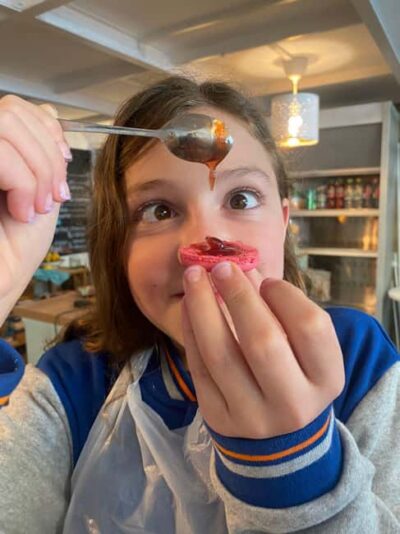
Paris: Macaron Baking Class for Families and Kids
Read our review →This kitchen also appears in