
Review · COOKING CLASSES WORLDWIDE
Plov and Samsa Cooking Class in Tashkent
Uzbek plov is more than a bowl of rice. It is a careful sequence of oil, onions, carrots, meat, spices, and steam, and this hands-on class lets you handle nearly every step. I like the focus on practical kitchen skills, especially cutting the vegetables and learning how the rice cooks. I also like that samsa fills the waiting time while the plov steams, so the three hours feel purposeful.
The class takes place in a private home, which gives the meal a personal touch instead of a restaurant feel. The main caution is communication: the wider team speaks Russian and English, but the hostess has only basic English, so demonstrations and simple instructions may carry more weight than long explanations.
Key things to know before you book
- Two Uzbek dishes in one class: You prepare plov, the country’s famous rice dish, and oven-baked samsa.
- Real participation: You cut onions, carrots, and meat, clean rice, fry ingredients, roll dough, and help cook the meal.
- Private setting: The class is for a private group, with a maximum of two people for the listed $160 price.
- A home-based meal: You finish by eating the food you helped prepare, along with any small snacks or tea the host family chooses to serve.
- Flexible dietary option: Meat-free plov is possible for vegans, but you should confirm your needs when booking.
- Simple planning: The class lasts three hours, pickup is not included, and comfortable clothes are recommended.
Starting in a Tashkent home kitchen
This experience begins after you receive directions to the meeting point. Pickup and drop-off are not included in the stated price, so plan your route in advance and allow time to find the home. The exact location is provided after booking.
The private format matters here. You are not watching a large demonstration from the back of a room. You and your companion can take part in the preparation, ask questions, and work directly with the host team. The class is priced at $160 for a group of up to two, not per person, which makes the value better if two people attend together.
The setting is a hostess’s home, and that changes the mood. You get a look at Uzbek food as it is prepared for a family meal, rather than as a polished restaurant performance. The class also ends with shared eating, so the cooking is not treated as a quick lesson before you are sent away.
The language setup deserves a realistic note. Instruction is available in Russian and English, while the hostess is described as having basic English. You should expect clear, practical guidance, but not necessarily a long lecture about every ingredient or cooking tradition.
More cooking classes around the world:
- Half-Day Thai Cooking Class at Organic Farm in Chiang Mai
★ 5.0 · 19,087 reviews - Florence: Pasta Cooking Class with Unlimited Wine
★ 4.9 · 10,285 reviews - 3 in 1 Cooking Class near Navona: Fettuccine, Ravioli & Tiramisu
★ 5.0 · 7,376 reviews
Cutting onions, carrots, meat, and rice
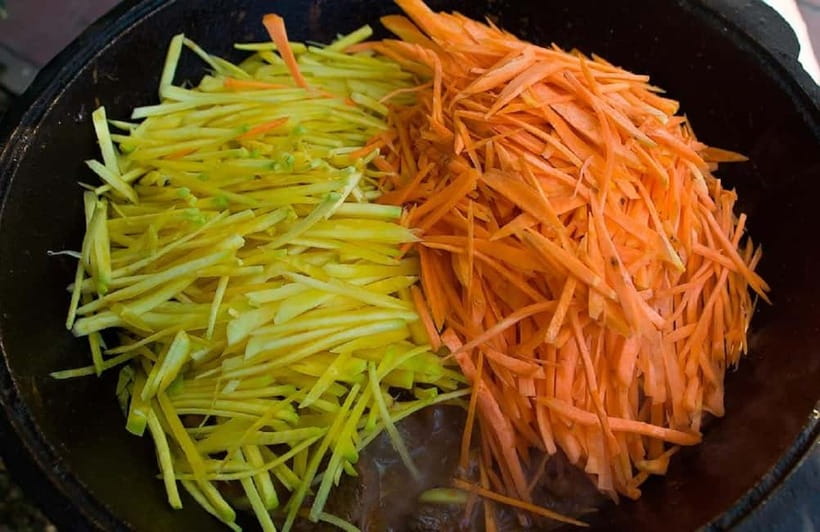
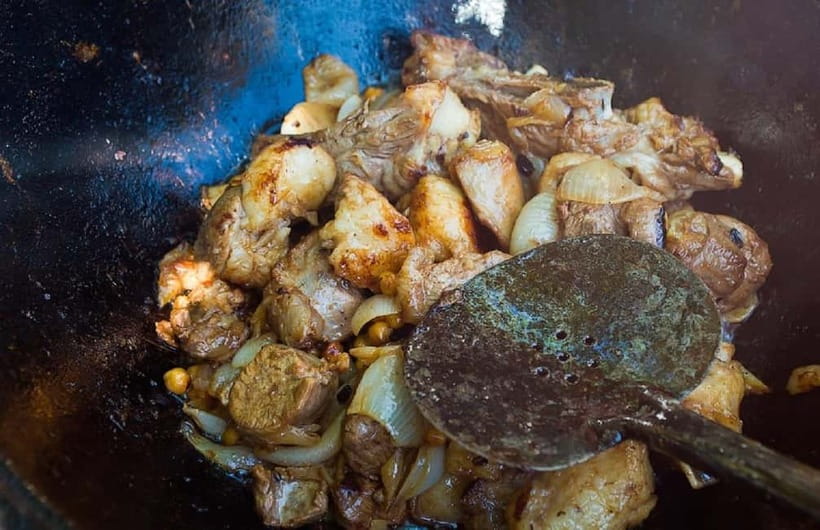
Plov starts with preparation, and this is where you begin to see why the dish takes care. You cut onions, carrots, and meat, then clean the rice. These are ordinary tasks, but they affect the finished dish. The vegetables need attention, the rice needs proper cleaning, and the order of cooking cannot be ignored.
I like this part because it gives you useful skills rather than only a recipe to copy. You are involved from the start, and the host team can correct your technique as you work. If you cook at home, you will leave with a better feel for how much preparation a large rice dish requires.
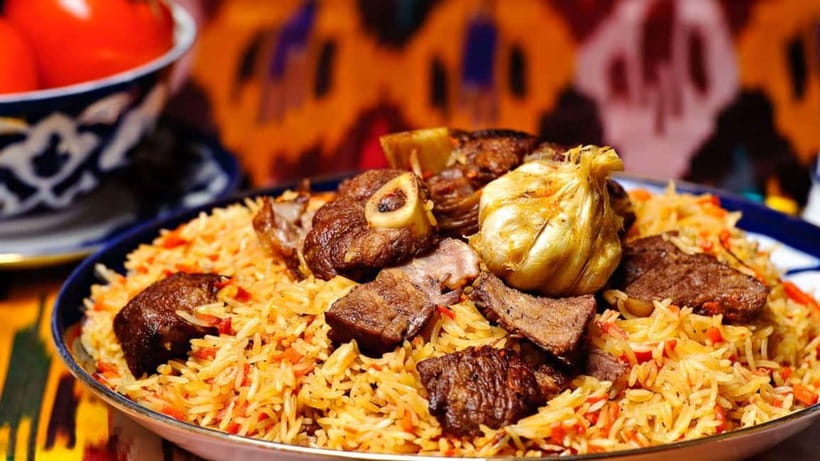
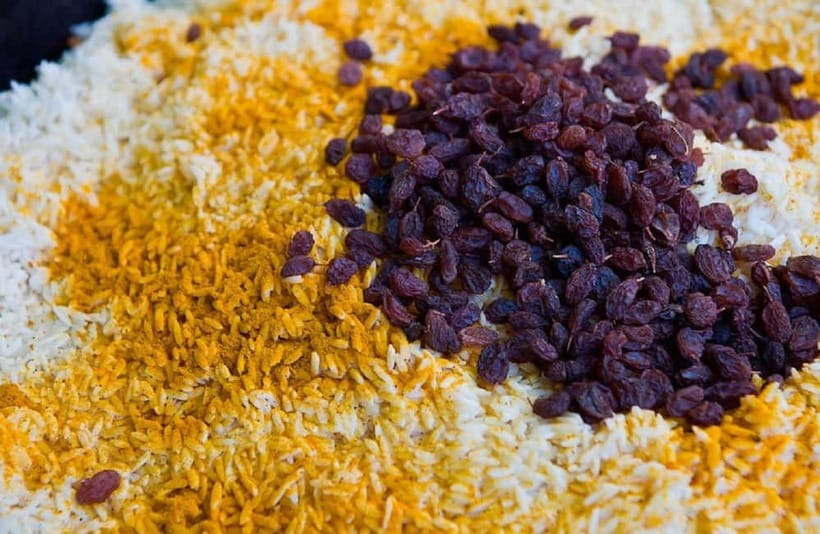
The ingredients listed for the plov include rice, meat, carrots, onions, garlic, cumin, raisins, and sunflower oil. That combination gives you a clear picture of the dish’s character: savory meat and vegetables, fragrant cumin, sweet raisins, and a whole head or cloves of garlic adding depth as the pot cooks.
The meat-free option is helpful for vegans, but you should not assume every part of the meal is automatically vegan. Samsa is described with minced meat filling, and the class includes ghee in the dough, so discuss substitutions before the cooking begins.
Frying and building the plov
After the cutting and cleaning, you fry the ingredients. This is one of the most useful parts of the class because you are not simply adding everything to a pot at once. You learn the rhythm of building the base before the rice goes in.
The activity description places emphasis on frying, cooking, and steaming the food yourself. That wording matters. You are expected to participate in the actual cooking, with the professional team helping you keep the dish on track. The result should feel like your meal, not just a dish prepared in front of you.
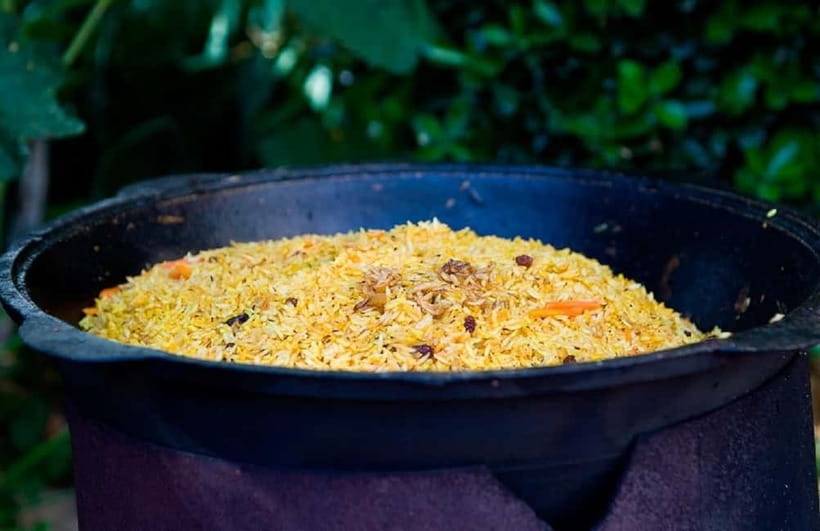
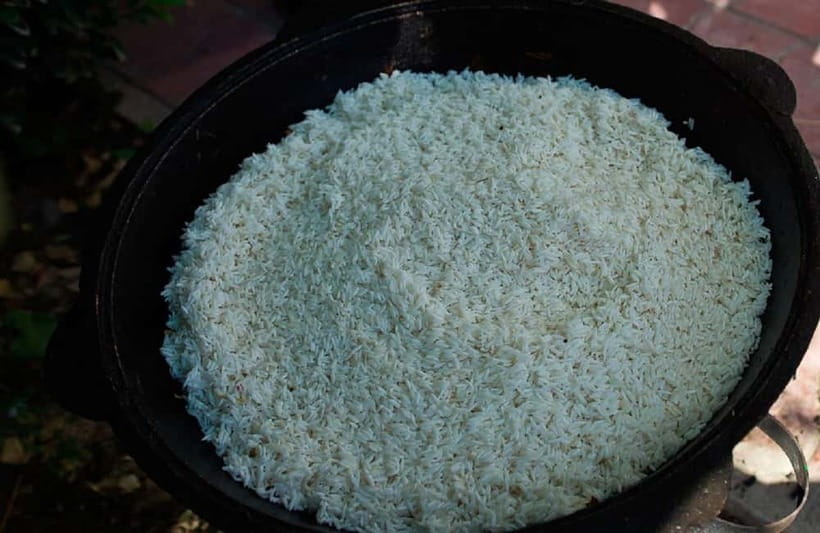
Plov is also a dish that rewards patience. Once water is added for the rice to steam, you have a short break. Rather than leaving you idle, the class uses that time to prepare samsa. This is smart scheduling and gives you two different cooking methods in one session.
You should still keep your expectations sensible. Cooking success depends on your own pace, the host’s instructions, and how closely you follow the process. The team helps you make the food tasty, but this is not a formal chef-training course with printed technical measurements provided in the description.
Rolling dough for Uzbek samsa
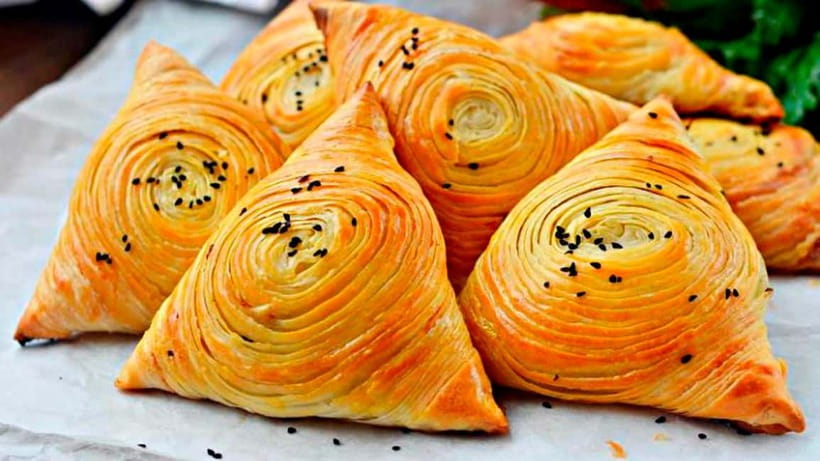
Samsa is an Uzbek baked pastry, often compared with samosa or samusa, but the preparation described here is its own process. You begin with simple dough, roll it out, and spread ghee across the surface. Then you roll the dough tightly, divide it into equal portions, and chill the small dough pieces.
After chilling, you roll each portion again and add the filling. The stated filling is minced meat, and the pastries are shaped into triangles before being baked in an oven. A member of the host team helps you through the process, which is useful because the rolling and shaping can be less familiar than ordinary pastry work.
This is the most tactile part of the class. You handle the dough, portion it, fill it, and shape it. You also get a contrast with plov: plov is built in a pot with heat and steam, while samsa depends on dough, filling, shaping, and the oven.
The samsa section is not a separate long workshop. It fits into the waiting period while the plov steams, so the two dishes work well together. If you want a class devoted only to pastry technique, this may feel brief. If you want a broad introduction to Uzbek home cooking, the combination is a strong feature.
Same kitchen, a different dish:
- Florence: Pasta & Tiramisu Cooking Class with Unlimited Wine
★ 4.9 · 6,708 reviews - Florence: Pasta Cooking Class with Unlimited Wine
★ 5.0 · 6,413 reviews - Hanoi Cooking Class: Culture, Local Market & Meaning CSR Impact
★ 5.0 · 5,147 reviews - 5 Traditional Dishes Hanoi Cooking Class with Market Trip
★ 5.0 · 4,890 reviews
Returning to the steaming plov
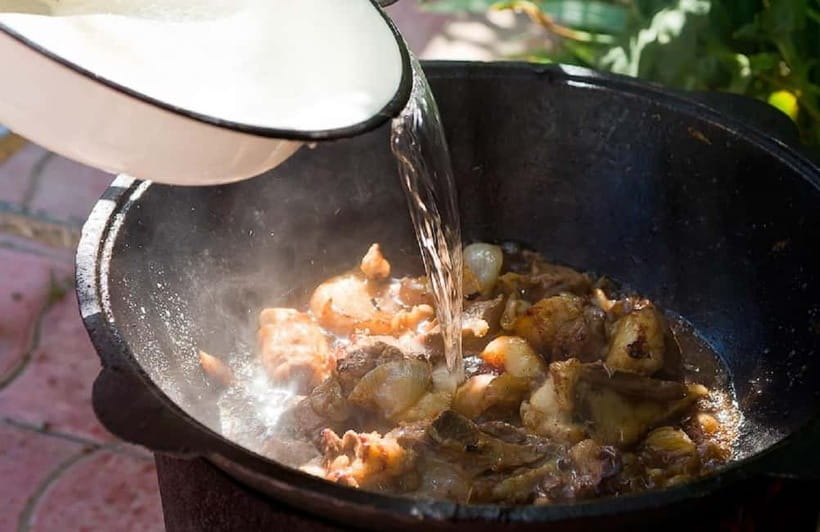
Once the samsa is ready for the oven, you return to the plov. This gives you a clear sense of the full sequence: prep the ingredients, fry the base, add water, let the rice steam, prepare another dish, then finish the main meal.
The final stage is also where the class becomes social. You eat the plov and samsa you helped make, rather than ending with a quick taste. A small spread of traditional snacks, desserts, and tea may also be served by the host family, adding to the home meal atmosphere.
One useful detail from the experience is that extra food may sometimes be packed for you to take away. Treat that as a possible courtesy rather than something to count on, since it depends on what the family prepares and how much remains.
The strongest part of the activity is this connection between work and meal. You see the raw ingredients, handle them, watch them cook, and then sit down to eat. That makes the food easier to remember than a dish ordered from a menu.
What the $160 price includes
The $160 rate covers a private group of up to two people. It includes professional instruction, all necessary ingredients for the plov and samsa, your participation in the preparation, and the meal at the end.
For two people, I find the price easier to justify because it buys a private cooking session rather than two seats in a large group. You are also paying for the ingredients, the host’s time, the use of the home kitchen, and the meal itself.
For one person, the value is less obvious. You still receive a private class and a full meal, but the same group price applies. If you are comparing this with a cheaper group cooking lesson, ask yourself how much you value privacy and direct participation.
Pickup, drop-off, and personal expenses are not included. One account of the experience described a driver being arranged, but the stated terms exclude transportation, so you should confirm this before relying on a transfer. Do not assume the cooking fee includes airport or hotel service.
The class offers free cancellation up to 24 hours before the start time, and you can reserve now and pay later. These policies help if your Tashkent schedule is still changing, but you should still confirm the meeting instructions after booking.
Who will enjoy this class most
I would choose this class if you want to do more than take photographs of Uzbek food. It suits couples, friends, and small private groups who enjoy working with their hands and sharing a meal afterward.
It is also a good fit if you are curious about home cooking rather than restaurant dining. The hostess’s home setting and family-style meal give the activity a personal feel that a commercial kitchen may not provide.
Families may appreciate the private format, though the supplied information does not give a minimum age or specific child arrangements. Ask before booking if you are traveling with children or need special help.
The class also suits vegetarians and vegans only with advance planning. Meat-free plov is possible, but the samsa instructions center on minced meat and ghee. Confirm exactly what can be changed before you arrive.
The experience is wheelchair accessible. That is useful, but the meeting point is given after booking, and no detailed information is provided about kitchen layout or restroom access. If you use a wheelchair, ask for those practical details ahead of time.
Timing, clothing, and communication
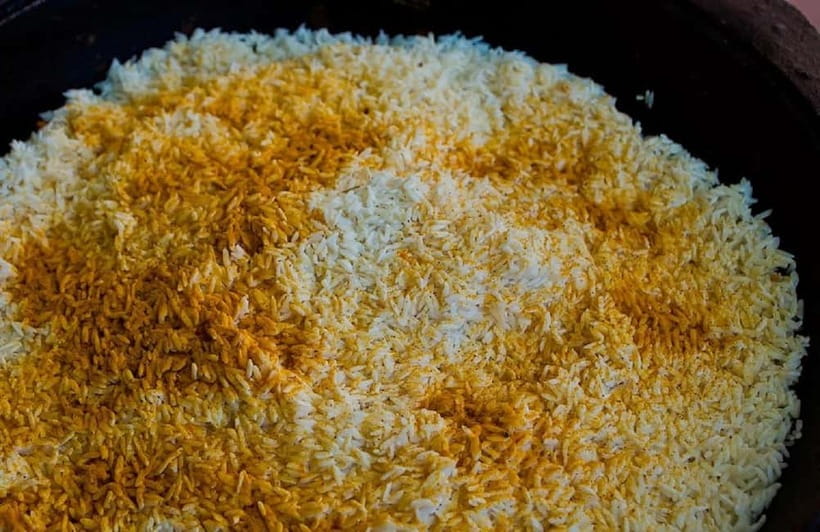
Three hours is enough time for a relaxed cooking session without turning the activity into a full-day commitment. The schedule has a natural pause while the plov steams, but you continue working by making samsa.
Wear comfortable clothes that you do not mind wearing in a kitchen. You will be cutting ingredients, frying, handling dough, and working around an oven. Alcohol and drugs are not allowed.
The host team speaks Russian and English. Since the hostess has basic English, you may find that watching the process and following short instructions is important. If you have food allergies, dietary limits, or questions about ingredients, explain them clearly before the class starts.
The class is private, which helps communication because you can ask for a demonstration more than once. Still, this is a practical cooking lesson, not a language course or a formal culinary school session.
My verdict on this Tashkent cooking experience
I would book this class if you want active cooking, a private setting, and a meal with the people who prepared it. The best features are the two-dish format, the chance to handle every stage of the plov, and the home-based atmosphere.
I would pause if you need guaranteed transportation, detailed English explanations, or a fully confirmed vegan menu. The $160 price is reasonable for two people who value a private session, but it is harder to defend for one person unless the personal setting matters greatly to you.
Before paying, confirm the meeting point, transportation, language support, and meat-free arrangements. If those details fit your plans, this is a warm and practical way to learn why Uzbek cooking depends on patience, order, and shared eating.
FAQ
How long does the Plov and Samsa Cooking Class last?
The class lasts three hours.
How much does the class cost?
The price is $160 for a private group of up to two people.
Is the class private?
Yes. The experience is offered as a private group activity.
Which languages are available?
Instruction is available in Russian and English. The hostess has a basic level of English.
Are ingredients included?
Yes. The necessary ingredients for plov and samsa are included.
Can vegans take part?
Meat-free plov is possible for vegans. The stated samsa preparation uses minced meat and ghee, so confirm suitable changes before booking.
Is pickup or drop-off included?
No. Pickup and drop-off are not included in the stated program.
What should I bring?
Wear comfortable clothes. Alcohol and drugs are not allowed.
New cooking classes around the world
- Shinjuku Tokyo: Authentic Japanese Home-Style Culinary Class★ 4.9 · 125 reviews
- Shibuya Tokyo: Onigiri & Tamagoyaki Cooking Class★ 5.0 · 4 reviews
- M.O.M COOKING CLASS★ 4.8 · 6 reviews
- Shanghai: Authentic Chinese Cooking Class with Master Chef★ 5.0 · 2 reviews
- Seville: Paella-Cooking Experience with Sangria & Full Meal★ 4.9 · 42 reviews
- Sestri Levante: Pesto & Cooking Classes, Wine Tasting★ 4.9 · 56 reviews
- Seville: Paella Cooking Class & 30-Min Local Expert Q&A★ 4.8 · 37 reviews
- Seoul: Korean Kimchi Cooking Class in the Heart of the City★ 5.0 · 3 reviews