
Review · COOKING CLASSES WORLDWIDE
Rio de Janeiro: Brazilian Cooking Class in Rio de Janeiro
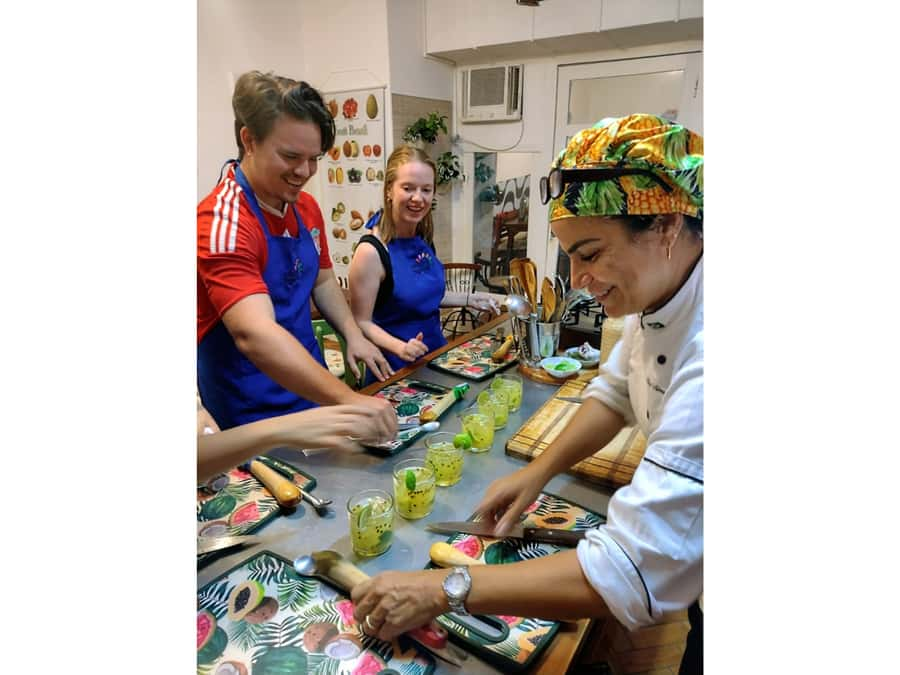
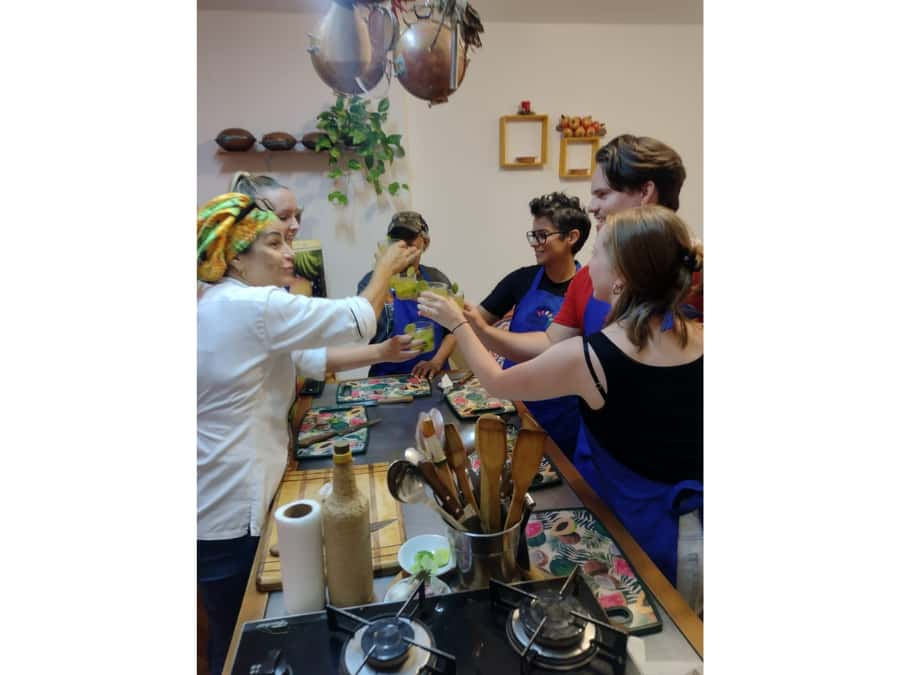
Brazilian cooking gets personal in this small Copacabana class, where Chef Simone guides you through recipes rather than simply demonstrating them. You prepare the food yourself, then sit down to eat it with her and toast the work with a caipirinha and a coconut drink.
I like two things right away: the class teaches dishes you can recreate at home, and the food changes by day. Choose seafood moqueca on Monday, Wednesday, or Friday, or book Saturday for pork-and-bean feijoada. The small maximum of seven people also gives you room to ask questions.
The one point to check before booking is the timing. The activity details list three hours, while the cooking description calls it a four-hour class. Transportation is not included, so you will need to reach the Copacabana studio yourself.
Key points to know before booking
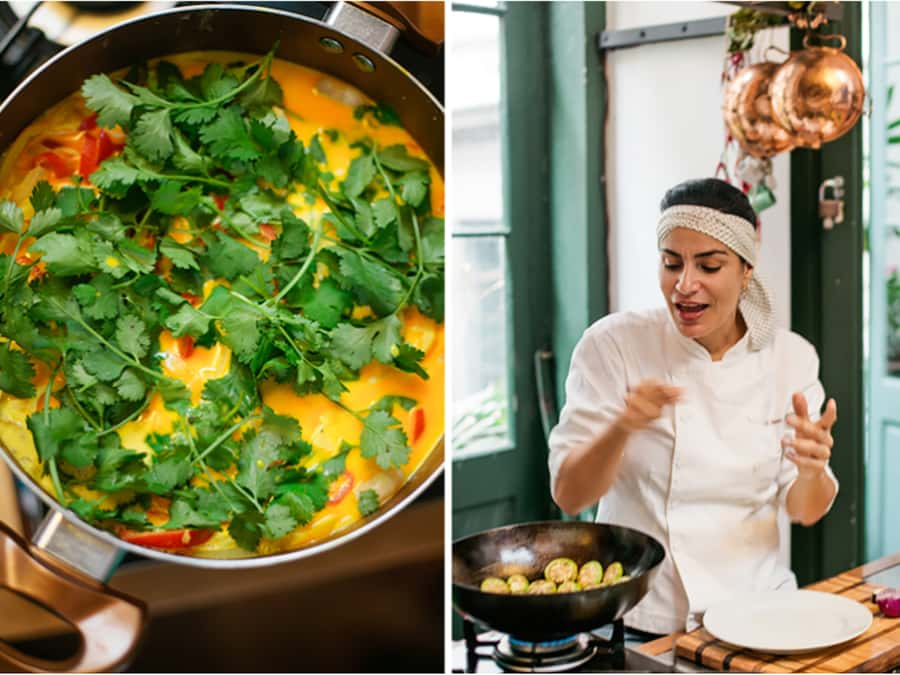
- Chef Simone leads the class: She teaches in Portuguese, English, or Spanish and brings Brazilian food and culture into the cooking.
- The main dish depends on the day: Moqueca is offered Monday, Wednesday, and Friday. Feijoada is offered Saturday.
- You do the cooking: This is a practical class, not a show where you sit and watch someone else prepare dinner.
- The menu goes well beyond one recipe: You prepare cheese with guava jam, sausage, drinks, the main course, cassava, farofa, rice, and dessert.
- The group is capped at seven people: That makes it easier to work with the chef and ask about ingredients or techniques.
- Two drinks are included: The menu features a lime caipirinha and batida de coco, along with the meal.
Cooking Brazilian food in a Copacabana studio
The appeal here is simple: Rio is not only a place to eat Brazilian food, but also a good place to learn why it tastes the way it does. At this cooking studio in Copacabana, Chef Simone takes you through the ingredients, methods, and everyday food traditions behind the menu.
You are not expected to arrive with cooking skills. The class welcomes beginners, while more experienced cooks still get useful contact with Brazilian recipes and ingredients. The chef guides the preparation, answers questions, and helps you keep the meal moving from one course to the next.
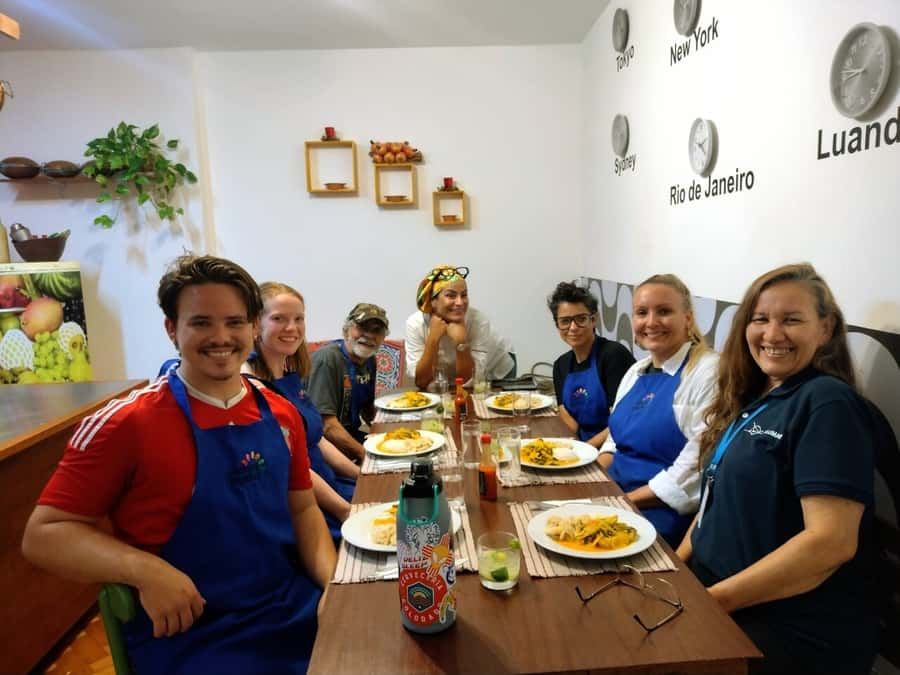
I especially like the social shape of this experience. You cook with a small group, share the work, then sit down together once the meal is ready. Chef Simone’s daughter sometimes assists, adding another family touch to the class. This is less formal than a chef demonstration and more like being invited into a Brazilian kitchen for an evening of food and conversation.
The setting matters, too. Since the class takes place in Copacabana, it can fit neatly into a day spent in the neighborhood. You do not need to commit to a full-day excursion or leave Rio for a rural cooking school. Just remember that hotel pickup and drop-off are not part of the price.
More cooking classes around the world:
- Half-Day Thai Cooking Class at Organic Farm in Chiang Mai
★ 5.0 · 19,087 reviews - Florence: Pasta Cooking Class with Unlimited Wine
★ 4.9 · 10,285 reviews - 3 in 1 Cooking Class near Navona: Fettuccine, Ravioli & Tiramisu
★ 5.0 · 7,376 reviews
Pick your Brazilian main course by day
The most important booking decision is the day you attend.
On Monday, Wednesday, and Friday, the main dish is seafood moqueca. This Brazilian preparation is known for its seafood, aromatic ingredients, and creamy coconut character. The class gives you the chance to see how the components come together rather than meeting the dish only as a finished bowl in a restaurant.
On Saturday, the main dish is feijoada, the famous pork-and-bean stew. The recipe listed here uses pork and beans, making it a hearty choice with a long connection to Brazilian home cooking. One recent participant specifically singled out the feijoada as a favorite, so Saturday is the day I would choose if you want the most classic comfort-food option.
The schedule is useful for planning, but it also means you should not assume you can order either main dish on any date. If moqueca is your priority, avoid Saturday. If feijoada is the reason you are interested, plan around the Saturday session and check availability before paying.
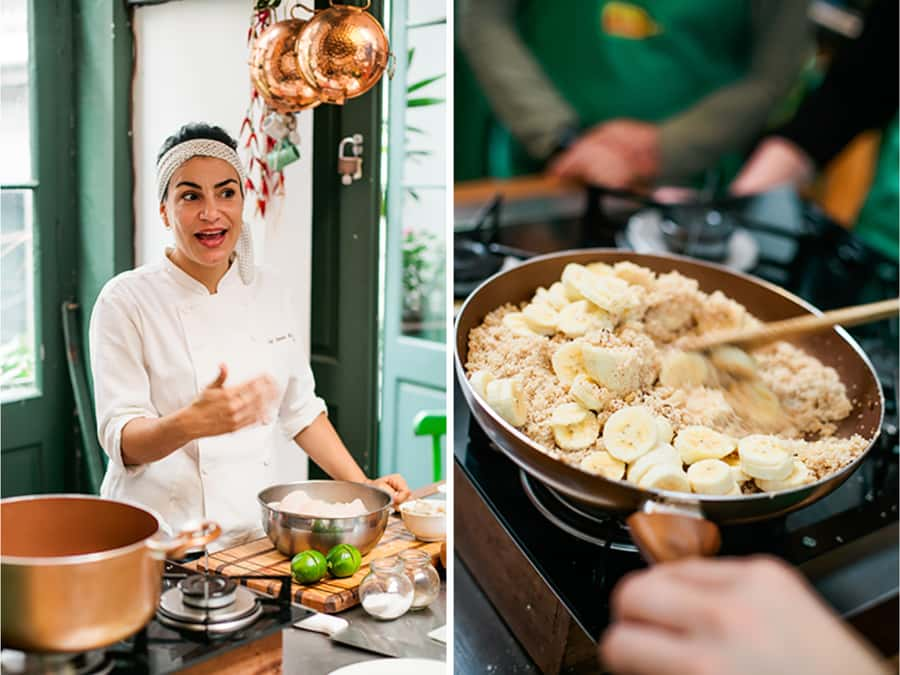
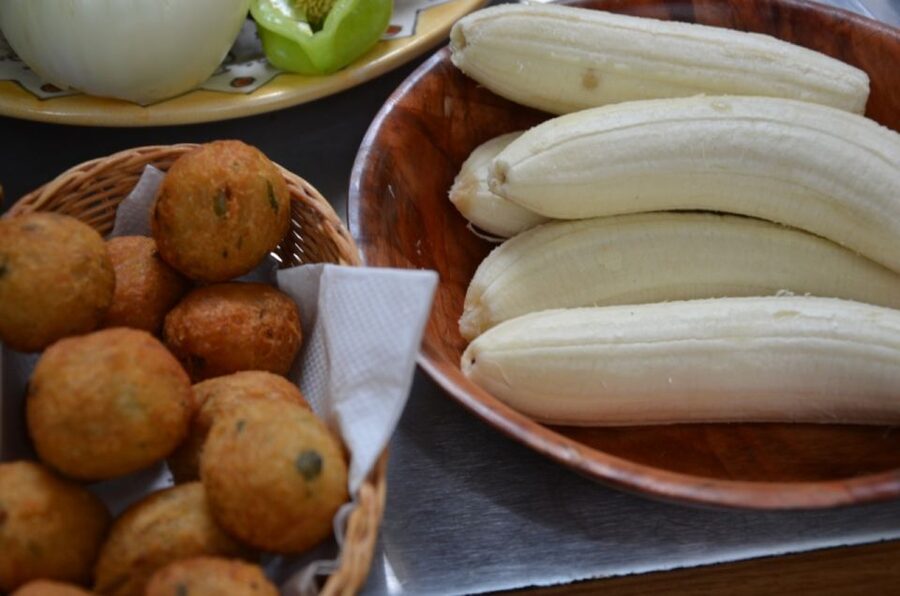
Both main courses come with cassava sticks, flavored rice, and banana farofa. Farofa is a toasted cassava-flour side dish often used to add texture and flavor to Brazilian meals. Here, the banana version gives the plate a sweet note alongside the savory main course.
What you actually prepare and eat
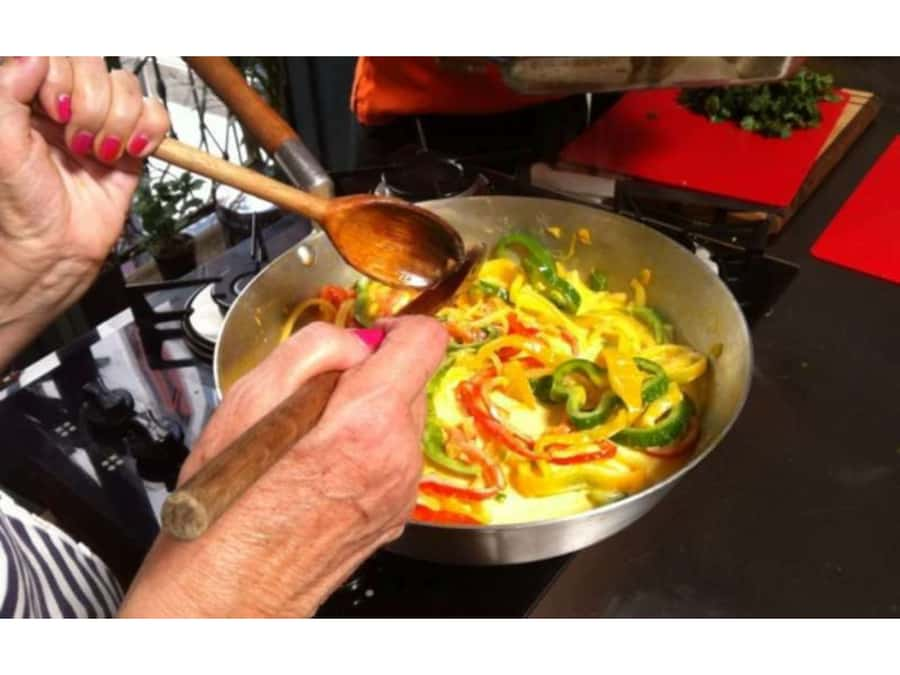
The menu is generous for a class of this length. The description refers to seven Brazilian recipes, while the meal is also presented as five courses with two drinks. In practical terms, you should expect several small preparations, a substantial main dish, sides, dessert, and drinks rather than seven large plated courses.
The listed menu includes:
- Fried cheese with spicy guava jam
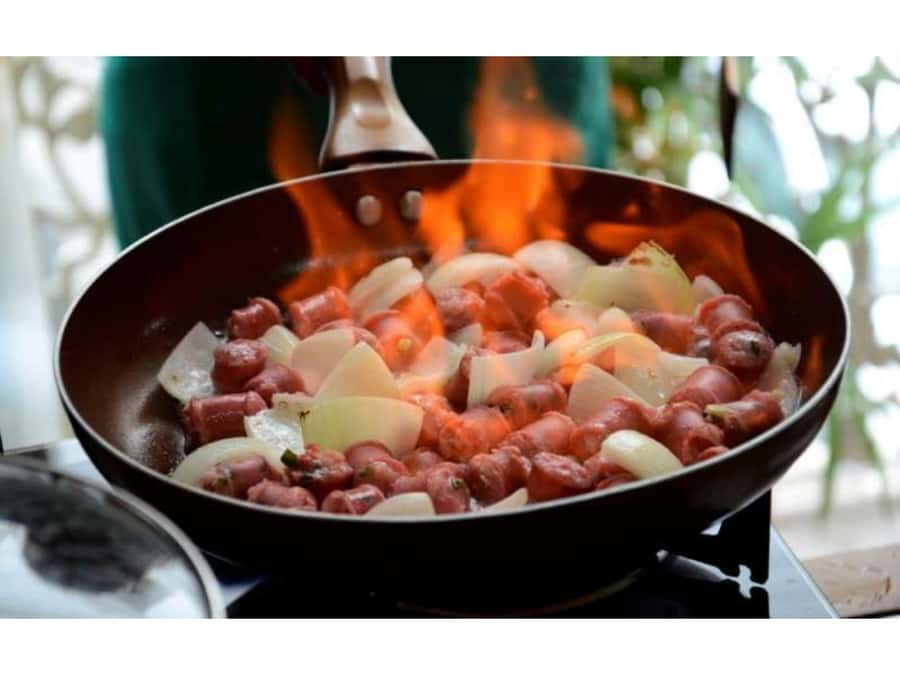
- Fried sausage slivers
- Lime caipirinha
- Batida de coco
- Seafood moqueca or pork-and-bean feijoada
- Banana farofa with flavored rice
- A surprise dessert
The first bites give you a quick introduction to the sweet and salty balance found in Brazilian snacks. Fried cheese with spicy guava jam pairs a crisp, savory bite with fruit and heat. It is the sort of simple combination that makes sense once you taste it, and the ingredients are not so unusual that you could not recreate it at home.
The sausage preparation adds another easy technique to your kitchen notes. The menu describes fried sausage slivers, listed with an apparent typo as clambered fried sausage. Either way, you can expect sausage prepared in small pieces as part of the shared meal.
Drinks are part of the cooking experience, not an afterthought. You prepare a lime caipirinha and a batida de coco, then have two alcoholic drinks with the food. The caipirinha brings the familiar lime and cachaça profile associated with Brazil. The coconut drink offers a softer, sweeter contrast.
The dessert varies. It may use exotic fruits available at the time, or it may be a sweet made by the chef, such as brigadeiro or doce de leite. Since this part is not fixed, you should treat it as a pleasant surprise rather than book the class for one particular dessert.
Why the hands-on format matters
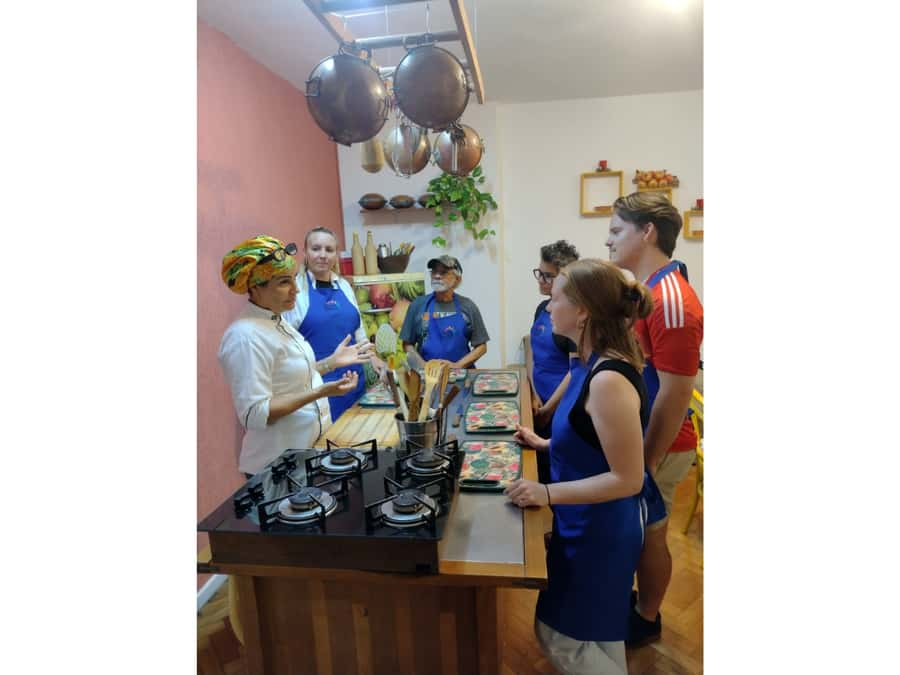
A Brazilian dish can look straightforward on a menu but involve unfamiliar ingredients or timing in the kitchen. Preparing it with a native chef helps you understand how the food is assembled and what each ingredient contributes.
I like that the ingredients are described as widely available around the world. That makes this class more useful than a one-night meal alone. You can take home the basic methods and try the dishes again, even if you do not live near a Brazilian market.
The class also gives you room to ask practical questions. You can ask about substitutions, the order of preparation, or how to handle a recipe in your own kitchen. With a maximum of seven participants, you should get more direct guidance than you would in a large demonstration class.
That small size does not guarantee a completely private lesson. The booking information describes the activity as a private group and also gives a maximum of seven participants. I would read that as a small-group format, with a private booking structure, rather than assume you will have the chef entirely to yourself unless that is confirmed at booking.
Same kitchen, a different dish:
- Florence: Pasta & Tiramisu Cooking Class with Unlimited Wine
★ 4.9 · 6,708 reviews - Florence: Pasta Cooking Class with Unlimited Wine
★ 5.0 · 6,413 reviews - Hanoi Cooking Class: Culture, Local Market & Meaning CSR Impact
★ 5.0 · 5,147 reviews - 5 Traditional Dishes Hanoi Cooking Class with Market Trip
★ 5.0 · 4,890 reviews
Meeting Chef Simone
The chef is a major part of the experience. Chef Simone is described as a native Brazilian cook who shares both food techniques and cultural context. Her teaching is available in English, Portuguese, and Spanish, which makes the class practical for a wide range of visitors.
Her role goes beyond calling out instructions. She explains Brazilian food and the place it holds in the country’s culture, while keeping the session friendly and social. One parent and child found the cooking format especially enjoyable, with Chef Simone’s daughter helping during the class. That detail suggests a family-style atmosphere rather than a stiff professional kitchen.
I would also keep Chef Simone’s local knowledge in mind. She can add context about Rio and Brazil beyond the recipes, so bring questions if you want more than cooking instructions. The experience is strongest for people who enjoy conversation as much as the food itself.
The language choice is worth confirming when you reserve. English, Portuguese, and Spanish are listed, but you will want to select the language that suits your group.
Eating the meal you prepared
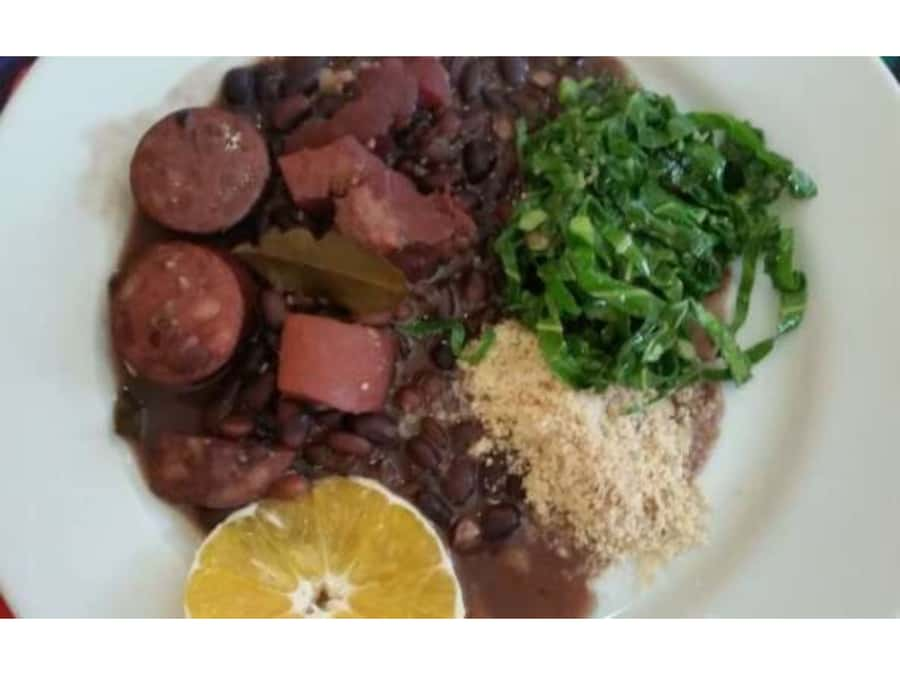
After the cooking is finished, you sit down with the instructor and eat the food. This final meal is an important part of the format. You are not rushing off after a quick demonstration or collecting a recipe card without tasting the results.
The meal also gives the class a natural ending. You can compare the different preparations, enjoy the two included drinks, and talk with Chef Simone about what you made. The setting encourages the sort of easy conversation that can make a cooking class feel more personal than a standard restaurant dinner.
If you are booking for a family, this shared meal helps balance the practical work. Younger cooks can take part in preparing food, while everyone gets a chance to relax at the table afterward. The class is also a good fit for couples or friends who want an evening activity with something substantial to eat.
One practical note: the supplied information describes the meal as five courses plus two drinks, but it also lists seven recipes. I would expect a multi-part meal with several small dishes and sides, not five oversized courses. Come hungry, but do not treat this as an unlimited tasting menu.
Is $220 a fair price?
At $220 per person, this is not a cheap meal or a casual market class. The price includes the cooking instruction, ingredients, equipment, five dishes, two drinks, taxes, and handling charges. You are paying for a hosted experience, not just the cost of the food.
The value improves if you want direct instruction and a small group. A maximum of seven participants means the chef can guide your work more closely, and the class includes both cooking and a sit-down meal. The drinks and dessert also make the experience feel more complete than a basic lesson focused on one main dish.
The price is harder to justify if you only want to sample Brazilian food. Rio has restaurants where you can eat moqueca or feijoada for far less than $220. You should book this when the learning, conversation, and hands-on time matter as much as dinner.
I would also factor in the cost of getting to Copacabana. Pickup and drop-off are not included, so transportation is your responsibility. Since the class is in a well-known Rio neighborhood, that may be manageable, but it remains an extra part of your plan.
Timing, language, and planning notes
The activity information gives a duration of three hours, while the main description calls it a four-hour cooking class. That difference could affect your dinner plans, transport, or an evening show. Check the exact start time and expected finish when you select a date.
The class is offered on specific days according to the main dish. Monday, Wednesday, and Friday are for moqueca. Saturday is for feijoada. The schedule does not list Tuesday or Sunday sessions, so do not build your Rio itinerary around a class on those days without checking availability.
You can cancel up to 24 hours before the activity for a full refund, and the booking option allows you to reserve now and pay later. Those policies give you some flexibility when your Rio plans are still changing.
All cooking equipment and ingredients are supplied. You do not need to shop for seafood, beans, cassava, drinks, or dessert ingredients before arriving.
Who will enjoy this class most?
I would recommend this class to you if you want a food experience that includes real participation. It suits curious beginners, home cooks, couples, families, and small groups who like to talk while they work.
It is also a strong choice if you want to learn one of Brazil’s best-known dishes in a setting led by a Brazilian chef. Choose Saturday for feijoada if traditional pork and beans is your priority. Choose Monday, Wednesday, or Friday for seafood moqueca.
The class may not suit you if you dislike group cooking, do not drink alcohol, or mainly want a quick meal. Two alcoholic drinks are included, and the format is built around preparation and conversation. The price also asks you to value the lesson, not just the plate.
Should you book the Copacabana cooking class?
I would book it if you want to leave Rio with more than restaurant memories. Chef Simone’s warm teaching style, the small group size, the choice between moqueca and feijoada, and the chance to prepare the meal yourself give this class real substance.
My practical advice is to choose your date based on the main dish, confirm whether the session lasts three or four hours, and plan your own route to Copacabana. At $220, it is a premium activity, but the price covers instruction, food, drinks, equipment, and a full sit-down meal.
If that combination sounds worthwhile, this is a good way to spend an evening in Rio. If you only want to eat Brazilian food, use the money at a restaurant instead.
FAQ
Where does the cooking class take place?
The class takes place at a cooking studio in the Copacabana region of Rio de Janeiro.
How long does the class last?
The activity details list a three-hour duration, while the cooking description calls it a four-hour class. Check the exact timing when booking.
Which main dishes can I prepare?
You can prepare seafood moqueca or pork-and-bean feijoada. Moqueca is offered on Mondays, Wednesdays, and Fridays. Feijoada is offered on Saturdays.
Is cooking experience required?
No. The class is designed for beginners as well as people with more cooking experience.
What languages does the instructor speak?
The class is offered in Portuguese, English, and Spanish.
How many people can join?
The maximum group size is seven participants. The activity is also described as a private group.
What food and drinks are included?
The menu includes fried cheese with spicy guava jam, fried sausage slivers, moqueca or feijoada, banana farofa, flavored rice, dessert, a lime caipirinha, and a batida de coco. Five dishes and two drinks are included.
Is transportation included?
No. Pickup and drop-off transportation are not included, so you need to make your own way to the cooking studio.
New cooking classes around the world
- Shinjuku Tokyo: Authentic Japanese Home-Style Culinary Class★ 4.9 · 125 reviews
- Shibuya Tokyo: Onigiri & Tamagoyaki Cooking Class★ 5.0 · 4 reviews
- M.O.M COOKING CLASS★ 4.8 · 6 reviews
- Seville: Paella-Cooking Experience with Sangria & Full Meal★ 4.9 · 42 reviews
- Shanghai: Authentic Chinese Cooking Class with Master Chef★ 5.0 · 2 reviews
- Seville: Paella Cooking Class & 30-Min Local Expert Q&A★ 4.8 · 37 reviews
- Sestri Levante: Pesto & Cooking Classes, Wine Tasting★ 4.9 · 56 reviews
- Seoul: Korean Kimchi Cooking Class in the Heart of the City★ 5.0 · 3 reviews