Review · ROME
Super Fun Pasta & Gelato Class by Vatican with Wine + Oil Tasting
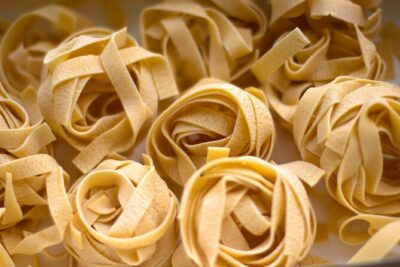
Making pasta by hand is the heart of this Roman cooking class. You mix, shape, and roll the dough with simple tools, then help prepare sauce and gelato before sitting down to eat the meal you made. The class is led by English-speaking chefs, often including Massimo, Carla, Luca, or other members of the team.
I like the hands-on approach, since you learn techniques you can repeat at home without a pasta machine. I also like the family-friendly pace, with children as young as 11 taking part and chefs making an effort to keep everyone involved. The main consideration is the host’s humor: the class is playful, and some of the teasing may not suit every group.
Key points at a glance
- Hand-rolled pasta: Learn a simple method using your hands and a rolling pin rather than relying on fancy equipment.
- A full meal: Prepare bruschetta, fresh pasta with sauce, and gelato, then eat your work.
- Chefs who engage the room: Massimo is especially warm and attentive, while other instructors such as Carla, Luca, Max, Carlo, David, Mersad, and Peter have also led sessions.
- Good for families: Children and first-time cooks can participate without feeling out of place.
- Near the Vatican: The class takes place at Via Simone de Saint Bon, 57, with the experience ending at the same address.
- Small-group setting: The maximum is 15 people, so you get more contact with the chef than in a large demonstration.
Why this pasta class works well in Rome
Rome can fill your day with ancient stones, crowded piazzas, and long museum lines. A cooking class gives you a different way to spend two and a half hours. Instead of only looking at Italian food, you learn how a few basic ingredients become lunch or dinner.
The focus is on the everyday side of Italian cooking. Fresh ingredients, simple sauces, and handmade dough matter more here than complicated restaurant tricks. That makes the class useful after your holiday, too. You can take home the recipes and repeat much of the process with ordinary kitchen tools.
The setting is near the Vatican, so this fits neatly into a sightseeing day. You may want to schedule it as a break before or after Vatican visits, but leave enough time to get to the address at Via Simone de Saint Bon, 57. The activity begins and ends at the meeting point, which keeps the transport plan simple.
The class is offered in English. That matters when you are learning small details such as how the dough should feel, how thin to roll it, and when a sauce needs more time. The chef’s stories and jokes also help turn a technical lesson into a social evening.
More Cooking Classes with Wine Tasting in Italy
- Rome: Pasta Making Class with Wine, Limoncello, and Dessert
★ 4.9 · 3,177 reviews - Fettuccine & Tiramisù: Cooking Class with Wine & Limoncello
★ 4.9 · 2,103 reviews - Pasta Making & Wine Tasting with Dinner in Frascati from Rome
★ 5.0 · 1,326 reviews
Starting with bruschetta, wine, and oil
The meal begins with bruschetta, a straightforward Roman-style starter that gets you thinking about the role of good ingredients. The listed experience also includes wine and oil tasting, with beer, water, and soft drinks available. This gives you something to sip while the dough and sauce come together.
I like this opening because it eases you into the class. You are not expected to walk in and immediately produce perfect pasta. You can settle into the room, meet the people at your table, and listen to the chef explain the ingredients.
The oil tasting is a useful touch for anyone who tends to treat olive oil as just another cooking liquid. Pay attention to how the oil is discussed and tasted, then use that awareness when you dress the bruschetta. The provided details do not specify a particular oil producer or tasting sequence, so you should not expect a formal sommelier-style presentation.
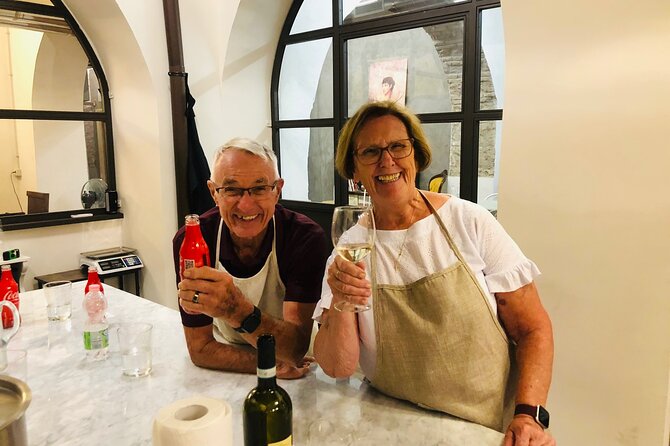
The drinks are part of the relaxed feel. Wine is a natural match for the meal, but beer, water, and soft drinks mean you are not forced to drink alcohol. This is helpful for families and for anyone taking the class early in the day.
Rolling pasta without a machine
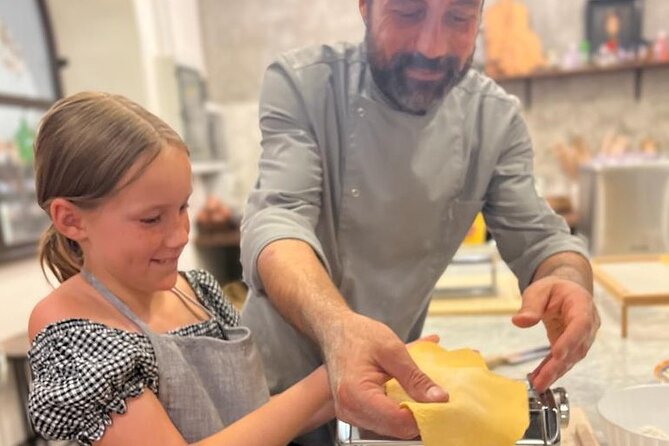
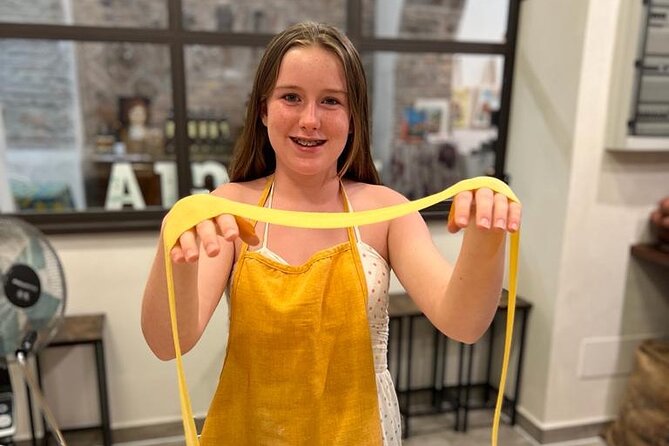
The most valuable part of the experience is the pasta lesson. You learn to make fresh pasta from scratch and, in some sessions, roll it by hand with a rolling pin. That is a practical skill, not just a photo opportunity. You can try it again at home without buying a pasta roller or setting up extra equipment.
The chef guides you through the process and helps you judge the dough by touch. Beginners can follow along, while experienced cooks may pick up a better feel for shaping and rolling. The pace is intended for all skill levels, so you do not need to arrive with kitchen experience.
Hand rolling also adds a little good-natured drama. The dough may not look perfect at first, and that is part of the fun. You get a clearer sense of how much effort goes into fresh pasta, and the final meal feels more personal because you handled the dough yourself.
One useful tip is to embrace the hand method. A pasta machine might produce more uniform strands, but the simple rolling-pin technique is easier to copy at home and creates less equipment to clean. If you want a polished, highly technical pasta workshop, this may feel basic. If you want a skill you can use in an ordinary kitchen, it is a strong fit.
The sample main course is handmade pasta with a tomato-based sauce, depending on the season. Seasonal wording matters here. You should expect the sauce to follow what is available rather than assume that every class uses precisely the same ingredients each day.
Preparing the sauce and eating what you made
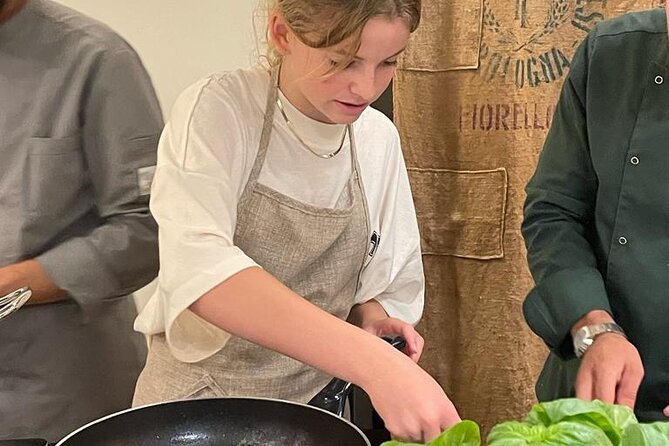
The sauce is not an afterthought. You help prepare it while the pasta is being shaped, then combine the two for the main course. This shows how Italian cooking often depends on timing and restraint rather than a long list of ingredients.
I appreciate that the meal is assembled during the class instead of being brought out as a separate restaurant course. You see the connection between the dough, the sauce, and the finished plate. The result may not be perfectly uniform, but it is fresh and satisfying because you helped make it.
The meal is also a useful lesson in proportion. Handmade pasta does not need a heavy sauce to be enjoyable. The class presents Italian food as something that can be made at home, using a few fresh components and good timing.
You should arrive ready to participate rather than simply watch. The chefs demonstrate, but the point is for you to mix, roll, shape, stir, and taste. If you have limited kitchen confidence, that active format is encouraging. If you prefer to sit back and watch someone else cook, you may find the class more demanding than expected.
More Cooking Classes with Wine Tasting in Rome
- Rome Cooking Class: Make Pasta, Dine & Drink Wine With Local Chef
★ 5.0 · 1,263 reviews - Rome: Combo Pizza and Pasta Cooking Class with Wine
★ 4.6 · 1,180 reviews - Rome: Pasta Making with Wine Tasting and Dinner in Frascati
★ 4.9 · 979 reviews - Rome: Traditional Pasta Making Class with Wine & Gelato
★ 4.9 · 677 reviews
Gelato is the sweet finish
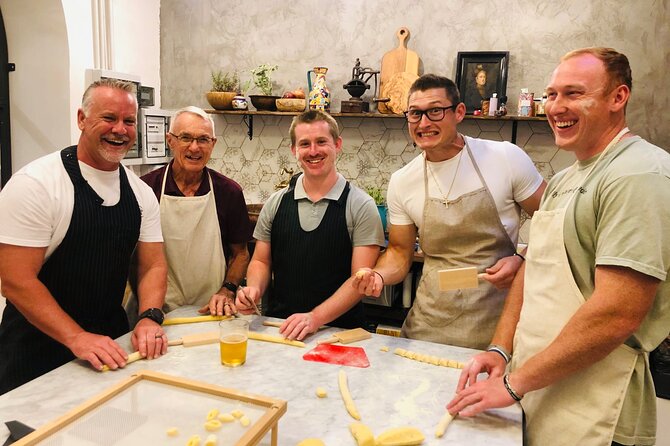
Gelato gives the class a second technique to learn and a clear reward at the end. The sample dessert is gelato, with strawberry sorbet appearing in at least some sessions. The lesson focuses on making a fresh dessert without relying on a long list of added chemicals.
This is especially useful for families. Children can take part in the process, and the cold dessert provides a welcome change from kneading and rolling. The class does not simply serve gelato at the end. You take part in making it, then taste the finished result alongside the pasta.
The exact flavor can vary. Strawberry is one example, but the menu is seasonal, so you should not book expecting one fixed flavor every time. The important point is that gelato is treated as part of the cooking lesson, not merely a free sweet course.
You also leave with a recipe or instructions that can be repeated at home. That gives the dessert lasting value. Fresh pasta may require a little practice, but a simple gelato or sorbet method can become an easy holiday memory to recreate.
The chefs shape the experience
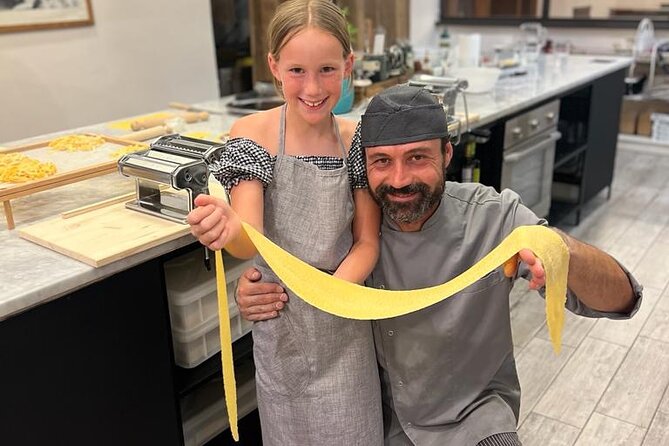
The food matters, but the instructor often determines how much you enjoy the class. Massimo receives particularly strong praise for being patient, warm, and good with children. He is described as keeping the room engaged while still giving individual help, which is important in a hands-on class.
Other sessions have been led by Carla and Luca, Max, Carlo, David, Mersad, Peter, Frederico, and a lead chef assisted by Peita. The range of names suggests that the exact personality and teaching style can vary by date. The common thread is an informal, social approach rather than a silent technical lecture.
That informality has two sides. A friendly chef can make a nervous beginner relax quickly. At the same time, the fun element can include jokes directed at people in the class. One participant found the teasing more prominent than expected. If you like lively banter, this may add energy. If you prefer a quiet, formal lesson, ask yourself if that atmosphere suits you.
The chefs speak English, and the instruction includes practical tips, stories, and explanations of Italian food culture. The best sessions seem to balance entertainment with real instruction. You should leave knowing not only what you cooked, but also why the basic method works.
A good choice for families and first-time cooks
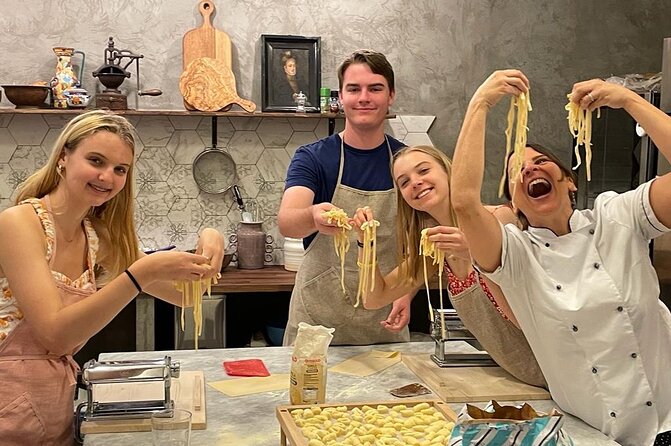
This class suits families better than many food activities in Rome. Children can roll dough, help with gelato, and eat a meal they helped prepare. An 11-year-old has been singled out as enjoying the class, and older children have also found enough to keep them interested.
The format also works for couples. A pasta lesson can be a more personal anniversary activity than a standard restaurant meal, especially when you work together and sit down to eat afterward. Solo participants can join as well, since the class is built around a shared table and group participation.
You do not need advanced cooking ability. The class welcomes beginners through advanced cooks, and the chefs can help you through the stages. More experienced cooks may enjoy comparing methods or asking questions, but do not expect a specialist workshop in advanced pasta shapes.
Food allergies should be raised before or at the start of the session. One participant was accommodated successfully, but the supplied details do not promise a specific allergy policy or guarantee every substitution. Contact the provider before booking if your diet is strict.
The maximum group size is 15. That is not a private lesson, but it is small enough for the chef to move around and offer help. A smaller class may feel more personal, while a full group will bring more social energy and less individual attention.
What the $85.26 price includes in value
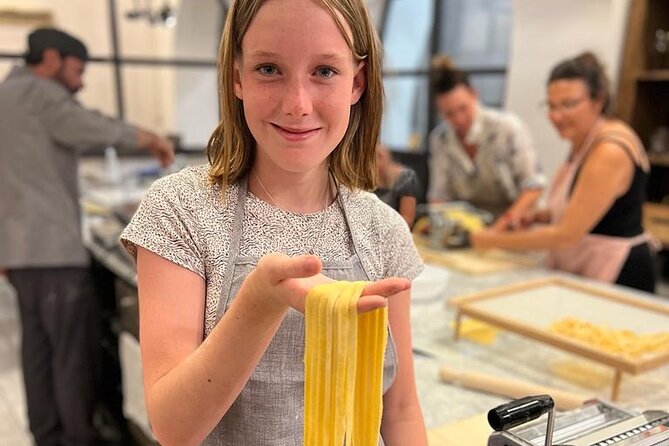
At $85.26 per person, this is more than the cost of a plate of pasta. You are paying for about two and a half hours of instruction, ingredients, drinks, a multi-course meal, and an activity near the Vatican. The value is strongest if you want both dinner and a useful skill.
The meal includes a starter, main course, and dessert: bruschetta, handmade pasta with a seasonal sauce, and gelato. Wine, beer, water, and soft drinks are available, and the experience includes wine and oil tasting. That makes the cost easier to justify than a short demonstration followed by a small sample.
The price is less appealing if your only goal is to eat. Rome has many less expensive ways to enjoy pasta, and a cooking class takes time that could otherwise go toward sightseeing. You are paying for participation, instruction, and the memory of making the meal, not simply for restaurant service.
The strong overall rating, 5 out of 5 from 726 ratings and a 99 percent recommendation figure, suggests a reliable choice for people seeking an upbeat cooking activity. Still, ratings cannot remove the personal factor. Your enjoyment will depend on how much you like group cooking, hands-on work, and a host who may joke with the room.
Timing, transport, and practical details
Plan on roughly two hours and 30 minutes. That estimate matters because cooking often involves pauses while dough rests or food is prepared. Do not place a tight Vatican Museum reservation immediately after the class unless you have plenty of extra time.
The meeting point is Via Simone de Saint Bon, 57, 00195 Roma RM, Italy. The experience ends there too. It is near public transportation, and the activity is described as walking distance to the Vatican, but you should still allow time to find the entrance and arrive without rushing.
The location can change. One participant received a location change the day before and had no trouble with it, but you should check your confirmation messages before setting out. Confirmation is received at booking, and the tour accepts mobile tickets.
Service animals are allowed. The maximum group size is 15 people. Free cancellation is available up to 24 hours before the local start time, with a full refund. Cancellations or changes made inside that window are not accepted, and the minimum number of participants must be met for the class to run.
Who should book this class?
I would choose this for a family, a couple, or a solo visitor who wants to do something active near the Vatican. It is especially good for first-time pasta makers, since you learn a method that does not depend on specialized equipment.
It also suits anyone who wants a break from museums and churches. You get food, conversation, local cooking ideas, and a sit-down meal in one activity. The English instruction makes it accessible, and the small maximum keeps the class from feeling like a large production.
I would hesitate if you want a quiet, chef-led demonstration, a strictly formal cooking school, or a fixed menu with no seasonal changes. The class is social and playful. The tone may include teasing, and different chefs can bring different personalities.
Should you book it?
Book this class if you want to make fresh pasta rather than simply eat it. The strongest reasons are the hand-rolling method, the complete meal, the gelato lesson, and the family-friendly teaching style associated with Massimo and the other chefs.
The $85.26 price is fair when you count the food, drinks, two and a half hours of instruction, and the chance to repeat the recipes at home. If you prefer a polished culinary course or need a completely fixed menu, check the details before paying. For most visitors looking for a practical and cheerful Rome activity near the Vatican, this is a very good use of an afternoon or evening.
FAQ
Where does the pasta and gelato class meet?
The meeting point is Via Simone de Saint Bon, 57, 00195 Roma RM, Italy.
Where does the experience end?
The activity ends back at the meeting point.
How long does the class last?
The class lasts approximately two hours and 30 minutes.
Is the class offered in English?
Yes. The experience is offered in English.
What food will I prepare?
The sample menu includes bruschetta, handmade pasta with a tomato-based sauce depending on the season, and gelato.
Are drinks included?
You can have beer, wine, water, or soft drinks during the experience. The activity also includes wine and oil tasting.
Do I need cooking experience?
No. All cooking levels are welcome, from beginners to advanced cooks.
How many people can join the class?
The activity has a maximum of 15 participants.
Can I cancel for a full refund?
Yes. You can cancel at least 24 hours before the start time for a full refund. Cancellations or changes made less than 24 hours before the start time are not accepted.
More Tiramisu and Dessert Classes in Rome
- Rome: Pasta & Tiramisu Cooking Class near the Spanish Steps
★ 4.8 · 1,395 reviews - Cooking Class in the Heart of Rome: Pizza and Tiramisu Making
★ 5.0 · 1,330 reviews - 2-in-1 Pasta and Tiramisu Cooking Masterclass in Rome
★ 5.0 · 832 reviews - Rome Cooking Class: Make Pizza and Pasta with Wine & Dessert
★ 4.5 · 651 reviews
More Pasta Making Classes in Rome
- 3 in 1 Cooking Class near Navona: Fettuccine, Ravioli & Tiramisu
★ 5.0 · 7,376 reviews - Rome Cooking Class: Make Pasta and 3 Spritz Cocktails
★ 5.0 · 2,937 reviews - Rome: 3-in-1 Fettuccine, Ravioli, and Tiramisu Cooking Class
★ 4.9 · 2,704 reviews - Rome: Fettuccine Pasta Cooking Class in Rome’s City Center
★ 4.8 · 2,414 reviews
New cooking classes around Rome
- ROME:Hands-On Lasagna & Marsala Tiramisu Cooking Experience”★ 5.0 · 3 reviews
- Rome: Vatican Food Tours, Cooking classes & Free Tours★ 4.9 · 11 reviews
- Rome: Trastevere Pasta Making Class★ 4.9 · 33 reviews
- Rome: Traditional Pasta, Spritz & Tiramisu Cooking Class★ 4.9 · 279 reviews
- Rome: Traditional Pasta and Tiramisu Cooking Class★ 5.0 · 4 reviews
- Rome: Small Group Pasta cooking class near Piazza Navona★ 4.9 · 8 reviews
- Rome: Traditional Cooking Class in the Jewish Ghetto★ 4.9 · 75 reviews
- Rome: “Rooftop Pasta and Cocktails Cooking Class”★ 5.0 · 12 reviews
Rome Cooking Classes, side by side.
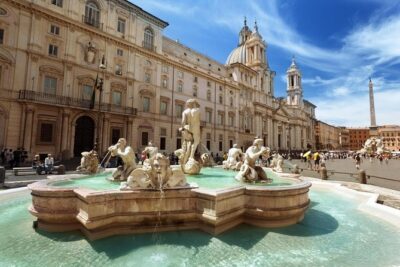
3 in 1 Cooking Class near Navona: Fettuccine, Ravioli & Tiramisu
Read our review →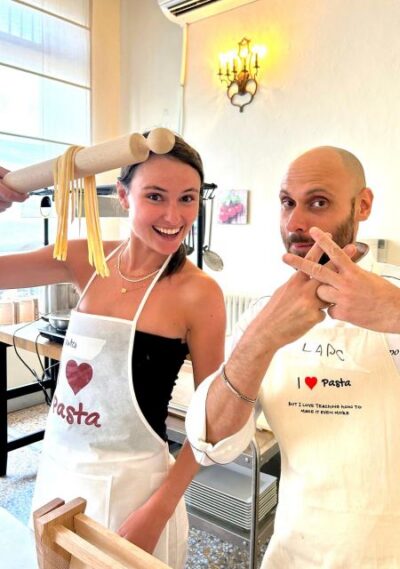
Rome: Pasta Making Class with Wine, Limoncello, and Dessert
Read our review →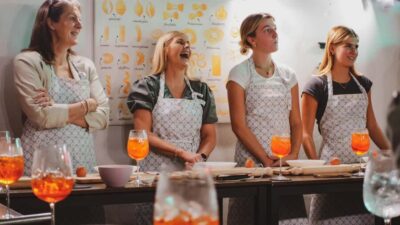
Rome Cooking Class: Make Pasta and 3 Spritz Cocktails
Read our review →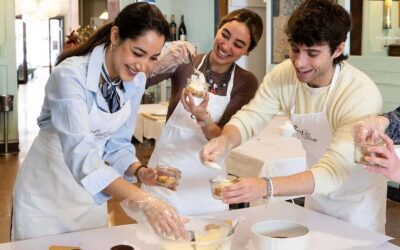
Rome: 3-in-1 Fettuccine, Ravioli, and Tiramisu Cooking Class
Read our review →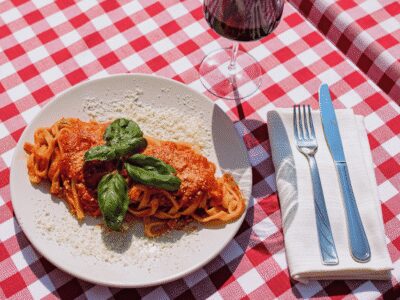
Rome: Fettuccine Pasta Cooking Class in Rome’s City Center
Read our review →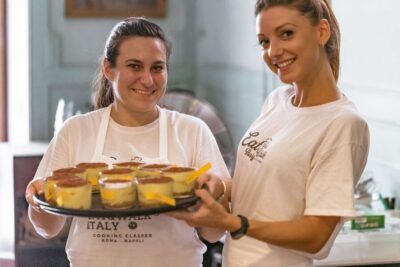
Fettuccine & Tiramisù: Cooking Class with Wine & Limoncello
Read our review →
Pasta Cooking Class Near the Colosseum with 3 Spritz Cocktails
Read our review →