
Review · TIRANA
Traditional Albanian Cooking Class in Tirana with Raki Tasting
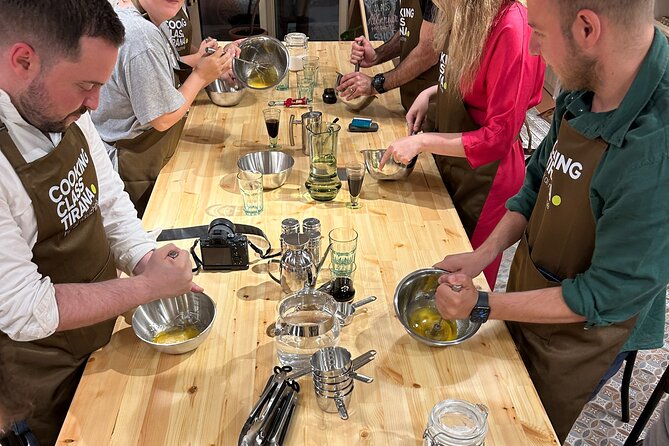
Albanian food tells its story at the table, and this class lets you help make the meal rather than simply order it. You’ll begin with meze and raki, then work through burek, village chicken with pershesh, and sheqerpare under the guidance of chef Dervis.
I like the hands-on teaching, especially the chance to roll burek dough and learn why the seasoning matters. I also like the generous social side: seasonal appetizers, unlimited homemade wine, and a communal meal that can turn a cooking lesson into a relaxed evening.
The main consideration is the alcohol. Raki and wine are part of the experience, so this may not suit anyone seeking a quiet, alcohol-free class. The four-hour session is also a full evening commitment, though the amount of food helps make the price worthwhile.
Key points to know before booking
- You cook three traditional dishes: Burek with cottage cheese, village chicken with pershesh, and sheqerpare.
- The welcome begins with Albanian meze and raki: Expect pickles, tomatoes, olives, cheeses, jams, cornbread, and seasonal dishes.
- Chef Dervis leads the class: His teaching style is patient, interactive, and focused on both technique and cultural context.
- Dietary needs can be accommodated: Vegetarian, vegan, pescatarian, halal, and lactose-free requests should be included when you book.
- The meal is paired with drinks: Homemade wine is available throughout, while alcoholic drinks are served only to adults over 18.
- It is a four-hour private activity: You start and finish at Cooking Class Tirana on Rruga Bardhok Biba in Tirana.
Why this Tirana cooking class is worth your evening
Tirana has plenty of restaurants, but a cooking class gives you something a restaurant cannot: a practical sense of how Albanian food comes together. You handle the dough, season the chicken, taste the small plates, and sit down to eat food that your group helped prepare.
I especially like the balance here. This is not only a demonstration where you watch a chef work. It is also not a rushed lesson built around one simple recipe. You take part in several stages of a traditional meal, with enough time to ask questions and hear about the customs behind the dishes.
The class lasts about four hours, so plan on giving it a full evening. That length matters because the experience includes a welcome, preparation, cooking, eating, and conversation. If you are trying to squeeze in a museum, dinner, and nightlife on the same night, this may feel long. If you want one relaxed activity that combines food and local culture, the timing makes sense.
At $53.21 per person, the value comes from more than the recipes. Your fee covers instruction, a substantial meal, meze, raki tasting, and homemade wine. You are also paying for a social activity and a useful introduction to several important Albanian dishes. It is not the cheapest dinner in Tirana, but it can replace both a meal and an evening activity.
More cooking classes around the world:
- Half-Day Thai Cooking Class at Organic Farm in Chiang Mai
★ 5.0 · 19,087 reviews - Florence: Pasta Cooking Class with Unlimited Wine
★ 4.9 · 10,285 reviews - 3 in 1 Cooking Class near Navona: Fettuccine, Ravioli & Tiramisu
★ 5.0 · 7,376 reviews
Starting with meze, raki, and Albanian hospitality
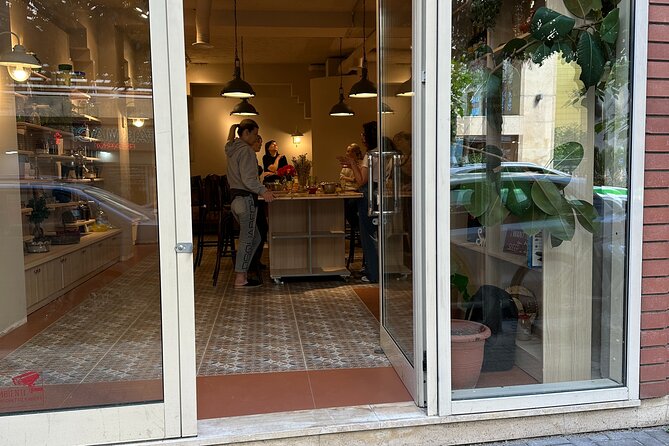
The class begins at Cooking Class Tirana, on Rruga Bardhok Biba, Tiranë 1001. The activity ends at the same meeting point, so you do not need to arrange a separate return transfer.
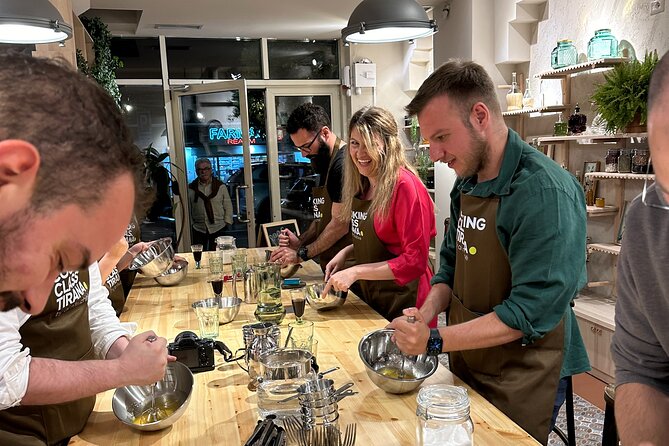
Your welcome includes meze and rakia. The sample spread includes pickles, fresh tomatoes, olives, white cheese with different jams, cottage cheese with cornbread, and pispili with leeks. Pispili is a savory Albanian preparation made with greens, and it gives you an early taste of the country’s home-style cooking.
This opening section is useful because it introduces the flavor range before you begin cooking. You get salty cheese, sharp pickles, fresh vegetables, sweet preserves, olives, and cornbread. It also gives you time to settle in and meet the chef before the practical work starts.
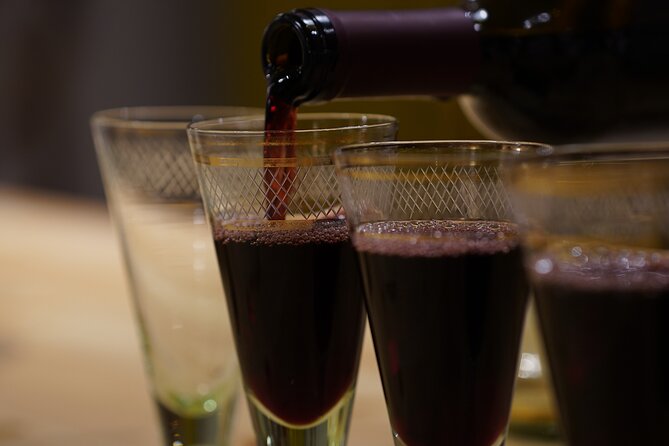
Raki is a strong Albanian spirit, and tasting it is part of the cultural side of the class. You do not need to treat it like a drinking competition. Taste it slowly, and remember that the experience also includes unlimited homemade wine. Alcoholic drinks are restricted to adults over 18.
If you do not drink, the provided details do not promise a separate nonalcoholic tasting menu, so ask about that before booking. The class can accommodate many food restrictions, but drink preferences should also be raised in advance if they matter to you.
Rolling dough for burek with cottage cheese
Burek is one of the most familiar foods in Albania and across the Balkans, but making it by hand gives you a better understanding of its appeal. The class teaches you how to roll the dough and prepare the filling rather than simply placing a finished pastry on your plate.
The version here uses cottage cheese. That keeps the dish simple and traditional, while also giving you a chance to work on texture. The dough needs to be handled carefully, and the filling has to be spread in a way that produces a satisfying contrast between pastry and cheese.
This is likely to be one of the most useful parts of the lesson for home cooks. A recipe alone does not always explain how thin the dough should be, how much filling to use, or how to avoid a heavy result. Watching the technique and doing it yourself makes those details easier to remember.
Burek is also the dish most likely to become a repeat recipe after your trip. You can serve it as a snack, a breakfast, or part of a larger meal. The class does not promise that you will leave with written recipes, so bring a phone or notebook if you want to record measurements and steps.
The food is prepared as part of a larger meal, not as a quick single-dish workshop. That means you will need to pace yourself. The meze arrives first, and more food follows later.
Preparing village chicken with pershesh
The main course pairs village chicken with pershesh, a traditional Albanian preparation that gives the meal a more substantial center. The class includes instruction on seasoning the chicken properly, which is important because good seasoning is often what separates a memorable home-style dish from a bland one.
This part of the class is less about a complicated restaurant trick and more about learning the logic of Albanian cooking. Fresh ingredients, careful seasoning, and a dish made for sharing are central to the experience. The chef also explains the cultural context behind the recipes, so you are not only copying instructions without knowing why the food matters.
Chicken with pershesh is a good choice for understanding how Albanian meals work as a whole. The plate is filling, familiar enough for many palates, and different from the burek that comes before it. You move from pastry and cheese to a savory main course, then finish with dessert.
If you do not eat chicken, make your dietary restriction clear at the time of booking. The class specifically says it can accommodate vegetarian, vegan, pescatarian, halal, and lactose-free diets, but the exact replacement for village chicken is not stated. Ask what version will be prepared for your group.
Same kitchen, a different dish:
- Florence: Pasta & Tiramisu Cooking Class with Unlimited Wine
★ 4.9 · 6,708 reviews - Florence: Pasta Cooking Class with Unlimited Wine
★ 5.0 · 6,413 reviews - Hanoi Cooking Class: Culture, Local Market & Meaning CSR Impact
★ 5.0 · 5,147 reviews - 5 Traditional Dishes Hanoi Cooking Class with Market Trip
★ 5.0 · 4,890 reviews
Finishing with sheqerpare
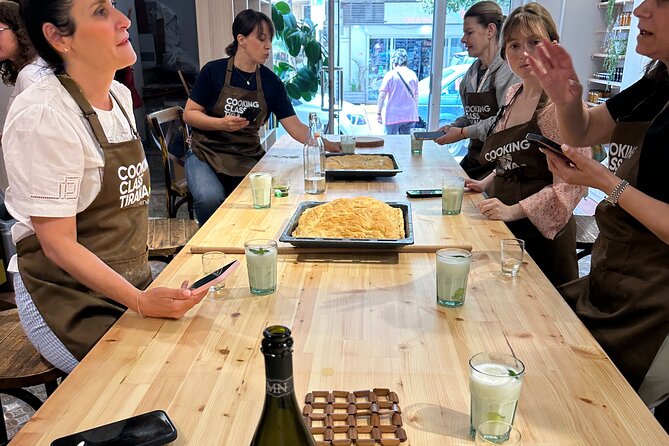
Dessert is sheqerpare, a traditional Albanian sweet. It is a fitting finish to a meal that has already included savory pastries, cheese, chicken, and a generous selection of small plates.
The cooking class gives you more than a chance to taste it. You prepare the dessert as part of the sequence, which helps you see how Albanian meals move from small starters to a filling main course and then a sweet ending.
The portion of food appears to be generous. Some participants found they had enough to take dessert back to their accommodation, and one useful tip is to arrive hungry. This is not a tiny tasting menu where you leave searching for dinner afterward.
That generosity is part of the value, but it can also be a practical issue. If you eat a large meal before arriving, you may not have the appetite to enjoy the dishes you prepare. Keep lunch or an early dinner light if you are booking the class in the evening.
Chef Dervis and the teaching style
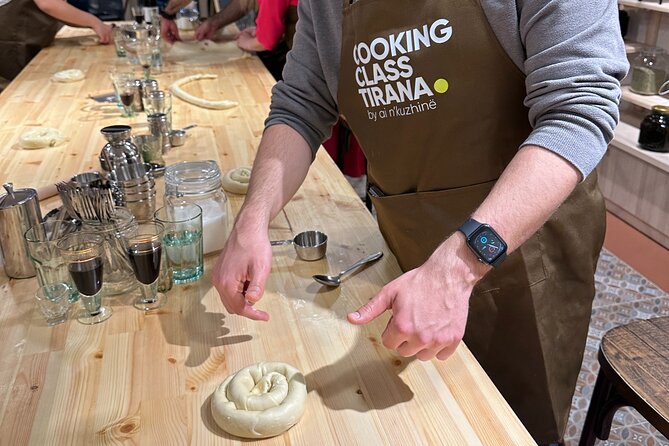
Chef Dervis is central to the experience. His approach is described as friendly, patient, interactive, and easy to follow. That matters in a cooking class because the quality of the evening depends as much on instruction and atmosphere as on the recipes.
You can expect explanations of both method and meaning. The class covers how to roll the burek dough and season the chicken, while also connecting the dishes to Albanian food traditions and culture. This makes the class suitable for someone who rarely cooks as well as for a confident home cook.
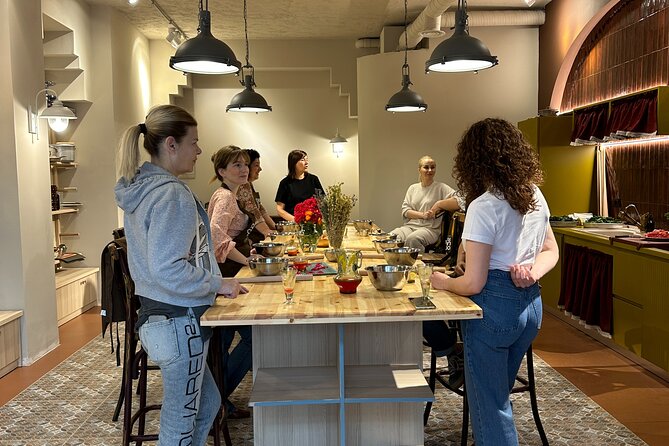
The teaching style also leaves room for conversation. The activity is designed around a shared table, and the cooking creates natural pauses for questions and discussion. You are not simply standing at a workstation for four hours.
One point to keep in mind is that the experience includes a strong social element. That is ideal if you like meeting people and talking over food. If you prefer a silent, highly technical lesson with little interaction, this may not be the right format.
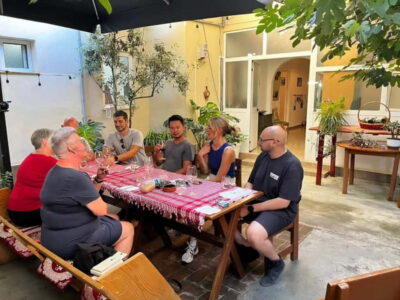
The activity is described as private, with only your group participating. For larger groups, contact the provider before booking. The provided experiences also suggest that the class can create a warm group atmosphere, particularly when the cooking and drinks give everyone an easy subject to discuss.
Eating together at the communal table
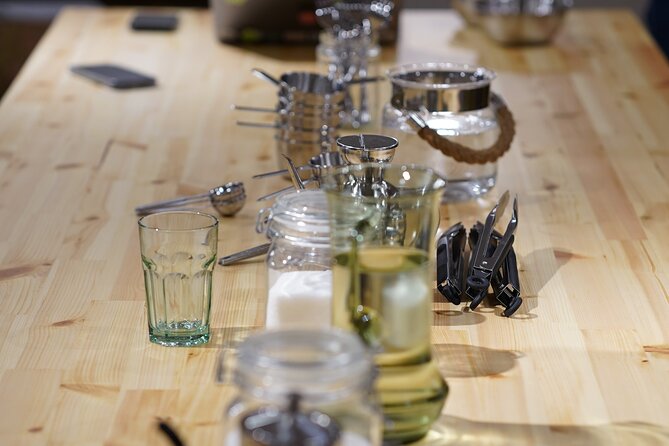
Once the cooking is finished, you sit down to eat the meal you helped prepare. This communal-table format is one of the best parts of the experience because it connects the separate cooking tasks into one complete Albanian meal.
You will have the meze, burek with cottage cheese, chicken with pershesh, and sheqerpare. Homemade wine can be enjoyed throughout, and the raki tasting adds another local touch. The meal is not just a final reward. It is the point where you can compare the dishes, ask last questions, and think about which recipes you want to make at home.
I like this format more than a class where everyone cooks and then leaves with a small portion. Here, the meal has enough weight to serve as your evening dinner. Some people may even have food to take away, though you should not assume that take-home packaging is guaranteed.
The food and drinks can make the evening feel festive, but moderation is sensible. Raki is strong, and unlimited wine may not appeal to everyone. You can focus on the food and conversation rather than treating the drinks as the main event.
Dietary requests, access, and practical details
Dietary restrictions can be accommodated, including vegetarian, vegan, pescatarian, halal, and lactose intolerance. Put your needs in the booking notes rather than waiting until you arrive. Since the menu centers on cheese, chicken, and pastry, early notice is especially important.
The meeting point is near public transportation, which makes the location practical for reaching from elsewhere in Tirana. The class starts and ends at Rruga Bardhok Biba, Tiranë 1001, Albania. No hotel pickup or drop-off is included in the stated details.
Mobile tickets are available, and confirmation is provided at booking. Service animals are allowed. The activity is offered in English, so it suits English-speaking visitors who want instruction and conversation without arranging a translator.
The cancellation rule is straightforward but strict close to the start time. You receive a full refund if you cancel at least 24 hours in advance. Changes or cancellations within 24 hours are not accepted for a refund. The minimum number of participants also needs to be met, and if the provider cancels for that reason, you are offered another date, another activity, or a full refund.
Who will enjoy this class most
I would recommend this class to you if food is one of your main ways of getting to know a place. It is also a strong choice for couples, friends, families with adult children, and small private groups looking for an evening activity that feels more personal than a standard restaurant meal.
It suits curious beginners particularly well. You do not need to be an experienced cook to roll dough, season chicken, or help prepare dessert. The patient instruction makes the class approachable, and the finished meal gives you a clear reward for taking part.
It is also useful early in a trip. You will learn about Albanian ingredients, dishes, and customs before ordering meals elsewhere in the country. The experience can give you the confidence to recognize burek, meze, pershesh, and other local flavors during the rest of your visit.
You may want to skip it if you dislike group conversation, cannot spend four hours at a cooking activity, or want a fully alcohol-free experience. You should also confirm the arrangements if you have a very specific allergy, since the class promises dietary accommodation but does not list every possible substitute.
Should you book the Tirana cooking class?
Yes, if you want an evening built around food, conversation, and practical instruction rather than a quick meal. The combination of meze, raki, homemade wine, three traditional dishes, and a communal dinner gives the $53.21 price solid value.
Book it early if your Tirana schedule is tight. The experience is often reserved well ahead, and its four-hour length means you should protect the whole evening. Add your dietary needs at booking, arrive hungry, and bring a phone or notebook if you want to remember the recipes.
I would make this a first or second-night activity for visitors who want an easy introduction to Albanian food and hospitality. It is not a formal culinary school lesson, but that is part of its appeal. You learn useful techniques, eat very well, and leave with a better sense of how Albanian cooking belongs at the center of family and social life.
FAQ
Where does the cooking class take place?
The class starts and finishes at Cooking Class Tirana, located on Rruga Bardhok Biba, Tiranë 1001, Albania.
How long does the experience last?
The cooking class lasts approximately four hours.
What dishes will I prepare?
The menu includes burek with cottage cheese, village chicken with pershesh, and sheqerpare, along with a variety of seasonal Albanian meze.
Is raki included?
Yes. The experience begins with a raki tasting, and alcoholic drinks are served only to adults over 18.
Is wine included?
Yes. Unlimited homemade wine is included during the class.
Can dietary restrictions be accommodated?
Yes. Vegetarian, vegan, pescatarian, halal, and lactose-intolerant diets can be accommodated. You should specify your dietary needs when booking.
What is the cancellation policy?
You can cancel at least 24 hours before the start time for a full refund. Cancellations or changes made within 24 hours are not accepted for a refund.
New cooking classes around the world
- Shinjuku Tokyo: Authentic Japanese Home-Style Culinary Class★ 4.9 · 125 reviews
- Shibuya Tokyo: Onigiri & Tamagoyaki Cooking Class★ 5.0 · 4 reviews
- M.O.M COOKING CLASS★ 4.8 · 6 reviews
- Seville: Paella-Cooking Experience with Sangria & Full Meal★ 4.9 · 42 reviews
- Shanghai: Authentic Chinese Cooking Class with Master Chef★ 5.0 · 2 reviews
- Sestri Levante: Pesto & Cooking Classes, Wine Tasting★ 4.9 · 56 reviews
- Seville: Paella Cooking Class & 30-Min Local Expert Q&A★ 4.8 · 37 reviews
- Seoul: Korean Kimchi Cooking Class in the Heart of the City★ 5.0 · 3 reviews
Tirana Cooking Classes, side by side.
Tirana: Traditional Cooking Class with Wine & Raki Tasting
Read our review →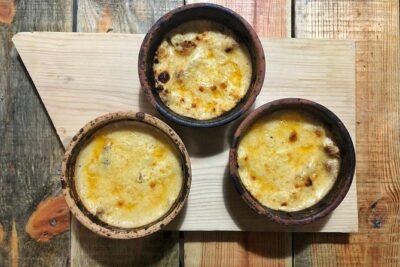
Cooking Classes and Traditional food tasting in Tirana
Read our review →This kitchen also appears in