
Review · MUMBAI
Mumbai: Indian Cooking Class & Cultural Delights
Mumbai’s best food lessons often happen away from restaurant tables. Here, you visit a local market, meet a home cook, and prepare a multi-course Maharashtrian meal yourself. The meal can include several dishes, chapati or paratha, and a final thali-style lunch.
I like the small groups of up to six, which give you room to ask questions and work at your own pace. I also like the market visit and cultural touches, including a traditional welcome, local chai, food history, and henna on some sessions. The main consideration is that transportation is not included, so you must make your own way to the entrance of Star Anise patisserie.
Key points
- Start with a local market visit: See the ingredients before they reach the cooking table, with explanations about Indian food and daily life.
- Cook several dishes yourself: The chef demonstrates each recipe, then you repeat the work rather than simply watching.
- Learn from a home cook: Trupti and other local cooks explain practical methods, spices, chapati, and traditional dishes.
- Finish with your own feast: Sit down for lunch and eat the food you prepared, often served as a thali.
- Small group, personal pace: The maximum of six participants makes it easier to receive help and ask questions.
- Good for complete beginners: You do not need prior cooking experience, and recipe sheets can be provided to take home.
A Market First Look at Mumbai’s Food
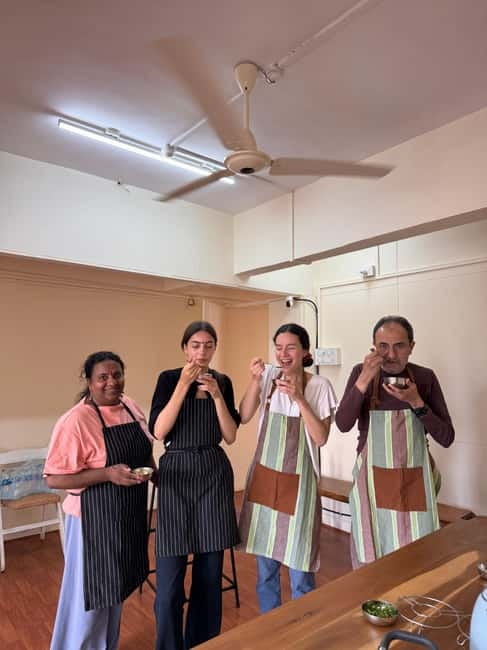
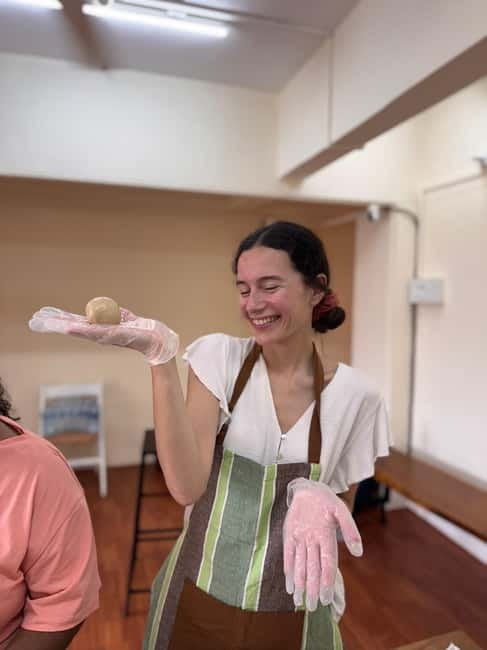
The three-hour experience begins at the entrance of Star Anise patisserie. From there, your English-speaking guide leads you to a local market. This is a smart way to begin a cooking class because the ingredients make more sense when you see them in their everyday setting.
You might inspect fresh vegetables, fruit, spices, and other items used in the day’s meal. One session also included a walk through a vegetable and fish market, with local chai along the way. The point is not simply to shop. The guide explains what the ingredients are, how they are used, and how food connects with life in Mumbai and Maharashtra.
I like this opening because it gives the class a sense of place. You are not learning an abstract Indian menu in a studio with ingredients already measured into bowls. You first get a glimpse of where the food comes from and how local shopping works.
The market will be a lively urban setting, so do not expect a quiet, polished food tour. It may feel crowded and sensory, and that is part of the lesson. If you prefer a calm cooking demonstration with no walking beforehand, the market visit could feel like extra work. For most people, though, it adds useful context to the meal.
More Indian Cooking Classes around India:
- Indian Cooking Class in an Authentic Local Home – Learn 6 Dishes
★ 5.0 · 195 reviews - Jaipur Market Tour & Vegetarian Rajasthani Home Cooking Class
★ 5.0 · 113 reviews - New Delhi: Indian Cooking Class in a Local Home
★ 5.0 · 65 reviews
Meeting a Maharashtrian Home Cook
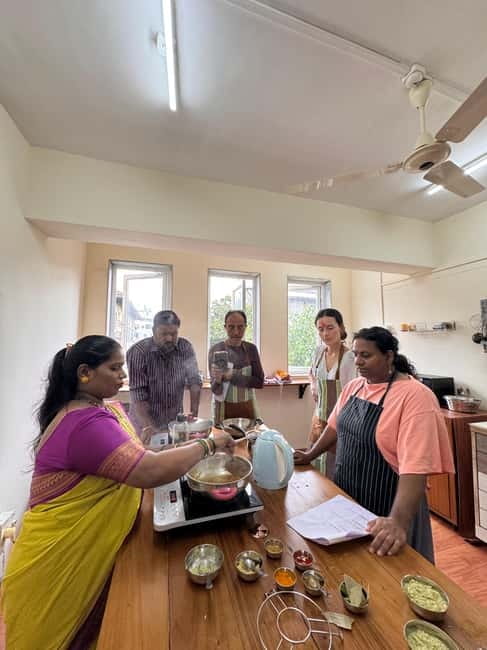
After the market, you continue to the cooking space. The class is led by a local cook, with the guide helping explain the food, culture, and steps in English. Dinesh is frequently involved as the guide, and Trupti has taught the cooking on some sessions. The exact team can vary, but the format is consistent: a local cook demonstrates, you follow along, and the guide fills in the cultural background.
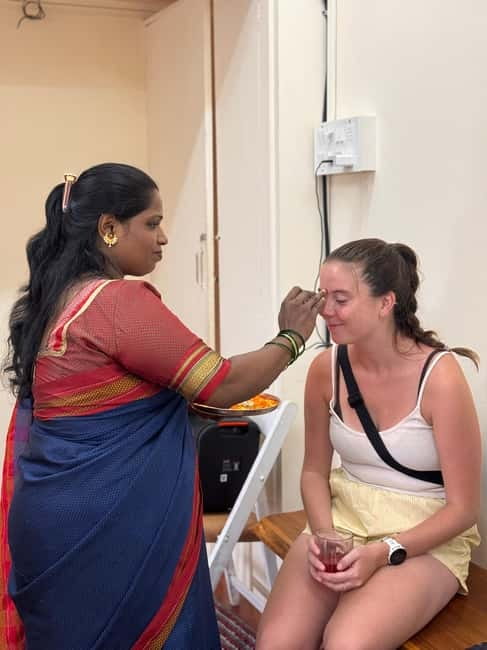
The welcome can include a traditional ritual. One participant described feeling immediately at home after this introduction, while another said the setting felt like entering a warm family home. That atmosphere matters. Indian food is tied closely to family routines, celebrations, regional habits, and hospitality, so a personal welcome gives the class more meaning than a standard demonstration.
The cooking space is described as clean and pleasant, with several cooking stations. One session had four stations and a peaceful setting. Those details suggest a practical room built for participation, not a large show kitchen where you stand at the back and watch a chef work.
You should still expect a real class, not a private family lunch. Other participants may be cooking beside you, and the group can include people with very different skill levels. The maximum group size is six, which keeps the session personal without requiring you to pay for a fully private class.
From Demonstration to Your Own Cooking
The central part of the class follows a useful rhythm. First, the cook demonstrates a dish and explains the ingredients and method. Then you prepare that dish yourself. The guide and cook remain available to answer questions, correct techniques, and help you move on to the next recipe.
The meal may include more than three dishes, with several sessions preparing around five recipes. Chapati can be part of the lesson, and paratha has also been added when participants specifically wanted to learn it. These breads are useful skills to take home because they require technique rather than simply following a list of ingredients.
You might learn how dough should feel, how to shape a flatbread, or how to work with spices without relying on heavy cream or excess oil. One particularly useful lesson is that full Indian flavor does not have to come from rich sauces. The class can show you how spices, timing, and simple ingredients build taste.
This hands-on format suits beginners. You do not need to arrive with knife skills or Indian cooking experience. The teacher shows you what to do, and the small group lets you ask for help. At the same time, experienced home cooks should find enough detail to make the session worthwhile, especially if you are curious about regional dishes or bread making.
Do not expect to master every recipe in three hours. The value is in learning a group of methods you can repeat at home. You will likely leave with a better sense of how Indian cooks balance spices, organize several dishes, and turn straightforward ingredients into a full meal.
The Food Matters More Because You Made It
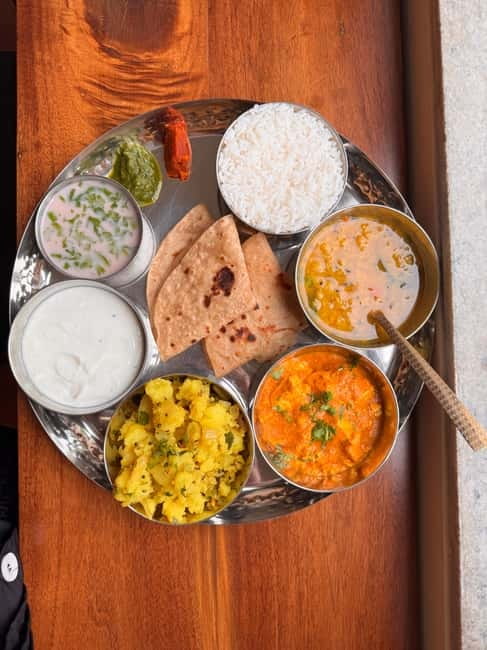
At the end, you sit down and eat the food prepared during the class. The meal is often presented as a thali, with several dishes gathered together rather than served as one single course. This gives you a chance to taste how the recipes work as a complete meal.
I like this ending more than a meal served by someone else. You remember the food differently when you have chopped, stirred, shaped, and cooked it yourself. You can also ask final questions while the flavors are fresh, such as how to adjust spice levels or what to substitute at home.
The meal is also a social moment. The group eats together with the guide and cooking team, and several sessions have included tea. This is a relaxed finish after the practical work. If you are shy about joining group activities, the meal still offers an easy way to meet people without forced conversation.
The menu is not fixed in the information provided, so do not book expecting a specific dish unless the organizer confirms it. You can expect Maharashtrian and Indian cooking, several recipes, and a full meal, but the exact dishes may change with the day or the group’s interests.
More cooking classes around India:
- Pink City Cooking Class
★ 5.0 · 452 reviews - Five Course Cooking Class & Meal
★ 5.0 · 250 reviews - Private Guided Cooking Workshop Experience in Jodhphur
★ 5.0 · 158 reviews - Cooking Class in Jaipur – Family Experience with Meal & Transport
★ 5.0 · 101 reviews
Cultural Lessons Beyond the Stove
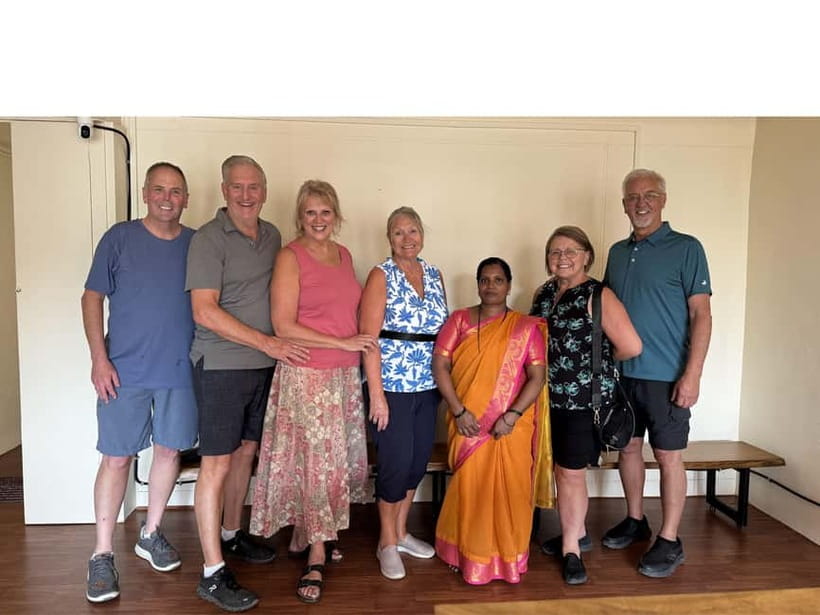
Food is the main event, but the class also gives you a short window into local life. The guide can discuss Indian food traditions, the local area, and the history of Bombay, including colonial-era background. That helps place Maharashtrian cooking within Mumbai’s wider story.
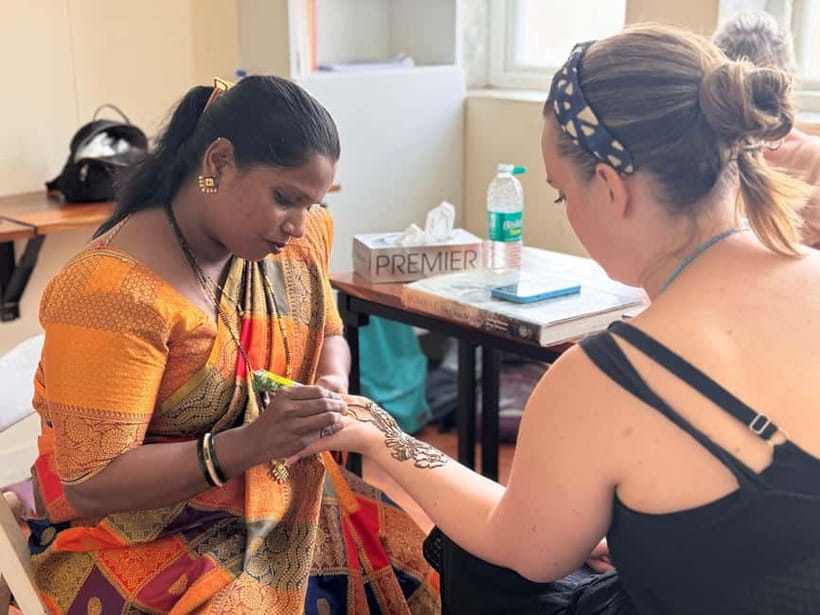
Some sessions have included henna, or Mehndi, on participants’ hands. Others have included traditional rituals and time to look through cookbooks. These details are not the reason to book the class, but they add a pleasant cultural layer and make the experience feel less like a technical lesson.
The guide’s role is important here. Dinesh is described as offering background on food, culture, and the local area while the cook focuses on the recipes. A good guide can explain why an ingredient matters, how a dish fits into daily life, and what makes regional cooking different from the generic Indian food found abroad.
The cultural activities are informal rather than a formal museum-style program. You will not receive a long lecture or a full survey of Maharashtra. Instead, you get small explanations while walking, cooking, and eating. I find that approach easier to remember because the information is connected to something you can see, smell, or taste.
Is Three Hours Enough?
Three hours gives you a compact introduction without taking up an entire day in Mumbai. It is long enough for a market visit, several demonstrations, hands-on preparation, and lunch. It also leaves time for conversation and cultural activities.
The schedule can feel full. You are moving from the market to the kitchen, learning several recipes, and preparing food before sitting down to eat. If you want to linger over every technique or spend a long time shopping, you may find the pace brisk.
That is a fair trade for many visitors. Mumbai has plenty to see, and a three-hour class fits neatly into a day of sightseeing. It works particularly well as a morning or midday activity, though starting times depend on availability.
The small group helps keep the class moving. With six people or fewer, you are less likely to wait a long time for your turn. On quieter dates, the group may be even smaller, and individual sessions have taken place. You should not count on a private class, but low attendance is possible.
What the $27 Price Buys You
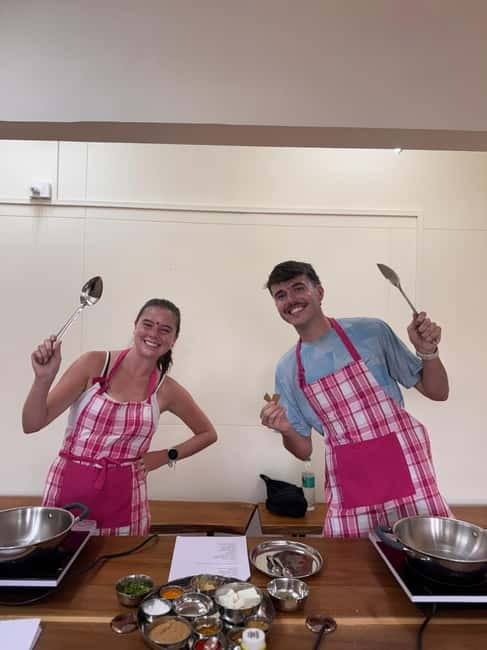
At $27 per person, this is a strong-value Mumbai activity if you want more than a restaurant meal. The price covers the Maharashtrian cooking class, market visit, cultural activities, and the multi-course meal you prepare. You are paying for instruction, food, local contact, and a structured experience in one package.
The value improves if you are interested in taking the recipes home. Some sessions provide recipe sheets, allowing you to repeat the dishes rather than treating the class as a one-time meal. You also gain practical ideas about spices, flatbreads, and meal planning that a food tour alone would not provide.
Transportation is not included. You must reach Star Anise patisserie on your own, and personal expenses are also separate. That is worth factoring into the budget, especially if your accommodation is far from the meeting point.
Still, the price is modest for three hours of instruction and a full lunch. A restaurant meal might cost less, but it would not give you the market walk, cooking practice, cultural explanation, or recipes. A private cooking lesson might offer more one-on-one time, but this experience keeps the price lower by using a small shared group.
Who Will Enjoy This Class Most?
This class is a good choice for first-time visitors who want a personal introduction to Mumbai beyond major sights. It suits solo visitors, couples, friends, and anyone who enjoys meeting local people through food.
It is also a safe pick for cooks at different levels. Complete beginners can follow the demonstrations, while experienced home cooks can ask about regional ingredients, spice use, chapati, and paratha. You do not need to be confident in the kitchen to participate.
Food-focused visitors will get the most from the market visit and hands-on work. If your main interest is sightseeing, the three-hour commitment may feel less essential. You should also know that the activity is centered on participation. This is not the right choice if you want to sit back and watch without cooking.
The class is wheelchair accessible, which is useful information when planning. Since transportation is not provided, you should consider how you will reach the meeting point and whether the route from your accommodation is convenient.
Practical Details Before You Go
Meet at the entrance of Star Anise patisserie. Check the available starting times when booking, since the activity runs for three hours and the schedule can vary.
The tour operates in English, with a live guide. The group is limited to six participants. Bring an appetite and wear something comfortable for practical cooking, though no special cooking background is needed.
You can reserve now and pay later, which helps if your Mumbai plans are still shifting. Free cancellation is available up to 24 hours before the activity for a full refund. These flexible terms are useful in a city where traffic, weather, and changing plans can affect a day.
The activity is hands-on, so expect to handle ingredients and take part in the preparation. If you have dietary restrictions or strong food preferences, ask about them before booking, since the supplied information does not specify how menus are adapted.
Should You Book the Mumbai Cooking Class?
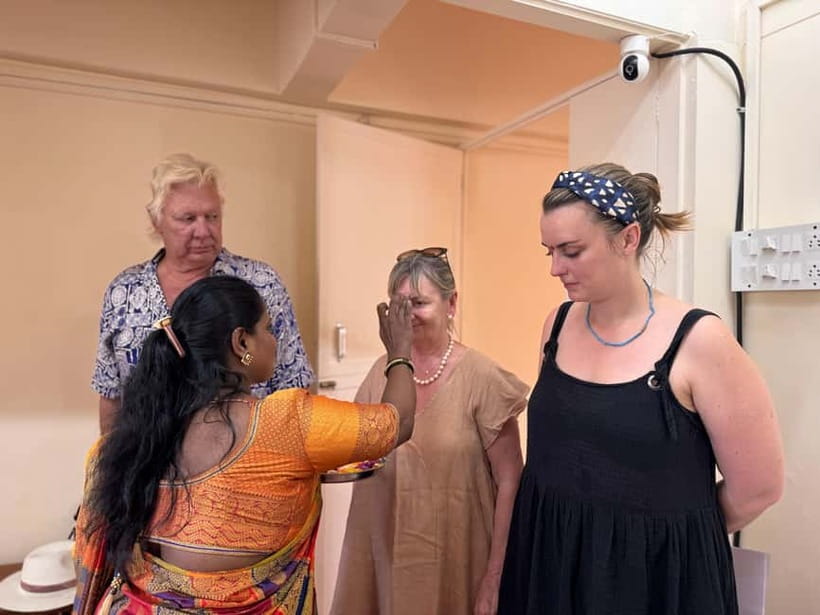
I would book this if you want a friendly, practical introduction to Maharashtrian food and daily life. The strongest parts are the market visit, the chance to cook several dishes yourself, the small group, and the final meal made from your own work.
At $27, it offers more substance than a basic food tasting. You get local guidance, cultural context, cooking practice, and lunch in three hours. The main drawbacks are the need to arrange your own transport and the fact that the menu may vary.
Choose this class if you like active experiences and want recipes you can use at home. Skip it if you prefer a fixed menu, a quiet restaurant meal, or a fully guided sightseeing tour with no kitchen work. For most food-curious visitors to Mumbai, it is an easy recommendation.
FAQ
How long does the Mumbai cooking class last?
The activity lasts three hours, including the market visit, cooking session, cultural activities, and meal.
Where is the meeting point?
Meet at the entrance of Star Anise patisserie.
Is transportation included?
No. Transportation to and from the meeting point is not included, so you must arrange it yourself.
What language is the class conducted in?
The live tour guide and activity are conducted in English.
How many people can join the class?
This is a small-group activity limited to six participants.
Do I need cooking experience?
No. The class is designed for participants of all cooking levels, including people without previous cooking experience.
What is included in the price?
The price includes an authentic Maharashtrian cooking class, a market visit, cultural activities, and preparation of a multi-course meal. Personal expenses and transportation are not included.
New cooking classes around India
- Private Cooking Class In Jodhpur With Family★ 5.0 · 2 reviews
- New Delhi: Indian Cooking Class in a Local Home★ 5.0 · 65 reviews
- New Delhi: Full-Day Cooking Class learn 8 dishes with Locals★ 5.0 · 7 reviews
- New Delhi: 5-Hour Traditional Cooking Class with Local Chef★ 5.0 · 2 reviews
- Mumbai Coastal Cooking: From Fishing Net to Flavourful Plate★ 5.0 · 5 reviews
- Kerala: Cooking Class in Munnar★ 5.0 · 2 reviews
- Kerala Traditional village cooking class (Munnar)★ 4.8 · 15 reviews
- Jodhpur 11 Dishes Cooking Class With REKHA Pick Up & Drop OF★ 5.0 · 24 reviews
Mumbai Cooking Classes, side by side.
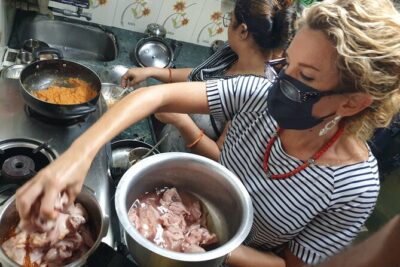
Private Vegetarian Indian Cooking Class in Mumbai
Read our review →
Small Group Authentic Mumbai Virtual Cooking Class with Dessert
Read our review →
Mumbai Coastal Cooking: From Fishing Net to Flavourful Plate
Read our review →This kitchen also appears in