Review · UBUD
Balinese cooking class/Go shopping at the market, cook, eat
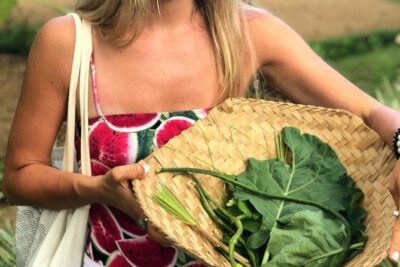
The best part of this experience is that Balinese food begins at the market, not in a classroom. On the morning option, you help choose vegetables, fruit, herbs, meat, and spices before learning how those ingredients become home-style dishes. The market stop gives the meal a useful sense of place, while the hands-on cooking keeps you involved from the first chop to the final bite.
I like that the recipes come home with you in a booklet, so this is more than a meal that disappears after lunch. I also like the choice between regular and vegetarian cooking, plus the two schedules: morning with lunch or afternoon with dinner. The main consideration is timing: the local market visit is offered only with the morning class, and pickup windows vary by hotel area.
Key points to know before booking
- Morning market visit: Choose the morning class if selecting fresh ingredients at a local market matters to you.
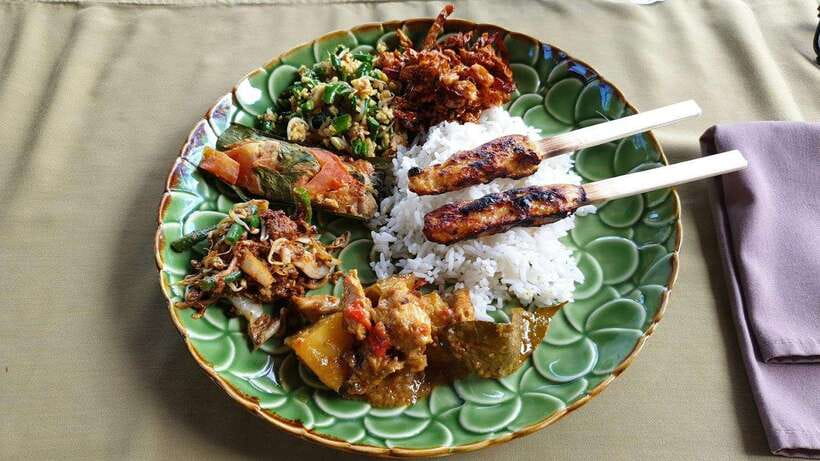
- Nine-dish menu: You may prepare dishes such as chicken coconut curry, steamed fish in banana leaves, sate lilit, gado gado, and banana compote.
- Vegetarian option: You can request the vegetarian format instead of the regular menu.
- Six hours with transport: Round-trip hotel transfer is included from listed areas around south Bali, Sanur, Canggu, and Ubud.
- Recipes to take home: A recipe booklet lets you repeat the cooking after your holiday.
- Private group option: A private group is available if you want a more personal format for family or friends.
A market start that gives the cooking real context
Choose the morning class and your day begins with hotel pickup, generally between 7:00 and 8:00. The exact time depends on your location, so wait in the hotel lobby and allow some flexibility. Pickup is listed for Nusa Dua, Jimbaran, Kuta, Legian, Seminyak, Kerobokan, Canggu, Sanur, Ubud, and Kuta Selatan.
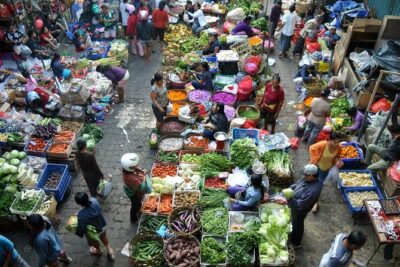
The local market visit is the most distinctive part of the schedule. You help select the ingredients used for the class, including vegetables, fruit, herbs, meat, and spices. That small act changes the class from a simple cooking lesson into a look at how Balinese food is assembled from ordinary market produce.
You should choose this option if you enjoy seeing ingredients before they reach the chopping board. It also makes the recipes easier to understand. A yellow spice mixture, coconut, banana leaves, snake beans, tempeh, and fresh vegetables are not just items on a printed menu. You see the raw materials first, then learn how each one is treated.
The market stop is not part of the afternoon schedule. If you choose the later class, you go directly toward the cooking portion instead. That is not a flaw, but it is an important trade-off. The afternoon option may suit you better if you prefer a slower morning, while the morning option gives you the fuller food experience.
More Cooking Classes with a Market Tour in Indonesia
- Ubud: Cooking Class with Transfers and Optional Market Visit
★ 4.9 · 824 reviews - Balinese Ubud cooking school (9 Dish Cooking and Market Tour)
★ 5.0 · 540 reviews - Ubud: Balinese Cooking Class and Market Tour
★ 4.8 · 531 reviews
The cooking session: nine dishes, plenty of participation
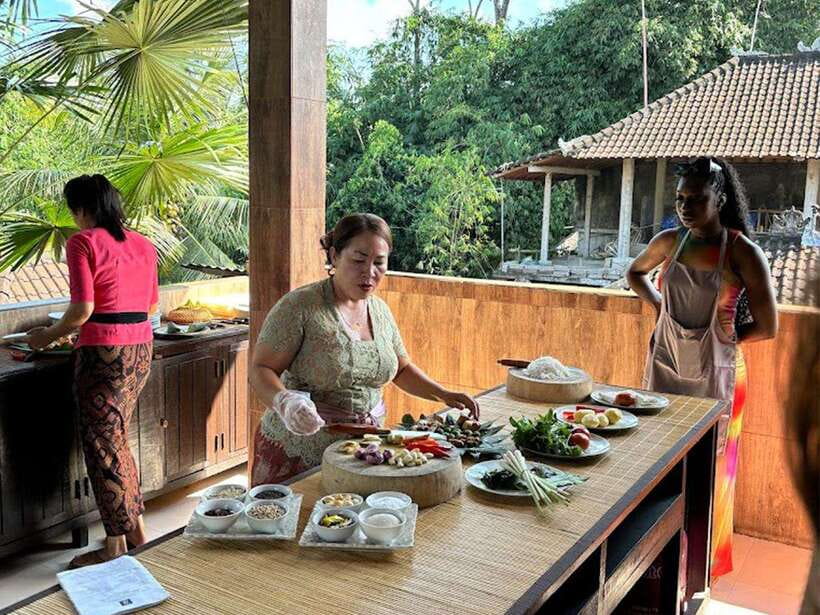
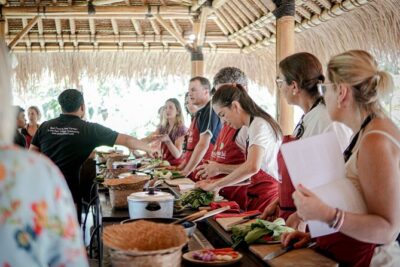
After the market, you head to the cooking school and begin preparing the meal. The class provides the ingredients, equipment, and cooking tools, so you can arrive empty-handed apart from your appetite and perhaps a camera.
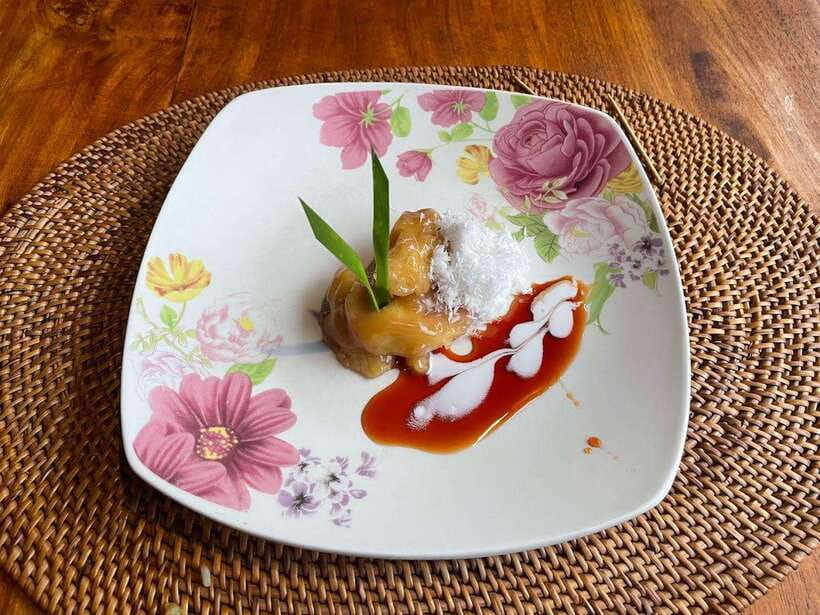
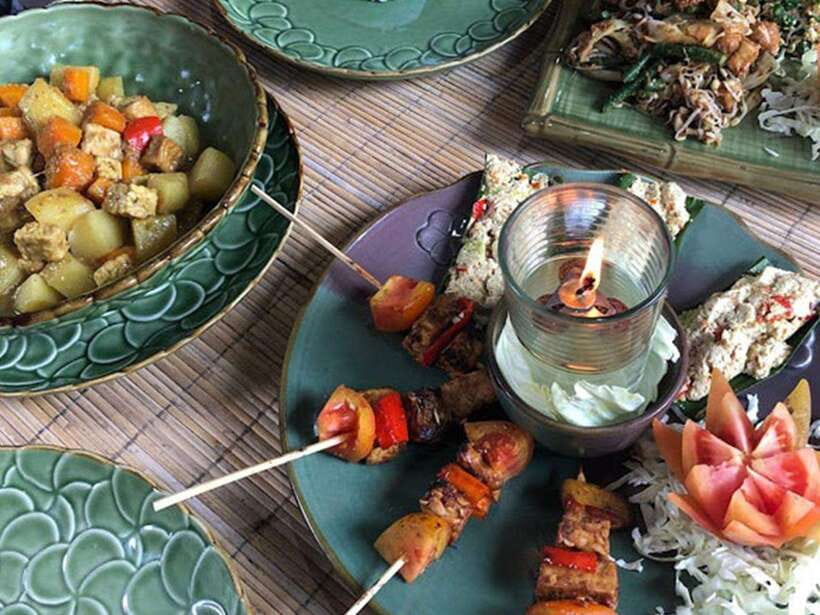
The menu covers a broad range of Balinese flavors and methods. You may prepare Kolak Pisang, a banana compote, and Bumbu Kuning, a yellow spice blend used as a foundation for other dishes. These teach you about the sweet and savory sides of Indonesian cooking without requiring a long list of hard-to-find equipment at home.
The menu also includes Sup Jamur, mushroom and vegetable soup, and Kare Ayam, chicken coconut curry. These are familiar formats for many people, but the Balinese seasoning gives the lesson a local character. You learn how spices, coconut, vegetables, and protein work together rather than simply watching someone else cook.
Another highlight is Pepes Ikan, fish steamed in banana leaves. Banana-leaf cooking is one of those details that makes the class feel tied to Indonesia rather than like a standard international cooking course. You also prepare Jukut Urab, a coconut and snake bean salad, which adds a fresh vegetable dish to the meal.
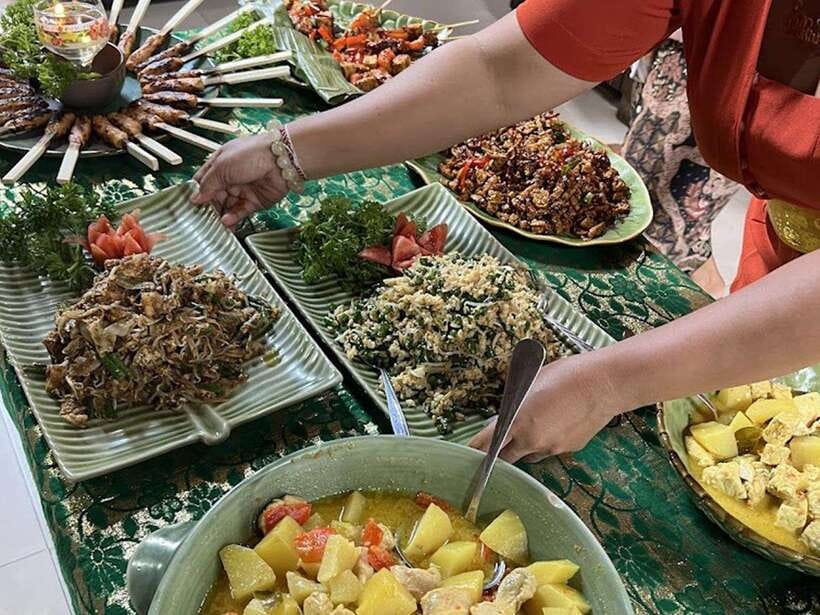
The menu continues with Sate Lilit Ayam, described as grilled fish meatball skewers, and Tempe Kering, sweet and salty tempeh stir-fried with seasoning. Gado Gado, warm vegetables with sweet and spicy peanut sauce, rounds out the list. The combination gives you soups, curries, vegetables, skewers, coconut-based dishes, a dessert, and several different cooking methods.
The large menu is a strength, but it also means the class is not focused on mastering one signature dish. You will get a broad introduction to Balinese home cooking instead of a narrow lesson on a single recipe. I would choose this class for range and participation, not for a quiet, highly specialized demonstration.
The available feedback points to a fully hands-on format. You should expect to take part rather than sit through a long lecture. The instructor is described as thorough and personable, and the cooking takes place on a patio that was found comfortable for the session.
Eating your own cooking at the end
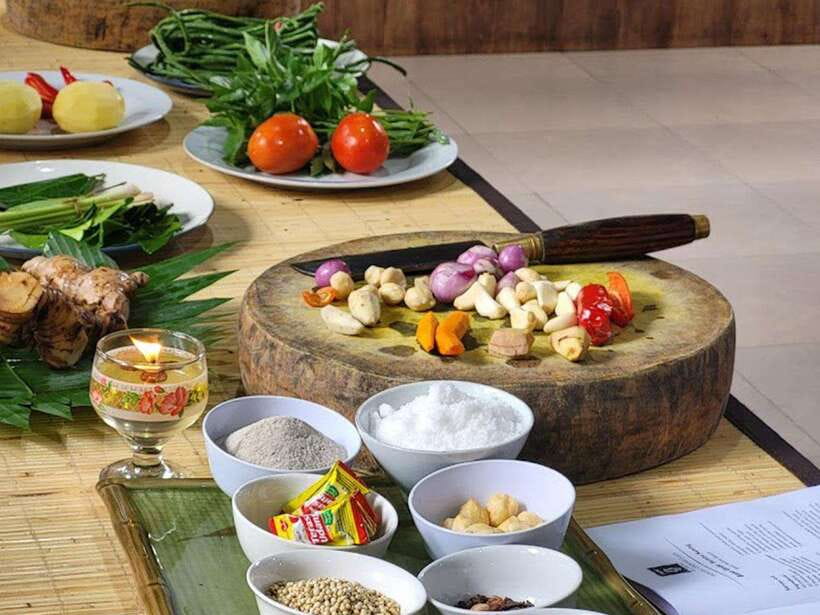
Once the dishes are ready, you sit down and eat the food you prepared. This shared meal is the natural payoff of the class, especially if you book with family or friends. Instead of sampling one demonstration dish, you get to see how a large group of recipes works together as a meal.
I like this format because it turns the class into a social activity without making the food an afterthought. You can compare the soup, curry, vegetables, tempeh, skewers, and dessert while the instructions are still fresh in your mind.
The meal is also useful for judging what you can repeat at home. Some recipes may be straightforward, while others may depend on ingredients that are easier to find in Bali than elsewhere. The included recipe booklet helps, but you should not assume every ingredient will be equally available in your local supermarket.
The supplied feedback places strong emphasis on the finished dishes. One detailed account describes the food as excellent and the recipe booklet as a valuable takeaway. Another praises the food at the cooking school along with the lesson itself. That balance matters: this is not only a craft activity with an edible result tacked on at the end.
Regular or vegetarian cooking
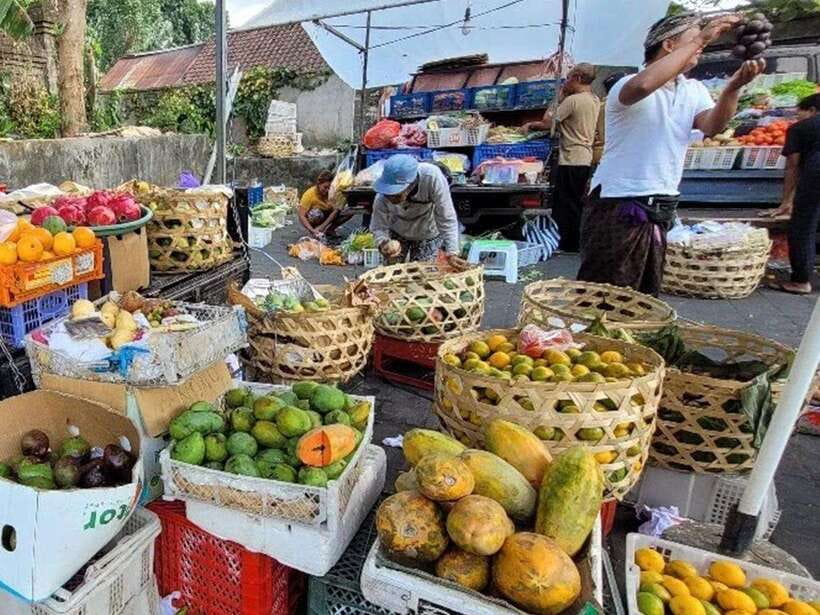
You can choose between the normal menu and a vegetarian format. This makes the class more practical for mixed groups, since not everyone has to follow exactly the same dietary plan.
The regular menu includes chicken, fish, and other ingredients listed above. The vegetarian option is available, but the supplied details do not specify the exact vegetarian substitutions or whether every dish remains identical. If you need to avoid a particular ingredient, contact the operator before booking rather than relying on a general vegetarian request.
For a family group, this flexibility is useful. One person can enjoy the coconut chicken curry and fish in banana leaves, while another can take part through vegetable, tempeh, peanut-sauce, and other plant-based preparations. Ask in advance if your needs go beyond vegetarian cooking.
More Cooking Classes with a Market Tour in Ubud
- Balinese Cooking class with traditional morning market visit
★ 5.0 · 161 reviews - Jambangan bali cooking class with morning market tour
★ 5.0 · 35 reviews
Morning lunch or afternoon dinner
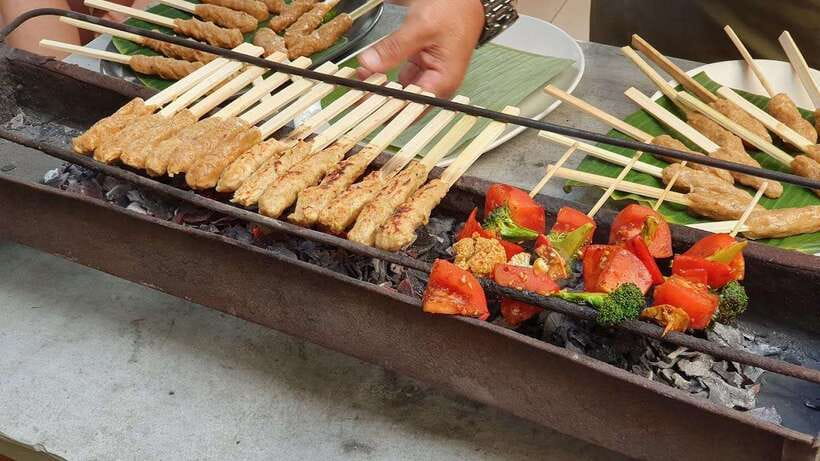
The two schedule choices affect more than your meal time. The morning class includes market shopping and generally uses an early pickup window of 7:00 to 8:00. You then cook and eat lunch before returning to your hotel.
The afternoon class generally has pickup between 13:00 and 14:30 and ends with dinner. It does not include the morning market visit. For many people, that is a fair exchange for avoiding an early start, especially after a late arrival or a full day of sightseeing.
The six-hour duration includes transport, the food activity, and the meal, so this is a substantial half-day commitment. Do not place a tightly timed attraction immediately afterward. Bali traffic can affect transfer times, and the listed pickup windows already suggest that the schedule is not built around minute-by-minute precision.
Morning travelers who care about food culture should select the market option. Afternoon participants should choose it for convenience and a relaxed start, not because it includes every part of the morning program.
Hotel transfers from a wide area
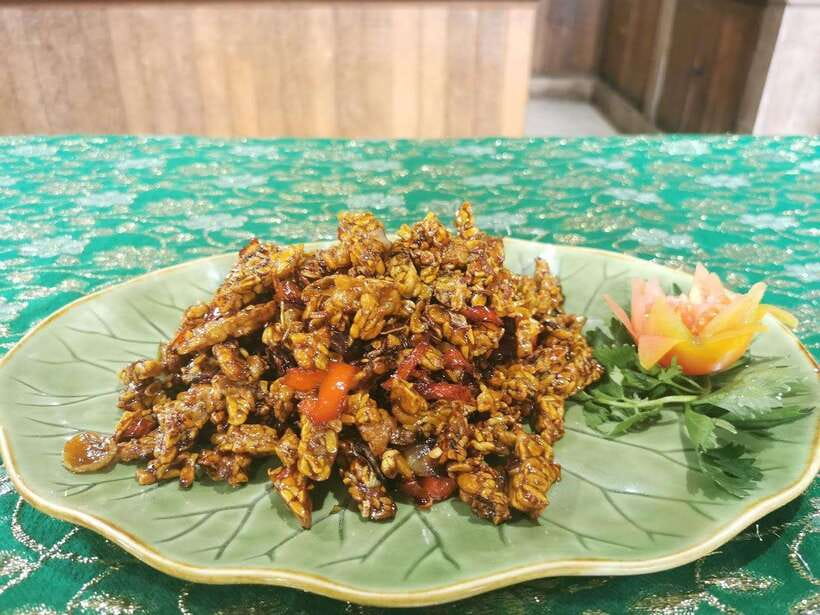
Round-trip hotel transfer is included, which adds real value at a listed price of $35 per person. Pickup and drop-off areas include Ubud, Sanur, Canggu, Kerobokan, Seminyak, Legian, Kuta, Jimbaran, Nusa Dua, and Kuta Selatan. If your hotel is outside the named areas, contact the operator to ask about arrangements.
The driver speaks English and Indonesian, and the activity information also lists Japanese among the available languages. The instructor language options are English, Indonesian, and Japanese. That gives you useful flexibility, although the information does not identify individual instructors by name.
You should wait in the hotel lobby for pickup. Since the service covers several different parts of Bali, transfer time will depend on where you stay and which other roads the vehicle uses. The included transport is convenient, but it also means the full six hours is not six uninterrupted hours at the cooking school.
The operator provides a driver rather than promising a food guide for every transfer. That distinction is normal, but it is worth keeping in mind if you expect a long running commentary during the ride. The main teaching takes place at the cooking school.
Is $35 a good value?
At $35 per person, this is a strong value if you use the included transport and take part in the full cooking session. The price covers the cooking school fee, ingredients and tools for the class, instruction, the food you prepare, and hotel transfer both ways.
The market stop makes the morning option particularly good value. You are not paying separately for a food market excursion, a cooking lesson, and a meal. You receive all three parts in one six-hour activity.
The value is less about luxury and more about usefulness. This is not presented as a high-end culinary school or a private chef experience by default. Instead, you get a practical introduction to Balinese food, a substantial menu, a meal, and recipes to use later.
A private group is available, which may be worth considering for a family or a group of friends. The provided information does not state the private-group surcharge or exact group size, so check the final price before assuming it remains $35 per person.
The class also has a useful booking policy. You can cancel up to 24 hours in advance for a full refund, and the reserve-now, pay-later option lets you hold a place without paying immediately. These terms are helpful when your Bali schedule is still shifting.
Who will enjoy this class most?
I would recommend it to people who want to connect food with daily life in Bali. It suits couples, families, and friend groups because everyone can work together, then share the finished meal.
It is also a good fit for cooks who want recipes they can repeat at home. The booklet gives you a practical reminder after the holiday, and the wide menu lets you choose which dishes deserve another attempt in your own kitchen.
The experience may be less suitable if you want a short activity, a market-only tour, or a highly polished gourmet lesson. Six hours is a serious block of time, and the cooking session covers many dishes rather than going slowly through just one or two.
You should also think carefully about the schedule. The morning class is the clear choice if the market matters to you. Pick the afternoon class if dinner timing and a later pickup are more useful than shopping for ingredients.
Final decision: book the morning class if food is your focus
I would book this experience if you want an active, affordable introduction to Balinese cooking rather than another restaurant meal. The strongest reasons are the market-to-table format, the large selection of dishes, the recipe booklet, and the included hotel transfers.
Choose the morning lunch option for the fullest program. Choose the afternoon dinner option if you value a later start and can live without the market visit. Before booking, confirm your hotel area, preferred language, regular or vegetarian menu, and any dietary requirements.
At $35, the class offers a lot: transport, instruction, ingredients, a shared meal, and recipes for later. It is best approached as a friendly, practical food workshop, with enough time to cook, eat, and learn without rushing.
FAQ
How long does the Balinese cooking class last?
The activity lasts six hours, including the cooking experience, meal, and hotel transfers.
Is hotel pickup and return included?
Yes. Round-trip hotel transfer is included from listed areas such as Ubud, Sanur, Canggu, Seminyak, Kuta, Jimbaran, Nusa Dua, and Kuta Selatan.
Which locations are available for pickup?
Pickup is listed for Nusa Dua, Jimbaran, Kuta, Legian, Seminyak, Kerobokan, Canggu, Sanur, Ubud, and Kuta Selatan. Contact the operator if you are staying in another area.
Does the class include a local market visit?
The local market visit is included with the morning class. The afternoon class does not list the market stop.
Can I choose vegetarian cooking?
Yes. You can choose between the normal menu and a vegetarian option. Contact the operator in advance about specific dietary needs.
What languages are available?
The activity lists English, Indonesian, and Japanese for the instructor. The included driver speaks English and Indonesian.
What happens if I need to cancel?
You can cancel up to 24 hours before the activity for a full refund. The reserve-now, pay-later option is also available.
More Balinese Cooking Classes around Ubud
- Ubud Cooking Class Bali with Balinese Chef
★ 5.0 · 1,609 reviews - PRIVATE Authentic Balinese Cooking Class in Ubud at Putu’s Home
★ 5.0 · 644 reviews - Balinese Farm Cooking Class by Pemulan Bali
★ 5.0 · 410 reviews - Balinese Vegan Cooking Class with Fresh Harvesting & Garden Tour
★ 5.0 · 86 reviews
New cooking classes around Ubud
- Ubud: Organic Farm Harvest, Bali Cooking Class by Pemulan★ 4.8 · 12 reviews
- packages cooking class and romantic dinner in a local home★ 5.0 · 4 reviews
- Jambangan bali cooking class with morning market tour★ 5.0 · 35 reviews
- Bali: Cooking Class with Monkey Forest and Art Village Tour★ 5.0 · 2 reviews
- Ubud: Balinese Cooking Class with Hotel Transfers★ 4.8 · 17 reviews
- From Ubud: Authentic Bali Farm Cooking School & Organic Farm★ 5.0 · 122 reviews
- Balinese Vegan Cooking Class with Fresh Harvesting & Garden Tour★ 5.0 · 86 reviews
- Balinese Cooking class with traditional morning market visit★ 5.0 · 161 reviews
Ubud Cooking Classes, side by side.
Ubud: Cooking Class with Transfers and Optional Market Visit
Read our review →
PRIVATE Authentic Balinese Cooking Class in Ubud at Putu’s Home
Read our review →
Balinese Ubud cooking school (9 Dish Cooking and Market Tour)
Read our review →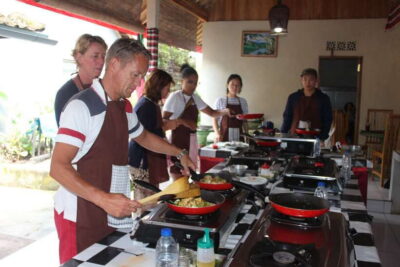
Balinese Cooking class with traditional morning market visit
Read our review →