Review · PORTUGAL
Porto: Coastal Villages Market & Seafood Cooking Tour
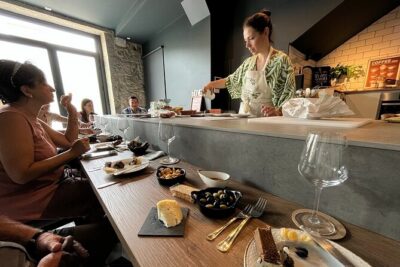
The best part of this Porto food tour happens before lunch: you help choose the fish. At São Pedro da Afurada, you’ll see sardines, octopus, clams, seabass, and whatever else came in with the boats that morning. Then you’ll follow the ingredients from market stall to cooking pot, with guide Marco explaining the fishing trade and local food customs.
I like the small size, capped at six people, and the way the day links several coastal villages instead of keeping you inside Porto. I also like the home-cooked meal, where seafood, bread, olive oil, local wine, and conversation matter as much as the recipe. The main caution is timing: this starts early, includes several van rides, and the final bill for the meal is listed as not included, so confirm exactly what you will pay before booking.
Key points to know before you book
- Choose your own seafood: Visit the fish market in Afurada and learn how locals judge freshness.
- See five coastal communities: The route can include Afurada, Miramar, Aguda, Granja, and Espinho.
- Cook with ingredients from the morning: Depending on the season, dishes may include arroz de marisco, açorda de camarão, or grilled fish.
- Small groups make a difference: The maximum is six people, with private tours also available.
- Marco brings food knowledge and local connections: His organic farm and family-run coastal setting add a personal touch to the meal.
- Budget carefully: The $106 price includes transport, ingredients, wine, and cooking materials, but the meal or restaurant bill is listed separately.
Starting with the fishing boats in Afurada
Your pickup can be in Porto, Vila Nova de Gaia, or Espinho. The first drive is short, about five minutes, and takes you to São Pedro da Afurada, a fishing community at the mouth of the Douro.
This is a useful first stop because it gives the rest of the day a clear purpose. You are not simply eating seafood at the end of a sightseeing trip. You are seeing where the food begins, learning what is fresh, and helping decide what will appear on the table later.
At the fish market, local fishermen display the catch of the day. You might see sardines, octopus, clams, seabass, and other seafood brought in by the boats. The exact selection depends on the season, the tide, and what has come in that morning. That uncertainty is part of the point. Portuguese coastal cooking follows the sea rather than forcing the sea to follow a fixed menu.
Marco explains how to select fish and shellfish. You can ask about freshness, local buying habits, and the changes affecting the fishing industry. He has particular experience with that subject, so this stop offers more than a quick photo opportunity.
The market visit lasts about 45 minutes. Wear shoes that can handle wet pavement, and do not expect a polished food hall. A working fish market can be damp, busy, and strongly scented. That is exactly what makes it useful for understanding daily life in northern Portugal.
More Cooking Classes with a Market Tour in Portugal
- Porto Local Market Visit & Cooking Class / Showcooking
★ 5.0 · 206 reviews - Lisbon Market and Food Tour with Cooking Class and Lunch
★ 5.0 · 117 reviews - Private Lisbon Market Tour & Portuguese Cooking Class with Paula
★ 5.0 · 89 reviews
From fish stalls to farm produce
After the fish market, you ride for about 20 minutes before the sightseeing portion of the tour. The route takes in coastal and agricultural communities including Afurada, Miramar, Aguda, Granja, and Espinho.
The villages each have their own pace. In Afurada, you may see laundry drying in the sea air and fishermen repairing nets. In Aguda and Miramar, wooden boats rest on the sand, a simple detail that helps you picture how these communities worked before the coast became mainly a leisure destination.
I like this section because it adds people and work to the food story. You hear about festivals, fishing customs, and the way the ocean shapes northern Portuguese cooking. The walk is listed at about 45 minutes, so it is long enough to get a feel for the area without turning the day into a demanding hike.
The route is spread across several places, and the van is important. You are not walking from Afurada all the way to Espinho. The schedule includes a 15-minute drive after sightseeing, followed by about 30 minutes of shopping. That format lets you see more coastline, but it also means this is a guided sampler rather than a slow village-to-village walk.
The shopping stop focuses on vegetables, herbs, fruit, olives, cheese, and bread from nearby producers. You pick ingredients for the meal, adding a second layer to the morning market visit. Fish gives you the taste of the sea; the farm produce shows how the rest of the meal is built.
A coastal food lesson with Marco
The guide is central to this experience. Marco leads the tour in English, Portuguese, or Spanish, and the English is spoken with a Portuguese accent. If you need every instruction repeated slowly, say so early. In a group of no more than six, that should be manageable, but the tour is conversational rather than a formal cooking school.
Marco and his wife run an organic farm, which forms part of the food experience. The farm provides another connection between the market shopping and the final meal. You are not only buying ingredients from a stall and then losing track of where they came from. You get a sense of the local food chain, from the coast to the soil and then to the kitchen.
The experience also draws on Marco’s family. The lunch setting is described as a coastal home, and one account of the tour places the meal at a B&B run by his in-laws. The setting matters because it changes the tone. You are not being seated in a large restaurant with a fixed menu and a quick turnover. You are sharing a meal in a family-connected space.
That personal setting will suit you if you enjoy asking questions and talking with the people around you. It may suit you less if you want a quiet, private lunch with precise restaurant service. The description promises wine, music, and conversation, so expect a social meal.
What you might cook at the Espinho stop
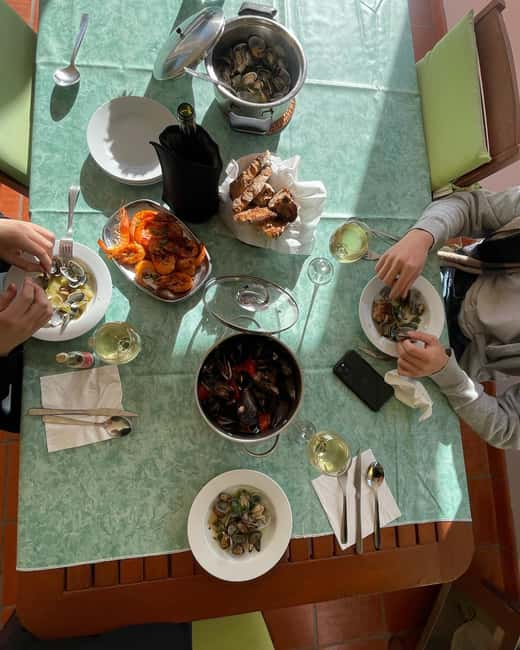
After another 10-minute van ride, you reach Espinho for lunch. The meal portion lasts about two and a half hours, which is generous by tour standards. You have time to prepare the food, eat slowly, and talk without watching the clock every few minutes.
The menu changes with the season and the market haul. Possible dishes include:
- Arroz de marisco, a Portuguese seafood rice
- Açorda de camarão, a garlic and shrimp bread stew
- Freshly grilled fish with olive oil, garlic, and herbs
The cooking lesson focuses on practical methods passed down through local families. You learn how to balance seafood flavors and how ingredients such as garlic, herbs, olive oil, bread, and wine support the main dish.
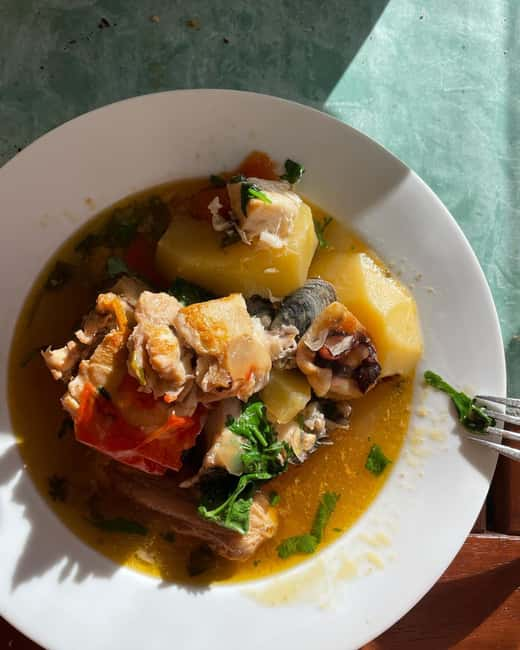
A sample meal can include clams, squid, and sardines, served with bread, olive oil, olives, potatoes, and roasted peppers. The exact combination is not guaranteed, since the market determines what is available. That is a strength for anyone who wants a genuine food experience, though it is worth noting if you have strong dislikes or dietary limits.
Local wine is included. Depending on the meal, you may drink Vinho Verde, Alvarinho, or wines from the Douro. White wine makes obvious sense with shellfish and grilled fish, while a Douro red may appear alongside heartier dishes. The pairing is informal, not a sommelier presentation, and that fits the relaxed style of the day.
The food preparation is part of the meal, not a separate class followed by a rushed lunch. You work with the ingredients, then sit down to eat what you helped prepare. That gives the afternoon a satisfying shape: market, villages, shopping, kitchen, table.
More seafood classes around Portugal:
- Faro: Learn to cook a Cataplana like a local!
★ 4.9 · 16 reviews - Lagos: Market Tour and Cataplana Cooking Class
★ 5.0 · 9 reviews - Tokyo Tsukiji Fish Market Tour and Sushi Making Lesson
★ 5.0 · 390 reviews - Seafood paella cooking class, tapas and visit to Ruzafa market.
★ 5.0 · 328 reviews
Why the family setting adds value
At $106 per person, this is not the cheapest way to eat seafood near Porto. It is also more than a standard market visit. Your price covers transportation, market visits, ingredients, local wines, and cooking materials. It also buys you several hours of guided access to places and people that would be difficult to arrange on your own.
The value depends on what you want from a food tour. If your main goal is a large meal at the lowest price, you can find cheaper options. If you want to understand how a northern Portuguese seafood meal comes together, the price is more reasonable.
I especially like that you are not only shown ingredients. You help choose them and then use them. That gives the market visit a practical reason, and it reduces the feeling of moving through a set of unrelated stops.
The family connections also make the experience more personal. Marco’s organic farm and the coastal home linked to his in-laws provide a sense of place that a restaurant kitchen usually cannot match. The trade-off is that the setting may feel less polished and less predictable than a professional dining room.
One detail needs clarification before you pay: the information lists the restaurant bill as not included, even though the main description presents a home-cooked lunch. Ask the provider what that charge means and what the $106 covers. This is a small but important budgeting point.
Transport, walking, and the pace of the day
The tour lasts around four to five hours, though the stated duration range is four to six hours. The listed schedule adds up to close to five hours once the short van journeys, market time, sightseeing, shopping, and two-and-a-half-hour lunch are counted.
You will travel in a van between stops. The route includes an initial five-minute ride, a 20-minute ride after the fish market, 15 minutes after sightseeing, 10 minutes before lunch, and a final 20-minute ride back to your drop-off point.
Drop-off is available in Porto, Vila Nova de Gaia, or Espinho. That flexibility helps if you are staying in Gaia or already spending time south of Porto. Pickup is also available from those three places, with instructions to wait in front of your hotel, hostel, or Airbnb.
Bring comfortable shoes, sunscreen, and a camera. The walking is not described as strenuous, but you will spend time outdoors near the coast and markets. Weather can affect how pleasant the village section feels, so light clothing and sun protection are sensible.
The small-group limit of six is one of the strongest practical features. You can hear the guide more easily, ask about food, and take part in the kitchen without competing with a busload of people. Private groups are also available if you want a more personal arrangement.
Who will enjoy this Porto food tour most
I would recommend this experience to you if food is one of your main ways of understanding a place. You should also enjoy local markets, informal conversation, and a schedule that mixes short drives with outdoor stops.
It is a particularly good fit for:
- Couples who want a shared meal beyond central Porto
- Small groups interested in Portuguese seafood
- Visitors who prefer local hosts to formal sightseeing
- Curious cooks who want practical ideas to take home
- People staying in Porto, Gaia, or Espinho who appreciate pickup and drop-off
It may not suit anyone looking for a late start, a strictly fixed menu, or a formal restaurant meal. Babies under one year are not accepted, and people over 95 are listed as unsuitable for the activity.
The tour is conducted in English, Portuguese, and Spanish. Since the English has a Portuguese accent, it helps to listen closely during the market and cooking explanations. The group size should make it easy to ask for clarification.
Free cancellation is available up to 24 hours before the start for a full refund. You can also reserve now and pay later, which is useful when your Porto plans are still shifting.
Should you book the coastal villages cooking tour?
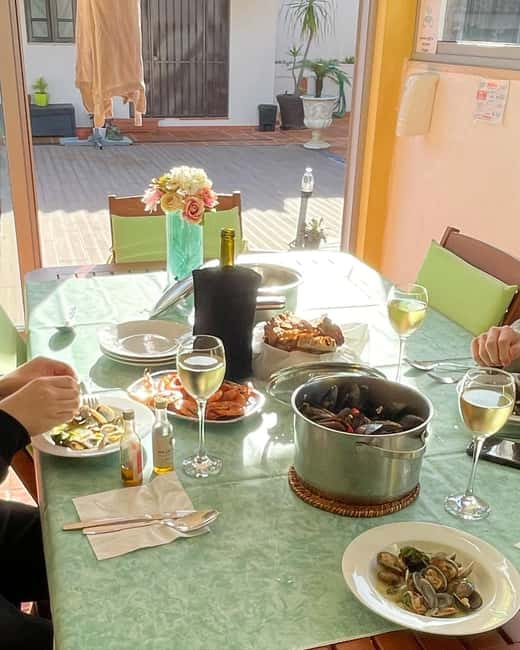
Book it if you want to spend a half-day with seafood, village life, and a local family connection rather than ticking off major monuments. The strongest parts are the fresh fish market, Marco’s explanation of the fishing industry, the organic farm link, and the long meal prepared from ingredients you helped choose.
I would not book it solely for sightseeing. The village stops are appealing, but they are brief and connected by van. I would also confirm the meal charge before booking, since the listed price and the note about the restaurant bill need to be understood clearly.
For the right person, this is a memorable way to meet northern Portugal through its daily food habits. You see the catch, shop for the supporting ingredients, cook with a local guide, and sit down with wine at the end. That is a much more personal introduction to the Porto coast than simply ordering seafood from a menu.
FAQ
Where does the Porto coastal villages tour start?
Pickup is available in Porto, Vila Nova de Gaia, or Espinho. You should wait in front of your hotel, hostel, or Airbnb.
Where does the tour finish?
Drop-off is available in Porto, Vila Nova de Gaia, or Espinho.
How long does the experience last?
The stated duration is four to six hours. The usual duration is around four to five hours.
What language is the tour conducted in?
The tour is available in English, Portuguese, and Spanish. The English is spoken with a Portuguese accent.
How many people can join the tour?
The small-group size is limited to six guests. Private groups are also available.
What markets do you visit?
You visit a traditional fish market in São Pedro da Afurada and a farmers’ market with produce, herbs, fruit, olives, cheese, and bread.
What villages may be included?
The route can include Afurada, Miramar, Aguda, Granja, and Espinho.
What food might you prepare?
Seasonal dishes may include arroz de marisco, açorda de camarão, or freshly grilled fish with olive oil, garlic, and herbs.
Are food and wine included?
Ingredients, local wines, and cooking materials are included. The information also lists the restaurant bill as not included, so you should confirm the exact meal charge before booking.
What should you bring?
Bring comfortable shoes, a camera, and sunscreen.
New cooking classes around Portugal
- Porto: Cooking Class with Local Market Visit★ 5.0 · 15 reviews
- Porto: Local Market Tour & Cooking Class/Showcooking★ 4.9 · 32 reviews
- Porto: Portuguese Cooking Class on the Terrace★ 5.0 · 2 reviews
- Lagos: Market Tour and Cataplana Cooking Class★ 5.0 · 9 reviews
- Lisbon: Traditional Portuguese Cooking Class★ 5.0 · 41 reviews
- Lisbon: Setúbal Market and Wine tour with Cooking class★ 5.0 · 4 reviews
- Lisbon: Portuguese Cooking Class with Wine Tasting★ 5.0 · 4 reviews
- Lisbon: Portuguese street food cooking class with Drinks★ 4.9 · 37 reviews
Portugal Cooking Classes, side by side.
Porto: Pastel de Nata Cooking Class with Grandma’s Recipe
Read our review →
Porto: Pastel de Nata Cooking Class with Port Wine – Sé
Read our review →
Porto: Pastel de Nata Cooking Class from Scratch
Read our review →
Lisbon Portuguese Cooking Class with 3-Course Dinner
Read our review →