
Review · CHENNAI
Traditional Vegetarian Cooking Class in Chennai with Gayathri
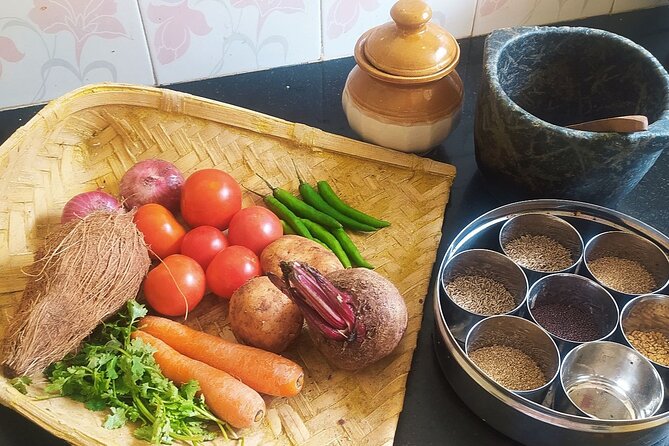
The most memorable part of this Chennai experience is not simply making a curry. It is cooking inside Gayathri’s home, using old-style Tamil vessels and a stone grinder before sitting down to eat from a banana leaf. Her recipes come from her grandmother, who was from Thanjavur, a place with its own proud food traditions.
I like the private format and the practical, step-by-step work. I also like that Gayathri explains medicinal herbs and the role of ordinary spices, rather than treating the kitchen as a quick recipe station. The main consideration is simple: this is a strictly vegetarian Tamil Brahmin home, so it is not the right pick if you want meat, seafood, or a broad survey of Indian cuisine.
Key points to know before booking
- Gayathri teaches in her own home in Ramapuram, giving the class a personal setting rather than a restaurant kitchen.
- You prepare one main dish and one side dish during about 1.5 hours of hands-on cooking.
- Traditional vessels may include kal chatti, eeya chombu, and mann chatti, chosen to suit the food.
- A stone grinder is used for chutney, giving you a feel for older Tamil kitchen methods.
- The meal is vegetarian and served on a banana leaf, with the option to request South Indian breakfast foods instead.
- The experience is private, and the total visit lasts about three hours, with the class followed by the meal.
Cooking with Gayathri in a Chennai home
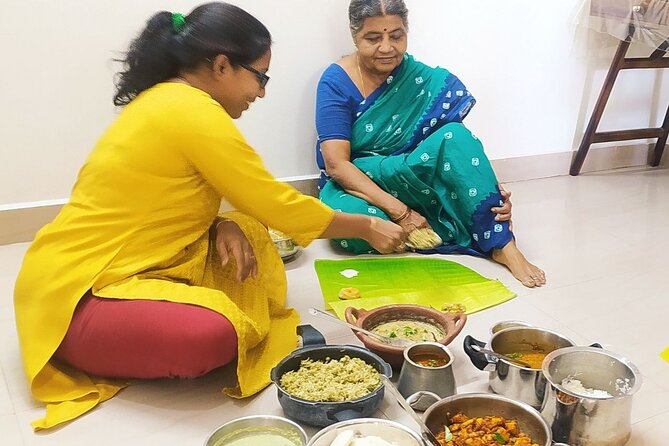
This experience begins in Ramapuram, a residential part of Chennai. You meet Gayathri at the stated meeting point and spend the visit with her and her family rather than joining a large class. That matters because cooking questions are easier to ask when the group is private, and Gayathri can adjust the pace to suit your party.
Her approach comes from family cooking. She was raised by her grandmother, a skilled cook from Thanjavur, and learned recipes and kitchen habits directly from her. That background gives the class a useful sense of place. You are not just following a generic Indian recipe translated for visitors. You are hearing about a Tamil Brahmin household and the food prepared there.
The experience is listed at about three hours, although the hands-on cooking portion lasts around 1.5 hours. The remaining time is for settling in, talking about the ingredients and cooking methods, and eating the meal you helped prepare. Plan your schedule with the full visit in mind, not only the time spent chopping and stirring.
More Vegetarian and Vegan Cooking Classes in India
- Jaipur Market Tour & Vegetarian Rajasthani Home Cooking Class
★ 5.0 · 113 reviews - Private Vegetarian Indian Cooking Class in Mumbai
★ 5.0 · 17 reviews - South Indian Vegetarian Cooking Class in Chennai with Meena
★ 5.0 · 17 reviews
What you actually cook during the 1.5-hour lesson
The menu changes with the season, so you should not book expecting one fixed set of dishes. You will prepare one main dish and one side dish, with the exact selection depending on what is suitable at the time of your visit.
The food can include familiar South Indian preparations such as kootu, sambar, and poriyal. These dishes are useful teaching choices because they show different parts of the regional kitchen. Kootu brings together vegetables, lentils, and seasoning. Sambar teaches you how lentils, vegetables, tamarind, and spices work together. Poriyal shows the simpler side of the meal, with vegetables finished with a tempered seasoning.
Gayathri guides you through the work step by step. You can expect to chop, stir, fry, and handle local ingredients and spices while learning small kitchen techniques that are easy to miss in a cookbook. The class is hands-on, but it is not a professional chef course. You are there to understand how a home meal comes together and to gain recipes you can attempt again.
The setting also makes the pace more personal. In a private activity, you do not have to compete with a large group for a turn at the grinder or cooking vessel. If you want more explanation about a spice, herb, or cooking stage, this is the kind of class where you can ask as you go.
Traditional vessels and the stone grinder
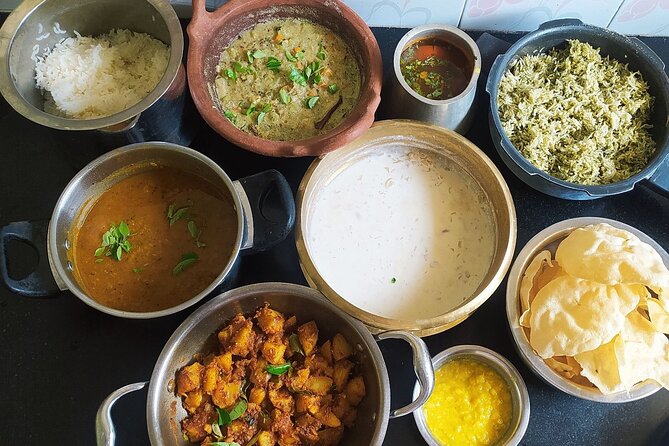
One of the best reasons to choose this class is the equipment. Depending on the dish, Gayathri may use a kal chatti, an eeya chombu, or a mann chatti.
A kal chatti is a soapstone vessel. A mann chatti is made from terracotta. The eeya chombu is a traditional tin alloy vessel. These are not decorative props. They are part of the cooking process and help explain how food was prepared in Tamil homes before modern cookware became standard.
You will also use a traditional stone grinder for tomato-onion chutney. This gives the lesson a more physical quality than simply placing ingredients in an electric blender. You can see how texture is created and why a chutney made by hand may feel different from one produced by a machine.
Do not expect every vessel to appear during every visit. Gayathri chooses the equipment according to the dishes being prepared. That is a strength, since the tools serve the food instead of becoming a staged demonstration.
Learning about herbs in a Tamil Brahmin kitchen
Gayathri also discusses medicinal herbs used in a traditional Tamil Brahmin kitchen. This part adds useful context to the cooking. You learn that the kitchen is not only about heat, salt, and spice. Certain herbs and ingredients have a place in household food traditions and are valued for more than flavor.
The class is especially helpful if you enjoy understanding why an ingredient is used, not just memorizing its name. You can ask about local ingredients, seasoning combinations, and practical tips as the meal takes shape. The information is tied to the food in front of you, so it should feel more useful than a separate lecture about Indian cuisine.
At the same time, keep your expectations in check. This is a home cooking lesson, not a formal course in Ayurveda or medicinal treatment. The focus is traditional kitchen use and cultural context.
Same kitchen, a different dish:
- Pink City Cooking Class
★ 5.0 · 452 reviews - Five Course Cooking Class & Meal
★ 5.0 · 250 reviews - Indian Cooking Class in an Authentic Local Home – Learn 6 Dishes
★ 5.0 · 195 reviews - Private Guided Cooking Workshop Experience in Jodhphur
★ 5.0 · 158 reviews
Eating from a banana leaf after cooking
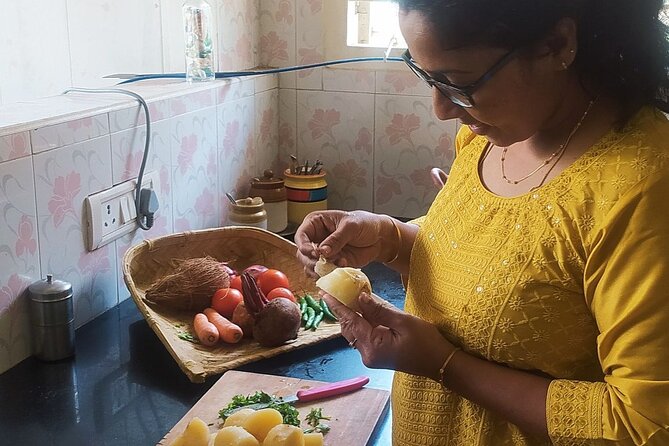
Once the food is ready, you sit down for a traditional vegetarian meal. The meal is served on banana leaves, and you eat with your hands. For many people, this is the part that makes the experience feel most different from an ordinary restaurant visit.
If you have never eaten this way, you may need a little guidance. The basic idea is practical: use your right hand to combine small portions of rice and accompaniments, then bring the food to your mouth. The meal is meant to be shared and enjoyed, not handled like a formal tasting.
The banana leaf also changes the rhythm of the meal. Rather than receiving one plated entrée, you get a home-style spread of prepared foods and eat the meal in the manner traditionally used in the household. It is a direct connection between the cooking lesson and the final table.
Some people may find the floor seating less comfortable, especially if they have knee, hip, or mobility concerns. The details provided for this experience specify a meal seated on the floor, so you should consider that before booking. If your group needs a different arrangement, ask about it in advance rather than assuming it will be available.
The optional South Indian breakfast menu
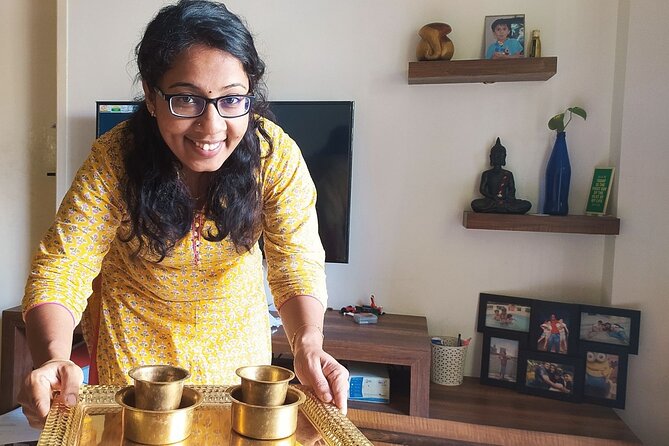
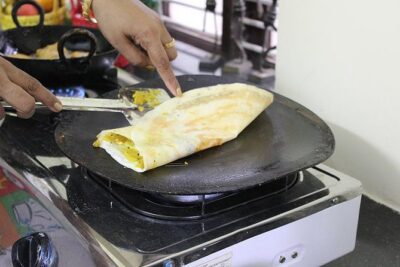
Gayathri offers an alternative to the traditional meal if you prefer South Indian breakfast foods. You can request dosa, sambar, medu vada, coconut chutney, and filter coffee.
Dosa is a thin pancake made from fermented rice and black gram batter. Medu vada is a fritter made from black lentils. Sambar and coconut chutney complete the meal, while filter coffee gives you a classic South Indian drink to finish.
This option is worth considering if you already know you enjoy breakfast-style food or want to try several familiar South Indian staples in one sitting. You must state your preference when booking the experience online. Do not wait until the cooking begins, since the menu needs to be planned ahead.
The breakfast choice also helps make the activity more flexible. One group may want a lesson centered on a home-style vegetarian meal, while another may be more excited by dosa and vada. Both options remain strictly vegetarian.
Why the private format matters
The experience is private, so only your group participates. This is a major part of the value. You can ask questions freely, work at your own pace, and focus on the dishes that interest you most.
A private class is also useful for families or small groups with different levels of cooking experience. One person may want detailed instruction on spices, while another may prefer to help with chopping or stirring. Gayathri can keep the activity personal instead of moving everyone through a fixed group schedule.
The tradeoff is that you are paying for a more personal visit rather than a low-cost group lesson. The listed price is $48 per person. That is not just the cost of ingredients or a recipe card. It covers Gayathri’s time, the private setting, the instruction, and the home-cooked meal.
For someone who wants a quick demonstration, the price may feel high. For someone who values conversation, direct instruction, traditional equipment, and a meal in a local home, the cost is easier to justify. Your group size also affects the value. A private class for a couple or small family gives you much more personal attention than a large cooking workshop.
Location, transport, and timing in Ramapuram
The meeting point is in Ramapuram, Chennai, and the activity ends back there. Hotel pickup and drop-off are not included, so you need to arrange your own way to the starting point and back afterward.
The activity is near public transportation, which helps if you are not using a private car. Still, allow enough time to reach Ramapuram and locate the meeting point. The full experience lasts about three hours, and arriving late could reduce the time available for cooking and conversation.
A mobile ticket is provided, and confirmation is received at booking. You should also send any allergies, dietary restrictions, or cooking preferences when you reserve. That is particularly important here because the menu is planned in advance and may change with the season.
Service animals are allowed. The available information does not give broader accessibility details, so ask directly if your group needs specific seating or kitchen arrangements.
Who will enjoy this cooking class most
I would choose this experience if you want personal contact with a Chennai host and prefer learning by doing. It suits people who are curious about household food, regional cooking methods, and the customs around eating a meal.
It is a good match for:
- Couples seeking a quiet cultural activity
- Families who enjoy cooking together
- Vegetarians who want a meal designed around their needs
- Food-focused visitors interested in Tamil Brahmin traditions
- Anyone who wants practical recipes rather than a restaurant tasting
- First-time visitors who want a local home experience in Chennai
It may not suit you if you want to sample meat dishes, compare food from many Indian regions, or attend a fast, polished demonstration. It is also worth reconsidering if floor seating is difficult for you or if you prefer not to eat with your hands.
How this compares with a standard Chennai food outing
A restaurant meal lets you order several dishes and sit back while someone else does the work. This class asks you to participate. You learn why ingredients are combined, how chutney is ground, and how a home meal is served.
That distinction is important. You will not cover every famous Chennai dish in three hours. You will get a focused look at one family’s vegetarian cooking tradition, shaped by Thanjavur roots and Tamil Brahmin household practices.
The experience also gives you more cultural context than a simple cooking demonstration. The meal, banana leaf, floor seating, herbs, vessels, and hand-eating custom all belong to the same food tradition. Taken together, they make the visit more memorable than a recipe lesson alone.
Booking advice and cancellation terms
Book ahead if your Chennai schedule is fixed. The experience is typically reserved about 25 days in advance, which suggests that last-minute availability may be limited, especially for a private visit.
You can cancel for a full refund up to 24 hours before the start time. Cancellations or changes made less than 24 hours before the experience are not refunded or accepted. The cutoff follows local Chennai time.
Send your menu preference, allergies, dietary restrictions, and cooking requests when booking. Decide in advance if you want the traditional vegetarian meal or the dosa, sambar, medu vada, coconut chutney, and filter coffee option.
Should you book Gayathri’s Chennai cooking class?
Book it if you want a private, home-based food experience with real participation. The strongest features are Gayathri’s family connection to Thanjavur cooking, the use of traditional vessels, the stone-ground chutney, and the chance to eat your own work from a banana leaf.
The $48 price is fair for a private class and meal, though it is more than a basic group cooking demonstration. Make sure you are comfortable with strictly vegetarian food, floor seating, hand-eating, and arranging your own transport to Ramapuram.
For a visitor who wants to understand how South Indian food is made and served at home, this is a thoughtful choice. For someone seeking a broad tasting tour or a restaurant-style meal, choose another activity.
FAQ
Where does the cooking class take place?
The class takes place in Ramapuram, Chennai, Tamil Nadu, at Gayathri’s home. The activity ends back at the meeting point.
How long does the experience last?
The full experience lasts approximately three hours. The hands-on cooking lesson lasts about 1.5 hours, followed by the meal and time with your host.
What will I cook?
You will prepare one main dish and one side dish. The menu may change according to the season and the ingredients available.
Is the meal vegetarian?
Yes. Gayathri only offers vegetarian food because her Tamil Brahmin family cooks vegetarian meals at home.
Can I request South Indian breakfast foods?
Yes. You can request dosa, sambar, medu vada, coconut chutney, and filter coffee instead of the traditional meal. Tell Gayathri your preference when booking.
Will I use traditional cooking equipment?
Depending on the dishes, you may use a kal chatti soapstone vessel, an eeya chombu tin alloy vessel, or a mann chatti terracotta vessel. You will also use a traditional stone grinder for tomato-onion chutney.
How is the meal served?
The traditional meal is served on banana leaves. You sit on the floor and eat with your hands.
Is the activity private?
Yes. Only your group participates, making this a private and personalized cooking experience.
Is hotel pickup included?
No. Hotel pickup and drop-off are not included. You need to make your own way to the Ramapuram meeting point.
Can I mention allergies or dietary restrictions?
Yes. You should advise Gayathri about allergies, dietary restrictions, and cooking preferences when booking. Service animals are allowed.
New cooking classes around India
- Private Cooking Class In Jodhpur With Family★ 5.0 · 2 reviews
- New Delhi: Indian Cooking Class in a Local Home★ 5.0 · 65 reviews
- New Delhi: Full-Day Cooking Class learn 8 dishes with Locals★ 5.0 · 7 reviews
- New Delhi: 5-Hour Traditional Cooking Class with Local Chef★ 5.0 · 2 reviews
- Mumbai Coastal Cooking: From Fishing Net to Flavourful Plate★ 5.0 · 5 reviews
- Kerala: Cooking Class in Munnar★ 5.0 · 2 reviews
- Kerala Traditional village cooking class (Munnar)★ 4.8 · 15 reviews
- Jodhpur 11 Dishes Cooking Class With REKHA Pick Up & Drop OF★ 5.0 · 24 reviews
Chennai Cooking Classes, side by side.
Traditional Cooking Class in Chennai in a Local Home with Sundari
Read our review →
Private South Indian Tamil Cooking Class in Chennai with Srividya
Read our review →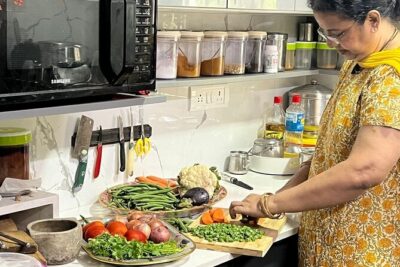
South Indian Vegetarian Cooking Class in Chennai with Meena
Read our review →This kitchen also appears in