
Review · PERU
Cusco: 3-Hour Peruvian Cooking Class
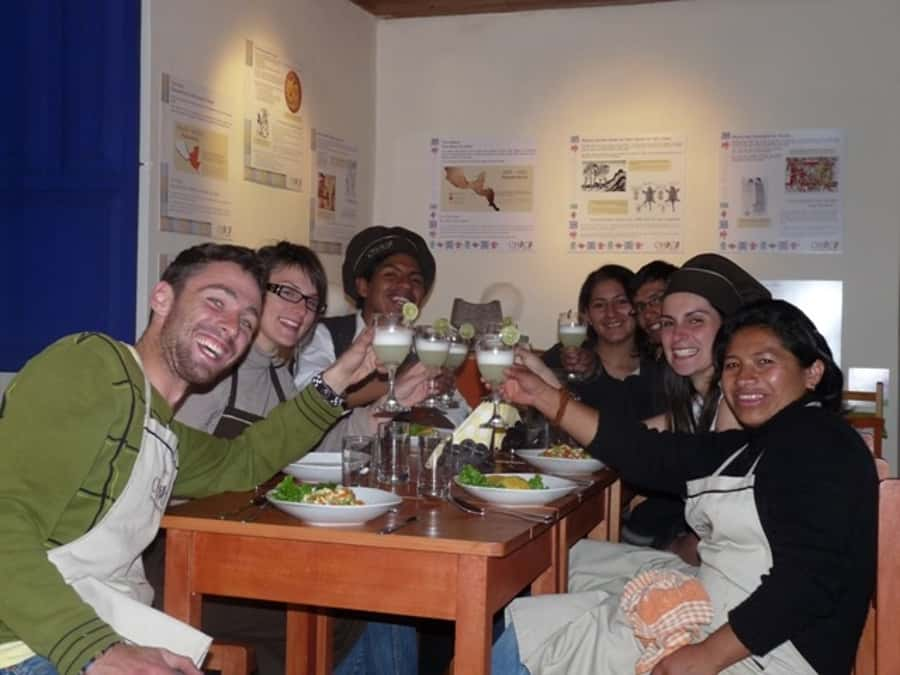
Peru’s food culture makes more sense when you handle the ingredients yourself. This three-hour class takes you from the Central Market to a working kitchen, where you prepare ceviche, a main course, a pisco sour, and chocolate fondue with local fruit. The market visit gives the meal a clear local setting rather than treating Peruvian food as a restaurant menu.
I like the small group of up to 10, which leaves room for questions and hands-on work. I also like the practical choice between lomo saltado and ají de gallina, though the first person booked gets the final say. The one drawback is timing: rice and potatoes may be prepared ahead and can be cool by the main course.
Key points to know before booking
- Start at the Central Market: See the produce and ingredients before cooking with them.
- Four-part menu: Prepare ceviche, one main dish, a pisco sour, and chocolate fondue with local fruit.
- Two main-course choices: The first booking decides between lomo saltado and ají de gallina.
- Small class size: The group is limited to 10 people, with instruction in English or Spanish.
- Cusco location: Meet at ChocoMuseo on the corner of Plaza Regocijo, marked by green and orange flags.
- Book at least 24 hours ahead: The kitchen needs time to prepare ingredients and may cancel short-notice bookings.
Why food is the right way to meet Peru
A cooking class can be a pleasant break from churches, ruins, and mountain viewpoints, but this one also gives you a useful way to understand Peru. You see ingredients in their market setting, learn how they are used, and then sit down to eat the result.
That connection matters. A pisco sour is not just a drink at the end of dinner. Ceviche is not simply a plate of fish. Lomo saltado brings together beef, vegetables, potatoes, and a style of cooking shaped by Peru’s Chinese culinary influence. Ají de gallina shows how a yellow pepper sauce can turn chicken into a soft, comforting main course.
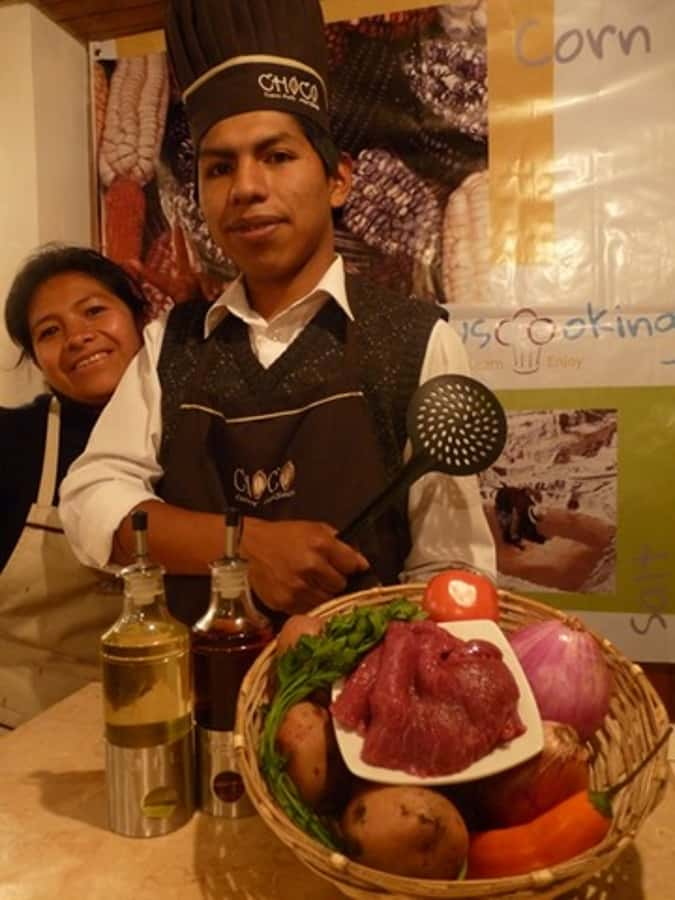
I especially like that the lesson begins outside the kitchen. You are not handed a premeasured box of ingredients with no context. You first see the range of produce available in Peru, then return to ChocoMuseo to work with what you have seen.
The class lasts three hours, so the pace should feel active without taking an entire day. It fits well into a Cusco schedule, especially on an evening when you want more than another restaurant meal.
More three-hour classes around Peru:
- Marrakech: 3-Hour Open-Air Moroccan Cooking Course
★ 4.9 · 74 reviews - 3-hour Tuscan Cooking Class with Wine & Oil Tasting
★ 4.5 · 36 reviews - Sabah Traditional Authentic Cuisine Cooking Class 3 Hours
★ 4.9 · 22 reviews
Meeting at ChocoMuseo by Plaza Regocijo
The class takes place inside ChocoMuseo, on the corner of Plaza Regocijo. Look for the green and orange flags hanging from the balconies. That landmark is useful because the meeting point is central, but you still need to allow enough time to find the correct entrance.
The location also gives the class a fitting setting. Chocolate appears in the final course, so the venue connects neatly with the food you will prepare. The supplied details do not promise a separate chocolate-making lesson, however. Expect the chocolate to be part of the dessert rather than the main focus of the class.
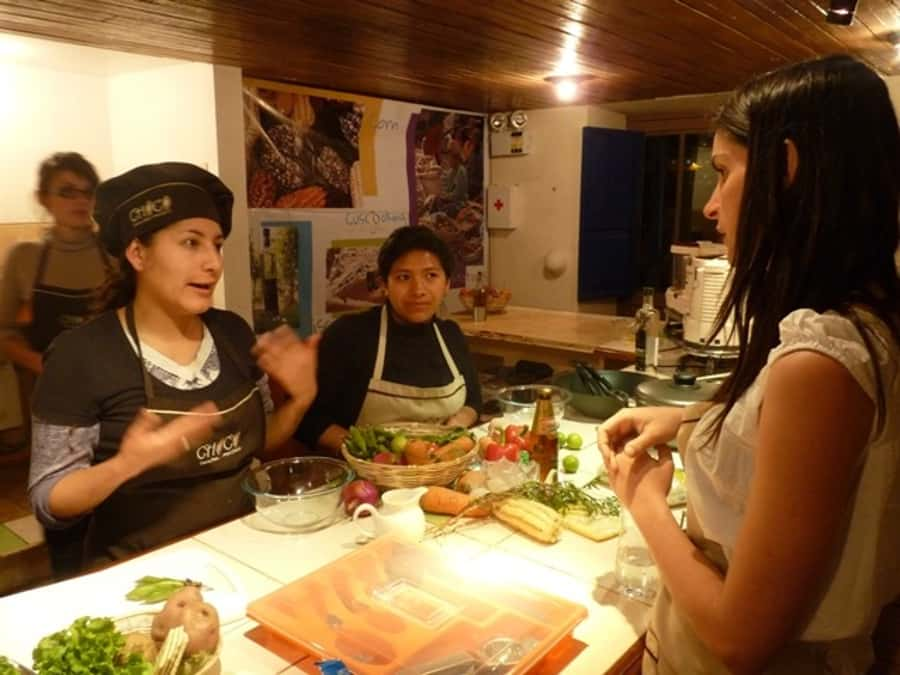
Instruction is available in English and Spanish. The class is limited to 10 participants, which is a meaningful advantage for a cooking lesson. You are more likely to receive help with chopping, mixing, and plating than you would in a large demonstration-only group.
Instructors have included Miguel and Yil. Miguel has been praised for guiding the market shopping, explaining ingredients, and walking the group through preparation and plating. Yil has added history, cultural details, fruit tasting, and advice that participants could use at home. Since staff can vary, treat those names as examples of the teaching style rather than a guarantee of your particular instructor.
The Central Market visit comes first
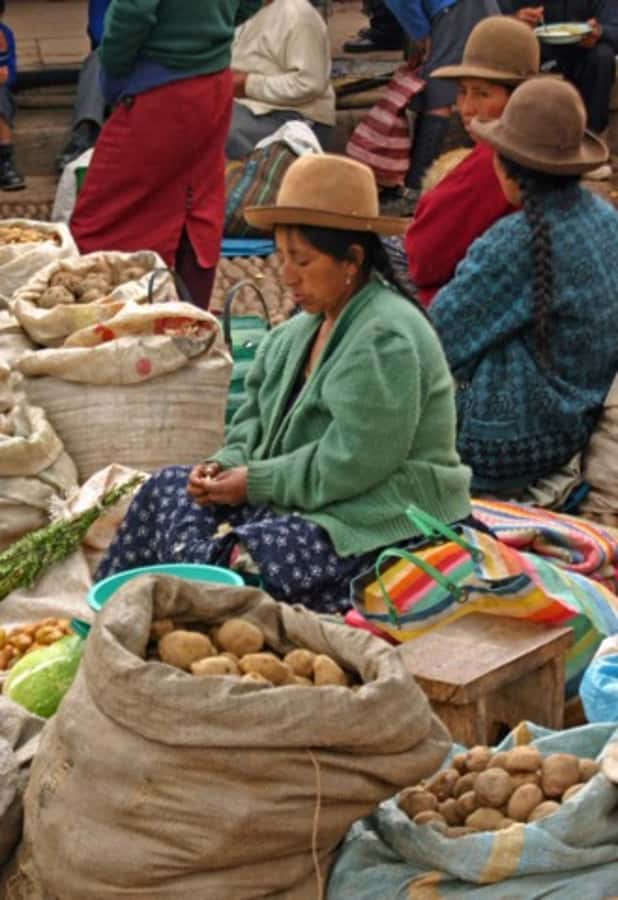
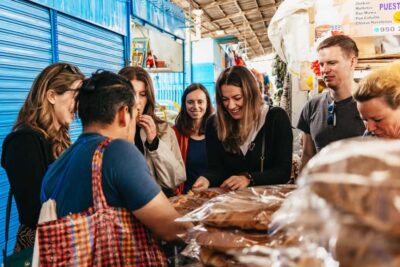
The market portion gives you the best sense of place. Instead of starting with a recipe card, you begin by looking at the produce used in Peruvian cooking. The guide explains the ingredients as you choose what the class needs.
Expect to learn about fruits, vegetables, potatoes, and other items that appear in the menu. One instructor spent time explaining the importance and variety of potatoes, while another offered facts about local food and Cusco culture. These small details help turn shopping into a short lesson in daily Peruvian cooking.
You may also get to taste local fruit. That is a simple but useful part of the experience because fruit can look unfamiliar when you see it in a market stall. Sampling it gives you a better sense of its flavor and helps connect the ingredients to the dessert that comes later.
The market is not presented as a long sightseeing stop. It is a practical visit tied to the recipes. That means it may feel too brief if you want a full market tour, but it works well if your goal is to understand the food you will cook.
I would pay close attention during this part, even if you are more interested in the kitchen. The explanations about origins, uses, and local ingredients are among the most valuable parts of the class, and they are difficult to reproduce from a recipe at home.
Preparing ceviche with direct kitchen instruction
Ceviche is the starter, and it gives the lesson an early taste of Peru’s best-known dishes. You will learn the preparation under the instructor’s direction, using ingredients gathered for the class.
The value here is not only eating ceviche. You see how the dish is assembled and how fresh ingredients are handled. The class description does not specify every technique or ingredient, so do not book it expecting a detailed professional seafood course. Expect a guided introduction suitable for people who want to cook the dish at home.
This is also where the small class size helps. A cooking teacher can correct a cutting motion, explain a step again, or answer a question about the balance of the dish. One participant specifically appreciated learning useful knife skills, so bring a willingness to work rather than simply watch.
If you are nervous about kitchen work, the format should still be manageable. The lesson is designed around instruction, cooking supplies, and ingredients provided for the group. You do not need to arrive with special equipment.
More cooking classes around Peru:
- Cusco: Peruvian Cooking Class, Cocktails & Local Market Tour
★ 4.9 · 512 reviews - Cooking class and market tour with a local chef
★ 5.0 · 186 reviews - Market Tour, Tasting of 35 Fruits, and 4-Course Peruvian Cooking Class in Lima
★ 5.0 · 86 reviews - #1 Rated Cooking Classes with Local Market Tour & Pickup
★ 5.0 · 69 reviews
Choosing between lomo saltado and ají de gallina
The main course is where you need to plan ahead. The menu offers either lomo saltado, sautéed beef with a savory style, or ají de gallina, chicken in a yellow pepper sauce. The first person booked chooses the option for the class, so you can state your preference but cannot count on getting it.
This rule is easy to miss and matters if you have a strong preference. If lomo saltado is the dish you most want to learn, booking early gives you the best chance of influencing the menu. If you are joining a group, ask before booking who will make the selection.
Lomo saltado is a good choice for anyone curious about a Peruvian dish with Chinese culinary influence. Ají de gallina offers a different experience, with tender chicken and a creamy yellow pepper sauce. Neither dish is described as a separate individual order, so the class appears to work from one group choice.
Vegetarian options are available on request. The meat can be replaced, but you should make that request in advance rather than waiting until the lesson begins. The same applies to the drink: the pisco sour can be swapped for fresh fruit juice if needed.
There is one practical food note. Rice and potatoes may be cooked earlier than the other elements, and one person found them cool by the time the main course was served. That is a fair limitation to keep in mind. A class has to coordinate several dishes at once, and the food may not arrive at the table with restaurant-level timing.
Mixing a Peruvian pisco sour
The pisco sour is taught as part of the menu, not treated as an optional bar order. You learn how to prepare the drink and then enjoy it with the meal.
The class may use a fresh variation, such as a chicha pisco sour. Chicha adds another Peruvian flavor reference and gives you something less ordinary than the standard cocktail. If alcohol is not suitable for you, request fresh fruit juice instead.
Water is included. Wine can be purchased, but wine and other alcoholic drinks are not part of the price. This keeps the basic cost clear, although you should budget extra if you want something beyond the included pisco sour.
The drink lesson adds value because it gives you another recipe to take home. It also breaks up the cooking routine and gives the group a natural chance to sit, taste, and compare the flavors being used.
Chocolate fondue and local fruit to finish
Dessert is chocolate fondue with local fruits. It is an easy final course, but it suits the setting and gives you another chance to try produce from Peru.
The dessert is less technically demanding than ceviche or the main dish. That is not a weakness. By this point, you have spent time shopping, chopping, cooking, and mixing a drink. A relaxed finish lets you enjoy the meal rather than adding another difficult task when everyone is ready to sit down.
The chocolate and fruit also make the class friendly for mixed-age groups and people with different levels of cooking experience. You can take part without needing advanced skills, and you still leave with a better idea of how local fruit fits into a Peruvian meal.
What the $49 price really covers
At $49 per person, the fee includes the market visit, ingredients, cooking supplies, instruction, water, and the meal. The included food covers the prepared menu, described as ceviche, a main course, pisco sour, and chocolate fondue with fruit.
I consider that a reasonable price if you value participation more than simply eating out. A restaurant meal might be easier, but it would not include the market lesson, recipe guidance, knife practice, or the chance to prepare the dishes yourself.
The value is strongest for couples, solo visitors, and small groups who want a hands-on activity. It is also useful if you plan to cook Peruvian food after returning home. The recipes, ingredient explanations, and practical tips make the class more useful than a meal with no instruction.
The value is weaker if you dislike group cooking or want a polished, restaurant-style dinner. You are doing the work, and the meal may have small timing issues. If cold rice or potatoes would ruin the evening for you, that limitation deserves attention.
Wine and extra alcoholic drinks cost more. Gratuity is also not included. Those are ordinary extras, but it is worth knowing before you arrive.
Who will enjoy this three-hour class most
I would recommend this for anyone who wants a close look at Peruvian food without committing to a full-day excursion. The three-hour length works well after a morning of sightseeing or on an evening when you want a social activity.
It is a particularly good fit for:
- People who like learning by doing
- Couples and small groups who want a shared meal
- Home cooks interested in ceviche, pisco sours, or Peruvian sauces
- Visitors curious about local fruit and potatoes
- Anyone who prefers a small class to a large demonstration
You should think twice if you have strict dietary needs that cannot be handled by a vegetarian substitution or drink change. The available information confirms vegetarian options and fruit juice on request, but it does not list every allergy accommodation.
You should also avoid a last-minute booking. The kitchen asks for at least 24 hours of notice, since ingredients and preparation need to be arranged. A short-notice request may be canceled if the team cannot get ready.
Should you book the Cusco cooking class?
Book it if you want to do more than sample Peruvian food. The market visit, hands-on recipes, local fruit, and pisco sour give you several useful points of contact with Cusco food culture in a short period.
The strongest reasons to choose it are the small group, the market-to-kitchen format, and the guidance offered by instructors such as Miguel and Yil. You also get a meaningful choice of main course, though the first booking controls that decision.
Skip it if you want a quiet dinner with no group activity, or if precise restaurant timing matters more than participation. For most curious eaters, the minor issue with pre-cooked rice or potatoes is a fair trade for learning how the meal comes together.
Book at least a day ahead, state any vegetarian or drink request clearly, and ask about the main course choice if it matters to you. At $49, this is a practical, good-value way to spend three hours in Cusco with food you can remember and recipes you can try again at home.
FAQ
How long does the cooking class last?
The class lasts three hours, including the Central Market visit, cooking instruction, and the meal.
Where does the class meet?
It meets inside ChocoMuseo on the corner of Plaza Regocijo. Look for the green and orange flags hanging from the balconies.
What dishes are prepared?
The menu includes ceviche, either lomo saltado or ají de gallina, a pisco sour, and chocolate fondue with local fruits.
Can I request a vegetarian main course?
Yes. The meat can be replaced with a vegetarian option upon request.
Can I replace the pisco sour?
Yes. The pisco sour may be replaced with fresh fruit juice if requested.
What languages are available?
Instruction is available in English and Spanish.
How many people are in the group?
The class is limited to 10 participants.
How far in advance should I book?
You should book at least 24 hours ahead so the team has time to prepare. Short-notice bookings may be canceled if the kitchen cannot get ready.
New cooking classes around Peru
- Lima: Peruvian cooking class and tour of Surquillo market★ 5.0 · 2 reviews
- Lima: Market Tour, 35 Fruits Tasting & Cooking Class★ 5.0 · 3 reviews
- Lima: Market Tour and Cooking Class with Pisco Sour★ 5.0 · 3 reviews
- Lima: 4-Course Peruvian Cooking Class in Miraflores★ 5.0 · 4 reviews
- Lima : Cooking Class – A Peruvian Culinary exploration★ 5.0 · 2 reviews
- Lima: Cooking Workshop and Water Circuit Tour★ 5.0 · 16 reviews
- Lima: Demo Cooking Class with Lunch at Cala Restaurant★ 4.1 · 4 reviews
- Cusco: Peruvian Cooking Class & Market Tour★ 4.9 · 19 reviews
Peru Cooking Classes, side by side.
Cusco: Peruvian Cooking Class, Cocktails & Local Market Tour
Read our review →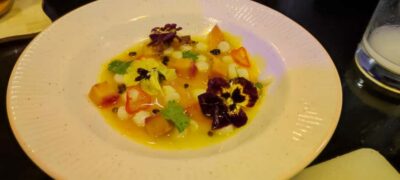
Cooking class and market tour with a local chef
Read our review →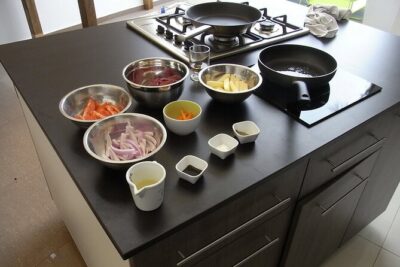
Market Tour, Tasting of 35 Fruits, and 4-Course Peruvian Cooking Class in Lima
Read our review →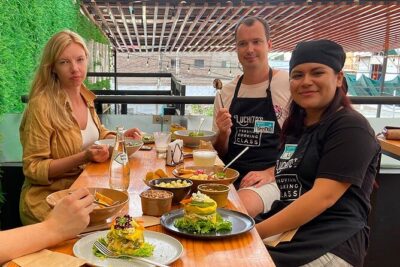
#1 Rated Cooking Classes with Local Market Tour & Pickup
Read our review →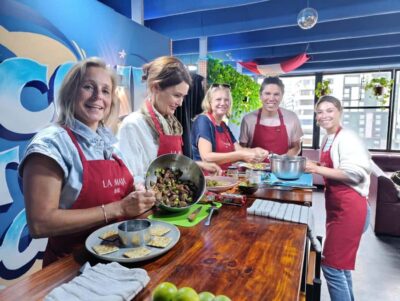
Miraflores: Amazing Peruvian Cooking Class Ceviche Seafood and Pisco Sour
Read our review →
Cook with Maido’s creative chef and chef de cuisine
Read our review →
This kitchen also appears in