
Review · TURKEY
Antalya: Turkish Cooking Class with a Local Host
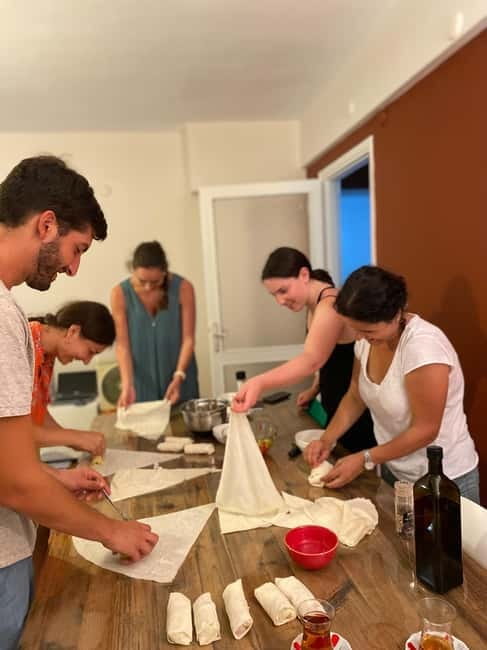
The best part of this Antalya experience is the setting: you cook in Sinem’s home, not in a formal restaurant kitchen. Over three hours, you prepare börek, stuffed grape leaves, salad, and a seasonal main course, then eat everything together.
I like the small limit of six people, which gives you room to work rather than watch from the back. I also like the family welcome, Turkish tea, and recipes passed down from Sinem’s grandmother. The main consideration is that the menu changes with the season, so you cannot choose every dish in advance.
- Cook in a real Antalya home: This is a home-hosted meal, with tea, conversation, and a family welcome.
- Learn four Turkish dishes: The menu includes börek, sarma, salad, and a seasonal main course.
- Work in a group of six or fewer: The small size allows each participant to take part in the cooking.
- Meet Sinem, an English-speaking home cook: She learned her methods from her grandmother and shares them in a relaxed setting.
- Eat what you prepare: The class ends with a shared four-course meal, not a quick taste at the kitchen counter.
- Plan for three hours: The class includes introductions, cooking, cultural conversation, and the meal itself.
A Turkish Cooking Class Inside Sinem’s Home
Antalya is easy to enjoy through its beaches, old streets, and ruins, but food gives you a more personal way into local life. This class takes you past the restaurant menu and into a Turkish home, where cooking is tied to family, memory, and the practical rhythm of preparing a meal together.
You meet Sinem at her home and begin with Turkish tea and introductions. That opening matters. It gives everyone time to settle in before the work starts, and it sets the tone for a class built around conversation rather than a strict demonstration.
Sinem learned to cook from her grandmother. You are not simply following a commercial recipe created for tourists. You are learning home-style dishes from someone whose cooking grew out of family practice. That does not mean every step will be formal or exact. Turkish home cooking often allows room for taste, texture, and whatever ingredients are available.
The class is taught in English and limited to six participants. That is a useful balance: enough people for a social meal, but not so many that your role shrinks to chopping one onion and watching someone else do the interesting work.
Starting With Tea and Turkish Hospitality
The experience begins with Turkish tea, introductions, and a welcome from Sinem and her family. Coffee may also be offered as part of the greeting, based on the experience in the home, but tea is the stated inclusion.
This first stage is more than a polite pause. In Turkey, offering tea is a familiar way to open a conversation, and here it helps turn a cooking appointment into a visit. You have time to meet the other participants and ask Sinem about the food before moving into the kitchen.
The family setting can be especially appealing if you want cultural contact without a large organized group. One participant described feeling at home with the family and enjoying the conversations, while another noted that Sinem and her husband were welcoming even when language differences appeared.
That language point is worth keeping in mind. The class is offered in English, but a home conversation may not always move at the same speed as a professional guided tour. You should expect a friendly, human exchange rather than perfectly polished commentary at every moment.
More cooking classes around the world:
- Half-Day Thai Cooking Class at Organic Farm in Chiang Mai
★ 5.0 · 19,087 reviews - Florence: Pasta Cooking Class with Unlimited Wine
★ 4.9 · 10,285 reviews - 3 in 1 Cooking Class near Navona: Fettuccine, Ravioli & Tiramisu
★ 5.0 · 7,376 reviews
Börek, Sarma, and the Work of Turkish Home Cooking
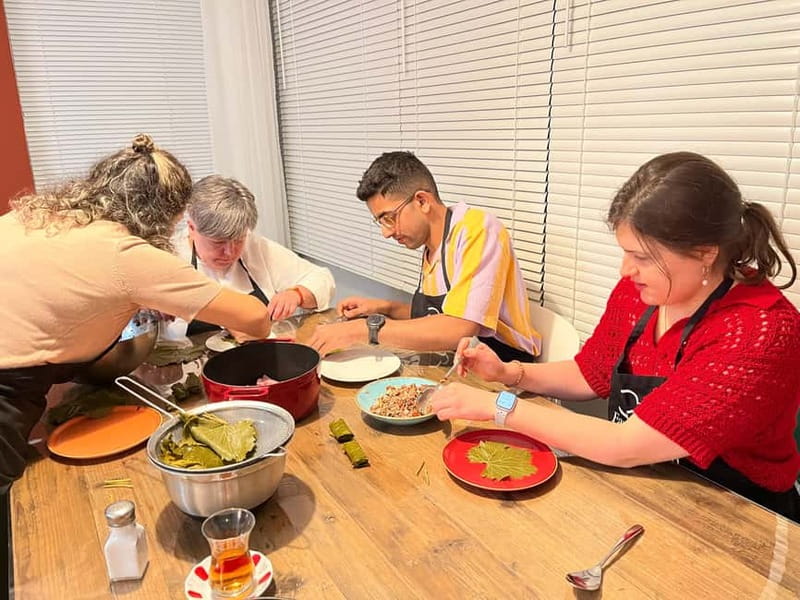
The first cooking tasks introduce you to dishes that are strongly associated with Turkish food. Börek usually involves pastry or thin dough layered or filled with ingredients, while sarma consists of stuffed grape leaves. Here, you prepare both as part of the four-course meal.
These are useful dishes to learn because they show two different sides of Turkish cooking. Börek calls for care with dough, filling, and shaping. Sarma takes patience and repetition as you fill and roll the leaves. Neither is just a matter of tossing ingredients into a pan.
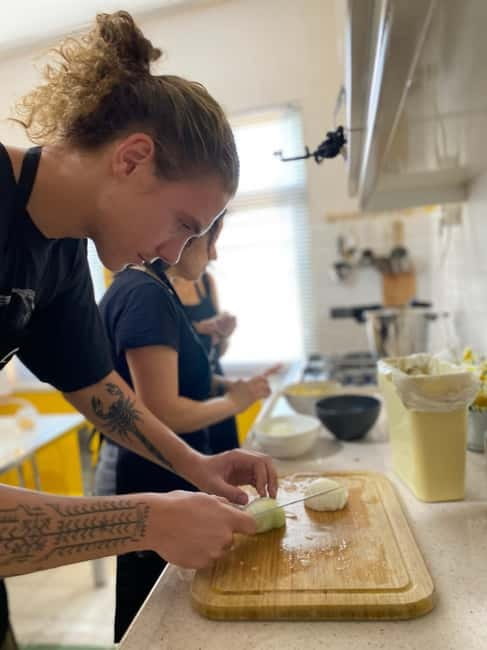
The class is hands-on, so you should expect to take part in the preparation rather than sit through a cooking show. Everyone in the group contributes to the shared meal. The exact division of tasks depends on the group and the day, but the small size should make it easier to get involved.
I like that these dishes are practical take-home lessons. You can try them again after your trip, especially since the class is designed around recipes and methods rather than a one-time tasting. One participant specifically looked forward to making the dishes again at home.
Do not expect every step to be measured like a baking laboratory. Home cooks often rely on feel, appearance, and taste. If you want exact quantities for every ingredient, ask Sinem questions as you work and take notes while the method is fresh.
A Seasonal Salad and Main Course
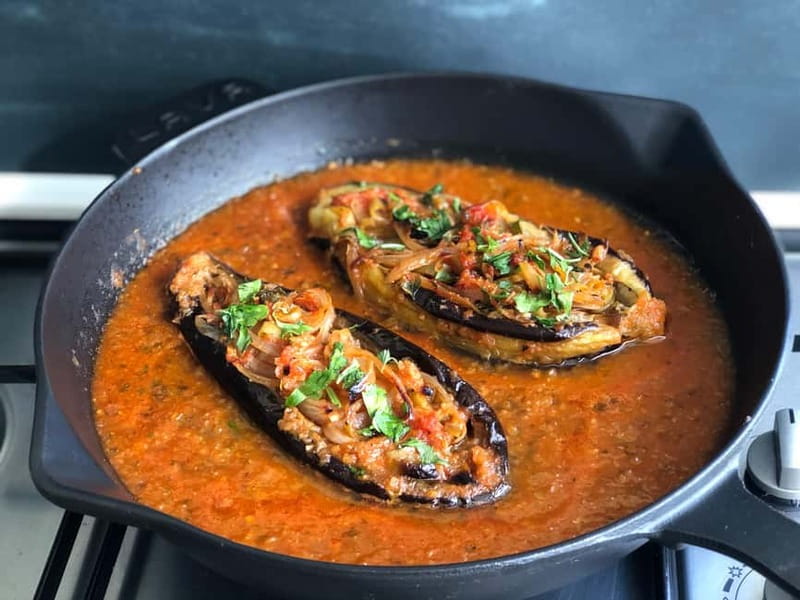
The remaining courses are seasonal salad and a hearty main dish. This part of the menu changes with the time of year, using fresh ingredients chosen by the host. That keeps the class connected to what is available rather than forcing the same meal in every season.
A changing menu is both a benefit and a small limitation. You get food that reflects the season, but you cannot book this experience expecting a fixed list beyond the named examples of börek and stuffed grape leaves. If a particular dish matters to you, ask about the current menu before booking.
The salad may look like the simplest course, but it can teach you how a home cook balances a meal. It adds freshness and contrast to the pastry, grape leaves, and main dish. The seasonal main course then gives the meal its center, turning the class into a full lunch or dinner rather than a collection of snacks.
Fresh ingredients are part of the appeal. You are working with food intended for the meal in front of you, not merely practicing with ingredients selected for a staged demonstration. That makes the process feel more useful and gives you a better sense of how Turkish households build a shared table.
Sitting Down to Eat the Four-Course Meal
After the cooking, you sit with Sinem and the other participants to eat what you have prepared. This final meal is included in the three-hour experience, along with Turkish tea and cultural conversation.
The shared table is where the class earns its place in an Antalya itinerary. A restaurant can serve you a Turkish dish, but it cannot give you the same connection between preparation and eating. You have handled the ingredients, helped shape the food, and then tasted the result with the people who made it alongside you.
The meal also gives you time to talk without rushing between cooking tasks. Sinem shares family food traditions and the memories connected to cooking. Her approach is built around the idea that food recalls the people and places that taught us how to prepare it.
That personal element is likely to matter most if you enjoy food as a way to understand daily life. This is not a chef-led performance focused on technical tricks. It is a cultural conversation that happens to produce dinner.
Same kitchen, a different dish:
- Florence: Pasta & Tiramisu Cooking Class with Unlimited Wine
★ 4.9 · 6,708 reviews - Florence: Pasta Cooking Class with Unlimited Wine
★ 5.0 · 6,413 reviews - Hanoi Cooking Class: Culture, Local Market & Meaning CSR Impact
★ 5.0 · 5,147 reviews - 5 Traditional Dishes Hanoi Cooking Class with Market Trip
★ 5.0 · 4,890 reviews
What the Small Group Size Changes
The maximum group size is six participants. For a cooking class, that is an important detail. You are more likely to have a real task, ask questions, and see what is happening at the counter or stove.
A group of six can also make the meal social without making it anonymous. You will cook with other participants, share the finished courses, and compare impressions during the meal. If you are traveling alone, this offers an easy setting for meeting people without committing to a full-day group tour.
The small group does not guarantee a private class. Other participants may have different cooking experience, food preferences, or levels of interest. Still, six people is small enough for Sinem to keep the class personal and for the group to work together.
The home setting also means the experience will have a less formal feel than a purpose-built cooking school. That is the attraction for many people, but it may not suit you if you want a polished kitchen, restaurant-style service, or a strict professional curriculum.
Is $94 a Fair Price in Antalya?
At $94 per person, this class costs more than simply ordering a four-course meal in Antalya. You are paying for the meal, but also for three hours of instruction, ingredients, tea, conversation, and access to a private home setting.
I think the value is strongest if you plan to cook again. You leave with techniques and recipes for dishes such as börek and sarma, rather than only a pleasant memory of what someone else prepared. The chance to ask questions while working adds value that a restaurant meal cannot provide.
The price is less compelling if your main goal is a quick introduction to Turkish food. In that case, a market visit or restaurant meal may cost less and take less time. This class asks you to give up three hours, so you should want the process as much as the finished food.
The seasonal menu also supports the price. Fresh ingredients and a meal prepared for a small group make this more personal than a standard food tasting. Still, the experience does not promise premium restaurant cooking or a large number of dishes. Its value comes from contact with a local family and learning home methods.
Who Will Enjoy This Experience Most
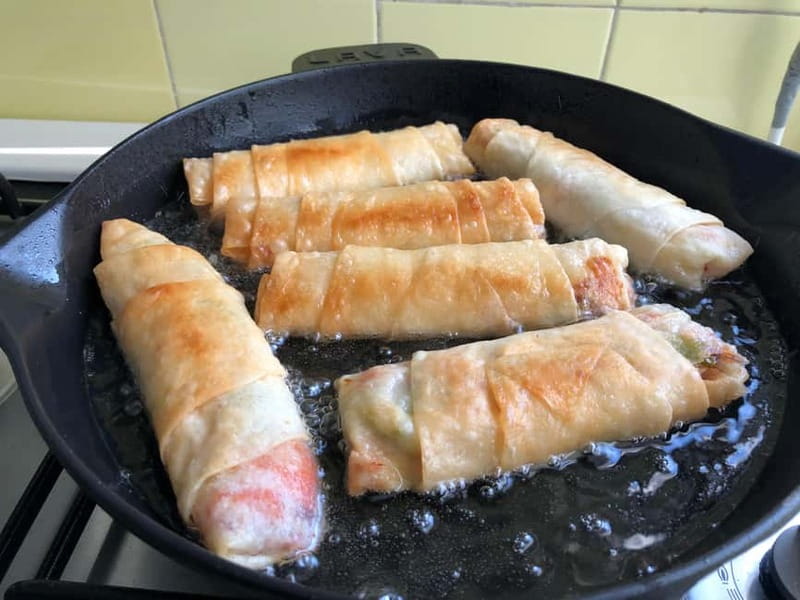
I would recommend this class to you if you like to learn by doing. It suits people who enjoy preparing food, asking questions, and sitting down for a long shared meal afterward.
It is also a good match if you want a cultural activity with a gentle pace. You are not racing between attractions or collecting photos at several stops. You are spending one block of time with a host, learning about food through preparation and conversation.
Families and couples may enjoy the warm home setting, while solo participants can benefit from the group size and shared meal. The English instruction makes the class accessible to English-speaking visitors, though the family conversation may still include occasional language gaps.
You may want to choose another activity if you need a fixed menu, strict dietary planning, or a professional training kitchen. The available information does not specify dietary accommodations, so ask before booking if food restrictions are important to you.
Timing, Meeting Point, and Cancellation
The experience lasts three hours, with starting times based on availability. You meet directly at Sinem’s home, so check the exact meeting instructions carefully when you reserve.
No transportation is included or described. You should treat the home address as the key logistical detail and allow enough time to reach it. Since the class takes place in a private home, arriving at the correct location matters more than it would for a clearly marked restaurant.
You can cancel up to 24 hours in advance for a full refund. The reserve-now, pay-later option also lets you hold a place without paying on the day of booking, which is useful when your Antalya schedule is still changing.
My Take: Book It for the Conversation and the Recipes
I would book this class if you want more than a meal and like the idea of meeting a local family around a kitchen table. Sinem’s grandmother-taught cooking, the small group, and the chance to make börek and sarma give the experience a clear sense of place.
The strongest reason to go is the combination of hands-on cooking and family hospitality. The main reason to pause is the lack of a fixed seasonal menu and the possibility that the home setting will feel less polished than a formal cooking school.
For $94, this is a fair choice when you value personal contact and recipes you can use at home. It is not the best fit for a quick, low-cost food stop, but it should suit you well if Turkish food and everyday culture are central to your Antalya plans.
FAQ
How long is the Antalya Turkish cooking class?
The class lasts three hours, including introductions, cooking, cultural conversation, and the shared meal.
Where does the cooking class take place?
You meet at Sinem’s home in Antalya. The experience takes place in a real local home rather than a restaurant.
Who teaches the cooking class?
Sinem teaches the class. She learned her cooking from her grandmother, and the experience may also include a welcome from her husband and family.
What dishes will I prepare?
The four-course meal includes börek, stuffed grape leaves known as sarma, a seasonal salad, and a hearty main course. The main course and some other details change with the season.
Is the class taught in English?
Yes. English is the listed language for the instructor and the activity.
How many people can join the class?
The class is limited to six participants, making it a small-group experience.
What is included in the price?
The price includes the hands-on cooking class, Turkish tea, a four-course meal, and cultural conversation.
New cooking classes around the world
- Shinjuku Tokyo: Authentic Japanese Home-Style Culinary Class★ 4.9 · 125 reviews
- Shibuya Tokyo: Onigiri & Tamagoyaki Cooking Class★ 5.0 · 4 reviews
- M.O.M COOKING CLASS★ 4.8 · 6 reviews
- Seville: Paella-Cooking Experience with Sangria & Full Meal★ 4.9 · 42 reviews
- Shanghai: Authentic Chinese Cooking Class with Master Chef★ 5.0 · 2 reviews
- Sestri Levante: Pesto & Cooking Classes, Wine Tasting★ 4.9 · 56 reviews
- Seville: Paella Cooking Class & 30-Min Local Expert Q&A★ 4.8 · 37 reviews
- Seoul: Korean Kimchi Cooking Class in the Heart of the City★ 5.0 · 3 reviews
Turkey Cooking Classes, side by side.
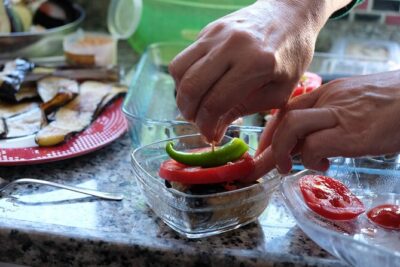
Private Turkish Cuisine Cooking Class with Local Moms
Read our review →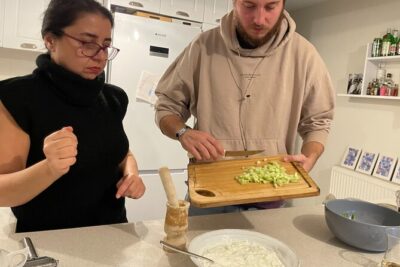
Traditional Home Cooking with a Local in İstanbul City Center
Read our review →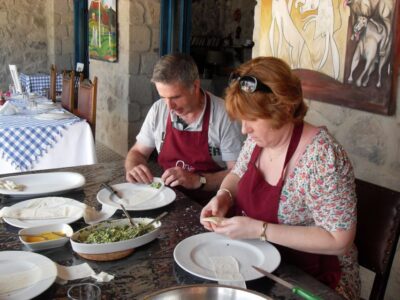
Authentic Turkish Cooking at a Local’s Home in Istanbul
Read our review →
Istanbul: Turkish Cooking Class with a Professional Chef
Read our review →
Istanbul: Vegan/Vegetarian Cooking Class with Locals at Home
Read our review →
Authentic Turkish Breakfast Cooking at Home with Locals
Read our review →
Antalya: Kunefe Cooking Class with Local Chef in Old Town
Read our review →This kitchen also appears in