
Review · SRI LANKA
Udawalawe: Farm to Table Cooking & Authe: Village Experience
Near Udawalawe, this experience turns a short afternoon into a look at Sri Lankan village life, with a reconstructed 200-year-old agricultural settlement, an old gem mine, cinnamon work, and a home-style cooking class. You pick vegetables from the garden, then help prepare the meal instead of simply sitting down to eat it.
I like the hands-on cooking and the friendly local women who guide it. I also like the garden visit, which gives the food a clear connection to the soil rather than presenting a polished restaurant demonstration. The main caution is price clarity: drinks served with the meal may cost extra, and one visitor was surprised by charges several times higher than shop prices.
Key points at a glance
- A reconstructed village near Udawalawe Elephant Orphanage: The site is only 1.2 kilometers away, making it easy to add to a Udawalawe day.
- An old gem mine visit: You learn about traditional gem-mining methods and see a demonstration of the process.
- Garden to cooking pot: You pick fresh vegetables, grind spices, and help cook in a traditional village kitchen.
- A meal you helped prepare: Coconut sambal and dahl have been particular highlights, with the food served in a communal setting.
- A private two-hour outing: English and Sinhala guides lead the visit, with around 90 minutes spent walking.
- A small but important price tip: The $30 fee covers the stated activities and meal, but ask before ordering extra drinks.
A reconstructed village with a real purpose
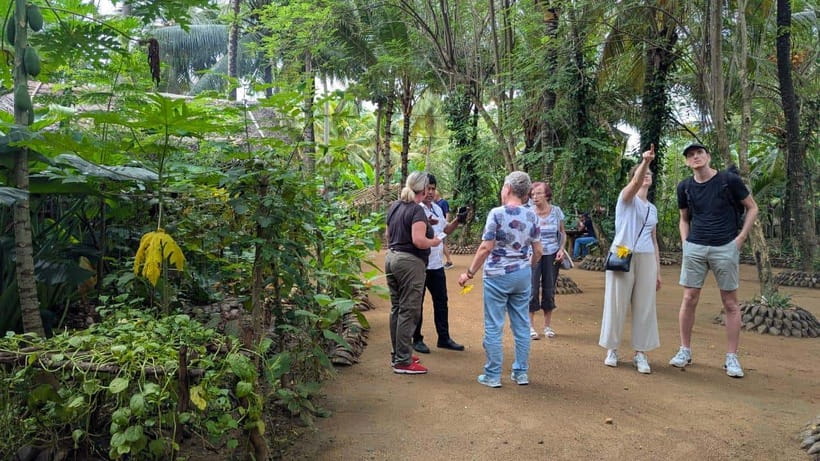
The setting is called Ceylon 1850, a reconstructed village designed to show how Sri Lankan agricultural communities lived around 200 years ago. That distinction matters. You are not walking through an untouched historic village. You are visiting a purpose-built cultural site that uses old-style buildings, food, farming, and craft demonstrations to explain village life.
I find this format useful when you want context without spending half a day in a museum. The visit brings several parts of rural life together: food production, spice preparation, traditional cooking, mining, and community customs. In two hours, you get a compact introduction rather than one narrow activity.
The site is close to Udawalawe Elephant Orphanage, only 1.2 kilometers away. If you already plan to visit the orphanage, the location makes this an easy addition. The experience is also private, so you are not automatically folded into a large bus group. That should make it easier to ask questions and take part at your own pace, though the available information does not give a maximum group size.
More Farm Cooking Classes in Sri Lanka:
- Organic cooking class sigiriya (kumara & family)
★ 5.0 · 650 reviews - Ella : Cooking class with amazing Spice Garden Tour
★ 5.0 · 239 reviews - Half-Day Thai Cooking Class at Organic Farm in Chiang Mai
★ 5.0 · 19,087 reviews
Starting with a welcome drink
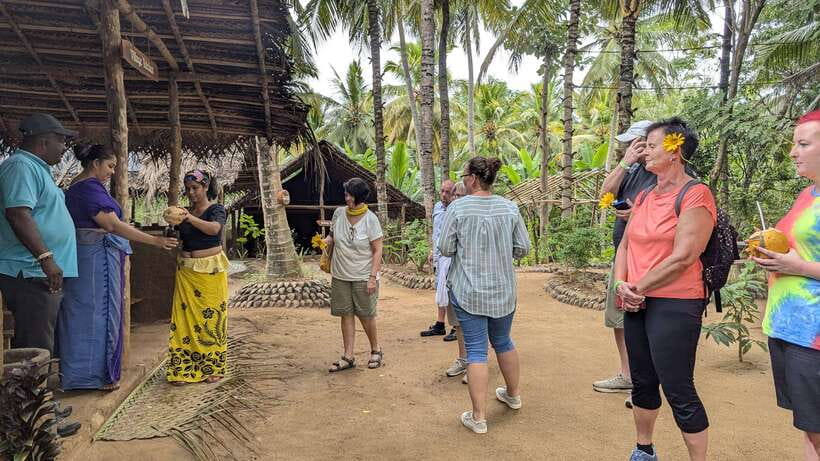
The visit begins with a local welcome drink. The activity information refers to both cinnamon tea and king coconut, so you should confirm which one is being served when you book or arrive. Either option fits the setting, but the difference is worth knowing if you are comparing this with other food tours or watching your spending.
This opening is more than a quick refreshment. Cinnamon is an important Sri Lankan crop, and the drink prepares you for the peeling demonstration later in the visit. King coconut, if served, gives you a taste of a familiar local drink before the cooking begins.
The drink is included in the stated package. Extra drinks with the meal may not be. I would ask about the price before ordering anything beyond what is included, especially because one visitor was charged much more than expected for drinks. This is a small detail, but it can affect how you feel about a $30 experience.
Seeing an old gem mine near Udawalawe
The mine visit adds an unexpected turn to a food-focused outing. Sri Lanka is known for gem mining, and this stop explains how precious stones were sought and brought out of the ground using older methods. You are shown the process rather than simply being taken to a shop to browse jewelry.
That makes the visit more useful than a sales stop. You can see the work behind the stones and understand why mining has a place in Sri Lankan rural life. The supplied details do not promise that you will find or purchase a gem, so treat this as a demonstration and cultural stop, not a buying opportunity.
The mine is also one reason the experience works well as a general introduction to local life. Agriculture is not the only rural industry in the area. The program links the soil that produces vegetables and cinnamon with the earth that may contain valuable stones.
Watching cinnamon become a spice
The cinnamon peeling demonstration shows a task that is easy to overlook when cinnamon arrives in a jar or neat roll at home. Skilled workers demonstrate how the bark is peeled and prepared. You see the craft behind a spice that is closely tied to Sri Lankan cooking and trade.
This is a short stop, but it gives the cooking class more meaning. When you later use spices in the kitchen, you have already seen one of them being handled by hand. The demonstration also creates a useful contrast with the gem mine. One activity involves careful work with plant material, the other with soil and stone.
Do not expect a full cinnamon workshop unless the staff offers extra time. The stated program promises a demonstration, not a long practical class. Still, it is a worthwhile part of the route because it connects a familiar household ingredient with a local skill.
More cooking classes around Sri Lanka:
- Ella: Traditional Sri Lankan Cooking Class
★ 4.9 · 788 reviews - Sri Lanka Cooking Class with Granny
★ 5.0 · 587 reviews - Kandy Village Cooking Class
★ 5.0 · 536 reviews - Sea waves sri lankan cooking class
★ 5.0 · 467 reviews
Picking vegetables before cooking
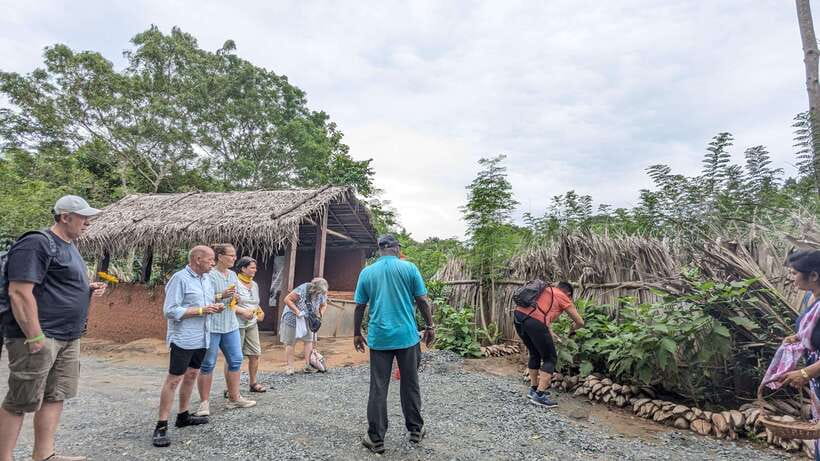
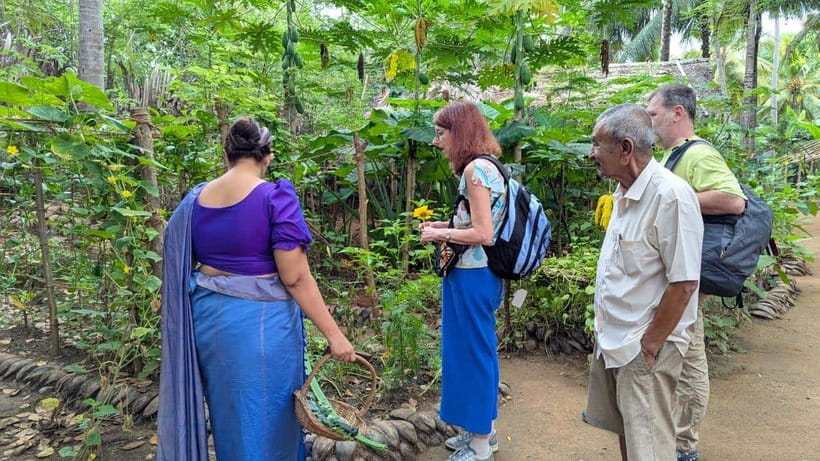
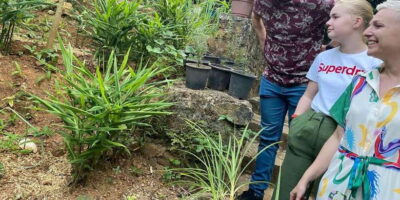
The garden is where this experience becomes genuinely hands-on. Instead of arriving at a kitchen with ingredients already measured out, you walk through the organic garden and pick vegetables for the meal. You get a clear sense of where the cooking starts.
I especially like this part for families and anyone who enjoys food with a story attached to it. Picking produce is simple, but it changes your role. You are not only watching a local recipe being made. You are helping gather the ingredients that will be used at the table.
The garden also lets you see the property at a slower pace. The area is described as beautiful, and the garden visit is one of the most praised parts of the experience. Since the walk forms a large part of the program, wear comfortable shoes and bring protection from the sun. The activity is not suitable for wheelchair users, and the walking portion lasts about 90 minutes.
Cooking with local women in a village kitchen
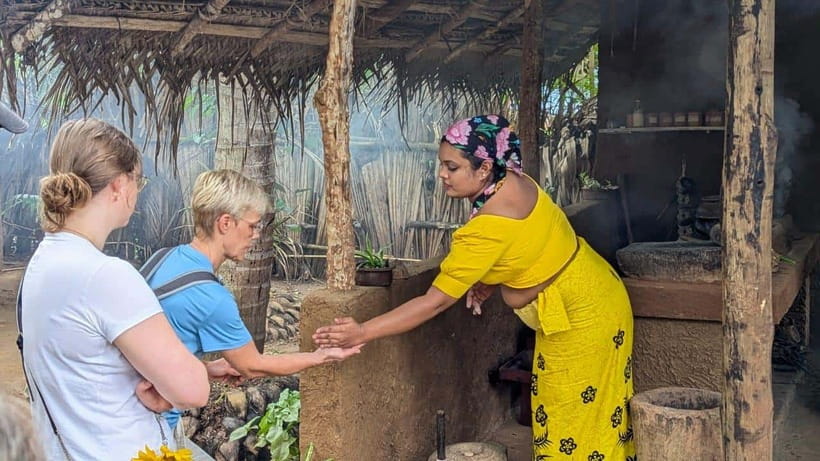
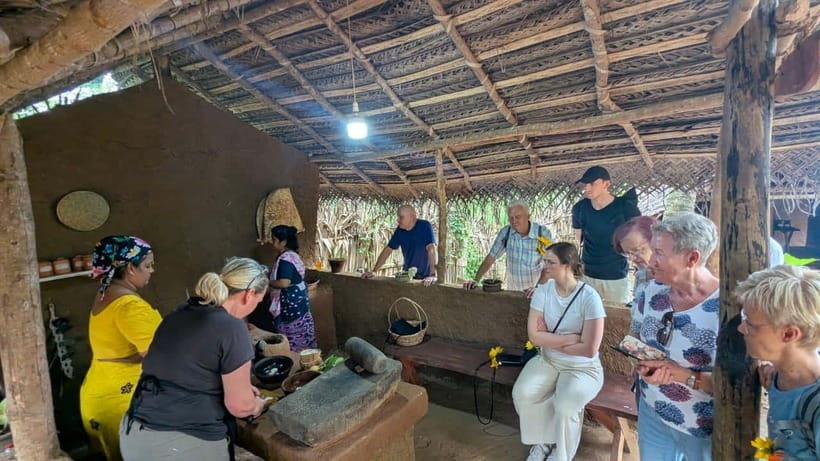
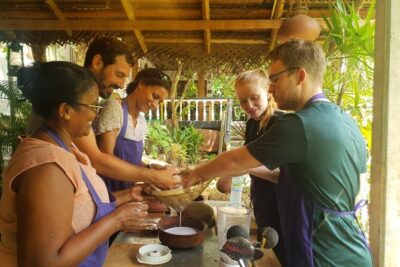
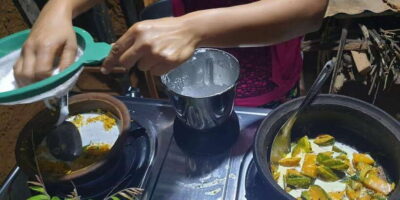
The cooking class is the heart of the visit. Local women lead you through traditional recipes and methods, with time spent preparing the ingredients and cooking in a village kitchen. You may help grind spices and cook over an open flame, giving you more contact with the process than a standard demonstration.
The teaching is intended to be participatory. You should expect to do some of the work, not simply stand at the edge while someone else cooks. The class has received particularly strong praise for being informative, friendly, and enjoyable. The staff makes an effort to show how the dishes are prepared and explain what is happening.
The exact menu is not specified in advance, so you should not book expecting a particular set of dishes. Coconut sambal and dahl have been especially well received, and they are good examples of why this class works: they are familiar Sri Lankan staples, but the flavor depends on fresh ingredients, spices, and the cooking method.
The kitchen setting is part of the appeal. A formal cooking school can teach you technique, but a village kitchen gives you a better sense of how food fits into daily life. You see the pace, tools, and shared work that make the meal a social activity.
There is also a practical limit. A two-hour experience has to move along. You will get a taste of the methods, not a full chef-training course or a long recipe workshop. If you want detailed written recipes to recreate everything at home, ask the guide if they can provide them. That is not listed as part of the package.
Eating the food you helped make
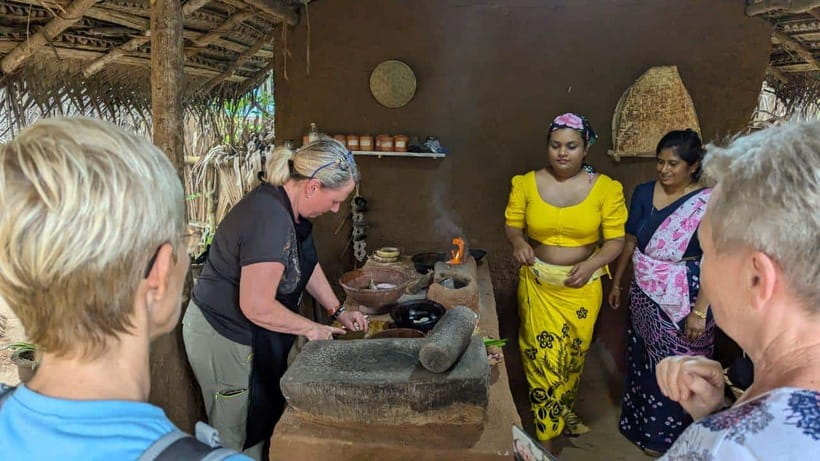
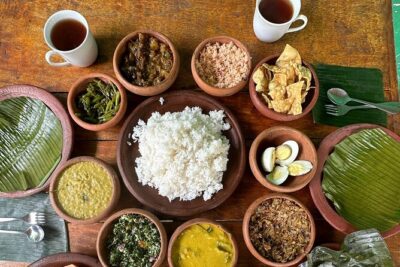
After the class, you sit down to eat the dishes prepared during the activity. This meal is the payoff, but it also gives you a chance to judge the cooking process by its results. Fresh garden vegetables and local preparation methods mean the meal should feel connected to the earlier stops rather than added as an unrelated restaurant course.
The communal setting fits the cultural focus. Food in Sri Lanka is often tied to hospitality and shared time, and this meal gives you that social element. You are not only sampling a finished dish. You have watched, handled, and helped prepare it.
The meal is included in the $30 price. Drinks may not be, and this is the point where you should clarify what is covered. One experience became less satisfying because drinks were added at prices far above local shop rates without a clear warning. A simple question before ordering can prevent that awkward end to the visit.
Joining local melas, with one point to clarify
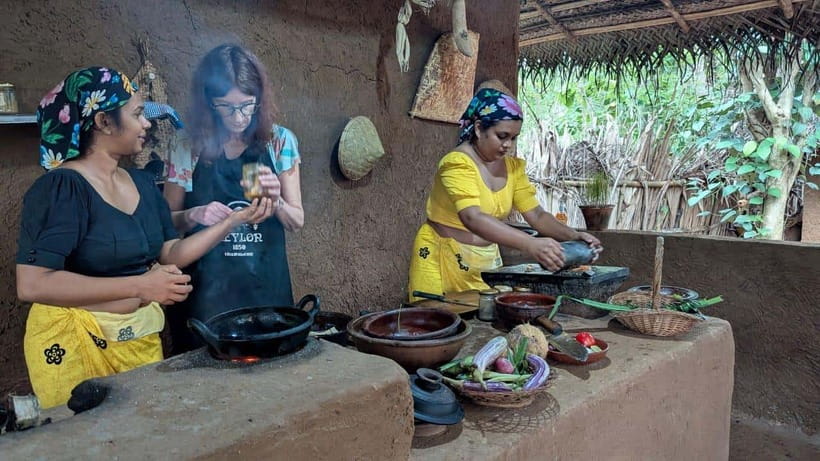
The program also includes participation in local melas, described as traditional fairs with crafts and local delicacies. Music and dance are also associated with these gatherings. This could be a lively finish, with a chance to see local customs in a social setting rather than only through a guided explanation.
The wording leaves some uncertainty about timing. The total activity lasts two hours, and about 90 minutes are spent walking, while the garden, mine, cinnamon demonstration, cooking class, meal, and mela participation all fit into that period. Ask the provider what will be taking place on your chosen date and how much time is allocated to the mela.
That question matters because local fairs may not operate in exactly the same way every day. The listed experience includes them, but the available details do not give a fixed schedule or say that a large fair happens at every departure. You should see the mela as an included cultural element, while confirming the day’s exact format.
What the $30 price really buys
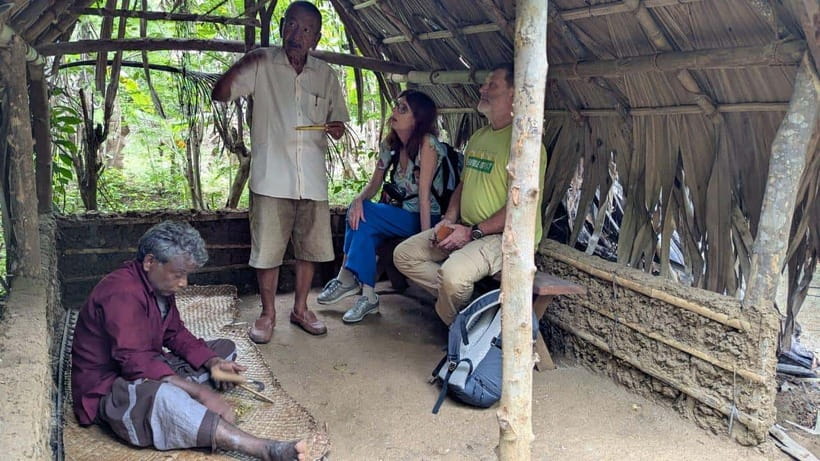
At $30 per person, this is not the cheapest way to eat in Sri Lanka. You could find a low-cost local meal for far less. The value here comes from the number of connected activities packed into a short visit: a welcome drink, mine tour, cinnamon demonstration, garden picking, cooking instruction, prepared meal, and local cultural activities.
I would consider the price fair if you want an organized introduction to rural food and craft traditions near Udawalawe. The private format and guided access add value, especially if you prefer asking questions rather than following a large group. The class also gives you an experience you could not get from simply ordering dahl and sambal at a restaurant.
The value is weaker if you mainly want lunch. In that case, the cooking class and cultural stops may feel like more than you need. It is also less appealing if you dislike walking, have mobility limits, or expect a quiet meal with no extra charges.
The drink issue deserves attention. The meal is included, but not every beverage served alongside it may be. Ask for the cost before accepting extra drinks. That is a practical step, not a criticism of the whole outing, and it keeps the final bill in line with your expectations.
Timing, language, and comfort
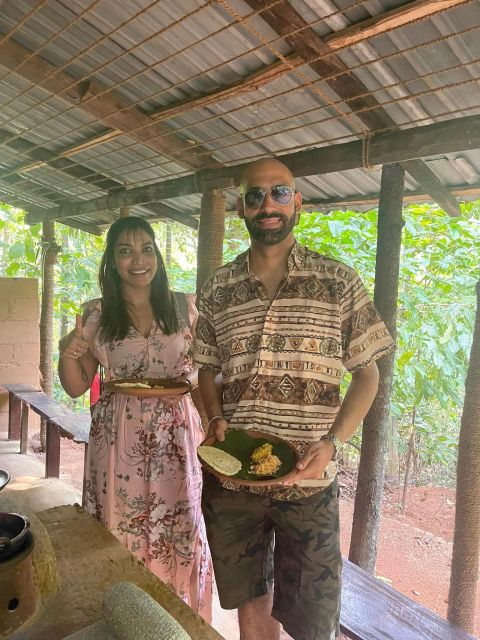
The stated duration is two hours, with starting times based on availability. English and Sinhala guides are available. Specific guide names are not provided, so you should not expect to request a named guide when booking.
The visit is described as a full walking tour lasting around 90 minutes. That is a substantial portion of the experience, even though the total duration is short. Wear shoes you can walk in and choose clothing suited to outdoor heat. The supplied information does not state that transportation around the site is provided.
Because the tour includes a garden, mine, demonstrations, kitchen, and meal, the pace may feel active. You will want enough time to look around, but the schedule still has to fit within two hours. A private group should help, though the provider does not state the group’s maximum size.
Wheelchair users should not book this activity because it is specifically marked as unsuitable. Other accessibility details are not supplied, so anyone with limited mobility should ask the provider for a precise description of paths, surfaces, and kitchen access before paying.
Free cancellation is available up to 24 hours before the activity for a full refund. You can also reserve and pay later, which is handy when your Udawalawe schedule depends on wildlife activities or changing transport plans.
Who will enjoy this Udawalawe experience
I would choose this for you if you want participation rather than a photo stop. The vegetable picking and cooking class are the strongest reasons to come. You get to work with local ingredients, learn from local women, and eat what you helped prepare.
It also suits families, couples, and small private groups looking for a gentle cultural activity near the elephant orphanage. Food-minded visitors will get the most from it, especially if coconut sambal, dahl, spices, and traditional cooking interest you.
You may want to skip it if you have very limited time, do not enjoy walking, or are only looking for a quick meal. The mine and cinnamon stops are useful additions, but the cooking class is clearly the main event. You should also be comfortable asking about extra drink prices.
Should you book the village experience?
Book it if you want a compact, practical introduction to village food and everyday skills near Udawalawe. The best parts are the garden, the friendly cooking instruction, and the meal made from the work you have just done. The old mine and cinnamon demonstration add useful local context without turning the visit into a shopping trip.
Before you go, confirm the welcome drink, ask what beverages are included, and check how the mela will operate on your date. If those details are clear and 90 minutes of walking suits you, $30 is a reasonable price for a private, hands-on cultural outing. If you want only a cheap lunch or cannot manage the walking, spend your time elsewhere.
FAQ
Where is the experience located?
The experience is in Sabaragamuwa Province, Sri Lanka, about 1.2 kilometers from Udawalawe Elephant Orphanage.
How long does the activity last?
The stated duration is two hours. About 90 minutes of that time is spent walking around the village and its activities.
What languages are available?
The tour is available with a live guide speaking English or Sinhala.
Is the cooking class included?
Yes. You pick vegetables from the organic garden and take part in a traditional cooking class in the village kitchen. The meal made during the class is included.
Are drinks included with the meal?
The package includes a welcome drink, described as either cinnamon tea or king coconut in the supplied information. Extra drinks served with the meal may not be included, so ask about prices before ordering.
Can I cancel the booking?
You can cancel up to 24 hours in advance for a full refund. You can also reserve the activity and pay later.
New cooking classes around Sri Lanka
- Private Traditional Sri Lankan Cooking Class in Kandy★ 5.0 · 7 reviews
- Private cooking class – Personalized classic menu★ 5.0 · 5 reviews
- Nilaveli: Sri Lankan Cooking Class with a Local Family★ 5.0 · 16 reviews
- Mirissa: Cooking Class with Beer and Meal★ 3.3 · 4 reviews
- Kandy Cooking Class with Granny★ 4.9 · 95 reviews
- Kandy: Village Cooking Class 12 Dishes with Market Tour★ 5.0 · 6 reviews
- Hands-On Cooking Class in Anuradhapura: Cook Like a Local★ 5.0 · 5 reviews
- Galle: Traditional Sri Lankan Cooking Class★ 5.0 · 21 reviews
Sri Lanka Cooking Classes, side by side.
Organic cooking class sigiriya (kumara & family)
Read our review →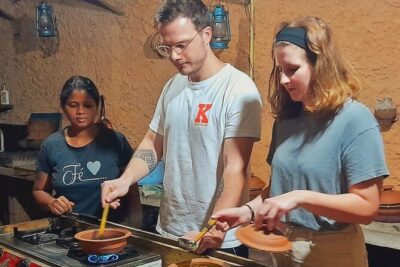
Ella: Sri Lankan Cooking Class with Neranji at Homestay
Read our review →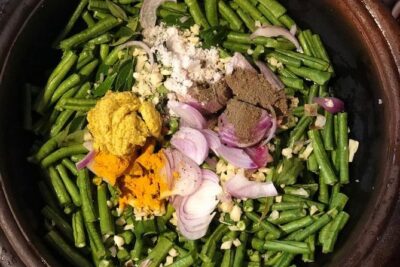
Ella : Cooking class with amazing Spice Garden Tour
Read our review →This kitchen also appears in