Review · UBUD
Ubud: Balinese Cooking Class and Market Tour
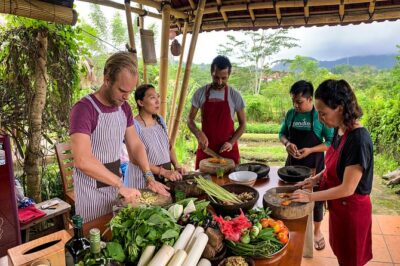
Ubud’s best food lesson may begin somewhere other than the kitchen. The morning market visit shows you the ingredients, Hindu offerings, and daily buying habits behind Balinese cooking before you sit down to prepare nine dishes with a local chef. I like that the food is made in a family compound rather than a polished hotel classroom, and that the finished meal is shared at the same table.
I also like the strong value: four hours, hotel pickup in Ubud, market and rice-field visits on the morning schedule, and a large meal for $23. The main thing to consider is the market itself. It is a real local market, with tight spaces, dirt floors, flies, and animal products, so it may not suit anyone wanting a tidy sightseeing stop.
Key points to know before booking
- Morning classes include the local market and rice paddies, while afternoon classes replace those stops with a Canang offering lesson.
- You prepare nine Balinese dishes, including sauces, main dishes, and dessert, then eat the food together.
- The family-run setting feels personal, with instructors such as Wayan, Putu, Butu, and Tata mentioned by name during different sessions.
- The class is hands-on but guided, so you get to work without being left alone with unfamiliar ingredients.
- Pickup is included only around Ubud, with an alternative meeting point at Ubud Palace for some people staying outside the pickup zone.
- The $23 price is unusually strong value for transport within Ubud, instruction, ingredients, a meal, and a recipe PDF.
A market morning before the cooking begins
Choose the morning class if you want the fuller four-hour outing. Pickup is available from hotels in the Ubud area, then you head to a local market before the cooking lesson. If your accommodation is outside the free shuttle zone, you can meet the vehicle at the front of Ubud Palace or go directly to the class.
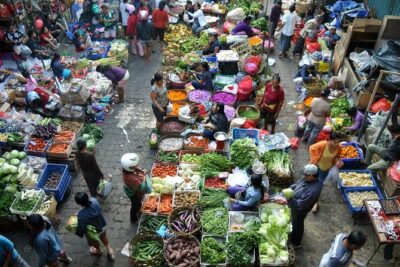
This is not a market arranged mainly for sightseeing. It is a working place where local people buy food and other goods. Your guide can explain what is being sold, how people shop, and which ingredients later appear in Balinese cooking. You may taste local fruit along the way, which gives the stop a useful sensory edge rather than making it a simple walk past stalls.
Guides named in the experience include Putu, Butu, and Tata, with names varying by departure. Several sessions have been praised for clear English, humor, and friendly explanations. Putu, in particular, has been described as good at explaining unfamiliar fruit by comparing it with fruit familiar to visitors from the United Kingdom. That sort of comparison is helpful when you are facing produce you cannot identify at a glance.
The market can also be confronting. Expect close quarters, dirt underfoot, flies, and visible meat handling. I see that as part of the value if you want to understand everyday food shopping in Bali, but it is not the right stop for anyone seeking a carefully staged food display. Wear practical shoes and bring cash, as requested in the booking information.
More Cooking Classes with a Market Tour in Indonesia
- Ubud: Cooking Class with Transfers and Optional Market Visit
★ 4.9 · 824 reviews - Balinese Ubud cooking school (9 Dish Cooking and Market Tour)
★ 5.0 · 540 reviews - Balinese Cooking class with traditional morning market visit
★ 5.0 · 161 reviews
Rice paddies and the meaning of rice in Bali
The morning program also includes a visit to local rice paddies. This short stop adds context to the cooking class. Rice is not simply a side dish in Bali. It is tied to food, work, family life, and religious practice, and a guide can explain why it matters.
The stop is not presented as a long walk or a farming workshop. Think of it as a brief countryside visit between the market and the kitchen. A guide named Putu has been described as having personal experience with rice fields, which can make the explanation more practical and less like a memorized speech.
You should keep the schedule in mind. The rice-paddy and market visits are for morning classes only. The afternoon option follows a different plan, so do not book a later start expecting the full market outing.
Cooking nine dishes in a family compound
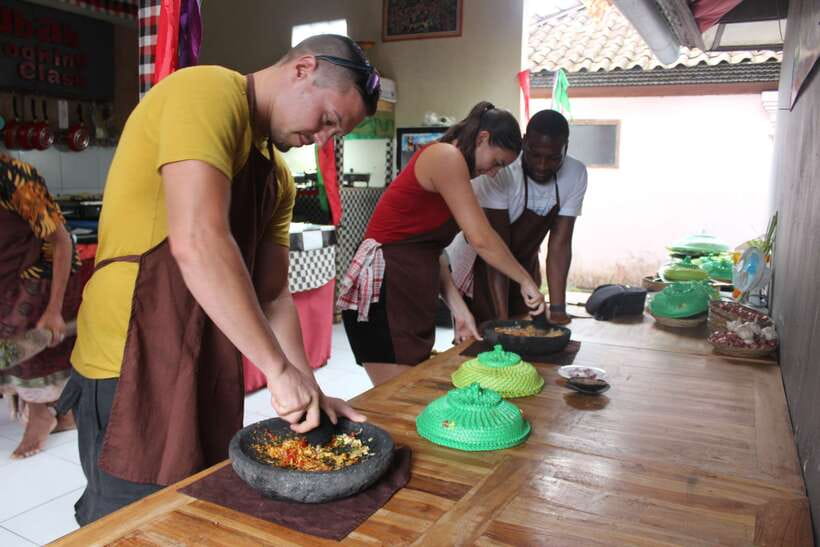
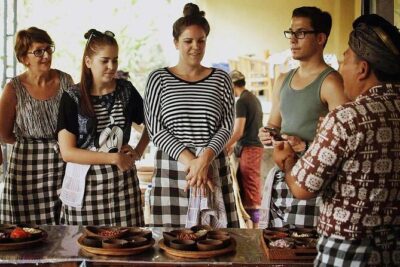
The cooking lesson takes place in a family-run setting, inside a local compound rather than a large commercial training kitchen. That setting matters. You are not only learning a list of recipes, you are seeing how a Balinese household-style food experience can be organized around shared preparation and shared eating.
The chef guides you through the ingredients and preparation step by step. The class produces nine signature dishes, with the menu described in broad terms as sauces, main dishes, and a dessert. The exact dishes are not listed in the supplied details, so you should not book expecting a fixed menu with named recipes.
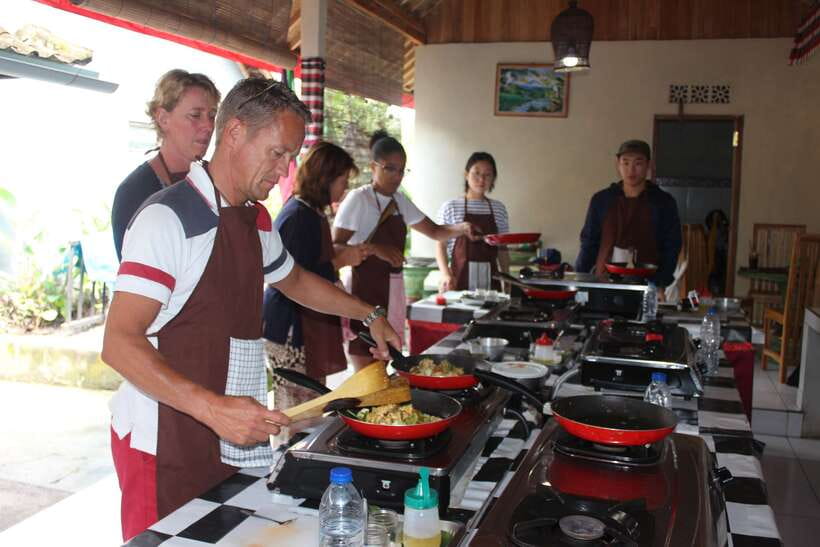
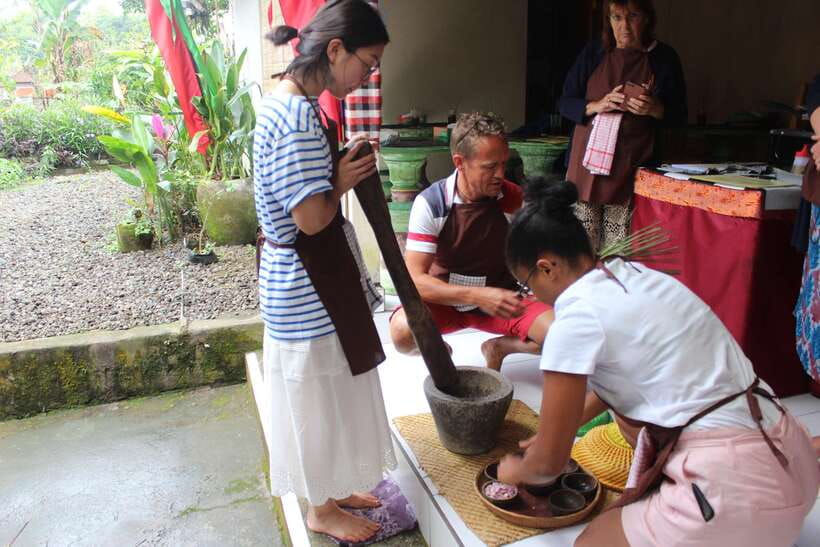
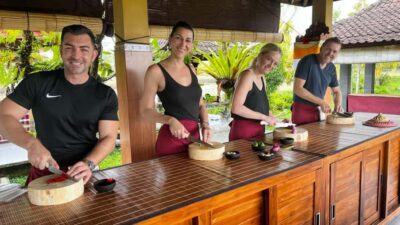
The class is hands-on, but not in a stressful way. You may be assigned a part of the preparation and then combine the work with the rest of the group. That arrangement lets you chop, mix, season, and prepare food while still having help nearby. It is a good balance for beginners who want to do more than watch but do not want to ruin lunch through one wrong move.
The instructors have earned praise for being patient, funny, and involved. Wayan is one chef named during the sessions, while other departures may be led by different staff. Butu has also been described as warm and entertaining, giving the class a social feel as well as a practical one.
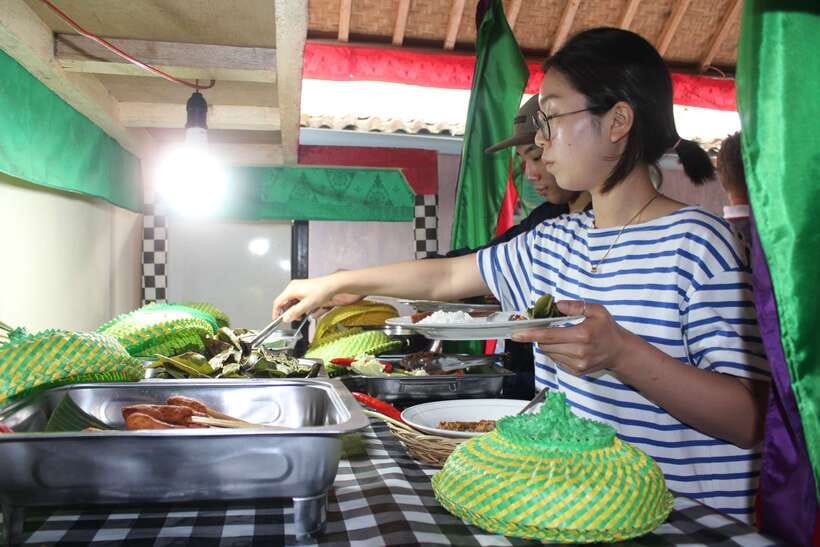
The food is cooked in substantial quantity. By the end, you should have a generous spread to eat together. That is an important part of the experience: the meal is not a token tasting after a demonstration. You eat the dishes you helped prepare, at the same time as the rest of the group.
Why the shared meal is the payoff
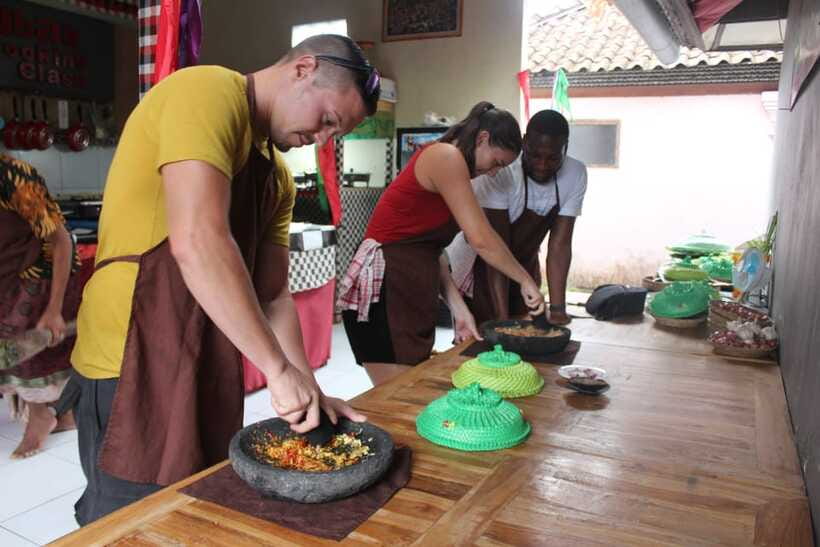
Balinese food can be easier to understand after you have handled the ingredients yourself. A sauce is no longer just something placed beside rice. You have seen how it was prepared, watched it change during cooking, and tasted the result with the rest of the meal.
The shared table also helps the class feel relaxed. One session included only four people, making the work especially hands-on, while the maximum group size is 14. A small group does not guarantee a private lesson, but it gives you a better chance to take part rather than sit at the back.
This is also a useful choice for solo visitors. You are placed into a group activity with clear jobs, a shared meal, and plenty of natural conversation. Couples and families fit comfortably too. A family with a 16-year-old enjoyed the class, while children under six are not accepted.
Vegetarian and vegan options are available, according to the experience information. One person with allergies was also given a non-spicy menu to prepare. You should still raise dietary needs when booking or before the class begins, since the supplied details do not specify every possible allergy or substitution.
More Cooking Classes with a Market Tour in Ubud
- Jambangan bali cooking class with morning market tour
★ 5.0 · 35 reviews - Balinese cooking class/Go shopping at the market, cook, eat
★ 5.0 · 12 reviews
The afternoon option and its Canang offering
The afternoon class is not simply the morning class at a different hour. It does not include the traditional market or rice-paddy visit. Instead, you learn to make a Canang offering before or alongside the cooking program.
A Canang is a small Balinese Hindu offering made from natural materials and used in daily religious practice. Making one gives you a cultural activity that is different from food preparation. It also helps explain why a Balinese compound may contain offerings and ritual objects as part of ordinary home life.
After the offering activity, you move into the cooking lesson and finish with dinner. This schedule suits you if you prefer a later start or want a cooking-focused afternoon without the market’s rough edges. It is less suitable if the market and rice fields are the main reason you are interested.
Transport, timing, and the real value at $23
The activity lasts four hours, but the exact starting time depends on availability. Morning pickup and the market stop add movement before the kitchen, while the afternoon session has its own sequence. Allow some flexibility around the stated duration, especially if you are arranging another tour immediately afterward.
At $23 per person, the price is a clear strength. You receive a guide, welcome drink, nine dishes, cooking instruction, the meal, and a recipe PDF. Morning guests also receive the market and rice-paddy stops, while afternoon guests receive the Canang activity. Hotel pickup and drop-off within Ubud add further value.
The free shuttle has a firm boundary. Pickup and drop-off outside the Ubud area are not included. If you are staying elsewhere, the stated alternatives are meeting at Ubud Palace or traveling directly to the class. One driver has occasionally helped with an out-of-zone drop-off, but you should not count on that as part of the standard service.
The small group limit of 14 is another practical benefit. The class may feel busier at full capacity than it does with four or six people, but the format is designed to keep everyone involved. The guides and kitchen staff assist with the work, so you are not expected to manage nine dishes alone.
What to bring and what not to expect
Bring a camera if you want market and rice-field photos, though stay aware of people buying and selling around you. Cash is useful, and practical shoes are sensible for the market stop. Headphones are also listed among the recommended items, although the activity itself is guided in English and does not describe a required audio system.
Do not expect a luxury culinary school. The appeal is the local setting, direct instruction, and large communal meal. The market is functional rather than polished, and the family-compound kitchen may feel informal compared with a resort cooking studio.
Do expect a busy class. Nine dishes in four hours means the team keeps things moving. You will receive help, but this is not a slow, private lesson devoted to perfecting one recipe. If your goal is to learn a broad set of Balinese flavors and take home recipes, the pace works well. If you want detailed instruction on every knife cut, you may find it rushed.
The recipe PDF is useful after you return home. The information says you receive recipes for the dishes prepared, letting you try to recreate the meal for lunch or dinner. Since the menu is not named in advance, ask the instructor to clarify any dish you especially want to remember before leaving.
Who should book this Ubud cooking class
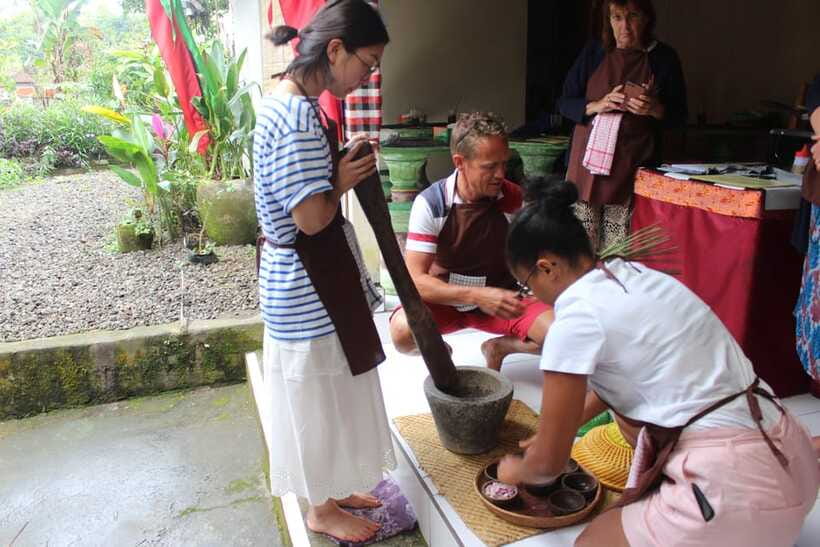
I would choose this for anyone who wants a practical introduction to Balinese food rather than another restaurant meal. It works especially well for first-time visitors, food-focused couples, families with older children, and solo visitors who enjoy joining a small group.
Pick the morning session if you value local food shopping, fruit tasting, rice culture, and a short countryside stop. Pick the afternoon session if the Canang offering interests you, if you prefer dinner to lunch, or if you want to avoid the rougher market conditions.
You may want to skip it if you need wheelchair access, since the activity is not suitable for wheelchair users. It is also not designed for children under six. Anyone uncomfortable around raw food markets should think carefully before choosing the morning schedule.
Should you book it?
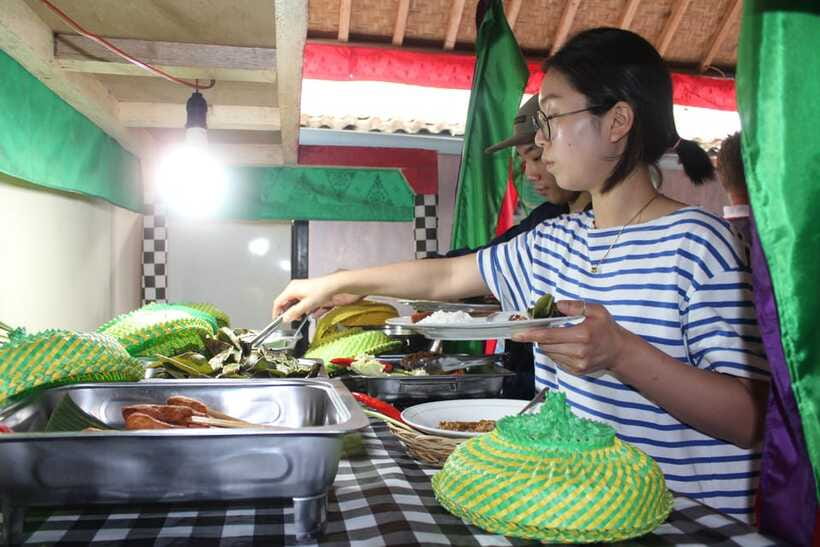
At $23, this is easy to recommend for a hands-on, low-cost introduction to Balinese food. The best features are the family-run setting, the patient instruction, the chance to prepare nine dishes, and the satisfying meal at the end. The morning market and rice-paddy visits add real local context instead of padding the schedule.
Book the morning option for the fullest cultural outing, and the afternoon option for a simpler cooking experience with a Canang offering. Just arrive ready for an informal class, a working market, and a generous amount of food rather than a polished restaurant demonstration.
FAQ
How long does the Ubud Balinese cooking class last?
The activity lasts four hours. Starting times depend on availability when you book.
What is included in the price?
The price includes a guide, welcome drink, nine Balinese signature dishes, cooking instruction, the meal you prepare, and a PDF copy of the recipes. Hotel pickup and drop-off are included within the Ubud area.
Does every class include a market tour?
No. The local market tour is included only with the morning class.
Does every class include a rice-paddy visit?
No. The rice-paddy visit is available only with the morning class.
What does the afternoon class include instead?
The afternoon class includes a lesson on making a Canang offering and finishes with dinner together.
Is hotel pickup available outside Ubud?
No. Free shuttle service is limited to the Ubud area. If you stay outside Ubud, you can meet the shuttle at the front of Ubud Palace or go directly to the class.
How many people can join the class?
The class is limited to 14 participants and is described as a small-group activity.
Is the class suitable for children?
Children under six are not permitted. The experience has been enjoyed by a family with a 16-year-old teenager.
Is the class suitable for wheelchair users?
No. The activity is listed as unsuitable for wheelchair users.
Can dietary needs be accommodated?
Vegetarian and vegan options are available. A non-spicy menu has also been prepared for someone with allergies, but you should discuss your needs with the provider in advance.
More Balinese Cooking Classes around Ubud
- Ubud Cooking Class Bali with Balinese Chef
★ 5.0 · 1,609 reviews - PRIVATE Authentic Balinese Cooking Class in Ubud at Putu’s Home
★ 5.0 · 644 reviews - Balinese Farm Cooking Class by Pemulan Bali
★ 5.0 · 410 reviews - Balinese Vegan Cooking Class with Fresh Harvesting & Garden Tour
★ 5.0 · 86 reviews
New cooking classes around Ubud
- Ubud: Organic Farm Harvest, Bali Cooking Class by Pemulan★ 4.8 · 12 reviews
- packages cooking class and romantic dinner in a local home★ 5.0 · 4 reviews
- Jambangan bali cooking class with morning market tour★ 5.0 · 35 reviews
- Balinese cooking class/Go shopping at the market, cook, eat★ 5.0 · 12 reviews
- Bali: Cooking Class with Monkey Forest and Art Village Tour★ 5.0 · 2 reviews
- Ubud: Balinese Cooking Class with Hotel Transfers★ 4.8 · 17 reviews
- Balinese Vegan Cooking Class with Fresh Harvesting & Garden Tour★ 5.0 · 86 reviews
- From Ubud: Authentic Bali Farm Cooking School & Organic Farm★ 5.0 · 122 reviews
Ubud Cooking Classes, side by side.
Ubud: Cooking Class with Transfers and Optional Market Visit
Read our review →
PRIVATE Authentic Balinese Cooking Class in Ubud at Putu’s Home
Read our review →
Balinese Ubud cooking school (9 Dish Cooking and Market Tour)
Read our review →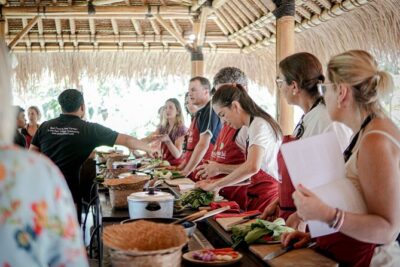
Balinese Cooking class with traditional morning market visit
Read our review →
From Ubud: Authentic Bali Farm Cooking School & Organic Farm
Read our review →