
Review · SRI LANKA
Hands-On Cooking Class in Anuradhapura: Cook Like a Local
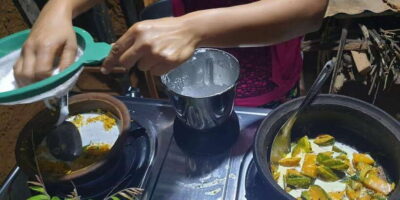
The most memorable part of this Anuradhapura cooking class is not the final plate. It is the old-fashioned work that comes first: grinding spices on a miris gala, scraping coconut with a hiramanaya, and cooking over a wood-fired stove beneath a coconut-leaf roof. You are not just watching a demonstration. You are making the meal.
I like the class for two clear reasons: it connects food to everyday village life, and the menu gives you a broad taste of Sri Lankan cooking, from tangy ambarella to lake fish curry and fiery coconut sambal. The main consideration is the setting. This is a rustic outdoor-style kitchen, so mosquito repellent and comfort with heat, smoke, and hands-on work will make the three hours more enjoyable.
Key points at a glance
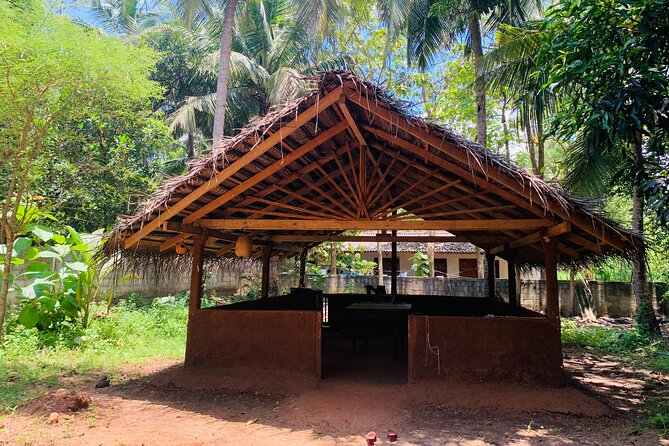
- Cook in a clay house kitchen: The class takes place under a traditional coconut-leaf shelter in a peaceful village setting.
- Use old kitchen tools: Grind spices by hand, scrape coconut, and prepare food with traditional methods.
- Make a full Sri Lankan meal: The menu includes rice, fish curry, several vegetable dishes, sambal, and dessert.
- Try unusual local ingredients: Ambarella, banana blossom, and kathurumurunga give the class a strong regional identity.
- Private three-hour experience: The class is conducted in English and is suitable for a private group.
- Good value at $40: You receive instruction, a complete meal, local ingredients, and a cultural activity rather than a simple restaurant lunch.
A village kitchen rather than a polished cooking studio
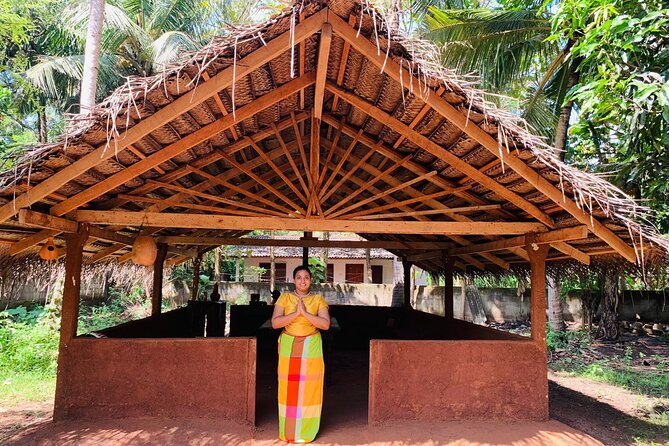
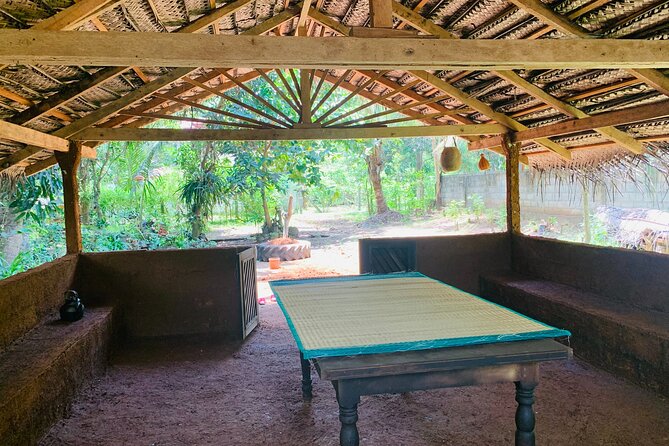
GK Immersions runs this experience in a clay house kitchen shaded by a coconut-leaf roof. That detail matters. The setting gives the class a clear sense of place, and the cooking feels connected to the homes and methods of rural Sri Lanka rather than designed for a hotel kitchen.
You can expect a calm, rustic atmosphere with nature around you. The kitchen uses clay pots, coconut-shell firewood, and ingredients picked from the garden. It is a simple setup, but that simplicity is the point. You see how a meal can come together with basic tools, patience, and fresh produce.
The space may not suit someone who wants air conditioning, stainless steel counters, or a fast demonstration with no mess. Heat, smoke, and outdoor conditions are part of the experience. Bring mosquito repellent. One piece of direct feedback specifically recommends it, and that is useful advice for a village setting.
More cooking classes around Sri Lanka:
- Ella: Traditional Sri Lankan Cooking Class
★ 4.9 · 788 reviews - Organic cooking class sigiriya (kumara & family)
★ 5.0 · 650 reviews - Sri Lanka Cooking Class with Granny
★ 5.0 · 587 reviews
Starting with local tools and a fresh welcome
The class begins with a refreshing local drink, then moves into the tools that shape the meal. You get to pick a coconut straight from the tree, a small but memorable activity that links the ingredient on your plate to its source.
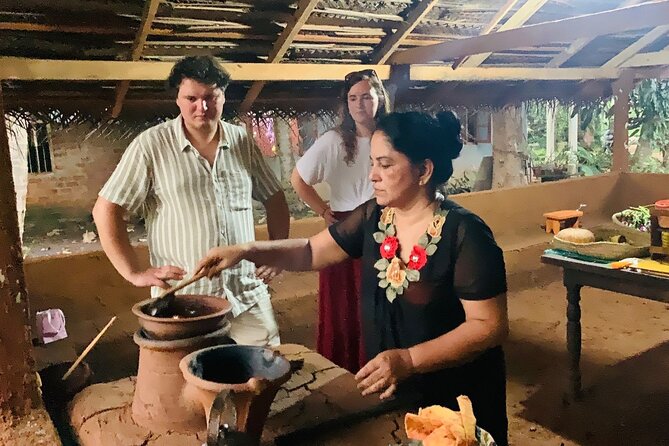
The coconut is not treated as a background ingredient. You scrape it with a hiramanaya, the traditional tool used in Sri Lankan homes. The motion takes a little practice, but it is easy to understand once you try it. This is one of the class’s best features because it turns a familiar food into a practical skill.
You also grind spices on a miris gala, a traditional stone grinder. Freshly ground spices have a strong aroma, and the work gives you a better feel for the base of Sri Lankan cooking than simply opening a jar. You learn through your hands and nose as much as through spoken instruction.
The class is conducted in English, and the cooking process is explained step by step. The strongest praise for the experience focuses on the clear guidance about which spices and vegetables to use. That makes this a good choice if you want more than a fun photo opportunity and would like to understand how the flavors are built.
Cooking over firewood in the Rajarata tradition
The meal is cooked on a wood-fired stove, using firewood that can include coconut shells. This adds smoke and a slower rhythm to the preparation. You will need to pay attention, follow the instructor’s directions, and accept that traditional cooking is not always as quick or controlled as a modern stovetop.
The setting draws on the ancient Rajarata area around Anuradhapura. The class does not ask you to study a long history lesson. Instead, it lets you see how older food customs remain useful in village cooking today. Clay pots, coconut, local greens, tropical fruit, and lake fish all help connect the food to the area.
I like this approach because it gives context without turning the activity into a lecture. You learn by preparing food in the same broad style that generations of home cooks used. The experience is especially useful after visiting Anuradhapura’s ancient sites, since it gives you another way to understand the daily life behind the monuments.
The rice and curry menu, one dish at a time
The menu is generous for a three-hour class. It is built around rice and several side dishes, so you can compare different levels of spice, sweetness, sourness, texture, and richness in one sitting.
Same kitchen, a different dish:
- Kandy Village Cooking Class
★ 5.0 · 536 reviews - Sea waves sri lankan cooking class
★ 5.0 · 467 reviews - Ella: Sri Lankan Cooking Class with Neranji at Homestay
★ 5.0 · 276 reviews - Cook with Wasantha
★ 5.0 · 248 reviews
Rice, the center of the meal
You prepare either yellow rice or white rice. Rice is the base of a traditional Sri Lankan meal, and learning to cook it well is more important than it may sound. Soft, properly steamed rice needs to hold its shape while still working as a carrier for curries and sambal.
Yellow rice adds color and seasoning, while white rice gives you a plain base for stronger sauces. The choice helps you see that Sri Lankan meals are not one single dish. They are a collection of small preparations meant to be eaten together.
Ambarella curry for a sharp tropical flavor
Ambarella is a tropical fruit used here as a savory curry ingredient. Its tangy character gives the meal a sharp, bright counterpoint to creamy coconut-based dishes.
This is one of the more distinctive parts of the menu. You may know mango or pineapple in savory food, but ambarella offers a different flavor and texture. It is a useful introduction to Sri Lankan produce because it shows how local cooks turn fruit into a main meal component.
Banana blossom and kathurumurunga mallum
Banana blossom becomes a curry or mallum, depending on the preparation. It has a firmer, more earthy texture than many common vegetables, and turning it into food takes more attention than simply boiling a familiar green.
Kathurumurunga is prepared as mallum with coconut and spices. The result is a lighter side dish that balances the richer curries. These two preparations are valuable because they introduce ingredients you may not find on an ordinary international menu.
The class gives you a chance to handle the ingredients before tasting them. That makes the final meal more meaningful. You are not just asking what a dish contains. You are seeing the plant, preparing it, and noticing how texture changes during cooking.
Lake fish curry with coconut milk
The lake fish curry brings a local protein into the meal. It is simmered with spices and creamy coconut milk, creating a dish that is fuller and more substantial than the vegetable sides.
Fish curries can vary greatly depending on the spice blend and cooking time. Here, the focus is on locally caught lake fish and a traditional preparation. If you enjoy seafood, this will likely be one of the main dishes to look forward to. If you do not eat fish, the menu includes enough other dishes to make the meal varied, though the activity is clearly designed around cooking and tasting the complete menu.
Coconut sambal and pumpkin curry
Fresh coconut, red chili, lime, and onion make the coconut sambal. It is a small side dish with a strong effect. The chili and lime cut through the richness of the rice and curries, while the coconut softens the heat slightly.
Pumpkin curry offers a gentler contrast. It is creamy, mildly spiced, and slightly sweet. Together, the sambal and pumpkin show the range of a Sri Lankan meal: one preparation can be fiery and sharp, another soft and comforting.
The variety also makes the $40 price easier to judge. You are not paying for one recipe and a tasting spoon. You are helping prepare a full spread with several dishes, different techniques, and a dessert.
Finishing with curd, treacle, and ripe fruit
The meal ends with fresh curd and treacle, followed by ripe papaya or other ripe fruit listed for the class. Curd with treacle is a classic Sri Lankan finish, pairing cool, creamy curd with the dark sweetness of palm treacle.
This is a fitting end to a meal that includes plenty of spice. It is simple and refreshing rather than elaborate. The ripe fruit keeps the finish light, which is welcome after rice, coconut, fish, and several curries.
Because you eat what you prepare, the final meal also gives the class a satisfying shape. The early work with the coconut and spices pays off at the table. You can identify the ingredients and remember the methods instead of leaving with only a restaurant receipt.
What the three-hour timing means for you
Three hours is long enough to cover the tools, ingredients, cooking, and meal without making the class feel like a quick tourist stop. It also means you should not schedule a major activity immediately afterward if you want to enjoy the pace.
The exact starting times depend on availability. The activity is private, which is useful if you want to ask questions freely or work at your own pace. It can also suit a couple, family, or small private party better than a large group class where everyone only gets a brief turn.
An English-speaking instructor leads the session. The strongest praise centers on the presentation of the cooking background, preparation methods, tools, and actual cooking. That suggests the class gives you both practical instruction and cultural context, rather than focusing only on the finished meal.
Who will get the most from this class
I would recommend this experience to anyone who wants an active cultural activity in Anuradhapura. It works particularly well for:
- People who enjoy cooking and want recipes connected to local life
- Food lovers curious about ambarella, banana blossom, lake fish, and regional greens
- Visitors who have seen the ancient city and want a closer look at everyday traditions
- Families or private groups who prefer a hands-on activity
- Anyone who wants a substantial meal as part of the experience
It may be less suitable if you dislike spicy food, smoke, outdoor heat, or touching raw ingredients. The activity is also not a passive food tasting. You are expected to take part in grinding, scraping, stirring, and cooking.
The experience is wheelchair accessible, according to the activity details. If you have specific mobility needs, it is still sensible to confirm the practical layout of the clay-house kitchen before booking, since the activity takes place in a traditional setting rather than a purpose-built studio.
Is $40 per person good value?
At $40 per person, the class offers good value if you want food and culture together. The price covers three hours of instruction, a private group setting, traditional tools, ingredients, a full cooked meal, a welcome drink, and dessert.
You are also paying for access to a village-style kitchen and methods you would not easily reproduce by ordering lunch in Anuradhapura. Grinding spices and scraping coconut are small tasks, but they are the parts that make the experience feel personal.
The value is weaker if you only want to eat Sri Lankan food. A restaurant meal will be quicker and may cost less. This class earns its price through participation, explanation, and the chance to handle the ingredients yourself.
You can cancel up to 24 hours before the activity for a full refund, and you can reserve now and pay later. Those options are useful when your Anuradhapura plans may change, especially if you are arranging several temple visits and day trips.
Practical tips for a better cooking session
Wear clothes you do not mind cooking in. The setting includes firewood, smoke, coconut, spices, and hands-on preparation, so this is not the place for clothing that needs to stay spotless.
Bring mosquito repellent. It is the most specific practical tip available from the experience, and the shaded village setting makes it worth taking seriously.
Arrive ready to participate. The more willing you are to try the stone grinder, coconut scraper, and wood-fired stove, the more you will get from the class. If you only stand back, you miss the strongest part.
Give yourself time to eat at the end. The menu includes rice, fish, several vegetable preparations, sambal, curd, treacle, and fruit. The final meal is not an afterthought. It is the payoff for the work.
Should you book this Anuradhapura cooking class?
Book it if you want a private, hands-on introduction to Sri Lankan village cooking and you are happy with a rustic setting. The combination of old tools, unusual local ingredients, a wood-fired stove, and a complete meal gives the class more substance than a standard demonstration.
I would especially choose it after visiting Anuradhapura’s ancient monuments. The cooking session adds a human, everyday side to the region’s past and present. Skip it only if you prefer a polished indoor kitchen, a short tasting, or a highly predictable menu.
For $40, this is a strong pick for food lovers and culture-focused visitors who want to do something active in Anuradhapura rather than simply see another site.
FAQ
Where does the cooking class take place?
The class takes place at a clay house kitchen shaded by a traditional coconut-leaf shelter. The setting is designed to feel like a peaceful village home.
How long does the cooking experience last?
The activity lasts three hours. Starting times depend on availability.
What language is the class conducted in?
The instructor teaches in English.
What food will I prepare?
The menu includes rice, lake fish curry, ambarella curry, kathurumurunga mallum, coconut sambal, pumpkin curry, and banana blossom mallum. Dessert includes curd with treacle and ripe fruit.
Is the activity private?
Yes. The experience is offered for a private group.
Can I cancel or pay later?
You can cancel up to 24 hours in advance for a full refund. You can also reserve your place and pay later.
New cooking classes around Sri Lanka
- Private Traditional Sri Lankan Cooking Class in Kandy★ 5.0 · 7 reviews
- Private cooking class – Personalized classic menu★ 5.0 · 5 reviews
- Nilaveli: Sri Lankan Cooking Class with a Local Family★ 5.0 · 16 reviews
- Mirissa: Cooking Class with Beer and Meal★ 3.3 · 4 reviews
- Kandy Cooking Class with Granny★ 4.9 · 95 reviews
- Kandy: Village Cooking Class 12 Dishes with Market Tour★ 5.0 · 6 reviews
- Galle: Traditional Sri Lankan Cooking Class★ 5.0 · 21 reviews
- Galle: Sri Lankan Cuisine Cooking Experience★ 5.0 · 5 reviews
Sri Lanka Cooking Classes, side by side.
Organic cooking class sigiriya (kumara & family)
Read our review →
Ella: Sri Lankan Cooking Class with Neranji at Homestay
Read our review →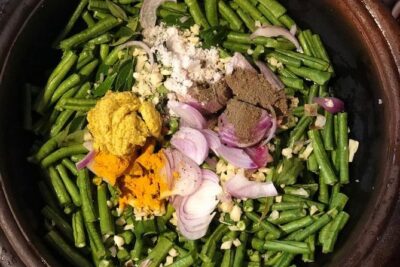
Ella : Cooking class with amazing Spice Garden Tour
Read our review →This kitchen also appears in